|
World Policy Forum
Burning Bridges:
How Washington Is Undermining Its Own Alliances
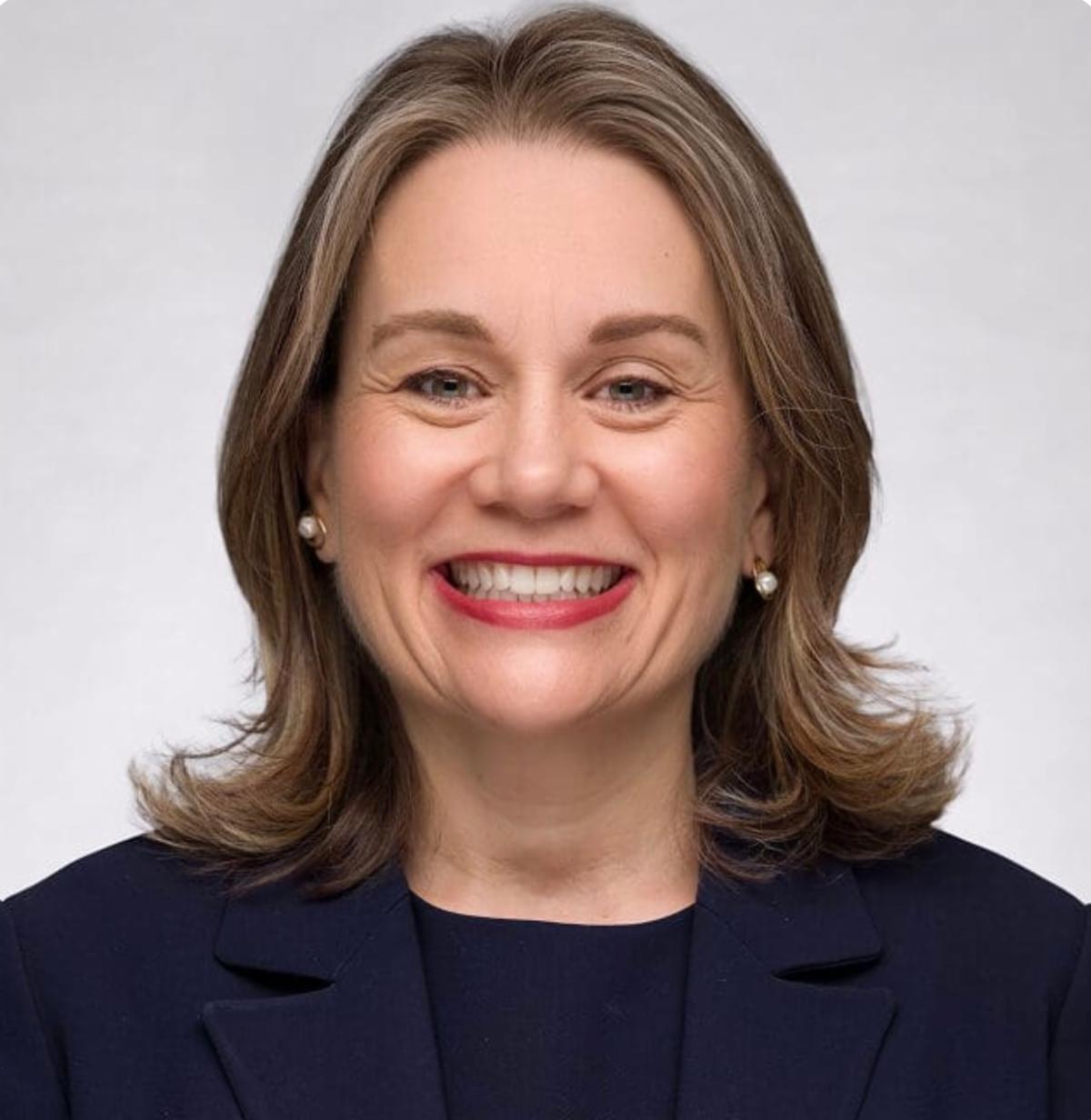
A Fireside Chat with Ambassador Julianne Smith Former U.S. Permanent Representative to NATO.
Event overview
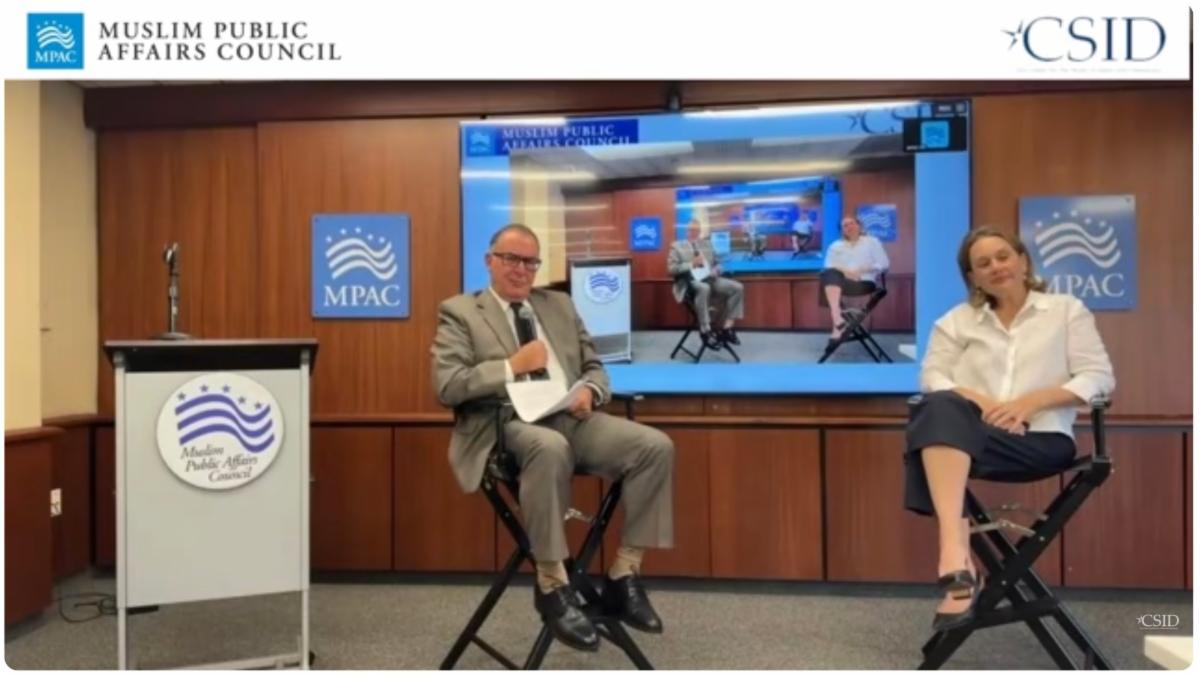
Ambassador Julianne Smith, U.S. Permanent Representative to NATO from 2021 to 2024, warned that the transatlantic alliance faces a trust deficit that a future administration will not easily repair. The fireside chat was held on September 30, 2026, at MPAC's Washington, DC office and online via Zoom, as part of the MPAC-CSID World Policy Forum series.
Sameer Hussein, Managing Director of MPAC's DC office, opened the event, noting that what happens beyond America's borders is inseparable from MPAC's domestic work on democracy, due process, and civil rights. Dr. Radwan A. Masmoudi, President of CSID and Senior Advisor for Strategic and Philanthropic Initiatives at MPAC, moderated the conversation and the Q&A.
NATO's foundation and today's trust deficit
NATO is 77 years old and has grown from 12 founding members to 32, with Finland and Sweden joining during Ambassador Smith's tenure. It rests on Article 5 (an attack on one is an attack on all) and on shared values written into the treaty: democracy, rule of law, and human rights.
The alliance is "alive and kicking" but in an extraordinarily difficult period. Dr. Masmoudi noted that European confidence in the U.S. as a reliable partner has fallen from roughly 70 to 80 percent in 2022 to the 20s and 30s today. Ambassador Smith pointed to four main causes:
First, President Trump has suggested that America's Article 5 commitment should depend on how much an ally spends on defense. She agreed that Europe had underinvested and credited the push to raise spending from 2% to 5% of GDP, but said the conditional language raised doubts about whether the U.S. would defend its allies.
Second, in March 2025 the U.S. abruptly suspended intelligence sharing and security assistance to Ukraine for about 72 hours, without consulting allies or Kyiv. Third, talk of the U.S. needing to "get" Greenland, the territory of a NATO ally, sent another shock wave through the alliance, especially in Denmark. Fourth, the administration has accused Europe of civilizational decline, unsettling the shared values on which the alliance rests.
The result, she said, is that many Europeans now see the U.S. as both unreliable and unpredictable, and are moving quickly to provide for their own security.
Why rebuilding trust will be harder this time
Ambassador Smith compared the transatlantic relationship to a long marriage that has survived the Suez crisis and the Iraq war. What makes this episode different is that allies are now questioning America's values and trustworthiness, not just its policies.
When President Biden declared "America is back" in 2021, the world was eager to believe him. A future president of either party would likely hear a more skeptical answer: allies have seen this movie before and fear the next administration could reverse any restored commitments. Whoever enters the Oval Office next must accept that these relationships have fundamentally changed and will take time to rebuild.
What America gains from NATO
The U.S. is in NATO because it serves American interests, not out of charity. After two world wars pulled the country in, Washington chose to build institutions (the UN, NATO, the OECD and others) that would provide stability abroad.
A secure Europe has made possible a deep trading relationship that benefits Americans directly. NATO also gives the U.S. leadership and influence: an American four-star general always serves as Supreme Allied Commander of NATO, and the U.S. traditionally speaks first and sets the direction for 31 other allies. U.S. forces in Europe also support operations in Africa and the Middle East.
Allies have also shown up for America. Article 5 has been invoked only once, after the September 11 attacks, when NATO allies flew surveillance over U.S. skies and later joined the war in Afghanistan.
Ukraine, tariffs, and the balance of power at home
On Ukraine. Ukraine is a close NATO partner but not a member, so Article 5 does not apply. Allies chose not to enter the war directly and instead provided security, humanitarian, and economic aid, hosted more than 6 million refugees, isolated Moscow, and imposed sanctions. With the war nearing its fifth year, she sees no sign that President Putin feels pressure, especially from Washington, to end it.
On Tariffs. Blanket double-digit tariffs on allies, at levels similar to those aimed at adversaries, left partners asking what benefit treaty alliance with the U.S. still brings.
On Erosion of checks and balances. Amb. Smith raised concern that the executive branch is rising above Congress and the courts. Ambassador Smith cited the dismantling of USAID, a congressionally created agency, despite lacking legal authority, and warned the Pentagon may soon cut U.S. troops in Europe below the 75,000 floor set by Congress. She urged that a future president of any party resist keeping these expanded powers. Allies, meanwhile, no longer trust that "politics stops at the water's edge," as even NATO and development aid have become partisan. Dr. Masmoudi added that the sudden end of USAID programs has cost lives in developing countries and damaged U.S. credibility.
Values versus interests
Dr. Masmoudi argued that NATO endured because it was built on shared values, of protecting freedom and democracy, which outlast shifting interests. Yet, the West has partnered with Arab dictators who abuse their citizens, and U.S. credibility in the Muslim world has collapsed: the share who see the U.S. as a reliable partner has fallen from the 60s in 2000 to roughly 10 to 13 percent in countries from Turkey and Egypt to Pakistan and Indonesia. Standing by principles, he said, is what earns respect and cooperation.
Ambassador Smith agreed that selective application of values (criticizing China and Iran while overlooking Saudi Arabia or Egypt) undermines credibility, a criticism leveled at several administrations, including over who was invited to the Biden-era Summit for Democracy. She noted that "whose values" has itself become partisan. Future presidents and Congress will need to decide how central values are to US foreign policy, and how to define and act on them. She remains optimistic that a new generation of leaders can restore that consistency.
Audience Q&A highlights
The fireside chat was followed by about 25 minutes of questions from participants in the room and online.
-
Asked whether military capability or political trust is harder to rebuild, Ambassador Smith said depleted stocks such as Patriot interceptors can be replenished, but lost political trust may take a generation to restore.
-
On new partnerships, she noted that allies are hedging. Some moves, such as Canada's turn toward the EU and a new EU-India trade agreement, look positive, while others, like Spain's move toward China, carry security risks.
- She does not expect NATO to take on out-of-area missions soon. The alliance has returned to its core task of territorial defense, focused on Russia's war in Ukraine and its hybrid attacks across Europe, from drones and undersea cables to cyberattacks and disinformation.
-
On business, she described European and Canadian consumers shunning U.S. goods, including a Danish app that flags American-made products. Tech and defense sales face especially strong resistance.
-
Looking toward 2029, she hopes the U.S. remains in NATO but expects Europe to stop simply following Washington's lead. American leadership will have to be earned again, and Americans may not appreciate its benefits until it is gone.
- She also warned that the rise of Marine Le Pen in France and the AfD in Germany could leave Europe less receptive, even if a future U.S. administration seeks to restore ties.
-
On the middle-power coalition championed by Canada's Mark Carney, she saw merit but said results must be judged in practice, since no one can ignore the U.S., China, or Russia.
-
Reforming the UN Security Council, the ICC, and the ICJ, she said, requires a committed United States, which a future administration may defer while it rebuilds at home.
-
Finally, despite a weakened G20 process and concern over Russia's possible return, she urged civil society to stay engaged and lay groundwork for future summits.
Closing
The central message was that America's alliances are a source of strength that the country may not fully value until it is gone. Restoring them will require consistent, bipartisan commitment, a return to three co-equal branches of government, and a foreign policy that applies our values consistently. Dr. Masmoudi closed with the hope that the United States will again lead the world toward peace, freedom, democracy, and human rights for all.
WATCH the Video of the WPF
|