The American Society of Le Souvenir Français Inc.
Monthly Bulletin - Vol. 1. No 9 - October 2021
|
|
PART V - FINAL EPISODE IN THE SERIES:
ON THE FOOTSTEPS OF ROCHAMBEAU'S ARMY:
VICTORY IN YORKTOWN
240th anniversary, October 19, 1781-2021
|
|
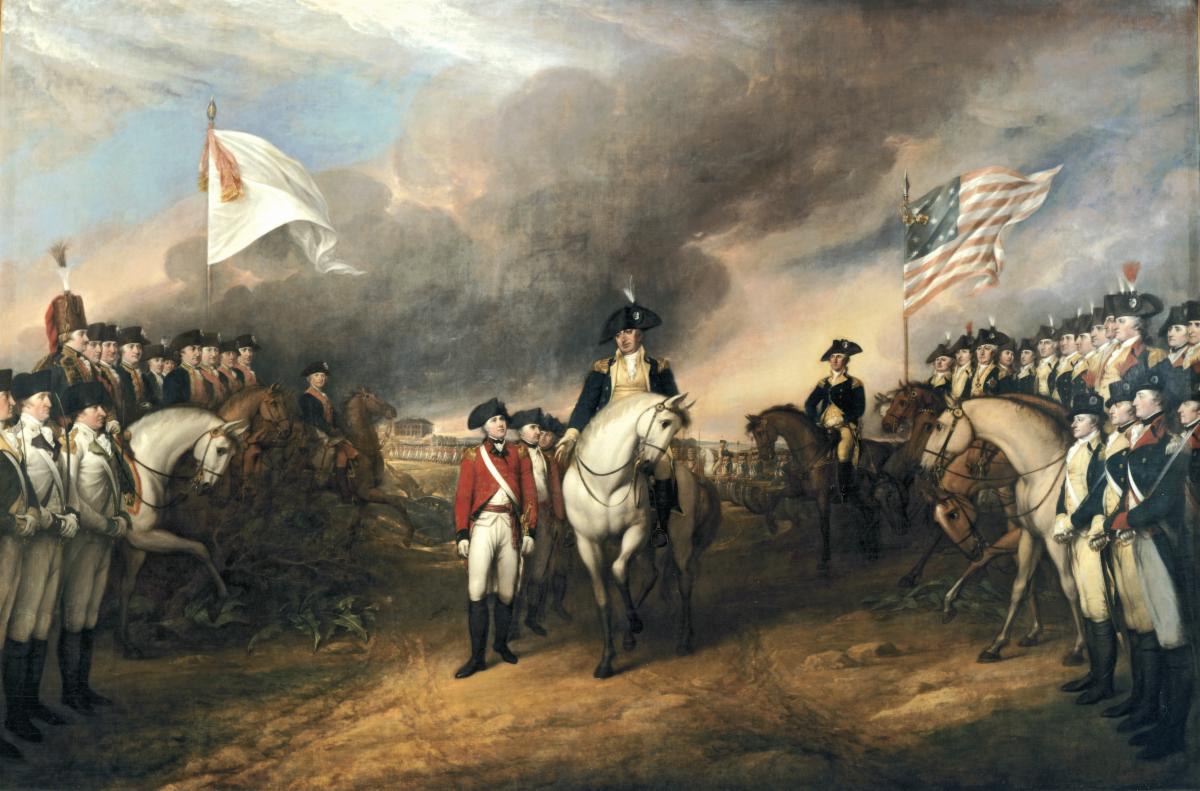
John Trumbull (1756-1843): Surrender of Lord Cornwallis. Rotunda of the US Capitol, painted 1820, placed 1826 - This painting depicts the forces of British Major General Charles Cornwallis, 1st Marquess Cornwallis (1738–1805) (who was not himself present at the surrender), surrendering to French (White Royal Flag of France) and American forces after the Siege of Yorktown (September 28 – October 19, 1781) The central figures depicted are Generals Charles O'Hara and Benjamin Lincoln. Public domain, via Wikimedia Commons
|
|
FROM MARCH TO SEPTEMBER, 1781,
THE FRENCH EXPEDITIONARY CORPS, 6,038 STRONG, MARCHED 690 MILES FROM NEWPORT, RHODE ISLAND TO YORKTOWN, VIRGINIA
AFTER THE FRENCH NAVY ESTABLISHED NAVAL SUPREMACY AT THE BATTLE OF THE CAPES, THE SIEGE OF YORKTOWN COULD BEGIN.
|
|
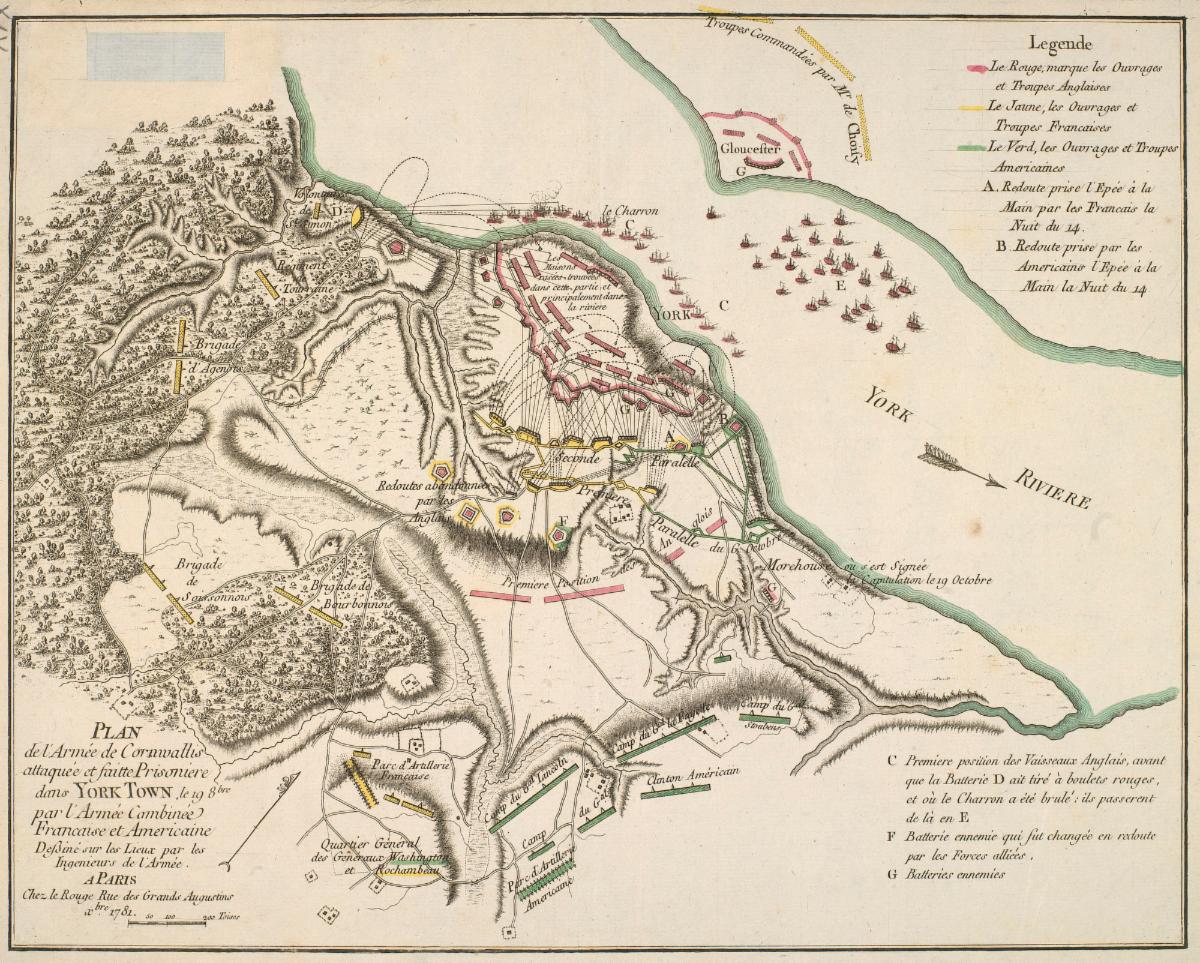
A map of Yorktown, besieged by the French and Americans commanded by General George Washington (1732-99) and Jean Baptiste Donatien de Vimeur, comte de Rochambeau (1725-1807), and surrendered by the British, commanded by Lieutenant-General Lord Charles Cornwallis (1738-1805). American War of Independence (1775-83). Oriented with north-west to top. Royal Collection Trust, George III maps, by Georges Louis Le Rouge (1707-93/4) - Royal Collection Trust / © Her Majesty Queen Elizabeth II 2021 |
|
A LONG MARCH TO VICTORY and AMERICAN INDEPENDENCE
IN THIS FIFTH AND FINAL PART OF A SERIES, WE COMMEMORATE THE FINAL VICTORY OF THE COMBINED FRENCH AND AMERICAN ARMIES AT YORKTOWN
We wish to acknowledge and express our gratitude for the work done by the National Washington-Rochambeau Revolutionary Route Association Inc. (W3R) and the National Park Service (WARO), and in particular Dr. Robert A. Selig who has conducted years of research and has published countless academic papers.
Summary of last month bulletin:
Last month we documented the rushed march to Williamsburg, after the successful French Navy blockade of the Chesapeake to entrap General Cornwallis in Yorktown. Although not technically ending of the war (which continued to be fought in India until the French naval victory of Cuddalore in June 1783!), the resounding allied victory in Yorktown led the British Cabinet to seek peace negotiations, and eventually formal recognition of American Independence with the Treaty of Paris signed September 3, 1783.
|
|
A BRIEF NARRATIVE OF THE SIEGE AND HOW VICTORY WAS ACHIEVED, WITH A FEW ANECDOTES.... |
|
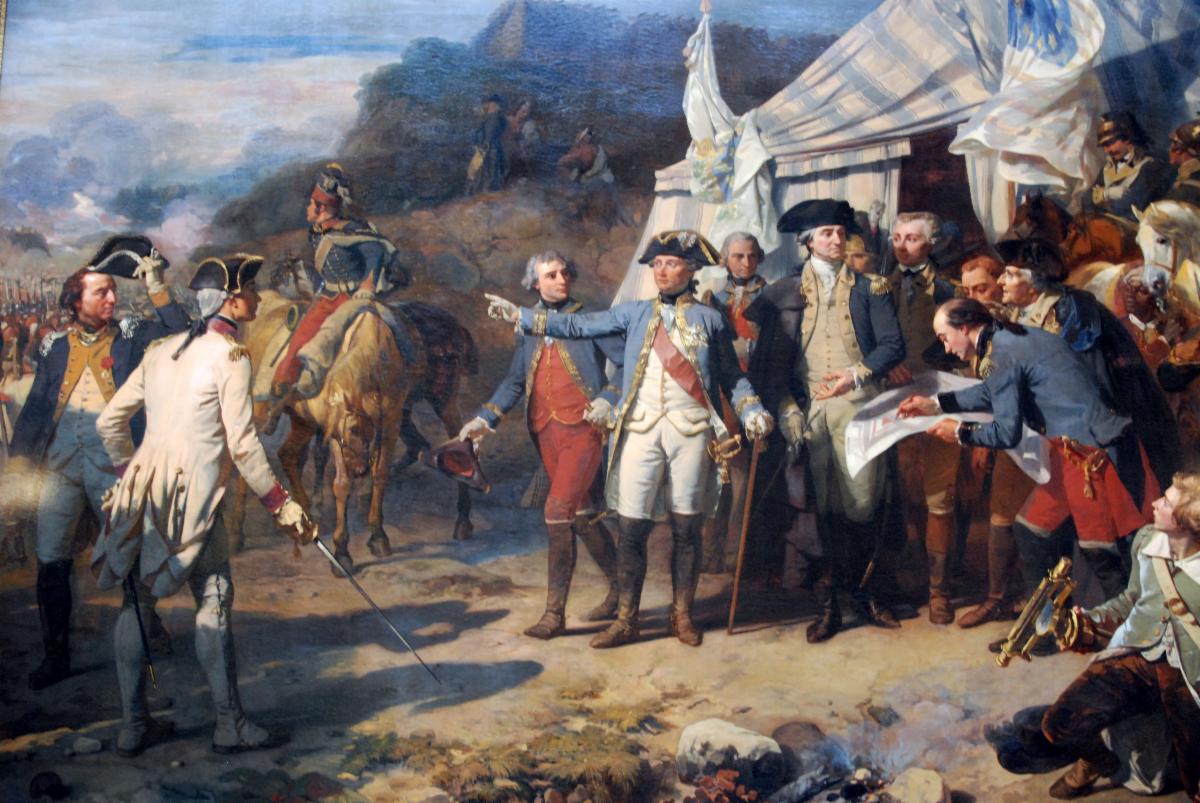
Siège de Yorktown, by Auguste Couder, (1789-1873), Palais de Versailles. Siege of Yorktown. General Rochambeau and general Washington give last orders before an attack, October 1781 - Public Domain via Wikipedia Common |
|
FORCES IN PRESENCE:
American Army: 9,150 Continentals and Militia under Washington, with generals Marquis de Lafayette, Lincoln, von Steuben, Wayne, Nelson...
French Army: 9,300 under Rochambeau, consisting of the regiments Bourbonnais, Soissonais, Royal Deux-Ponts and Saintonge, who marched from Newport, (the Lauzun Legion of Hussards was sent to Gloucester on the other bank of Yorktown to prevent any escape), along with the additional regiments of the Gâtinais, the Agenais, and Touraine transported from the French West Indies by Admiral de Grasse and under the command of Marquis de Saint-Simon, with all the heavy artillery brought from Newport by admiral Barras.
French Navy: 28,400 French marines and ship crews blockading the Chesapeake under Admiral de Grasse.
British Forces: 9,700 (including 840 naval personnel) commanded by Lord Cornwallis.
September 28: American and French forces immediately lay siege to Cornwallis and his men who had built a series of redoubts on the outskirts of Yorktown. Rochambeau's long military experience with fourteen sieges under his belt, gained during the Seven Years War, proved invaluable, as were the help of French engineers.
"Fortunately, the French Army included the best military engineers in the world. As a result, though Washington was officially in command, the Yorktown siege was essentially a French operation...Washington issued a fifty-five point memorandum to his officers clarifying their respective duties" (Joseph Ellis, His Excellency George Washington, p. 135)
American and French troops begin to feverishly dig, night and day, often in total silence, a series of parallel trenches, in order to bring troops and artillery close enough. All the while, the British attempted to disrupt Allied operations, keeping the Allies under continuous fire, killing many men, however their attempts were futile.
Anecdote: George Washington' s ancestor, Nicolas Martiau (1591-1657) was a French Walloon Huguenot, who immigrated to America in 1620, and who purchased fifty acres of land located on the high bluff of...Yorktown, in 1635!
October 4: In Gloucester, across the river, infamous British Lieutenant Colonel Banastre Tarleton, who committed war atrocities in South Carolina, engaged in a skirmish with the Duke of Lauzun.
Anecdote: A few moments before, Tarleton had asked a woman farmer "where is Lauzun, so that I can shake hands with him?" and minutes later, Lauzun met the same woman and upon hearing her answer, rode off in pursuit. He and his troops caught up with the British, and when one of Lauzun's hussard drove a lance in the flank of his horse,Tarleton fell but managed to climb back on another horse and retreated, leaving several dead behind.
October 9: In the afternoon, at 3:00PM the Allied barrage begins, with the French opening the salvo, with the French troops accompanying it with a general shout of "Huzza for the Americans!"
From then on, the artillery pounded the British with no respite for several days: 36 siege guns, and 54 cannons.
Anecdote:
Soon afterwards, on the American side, as general Knox was about to fire off the first cannon, he took the touchhole match from the gunner and gave it to George Washington, who put the match to the touchhole on the first cannon and scored a direct hit at 5:00PM. Legend has it that this shot smashed into a table where British officers were eating!
Washington ordered that the guns fire all night so that the British could not make repairs.
October 11. Washington orders troops to dig a second parallel 400 yards closer to the British lines. The new line is in place by the morning of October 12. The artillery barrage continues.
Anecdote:
Taking a huge risk, Rochambeau and his son went themselves close to the British redoubt to assess if enough damage was done before launching the grenadiers to attack... "Nous verrons demain si la poire est mûre" (We shall see tomorrow if the pear is ripe), he famously declared.
|
|
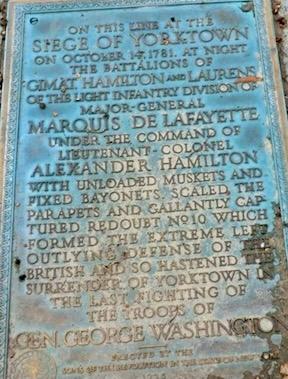
October 14: Finally, American and French forces prepare a surprise assault on redoubts #9 and #10. To maintain stealth, soldiers did not load or prime their weapons. The password for the operation is “Rochambeau,” which the Americans translated as “Rush on boys!”
Lt. Col. Alexander Hamilton’s force, consisting of a detachment of 400 of his light infantry, assaults redoubt #10 with bayonets fixed and muskets unloaded. The British are overwhelmed. It is a stunning victory with the Americans sustaining only 34 casualties.
The French simultaneously assault redoubt #9 and, after an equally fierce firefight, wrest control from the British.
Anecdote:
As the grenadiers of the regiment Gâtinais rushed towards redoubt 9, they heard a familiar voice: "Auvergne, Auvergne sans tache!" [untarnished]! It was the cry of "Papa Rochambeau" urging his men to fight on. Back during the Seven Years War, the regiment had been split in two units, one retaining the name "Auvergne" and the second called "Gâtinais". The veterans of Rochambeau's old regiment yelled back to him: "Give us back our old name, and we will fight to the last man". As Rochambeau wrote in his memoirs: "They kept their word, and charged like lions, and lost a third of their effectives". Months later, upon his return to Versailles, Rochambeau obtained from Louis XVI the change of name!
Cornwallis’s position is untenable as the Franco-American alliance has artillery on three of his sides, with additional new pieces positioned in redoubts #9 and #10 after their fall.
October 15: In a last-ditch effort, Cornwallis orders a futile counterattack, which fails miserably.
October 17: That morning, a small British drummer boy, beating “parley” appeared, followed by British officer waving a white handkerchief tied to the end of a sword. Blindfolded and brought inside American lines, the British officer secures terms of surrender for the British Army.
As Rochambeau wrote in his memoirs: "this justice must be rendered to the Americans that they behaved with a zeal, a courage, an emulation which left them in no case behind".
October 19: In a field outside of Yorktown, at 2:00PM, the capitulation takes place as British troops and their Hessian allies, with flags furled and cased, late for the ceremony, marched somberly between long lines of American and French forces.
Anecdote: British troops were ordered by their officers to march "eyes right" looking at the French and ignoring the Americans, while playing "The World Turned Upside Down". Seeing this affront, Lafayette ordered Continental musicians to play "Yankee Doodle Dandy" loudly to force the British to acknowledge the Americans.
Another Anecdote:
In a famous episode, Lord Cornwallis, pretending to be ill, let his second-in-command General Charles O'Hara lead the British soldiers. As he approached Rochambeau to surrender his sword, Rochambeau refused and directed him to Washington, who refused and let General Lincoln take the sword, while the British soldiers laid down their arms.
Separately, the Duc de Lauzun and his hussards received the capitulation of the British in Gloucester across the river. Tarleton, fearing for his life, asked Rochambeau for his protection, who, although "he considered him a butcher and barbarian without merit as an officer, granted permission".
Anecdote:
The French treated their British prisoners of war very well. Rochambeau even loaned Cornwallis 150,000 livres to pay for his (and his officers') expenses of returning home! Lord Cornwallis wrote afterwards: "the kindness and attention that has been shown to us by the French officers...has really gone beyond what I can possibly describe".
"I have the honor to inform congress," Washington wrote on October 19, "that a reduction of the British army under the command of Lord Cornwallis is most happily effected."
Total casuaties at Yorktown:
French dead 253, Continentals 130, British 552 .
Note: Malaria was endemic in the marshlands of Virginia. The Continental Army was fairly immune to it since many grew up with the disease. As malaria has a month-long incubation period, most of the French soldiers had not begun to exhibit symptoms before the surrender.
Total French casualties 1778-1783:
French Navy: 3,520 dead (out of 31,497 who served)
French Army: 1,520 dead (out of 12, 680 who served)
Total: 5,040 dead (out of 44,177 who served)
|
|
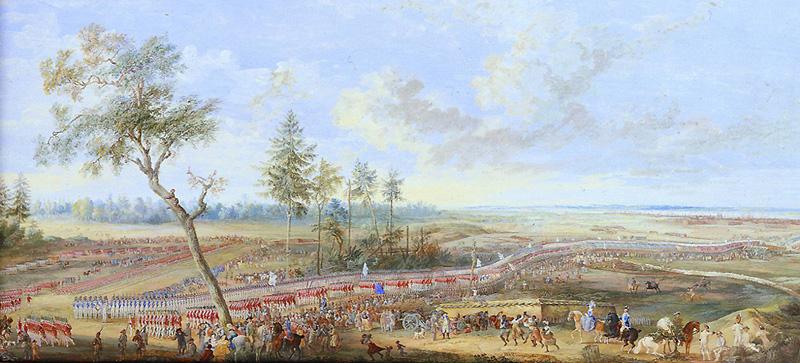
The Surrender of Yorktown by Louis-Nicolas Van Blarenberghe (1716-1794), 1786, gouache on panel, 23.5 in x 37 in., private collection, a gift of King Louis XVI to Rochambeau, by Louis-Nicolas Van Blarenberghe, Public domain, via Wikimedia Commons. This painting was directed by Alexandre Berthier, who instructed the painter to paint each one of the hundred of faces with individual countenance: French and American pleased and proud, the British weeping and angry.
|
|
A WALK THROUGH THE BATTLEFIELD, AS IF YOU WERE THERE,
FROM THE FRENCH PERSPECTIVE
|
|
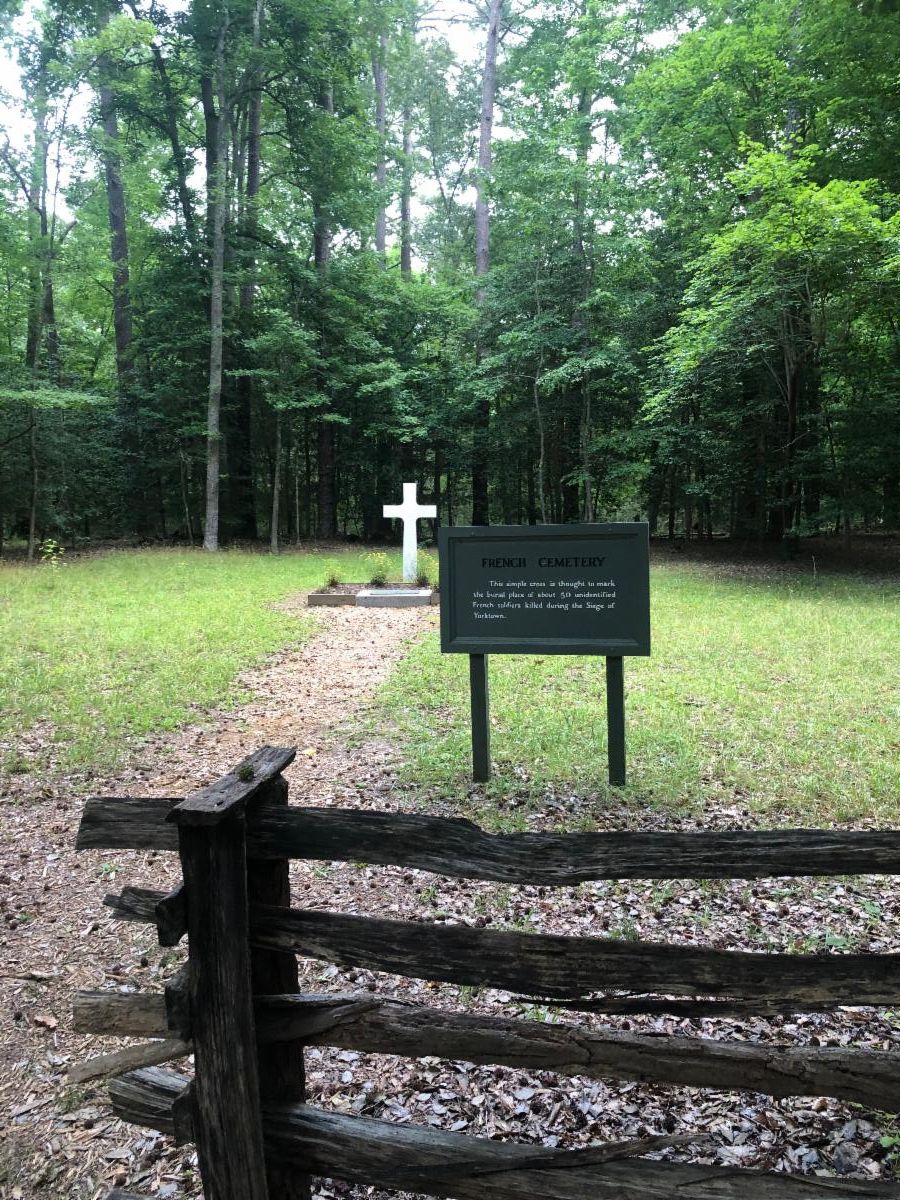
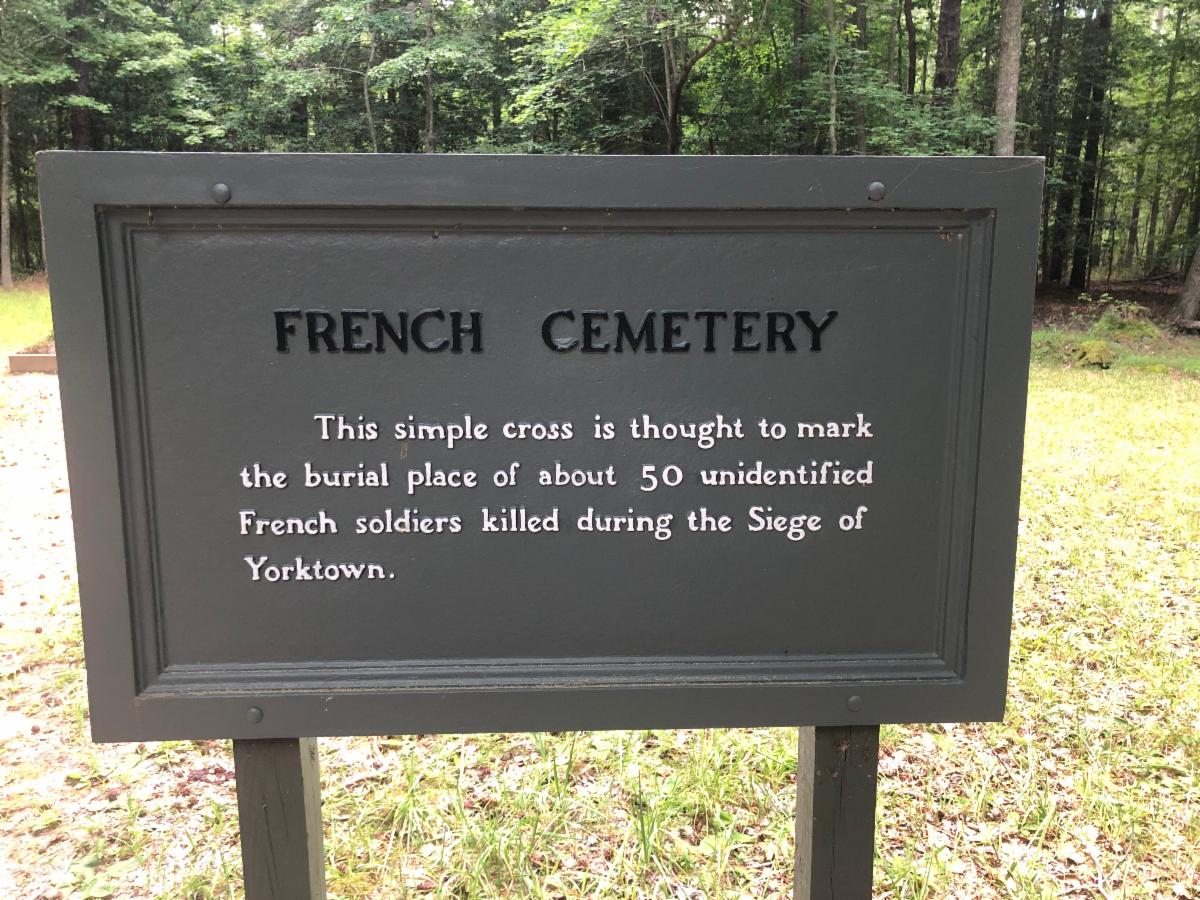
French Cemetery, located on the Historical Tour Road (past George Whashington’s headquarters), Yorktown, VA.
Marker is located on the Yorktown Battlefield in Colonial National Historical Park, at stop “I” on the Allied Encampment Tour GPS location: 37.205865, -76.527233
|
|
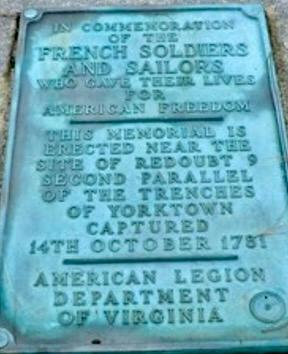
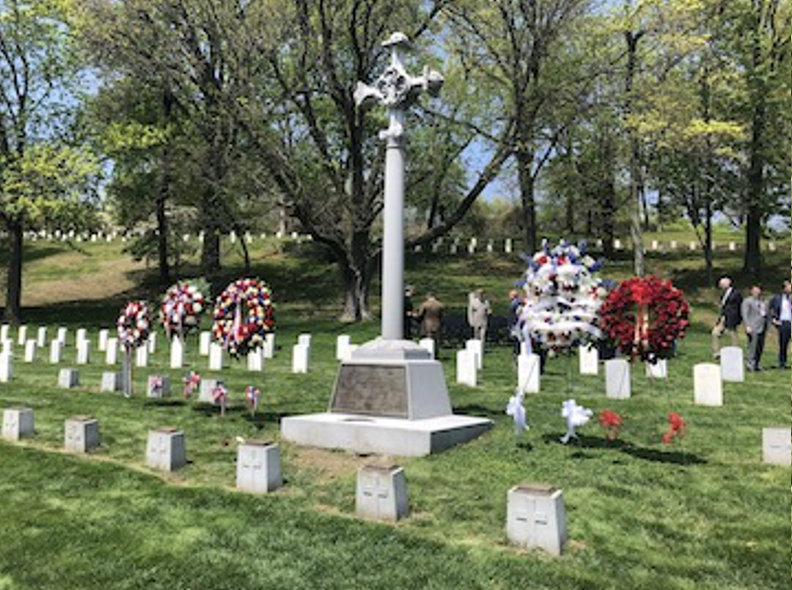
During the Bicentennial of the Battle of Yorktown in 1981, members of the French veterans' organizations attending the celebration noted that there was an area on the battlefield where approximately 50 French soldiers were buried in an unmarked, common grave. Although this area was indicated by a cross and a plaque, none of the names of any French soldier was inscribed there. It has long been a point of cultural tradition in France that the graves of those who died serving France are marked with their names whenever possible, or that the battlefields have a memorial with their names inscribed.
As noted in previous bulletins, we are thankful to all the volunteers from the American Friends of Lafayette, for their "Spring cleaning" and beautification of these sacred grounds, as well as the Society of Honor Guard / Tomb of Unknown Soldiers, for their moving ceremony this past April honoring these soldiers who died for the cause of Freedom.
|
|
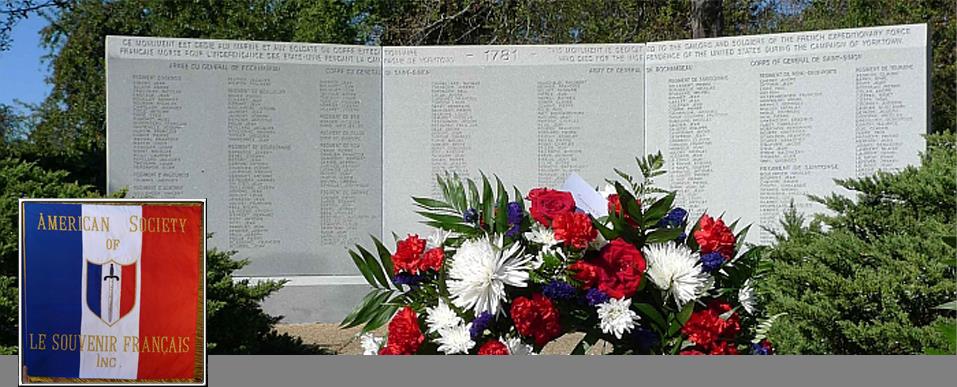
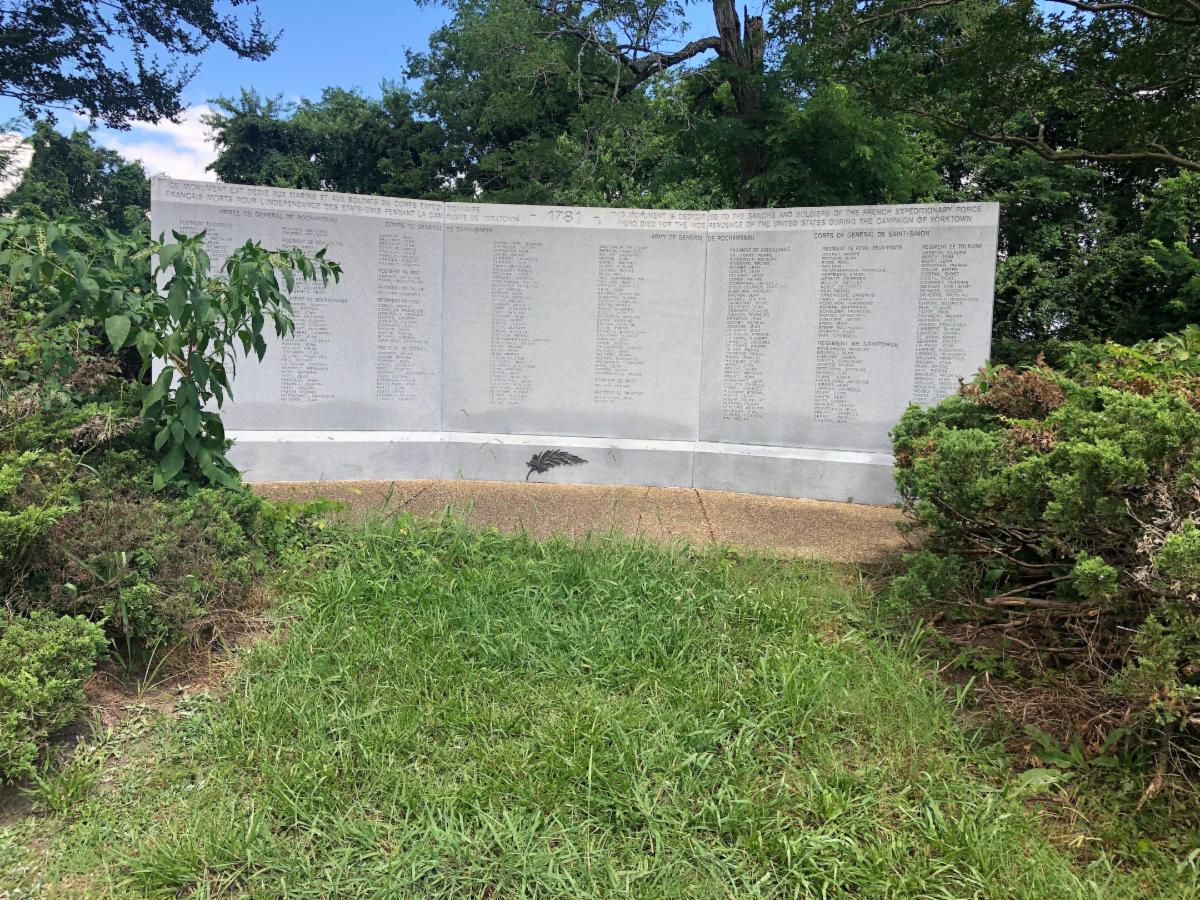
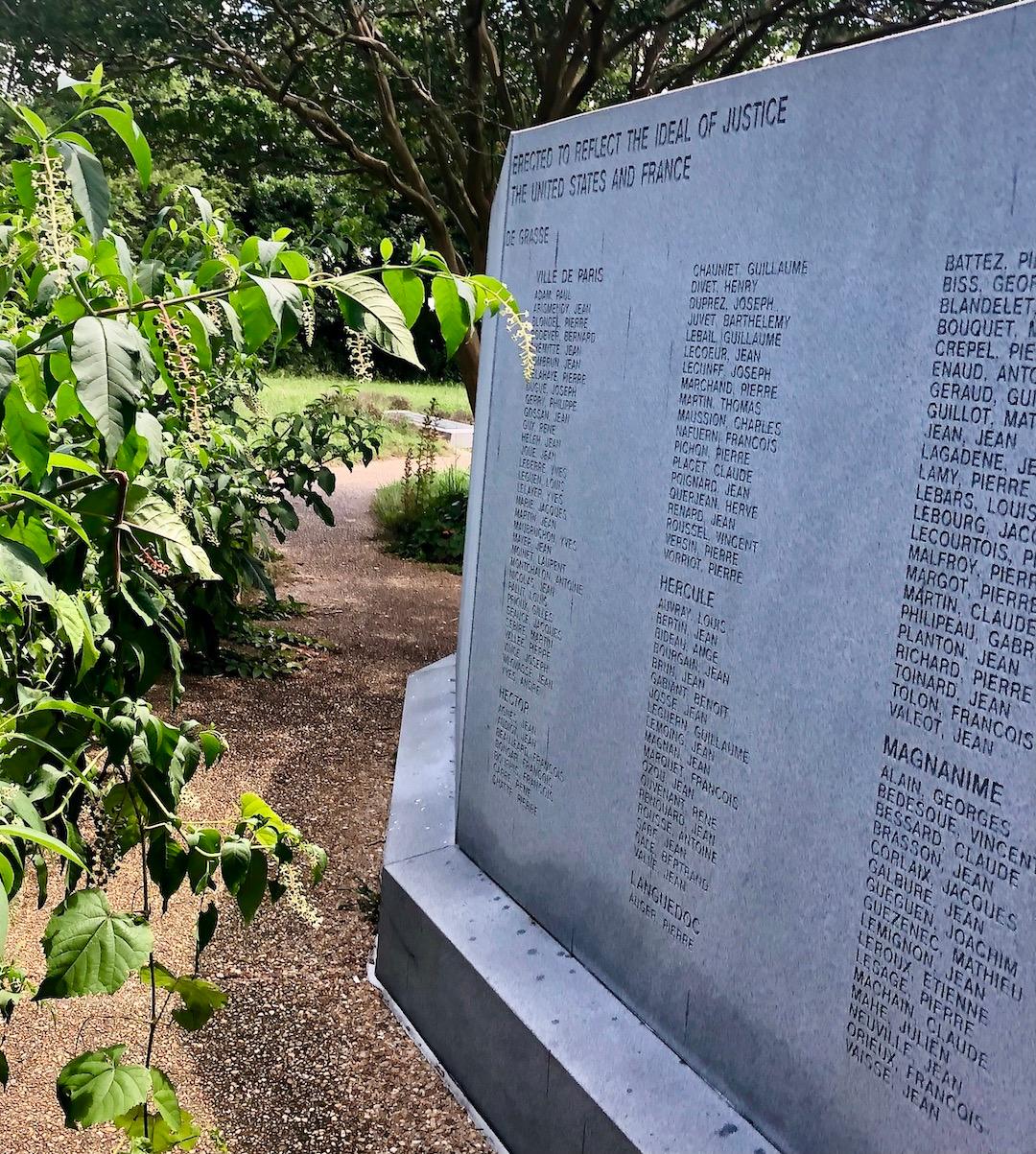
French Memorial Monument near the Fusiliers Redoubt by the river, across the American Revolution Museum, a few feet from Colonial Pkwy, off Fusiliers Redoubt Ramp, Yorktown, VA
|
|
THE FRENCH MEMORIAL MONUMENT
• At the urging of French veterans' groups, the Ambassador of France to the United States, His Excellency M. Emmanuel de Margerie, appointed a committee to correct this oversight. It was the Committee for the Yorktown French Memorial, with Professor André Maman of Princeton University serving as its president.
• The purpose of the committee, which included both French and American members, was to create a memorial to honor all French soldiers and sailors who gave their lives in the Yorktown campaign in 1781. The memorial was to include the names of some 600 Frenchmen who lost their lives in this campaign, including the Yorktown siege and the naval battle of Chesapeake Bay, or the Battle of the Capes, as it is sometimes called.
• The design was completed with the approval of the Ambassador and the National Park Service. Members of the French Societies of the Sons of the American Revolution, Daughters of the American Revolution and the Order of the Cincinnati as well as French veteran and cultural organizations here were engaged in fundraising.
This Monument "Memorial to the French" is located a few steps from the battlefield road, across the American Revolution Museum, overlooking the York river. In addition to the front and back where hundreds of the fallen French are engraved, there are several bronze plaques laying on the ground with additional details.
Mrs. Nicole Yancey, former Honorary Consul of France in Virginia and current Regional Delegate of the American Society of Le Souvenir Français, who worked on the French Memorial Monument, launched the proposal and is currently spearheading the effort to add one additional bronze plaque, honoring the thousands of French sailors who died at sea and were sent to the bottom of the ocean with no sepulture.
Stay tuned on additional information as to this important project, which we aim to inaugurate before the 250th anniversary (Semiquincentennial) of the United States, as well as the beautification endeavors of the surrounding landscaping.
|
|
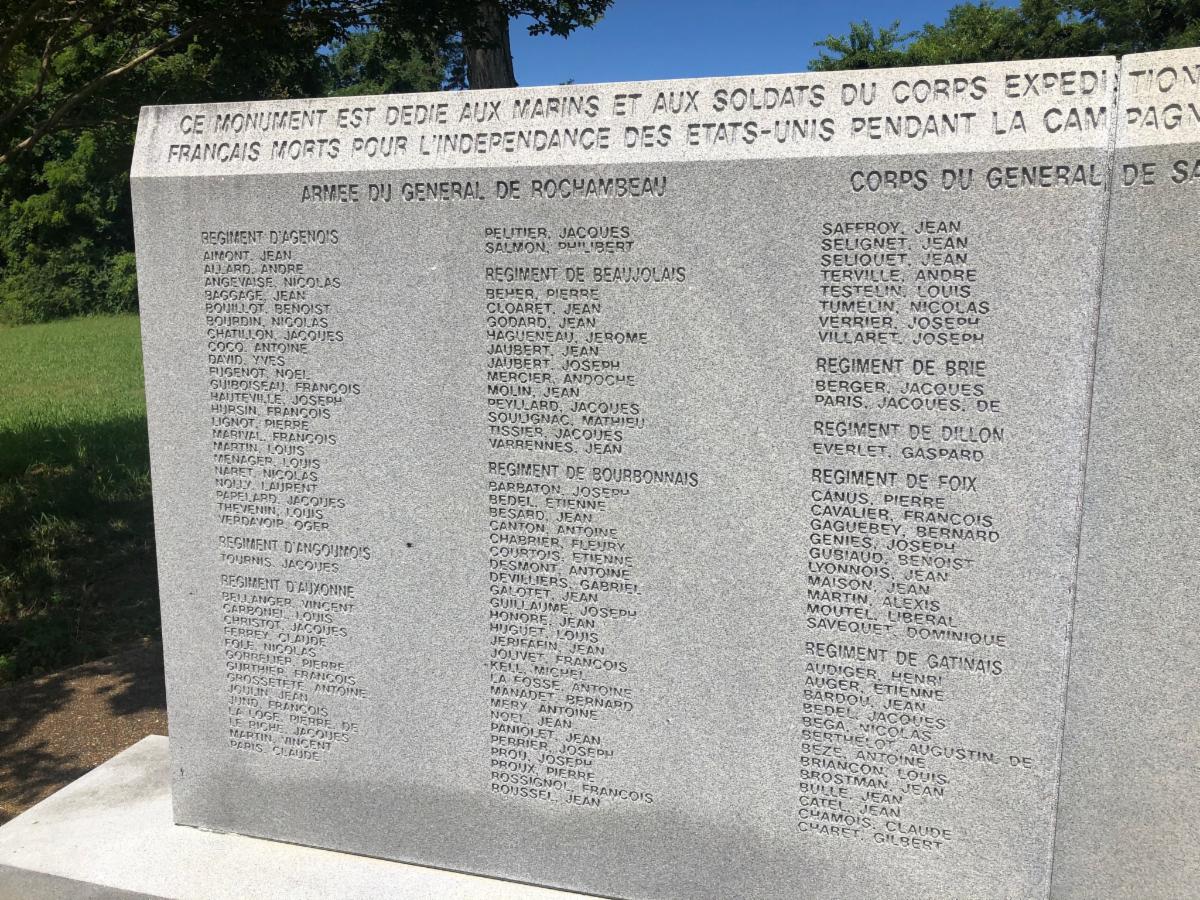
Close-up details of the names listed on the French Memorial Monument. On the front side (facing the road) are the soldiers casualties listed by regiments, on the back side (facing the York river) are the sailors casualties with the names of their warships. |
|
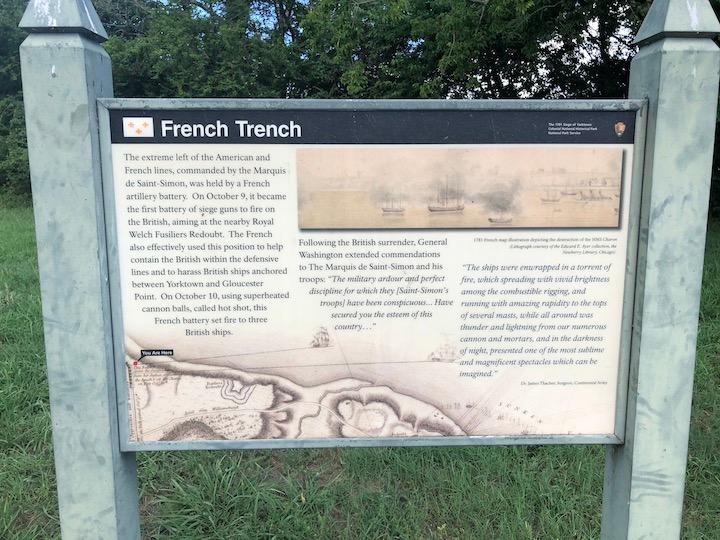
Marker, “French Trench, The 1781 Siege of Yorktown”
Marker is on Fusiliers Redoubt ramp, on the left when traveling east. Marker is located across the road from the Yorktown Victory Center. GPS coordinates: 37.240624, -76.521466
The bottom of the marker features a map of the French batteries in relation to the vessels that they set afire. The location of the marker is also indicated. The upper right of the marker contains a reproduction of a “1781 French map illustration depicting the destruction of the HMS Charon. (Lithograph courtesy of the Edward E. Ayer collection, the Newberry Library, Chicago.”)
|
|
Excerpt:
“The extreme left of the American and French lines, commanded by the Marquis de Saint-Simon, was held by a French artillery battery. On October 9, it became the first battery of siege guns to fire on the British, aiming at the nearby Royal Welch Fusiliers Redoubt. The French also effectively used this position to help contain the British within their defensive lines and to harass British ships anchored between Yorktown and Gloucester Point. On October 10, using superheated cannon balls, called hot shot, the French battery set fire to three British ships.
George Washington, wrote to the marquis on October 24, 1781, shortly before he departed the United States: “I cannot suffer you to leave this Country, without testifying my sense of the distinguished services which you have rendered the Allies during your stay (...) The military ardour and perfect discipline for which they have been conspicuous in the seperate Attack and during the other operations of the Siege, and your measures, as judicious and vigorous on all occasions, have secured you the esteem of this country; they will at all times claim my particular applause, and I entreat you to accept my warmest acknowledgements.”
“The ships were enwrapped in a torrent of fire, which spreading with vivid brightness among the combustible rigging, and running with amazing rapidity to the tops of the several masts, while all around was thunder and lightning for our numerous cannon and mortars, and in the darkness of night, presented one of the most sublime and magnificent spectacles which can be imagined.”
Dr. James Thacher, Surgeon, Continental Army
|
|
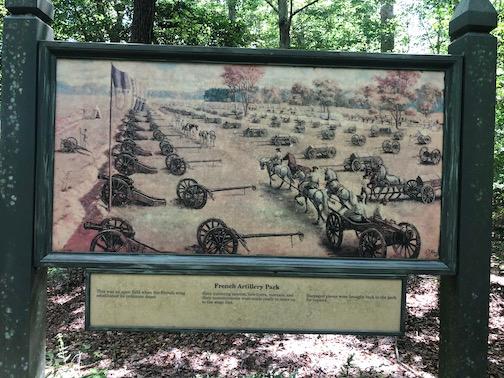
The Grand French Battery, First Allied Siege Line
Marker is on on Cook Road (Virginia Route 704) Battlefield in Colonial National Historical Park, near stop “B” on the Battlefield Tour. GPS coordinates: 37.223374, -76.506417
|
|
Excerpt:
“The Grand French Battery formed part of the first Allied siege line around Yorktown. French and American soldiers worked through the night of October 6, 1781, to establish the line from a point about one hundred yards to your left (across the road) to the York River.
Largest gun emplacement built during the siege, the Grand French Battery opened fire on October 10 and inflicted great damage on the British.
A French officer noted that “ … the superiority of the fire of these different batteries over those of the enemy, silenced the firing from the town.” This superiority in artillery contributed greatly to Allied victory.
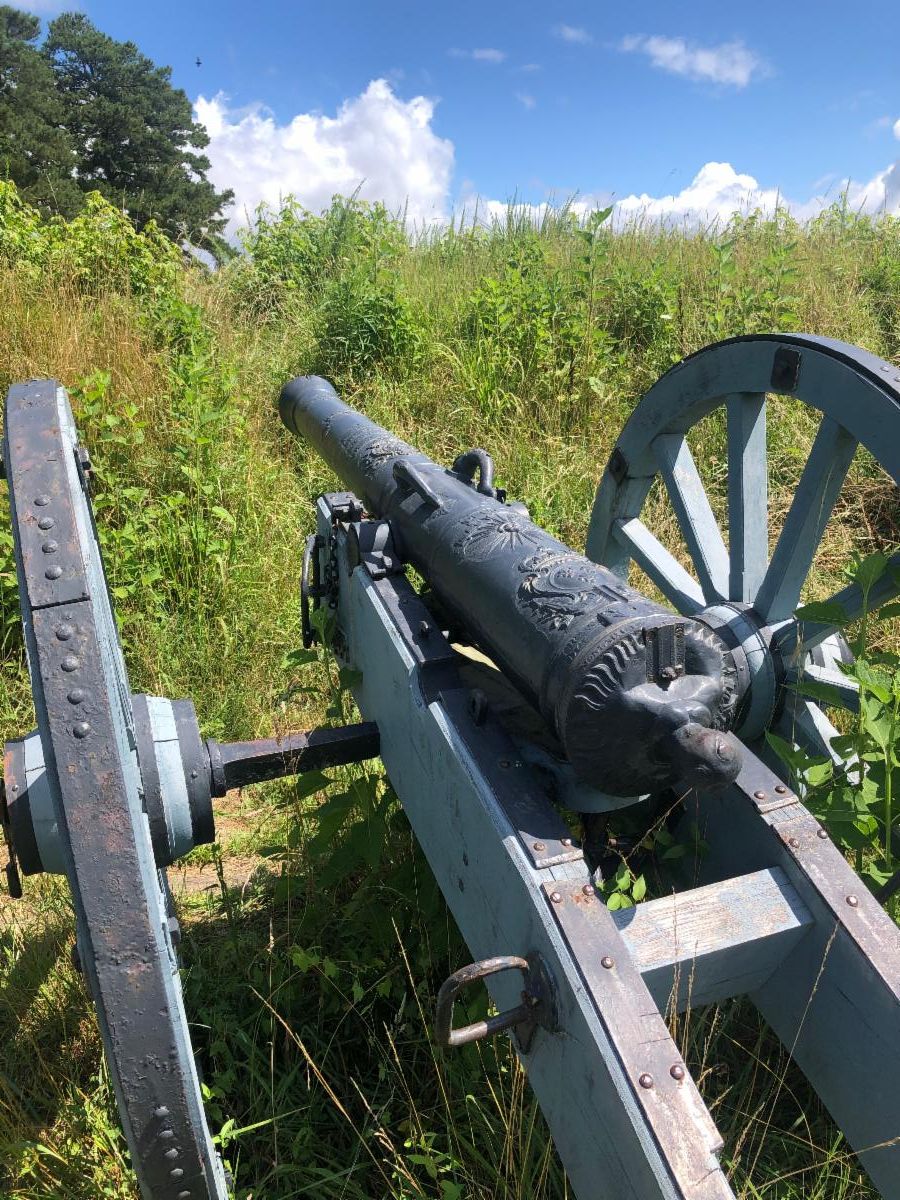
The National Park Service has reconstructed most of the Grand French Battery on its original site and equipped it with original and replica Revolutionary War period artillery.
|
|
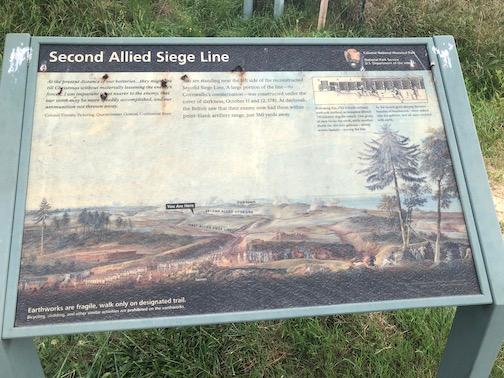
Marker, Second Allied Siege Line
On the Yorktown Battlefield in Colonial National Historical Park, at stop C on the Battlefield Tour
|
|
•Excerpt:
A large portion of the line – to Cornwallis’s consternation – was constructed under the cover of darkness, October 11 and 12, 1781. At daybreak, the British saw that their enemy now had them within point-blank artillery range, just 360 yards away."
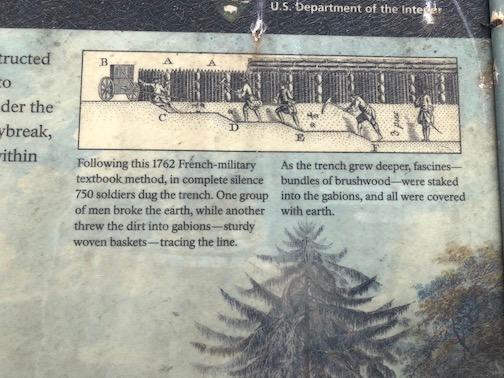
The upper right of the marker contains an illustration of the siege fortifications with the caption: “Following this 1762 French-military textbook method, in complete silence 750 soldiers dug the trench. One group of men broke the earth, while another threw the dirt into gabions – sturdy woven baskets – tracing the line. As the trench grew deeper, fascines – bundles of brushwood – were staked into the gabions, and all were covered with earth.”
|
|
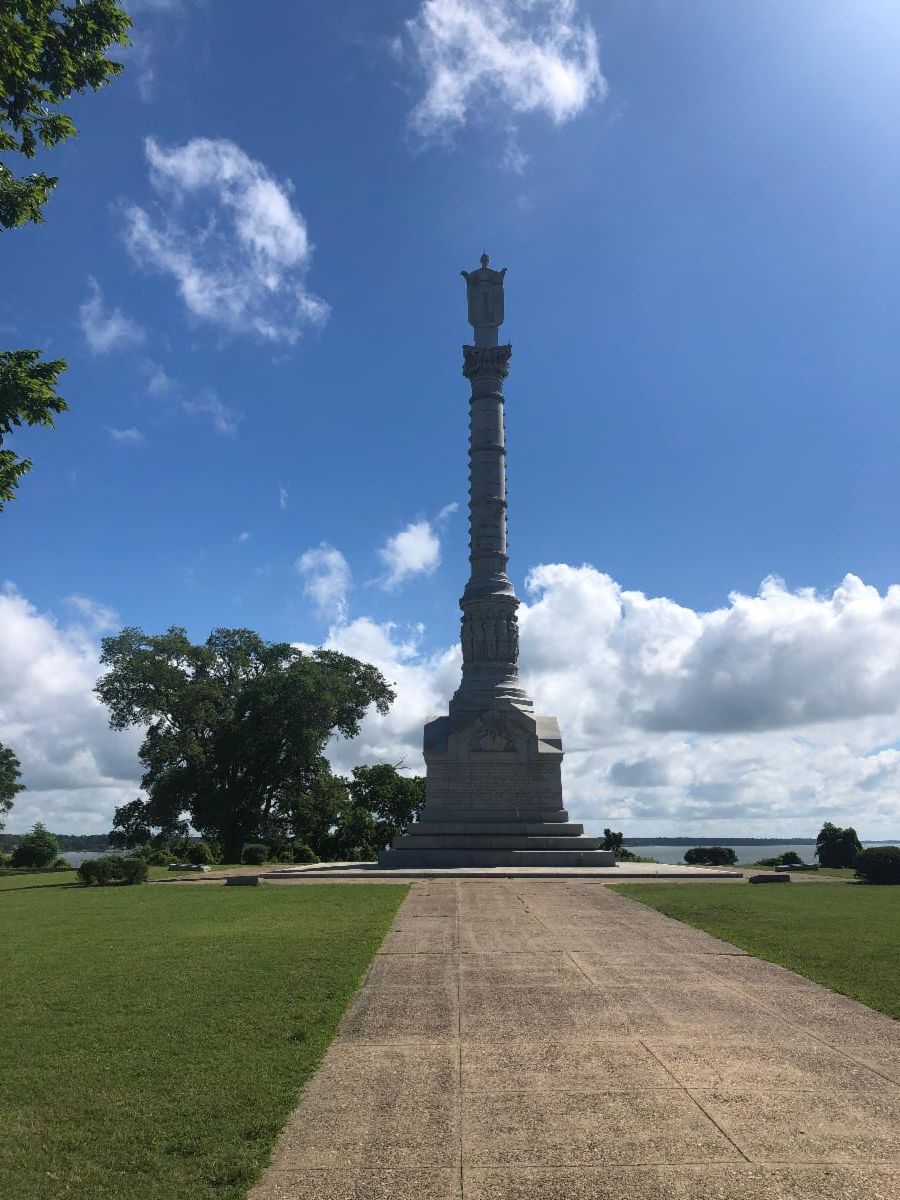
100 YEARS LATER, THE VICTORY COLUMN IS ERECTED |
|
The Victory Monument stands as a fitting symbol to the French and American victory at Yorktown on October 19, 1781 - a victory that resulted in American Independence.
The Yorktown Monument to "The Alliance and Victory" was the first monument authorized by the Federal Government.
Inscription:
“This monument was authorized by Continental Congress, October 29, 1781, just after the news of surrender reached Philadelphia. Actual construction began 100 years later and was completed in 1884. The original figure of Liberty atop the Victory shaft was severely damaged by lightning. A new work replaced it in 1956. The shaft of Maine granite is 84 feet in height to which Liberty adds another 14 feet.”
|
|
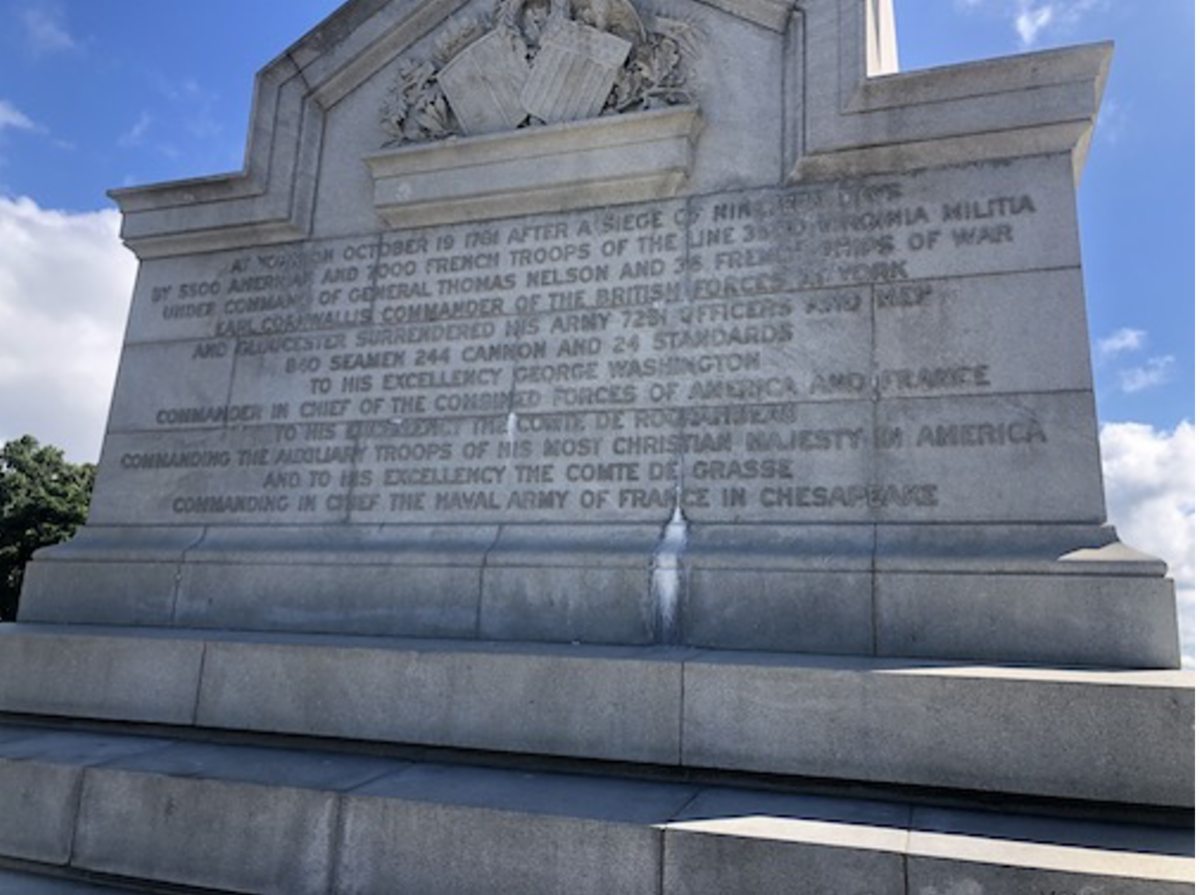
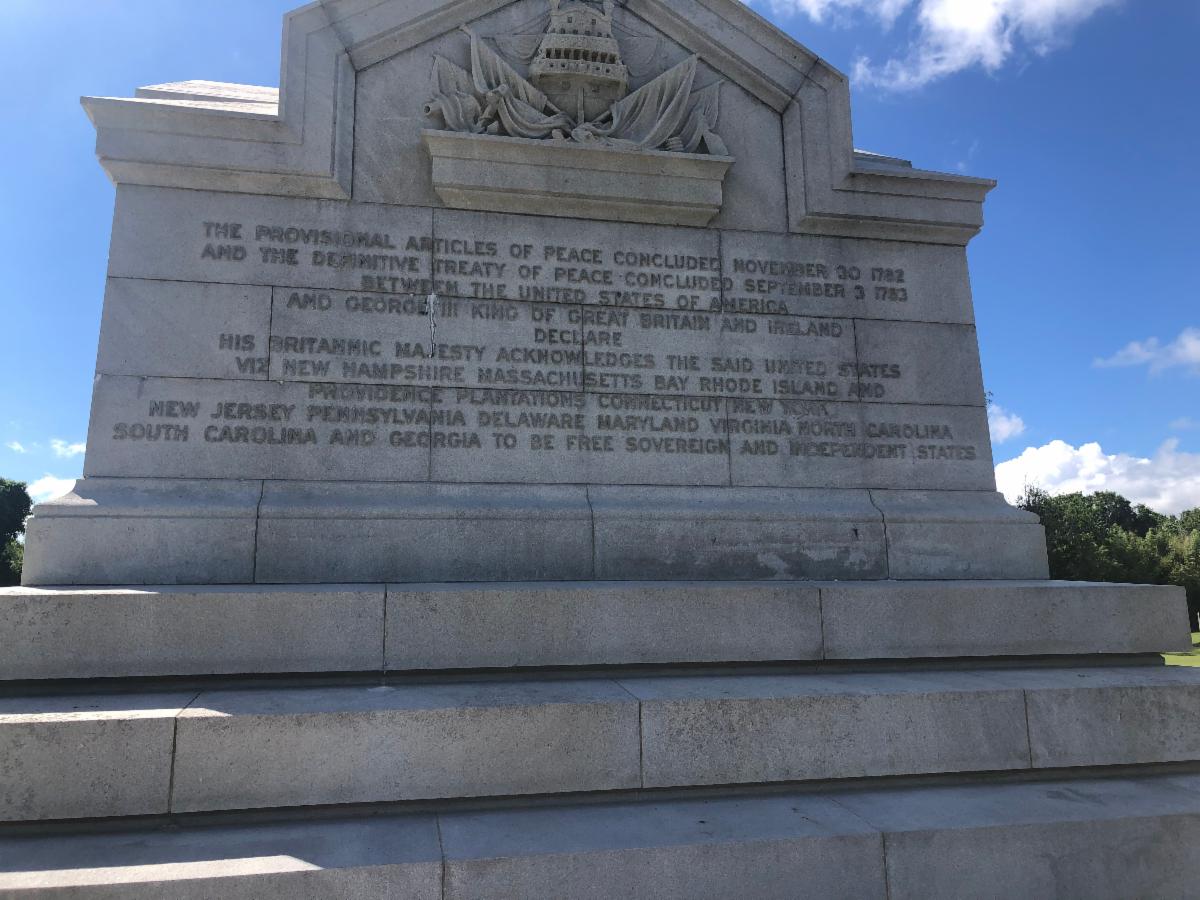
Inscription:
“The provisional Articles of Peace concluded Nov 30, 1782 & the definitive treaty of peace concluded Sept 3 1783 between the U.S.A. and George III King of Great Britain & Ireland declare His Britannic Majesty acknowledges the said U.S. viz New Hampshire Massachusetts Bay Rhode Island and Providence Plantations Connecticut New York new Jersey Pennsylvania Delaware Maryland Virginia North Carolina South Carolina and Georgia to be free sovereign and independent states”
|
|
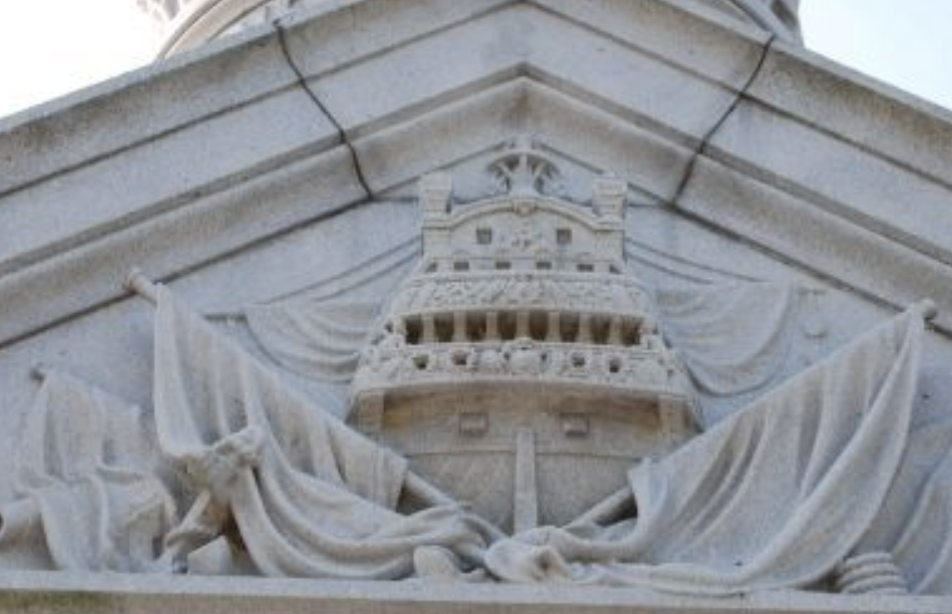
The 104-cannon flagship of Admiral de Grasse, the " Ville de Paris" was o riginally laid down in 1757 as the 90-gun Impétueux, she was funded by the City of Paris and renamed Ville de Paris in 1762 as a result of the "don des vaisseaux" , Duc de Choiseul’s campaign to raise funds for the Marine Royale from the cities and provinces of France.
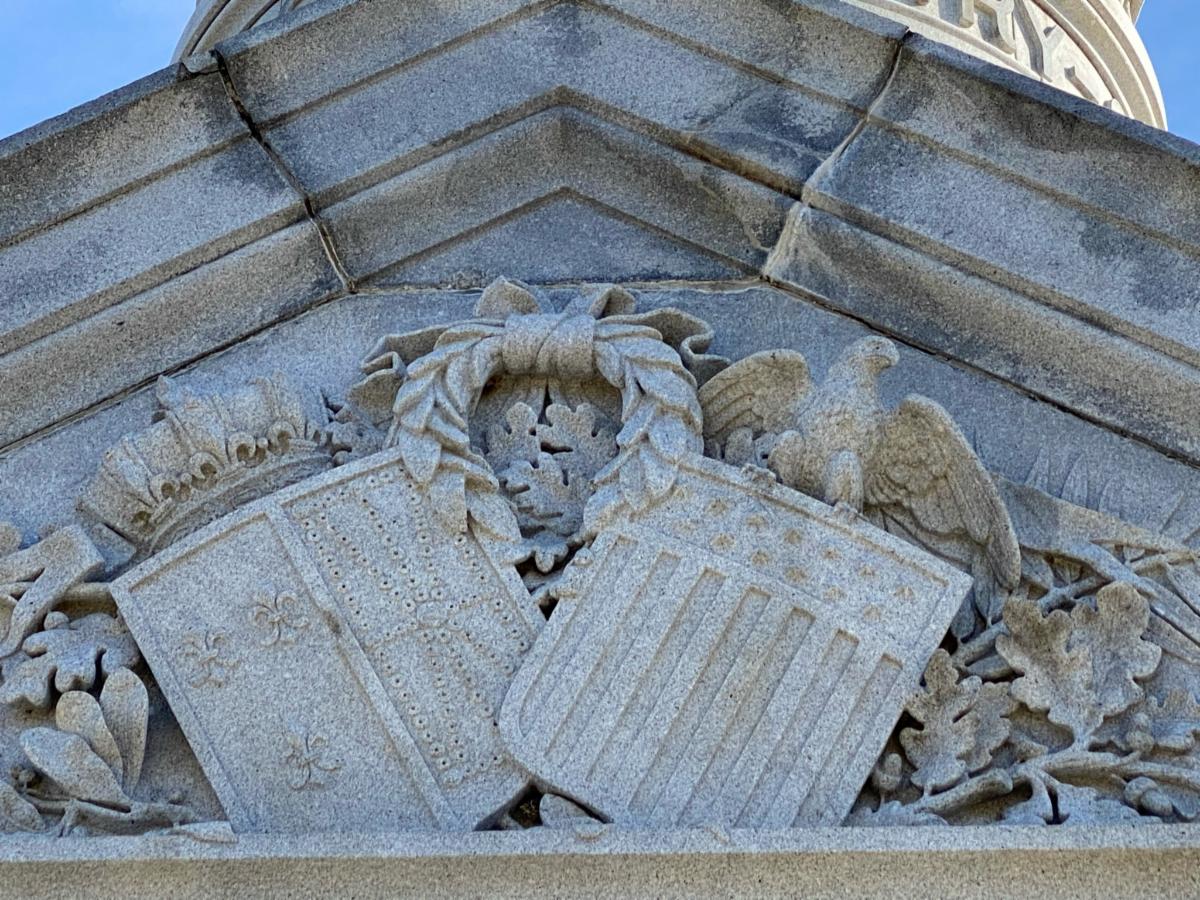
All photos (unless otherwise noted): Thierry Chaunu (2021) – the details above depict the coat of arms of Royal France and the 13 United States, as well as (most likely) Admiral de Grasse’s flagship 104-gun ship “Ville de Paris"
|
|
Yorktown didn't not immediately end the war. In fact, the French army under Rochambeau (and, after his return to France, the duke of Lauzun) stayed one more year to make sure the British wouldn't attempt yet another offensive against Philadelphia, Baltimore, etc...as it was not for certain that the British would sue for peace.
After spending the winter in nearby Williamsburg, the French undertook the long march back to Boston in July 1782, another 690 miles punctuated with festivities and many colorful anecdotes...which we will relate, dear readers, in 2022!
One more mention, however, which we deem important to add in this bulletin, considering some recent press articles...
France is not "one of the oldest allies" as it is sometimes reported in the press. It is the oldest ally, as the Treaty of Alliance of February 6, 1778, as well as the ceremonial mass of gratitude, ordered by George Washington to be held in perpetuity, attest....
And, if revenge against the British was certainly a factor for the French to side with the Insurgents, it was not at all the prime motive, contrary to what is asserted by some ignorant journalists.
Witness: when King Louix XVI went to war, he simultaneously declared France was not seeking any gain, except the freedom of the Americans...During the peace negotiations, when Canada was offered as compensation (after all, the French had lost Canada only 20 years before), Louis XVI refused, saying he only had one word.
As noted by French Ambassador Jusserand in his memoirs:
"There is, perhaps, no case in which, with the unavoidable mixture of human interests, a war has been more undoubtedly waged for an idea. The fact was made obvious at the peace, when victorious France, being offered Canada for a separate settlement, refused, and kept her word not to accept any material advantage, the whole nation being in accord, and the people illuminating for joy."
"Which was done in a letter giving as a reason “that, whenever the two crowns should come to treat, his Most Christian Majesty would show how much the engagements he might enter into were to be relied on, by his exact observance of those he had already had with his present allies.”
Quoted, as “a sentence which I much liked,” by Benjamin Franklin, writing to John Adams, April 13, 1782."
|
|
Our next Bulletin in November will cover the celebration of Armistice Day, November 11, ending World War One where the French and American people fought side by side once again for the cause of freedom. |
|
RECENT NEWS AND UPCOMING ACTIVITIES |
|
ANNOUNCEMENT:
We received an invitation to attend
"A COMMEMORATION OF THE AMERICAN VICTORIES AT SARATOGA AND YORKTOWN"
held on October 16, 2021 at 2:00 P.M., St. Paul's Chapel of Trinity Church Wall Street, 209 Broadway, New York, NY 10007 in the churchyard.
The event is sponsored by the Lower Manhattan Historical Association
and its Constituent Organizations: Veteran Corps of Artillery, Sons of the Revolution in the State of New York, Culture Now, First Continental Chapter, Sons of the American Revolution, Institute of History, Archeology, and Education, The Chinatown Partnership.
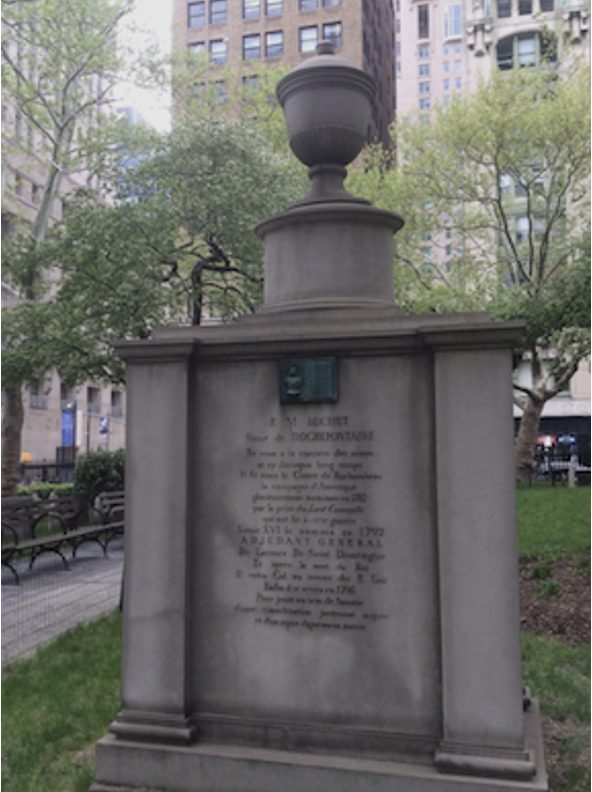
Note: To all those who attend, please visit in the churchyard the tomb of:
|
|
Lt. Col. E.M. Bechet, Sieur de Rochefontaine
1755-1814
"Revolutionary War Soldier"
"A French officer who fought for American independence, Rochefontaine served under the French General Rochambeau during the Revolutionary War. He assisted in the capture of Lord Cornwallis and later commanded the Corps of Artillerists and Engineers at West Point Military Academy.”
|
|
|
On October 15, 2021, there will be a dedication of a new bronze marker at the Washington, D.C. Navy Yard, which Lafayette visited on October 15 & 16, 1824.
At the end of his 13-month stay, President James Madison offered Lafayette to cross the Atlantic on the then brand new US Navy frigate "Brandywine", built on that same naval shipyard, and so renamed in his honor after the Revolutionary Battle where Lafayette was wounded and shed blood for the Independence of the United States.
Unfortunately, due to the fact that it is still an active US Navy installation and due to Covid, the event will be closed to the public.
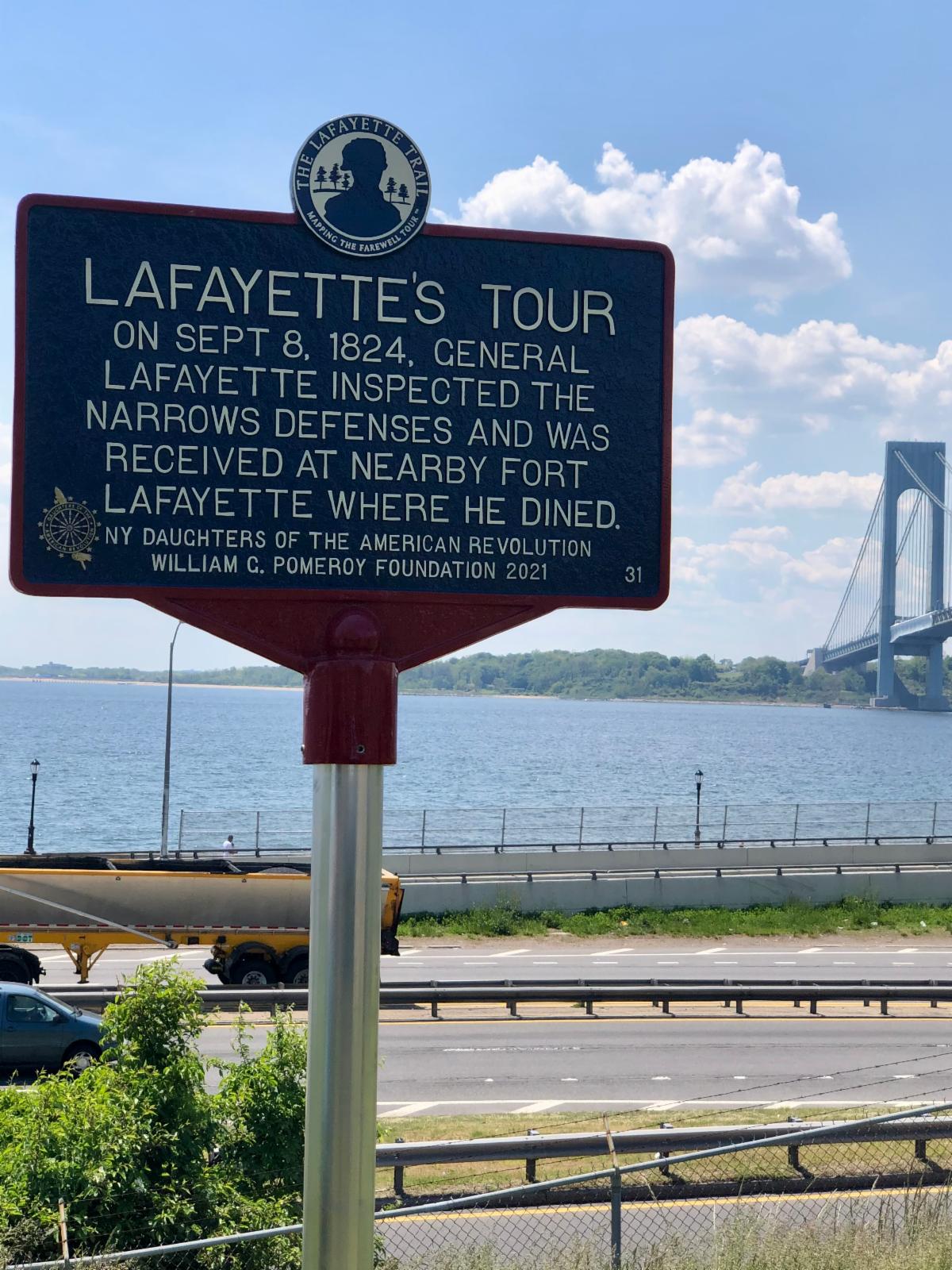
We heartily recommend you to support the LafayetteTrail.org association, led by its president Julien Icher, who is pursuing the monumental task of erecting bronze markers everywhere the Marquis General de Lafayette went during his triumphal tour of the United Sate in 1824-1825 as "Guest of the Nation".
We invite you to view the films published on YouTube "Follow the Frenchmen", the latest one being the dedication of a Lafayette marker at Fort Hamilton this past May 17th, attended by Alain Dupuis of the Federation of French War Veterans and Thierry Chaunu, president of the American Society of Le Souvenir Français.
The American Society of Le Souvenir Français is proud to support the filming of this upcoming "Follow the Frenchmen" episode.
|
|
YORKTOWN CEREMONIES
October 17-19, 2021
Due to COVID, Local, State authorities and the National Park Service have imposed drastic restrictions on this year's upcoming ceremonies. The traditional Victory Dinner on October 18 and the traditional parade on October 19 are cancelled.
On Tuesday, October 19:
The ceremonies at the French Cemetery, the French Memorial and at the Victory Monument will be maintained, however they are closed to the general public and strictly limited to 50 participants.
The only authority authorized to lay a wreath will be Lt Col Alain Abad, French Army, from the NATO Headquarters Supreme Allied Commander Transformation Command in nearby Norfolk.
08.45 AM Lineup for motorcade at Surrender Field for the ceremony at the French Cemetery
09:00 AM Ceremony at the French Cemetery (attendance 50 maximum)
09:30 AM Arrival at French Memorial
09:40 AM Ceremony at the French Memorial (attendance 50 maximum)
10:45 AM Arrival and seating for guests at Victory Monument
11:00 AM Ceremony at Victory Monument begins (attendance 100 maximum)
|
|
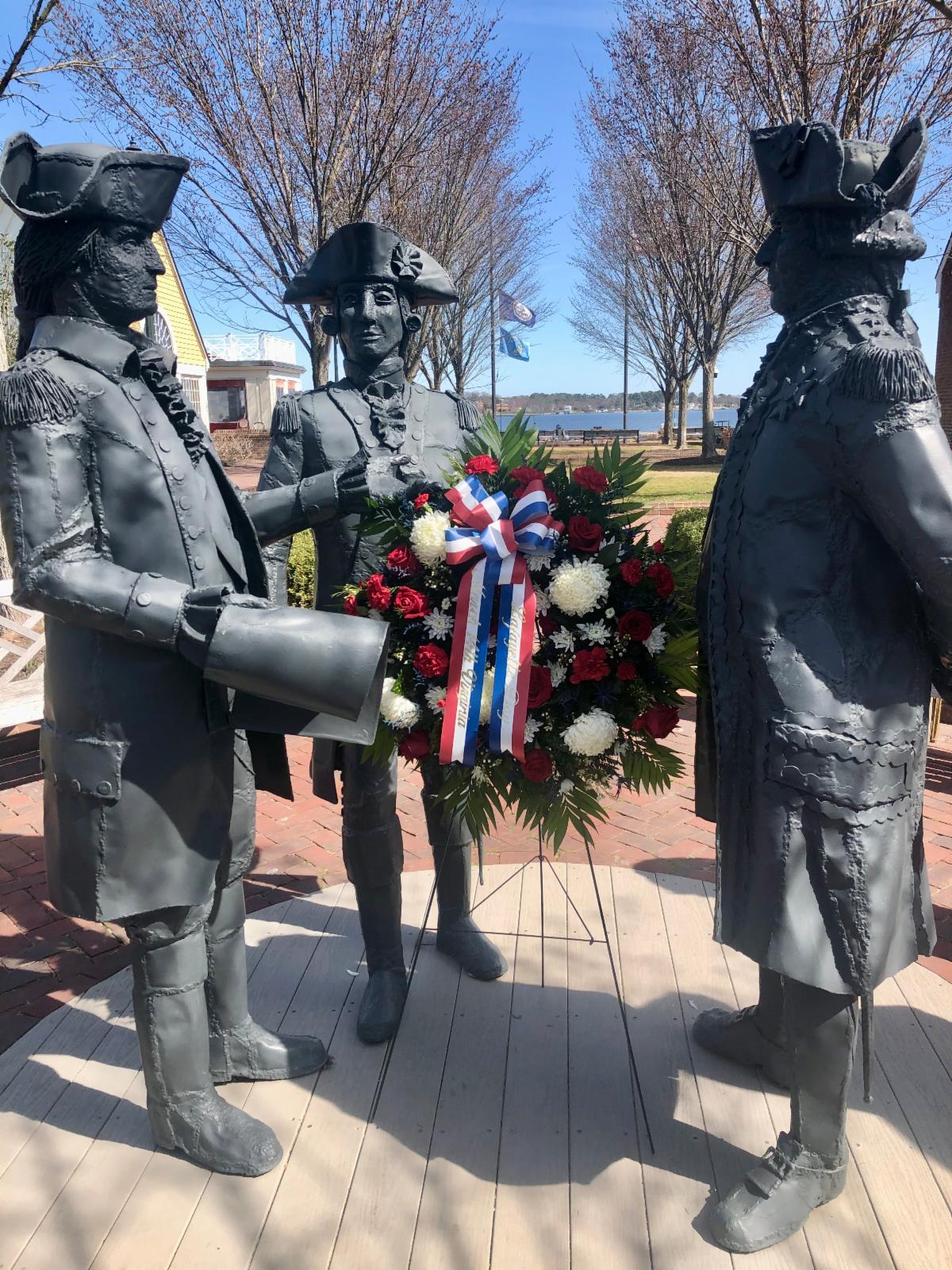
Also, Monday, October 18th at 11:00am at the Yorktown Riverwalk Landing (323 Water Street in Yorktown, Virginia), The American Friends of Lafayette, along with les Amis de Rochambeau and the National Park Service, will be unveiling the Statue of Rochambeau on the Yorktown waterfront. Joining the statues of General Washington, Admiral de Grasse, and General Lafayette, General Rochambeau is the final piece of this statuary hall of fame. The ceremony will be a spectacle of Franco-American friendship and patriotism.
The ceremony is open to the public since it is held outside of the battlefield however strict social distancing rules and masks will be observed as per city and State regulations.
This ceremony will be filmed and on live stream on Zoom. Here is the link and password:
PASSCODE: 059775
|
|
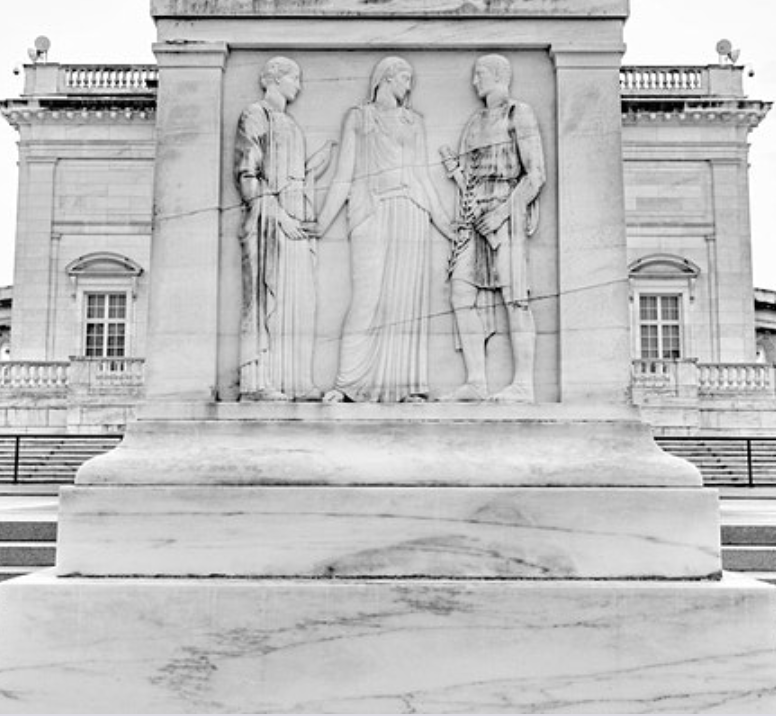
CENTENNIAL OF THE US UNKNOWN SOLDIER
Sunday, October 24 in Arlington National Cemetery, VA and Monday October 25 at 2:15PM on board the USS Olympia, in Philadelphia: Ceremony to commemorate the Centennial of the US Unknown Soldier.
Due to Covid, attendance is strictly limited, however representatives of the Federation of French War Veterans and the Souvenir Français are planning to attend.
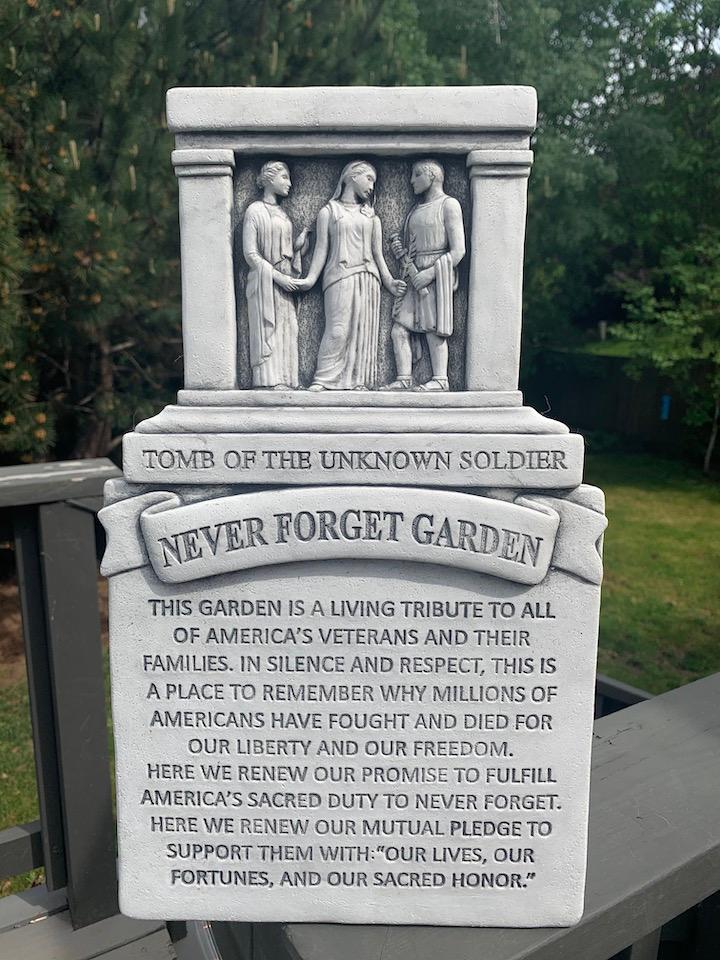
We are honored and grateful to work hand-in-hand with the Society of Honor Guard / Tomb of Unknown Soldier, who invited us to join, and in promoting the "Never Forget Gardens" throughout America, include all French officers, soldiers and sailors who are interred in the United States.
Also, at the same time in France...
FOR IMMEDIATE RELEASE October 8, 2021
The Society of the Honor Guard, Tomb of the Unknown Soldier is pleased to announce that a special group will be traveling to France to conduct an historic pilgrimage following in the footsteps of the US Unknown Soldier from World War I during the 100th anniversary of the Tomb of the Unknown Soldier (1921-2021).
Members of the group will include the President of the Society; current and former Tomb Guards at Arlington National Cemetery and their families; the President General of the Daughters of the American Revolution; and members including the President of the American Gold Star Mothers INC and their families.
In October 23-25, 1921 ceremonies were conducted by the French and United States governments to selected an unknown American who fell in battle during World War I and bring that body home to reside in the Tomb of the Unknown Soldier in Arlington National Cemetery. This Unknown Soldier would represent all who had fallen and never returned from conflict, and has been guarded 24-7 by Tomb Guards since 1926.
The special group will start in Paris and over the next few days to visit the key cemeteries where the four unknown candidates were disinterred in 1921, starting with the St. Mihiel American Cemetery on October 21st. At each cemetery the special group will be given a tour of the cemetery by staff from ABMC, followed by a small ceremony with local leaders and veterans. Over the next two days we will also visit the Ainse-Marne American Cemetery, the Somme American Cemetery, and finally the Meuse-Argonne American Cemetery.
On the evening of October 23rd, the City of Châlons-en-Champagne will host exhibits and a vigil at the Hotel de Ville, which is the site of the selection in 1921. This vigil will be reenacted using period correct French and American uniforms and remember what the French military did 100 years ago as they stood watch over the four unknown candidates in preparation for the selection ceremony the next morning.
On October 24th, the Mayor of Châlons-en-Champagne will host a ceremony staring at 11:00am to mark the 100th anniversary of the selection of the World War I Unknow Soldier by Sergeant Edward Younger in 1921. There will be key speeches by dignitaries, the placing of memorial wreaths, and a military parade to the War Memorial.
On October 25th, the special group will visit the Normandy American Cemetery in the morning and then travel to the City of Le Havre for official ceremonies to mark the 100th anniversary of the departure of the Unknown Soldier aboard the USS Olympia in 1921 starting at 3:00pm. There will also be a dedication of a historic plaque on the site where M. Andre Maginot presented the French Legion of Honor to the Unknown Soldier in 1921.
On October 26th the special group will return to Paris and conclude the tour where we will participate in the rekindling of the flame and wreath ceremony at the grave of the French Unknown Soldier under the Arc de Triomphe.
|
|
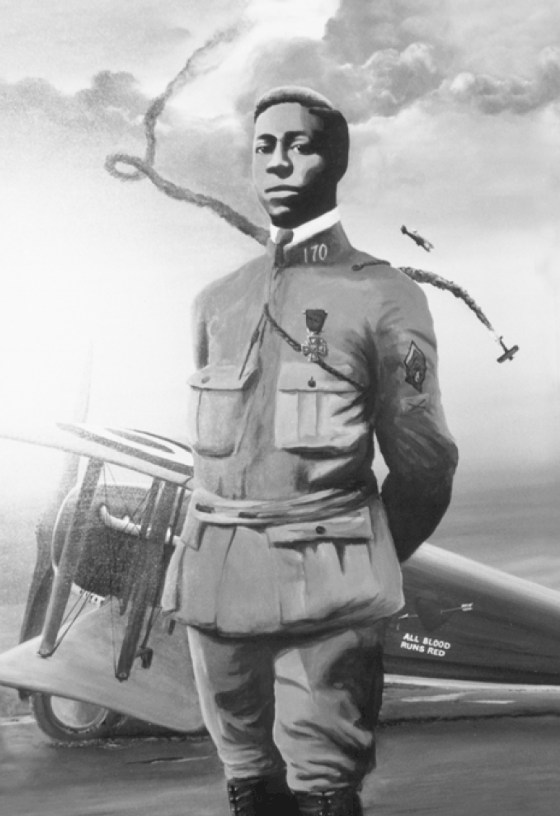
Saturday, October 30th at 10:00AM, at Flushing Cemetery, in the French War Veterans section, a re-dedication of the grave marker of Lt Eugene Bullard will be held by the Federation of French War Veterans, The Association of French Reserve Officers in the United States (ACREFEU), the American Society of Le Souvenir Français, in the presence of Mr. Jérémie Robert, General Consul of France in New York, members of the 369th regiment and a Color Guard of the US Air Force.
Corporal Eugene Bullard volunteered in the Foreign Legion. He was the first African-American pilot to have fought in the french and American air force in 1917. He was decorated with the Medal of Chevalier (Knight) of the Legion of Honor by General De Gaulle in 1959.
• Fighting under French uniform, he was assigned to the 3rd Marching Regiment of the Foreign Legion, the 170th French Infantry Regiment & the French Air Service as an air gunner and combat pilot (Lafayette Flying Corps & Squadron N.85) who fought with the French forces during World War I.
• He was officially recognized by the US Air Force as the first African American fighter pilot.
You can learn more about Eugene Bullard in our
February Bulletin:
Directions:
163-6 46th Ave, Queens, NY 11358
Entrance at 46th Avenue and 162nd Street. By car from ManhattanTake Northern Boulevard, turn right on 162nd Street and left on 46th Avenue.
|
|
Later that day, on Saturday, October 30th at 12:00PM noon, another ceremony will be held at the French Sailors Lot, Cypress Hills National Cemetery, to honor 25 French sailors who died « Morts pour la France » in New York from the Spanish flu in 1918. Three of these sailors were repatriated to France.
This ceremony is organized each year during the weekend closest to All Saints' Day (or during calls by French Navy ships) by the Federation of French War Veterans and by the American Society of The Souvenir Français Inc., alongside the Association of French Reserve Officers in the United States (ACREFEU), in the presence of Mr. Jérémie Robert, General Consul of France in New York.
Cypress Hills National Cemetery:
625 Jamaica Ave, Brooklyn, NY 11208
|
|
Important additional News! On November 9 & 10, Arlington National Cemetery invites you to participate in the 100th Anniversary of the Tomb of the Unknown Soldier.
November 9 and 10 with flower placement from 9:00AM to 4:00PM
• Complimentary flowers will be given to those who wish to walk on the Tomb of the Unknown Soldier Plaza and pay their respects by placing a flower at the Tomb of the Unknown Soldier.
• This is a rare opportunity for the public to walk next to the Tomb of the Unknown Soldier, a privilege only given to the Sentinels of the 3rd U.S. Infantry Regiment, “The Old Guard.”
• This event will take place rain or shine.
Registration is required!
We have the list and location of the graves of 9 French officers and soldiers who are buried in Arlington National Cemetery. If you are in Washington DC, please go and pay your respects by placing a French and American flag next to their graves. They are:
Lieutenant Fernand Raoul Jules HERBERT
Mort pour la France le 26-07-1918 (Deming - Nouveau-Mexique - Près du camp de Deming au Nouveau-Mexique, Etats-Unis)
Né le 15-07-1881 à Havre (Le) (76 - Seine-Maritime)
163e régiment d'infanterie (163e RI)
Section 3 Grave 4141
Lieutenant Jean JEGOU
Mort pour la France le 26-07-1918 (Deming - Nouveau-Mexique - près du Camp Cody, Etats-Unis)
Né le 03-02-1884 à Saint-Jean-Kerdaniel (22 - Côtes-d'Armor (ex Côtes-du-Nord), France)
73e régiment d'infanterie territoriale (73e RIT)
Section 3 Grave 4141
Capitaine Gaston Marie Roger CHENO
Mort pour la France le 21-10-1918 (Camp Sheridan, Etats-Unis)
Né le 06-01-1883 à Bressuire (79 - Deux-Sèvres, France)
225e régiment d'infanterie (225e RI)
Section 3 Grave 4142
Sous-Lieutenant Félix Marie Louis COURRIERE
Mort pour la France le 17-11-1918 (Washington - Walter Reed General Hospice, Etats-Unis)
Né le 05-06-1887 à Lyon (69 - Rhône)
8e régiment du génie (8e RG)
Section 3 Grave 4142
Sous-Lieutenant Henri COQUELET
Mort pour la France le 30-09-1919 (Washington, Etats-Unis)
Né(e) le/en 28-02-1889 à Paris 8e arrondissement (75 - Seine)
54e régiment d'artillerie (54e RA)
Section 3 Grave 4143
Sergent Fourrier Paul TEMPERLI
Mort pour la France le 04-10-1918 (Kansas-City (États-Unis), Etats-Unis)
Né le 19-09-1882 à Uster, canton de Zurich (Suisse)
Régiment de marche de la Légion étrangère (RMLE)
Section 17 Grave 19279
Maître Pointeur Félix Noël SABUT
Mort pour la France le 23-10-1918 (Washington - Hôpital Walter Reed Général, Etats-Unis)
Né le 18-12-1886 (15 - Cantal)
53e régiment d'artillerie de campagne
Section 17 Grave 19405
2e Cl. Canonnier Antoine-Marie BRUN
Mort pour la France le 26-10-1918 (Washington - Hôpital Walter Reed Général, Etats-Unis)
Né le 27-09-1887 à Lantriac (43 - Haute-Loire)
Section 17 Grave 19407
Sergent Maurice Georges JACQUET
Décédé le 17-04-1918 (Washington, Etats-Unis)
Né le 06-05-1880 à Chilleurs-aux-Bois (45 - Loiret)
331e régiment d'infanterie (331e RI)
Section 17 Grave 19156
|
|
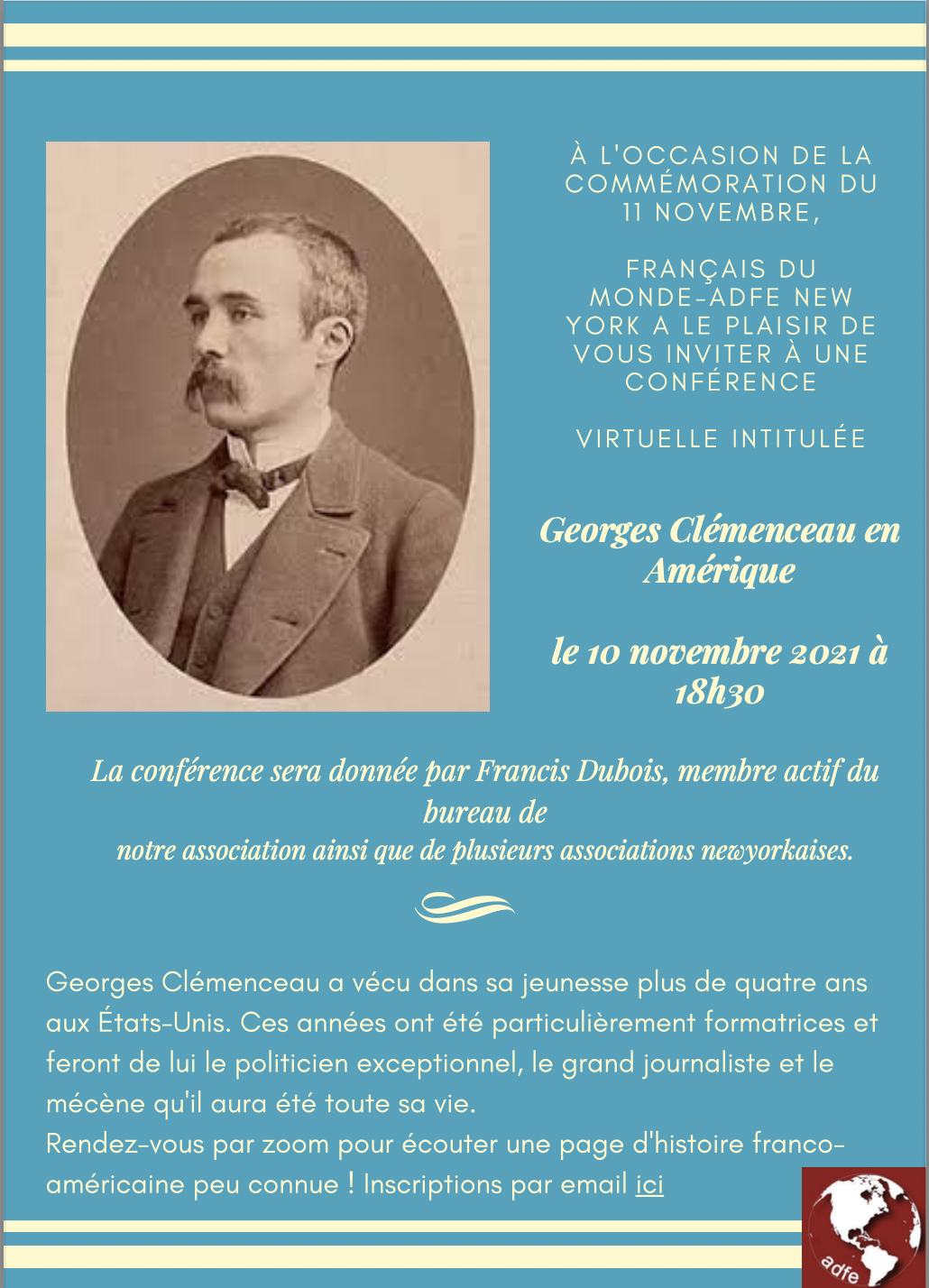
On Wednesday, November 10, at 6:30PM, our Board Member Francis Dubois will give a lecture
"Georges Clémenceau en Amérique"(in French).
The Conference will be on Zoom,
in order to register and receive the invitation link.
"Georges Clémenceau spent four years in his youth in the United States, before becoming the French Statesman and Prime Minister who led France to victory in War World I."
|
|
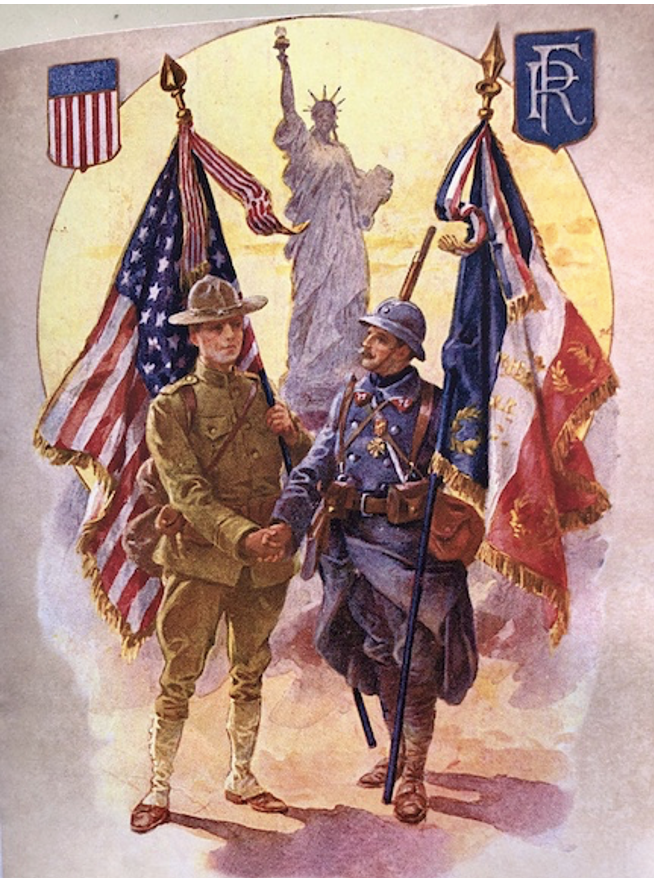
ARMISTICE DAY PARADE, November 11, 2021, on Fifth Avenue, New York
(start at 10:00AM on 24th Street, and ends at 52nd Street)
This year the parade is back in full force, with the active participation of the Federation of French War Veterans, the American Society of The Souvenir Français Inc., and The Association of French Reserve Officers in the United States (ACREFEU).
Two giant French and American Flags will be held by more than 40 scouts of Troop#1, alongside the talented musiciens of the Cadets Lafayette fanfare, led by Jacques Letalon. We invite you to line up on the sidewalks of Fifth Avenue and applaud our members who will be in the parade!
|
|
UN GRAND MERCI
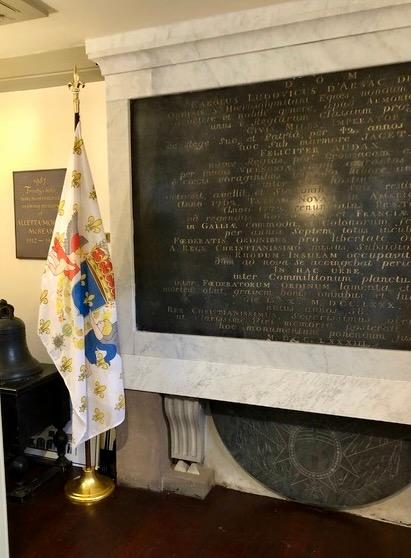
We are very thankful to Rev. Cannon Timothy Watt, Rector of Trinity Church in Newport, R.I., and Charlotte Johnson, Church Historian, who displayed a replica of the official Flag of the Marine Royale, under which Admiral de Ternay and his fleet served, donated by the American Society of Le Souvenir Français, Inc.
The flag is now displayed at the entrance Tower Room of Trinity Church, next to the plaque offered by King Louis XVI.
Trinity Church is the 6th oldest House of worship in continuous existence in the United States, where George Washington prayed.
|
|
OUR MISSIONS:
• To preserve the memory of the French soldiers, sailors and airmen who gave their lives for freedom, and who are buried in the United States.
• To honor French Citizens who did great deeds in the United States, or with a strong connection with the United States,
• To promote esteem for French military heritage in the United States,
• To strengthen the long-standing traditional bonds of friendship between the American and French peoples, and to this end: erect or maintain memorials and monuments and encourage historical research, public presentations and publications in the media.
Le Souvenir Français, a French association under the high patronage of the President of the Republic, was born in 1872 in occupied Alsace-Lorraine, and was founded in 1887 in Paris by Professor Xavier Niessen. The association has more than 300,000 members in France and in more than 45 countries.
In the United States, the American Society of Le Souvenir Français (Souvenir Français USA) has been represented since the First World War by a General Delegate, among whom were Dr Jules Pierre, MM. Bruno Kaiser, Colonel Roger Cestac, Christian Bickert, Mathieu Petitjean, and Jean Lachaud. The association is presided since November 2020 by CF(H) Thierry Chaunu (H) Lt Cdr., French Navy.
The American Society of Le Souvenir Français, Inc. is a 501(c)3 corporation established in 1993 in NY.
|
|
OUR PAST MONTHLY BULLETINS
September Bulletin – On the footsteps of Rochambeau (Part 4–Philadelphia to Yorktown, Battle of the Capes)
Bulletin de septembre sur la marche des troupes de Rochambeau
August Bulletin – On the footsteps of Rochambeau (Part 3– New York/New Jersey to Philadelphia)
July Bulletin – On the footsteps of Rochambeau (Part 2 – Connecticut & New York)
June Bulletin – On the footsteps of Rochambeau (Part 1 – Connecticut)
May Bulletin honoring the WWII French aviators who died in the United States
April Bulletin celebrating the annual commemoration of “French Alliance Day” in Valley Forge, PA
March newsletter honoring two French Navy officers from Rochambeau’s army buried in Newport, RI.
February Bulletin honoring Eugene Bullard, America's first Black Fighter Pilot:
|
|
Did you know that a portion of every purchase you make on Amazon can benefit American Society of Le Souvenir Francais Inc, at no cost to you?
Simply go to: smile.amazon.com, designate American Society of Le Souvenir Francais Inc. as your beneficiary, and shop away!
|
|
Help us implement several historic commemorative projects celebrating the 243-year-old Franco-American friendship and alliance!
The American Society of Le Souvenir Français, Inc. is a registered NY State non-profit corporation and has full IRS tax exempt 501(c)3 status. All donations are tax deductible.
pt 501c3 status. All donations are tax deductibl
Contact: Thierry Chaunu, Président
132 East 43rd Street #341 The Chrysler Building New York, NY 10017
|
|
|
|
|
|
|