Greetings from the NRC........................... October 2026 | |
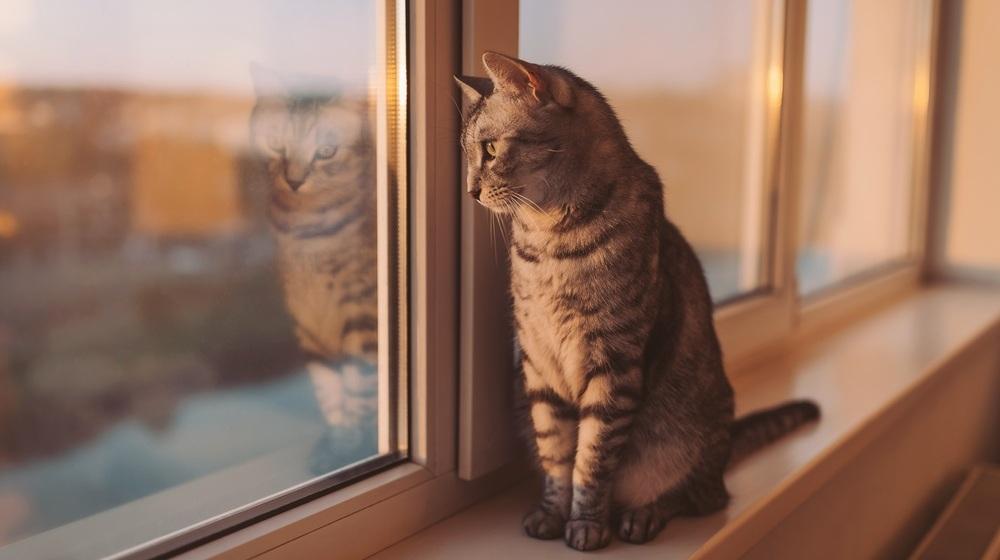
The idiom “curiosity killed the cat” has a lengthy backstory. Its origins point to a very different meaning in the late 1500s, when variations of the phrase appeared in plays, including one performed at Shakespeare’s Theatre. “Care’ll kill a cat” roughly meant to express the idea that excessive worry and grief are bad for your health. Over time, the phrase slowly evolved, and by the 1800s it had moved closer to its current meaning: that nosiness and asking too many questions can be dangerous, to cats and to us humans. Then, in the early 1900s, an added line, “…but satisfaction brought it back,” appeared in multiple newspapers on various occasions.
This phrase is relatable for those of us within the Osher Network: while curiosity might carry some risk, the pursuit of understanding is worthy of taking that risk.
As the fall term is in full swing at most OLLIs, we are taking those risks every day. Examining and discerning truth has never been more challenging. Remaining attentive as students, seeking answers, questioning information, debating ideas, and working together to understand issues and perspectives can help us arrive at a deeper and more thoughtful understanding of the world around us. Ironically, we live in an age of so much digitally delivered information, truth can seem more elusive than ever.
So, I urge you to exercise your curiosity in every way possible in your OLLI community: through study and discussion; by experiencing, touring, creating, and exploring; and by engaging with both new and familiar topics and interests. Relish the opportunities your Institute can bring you at this time in our lives. It is a time when opportunities encourage contemplation and thoughtful evaluation of the world around us.
Ask the questions. Explore the possibilities. Seek the answers. And stay curious.
| | | |
OLLIs THROUGHOUT THE US
Reel Talk
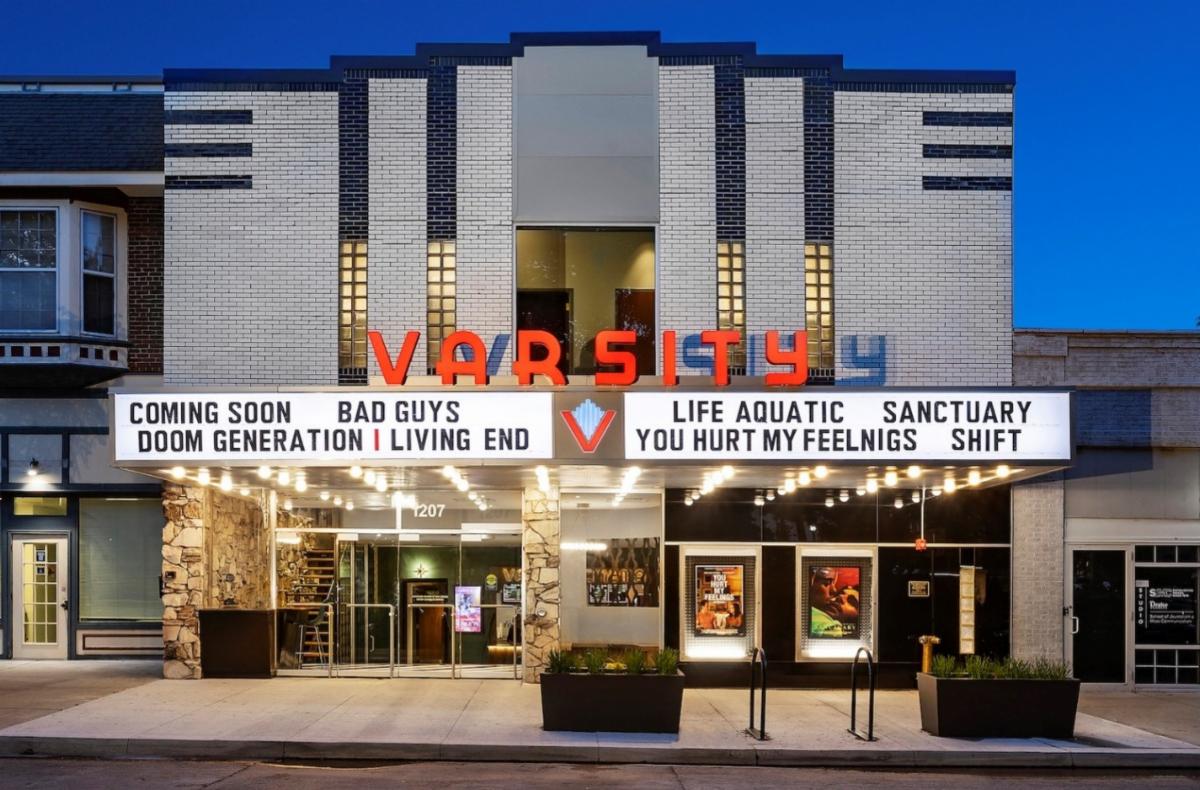
| | The Varsity Theatre, Des Moines, Iowa adjacent to the Drake University Campus | | |
Film screenings and lively discussions have long been a staple of curriculum and activities at many Osher Institutes. Movies connect naturally with members’ strong interests in history and culture. The variety of approaches OLLIs use demonstrates the creativity of their committees and instructors.
At Indiana State University, the OLLIwood Summer Film Festival featured a theme of crime, power, and the American myth, with four classic gangster films exploring ambition, identity, and moral consequence: the black-and-white films Little Caesar (1931), Scarface (1932), The Godfather (1972), and The Godfather Part II (1974). Post-screening discussions, refreshments, and a weekly DVD giveaway added to the fun of the sold-out course.
OLLI at Drake University partners with the nearby Varsity Cinema for monthly movie events combining classic films with lifelong learning. Members experience a film on the big screen, followed by a thoughtful discussion led by an OLLI instructor. The screenings often fill the 250-seat theater and are also open to the public, giving prospective members a chance to sample and learn about the OLLI community. Members say there is something special about returning to movies from their childhood while discovering films from generations before and after their own.
At Sonoma State University, cinema scholar and OLLI instructor Barbara Spear began teaching film courses when the Institute launched in 2001. She later started the Cinema Club, partnering with a nearby community library and local movie theater. Today, the dedicated group screens and discusses films together on Friday afternoons. More informal and relaxed than a regular class, the club offers another option for those who may not be able to participate during the week.
OLLI at Florida Atlantic University recently introduced Café Cinémathèque: A New Way to Experience Film. Participants watch assigned movies on their own using services such as Kanopy, Hoopla, or Amazon Prime, then meet on Zoom for a one-hour guided discussion. The instructor provides film analysis, but conversation is explicitly described as the heart of the class. A recent four-week lineup included Ida (2013), Barbara (2012), Mustang (2015), and Driving Madeleine (2022). Members appreciate discovering films they might not otherwise see, along with the historical context and critical insights. One participant called it “a brilliant alternative to a night at the conventional movie house,” while another described it as “a gem of a class” that introduced them to “wonderful movies I would have never seen otherwise.”
No matter the format, genre, or season, film appreciation and discussion are a winning part of OLLI offerings across the country.
Contributions from the OLLIs at: Indiana State University, Drake University, Sonoma State University, and Florida Atlantic University
| | | |
OLLI AT AMERICAN UNIVERSITY
Curiosity Never Retires: Why Lifelong Learning Should Be in Your Future
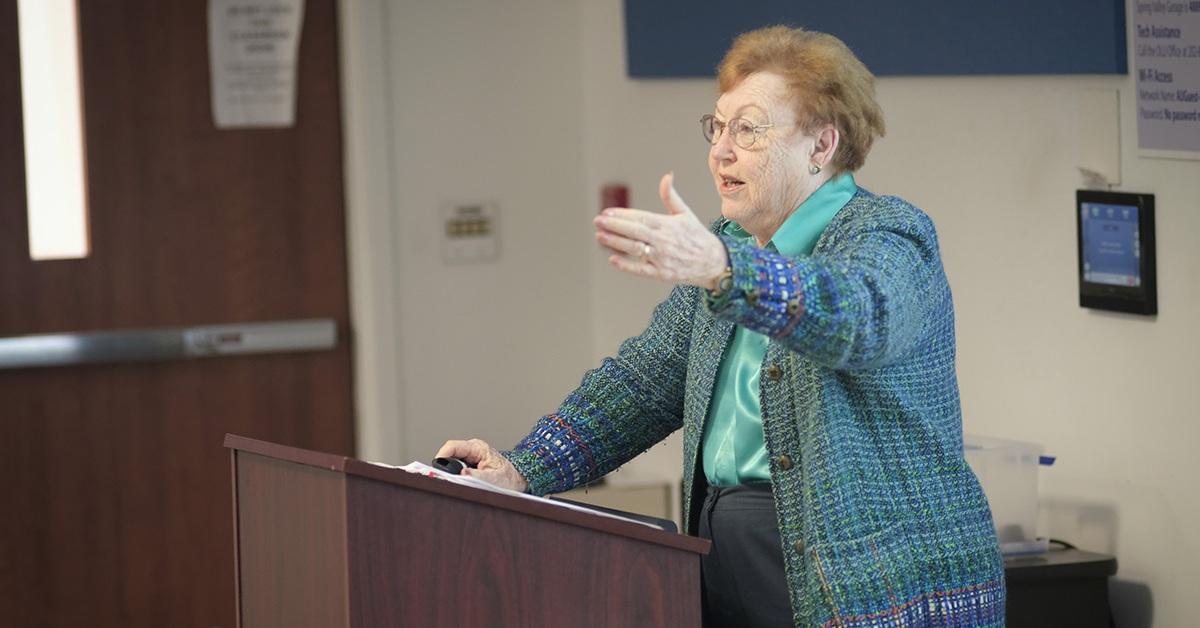
| | Liz Shelton gives a lecture at American University in 2019. | |
What happens to a lifetime of knowledge and experience after retirement? At OLLI, it becomes part of the classroom. In a recent Foreign Service Journal article, OLLI at American University member and instructor Elizabeth “Liz” Shelton makes a compelling case for lifelong learning after retirement, drawing on her own experience and those of fellow retired Foreign Service Officers (FSO). Liz and her fellow FSOs consider lifelong learning not only as students, but as instructors and volunteers.
The following is an excerpt of the article written by Liz Shelton, retired Foreign Service Officer and current member of OLLI at American University.
My Experience, for Example
Coming from a family that valued education as a lifelong adventure, I thought that after nearly 30 years as a Foreign Service officer, I might enjoy teaching as a second career. I learned about OLLI’s continuing education program at American University and joined as an instructor. The give and take of mutually stimulating sessions has kept me young. Now, at age 86, I am still learning.
The Reward of Volunteering
I’m not alone at OLLI. My colleague, veteran diplomat John Bargeron, also found a new path through OLLI, where he has volunteered for years. Bargeron told me, “OLLI colleagues are seasoned learners at the peak of their life experiences who want to know more. They bring enormous life, professional, and other experiences to the classroom, where cross-discussions are often more compelling than lectures.”
Bargeron says his biggest surprise at OLLI has been the reward of volunteering. “This was new territory for someone who had served in a highly structured federal environment for nearly 40 years,” he says. “But I took the plunge, and it has turned out to be one of the most rewarding periods of my life. I often point out that OLLI is more than classes and lectures – it is a community. I learned that the best way to the heart of that community is to give back by volunteering.”
High-Caliber Discussion
After 30 years in the Foreign Service, Xenia Wilkinson retired and earned a PhD in Latin American history at Georgetown University. “Post-retirement, I devoted several years to academic research as well as travels with my husband, Ted, also a retired FSO,” Wilkinson told me. “After Ted passed away in 2015, I knew that my plans and dreams had to change.” At the recommendation of another FSO colleague, Wilkinson turned to OLLI to help her through this difficult time.
A Whole New World
There is a whole new world forming around us – so much to learn and to know. Enjoy these golden retirement years by finding a lifelong learning program near you and building a fuller, richer life.
Read the full article.
Submitted by: Tony Long, Executive Director, OLLI at American University
| | | |
INNOVATIVE COURSES AND CONTENT DELIVERY
Curriculum Corner
| | |
Osher Institute at Oklahoma State University
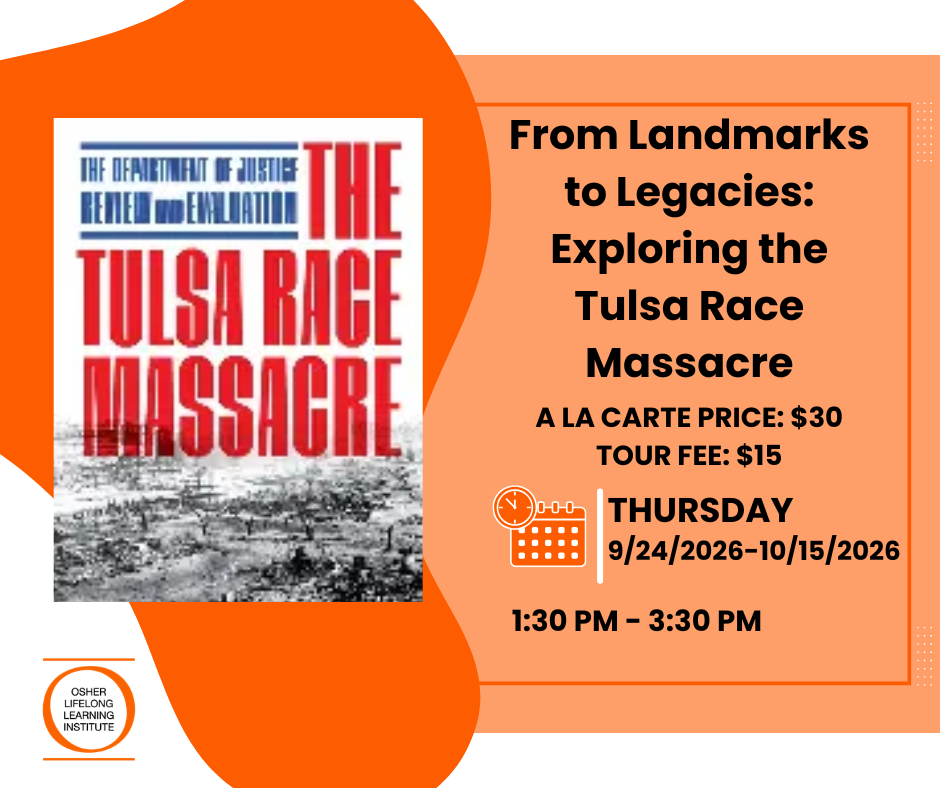
"From Landmarks to Legacies: Exploring the Tulsa Race Massacre"
Course Length: Four Weeks (four sessions)
Course Instructor: Shanedra Nowell
Course Delivery: In-person lecture plus tour
Course description: In this course, explore the rich history and enduring legacy of Tulsa’s Greenwood District and the 1921 Tulsa Race Massacre. Participants will trace Greenwood's historical significance within Oklahoma and African American history, examine the catastrophic events of the massacre, and consider its impact 105 years later, including the centennial commemoration. The class includes guided tours of the Greenwood Rising Museum and John Hope Franklin Reconciliation Park.
| | | |
QUICK TIPS FOR HELPING OPERATE AN OSHER INSTITUTE
Quick Tip - The OLLI Trolley
| | |
Is your OLLI’s parking lot a long walk from the classroom or are your classrooms all over your campus? For some OLLI members, that distance can be more than an inconvenience, it can be a barrier to participating in programs they enjoy.
Consider an “OLLI Trolley.” A few OLLIs have purchased golf carts to shuttle members between parking areas and OLLI classrooms. The University of South Carolina Beaufort’s OLLI is one example. Their OLLI Trolli provides a welcoming ride for members who may have mobility challenges, are carrying materials, or simply appreciate a little help getting from the car to class. An OLLI Trolley can be as simple as a golf cart, a designated driver or volunteer, and a regular pickup routine. Consider clearly marking pickup/drop-off locations and establishing basic safety procedures.
The goal? Remove one more barrier to learning, connection, participation and make getting to OLLI part of the welcome.
| | | |
CAREER OPENINGS IN THE OLLI NETWORK
Job Board
| |
National Resource Center for Osher Institutes, Northwestern University
Wieboldt Hall, Sixth Floor, 339 East Chicago Avenue, Chicago, IL 60611
| |
| | | |