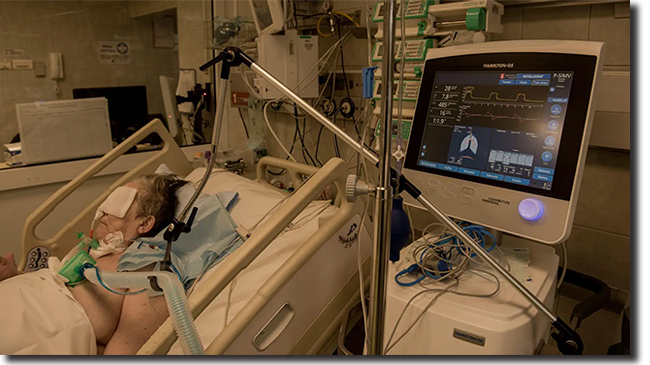
With this funding, more than $18 billion will have been distributed from the Provider Relief Fund and the American Rescue Plan Rural provider funding in the last three months
The U.S. Department of Health and Human Services (HHS), through the Health Resources and Services Administration (HRSA), is making more than $2 billion in Provider Relief Fund (PRF) Phase 4 General Distribution payments to more than 7,600 providers across the country this week. These payments come on the heels of the nearly $9 billion in funding that was already released by HHS in December 2021. With today’s announcement, a total of nearly $11 billion in PRF Phase 4 payments has now been distributed to more than 74,000 providers in all 50 states, Washington D.C., and five territories. This is in addition to HRSA’s distribution of American Rescue Plan (ARP) Rural payments totaling nearly $7.5 billion in funding to more than 43,000 providers in December 2021.
“Provider Relief Fund payments have served as a lifeline for our nation’s heroic health care providers throughout the pandemic, helping them to continue to recruit and retain staff and deliver care to their communities,” said Health and Human Services Secretary Xavier Becerra. “This funding is just the latest example of the Biden-Harris administration’s dedication to ensuring that providers continue to have the resources they need to meet the evolving challenges presented by COVID-19 and keep providing critical services to the American people.”
Provider Relief Fund payments have been critical in helping health care providers prevent, prepare for, and respond to coronavirus. Providers have used the funds to remain in operation and to continue supporting patient care by covering a variety of costs including personnel, recruitment and retention initiatives, medical supplies, information technology, and many other functions.
|
|
Framing the variant as such overlooks the realities of a serious crisis
Experts have said that describing the Omicron variant as "mild" ignores the harsh realities of a pandemic that's far from over: more people than ever in the hospital, sick children, other health conditions made worse by COVID-19, and staff shortages.
And although the odds of long hospital stays and death are lower with Omicron on an individual scale, numbers suggest that Omicron is, in fact, serious on a population level.
"What's mild about hospitals at or near the breaking point? What's mild about hundreds of healthcare workers per hospital out ill with COVID-19? What's mild about 1.3 million cases in the U.S. just yesterday? What's mild about the rising titer of burnout? What's mild about an unprecedented number of children now ill and hospitalized with COVID-19?" Clyde Yancy, MD, chief of cardiology at Northwestern University's Feinberg School of Medicine in Chicago, wrote in an email to MedPage Today.
|
|
Infectiousness may linger beyond the 5-day isolation period recommended by the CDC
As high levels of COVID-19 transmission persist, people continue to wonder how long they should isolate after learning they're infected.
One especially perplexing predicament is what to do when you continue to see positive results on a rapid antigen test, but it's been 5 days (or more) and your symptoms have resolved.
So, what could cause someone to continue to test positive?
It may be due to weakened virus that continues to replicate, Benjamin tenOever, PhD, a microbiologist at NYU Grossman School of Medicine, told MedPage Today. It may also happen as a result of broken virus genomes.
|
|
A change that benefited big clients left little ones holding the bag
It’s easy for a small investor to make big mistakes. It would be even easier for giant investment firms to help prevent them—but, sadly, the asset-management industry seems to have other priorities.
Just look at what happened last month to some investors in Vanguard’s Target Retirement funds. They got whacked with huge capital-gains distributions. Those payouts triggered painful tax bills they could easily have avoided if Vanguard had simply warned them not to hold these funds outside of a tax-advantaged retirement account.
Like many investment firms, Vanguard offers target-date funds: bundles of stocks, bonds and cash that automatically become more conservative as investors approach their retirement date.
|
|
ASIPP is conducting a survey on the practice patterns of perioperative management covering antiplatelet and anticoagulant therapy in Interventional Pain Management. We last surveyed this topic 10 years ago. We would like to compare the 2011 data to 2021 to see the changes to the practice pattern. Your help is needed to accomplish this!
We recently mailed to you the survey titled Practice Patterns of Perioperative Management of Antiplatelet and Anticoagulant in Interventional Pain Management. If you did not complete the survey, please take a few minutes to complete it mail it back to us in the prepaid return address envelope.
If you did not receive the survey, you may download the survey by clicking here. Please complete and e-mail it back to drm@asipp.org or fax to 270.554.5394.
This survey is most important to ASIPP and its members. It will demonstrate how our members practicing Perioperative Management utilize antiplatelet and anticoagulant therapy in pain management procedures. The more members that participate will increase the impact of the survey.
Please complete the survey and mail, e-mail, or fax back as soon as possible.
|
|
To lower costs, Cuban cut out the middleman, setting up his own pharmaceutical wholesaler and negotiating directly with drug manufacturers and pharmacies for rebates and discounts. It sells the drugs at a 15% markup and an added $3 pharmacist fee. Shipping is $5.
Among the discounted drugs is mesalamine, which treats ulcerative colitis. Normally, that retails for $940 per month, which falls as low as $102 per month with vouchers. Cuban Cost Plus will sell it for $32.40 per month. Atorvastatin (a generic version of cholesterol medicine Lipitor) generally sells for $55.08, but will cost $3.60 on Cuban Cost Plus, the company website said.
|
|
One in five physicians say it is likely they will leave their current practice within two years. Meanwhile, about one in three doctors and other health professionals say they intend to reduce work hours in the next 12 months, according to recently published survey research.
Researchers based their findings on more than 20,000 respondents at 124 institutions across the country. They found that burnout, workload, fear of infection, anxiety or depression due to COVID-19 and the number of years in practice were associated with intent to reduce work hours or leave, says the article published in Mayo Clinic Proceedings: Innovation, Quality & Outcomes, “COVID-Related Stress and Work Intentions in a Sample of U.S. Health Care Workers.”
To researchers’ surprise, COVID-19 load by county was not associated with intent to reduce work hours or leave current practice. The AMA provided grant support for the study.
|
|
Schools should be open, pandemic or not, much of the public says. If only they all had what they need to function.
Students at New York City’s elite Brooklyn Technical High School played Hangman in psychology class recently while a substitute sat behind the teacher’s desk. They were eager to prepare for a coming midterm exam, the students said, but their usual instructor was out sick again.
“Everybody’s kind of freaking out,” said Delia Marcus, 17. “We haven’t really learned anything.”
|
|
"I am 27 years old and just praying I can get through every shift"
The federal government will spend $103 million to try to reduce burnout among healthcare workers, Health and Human Services (HHS) Secretary Xavier Becerra announced Thursday.
"Make no mistake: healthcare workers have faced a very grim reality," Becerra said on a phone call with reporters. "They've had a very difficult holiday season because they had to go and work and be on the job. It is no joke to say that they are tired; as one healthcare worker summed it up recently: 'I am 27 years old and just praying I can get through every shift.'"
"We are awarding $103 million to strengthen long-term efforts to reduce burnout among our healthcare workforce and to promote mental health and wellness among all of our healthcare workers," he continued. "The funds, which come from the American Rescue Plan, will be disbursed to numerous organizations that oversee evidence-informed programs, practices, and training. The focus will be on providers who do service in underserved and rural communities."
|
|
-
To log in for the first time you will need to click “forgot password” at the bottom of the login window.
- Check your email and then log in as directed.
-
If you have problems logging into your account, click here.
|
|
Call for
Abstracts & Poster Presentations
|
Proposals accepted through March 1st
|
A $50 submission fee is required upon completion of the form. |
Questions can be directed to
Savannah Gold at 270.554.9412 ext 4219 or
|
|
After reading the 2022 Abstracts & Poster Presentations guidelines, please complete the form along with the presenter's CV by clicking here.
- Top 3 will present during the general session on the final day.
- Top 10 will present during the abstract breakout session.
-
Rapid review and publication in the Pain Physician journal will be extended to the Top 10 authors accepted for meeting presentations.
Click here for Abstract and Poster Presentation
|
|
Pain Medicine Case Reports (PMCR) and Editor-in-Chief Alaa Abd-Elsayed, MD, PhD would like to invite you to submit case reports and case series to the PMCR journal. Your article will be published free of charge.
Open access journals are freely available online for immediate worldwide open access to the full text of published articles. There is no subscription fee for open access journals. Open access journals are no different from traditional subscription-based journals: they undergo the same peer-review and quality control as any other scholarly journal.
Interested in becoming a member of the PMCR Editorial Board?
Editorial board members are asked to review 2-6 manuscripts per year. Please submit your most up-to-date CV to sgold@asipp.org for consideration.
For more information or to submit your articles, click here.
|
|
| CASE REPORT |
Michael S. Nirenberg, DPM
Abstract
BACKGROUND: Complex regional pain syndrome (CRPS) is a potentially severely painful and debilitating disorder that frequently affects an extremity after surgery or even a minor injury. Treatment of CRPS can be challenging, and due to some patients’ co-morbidities, treatments may be limited.
CASE REPORT: Retrospective review of 20 patients who were diagnosed with CRPS of the foot and/or ankle early (within 45 days of onset) and who were adjunctively treated with ring-type ankle blocks of bupivacaine with dexamethasone. Patients who benefited from the treatment were monitored for 12 months.
CONCLUSION: When CRPS of the foot and/or ankle was diagnosed early and adjunctively treated with one or two 2 ankle blocks of bupivacaine with dexamethasone, the condition resolved completely for 18 of the 20 patients (90%). The ankle block is a simple, safe treatment with the potential to assist in alleviating CRPS of the foot and/or ankle when the condition is diagnosed early.
KEY WORDS: Ankle, ankle block, complex regional pain syndrome (crps), foot, local anesthesia
|
|
| META-ANALYSIS |
Zuxing Wang, MD, Minlan Yuan, PhD, Jun Xiao, BS, Lili Chen, BS,
Xiaoyun Guo, PhD, Yikai Dou, PhD, Fugui Jiang, MD, Wenjiao Min, PhD,
and Bo Zhou, PhD
Abstract
BACKGROUND: Many structural magnetic resonance imaging (MRI) studies have used voxel-based morphometry (VBM) to identify gray matter abnormalities in patients with chronic primary pain (CPP), but the findings have been inconsistent.
OBJECTIVES: To identify (a) gray matter differences between CPP patients or female patients and healthy individuals and (b) the effects of symptom duration and pain scores on gray matter.
STUDY DESIGN: We conducted a meta-analysis.
METHODS: VBM studies in PubMed, Cochrane Library, and Google Scholar, from November 2005 to June 2020, were thoroughly collected and carefully reviewed. Manual searches were performed using title and citation information. Gray matter VBM study comparing adult patients (18-65 years) with CPP to healthy controls was reviewed, and results, presented in Talairach or Montreal Neurological Institute coordinates, were included. The t value, peak coordinates, and basic clinical information of each study were reported in detail. Anisotropic effect-size signed differential mapping was used for voxel-based meta-analyses.
RESULTS: Patients with CPP had decreased gray matter in the left anterior cingulate (z value = 2.950, P < 0.001), right median cingulate (z value = 1.858, P = 0.001), and the insula bilaterally (left: z value = 2.441, P < 0.001; right: z value = 2.113, P < 0.001 ), and increased gray matter in the right striatum (z value = 1.194, P < 0.001). Subgroup meta-analysis showed female patients with CPP also had decreased gray matter in the left anterior cingulate gyrus (z value = 2.622, P < 0.001). Meta-regression analyses revealed that pain symptom duration was positively associated with a large right brain region (z value = 2.110, P < 0.001), a negative association between pain symptom duration and gray matter was found in the right anterior cingulate (z value = 1.969, P < 0.001) and right middle frontal gyrus (z value = 1.849, P < 0.001).
LIMITATIONS: Due to the lack of data from male patients, we were unable to perform a male subgroup analysis; therefore, we cannot thoroughly explore the difference in CPP from the perspective of gender.
CONCLUSION: We identified gray matter changes in CPP patients and female patients, as well as a close relationship between CPP and mental disorders. With the chronicity of pain leads to changes in relevant brain regions, which makes treatment more challenging and may have synergistic effects with affective disorders. More prospective longitudinal structural MRI studies of CPP examining the associations between those variables and gray matter in a larger population should be conducted. Additional prospective longitudinal structural MRI studies of CPP with larger sample sizes to confirm the relationships between these variables and gray matter are needed as well as gender differences of CPP in brain structure and function.
KEYWORDS: SDM meta-analysis; gender difference; gray matter difference; mental disorder; Chronic primary pain.
|
|
| NARRATIVE REVIEW |
Guilherme Ferreira-Dos-Santos, MD, Mark Friedrich B. Hurdle, MD,
Steven R Clendenen, MD, Jason S Eldrige, MD, and Wenchun Qu, MD, PhD
Abstract
BACKGROUND: During the last decades, platelet-rich plasma has been studied for the treatment of multiple chronic pain conditions, in addition to being employed in the enhancement of healing after tissue injury.
OBJECTIVE: To establish a framework for future research regarding the utilization of platelet-rich plasma in the treatment of chronic tissue injuries.
METHODS: Preclinical and clinical studies from 2000-2020 relevant to applications of platelet-rich plasma for the treatment of chronic pain conditions were extracted from PubMed and Medline databases. The studies were analyzed on the basis of the study population, type of intervention, method of platelet-rich plasma preparation, the number of treatments administered, the timeframe of injections, and clinical outcomes.
RESULTS: Although several preclinical studies and double-blind, randomized trials have shown promising results in the application of platelet-rich plasma for the treatment of multiple chronic pain conditions, various studies have also reported controversial results. Additionally, the methods employed for obtaining the platelet-rich plasma have not been standardized between studies, resulting in different concentrations of blood components between the preparations utilized. Moreover, differences between studies were also found regarding the number of injections administered per treatment.
CONCLUSIONS: Future research addressing the utilization of platelet-rich plasma in the treatment of chronic pain conditions should focus on shedding light on the following major questions: a) Is there a dose-effect relation between the platelet count and the clinical efficacy of the preparation?; b) What pathology determinants should be considered when selecting between leukocyte-enriched and leukocyte-depleted concentrates?; c) What is the role of platelet activation methods on the clinical efficacy of platelet-rich plasma?; d) Is there an optimal number of injections and time frame for application of multiple injection treatment cycles?; e) Does the addition of local anesthetics affect the clinical efficacy of platelet-rich plasma?; and f) Is there potential for future platelet-rich plasma applications for the treatment of neuropathic pain of peripheral origin?
KEYWORDS: clinical research; pain medicine; platelet-rich plasma; regenerative medicine; Chronic pain.
|
|
Since this malpractice insurance program officially launched in November 2018, ASIPP has signed up hundreds of providers with an average savings of 30%. This is professional liability insurance tailored to our specialty and will stand up for us and defend our practices.
Norcal Mutual is A-Rated by AM best and is licensed in all 50 states. To read a few important points to keep in mind about the program, including discounts, administrative defense, cyber coverage, aggressive claims handling, and complimentary award-winning risk management CME activities, click here.
|
|
ASIPP® has formed a partnership with Henry Schein and PedsPal, a national GPO that has a successful history of negotiating better prices on medical supplies and creating value-added services for independent physicians. Working with MedAssets, PedsPal provides excellent pricing on products like contrast media that alleviate some of the financial pressures you experience today.
|
|
ASIPP® is now offering our members the benefit of a unique revenue cycle management/ billing service.
We have received a tremendous amount of interest in the ASIPP® billing and coding program.
Click here to learn more about the negotiated rate for practices and more!
|
|
|
up-to-date news related to you, your practice, and your patients!
|
|
|
|
|
|
|