PacIOOS Tools and Services |
|
New Wave Buoy Deployed in Yap, Hanalei Wave Buoy Redeployed |
|
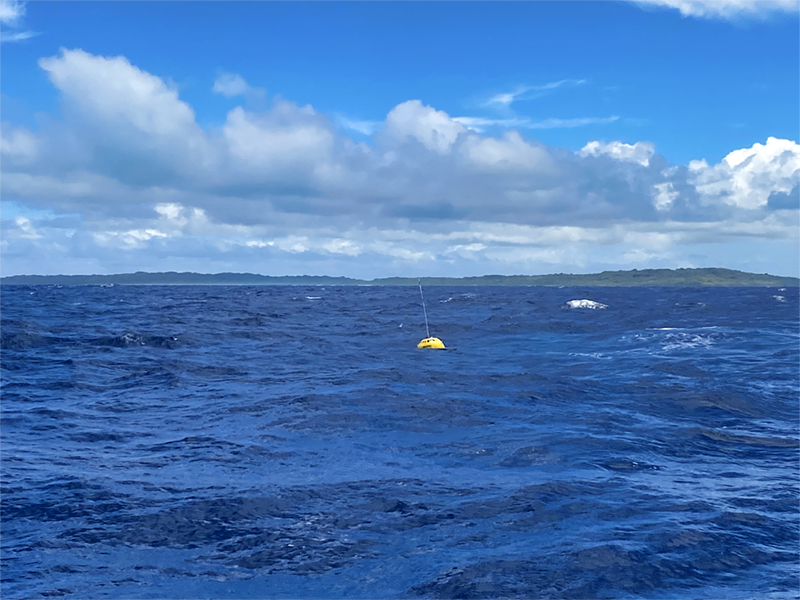
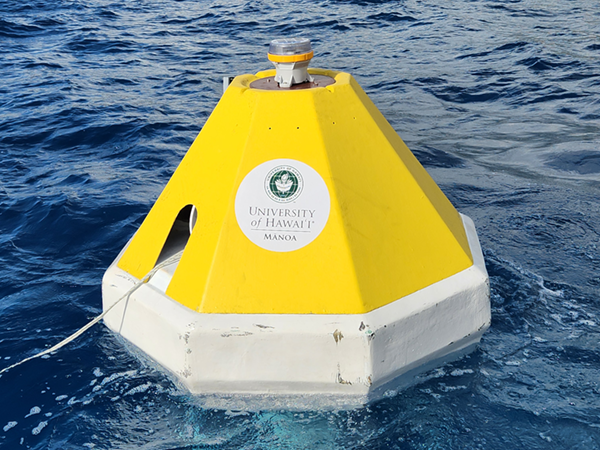
A new wave buoy was deployed in Yap, Federated States of Micronesia on April 17. Moored about 1.25 miles (2 km) offshore of the northernmost barrier reef and approximately 3 miles (5 km) north of Rumung Island, the northernmost island of the Yap island group, this buoy measures wave direction and energy, as well as surface currents, sea surface temperature, and air temperature in real-time. The Yap wave buoy is owned and managed by PacIOOS, thanks to funding from the U.S. Department of State. Other key partners include the Yap Fishing Authority (YFA) and the National Weather Service Office in Yap (WSO Yap).
On April 18, the Hanalei, Kauaʻi wave buoy was redeployed. This buoy also measures wave direction and energy, as well as sea surface temperature. Located about 4 miles offshore Hāʻena Point, the data provided by the buoy assists with safe and efficient maritime transportation in Hanalei Bay.
[Photo: Yap Wave Buoy. Credit: PacIOOS/Andreia Monteiro Queima]
|
|
Bishop Museum Science and Sustainability Festival |
|
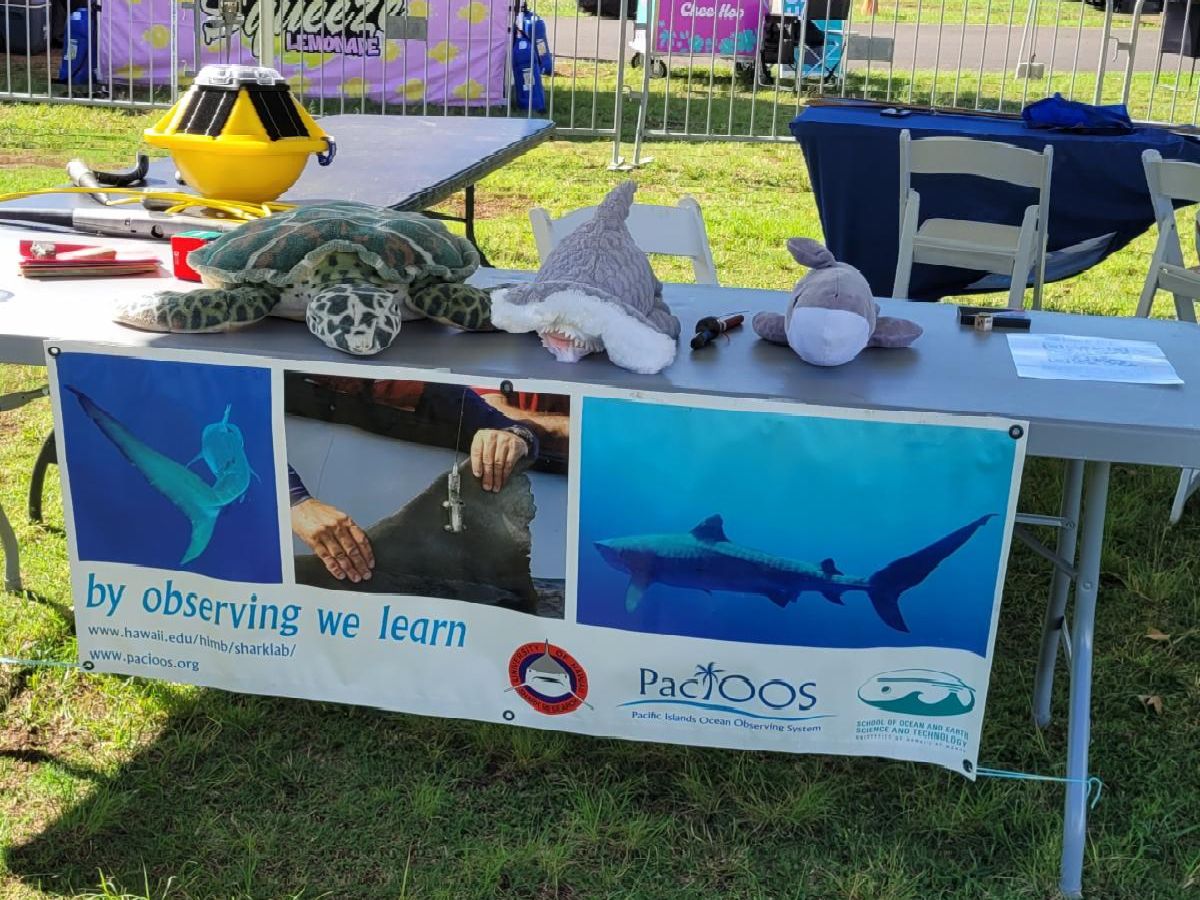
In celebration of Earth Day, PacIOOS joined other scientists, educators, cultural practitioners and community groups at the Bishop Museum’s Science and Sustainability Festival on April 20. The festival featured keiki activities, workshops, exhibits, special presentations and performances that highlighted biodiversity research and conservation efforts in Hawaiʻi. PacIOOS’ activity featured the Hawaiʻi Institute of Marine Biology (HIMB) shark tracking project, introducing families to our favorite “mobile oceanographers,” which collect valuable ocean data that researchers use to understand and protect the biodiversity of our oceans. The Sofar Spotter buoy and Smart Mooring used in the Backyard Buoys project was also available for keiki to learn about how wave data are important for the safety and livelihoods of coastal communities. [Photo: PacIOOS’ Table at the Bishop Museum Science and Sustainability Festival]
|
|
Trilogy Excursions Receives Citizen Honors Award for Maui Lahaina Fire Efforts |
|
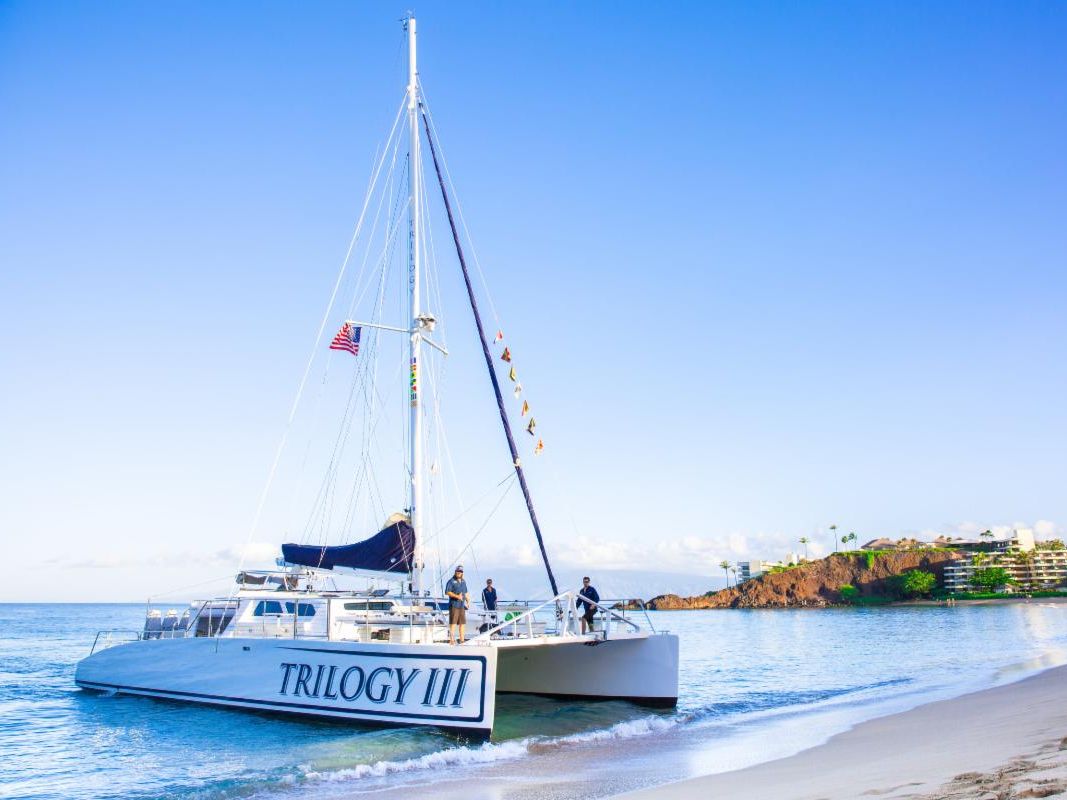
In recognition of their brave and selfless acts during the Lahaina Fire on August 8, 2023, Captain Riley Coon and his team at Trilogy Excursions were presented with the Congressional Medal of Honor Citizen Honors Award. On the night of the fire, Captain Coon responded to a call from the Coast Guard Station Maui for any mariners willing to assist with rescue efforts in the waters off Lahaina. Working alongside the Coast Guard, Trilogy crew were able to assist and aid in saving fifty people, including children. At the Honors Celebration in Washington D.C., Captain Coon accepted the award, in recognition not only of the efforts of the Trilogy team, but also the courage and resilience of the Lahaina community. To watch a video highlighting Trilogy’s selection for the award, click here. [Photo: Trilogy III. Credit: Trilogy Excursions]
|
|
Climate Adaptation Science Center Project Opportunity |
|
The U.S Geological Survey Climate Adaptation Science Center (USGS CASC) network is accepting Statements of Interest for research projects focused on high-priority natural or cultural resource management issues that will benefit from climate adaptation science and traditional knowledge, and align with priority science topics identified by region. Priority science topics for the PI-CASC region include: Climate Resilience of Water, Post Adaptation Outcomes, Species and Cultural Displacement Implications for Adaptation, and Climate-aware Actions Around Natural Hazard Risk Minimization and Recovery. For more details, see the PI-CASC instructions and guidelines. An informational webinar for the PI-CASC region will be held on Monday, April 29th at 2-3pm HST. [Image: USGS CASC regional logos]
|
|
New MapCO2 Buoy Deployed off Hawaiʻi Island |
|
In collaboration with the NOAA Pacific Marine Environmental Laboratory, the lab of University of Hawaiʻi oceanographer Christopher Sabine has deployed a new MapCO2 buoy in Maʻihi Bay off Hawaiʻi Island. As part of the NOAA Ocean Carbon Network, this buoy monitors water quality, with a particular focus on parameters to measure ocean acidification, including pH and partial pressure of carbon dioxide in the water and air. The ocean carbon measurements collected every three hours also include other measures of water quality: temperature, salinity, dissolved oxygen, chlorophyll a, and turbidity. The data are transmitted by satellite and are available on the PacIOOS website as Water Quality Buoy Observations. This buoy is one of three funded by a 2022 gift from Dr. Priscilla Chan and Mark Zuckerberg to the Hawaiʻi Institute of Marine Biology, to improve Hawaiʻi’s ocean health. [Photo: Maʻihi Bay MapCO2 Buoy. Credit: UH/Chris Sabine]
|
|
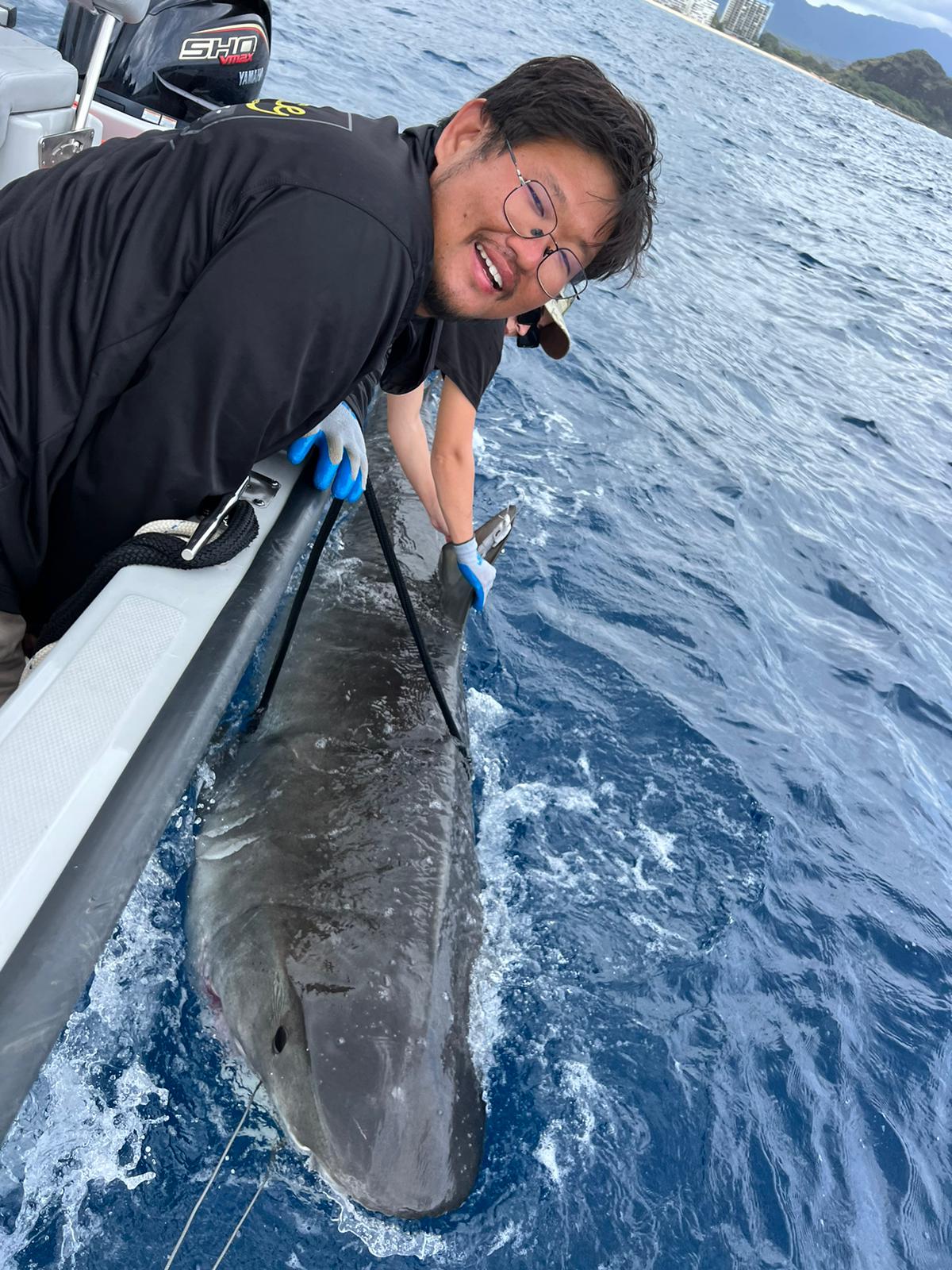
The Hawaiʻi Institute of Marine Biology (HIMB) Shark Research Lab hosted guests from Guam and Saipan for the second annual shark tagging workshop (April 15-19). Guests gained technical training and experience in handling and tagging sharks with surgically implanted acoustic transmitters, and deploying acoustic receivers for detecting tagged sharks. Attendee Andrew Kang, with the Guam Department of Agriculture (DOAG), stated, “It is an invaluable experience to be able to tag along with Dr. Carl Meyer and the rest of the HIMB Shark Lab. Their methodology is so well thought out and streamlined that anyone who gets tossed in, without any prior experience, is able to successfully tag and release sharks.”
He also noted that everyone involved with the Shark Lab is integral to the success of the research, and is able to adjust and react to situations as they arise, “thinking outside the box” in order to achieve their research goals.
During his week on the water in Kāneʻohe Bay, Andrew learned valuable skills that he will take back to Guam and apply to a DOAG project gathering data from suspected depredating sharks. The data will be used to identify trends or predictions of shark abundance and behavior at key fishing sites around Guam. With Guam fishers as collaborating community scientists, the project will incorporate Indigenous knowledge, best management practices, and state-of-the-art research to help reduce shark-gear interactions and improve the economic yield and sustainability of fisheries and shark populations of Guam. Andrew is looking forward to more collaborations with Dr. Meyer and his lab on future projects. [Photo: Andrew Kang tagging a Tiger Shark in Kāneʻohe Bay, Oʻahu]
|
|
|
|
|
|
|