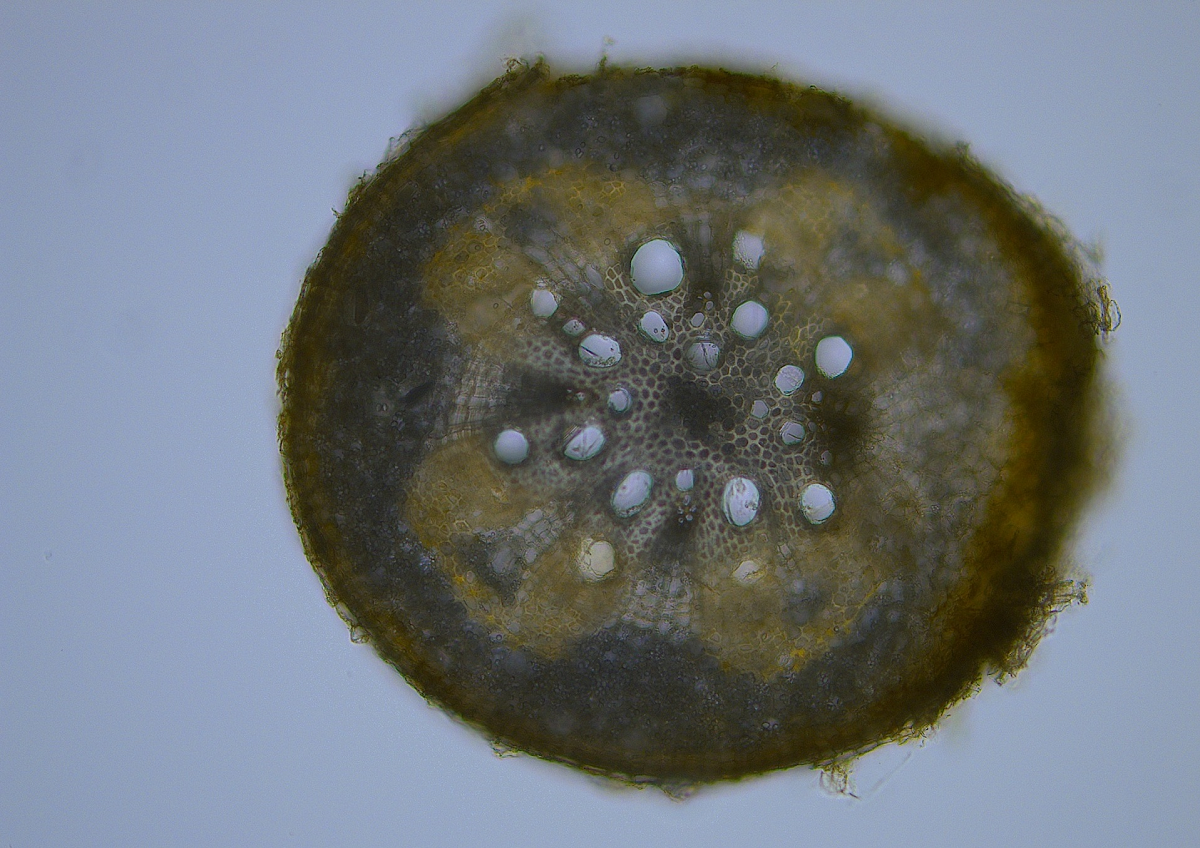
Cross-section of a 140Ru root* |
|
At the outset of 2021, I heard a quip I found as humorous as it was hopeful: that the new year would be pronounced “twenty-twenty won.” To me, it signaled that, as rotten as the previous year—the start of the pandemic—had been, we’d move forward collectively, maybe even return to relative normalcy. And yet…
As the calendar turned to 2022, I heard a resigned riff on that old theme: that this would be “twenty-twenty, too.” Indeed, the year opened with all the well-worn anxiety and uncertainty of 2020. At any moment in January, if you’d have asked me how I thought the month would end, I would’ve given you a different answer.
You see, NGRA’s Annual Meeting and First-of-Year Board Meeting was planned to be held in person in Sacramento on Monday, January 24, to coincide with the Unified Wine and Grape Symposium. With Omicron surging across the country, throughout the first two weeks of January, we debated whether to gather in real life. We surveyed stakeholders about meeting, crunched the numbers on canceling, and privately (e.g., in my head) decided, undecided and decided again. Ultimately, we stayed the course (as did Unified).
For those who couldn’t or preferred not to join us in person, we offered a robust virtual option and half of attendees tuned in via Zoom. What we found was, the camaraderie and interaction at this Board meeting was much greater, certainly among those of us in the room but for those on Zoom, as well. There seemed to be something magical about having people in the same place that elevated and enlivened the conversation.
I felt the same about Unified. I’m glad to have been able to attend in person and was grateful to connect with colleagues in more than two dimensions. Kudos to co-organizers the American Society for Enology and Viticulture and California Association of Winegrape Growers for the fortitude to forge ahead.
The NGRA Mid-Year Meeting will be in July, and there’s no telling what Covid will bring by then. But hopefully, we can persist in inviting our stakeholders to be present in person if possible. Now that we’ve made one small step toward normalcy, it’s a little easier to envision another.
|
|
January ended better than I could’ve imagined. In some ways, I suppose it was all the worry that made the positive outcome so remarkable. If there’s any lesson in “twenty-twenty, too,” maybe it’s just to plan for the worst. But dare to hope for the best. |
|
*About the photo
UC Davis' Megan Bartlett provided this beautiful cross-section of the water uptake zone of a 140Ru rootstock root, referenced in the Research Focus article below. Megan says, "The large pores are xylem and the layer of gray cells in between the xylem and epidermis are the living cells we focused on in the study."
|
|
Tom Davenport, an NGRA Founder, Wins Rich Smith Award |
|
On January 26, 2022, the Rich Smith Award of Excellence was presented to Tom Davenport (shown here), who until his retirement as Viticulture Research Director at the National Grape Cooperative/Welch’s in 2010, served to foster and coordinate research not only for juice grapes but across all sectors of the industry. Tom received the award in person in Sacramento, at the Winegrape Growers of America (WGA) Leadership Luncheon. The Smith Family, NGRA, WGA and WineAmerica annually confer the award. (Photo credit: Jenny Devine.)
|
|
Save the Date: ASEV-NGRA Precision Viticulture Demo Day |
|
Last June, NGRA partnered with the American Society for Enology and Viticulture (ASEV) to produce the Precision Viticulture Symposium. This spring, on Wednesday, April 13, 2022, join us in California’s Salinas Valley, for the ASEV-NGRA Precision Viticulture Demo Day to see advances in precision viticulture technology come to life! We’ve enlisted three early-adopting precision viticulture operations, one of the country’s top vegetable growers, and cutting-edge precision technology and service providers to demonstrate precision techniques in action. Demos will feature mechanized, autonomous and robotic tools, as well as sensors, decision support systems and more. See the draft agenda and stay tuned for registration, coming soon! |
|
U.S. Food Is Free of Pesticide Residue |
|
Each year since 1991, the USDA’s Agricultural Marketing Service (AMS) has conducted the Pesticide Data Program (PDP) report to collect new/updated data on pesticide residues in food. This 30th Annual Summary (for calendar year 2020) shows that, when pesticide residues are found on foods, including grapes, they are nearly always below the maximum amount allowed to remain in or on a food, set by the U.S. Environmental Protection Agency (EPA). Indeed, in this year’s study, more than 99% of the samples tested had residues below EPA tolerance levels and 30% had no detectable residue. In 2020, the PDP report was conducted with the support of 10 states: California, Colorado, Florida, Maryland, Michigan, New York, North Carolina, Ohio, Texas and Washington. |
|
USDA Invests $9M in Boosting Climate-Smart Ag Practices |
|
The USDA this month announced a $9 million investment across six funded projects focused on Cooperative Extension and USDA Climate Hubs partnerships to bolster climate research and connect and share climate-smart solutions directly with the agricultural community. The investment is being made via USDA-NIFA’s Agriculture and Food Research Initiative (AFRI). This new AFRI program area provides effective, translatable and scalable approaches to address climate change through regional partnerships, including the USDA Climate Hubs, and extends outreach through organizations such as the Cooperative Extension Service. |
|
Washington Maps Its Soil Health |
|
Interested in the soil health of Washington vineyards? Check out the Washington Soil Health Initiative Roadmap 2021, developed by Washington State University, Washington State Department of Agriculture and Washington State Conservation Commission to assess current issues of Washington agriculture soils and identify ways to improve soil health. Juice and wine grapes were one of eight focus areas of the roadmap. The roadmap provides goals, priorities, milestones, barriers, resources, opportunities and core investments needed to improve the soil health forward of Washington’s vineyards.
|
|
Washington Wine Industry Survey: Research Priorities |
|
The Washington State Wine Commission, an NGRA member-organization, is asking the state’s winegrape growers and wineries to participate in its 2022 research survey to help guide the annual re-evaluation of priorities by the Wine Research Advisory Committee, a subcommittee of the Washington State Wine Commission. The priority list, used by scientists to develop research proposals and projects, helps ensures that the program addresses important needs specific to Washington’s wine industry. Take the survey now.
|
|
Jessica Youngblood Joins Michigan Craft Beverage Council |
|
Earlier this month, Michigan Governor Gretchen Whitmer announced new appointments to the state’s agricultural boards, naming Jessica Youngblood to the Michigan Craft Beverage Council (MCBC). Jessica serves as the Midwest Regional Representative on the NGRA Board of Directors and is a member of our Executive Committee. On the MCBC, she will represent Michigan winemakers for a three-year term. The Council awards grants for research into winemaking, hops, barley, beer and spirits; conducts market surveys and analysis; and offers other programs that encourage the agricultural elements related to Michigan’s craft beverage industries. |
|
John Aguirre to Leave CAWG |
|
The California Association of Winegrape Growers (CAWG) this month announced the planned departure of President John Aguirre, a past Board Chair of NGRA, effective May 31, 2022. John started with the association on June 1, 2010. “Leading CAWG has been a dream job,” Aguirre said. “I’ve had the privilege of working for outstanding volunteer leaders who are dedicated to the idea of advocacy on behalf of winegrape growers. I could not contemplate a better conclusion to my career as an association executive.” |
|
Anita Oberholster Is CAWG's 2022 Leader of the Year |
|
For her role at the forefront of the state’s research and response to wildfire smoke exposure issues, Anita Oberholster, extension enologist at UC Davis has earned one of CAWG's top honors: Leader of the Year. The award recognizes an individual whose exceptional leadership has benefitted California’s wine industry, who has demonstrated an outstanding commitment to issues of significant importance to winegrape growers and has achieved lasting changes to promote and protect the interests of California winegrape growers. “Dr. Oberholster is an esteemed researcher and leading voice as an educator and expert on the complicated issues surrounding wildfire smoke and winegrapes,” said CAWG President John Aguirre. “Her relentless drive to help by sharing her expertise and frequent communication have been incredibly beneficial to growers and vintners, and CAWG appreciates all that she has done for California’s winegrowers.” |
|
Tony Wolf Is One of 'Wine's Most Inspiring People' |
|
Wine Industry Network this month recognized Virginia Tech’s Tony Wolf as one of “Wine’s Most Inspiring People.” Veteran viticulture consultant Lucie Morton recalls that, when, as a new Cornell Ph.D. grad, Tony Wolf was hired by the Virginia Department of Agriculture to support its then-fledgling wine industry, it was, she says, five jobs in one: grape research scientist and extension agent, professor of viticulture, communication hub and administrator. Thus, she said, Tony was “a kind of Hail Mary hire” who turned out to be a “winning touchdown. ” Over the next 30 years, Tony would go on to influence students, grape growers and the wine industry in Virginia and eastern U.S. He is retiring this month.
|
|
Nominate Eastern Leaders for ASEV-ES Merit Awards |
|
The Eastern Section of the American Society for Enology and Viticulture offers two awards to individuals or organizations who have made significant contributions to advances in viticulture and enology in Eastern North America:
-
Outstanding Achievement Award: Recognizes the lifetime accomplishments of individuals who have meritoriously contributed to the advancement of enology or viticulture, or both. The nominee must be a member of the ASEV-ES.
-
Distinguished Service Award: Recognizes ASEV-ES members or non-members who have demonstrated outstanding service to the wine and grape industry through teaching, research, extension, administration, industry leadership, entrepreneurship or volunteerism.
To make nominations, email 1) a brief biographical sketch of the nominee, 2) a statement of the achievements on which the nomination is based, and 3) an evaluation and appraisal of the nominee’s accomplishments to Amy Bowen by February 15, 2022. Recipients will be recognized during the ASEV-ES Annual Meeting, July 13-15, 2022, in Bloomington, MN.
|
|
USDA-ARS Seeks a Grape Research Geneticist |
|
The USDA-ARS Grape Genetics Research Unit (GGRU) in Geneva, NY, is looking for a Research Geneticist to investigate genetic, physiological and molecular mechanisms of grapevine responses to climate-change related abiotic stresses, such as cold and drought tolerance and adaptation to adverse soil conditions that are important to the U.S. grape industries. This position interacts and collaborates closely with fellow scientists in the unit as well as those in the public and private sectors to advance genetic knowledge of grapevines in the research areas assigned. The role also has responsibility to transfer relevant knowledge, tools and genetic resources to the grape breeding community to further grapevine improvement. Learn more and apply by February 18, 2022. |
|
Missouri State Seeks an Assistant Professor |
|
Join the Missouri State University faculty as its newest Assistant Professor and maintain an active program in applied, field-based fruit production research (including grape) at the State Fruit Experiment Station (SFES). The job involves supporting the development and evaluation of new cultivar releases, and its primary service requirements are directing vineyard operations for the SFES and collaborating with the MSU Winery and Distillery for harvests. The tenure-track position also has assigned roles in teaching, outreach and service. The vacancy is open until filled; the successful candidate begins May 2, 2022. Learn more and apply.
|
|
ROOTSTOCKS TO THE RESCUE: DROUGH-RESISTANCE TRAITS COULD HELP VINES ADAPT TO A DRIER FUTURE |
|
A team of UC Davis scientists led by Department of Viticulture and Enology Assistant Professor Megan Bartlett have identified new root traits that help grapevines resist drought. The findings, published in the journal Annals of Botany, could speed up the development of grape rootstocks that protect vines from dry conditions, helping the grape and wine industry adapt to climate change. The research comes as 80% of California is experiencing extreme drought.
“Rootstocks are an important tool to manage water stress,” Megan said. “Our goal was to identify traits that make rootstocks drought tolerant, so that grape breeders can amplify these traits in new varieties.”
Root Cell Traits
Focusing on traits measuring drought responses in living root cells, this novel research specifically identified capacitance—a measure of how much roots shrink as they dehydrate—as an important trait for drought tolerance. It’s the first study to test whether traits measuring root shrinkage and cell collapse can capture differences in rootstock drought tolerance.
Most research has focused on xylem traits, but Megan explained, “the water that enters the roots has to cross through a band of living cells to reach the xylem—the network of pipes that carries water up to the leaves.” The living cells are often the first to be damaged during drought.
Water stress can shrink, deform or even kill the living cells, causing the roots to shrivel away from the soil and lose access to whatever soil water remains. Vines are then unable to replace water lost to evaporation and are forced to close the stomata—the small pores on the leaves that take in carbon dioxide for photosynthesis—to prevent severe dehydration. But closing the stomata stops photosynthesis and starves the vine of the sugars it needs to grow and ripen fruit.
Cell Traits and Drought Tolerance
For the six-month study, Megan and team grafted Chardonnay onto eight commercial rootstocks: four varieties thought to be drought-tolerant (110R, 1103P, 140-Ru and Ramsey) and four drought-sensitive (5C, 420A, Riparia Gloire and 101-14). The vines were randomly assigned to be kept either under drought conditions or well-watered, all in a greenhouse. While the rootstocks were found to vary widely in their traits, interestingly, the droughted vines appeared to acclimate to their dry conditions by changing their traits. Specifically, over time, they became less susceptible to shrinkage and cell collapse than the well-watered vines.
Among the traits, the researchers found capacitance to be most important for drought-tolerance. The rootstocks that exhibited lower capacitance (less root shrinkage) were better able to maintain photosynthesis during drought than other rootstocks. (Editor’s note: These findings suggest the low-capacitance rootstocks could help support the production of fruit at the scion under dry conditions.)
“This research gives us a new trait to target for breeding more drought-tolerant rootstocks,” said Gabriela Sinclair, a co-author of the study and Ph.D. student at UC Davis. Megan’s other collaborators include Andrew McElrone from the USDA-ARS, Thorsten Knipfer from the University of British Columbia, and Andy Walker and now-graduated Gabriela Fontanesi from UC Davis.
|
|
The Foundation for Food & Agriculture Research (FFAR) is accepting nominations for the 2022 New Innovator in Food & Agriculture Research Award. This program awards up to 10 grants a year, each for up to $150,000 for three years, to early-career scientists pursuing research that sustainably enhances agricultural production or improves health through food. By investing in scientists and faculty members at the onset of their careers, the program enables New Innovators to pursue research without the pressure to secure additional funding for their ideas. Awardees are not required to secure matching funding. Applications from eligible nominees will be evaluated on their research program proposals as well as a demonstrated commitment to mentoring future generations of agricultural and food scientists. Learn more and submit nominations by February 23, 2022. Note that nominations must be made by the nominee’s institution. Self-nominations are not accepted .
|
|
Funding Opportunities
Sharpen your pencils! These research funding programs have upcoming deadlines.
|
|
This inter-agency federal program (supported by NSF, USDA, NASA and others) funds fundamental research to advance the science of robot integration. The program supports research that promotes integration of robots to the benefit of humans including human safety and human independence. Collaboration between academic, industry, non-profit and other organizations is encouraged to establish better linkages between fundamental science and engineering and technology development, deployment and use. Projects will range from $250,000 to $1,500,000 in total costs for up four years. Deadline is February 22, 2022.
The National Science Foundation’s Understanding the Rules of Life: Emergent Networks program supports multidisciplinary research investigating the intertwined networks that connect living things, from individual cells to entire ecosystems. “Predicting Transformation of Living Systems in Evolving Environments” is the focus of the program’s updated guidelines. This cross-directorate program aims to develop a predictive understanding of how key properties of living systems emerge from interactions of factors such as genomes, phenotypes, and environments and how emerging networks of organismal, natural, social, and/or human-engineered systems respond to or influence evolving environments. It will support projects with a total budget of up to $3,000,000 and an award duration of up to five years. Deadline is March 1, 2022.
The California Department of Pesticide Regulation’s (DPR) Alliance Grants Program provides funding to projects that promote or increase the implementation, expansion and/or adoption of effective and proven integrated pest management (IPM) systems or practices that reduce risks to public health and the environment in agricultural, wildland or urban settings. Deadline is March 10, 2022.
|
|
January 21, 2022 | Wine Australia
Scientists at Australia’s Charles Sturt University are using a Botrytis antigen test (like a Covid test) to quickly assess the loss of wine quality from bunch rot. Analysis is rendered in minutes vs. the hours or days needed to assess levels of ergosterol, a sterol found only in fungal cells. The findings will help growers make picking decisions for infected fruit.
January 20, 2022 | Wine Spectator
With workers leaving the wine industry for good, winegrowers are being forced to adapt. Some are replacing hands with machines, some are trying new ideas for attracting and retaining workers, and all are reimagining what work looks like in American vineyards.
January 18, 2022 | KSBY
The Justin and J. Lohr Center for Wine and Viticulture is now open at Cal Poly. With state-of-the-art classrooms, labs and winery, the 27,000-square foot building houses the Cal Poly Wine and Viticulture program, the largest undergraduate program of its kind in the U.S. with more than 300 students.
January 20, 2022 | Vineyard Team
While many California grapegrowers are familiar with the Western Leafhopper, they may not know as much about the Virginia Creeper Leafhopper, which was introduced to the North Coast around 2010. Its biology and management are different from other leafhoppers and it has no local biocontrols. Here, entomologist Houston Wilson of UC Riverside discusses his research on the pest.
January 18, 2022 | Growing Produce
What can grape growers do to improve the quality of the fruit from red blotch-infected vines? Not much, according to UC Davis’ Justin Tanner. Two research trials in 2021 showed that crop thinning and increased irrigation had little impact on soluble solids, Brix or color.
January 17, 2022 | Lodi Winegrowers
Introducing this video, premiered at the LODI RULES annual recap event this month, the Lodi Winegrape Commission's Stephanie Bolton says, “We connected a young, energetic sheep Basque rancher with an old-vine Zinfandel vineyard to test out the ancient farming practice of using sheep in the vineyard for weed management just before budbreak. Here’s what happened.”
January 10, 2022 | Oregon State University
Not grape research, but noteworthy: Researchers at Oregon State University found that a pair of cannabinoid acids (not psychoactive compounds) bind to the SARS-CoV-2 spike protein, blocking a critical step in the process the virus uses to infect people. The research shows these acids were equally effective against the alpha and beta variants of the coronavirus.
January 6, 2022 | WVPE 88.1
Climate change has introduced warmer weather and new pests and diseases, ranging from fungus to yellow jackets, all straining vines’ ability to survive in the Great Lakes region—and driving higher costs for growers trying to manage them.
January 5, 2022 | Wine Business Monthly
If you’ve studied for a wine certification like WSET, you’ve probably read "Understanding Wine Technology" by David Bird. With new co-author Nicolas Quillé, a fourth edition—the first update since 2010—was published January 18. "New" innovations like orange, natural, biodynamic and low-alcohol wines, plus cold stabilization and flash detante techniques are newly included.
January 3, 2022 | Good Fruit Grower
Artificial intelligence (AI) is accelerating grape breeding by accurately identifying vines with favorable genetic characteristics (a.k.a. phenotyping), notably those that provide mildew resistance and high fruit quality. The robotic camera system developed at Cornell University, called Blackbird, could also be used by growers to determine optimal fungicide combinations for their location.
January 3, 2022 | Good Fruit Grower
Thanks to Breeding Insight, grape is one of a handful of specialty crops that now have access to the kind of sophisticated bioinformatics, statistical and “big data” tools that have long sped the development of new varieties for commodity crops. When USDA-ARS established BI in 2018, grape was selected in part because of the foundation for genotyping, DNA marker analysis, and advanced phenotyping methods established by the VitisGen project. Industry support from NGRA also was instrumental.
December 30, 2021 | Forbes
A new OIV study entitled “Digital Trends in the Vine & Wine Sector,” reveals nine technologies that will shape the future of wine. They include the Internet of Things and sensors, AI and robotics in the vineyard and winery; satellite and LIDAR imaging for precision viticulture and mapping; and many more technologies in the winery and distribution chain.
December 28, 2021 | Growing Produce
New York's Finger Lakes PRISM (Partnership for Regional Invasive Species Management) is combatting the spread of spotted lanternfly on many fronts. That includes everything from requiring permits for companies moving goods and equipment out of quarantine zones to temporary tattoos for kids to trapping and spraying the bugs themselves.
December 27, 2021 | Wine Enthusiast
Whether they're sniffing out cork taint-causing TCA or spoilage yeast Brettanomyces in the winery, or Eutypa, phylloxera or mealybugs in the vineyard, detection dogs are trained to identify unseen issues. They've even been used to ID Covid-positive guests at wine events. “The sniffer dog is an example of farmers going outside of their normal tool belt,” says Michael Honig, Honig Vineyard and Winery.
December 26, 2021 | 60 Minutes
Venerable champagne house Piot-Sevillano made no champagne in 2020. Renowned Bordeaux producer Château La Louvière lost 40% of its merlot. Vineyards in California and Australia lost tons of fruit to wildfires and smoke. This segment shows the effects of climate change on the wine industry worldwide.
December 20, 2021 | Good Fruit Grower
Michigan vineyards commonly exhibit a particular kind of non-uniformity: some sections of the same vineyard struggle while others don’t. In a new precision viticulture effort, Michigan State University’s Paolo Sabbatini (a viticulturist) and Bruno Basso (a crop modeler) are deploying drones and satellite data to map struggling vines.
December 9, 2021 | Alliance for Science
This opinion piece from Sarah Evanega, director of the Alliance for Science, is focused broadly on agriculture (not viticulture), but argues that, “while the GMO debate has been percolating for nearly three decades, data indicate it’s now over.”
December 7, 2021 | National Science Foundation
When it comes to sensors, could this new technology solve grape’s occlusion problem? Researchers at Northwestern University have invented a high-resolution, non-line-of-sight, or NLoS, camera that can see around corners and through occlusions. Called synthetic wavelength holography, it scatters light then reconstructs it via an algorithm to reveal hidden objects.
Find these stories and more, published daily, on NGRA's Facebook and Twitter feeds.
|
|
February 1, 2022
Lodi, CA
February 4, 2022
Virtual event
February 7-10, 2022
Kennewick, WA
February 8, 2022
Eastern Viticulture and Enology Forum:
Virtual event
February 8-10, 2022
Tulare, CA
February 15-17, 2022
Virtual event
February 17-19, 2022
Denton, TX
February 21-22, 2022
Dublin, OH
February 24-25, 2022
Virtual event
February 27-March 3, 2022
Blended event with virtual sessions and in-person meetings in various locations
March 3, 2022
Geneva, OH
March 8-9, 2022
Portland, OR
March 16, 2022
Davis, CA
March 22-24, 2022
Syracuse, NY
March 27-29, 2022
Washington, DC
March 29-31, 2022
Virtual event
March 30, 2022
Paso Robles, CA
March 30-31, 2022
Newberg, OR
|
|
The monthly NGRA Update is provided as a service to the U.S. grape and wine industry.
|
|
|
|
|
|
|