Weekly News From Los Alamos County
August 18, 2022
|
|
Inside this newsletter, you will find...
The Epidemiology Corner - COVID-19 Update, Updated Public Health Order, Treatment Information, CDC Changes, New Vaccine for the Fall, What to Eat,
Long COVID, Survey & Results, COVID-19 data, and more.
|
|
NOTE: There will be no newsletter the week of August 25 |
|
|
|
COVID-19 Update: Modest Increase in County Transmission Rates But Emergency Department
Visits Decline...
|
|
Nationwide Hospitalizations Stabilize at Elevated Level Likely Along with Community Transmission
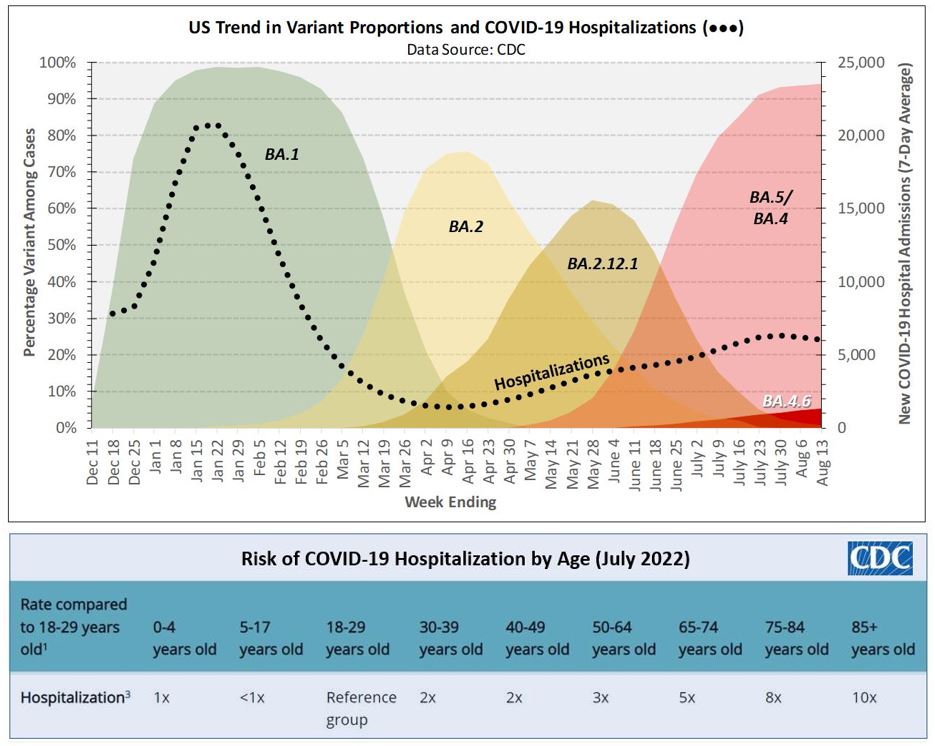
For the week ending August 13, CDC estimates that Omicron variants BA.4/BA.5 accounted for 94% of US cases nationwide, with BA.5 alone accounting for 89% of cases. The newest emergent variant, BA.4.6 increased in prevalence over the past week from 4.8% to 5.1% nationwide. See HERE. New average daily hospital admissions for COVID-19 have stabilized around 6,000 new admissions per day in the US, indicating that significant virus transmission continues nationwide. The risk of COVID-19 hospitalization increases with advancing age, with persons 65+ years being at least 5- to 10-times more likely to be hospitalized compared to younger adults 18-29 years.See HERE CDC strongly recommends that all eligible at-risk persons, including anyone 50+ years, obtain booster shots, which continue to show strong effectiveness towards preventing severe disease and hospitalization for all Omicron variants. See HERE
|
|
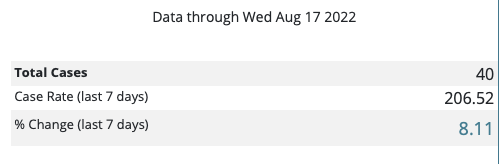
COVID-19 in the County: Modest Increase in Reported Cases But Continued Decline in % ED Visits
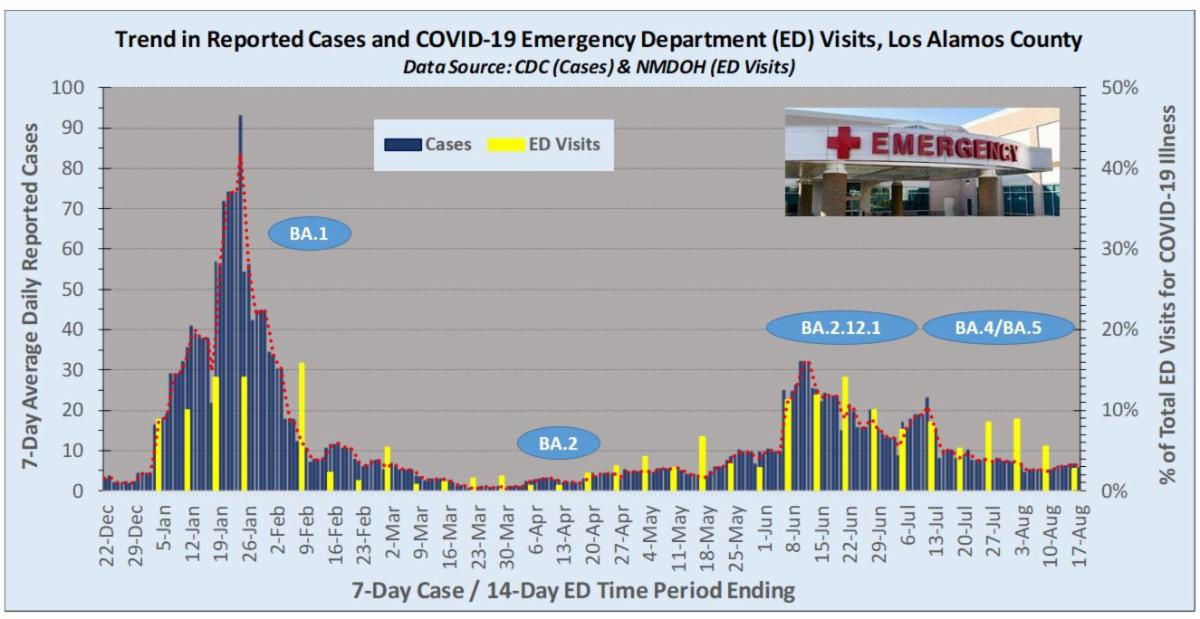
An average 5.7 cases per day were reported for the week ending August 17, which represents a roughly 8% increase from the 5.3 daily cases reported the prior week ending August 10. The current level of transmission remains about 5-fold higher than the average of one reported case per day during late-March/early-April 2022. According to the NMDOH, 2.7% of all ED visits for the two weeks ending August 16 were for COVID-like illness compared to 5.5% for the two-week period ending August 9. This represents a roughly 50% decline in the burden of ED visits related to COVID-19. COVID-like illness includes ED encounters with chief complaint consisting of fever and cough, shortness of breath, or difficulty breathing, while also including COVID-19 associated discharge diagnoses codes. The definition excludes known influenza related ED visits coded with a related influenza discharge diagnosis. See HERE According to CDC, five COVID-19 deaths (as of August 16) occurred in the county during the recent surge beginning in early June. This burden represents 23% of the total 22 COVID-19 deaths registered in the county since the pandemic began in March 2020.
|
|
Wastewater Surveillance Shows SARS-CoV-2 Virus Continuing to Circulate in County
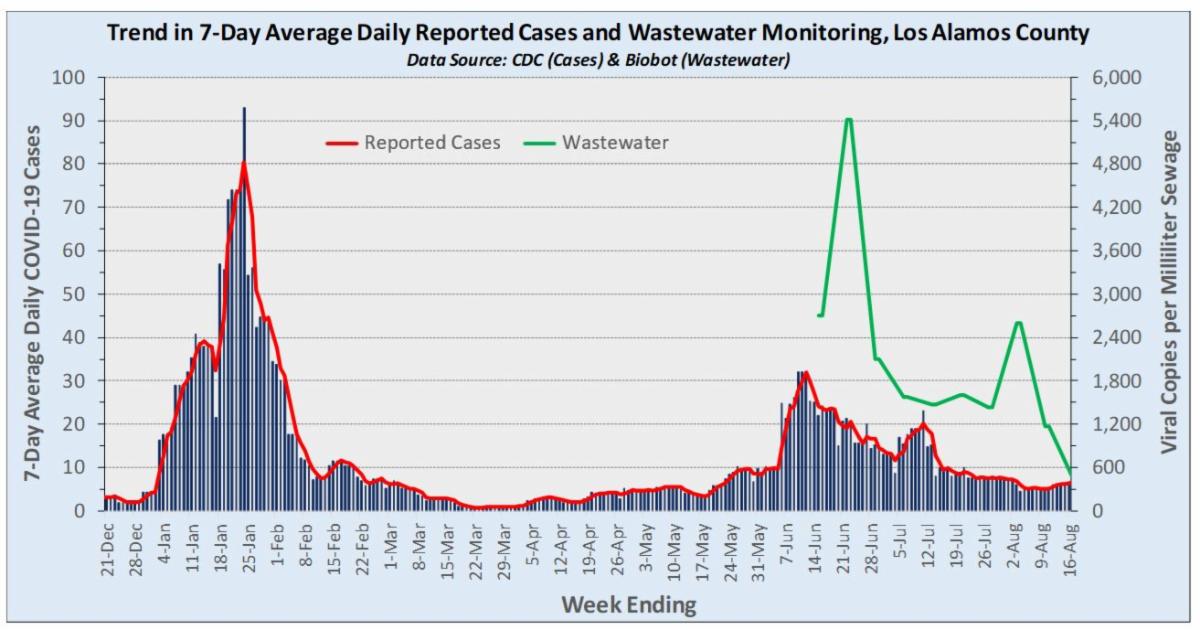
The wastewater surveillance program involves collection of two weekly samples (Tuesday/Thursday) at both the Townsite and White Rock sewage treatment facilities. Biobot, the CDC contractor for the program, reports sample virus concentration levels as an “effective concentration”, which is a measure normalized by the amount of sewage in the system at sample collection time and the size of the population served by the treatment facility. See HERE Samples collected at each facility in the county have consistently detected SARS-CoV-2 virus in wastewater since the first samples were collected on June 14. Wastewater surveillance results show a generally declining trend consistent with the gradually declining trend in daily reported cases. The chart below shows the smoothed trend in SARS-Cov-2 effective concentration levels complied at the county level from data from the townsite and White Rock treatment facilities. For samples obtained during the week of July 27, Biobot reports that the BA.5 variant accounted for essentially all viral copies (100%) detected in county municipal sewage. See https://biobot.io/data/
|
|
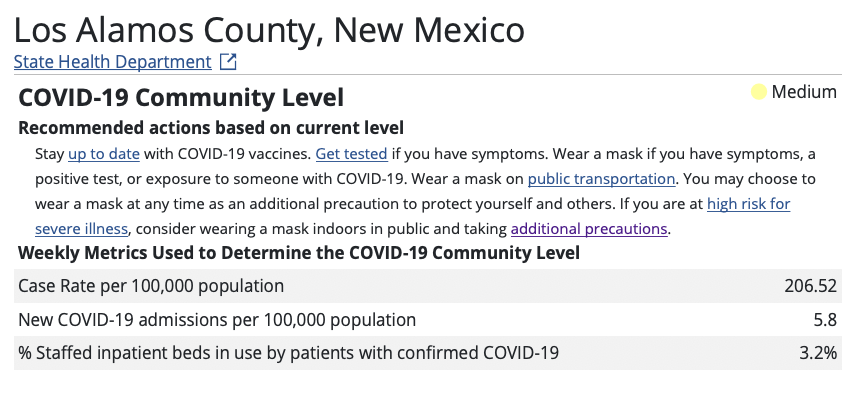
CDC Community Level Risk Increased from Low to MEDIUM
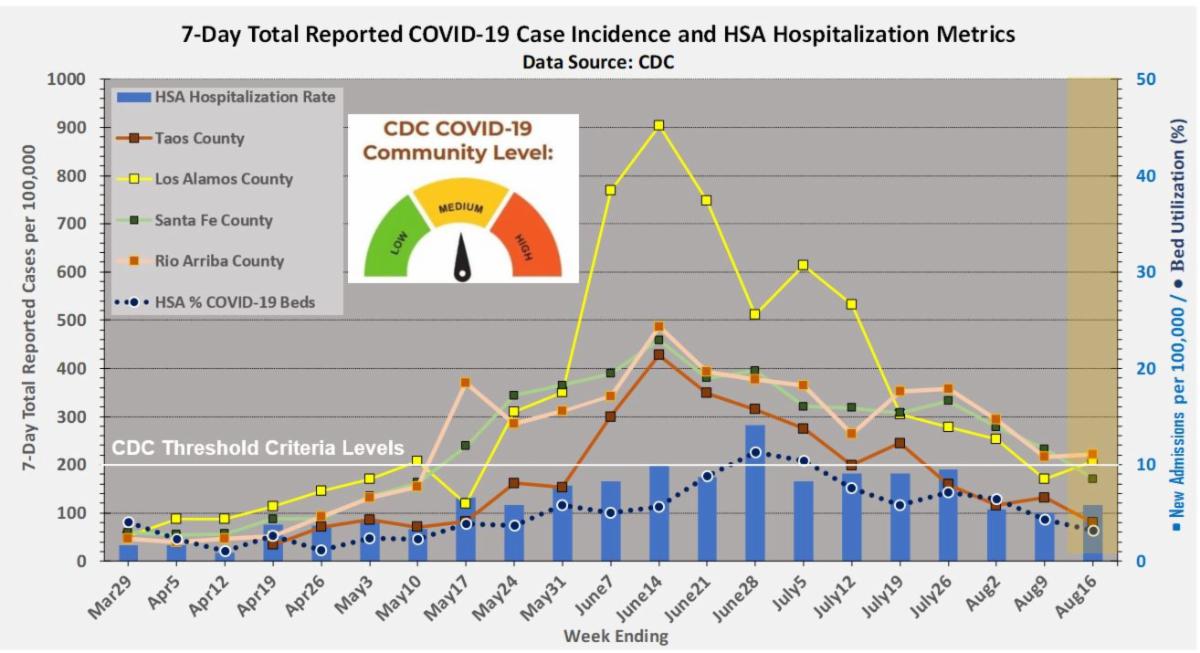
For the week ending August 16, the CDC Community Level is MEDIUM. The reported case incidence in Los Alamos County (207 cases per 100,000) is just above the CDC criteria threshold of 200 cases per 100,000. Health Services Area hospitalization metrics remain below CDC thresholds. CDC recommendations at MEDIUM Community Level risk can be accessed here. See HERE CDC recommends that persons use information about the current level of COVID-19 impact on their community to decide which prevention behaviors to use and when (at all times or at specific times), based on their own risk for severe illness and that of members of their household, their risk tolerance, and setting-specific factors See HERE
|
|
NOTE: The COVID-19 incidence data reviewed here are based on PCR-confirmed testing results compiled by CDC and NMDOH and do not include data on positive at-home antigen tests. As such, case counts are likely underestimated, but how much cannot be determined at any given time point.
To assist with more complete case monitoring in New Mexico, NMDOH provides for online reporting of positive at-home antigen results HERE.
|
|
Department of Health amends emergency public health order
The New Mexico Department of Health amended the state’s emergency public health order rescinding all previous orders and streamlined it to adapt to the evolving nature of the virus and the effective tools we have today along with shifting management to the federal government and reducing state regulations. Only the directives in the new order shall remain in effect until it is amended or rescinded. The new order effective today will be in effect until August 26, 2022.
“It’s clear by the CDC’s recommendation yesterday which moves away from restrictive measures that we’re in a different place in this pandemic than we were two years ago,” said Acting Department of Health Secretary David R. Scrase, M.D. “Over the past eight months we have excelled in implementing the tools to minimize the spread of COVID-19 such as: vaccines, boosters, home testing and oral treatments that have helped reduce hospitalizations and deaths.”
Link to the new public health order here.
All facilities are advised to evaluate CDC community transmission levels in their locality and adopt more stringent precautions, if needed. CDC community transmission levels are available HERE.
All New Mexicans should remain aware of the importance of protecting our most vulnerable population groups, including those who are older, immune compromised, or have other pre-existing conditions that place them at high risk for serious COVID illness. More information from the CDC is available HERE.
All New Mexicans should be aware that there are now tools that can be used to direct both isolation for those who have acquired COVID and quarantine for those who have been exposed to COVID are strongly encourages to use the CDC Quarantine and Isolation Calculator that is available HERE.
Over 85% of New Mexicans are vaccinated against COVID-19 with at least one dose. Throughout the pandemic, New Mexicans have proactively embraced critical tools to support living in a COVID-19 world, including reducing viral spread with the use of at-home tests and self-reporting on NM Notify, accessing convenient oral treatments to reduce hospitalizations, and getting boosted as soon as possible. New Mexicans can schedule their booster by visiting VaccineNM.org.
To read the full news release, click HERE.
|
|
What's behind the FDA's controversial strategy for evaluating new COVID booster
The U.S. Food and Drug Administration is using a controversial strategy to evaluate the next generation of COVID-19 boosters.
The approach is stirring debate as the agency works to make new, hopefully improved, boosters available in September to help prevent severe disease and save lives in the fall and winter.
For the first time, the FDA is planning to base its decision about whether to authorize new boosters on studies involving mice instead of humans.
"We have 500 people a day dying of coronavirus right now. Those numbers sadly might very well rise in the fall and the winter. The question is: 'Can we do something better?'" says Dr. Ofer Levy, a pediatrics and infectious disease researcher at Harvard Medical School who also advises the FDA. "And I think the answer is: 'We can, by implementing this approach.'"
The U.K. just approved a new booster
The United Kingdom just approved a new booster that targets both the original strain of the virus and the original omicron variant, called BA.1 — a so-called bivalent vaccine.
But the FDA rejected BA.1 bivalent boosters last spring. Instead, the FDA told the vaccine companies that make the mRNA vaccines, Moderna and Pfizer and BioNTech, to develop bivalent vaccines that target the dominant omicron subvariants — BA.4 and BA.5 — in the hopes they will offer stronger, longer-lasting protection.
That's why the FDA decided to use a new, streamlined strategy for testing the new boosters. The agency is asking the companies to initially submit only the results of tests on mice. Regulators will rely on those results, along with the human neutralizing antibody data from the BA.1 bivalent booster studies, to decide whether to authorize the boosters.
The companies will continue to gather more data from human studies; those results probably won't be available until late October or early November.
But the big concern is the boosters may not work as well as the mouse data might suggest. Mouse experiments are notoriously unreliable.
And with the government telling people not to get the old boosters now and rejecting the first bivalent vaccines, the FDA really needs good evidence that the BA.4/5 boosters are in fact better, critics say.
Some also worry that the approach may further erode the long-faltering efforts to persuade people to get boosted.
But others agree the time constraints mean the country can't wait for more evidence. The billions of people who have gotten Moderna and Pfizer-BioNTech mRNA vaccines show how safe they are, those experts say.
The new booster will be identical to the original vaccines except it will contain genetic coding for two versions of the protein the virus uses to infect cells — the protein from the original vaccine and proteins from the BA.4 and BA.5 omicron subvariants.
And some scientists say health officials know enough about how vaccines work to start handling the COVID-19 vaccines like the flu vaccines, which are changed every year to try to match whatever strains are likely to be circulating but aren't routinely tested again every year.
The companies are expected to submit their data to the FDA by the end of the month and the administration hopes to make millions of doses of the new boosters available starting in September.
To read the full news release, click HERE.
|
|
COVID-19: What to eat when you have the virus
Eating a nutrient-dense diet can help someone recover from COVID-19 by supporting their immune system and managing inflammation. This may be particularly important if they lose their sense of taste or smell and have the temptation to eat stronger tasting, less nutritious foods.
People can support their bodies in recovery at home by eating a nutritious diet. This article looks at what experts advise to eat when individuals have COVID-19.
This article also details the symptoms of COVID-19, how the loss of taste and smell affects diet, what to do if vomiting occurs, and some frequently asked questions.
Plant-based foods
According to a 2022 review, experts associate a diet involving healthy, plant-based foods with a lower risk and severity of COVID-19. In addition, the study found that a healthy, plant-based diet may particularly benefit people with higher socioeconomic deprivation.
A diet high in saturated fat increases angiotensin-converting enzyme, the main entry point for coronavirus into cells. Research suggests that diets, such as the Mediterranean diet, which are low in saturated fat and high in nutrients from plant foods, can provide more antioxidants for the body. Antioxidants may help fight viruses and support the immune system.
Therefore, eating the following foods can provide fiber, essential vitamins and minerals, and phytochemicals, which are helpful compounds that plants produce.
- vegetables and fruits
- nuts and seeds
- olives and olive oil
- legumes, beans, and lentils
Fiber and protein
According to a 2020 review, high quality proteins, such as fish, eggs, and lean meat, are an essential part of an anti-inflammatory diet that helps produce antibodies and fight off infection.
The review also notes that dietary fiber consumption correlates with lower mortality from infectious and respiratory diseases. Consuming fiber can also lead to more favorable gut bacteria, which lowers inflammation. People can consume beneficial fiber in:
- whole grains such as brown rice, bread, pasta, buckwheat, rye, spelt, oats
- fruits and vegetables
- legumes, beans, and lentils
Omega-3 fatty acids
Omega-3 fatty acids, especially eicosapentaenoic acid (EPA) and docosahexaenoic acid (DHA), may have beneficial effects on COVID-19. These include:
- anti-inflammatory effects
- stimulating the immune system
- possible antiviral effects
Oily fish is a high source of omega-3 fatty acids. Additionally, plant-based foods, such as flaxseed, walnuts, and hemp, contain alpha-linolenic acid, which the body can convert to EPA and DHA. People can also take an omega-3 supplement from fish or algae.
Vitamin C
Some studies have found that vitamin C can shorten the duration of colds and may improve respiratory symptoms. Vitamin C acts as an antioxidant and regulates the immune system and gene expression.
Other research suggests that vitamin C may help improve inflammation markers in people with coronavirus, but people should not consider it as a treatment in supplement form.
However, people can include vitamin C-rich foods in their diet when they have COVID-19 to help support their immune system. These include:
- vegetables, such as peppers, broccoli, tomatoes, potatoes, green peas, and spinach
- fruit, such as oranges, grapefruit, kiwifruit, and strawberries
- juices, such as orange juice, tomato juice, or green smoothies
Vitamin D
Vitamin D plays an important role in the body’s immune system. Scientists previously suggested that dietary sources of vitamin D were particularly important during the pandemic because many people had less exposure to the sun during the lockdown.
People get vitamin D from exposure to the sun and foods such as beef liver, egg yolks, cheese, and fortified breakfast cereals.
Zinc
Some research suggests zinc may reduce viral replication and gastrointestinal and respiratory symptoms of COVID-19. However, most research has focused on zinc supplements, so it is difficult to say whether eating zinc foods can help.
However, zinc is an essential mineral for immune function, and eating foods that contain the substance may support recovery from illness. Foods containing zinc include:
- meat and poultry such as beef, pork, and chicken
- beans such as chickpeas and kidney beans
- seafood such as oysters, crab, flounder, and sole
- dairy foods such as cheese and yogurt
- nuts and seeds
- oatmeal
When someone has COVID-19, they should aim to eat a nutritious, balanced diet that supports their immune system.
Nutrients, such as vitamin C, zinc, and omega-3 fatty acids, can help the process of recovery. Similarly, a person should ensure adequate fiber and protein from nutritious sources.
If someone has lost their sense of taste or smell, they should avoid eating too many inflammatory foods such as sugar and fat. Instead, they may want to try eating individual fruits and vegetables rather than one-pot meals that disguise their flavor.
To read the full news release, click HERE.
|
|
Walensky, Citing Botched Pandemic Response, Calls for C.D.C. Reorganization
Dr. Rochelle P. Walensky, the director of the Centers for Disease Control and Prevention, on Wednesday delivered a sweeping rebuke of her agency’s handling of the coronavirus pandemic, saying it had failed to respond quickly enough and needed to be overhauled.
“To be frank, we are responsible for some pretty dramatic, pretty public mistakes, from testing to data to communications,” she said in a video distributed to the agency’s roughly 11,000 employees.
Dr. Walensky said the C.D.C.’s future depended on whether it could absorb the lessons of the last few years, during which much of the public lost trust in the agency’s ability to handle a pandemic that has killed more than 1 million Americans. “This is our watershed moment. We must pivot,” she said.
Dr. Walensky laid out her basic conclusion from the review in candid terms: The C.D.C. must refocus itself on public health needs, respond much faster to emergencies and outbreaks of disease, and provide information in a way that ordinary people and state and local health authorities can understand and put to use.
The agency has been under fire since the outset of the coronavirus pandemic two and a half years ago.
Its public guidance has often been confusing, even to public health experts. Leaders of its Covid team rotate so frequently that other senior federal health officials have at times been unsure about who is in charge. And important data was sometimes released too late to inform federal decisions, including studies on breakthrough infections that could have influenced a federal recommendation on authorizing a round of booster shots.
Regardless of who led the agency, “an honest and unbiased read of our recent history will yield the same conclusion,” Dr. Walensky told employees. “It is time for C.D.C. to change.”
She outlined in broad terms how she hopes to transform operations by emphasizing public health needs, especially with a quicker response to emergencies like infectious disease outbreaks. One of her top priorities is to deliver clear, concise messages about public health threats, in plain language that can be grasped without sifting through voluminous pages on a website.
Dr. Walensky also plans to create a stronger cadre of officials who respond to public health crises by training more staff and requiring that those officials remain in their positions for at least six months. Previously, officials in charge of the pandemic response often left after only a few months — a system that helped mitigate burnout but also sowed confusion
To read the full news release, click HERE.
|
|
The Causes of Long COVID
Trying to understand infections’ persistent effects
ALTHOUGH AMERICANS have survived more than 93 million cases of COVID-19, the disease is not yet fully understood. And for an estimated 10 to 30 percent of those afflicted, the unanswered questions are even more vexing, because their recovery has not been straightforward. For them, the threat of long-term, systemic ill-effects seems increasingly real—and with it, the fear that the acute results of the infection may be accompanied by chronic impacts that pose lasting risks to health and well-being.
Millions have suffered debilitating symptoms that persist for months, and sometimes years. These lingering after-effects, collectively termed “long COVID,” range wildly, and tend to occur in clusters, centering, for instance, on the cardiovascular system, the lungs, or the gut. Some patients develop irregular or rapid heartbeats, with symptoms developing weeks after they appear to have fully recovered from an initial COVID-19 infection. Others experience joint pain, or nausea, or suffer kidney failure, blood clots, or neurological problems. Most common, affecting more than two-thirds of these long COVID patients, is an extreme, harrowing fatigue, the kind that makes even a small task seem strenuous.
The Seeds of a Syndrome
THERE ARE AT LEAST FOUR hypotheses about the causes of long COVID, ranging from inflammation, to a virus-triggered autoimmunity that leads the body to attack itself to—most intriguingly—persistence of viral reservoirs in the body. Their diverse nature, like the breadth of long COVID symptoms themselves, suggests the challenge that confronts scientists trying to come to terms with the syndrome and, ultimately, develop treatments.
• Dormant viruses. A COVID-19 infection could rouse dormant viruses—the way chickenpox can return as shingles later in a person’s life.
• Persistent inflammation. Another explanation focuses on persistent inflammation. Immune responses are beneficial as long as they shut down after an infection has been controlled. When they persist, a host of health problems can ensue.
• Autoimmunity. Irregular heart rate, breathing, and other functions disrupted in long COVID patients, may be related to autoimmune problems. A great deal of scientific work is now focused on trying to establish whether this is true.
• Persistent viral infection. Perhaps the most interesting and concerning theory, is that long COVID is caused by virus that persists in the body long after the acute phase of COVID-19 infection ends. Autopsies of COVID-19 patients who died as long as seven months after their initial infection provided the first solid evidence for this idea: virus was found in their lung, heart, brain, gut, and other tissues.
Long COVID Symptoms
COVID long haulers report a broad range of symptoms, including fatigue, headache, attention disorders, memory loss, shortness of breath, digestive disorders, and anxiety and depression.
Who Is Most Susceptible?
ALTHOUGH LONG COVID can affect anyone, of any age, the typical patient is middle-aged, generally in her 40s. Some 60 to 70 percent of patients are women. But nobody yet knows the reason for the disparity.
Nor is it known whether minority populations are inherently more likely to develop long COVID. If the researchers observe more long COVID cases in that population, they will use statistical techniques “to establish whether the cause is an independent risk factor, or mediated through another variable,” meaning that people who are Hispanic or LatinX may not have an intrinsically higher risk, “but maybe that they live with a higher prevalence of co-occurring conditions, such as asthma,” that elevate risk.
People with more severe infections (minorities have been overrepresented in this category) bear a higher risk of developing long COVID. But even mild or unnoticed initial infections can lead to new, lingering symptoms in some people one to three months later. And people who have been infected more than once during the pandemic run the risk of developing long COVID with each infection. Whether the relative risk of developing long-term symptoms rises with each subsequent infection is not yet known.
To read the full news release, click HERE.
|
|
CDC COVID Data Tracker - August 18, 2022
To get today's break down of positive case data, demographics information, vaccine status and more for Los Alamos County or other counties across the United States, click HERE
|
|
The charts available with this TOOL layout the key metrics for understanding the reach and severity of COVID-19 in a given area.
|
|
Johns Hopkins
COVID-19 Status Report Dashboard for
|
|
Daily COVID-19 Data in Motion
The Johns Hopkins' Daily COVID-19 Data in Motion report is a 60-second, daily summary of the most important data on COVID-19 in the U.S., updated every morning. The report shares critical data on COVID-19 from the last 24 hours.
|
|
NMDOH Epidemiology Reports - Daily and Weekly Data
As part of the COVID-19 pandemic response, NMDOH collects and analyzes statewide data for COVID-19 positive cases, hospitalizations, and deaths. The reports reflect these critical data and are updated weekly - click HERE
|
|
We are listening to you!
Your feedback is helping to shape future newsletters, inform decisions regarding services, and make Los Alamos County healthier and safer. Make sure to participate each week to be heard!
|
|
Remember, we appreciate your questions! We always try to respond in a timely manner, and if appropriate, we will include those Q&As in future newsletters.
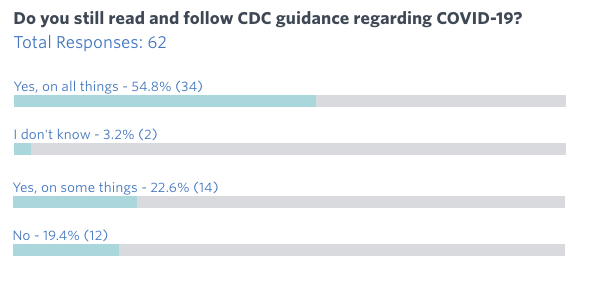
Take a look at these results from the last survey:
|
|
Have a question? Email us. |
|
Los Alamos Treatment Information |
|
Bebtelovimab COVID-19 treatment
The U.S. Food and Drug Administration (FDA) has issued an Emergency Use Authorization (EUA) for the emergency use of bebtelovimab for the treatment of mild-to-moderate symptoms for those who've tested positive for COVID-19 in adults and pediatric patients (12 years of age and older weighing at least 88 pounds).
While the oral antiviral drug Paxlovid, is the first line of treatment for patients at high risk for progression to severe symptoms, a physician may elect bebtelovimab as the next line of defense if the patient is not able to take Paxlovid.
In Los Alamos, bebtelovimab is only administered at the Los Alamos Medical Center Emergency Room, 3917 West Road, and as determined by a physician. While a single intravenous infusion (IV) treatment is quick, the patient will be required to remain for observation.
More information and frequently asked questions on the bebtelovimab are available on the FDA website.
|
|
Los Alamos County COVID Treatment Resources
Visit the County COVID Page for information regarding treatments, click below:
|
|
Los Alamos Testing Information |
|
At-Home COVID-19 Antigen Tests-Take Steps to Reduce Your Risk of False Negative: FDA Safety Communication
The U.S. Food and Drug Administration (FDA) is advising people to perform repeat, or serial, testing following a negative result on any at-home COVID-19 antigen test, to reduce the risk an infection may be missed (false negative result) and to help prevent people from unknowingly spreading the SARS-CoV-2 virus to others. The FDA recommends repeat testing following a negative result whether or not you have COVID-19 symptoms.
At-home COVID-19 antigen tests detect proteins, called antigens, from the SARS-CoV-2, the virus that causes COVID-19. At-home COVID-19 antigen tests are less likely to detect the SARS-CoV-2 virus than molecular tests, such as polymerase chain reaction (PCR) tests. This is especially true early in an infection or in people who do not have COVID-19 symptoms.
Today's recommendations are based on the latest study results from people with likely omicron infection showing that repeat testing after a negative at-home COVID-19 antigen test result increases the chance of an accurate result.
Recommendations:
Before you use a COVID-19 antigen test
- Be aware that at-home COVID-19 antigen tests are less accurate than molecular tests. COVID-19 antigen tests may not detect the SARS-CoV-2 virus early in an infection, meaning testing soon after you were exposed to someone with COVID-19 could lead to a false-negative result, especially if you don't have symptoms. This is the reason why repeat testing is important.
- If you plan to use at-home COVID-19 antigen tests, have several tests on hand so you can test more than once. You do not need to use the same brand of test each time for repeat testing.
- Be aware the FDA expects similar performance with Point of Care (POC) COVID-19 antigen tests performed at a clinic or doctor's office. A negative POC COVID-19 antigen test result should also be followed up with repeat, or serial testing, and an at-home test could be used.
To read the full news release, click HERE.
|
|
|
Do you regularly test for COVID-19?
|
|
|
|
Los Alamos County COVID Testing Resources
Visit the County COVID Page for information regarding testing, click below:
|
|
Los Alamos Vaccine & Booster Information |
|
How do I know if I'm eligible for a vaccine or booster?
Follow these links to review the CDC eligibility guidelines:
|
|
Los Alamos County COVID Vaccine/Booster Resources
Visit the County COVID Page for information regarding vaccinations/boosters, click below:
|
|
What else would you like to see in this newsletter?
Click below to email us your feedback and questions!
|
|
|
|
|
|
|