|
Jewish Artists:
Jeanette Jena
Jewish Encyclopedia
Daughters of Lilith
Databases:
Western Pennsylvania Synagogue Project
A Patchwork Life:
Extended through May 27
Calendar:
April 21: Barbara Trellis exhibit
April 22: REACHing Out
April 25: Tree of Life exhibit
April 27: Treasures in the Archives
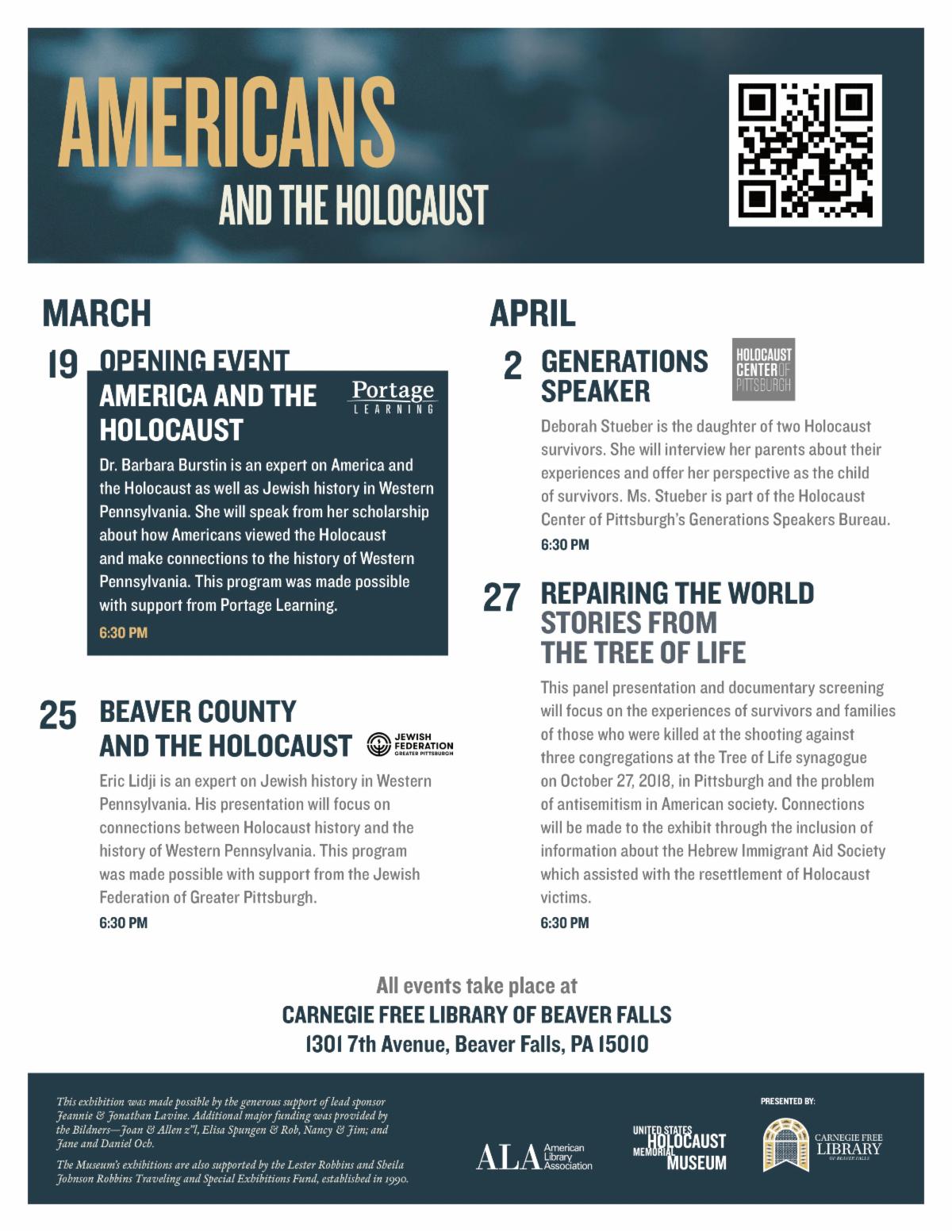
April 27: Americans and the Holocaust
April 29: Stories From the Sidewalk
May 4: Eli Rubin book launch
May 8: "Teach Them to Your Children"
Jewish Genealogy Society:
April 20: Gil Bardige
Community:
URA photographs
SHHS archives
JCBA "Road-Trip"
Research Tools:
Newspapers, Cemeteries,
Memorial Plaques, Books,
Population Figures, Synagogues, Newsletter Archive,
Shul Records America,
Timeline
| | | |
Jewish Artists:
Jeanette Jena
| | |
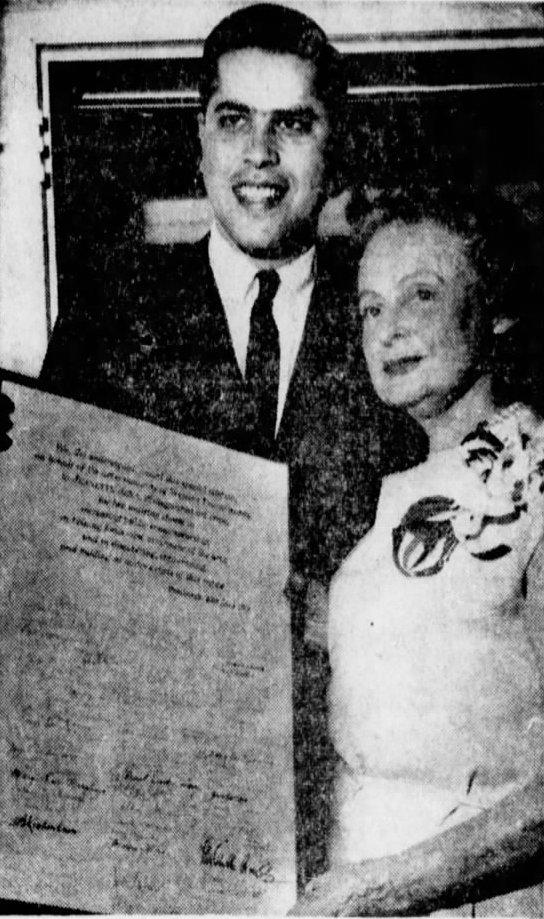
Jeanette Jena receiving a distinguished service award from Sylvester Damianos of the Associated Artists of Pittsburgh.
Pittsburgh Post-Gazette (June 6, 1966)
Newspapers.com
| | |
Jeanette Ruth Jena (1896-1971) was an art critic for the Pittsburgh Post-Gazette. She was born Jeanette Einstein in Kittanning, Pa., one of four children of Jacob R. Einstein and Augusta (Cohen) Einstein. She was active at Rodef Shalom Congregation as a child. She graduated from Vassar College in 1917 as a member of Phi Beta Kappa. She returned to the Pittsburgh area after graduation and married Dr. Milton Jena of Pittsburgh in 1921 or 1922.
Jena worked briefly in advertising at Hornes Department Store before starting a career in journalism. She published book reviews in the Pittsburgh Press as early as 1927 and joined the Pittsburgh Post-Gazette as an art critic around 1935. For the next 35 years, she was an institution in the local art world—admired by readers and by artists alike. A group of more than 100 regional artists jointly presented her with a “distinguished service award” at a meeting of the Associated Artists of Pittsburgh in 1966. The citation read, in part, “For her untiring efforts in increasing public connoisseurship; in helping focus civic awareness of the arts; and in discovering, encouraging and guiding so many artists of this region.” She retired from the Post-Gazette in 1969.
| | As part of our yearlong initiative to highlight Jewish artists in Pittsburgh, we’ve created a new entry for “Artists” on the Jewish Encyclopedia of Western Pennsylvania. The entry includes links to profiles of 19 local Jewish artists, including all of the artists profiled in this newsletter so far this year, as well as several artists who have collections at the Rauh Jewish Archives. We will continue to update and expand this entry in the weeks and months to come. | | All year, the Rauh Jewish Archives is highlighting stories of Jewish artists in Western Pennsylvania before World War II. If you would like to donate a material from this time period, or any historic materials documenting Jewish life in this region, contact the archive or call 412-454-6406. | | |
Jewish Encyclopedia:
Daughters of Lilith
| | |
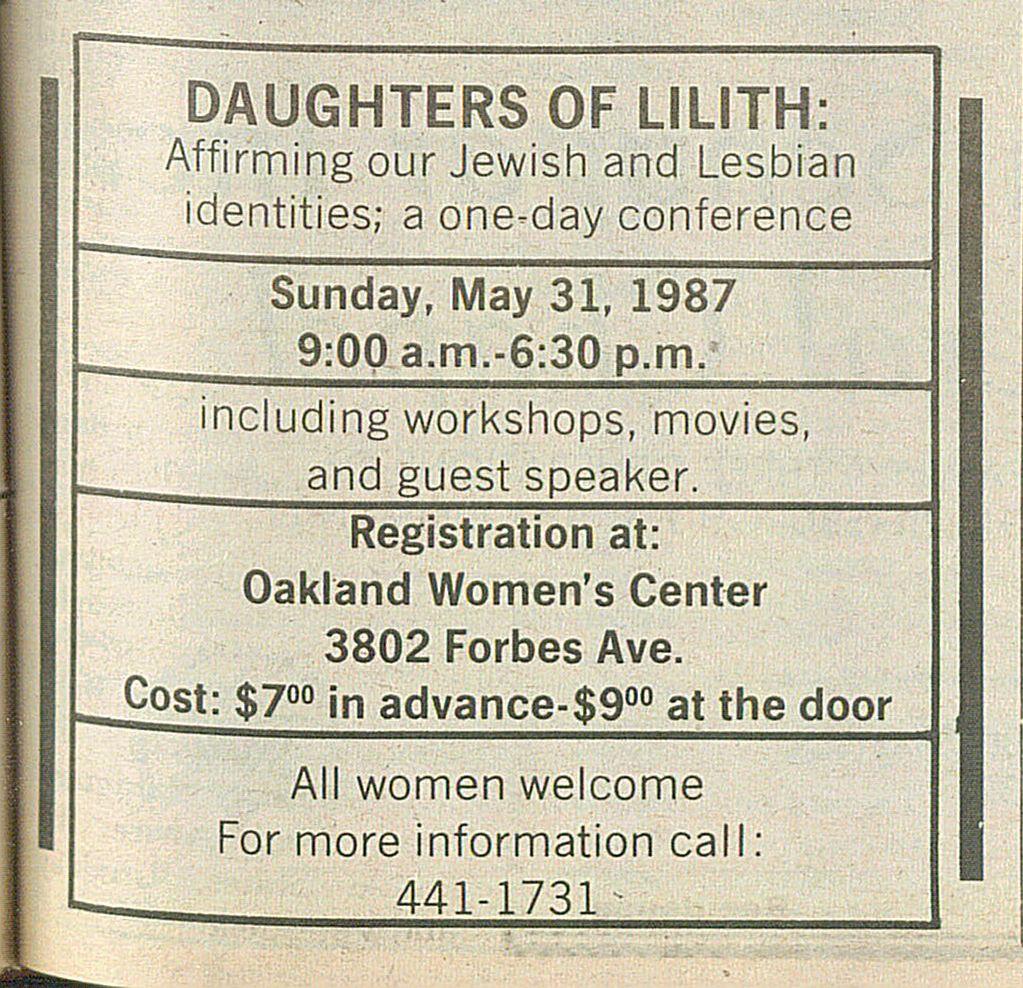
Advertisement for “Daughters of Lilith” conference at the Oakland Women’s Center.
Jewish Chronicle (May 27, 1987)
Pittsburgh Jewish Newspaper Project
| | Daughters of Lilith was a Jewish lesbian collective in Pittsburgh. It emerged in the late 1980s after several local Jewish women attended an annual retreat in the Philadelphia area hosted by a Jewish feminist collective called “Achiyot Or” (Sisters of Light) and decided to create something similar in Pittsburgh, focusing specifically on Jewish lesbian women. The formed Daughters of Lilith in early 1987. The group hosted an all-day conference at the Oakland Women’s Center on May 31, 1987 titled “Daughters of Lilith: Affirming our Jewish and Lesbian identities; a one-day conference.” The following year, several founding Daughters of Lilith members joined the emerging Bet Tikvah Congregation to encourage the development of a single place for local LGBTQ Jews. | | |
Databases:
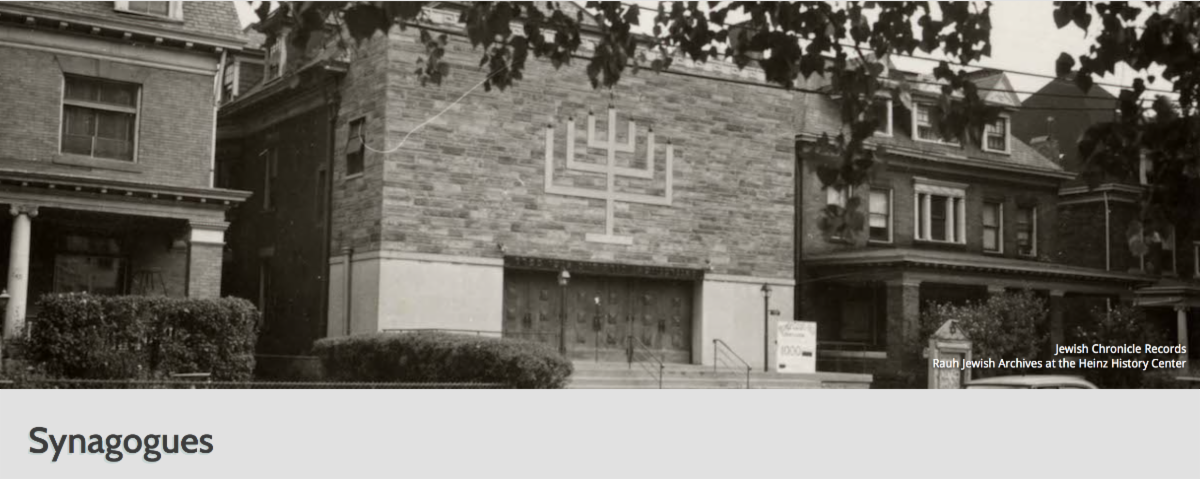
Western Pennsylvania Synagogue Project
| | |
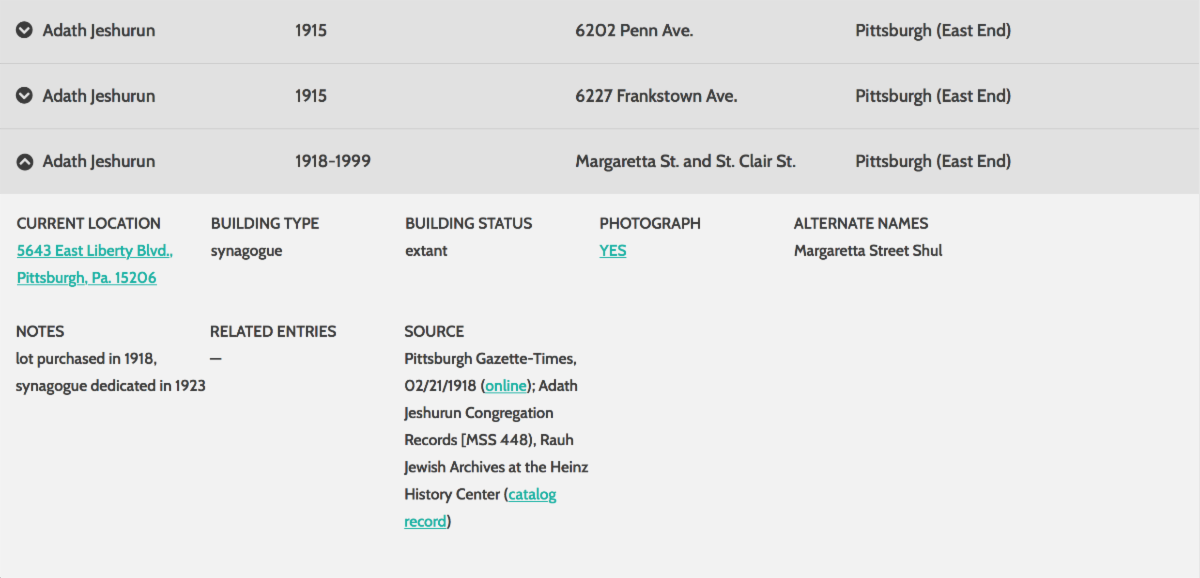
After a hiatus, we have once again begun updating the Western Pennsylvania Synagogue Project database. The database now includes 218 locations associated with 61 congregations. We recently added 27 locations associated with Congregation Beth Shalom, Lubavitch Center, the Maimonides Institute, Temple Sinai, Yeshiva Schools of Pittsburgh, and Young Israel.
| | |
Louise Silk: A Patchwork Life
Extended Through May 27
| | |
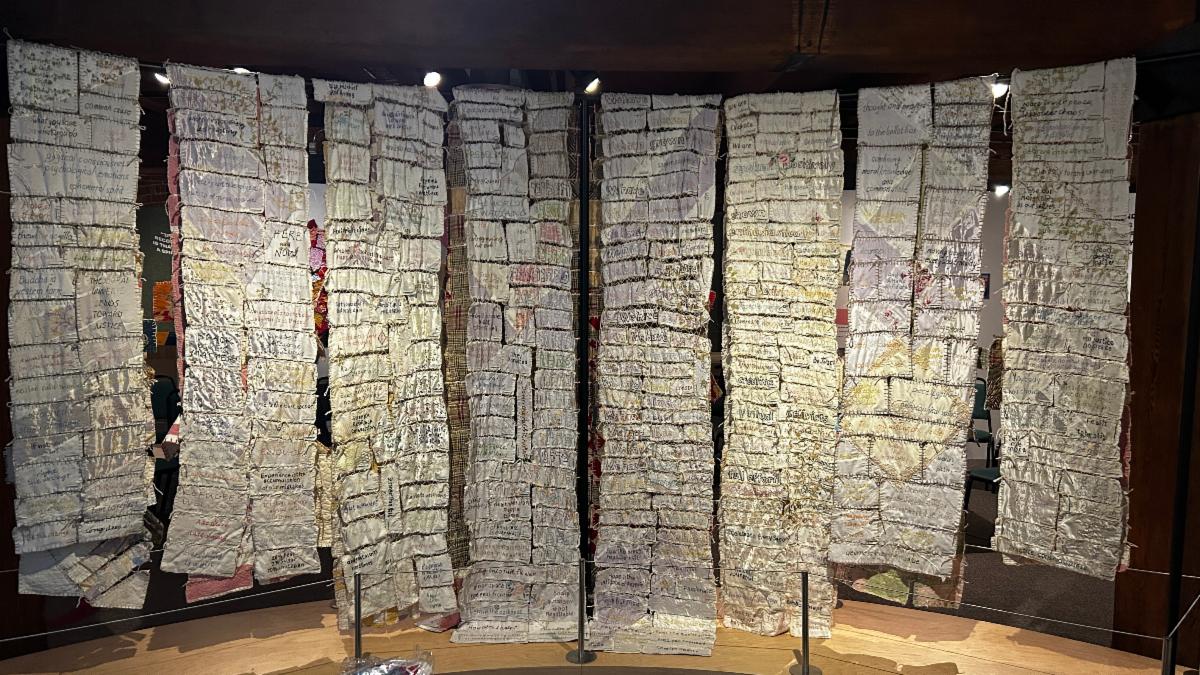
Due to popular demand, the Senator John Heinz History Center will extend its exhibition, Louise Silk: A Patchwork Life, through Monday, May 26.
Originally set to close on April 6, the vibrant exhibition reveals how the quilts of local artist Louise Silk reflect her life’s journey.
A project of the Rauh Jewish Archives, Louise Silk: A Patchwork Life features a stunning collection of handmade quilts and colorful artwork crafted by Silk, alongside captivating archival images, videos, and artifacts that detail her work and life experiences over the past five decades.
Born in Pittsburgh’s East End in 1950, Silk emerged from a large Jewish family that had emigrated from Eastern Europe in search of opportunity and stability. The social revolutions of the 1960s ignited her desire for change. By chance, she discovered quilting – an art and craft that would become her lifelong passion and profession.
Silk initially kept her art separate from her Jewish identity until a creative crisis in the late 1980s led her to blend spirituality and art, resulting in quilts with deep personal and cultural significance. By the mid-1990s, quilting became Silk’s way of processing life's challenges, including divorce, loss, and personal growth. Today, she sees her life as a patchwork of many pieces, embracing her roles as an artist, teacher, mother, and partner. Silk’s artistry continues to evolve as she reimagines her past work with daring and innovative ideas.
Exhibition highlights include:
· Silk’s first project, the “Grandmother’s Flower Garden” quilt, made after learning about the art of quilting in Ms. Magazine
· A three-dimensional quilted table from Silk’s first solo exhibition, City Quilts, in 1987
· A quilted mezuzah, created in collaboration with printmaker Leslie Golomb, which reflects their shared Jewish identity
· A machine-pieced and hand-quilted map of the South Side, where Silk currently lives and works
· The “Archangel Michal,” created from recycled zippers from SilkDenim projects with her daughter, representing the angel Michael – a heavenly advocate for Jewish people.
The Louise Silk: A Patchwork Life exhibit is generously supported by the Jewish Healthcare Foundation and The Fine Foundation, with additional support from The Heinz Endowments, Richard King Mellon Foundation, and the Allegheny Regional Asset District (RAD).
| | |
April 21:
Barbara Trellis: The Story Behind Her Designs
| | |
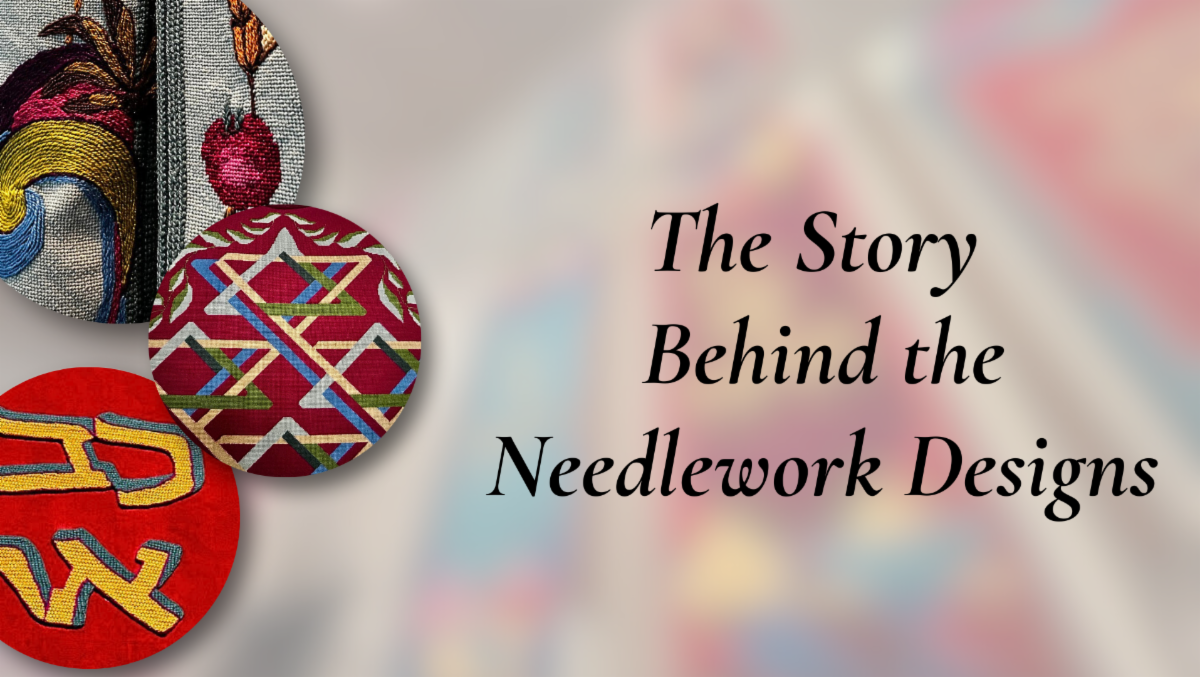
A self-made textile designer and artist, Barbara Trellis (1930-2024) graduated from Carnegie Institute of Technology (now Carnegie Mellon University), where she majored in Clothing and Design. Barbara's passion for needlepoint inspired her to launch a mid-life career teaching the craft to others. She ultimately became an ecclesiastical designer and was tapped to design and produce many large-scale installations for major Pittsburgh religious institutions. She carefully selected and led teams of volunteer stitchers from these organizations to execute her elaborate designs.
For Rodef Shalom, projects included Torah covers, altar chairs, banners depicting the Ten Commandments, and a wall hanging of the Torah portion from Leviticus. In addition, independently, she designed and constructed a silk appliqued chuppah. Her final contribution was a large, dramatic appliqued kidskin Menorah. In addition, Trellis designed Torah covers for Beth Shalom, Torah covers and a chuppah for Beth El, a curtain and valance for the ark and lectern coverings for Poale Zedek, and an ark covering for Beth Israel in McKeesport. She designed a series of communion kneelers for the United Methodist Church in Mt. Lebanon.
This free exhibit will be on display in the Rodef Shalom Congregation Jewish Museum (4905 Fifth Ave.) from March 21 through April 21, 2025.
| | |
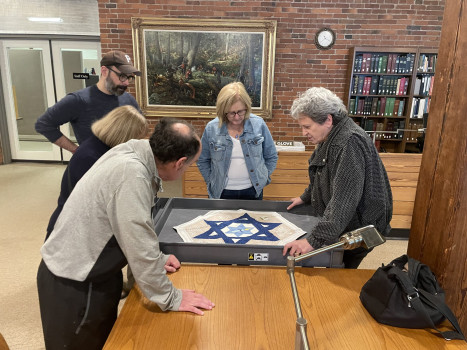
After the October 27, 2018 synagogue shooting, people around the world sent objects of comfort, care, and love to those directly impacted by hate. Join us as family members and survivors share their profound experiences of both antisemitism and solidarity and reflect on what the objects sent to Pittsburgh tell us about the nature of community. This event is hosted in partnership with the Rauh Jewish Archives and REACH, a project of the 10.27 Healing Partnership that supports families and survivors of the Pittsburgh synagogue shooting in sharing their stories to remember, educate, and combat hate.
This event is being held at University of Pittsburgh's University Club from 7-8:30 pm. Paid parking is available in the Club lot (on Thackeray Ave), the Soldiers and Sailors Memorial lot, and street parking throughout Oakland.
| |
April 25:
Lessons from the Tree of Life
| | Created in partnership with the Rauh Jewish Archives at the Heinz History Center, this exhibition from The Tree of Life Center features a curated selection of items gifted to the Pittsburgh Jewish community in the aftermath of the October 27 attack. It challenges visitors to reflect on the impact of antisemitism in America and seeks to inspire action to build a future rooted in resilience and understanding. The exhibit is at the University Club on the campus of the University of Pittsburgh and will then travel to other cities. | | |
April 27:
Treasures in the Archive
| | |
Join the Detre Library & Archives on Sunday, April 27 at 1 pm to explore highlights from one of the largest collections of historic materials in Western Pennsylvania.
The popular FREE annual program delves into captivating stories preserved in the History Center collection and gives you a unique glimpse into Western Pennsylvania’s past through one-of-a-kind documents and photographs.
Collections featured in past Treasures in the Archives have included building movers, unrealized Pittsburgh futures, boxers, coroners, pandemics, beloved neighborhood figures, old saloons, famous families, overlooked community stories, and the lost history of a notorious home for ex-offenders.
This annual program dives deeply into four topics carefully chosen by our dedicated archivists. This year’s topics include:
- A behind-the-scenes look into how the archives brings history to life for students
- An exploration into the archives of Louise Silk and Barbara Trellis, two local fiber artists with exhibits currently on display in Pittsburgh
- A look at the personal correspondence of Pittsburgh’s unsung hero Henry Ellenbogen who helped Jewish Europeans escape the Third Reich
- The Pittsburgh Folk Festival, which was founded amid the Cold War and celebrated the region’s ethnic communities, offering a counterpoint to communism by highlighting America’s tradition of welcoming diverse cultures
For one-day only, a special selection of archival materials related to these four topics will be on view for attendees. Deepen your understanding of Pittsburgh’s history and learn more about these one-of-a-kind stories during this signature event on the Detre Library & Archives calendar.
| | |
April 27:
Americans and the Holocaust:
Repairing the World: Stories from The Tree of Life
| | |
April 29:
Stories From The Sidewalk
| | |
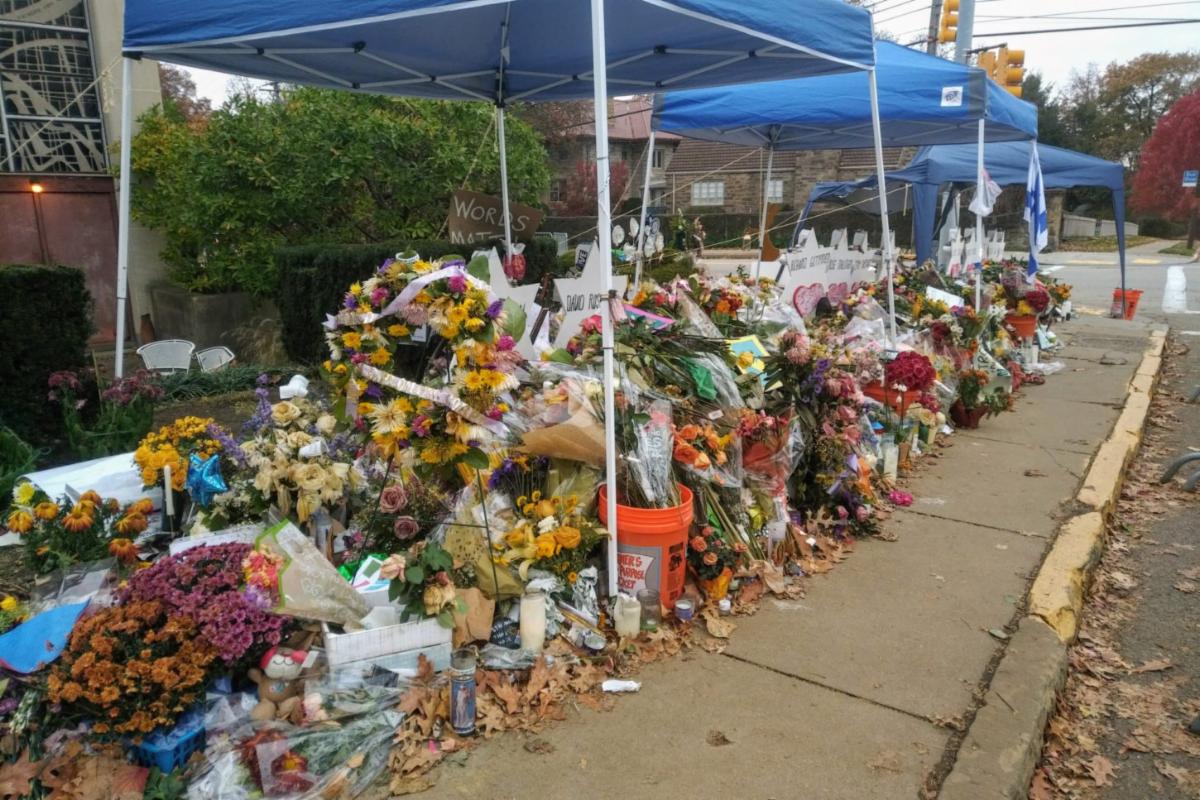
In the days following the October 27, 2018 attack, thousands of people paid their respects by leaving items of consolation at a makeshift memorial on the sidewalk in front of the Tree of Life synagogue building.
Those objects now form the basis of a major artifact collection at the Rauh Jewish Archives at the Heinz History Center, documenting the powerful local and global response to October 27 and the support for the victims’ families, survivors, the three congregations targeted, law enforcement, and the entire Jewish community.
Join retired CMU history Professor Laurie Eisenberg and RJA Director Eric Lidji as they explain how this collection came to be and share the moving stories behind several gifts from the memorial. Eisenberg and Lidji will also direct attention to an online gallery featuring more of these items and their backstories, and will explain how visitors to the site can use it to promote a more compassionate world.
| |
|
May 4:
"Kabbalah and the Rupture of Modernity"
| | |
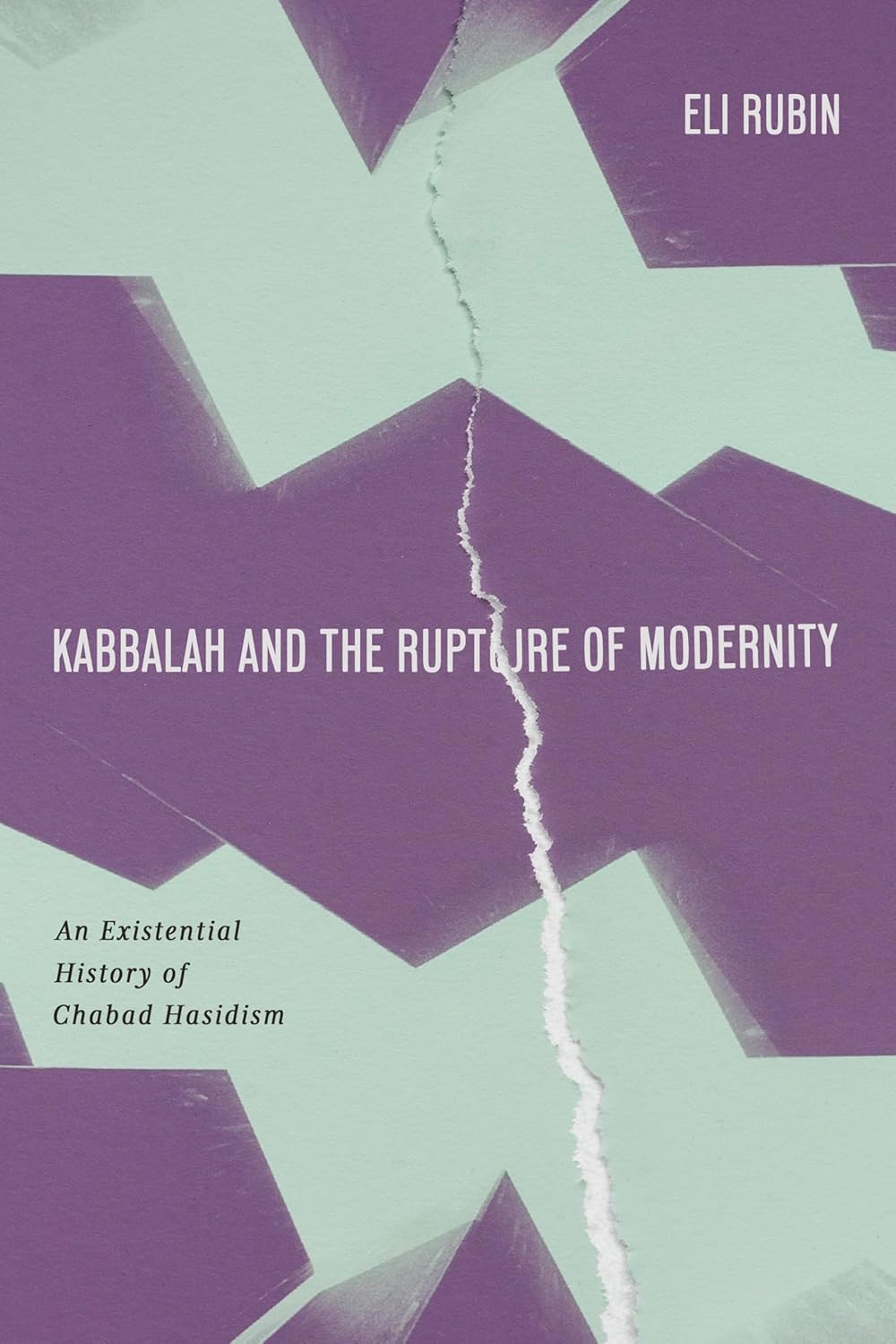
To celebrate the publication of Eli Rubin’s new book, “Kabbalah and the Rupture of Modernity,” the Rauh Jewish Archives and the University of Pittsburgh Jewish Studies Program are hosting an evening of local Jewish scholars discussing the work and considering its themes. The program will include short reflections on the book from Shua Hoexter (JGrads Pittsburgh), Leah Shollar (Yeshiva Schools of Pittsburgh), and Adam Shear (University of Pittsburgh), followed by a response from Dr. Rubin.
“Kabbalah and the Rupture of Modernity” provides a comprehensive intellectual and institutional history of Chabad Hasidism through the Kabbalistic concept of ṣimṣum. The onset of modernity, Rubin argues, was heralded by this startling idea: existence itself is predicated on a self-inflicted “rupture” in the infinite assertion of divinity. Centuries of theoretical disputations concerning ṣimṣum ultimately morphed into religious and social schism. These debates confronted the meaning of being and forged the animating ethos of Chabad, the most dynamic movement in modern Judaism.
Chabad’s distinctive character and self-image, Rubin shows, emerged from its spirited defense of Hasidism’s interpretation of ṣimṣum as an act of love leading to rapturous reunion. This interpretation ignited a literal conflagration, complete with book burnings, denunciations, investigations, and arrests. Innovatively integrating history, philosophy, and literature, Rubin shows how Kabbalistic ideas are crucially entangled in the experience of modernity and in the response to its ruptures.
Kosher refreshments provided by Elegant Edge.
| |
|
May 8:
"Teach Them To Your Children"
| | |
Since the times of the Talmud, Jewish education has been a communal responsibility. How has Western Pennsylvania met this challenge?
In a fast-paced and engaging monthly series “Teach Them To Your Children,” Rauh Jewish Archives Director Eric Lidji will cover 150 years of Jewish educational initiatives in Western Pennsylvania, showing how our community has perpetuated Jewish knowledge from generation to generation.
This series will take place monthly in the Community Day School library (2743 Beechwood Blvd.) on Thursday evenings at 7 p.m.
Jan. 9—The 19th Century
Feb. 6—The 1900s
Mar. 6—The 1910s
Apr. 10—The 1920s
The series continues May 8 with a review of local Jewish educational initiatives in the 1930s and the impact of the Great Depression and overseas turmoil.
The schedule for the rest of the year includes:
June 12—The 1940s
July 10—The 1950s
Aug. 14—The 1960s
Sept. 11—The 1970s
Oct. 9—The 1980s
Nov. 13—The 1990s
Dec. 11—The Future
"Teach Them To Your Children" is presented by Community Day School, Hillel
Academy of Pittsburgh, and Yeshiva Schools of Pittsburgh.
| | |
Did you enjoy Gil Bardige’s previous talk…Part 1? We hope that you tried his methodologies and techniques. Well, it is now time for the Next Steps. This intermediate to advanced level presentation is primarily for people working with Jewish ancestry who have completed Gil’s Part 1 and have run into
new brick walls or want to expand their search parameters productively.
Gil will provide you with actionable processes that you can use in your genealogy research, including new criteria and dealing with the exceptions. Through case studies and examples, he explains Pileup Areas, Segment Triangulation and for those of you who have tested at Ancestry, Gil has added, how he used Pro Tools (Shared matches & ThruLines) to find 7 DNA matches that he would have missed without these techniques and added nearly 4 dozen new documented relatives to his tree.
Tested at MyHeritage? Learn some key shortcuts to help you sort through the unknown matches in a quicker more productive process while making use of the key tools that only My Heritage provides.
He is a firm believer that you can use DNA results as a tool in your genealogical research as it generates clues that can help people confirm/deny relationships. His speaking style is high energy (you won’t be bored) and he loves to take questions at the conclusion. People have said of his presentations, “Thank you, Gil, I am no longer confused!”
Gil Bardige was born & raised in Chicago and currently lives in the Columbus Ohio area. A graduate of the New York Institute of Technology, Gil retired in 2019 after a long career in air conditioning and refrigerationmost recently as a National Business Development Leader for Trane Technologies. At the “instruction” of his mother, Gil began his genealogy adventure in 1979 with 54 people in his tree.
Today his family tree including Mishpocha, is over 3200 people tracing 4 branches back to his 5th great grandfathers born about 1740. His family arrived in Chicago in the early 20th century. For nearly 18 years Gil has expanded his knowledge base to Genetic Genealogy, testing at each of the four
major DNA companies, and currently manages three y-DNA projects at Family Tree DNA as a Volunteer Administrator. He loves to help people manage their expectations and begin to remove confusion from the DNA results whether it’s, Y-DNA, mtDNA, or Autosomal DNA. He had spoken at dozens of local events, international webinars and conferences, including at last 8 IAJGS Conferences. Gil has found nearly four dozen previously unknown cousins through DNA.
Gil is the Chair of the Genealogy Committee of the Columbus Jewish Historical Society (JGS). He co-hosts live Genetic Genealogy Q&A sessions at JGS Illinois and JGS Toronto. Gil developed and hosts the monthly Kvell & Kvetch genealogy Q&A in Columbus. Gil has managed the Mentoring Program for IAJGS and cohosts the Apple Users and Jewish Genealogy Facebook page and monthly virtual BOF (Birds of a Feather) meeting.
| | Urban Redevelopment Authority Archives | | The City of Pittsburgh Archives has launched a new digital archive containing thousands of photographs and documents spanning more than two centuries. Of particular interest to local Jewish history is a collection of more than 2,000 photographs of properties in the lower Hill District taken by the Urban Redevelopment Authority in the late 1950s prior to demolitions in the area. | | Squirrel Hill Historical Society Archives | | Squirrel Hill Historical Society has added a collection of 60 historic images of Squirrel Hill to the Historic Pittsburgh website. The collection contains selected images from three organizations: the Squirrel Hill Historical Society, Squirrel Hill Urban Coalition, and Mary S. Brown Memorial-Ames United Methodist Church. The photographs document many aspects of life in Squirrel Hill, including many beloved businesses from the 1990s that no longer exist. | |
From the Jewish Cemetery & Burial Association
"Road Trip: The Jewish Cemeteries of Western Pennsylvania"
| | |
The Jewish Cemetery and Burial Association of Greater Pittsburgh has released a new documentary showcasing Jewish cemeteries in Western Pennsylvania.
“Road Trip: The Jewish Cemeteries of Western Pennsylvania” is a one-hour tour of the many cemetery properties overseen by the JCBA, as well as an overview of the organization’s ongoing work to care for these sacred burial grounds. The video is a wonderful opportunity to celebrate these special Jewish cultural sites in our region. The video includes many historic photographs and documents from the collections of the Rauh Jewish Archives.
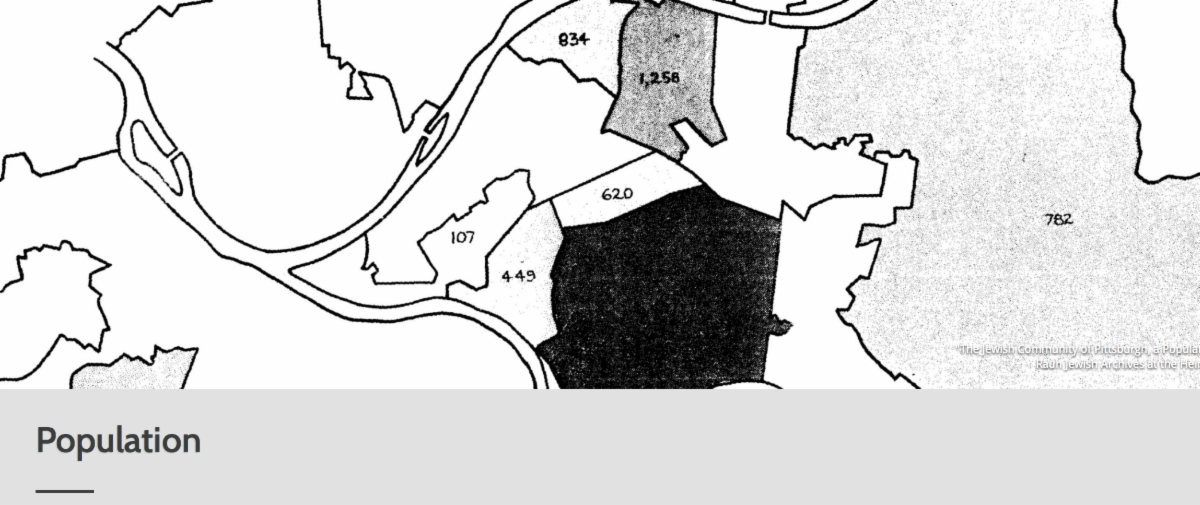
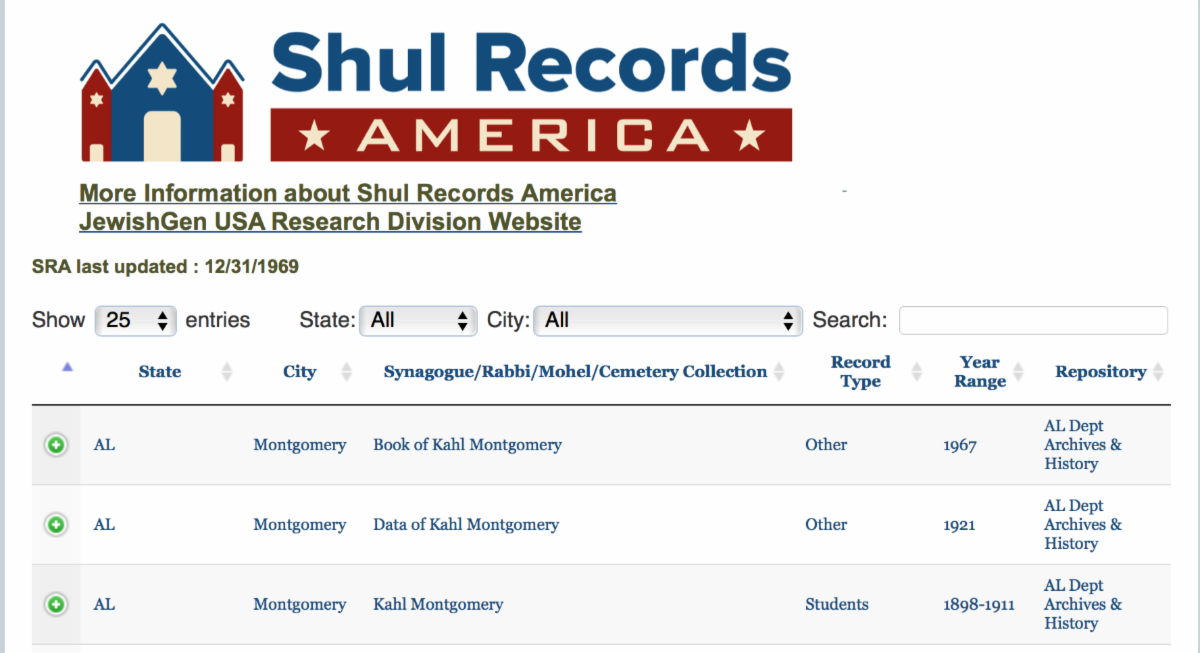
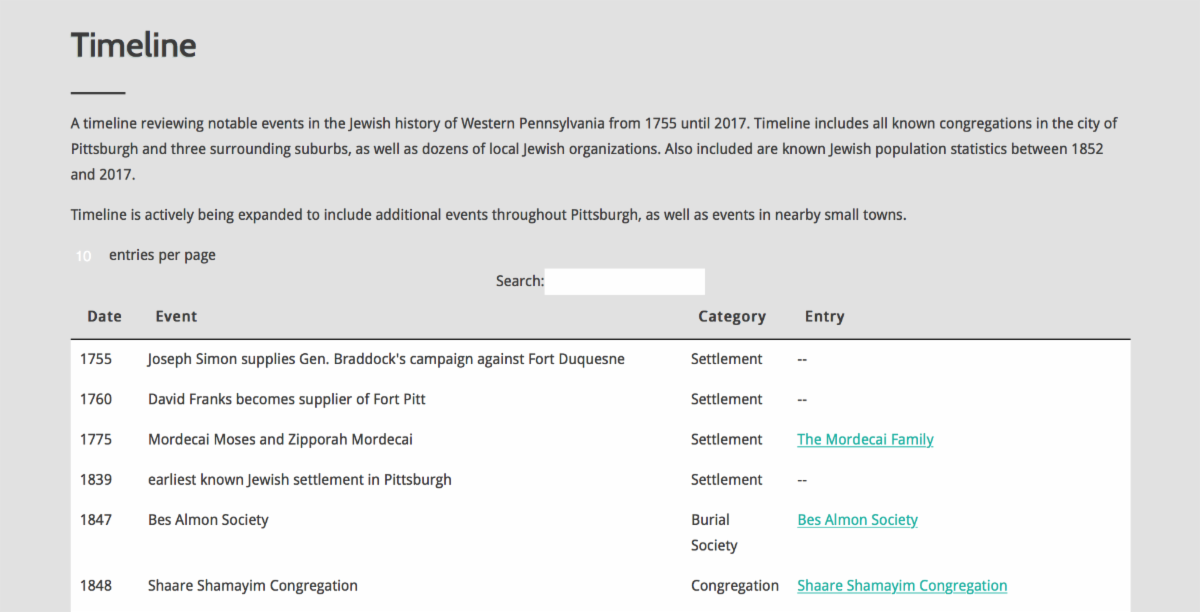
| | Pittsburgh Jewish Newspaper Project | | The Pittsburgh Jewish Newspaper Project contains digitized, searchable copies of four local English-language Jewish newspapers between 1895 and 2010. It is a valuable tool for researching almost any topic about Jewish history in Western Pennsylvania. For a primer on using the website, watch our video. | | | Western Pennsylvania Jewish Cemetery Project | | | | The Rauh Jewish Archives launched the Western Pennsylvania Jewish Cemetery Project in 1998 to preserve burial records from Jewish cemeteries across the region. Over a period of fifteen years, the information was compiled into a searchable, online database containing approximately 50,000 burial records from 78 Jewish cemeteries throughout the region. | | Western Pennsylvania Yahrzeit Plaques Project | | The Rauh Jewish Archives launched the Western Pennsylvania Yahrzeit Plaques Project in 2020. The goal was to create a comprehensive collection of burial records from memorial boards at synagogues across the region. Volunteers are currently transcribing these boards and records are being added monthly to our online database. The database currently contains more than 2,700 listings. | | | Rauh Jewish Archives Bibliography | | | | University of Pittsburgh librarian and Rauh Jewish Archives volunteer Laurie Cohen created this comprehensive bibliography of the Rauh Jewish Archives library holdings from 1988 through 2018. It lists nearly 350 volumes arranged by type and then by subject. This a great tool to use early in your research process, as you’re surveying available resources on a given subject. | | Jewish Population Estimates | | Looking to figure out how many Jews lived in a certain part of Western Pennsylvania at a certain moment in time? This bibliography includes more than 30 estimates of the Jewish population of Pittsburgh and small-towns throughout the region, conducted between 1852 and 2017. | | | | | A database of buildings throughout Western Pennsylvania known to have hosted Jewish worship services. Includes links to photographs and citations with original source material. Database currently includes 90 locations from 2 institutions | | Rauh Jewish Archives Newsletter | | The Rauh Jewish Archives has been publishing a weekly newsletter since 2020. The newsletter contains a variety of articles about local Jewish history, including much original research not found anywhere else. You can find and read every issue—more than 150!— in our new index. | | | | | Online finding aid from JewishGen listing congregational archival collections held at publicly accessible repositories across the United States. Includes 63 listings from the Rauh Jewish Archives, as well as other repositories with Western Pennsylvania congregational records. | | Timeline of local Jewish history between 1755 and 2017, including the founding dates for 85 organizations, 66 congregations, and 30 schools in Pittsburgh and its surrounding suburbs. The timeline also includes 23 local Jewish population estimates made between the mid-19th and early 21st centuries. | | |
[IMAGE: Marian Schreiber and employees at the Schreiber Trucking Company, c.1943—from Schreiber Family Papers and Photographs, MSS 846.]
If you like this newsletter, why not forward it to a friend? We want to share the story of Western Pennsylvania Jewish history with as many people as possible.
If you've received this newsletter from a friend or neighbor, and you want to read more, just click on the link below to start receiving future editions.
| | The Rauh Jewish Archives was founded on November 1, 1988 to collect and preserve the documentary history of Jewish life in Western Pennsylvania and to make it available to the world through research assistance, programing, exhibits, publications, and partnerships. | | | | |