|
American Indian and Alaska Native (AIAN) communities experience some of the most significant cancer disparities in the United States. Across several cancer types, AIAN populations experience higher cancer incidence and mortality, later stage diagnosis, reduced access to specialty oncology care, and lower clinical trial enrollment. Numerous articles document these disparities, yet, despite growing attention, inequities remain.
Cancer Health Disparities Faced by AIAN Individuals
A well-documented history of mistreatment and data misuse has led to mistrust of the health care system and research in general, exacerbating these issues. Historical traumas, chronic underfunding of AIAN health care systems, geographical isolation, understaffing, and longstanding exclusion from research are drivers of these inequities. AIAN communities continue to face barriers to accessing treatment at cancer institutes and other specialty oncology care.
Cancer centers can play a critical role in addressing these disparities; however, they cannot effectively address AIAN cancer inequities through outreach, engagement, and community-based research alone. Meaningful progress requires leadership from AIAN people, investment in hiring AIAN team members, and sustainable, long-term partnerships with tribes. At OHSU Knight Cancer Institute (KCI), these principles have guided successful initiatives that may serve as an example for other cancer centers seeking to engage with tribal communities and address known cancer health disparities.
AIAN Leadership Committed to Providing Cancer Care
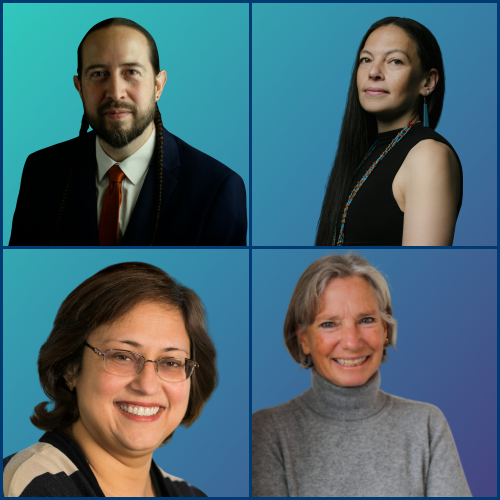
First, our efforts are led by two AIAN clinical faculty investigators: Gynecologic Oncology Professor Amanda Bruegl, MD, MCR and Research Assistant Professor Claymore Kills First, PharmD, BCOP. Drs. Bruegel and Kills First lead and facilitate tribal outreach and research within KCI’s Community Outreach and Engagement. Through their tenure at KCI, they have established relationships with the tribes and tribal-serving entities within the Pacific Northwest as well as elevated tribally-related health issues within the KCI. Through their faculty leadership, they have imparted that trust is built upon relationships, and work through KCI has sought to place tribal members in key operational and decision-making roles.
A top priority for our team has been improving access to high-quality cancer care. AIAN patients often experience fragmentation of care between tribal health systems, Indian Health Service, urban Indian health programs, local hospitals, and cancer centers. To address these barriers to care we developed the Native American Values Included to Guide Access to Expert Cancer Care (NAVIGATE) study. NAVIGATE centers around an Indigenous community oncology navigator (ICON) who provides culturally rooted support for AIAN patients and families throughout their cancer journey while coordinating care between tribal health systems and the cancer center. By making culturally informed care a pillar of oncology navigation, NAVIGATE aims to improve patient support, care coordination, and communication; reduce barriers; and promote care that is tailored to AIAN patients’ unique needs.
Tribal Partnerships and Inclusive Research to Meet Community Goals
Federally recognized tribes are sovereign governments with the authority to control all research involving their members, communities, and lands. Successful collaborations require more careful safeguards that are beyond the scope of academic institutional review boards. These initiatives require meaningful partnerships, tribal government review and approval, and protections to guarantee accountability for outside investigators. We have worked with Oregon Tribes to develop data use agreements and governance structures that uphold tribal data sovereignty and facilitate culturally informed research and outreach.
Our commitment to tribally inclusive research has led to the creation of a tribal relations research coordinator (TRRC), an ICON, and hiring community members as tribal liaisons to guide our work. These individuals serve as cultural experts, relationship builders, advocates, and bridges between tribes and the KCI. Their roles, along with our AIAN investigators, help ensure that projects remain aligned with community goals and are culturally informed. They also serve as a resource for non-AIAN investigators to conduct culturally informed research within these populations.
Overcoming Cancer Disparities Through Trust and Relationship Building
This trust and relationship building has enabled us to advance a diverse range of AIAN-focused cancer research, education, and community engagement initiatives. The creation of the TRRC role and implementation of a formal research review process allows for bidirectional research.
In one community during multiple relationship-building events, tribal members expressed concern regarding contaminated drinking water that they believed may be contributing to elevated cancer rates on their reservation. In partnership with the tribe, KCI investigators developed a research project to test water sources throughout the community for environmental risk factors associated with certain cancers. This project highlights true collaboration that resulted in community engagement, education, and the development of research that was meaningful to the tribe.
Most importantly, this work emerged from community-identified concerns rather than investigator-driven priorities, illustrating how tribal partnerships can shape cancer research and answer questions of greatest relevance to AIAN communities.
Clinical Care, Prevention, and Research
AIAN individuals within the Pacific Northwest experience a significantly greater incidence and mortality of pancreatic ductal adenocarcinoma. Dr. Kills First and researchers within the KCI Brenden Colson Center for Pancreatic Care have established a multipronged approach to start moving the needle related to these health disparities by establishing a high-risk pancreatic cancer clinic with one of our tribal partners with plans to expand to tribes across the KCI catchment area. Dr. Bruegl and her teams have similarly identified contributors to cervical cancer health disparities faced by AIAN individuals and have created clinical outreach and research directed toward eliminating death from cervical cancer.
These programs and initiatives share the common practice of partnering with tribes and tribal organizations, recognizing that tribal communities should be shaping projects involving their members. AIAN faculty leadership, bidirectional research, tribal representation within KCI and tribes, and AIAN allies have led to the early successes to address cancer health inequities experienced by AIAN people within the KCI catchment area.
|