November 2021 Exhibitions and Public Programs |
|
For Immediate Release
Santa Fe, New Mexico, October 21, 2021
For more information, please contact IAIA Communications Interim Director Jason S. Ordaz at jason.ordaz@iaia.edu.
|
|
Anne and Loren Kieve Gallery
August 20, 2021–July 10, 2022
Exposure: Native Art and Political Ecology documents international Indigenous artists’ responses to the impacts of nuclear testing, nuclear accidents, and uranium mining on Native peoples and the environment. The traveling exhibition and catalog give artists a voice to address the long-term effects of these man-made disasters on Indigenous communities in the United States and around the world. Indigenous artists from Australia, Canada, Greenland, Japan, Pacific Islands, and the United States utilize local and tribal knowledge, as well as Indigenous and contemporary art forms as visual strategies for their thought-provoking artworks.
Exposure: Native Art and Political Ecology is co-curated by iBiennale Director Dr. Kóan Jeff Baysa; Nuuk Art Museum Director Nivi Christensen (Inuit); Hokkaido Museum of Modern Art Chief Curator and Vice Director Satomi Igarashi; Art Gallery of New South Wales Assistant Curator of Aboriginal and Torres Strait Islander Art Erin Vink (Ngiyampaa), Independent Curator Tania Willard (Secwepemc Nation), and MoCNA Chief Curator Manuela Well-Off-Man.
The hardcover, fully illustrated catalog will be published in Fall 2021 and features artist statements, interviews and essays by co-curators, art historians, writers, scientists, and activists who will examine art practices and artists’ concerns more in depth. Exposure: Native Art and Political Ecology is supported by the Ford Foundation and the Andy Warhol Foundation for the Visual Arts.
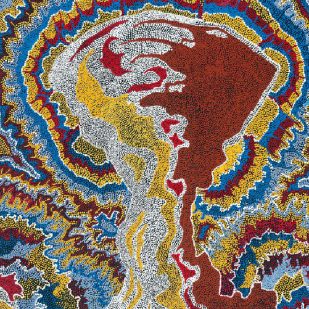
Image Credit: Hilda Moodoo (Pitjantjatjara) and Kunmanara Queama (Pitjantjatjara), Destruction I, 2002, synthetic polymer paint on canvas, 46.85 x 38.66 x 1.18 in. Art Gallery of South Australia, Santos Fund for Aboriginal Art 2002, 20025P24
|
|
South Gallery
IAIA 2021/2022 BFA Exhibition: We Went Wild
November 5, 2021–January 30, 2022
We Went Wild is an exhibition of emerging students in the Institute of American Indian Arts’ (IAIA) BFA programs. Some of the participating artists are from the American Southwest, Peru, Northern Great Plains, and Japan.
This exhibition of recent work comprises various media, including sculpture, painting, and jewelry, which move as conduits for complex emotions we have all attempted to navigate during these challenging times. This distance has also challenged us to re-examine closeness and the need for connection.
IAIA Museum Studies Junior and Student-Curator Jaime Herrell explains that “We, no matter the disconnect or distance, especially in this existence, are here to create, to share, to feel—to find a peaceful moment or to just be grumpy, just as these artists do in their creative processes. Any distance between people explores the power and significance of genuine feelings, emotions, and cross-cultural expressions between each other, along with the individuality and solitude within us. This distance has also challenged us to re-examine closeness and the need for connection.”
Participating Artists
- Brandon Armijo (Jemez Pueblo)
- Chelsea Bighorn (Fort Peck Assiniboine and Sioux/Shoshone-Paiute)
- 伊藤福 (Fuku Ito) (Japanese)
- Jazmin Novak (Diné)
- Jonathan Loretto (Jemez/Cochiti Pueblos)
- Joseph Maldonado (Tlingit/Ottawa)
- Kelly Tungovia (Hopi)
- Kelsey Frosch
- Renee Chavez (Isleta Pueblo)
- Suni Sonqo Vizcarra Wood (Quechua Nation, Peru)
Image Credit: Jazmin Novak (Diné), Be Still, 2021, Bronze, 4.5 x 4.5 x 11 in., photograph by Jason S. Ordaz, IAIA
|
|
Kieve Family Gallery
On view until February 20, 2022
Experimental exPRESSion: Printmaking at IAIA, 1963–1980 features fifty-one recently-acquired works on paper from the Tubis Print Collection, donated by the Nina Tubis Wooderson Trust. Notable artists in the exhibition include Peggy Deam (Suquamish), Mary Gay Osceola (Seminole), and Sandy Fife (Muskogee Creek), among other IAIA Alumni. The exhibition will be on display for two-years and closes July 2021.
“Printmaking today contains so many variables, so many possibilities exist in the uses of materials. It is unlikely that any contemporary printmaker has not experimented or thought of experimenting with the same materials and processes.”—Seymour Tubis, 1966
The Tubis Print Collection represents the experimentation that took place in the IAIA Printmaking Studio from 1963–1981, which established a standard ofmodern printmaking practice for Native artists. Printmaking students learned skills that were central to the fine art curriculum developed for young Native artists. The process introduced students to the concepts of design, layout, shape, line, texture, and color. Printmaking informed other media, such as painting and sculpture, and helped shape the Contemporary Native Arts Movement at IAIA.
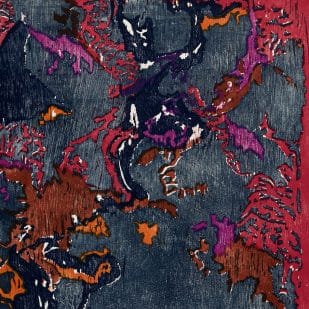
Image Credit: Benjamin Harjo, (Seminole/Shawnee), Microcosms of the Everglades, woodblock print, ca. 1965. Courtesy of IAIA MoCNA Permanent Collection, SE-67
|
|
Exposure: Native Art and Political Ecology documents international Indigenous artists’ responses to the impacts of nuclear testing, nuclear accidents, and uranium mining on Native peoples and the environment. The traveling exhibition and catalog give artists a voice to address the long-term effects of these man-made disasters on Indigenous communities in the United States and around the world. Indigenous artists from Australia, Canada, Greenland, Japan, Pacific Islands, and the United States utilize local and tribal knowledge, as well as Indigenous and contemporary art forms as visual strategies for their thought-provoking artworks.
Exhibition Size and Availability
The exhibition size is 365–500 linear feet (3,500–4,000 square feet) and it is available for booking periods beginning January 2023. (The exhibition size is negotiable.)
To inquire further about the availability of Exposure: Native Art and Political Ecology or to receive a prospectus and checklist for this traveling exhibition, contact IAIA Museum of Contemporary Native Arts (MoCNA) Chief Curator Manuela Well-Off-Man at manuela.well-off-man@iaia.edu.
Image Credit: Hilda Moodoo (Pitjantjatjara) and Kunmanara Queama (Pitjantjatjara), Destruction I, 2002, synthetic polymer paint on canvas, 46.85 x 38.66 x 1.18 in. Art Gallery of South Australia, Santos Fund for Aboriginal Art 2002, 20025P24
|
|
Maxx Stevens: Last Supper
Last Supper is a conceptual installation pointing to the effects of how the food we consume is making a negative impact within our communities. C. Maxx Stevens (Seminole/Mvscogee Nation) builds a visual narrative based on private and public memories and experiences to deal with the devastating effect of diabetes throughout native nations. The exhibition Last Supper creates a larger social awareness of the epidemic and its dilemma in all of the United States. The mixed media installation includes her family archives and testimony about the disease and its impact on traditional values and the drastic evolution of diet as well as economy. C.Maxx Stevens is an installation artist and a member of Seminole/Mvscogee Nation from Oklahoma. She has recently retired as a Professor of Art at the University of Colorado in Boulder, Colorado.
The exhibition requires approximately 600 sq. ft. of space. To inquire further about the availability of Maxx Stevens: Last Supper or to receive a prospectus and checklist for this traveling exhibition, contact IAIA Museum of Contemporary Native Arts (MoCNA) Chief Curator Manuela Well-Off-Man at manuela.well-off-man@iaia.edu.
Image Credit: Maxx Stevens (Seminole/Mvscogee Nation), Last Supper (detail). Photo courtesy of IAIA Museum of Contemporary Native Arts
|
|
2nd Floor North Hallway
On view until February 27, 2022
Daniel McCoy Jr.’s (Muscogee Creek/Citizen Band Potawatomi) ’17 mural outside the Kieve Family Gallery is part of the Experimental exPRESSion: Printmaking at IAIA, 1963–1980 exhibition.
McCoy who also created printmaking illustrations for the exhibition design and didactics. “The mural is influenced by powwow regalia colors, films, and comics from the late sixties and seventies. I tried to imagine what the IAIA students would have liked during this time (1963–1980). My son Noel and I first drew black and white illustrations in ink then roughly based the mural on these illustrations.”
—Daniel McCoy Jr.’s (Muscogee Creek/Citizen Band Potawatomi) ’17
Image Credit: Daniel McCoy Jr.: Experimental exPRESSion Mural (detail), photograph by Jason S. Ordaz, IAIA, 2021
|
|
Hallway Gallery and Honor Gallery
Alexander Lee: The Dream of Haere-pō
On view until July 2022
Alexander Lee’s (Hakka Chinese, Tahiti) mural The Dream of the Haere-pō is a study on time and on Indigenous transformation. It depicts in five sections, five tāpa’o (signs, markers) what Lee considers to be memory helpers and instruments for storytelling. Lee created this mural to inspire viewers to question limiting expectations of what Indigenous art is. He invites artists to redraw a narrative through reclaiming visual signs, and to write their own stories of time and space. With this mural, Lee hopes to inspire viewers to question the “Indigenous” and “Contemporary” labels as places of enclosure, and he invites them to imagine futures through an Indigenous perspective. The mural is part of Alexander Lee’s installation Te atua vahine mana ra o Pere (The Great Goddess Pere)—L’ Aube où les Fauves viennent se désaltérer.
Image Credit: Alexander Lee: The Dream of Haere-pō (detail), photograph by Jason S. Ordaz, IAIA, 2021
|
|
Allan Houser Art Park
On view until October 2021
As part of the Reconciliation exhibition, artist Lynnette Haozous (Chiricahua Apache/Diné/Taos Pueblo) painted a mural depicting the last day of the Entrada. Haozous explains, “The path to reconciliation is to first acknowledge the events that have brought us here today, post-Entrada—it is an honorary mural depicting the strength of the community members coming together to abolish the Entrada, especially the Indigenous women who stood on the front line. These warriors also fought against all that it represents from colonial police state violence to patriarchy—the fight for Indigenous rights and ways of life also includes the protection of land, air, water, and sacred sites for our future generations.”
The mural depicts the different points of view from community members who voiced their opinions and feelings surrounding the Entrada. “It is important to understand each other’s perspectives, while also acknowledging the true history of these lands. We must remember that reconciliation is an active process,” says Haozous.
Image Credit: Lynnette Haozous: Abolishing the Entrada Mural (detail), photograph by Jason S. Ordaz, IAIA, 2021
|
|
Upcoming Public Programming |
|
Online Event
Thursday, October 21, 2021, 4–5 pm
Please join us for an online discussion with the co-curator of MoCNA’s current exhibition, Exposure: Native Art and Political Ecology, Erin Vink (Ngiyampaa).
Erin Vink, a Ngiyampaa woman, is assistant curator of Aboriginal and Torres Strait Islander art at the Art Gallery of New South Wales. Previously, she was the inaugural Indigenous assistant curator of art at the Australian War Memorial. Her recent curatorial projects, including Wirura Kanyini (2020), From My Mother Unto Me (2019), For Our Country (2019, co-curated with Toni Bailey) and Naygayiw Purka: Alick Tipoti, the Eyes of the North (2019), address Aboriginal and Torres Strait Islander people’s experience with Country, our relationship to it, and our inherent desire to defend it. She is featured in a number of catalogs and art magazines, including most recently Extraction: Art on the Edge of the Abyss, Art Monthly Australasia’s #KNOWMYNAME edition, and Country Art SA’s Viétnam: One In, All In. Erin is an alumni member of the prestigious National Gallery of Australia’s Indigenous Arts Leadership program supported by Wesfarmers Arts.
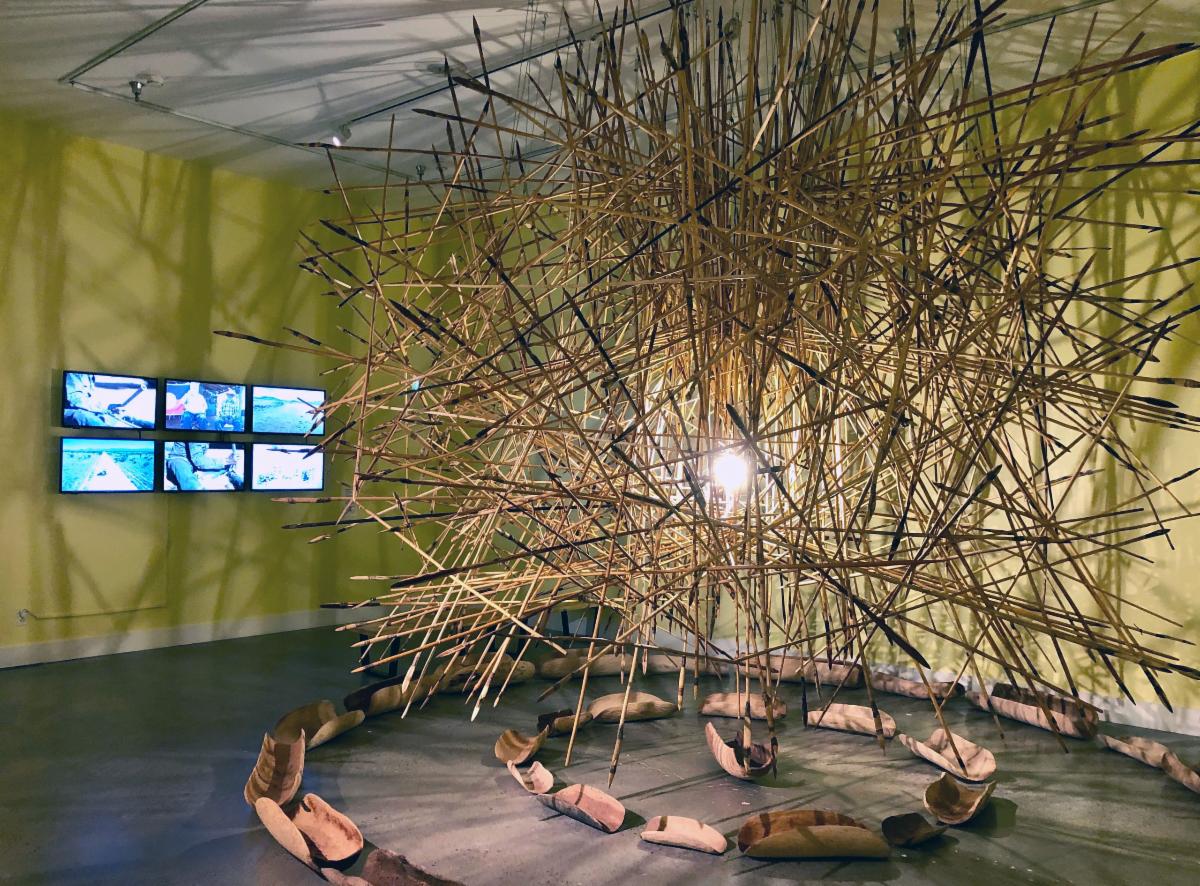
Image Credit: Gallery photograph of Exposure: Native Art and Political Ecology, courtesy MoCNA
|
|
Online Event
November 1–30, 2021
For Native American Heritage Month, MoCNA will host four Indigenous artists on MoCNA Instagram. Each artist will be given one week out of the month to share daily posts of their work, impromptu Q&A sessions, studio tours, and more. The purpose of the digital residency is to bring more visibility of contemporary Indigenous art through the realm of social media. The chosen group of Instagram artist residents will be announced on November 1. Please follow MoCNA’s Instagram for more updates.
Image Credit: David Neel (Kwakwaka’wakw, Canada, British Columbia), Chernobyl Mask (Allusion to Bakwas/Nuclear Disaster Mask), 1993, cedar wood, cedar bark, acrylic paint, 28 x 14 x 8 in., Seattle Art Museum, Margaret E. Fuller Purchase Fund, 97.55, photograph by Brad Trone
|
|
Ongoing Public Programing |
|
MoCNA Tours
Beginning in November, MoCNA will have weekly walk-in tours every Wednesday of each week. Walk-in tours are limited to six per group and is on a first come first served basis. MoCNA will also continue special group tours for school, travel, non-profit, and corporate groups. Group tours must be arranged one month prior to arrival. We are currently scheduling group tours for 20 or less. Please email groups@iaia.edu to schedule a tour.
Also, please visit our virtual museum online or download our mobile app for a self-guided tour option when visiting the museum.
|
|
 |
MoCNA Virtual Museum III
The virtual museum was co-created by our Senior Museum Education Manager Winoka Yepa (Diné) and Photographer Lisa Hinson of 5D Media, who provided the high-resolution photographs used for this VR experience.
|
|
|
|
MoCNA Mobile App
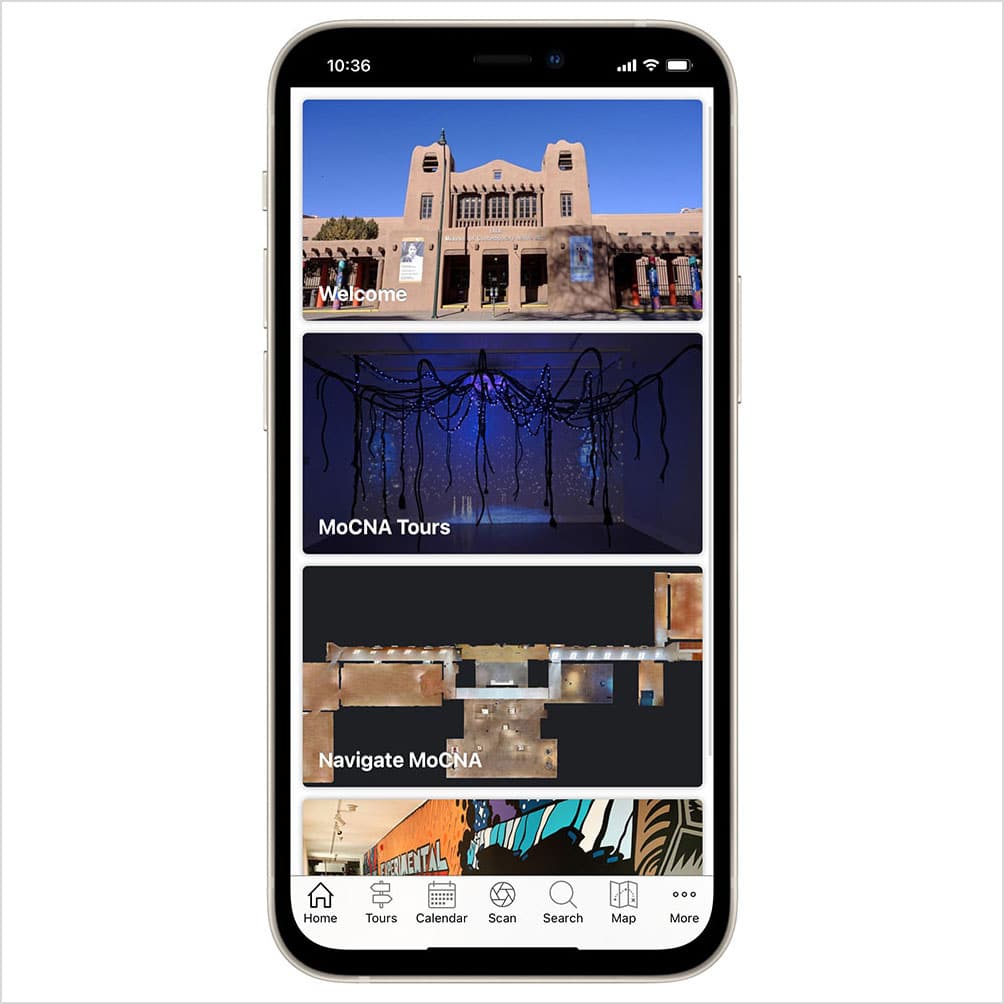
Experience MoCNA from your smartphone. Explore contemporary Indigenous art through our current exhibitions, through guided tours, artist interviews, and more. Stay up to date on our latest events, and explore the museum using our interactive maps all through the app.
The MoCNA app was co-developed by Cuseum, Inc. and MoCNA Senior Manager of Museum Education Winoka Yepa (Diné). All Apple and Apple logos are registered trademarks of Apple Inc.
|
|
|
|
|
Kinship & Solidarity Across Borders
This panel, Kinship and Solidarity Across Borders: A Conversation on Indigenous Curatorial Practices in “so-called” Canada and the United States, brings together Indigenous curators and artists based in “so-called” Canada and the United States who will discuss their Indigenous curatorial practices and issues and movements of solidarity, accountability, respect, and reciprocity in their roles as curators, educators, and artists within the institutions for which they work or collaborate.
|
|
|
|
Artist Talk with Michael Namingha
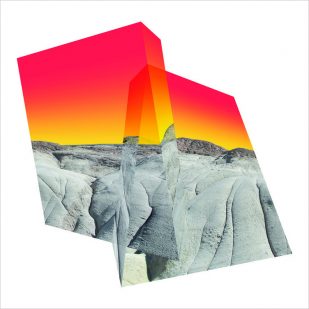
This artist talk and tour was held live virtually on Thursday, April 22 via ZOOM. Michael Namingha (Tewa/Hopi) spoke about his current work in his solo-exhibition, Altered Landscapes, which is currently on view in our North gallery.
Altered Landscape series are abstract, photography-based works that juxtapose geometric shapes in bright neon colors against black-and-white aerial landscapes from the Four Corners region.
|
|
|
|
|
|
Watch the gallery and artist talk with curator Dr. Lara M. Evans (Cherokee) and Linda Lomahaftewa where they discuss the The Moving Land: 60+ Years of Art by Linda Lomahaftewa exhibition. |
|
|
|
Lloyd Kiva New Gallery
August 20–November 1, 2021
Story Paintings: A Mythological Narrative told by the Creatures of the Anthropocene by artist Rebecca Lee Kunz (Cherokee Nation) will be on view at the IAIA Museum of Contemporary Native Arts (MoCNA) Store Lloyd Kiva New Gallery.
Story Paintings reimagine Cherokee mythology through the lens of animals living in the contemporary epoch of the postindustrial world and global climate change. These characters share the space with historical symbology and new translations of ancient petroglyphs. The backdrop of each piece begins with monoprinting, and is overlaid with graphite drawing and watercolor, created on a deckled edge paper that will be floated and framed. Kunz says, “I’m honored to be the translator of these contemporary stories as they work their way into my new pieces.”
Rebecca Lee Kunz holds a BFA in Painting from the College of Santa Fe. Originally from Oklahoma, Kunz draws upon her Cherokee roots and is greatly inspired by mythical and archetypical symbolism. Her mission is to create art that is accessible, while bringing healing beauty to the world ecology.
Image Credit: Rebecca Lee Kunz, Sky Split (detail), courtesy the artist
|
|
The Museum Store offers a unique shopping experience, featuring a collection of high-quality, Native-made, and Native-designed products including one of the most extensive collections of books on Native-related topics. The inspiring collection of items also includes prints, textiles, paintings, jewelry, pottery, sculpture, various home goods, and children's products. We are pleased to offer Native brands like Eighth Generation, The NTVS, Trickster Company, Bison Star Naturals, and more. |
|
Over 40 titles coming soon to the Museum Store. Featuring an updated and expanded Pueblo History section, and newly added LGBT2SQ+ texts, including children, and teen books. |
|
Indigenous Men and Masculinities: Legacies, Identities, Regeneration
Edited by Robert Alexander Innes and Kim Anderson
|
|
Ho‘onani: Hula Warrior
Heather Gale
|
|
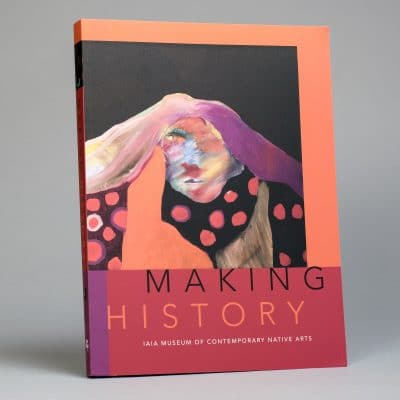
Making History
Edited by Nancy Marie Mithlo, PhD
|
|
Pukawiss the Outcast
(The Two-spirit Chronicles Book 1)
Jay Jordan Hawke
|
|
Trickster Company Basketball |
|
IAIA Face Coverings
(four styles to choose from)
|
|
Interested in browsing our selection of products not currently featured on our website? Email us at store@iaia.edu or call (505) 428-5912 to inquire about specific artists or merchandise. Phone and email orders are welcome! |
|
IAIA Museum of Contemporary Native Arts (MoCNA) |
|
The mission of the IAIA Museum of Contemporary Native Arts (MoCNA) is to advance contemporary Native art through exhibitions, collections, public programs, and scholarship. MoCNA's outreach through local and national collaborations allows us to continue to present the most progressive Native arts and public programming. MoCNA's exhibitions and programs continue the narrative of contemporary Native arts and cultures. |
|
|
|
|
|
|
|
|
|