Lights Out, Fort Worth!

May 2025 Update

Facebook  Instagram  Twitter
 

As April brought Earth Day celebrations across the state, people from all walks of life had the opportunity to learn about the impacts of light pollution on birds and other wildlife through various outreach events.


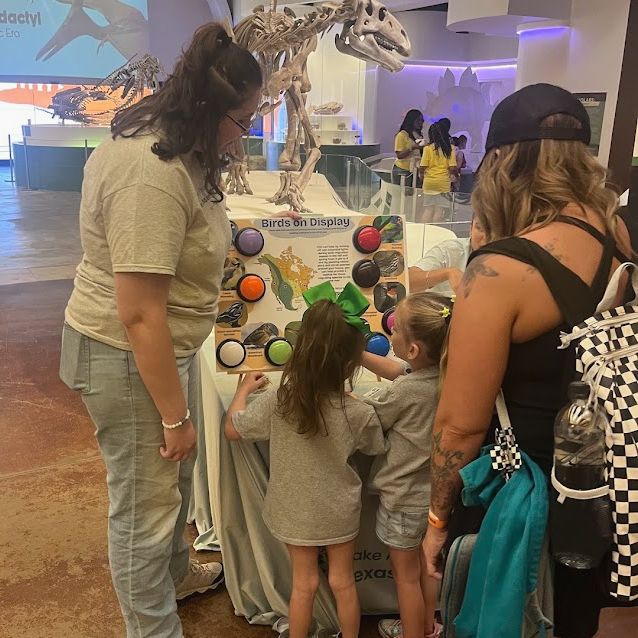
As seen above at the Fort Worth Museum of Science and History, children engage in recognizing bird species by their calls and explore why birds are important to our ecosystems.


No matter who you are or where you come from, the beauty of a starlit sky is something we all share. Join us in turning off non-essential lights for the birds, for the stars, and for all who call this planet home.


Bird of the Month: Painted Bunting

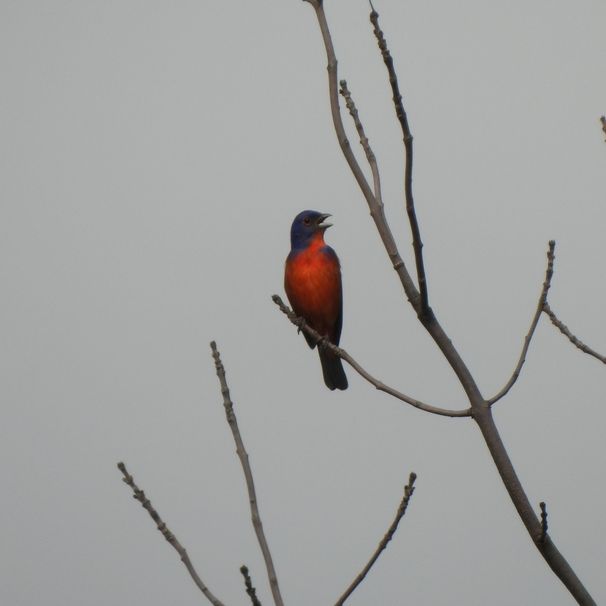
A recent sighting of a painted bunting, photographed by iNaturalist user charley at the Fort Worth Nature Center on April 27.

Sometimes called the 'Nonpareil,' meaning 'unrivaled,' a fair way to describe the unbelievable colors of the male Painted Bunting. This species is locally common in the Southeast, around brushy areas and woodland edges. It is often secretive, staying low in dense cover, but males can be heard singing their bright, warbling songs from higher in the trees, sometimes hidden among foliage, other times out in the open on a sunlit perch.


Their vibrant arrival across DFW in spring is a stunning reminder that migration season is in full swing. Sadly, these birds are also at risk due to light pollution—over 60 Painted Bunting collisions have been documented through the Lights Out Texas Monitoring Project. Turning off non-essential lights at night can help protect these spectacular migrants as they journey north to their breeding grounds.


Take Action! – What to Do If You Find a Bird Strike Victim

Spring migration is in full swing, and unfortunately, so are window collisions. Whether a bird is injured or deceased, your response matters.


If the bird is injured or stunned:

Even if a bird appears just “stunned” and flies off after a few minutes, it could still suffer from internal injuries and should be evaluated by a professional.

If you’ve found a wild bird or animal in need of care, contact:


Report all bird strikes—injured or dead:

Your report helps identify collision hotspots and improve protections for migratory birds. Submit sightings to the Bird-window Collisions Project on iNaturalist.


Prevent future collisions:

Turn off non-essential lights at night, especially during peak migration in April and May. Encourage others to do the same at home, school, and work. Thank you for being part of the solution and helping birds migrate safely through North Texas.


Birdcast: See Migration in Action

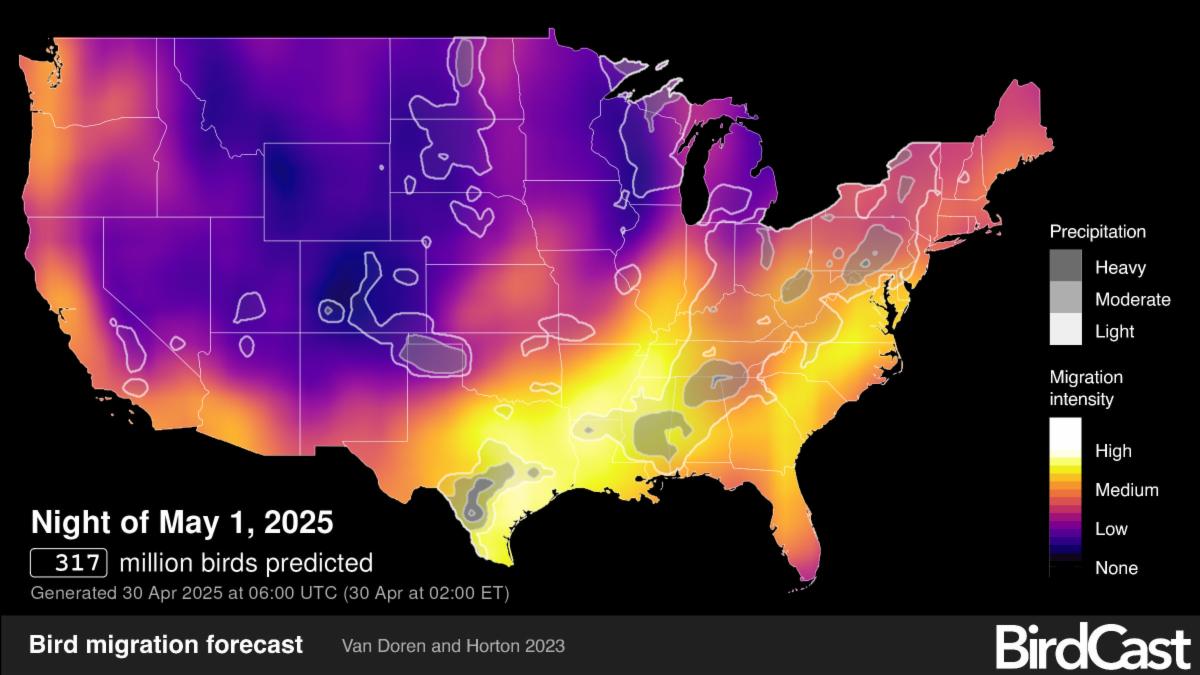
BirdCast forecast for the night of May 1, 2025, showing high-intensity bird migration (yellow/white) across Texas and the eastern U.S. Over 317 million birds are expected to be in flight.

Peak spring migration is underway, and North Texas is right in the middle of it. On the night of May 1, over 317 million birds were predicted to be migrating across the country, many passing directly over our region.


The BirdCast map below shows how intense the migration will be, with yellow and white areas indicating high activity. This is one of the most critical times to turn off lights at night to prevent deadly building collisions.


Want to track migration in real time or receive alerts when migration is heaviest in your area? Sign up here:

Lights Out! Curriculum Update

The Lights Out, Texas! curriculum for 6th–8th grade is in its final stage of testing and implementation! Thanks to the expertise of Meridith Cooper, our Curriculum Consultant, the program is making strong progress toward full alignment with current Texas Essential Knowledge and Skills (TEKS) standards.


Meridith brings deep experience to the role—she currently serves as the 7th Grade Science District Curriculum Lead for Rockwall ISD, where she supports a team of nine educators and ensures curriculum quality across the district.


Her passion for Lights Out! began last year at the Smithsonian National Museum of Natural History, where she encountered the Lights Out: Recovering Our Night Sky Exhibit. That experience sparked her awareness of how light pollution affects biodiversity and now fuels her dedication to developing this classroom-ready resource.

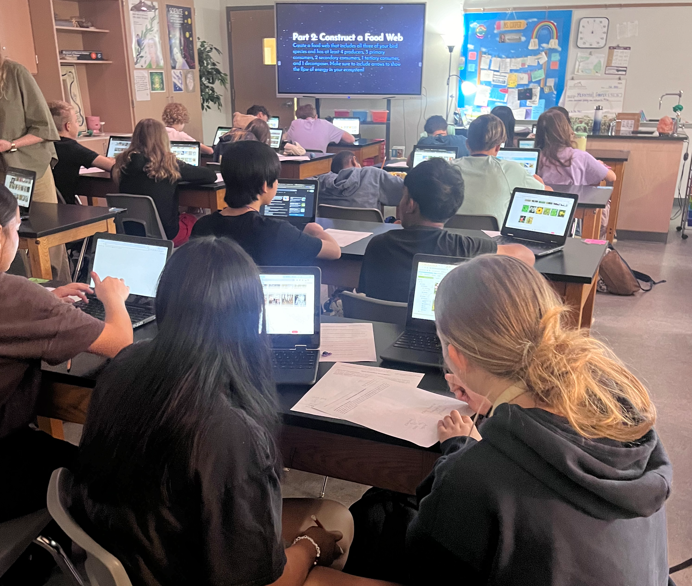
Meredith's students working on Module 2: Disruptions to Energy Flow, which explores how human-caused factors like light pollution and bird-building collisions interrupt natural food webs. When artificial lights disorient migratory birds and collide with buildings, bird populations are reduced, which can impact predator-prey relationships and energy transfer in ecosystems.

🗓 The curriculum is on track to launch in early August—just in time for the new school year!


📬 Want early access? Fill out your contact info to be the first to know when it’s released!

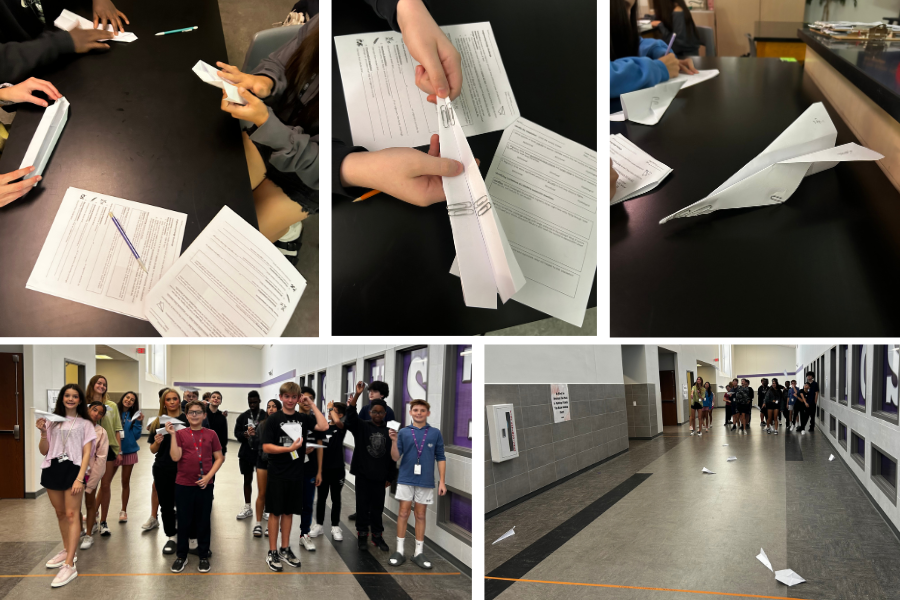
(Top three): Classroom activity at Cain Middle School during the implementation of the 6th–8th grade curriculum Module One – Engineering Design Challenge. Students build model migratory birds featuring three types of adaptations—behavioral, structural, and physiological—using paper clips and other simple materials.

(Bottom two): Students test the flight ability and functionality of their model birds.

Lights Out! Surveys

March 13 – May 31, 2025

So far this season, our bird collision surveys have recorded 13 bird strike incidents in total. Of these, 6 birds were found deceased and collected, 3 were deceased but not able to be collected, and 4 were spotted stunned but flew away. Each data point helps us better understand the impact of light pollution and urban hazards on migrating birds, reinforcing the importance of continued awareness and action.

Earn your Lights Out! logo patch!


The newly released Lights Out, Texas! logo, designed by Audubon Texas, is now available as a special patch for dedicated volunteers!


Volunteers who complete 5 or more surveys this season will receive the patch in recognition of their commitment to protecting migratory birds.


When:


April 23 - May 10 (Peak Migration)

Wed- Sat mornings


May 15 - May 31

Thu, Fri, Sat mornings


ALL surveys begin at 6 am and end around 8 am!

Where:


Surveys start and end at the Tarrant County College - Trinity River Campus East Parking lot (see Parking Map). Upon arrival to the parking lot, Lights Out, Fort Worth Coordinators and/or Survey Leaders will give you a temporary parking permit. This parking permit is required!

Volunteer Sign Up Portal

Beyond participating in bird—window collision surveys, everyone can play a role in supporting migratory birds. Join us and learn how you can make a difference!

Facebook  Instagram  Twitter