Elmo Peeler Note-for-Note Piano Transcriptions
|
|
|
Happy New Year!
Happy New Decade!
Today is the first day of January 2020 and time again for my monthly newsletter to keep you informed of recent transcriptions and other news of the last month.
|
|
 |
Michael Bloomfield & Al Kooper
|
|
I believe I have a very special transcription to start the New Decade.
What do you get when you combine a very ambitious young New York City musician with a distracted producer?
This month we also take a look at Kofi Burbridge, the late, brilliant keyboardist for the Tedeschi Trucks Band.
And new this month is a boogie-woogie exercise for improving your Right Hand's "thumb pivot" capability plus Left-Right coordination.
BTW, to make sure that my email doesn't end up in your Spam folder, please add me to your Contact list and/or mark my email as "Not Spam".
Note that every Title Heading is clickable.
Elmo Peeler
|
|
|
ALL of the Sheet Music listed on my website has been personally transcribed by me, and guaranteed to be note-for-note perfect.
Whether you:
-
have a cover band and want to get your keyboard parts exactly correct,
-
are a professional who wants to study the styles of rock's greatest keyboard players, or
-
are a hobbyist that wants to learn how to play pop/rock and great piano music,
...these note-for-note transcriptions will prove extremely helpful.
And as always, if you ever need any help, just drop me a note at: elmo@manymidi.com
|
In the News!
- Bob Dylan - "Like a Rolling Stone"
Al Kooper's Classic Hammond Organ Track
|
|
|
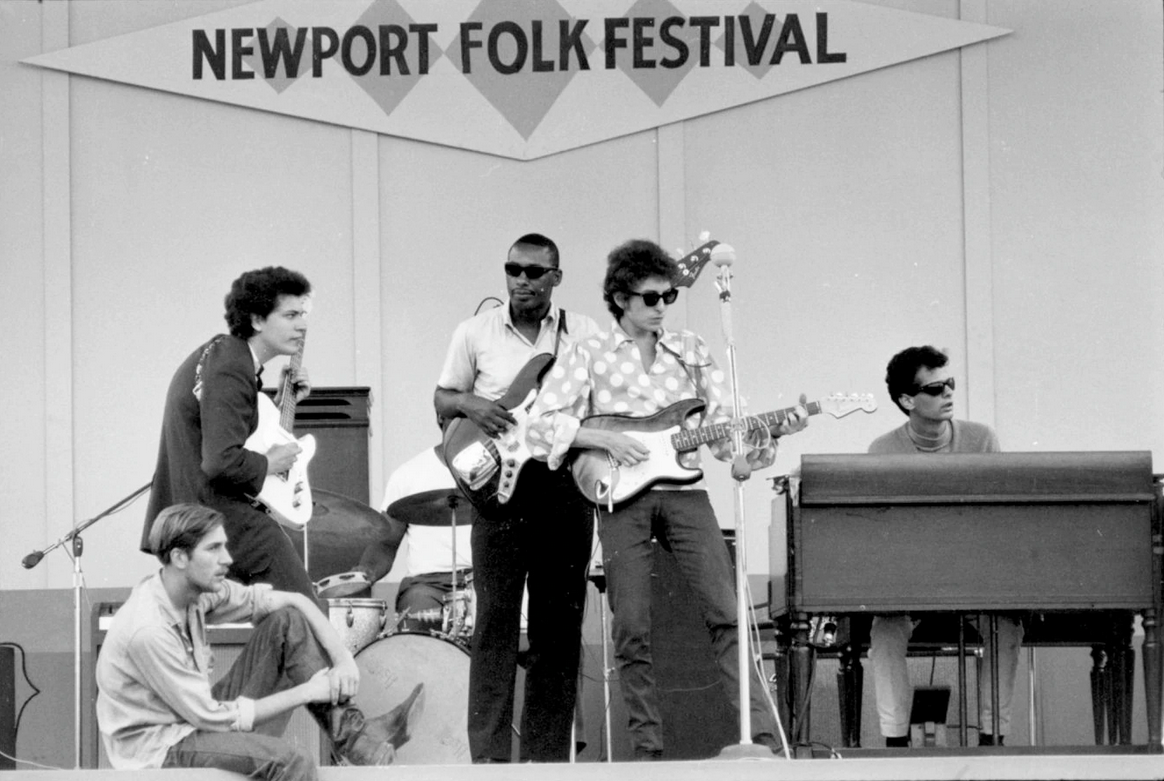
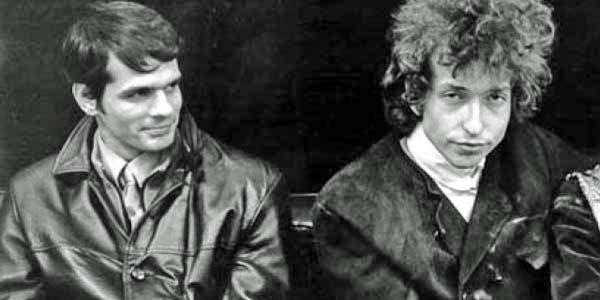
| Al Kooper on B-3 Organ with Bob Dylan, 1965 |
|
Al Kooper was born in 1944 in Brooklyn, New York and grew up in Queens in a lower middle class neighborhood, primarily Italian and Jewish, where "everybody lived in the same kind of houses".
Then, in the 7th grade, he was bussed to a junior high school in a different neighborhood, which changed his life - suddenly around people that were quite different from those he grew up with.
That's where he first heard Gospel music. "The way I play the organ on "Like a Rolling Stone" was very gospel derivative. It's what a gospel organ player would have played."
His first professional gigs were as a 14-year-old touring guitarist with the Royal Teens ("Short Shorts"). During his teen years producers would hire him because he wasn't as sophisticated musically as the usual jazz-oriented session players, and could get that "dumb, kid sound".
Considered a "bad boy" or "juvenile delinquent", he attended four different high schools, including a tough public school where a teacher had been thrown out the window.
After high school he attended college for a year but quit because he felt they were teaching him to be a music teacher. Continuing to record guitar parts for lots of teen records, he learned how to read and write music for the studio, and started becoming friends with many of the more-established players.
At age 16 he had begun working as a songwriter at NYC's Brill Building, and at 20 co-wrote his first big hit, "This Diamond Ring" by Gary Lewis & the Playboys.
When Al was 21, his friend Tom Wilson was producing Bob Dylan, and invited him to observe the session. However, he was determined to figure out a way to play on the session and arrived an hour early with his guitar, to set up his gear and appear to be a hired musician. The other musicians knew him from other recording dates, so he blended in until Dylan walked into the studio, accompanied by guitarist Michael Bloomfield. Kooper did not know Bloomfield, but when he heard him warming up, he was blown away, packed up his gear and went into the control room, pretending to be a magazine reporter.
The players began their first rehearsal of "Like a Rolling Stone" but stopped and moved the organist, Paul Griffin ("American Pie"), onto piano. Seeing the organ wasn't going to be played, Kooper asked the producer if he could play it. But before Wilson could gave a definitive 'no' he became distracted, so Kooper went in and sat down at the Hammond organ.
Before this, Kooper had only played organ a little on songwriter demos, and didn't really understand the instrument. He has said that if Paul Griffin hadn't left the organ turned on, he wouldn't have known how to start it.
|
|
|
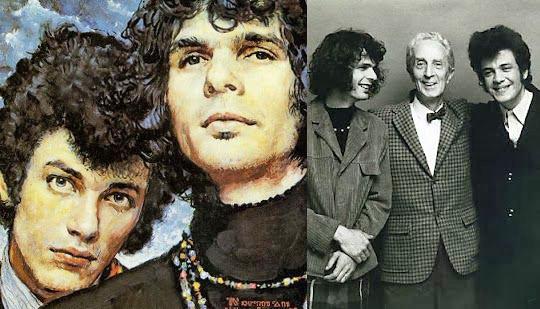
Norman Rockwell's Only Painting of a Rock Star
|
|
Of the session Kooper has said,"It was a six minute song, there was no music to read from. And there I was playing this unfamiliar instrument. So I would come in on the upbeat of one. I would wait until the band played the chord, and then as quickly as I could come in, play the chord. So the band would go, uh, [plays] -- this is the band, this is me. [plays] So if you listen to the record you can hear I'm always on the upbeat of the band, because I'm listening to hear what the chord is. I'm always an 8th-note behind everyone else, making sure of the chord before touching the keys. And I had good ears, and that's really what got me through that take.
"The other thing is, see where the Leslie speaker is over there, at the session, that was covered up by sound material. And the band was playing so loud that I couldn't even hear the Leslie... And I just knew what those notes were from having a little musical knowledge. But I could not hear it until I came into the playback. And it very could have easily have been wrong, but it wasn't.
"At the end of the playback of that take of 'Like A Rolling Stone', or actually during the thing, he (Dylan) said to the producer, turn up the organ. And Tom Wilson said, oh man, that guy's not an organ player. And Dylan said, I don't care, turn the organ up, and that's really how I became an organ player."
Of course, Kooper also became a legendary arranger/producer. He founded Blood, Sweat and Tears, and 'discovered' Lynyrd Skynyrd in an upscale Atlanta nightclub, producing their first three albums, which included
"Sweet Home Alabama", "Free Bird",
"Call Me the Breeze",
"Tuesday's Gone",
"Poison Whiskey", and
"Simple Man".
His excellent keyboard playing alongside Michael Bloomfield's terrific guitar can be heard on his albums
Super Session and
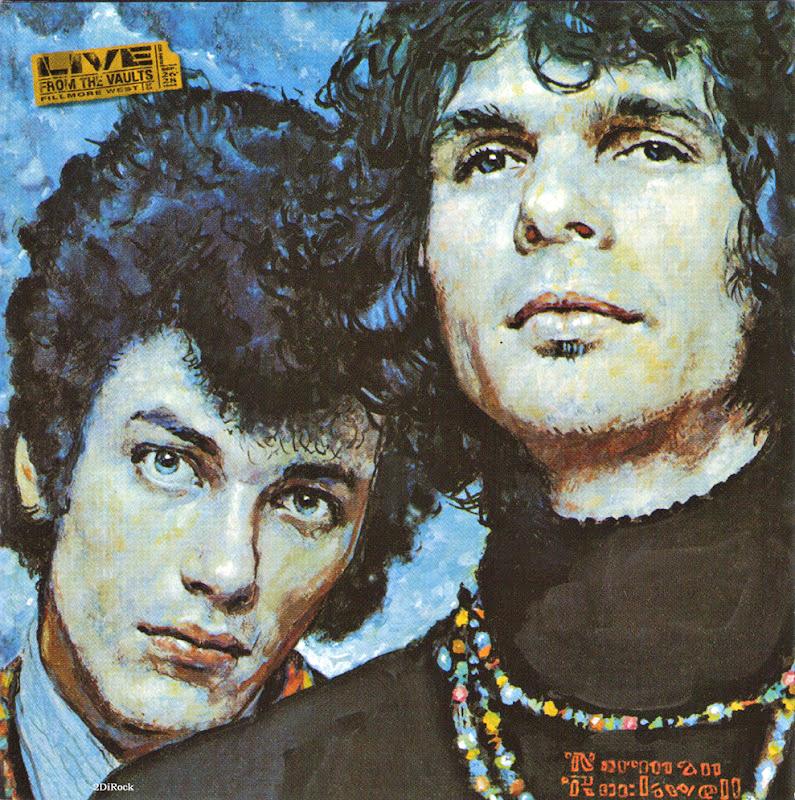
The Live Adventures of Mike Bloomfield and Al Kooper (whose cover was painted by Norman Rockwell).
My Bob Dylan transcriptions:
My Lynyrd Skynyrd transcriptions:

|
|
|
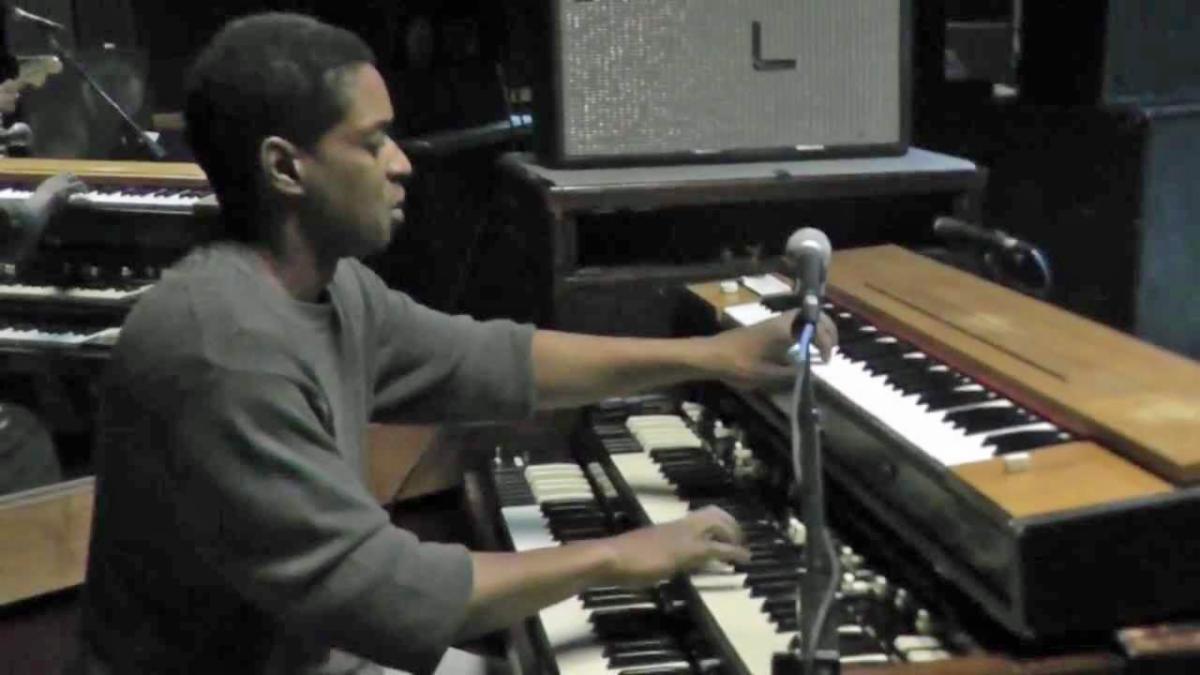
Kofi Burbridge on Clavinet & Hammond B-3 Organ
|
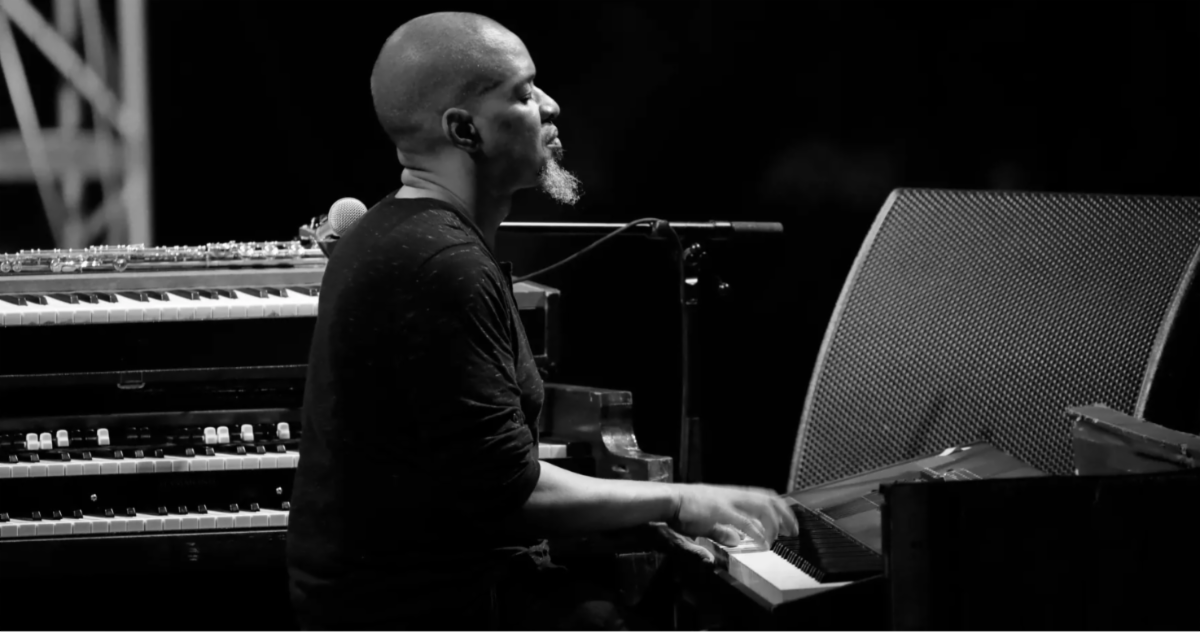
Kofi Burbridge was born in 1961 in the Bronx, at two moved to Washington, DC, and at three became the older brother of Oteil Burbridge.
As children, both were jazz- and classically-trained on many instruments.
Kofi, born with perfect pitch, developed a love of keyboards and flute, while Oteil chose bass and drums.
Kofi's early career was in a variety of Southeast R&B and Pop cover bands.
|
|
|
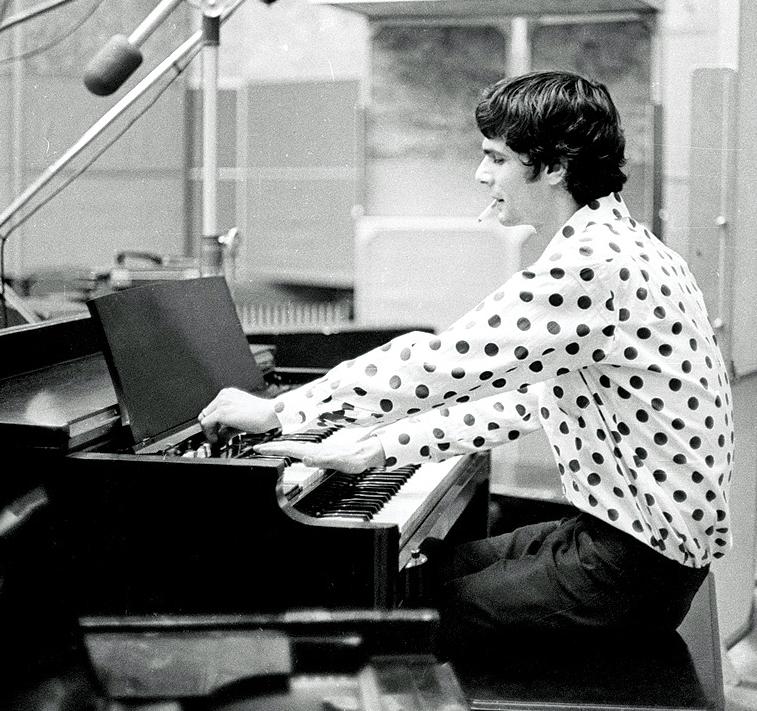
Kofi Burbridge playing piano, in the zone
|
|
After both brothers moved to Atlanta, in 1997 Oteil joined the Allman Brothers Band and in 1999 Kofi joined the Derek Trucks Band.
In 2010 Kofi co-founded the Tedeschi Trucks Band, whose debut album,
Revelator, won the Best Blues Grammy in 2012
.
Tragically, Kofi Burbridge passed away in February 2019 of an ongoing cardiac issue. Fortunately his legacy includes many outstanding recordings, forever a testament to his wonderful talent.
My only transcription of the Tedeschi Trucks Band:
|
January's New Transcriptions
- "Like a Rolling Stone" Organ
Note-for-Note Accuracy
|
|
|
Al Kooper & Bob Dylan
|
|
We're starting off the New Year - indeed, the New Decade - with a brand-new transcription of one of the most iconic Hammond organ songs ever recorded, Bob Dylan's "Like a Rolling Stone".
In 1965 against the better judgement of the record company executives, one of the longest records ever was released, "Like a Rolling Stone" - over six minutes long. But it climbed to the very top of the charts, making history.
And although the organist, Al Kooper, had only been invited to the session as an observer, not to play, it became one of the Hammond organ's most famous songs. The most important musical licks in the long recording were not
Paul Griffin's amazing piano part nor Michael Bloomfield's outstanding guitar, but Kooper's indispensable Hammond organ lines.
This is a note-for-note transcription of the entire organ part in "Like a Rolling Stone" - all 154 bars. The album mix is 6:13 long, but my transcription goes an additional nine bars, until the musicians stop playing.
Kooper has said in interviews that since he had no sheet music to read from, as the musicians played he'd listen to the next chord change and then play - listen and play, listen and play. This transcription details those 'upbeat' entrances - and the chords' cut-offs - precisely. And of course it also includes the rhythmic figure introduced in the first Chorus that recurs every Chorus more developed until the 4th Chorus when it is the dominant figure. Every organ note is included, exactly as on the record.
Also new this month is a transcription of the brief, 15-second clavinet solo in "Come See About Me" by the Tesdeschi Trucks Band, played by the late great Kofi Burbridge.
-
(click here to hear the clavinet solo in "Come See About Me"")
|
January's New Exercise - Boogie-Woogie Exercise #3
Thumb-Pivot Right Hand vs Walking Broken-Octave Left Hand
|
|
|
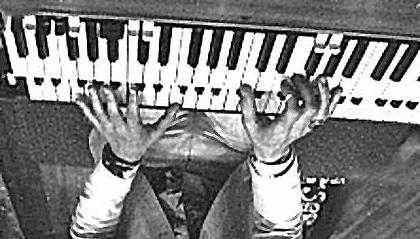
| Al Kooper's hands |
|
One of the main techniques involved in boogie-woogie is the use of the right hand thumb as a pivot between notes struck with higher fingers, i.e., 2 - 5.
This exercise will help develop strength and facility with that thumb-pivot motion.
The broken-octave walking bass against the right hand thumb-pivoting will also help develop Left-Right coordination.
(BTW, if you need other good, effective technical exercises, please check out the other 70 exercises available - including other boogie exercises.)
(click here to hear it)
|
'Crowdfund' a Transcription - Your Own Favorite Track?
Maybe Your Favorite Keyboard Track Should Be CrowdFunded
'Custom' (to-order) transcriptions can be expensive because of the time required. And when a recording is particularly long and/or complex, the expense can be too much for one person.
if you'd like to suggest a transcription - a complete song, or perhaps just a keyboard solo.
My 'CrowdFunded' transcriptions to-date:
|
Is getting serious about your keyboard playing a New Year's resolution?
If you'd like a fun, experienced 'coach' to guide your growth and provide a practice regimen tailored to your own musical needs, feel free to call me and let's talk about it for five minutes (323-650-6602).
I've
toured the world playing keyboards and arranging/conducting for these Rock and Roll Hall of Fame Artists:
- The Beach Boys
- Ricky Nelson - Stone Canyon Band
- Rod Stewart - All 'Unplugged' concerts
I've also won classical piano competitions performing Beethoven, Rubinstein and Saint-Saens' Piano Concerti. See me playing here. "Josie's Boogie" is quite the virtuoso dramatic minor-key showpiece; check out the ascending double-octave run at the ending... :)
Thanks to the internet, I can help you play piano better - rock or classical, by ear or by note.
Perhaps all you need is just an hour or two on Skype discussing rock keyboards.
If you're serious about wanting to improve, drop me a note at info@manymidi.com. Tell me three things:
1) Your musical background
2) Where you are currently, musically-speaking
3) Your musical goals
My students include members of:
- Weezer (Rivers & Brian)
- Vampire Weekend (Ezra & new addition, Greta)
- Incubus (Mike)
- The Strokes (Nick)
- Rooney (Robert)
- Jason Schwartzman ("Mozart in the Jungle")
- Courteney Cox
- Sasha Spielberg
|
|
|
|
|