Weekly News Roundup - October 12, 2026 | | | |
The Partnership for Male Youth's award-winning Weekly News Round-Up, published since 2013, provides a curated, nonpartisan look at pressing health issues affecting adolescent and young adult males. Each edition highlights timely research, media coverage, and policy updates from the past week—bringing attention to often-overlooked topics to ensure young males are seen, supported, and included in the national dialogue.
| | |
Timothy Wienecke, MA, LPC, LAC, American Masculinity, Substack, October 4, 2026
| | Writing on the American Masculinity Substack, a therapist and former Air Force intelligence analyst shifts attention from the seven Chi Phi members accused in the Cornell case to the dozens in the Snapchat group who saw the "free pussy upstairs" message and stayed silent. Drawing on his years as one of two volunteer victim advocates at a small base in England, he describes shutting down lewd jokes aimed at female colleagues and paying for it with social isolation and a severe depression. He uses the "Continuum of Harm" from bystander training to argue that rapists rarely start at the top: a man who tells a sexist joke and hears only silence takes it as approval, so the real intervention point is the joke, ideally from friends who correct him and keep him in the group. He adds that in dangerous work, ribbing tests whether peers will hold under pressure, but in a fraternity it becomes a status test, where a low-status objector gets frozen out rather than argued with, and where breaking ranks at an elite school can cost a young male his lifelong network. The author's central argument is that the adult men around these students failed them. Putting 22-year-olds in charge of 18-year-olds with absent or complicit advisors, he says, makes assaults like this one the predictable result, especially since many victims are first assaulted between 18 and 24, the years institutions take responsibility for young people. Without excusing those who participated, he calls on older men to stop complaining from the sidelines and show up as mentors: catch young males at the joke, support them through the correction, and back other men who speak up so they no longer have to do it alone. | |
|
Sara Pequeño, USA Today, October 11, 2026
| In this USA Today opinion column, Sara Pequeño focuses on the Chi Phi fraternity members who were not among the seven accused in the Cornell case but who saw the Snapchat group messages advertising Jane Doe as available for sex and did nothing. The chapter had 57 members at the time, and while some replied approvingly, most stayed silent. Drawing on CUNY psychologist Lauren Mahoney, Pequeño frames this as the bystander effect, in which diffusion of responsibility and group loyalty override individual morals. Mahoney argues that 57 people in the chat should have meant 57 chances to intervene, and that stepping in could have been as simple as interrupting or anonymously calling campus security. Pequeño says research shows college men are less likely to act as active bystanders because of sexism and substance use, factors that fraternity hierarchies amplify. She also blames a wider culture of desensitization, including online "alpha male" misogyny, violent algorithmic content, and the political success of Donald Trump despite his remarks about women. Mahoney adds that she is seeing growing apathy toward intervening in other people's affairs. Pequeño concludes that colleges must move beyond online sexual misconduct modules to comprehensive in-person bystander training at orientation, backed by serious consequences, so that young people see adults treating these incidents seriously. | | |
Casey Parks, Washington Post, October 9, 2026
| | |
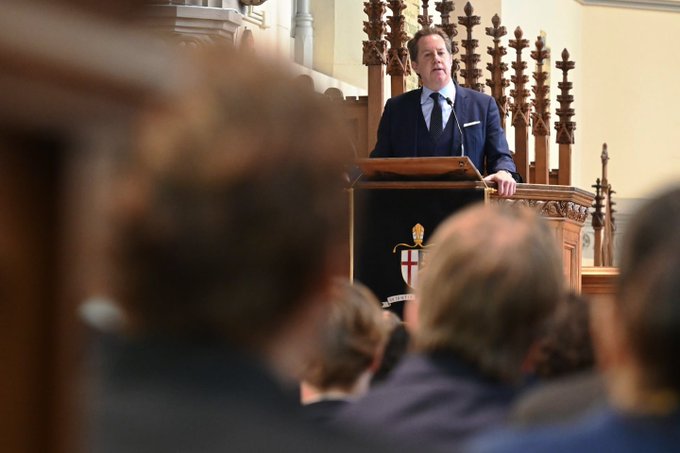
This Washington Post story profiles Stephen Beatty, headmaster of Royal St. George's College, an all-boys school in Toronto, who replaced his usual lighthearted Monday assembly with a talk prompted by the Cornell case. Drawing on an online comment that dubbed the fraternity members in the Snapchat group "the Cornell 57," he told his 350 students that not one of them had the courage to stop what was happening, and asked what kind of men they wanted to be. It was the third time Beatty had given a version of this speech, after the Steubenville case and the Hockey Canada case. Mindful of not shaming boys simply for being boys, he wrote it with affirmation of their kindness and fairness, and he drew on his own teenage regret at staying silent while peers bullied an overweight classmate, a silence he came to realize had harmed him as well. Beatty's core message was that silence is not strength, and that breaking it is what is truly masculine. Believing boys need concrete instructions rather than prohibitions, he framed the talk as a fire drill: say "That's enough" to a degrading joke, refuse and ask a friend to delete a private photo, be willing to make things awkward when a group chat turns cruel, and do anything necessary, including pulling a fire alarm, to stop an assault. He gave the students his cellphone number, told them to call him whenever they needed help without judgment, and told them he loved them. By the time he returned to his office, many had already texted him, often with nothing more than "Hey, Mr. Beatty, it's me," which he took as a meaningful start.
| | |
Gaby Clark, Medical Xpress, October 6, 2026
A new University of Toronto study published in the journal Body Image finds that boys and young males with greater symptoms of muscle dysmorphia, an intense preoccupation with and dissatisfaction about their muscularity, are more likely to experience sexual difficulties. Analyzing data from 1,116 sexually active males ages 15 to 35 in Canada and the United States, the researchers found that higher symptom levels were linked to seven of the eight sexual problems examined, including lack of interest or enjoyment, lack of arousal, difficulty reaching climax, physical pain during sex, and erectile difficulties. Appearance-related distress was especially important, and the strongest association was with anxiety during sex. Lead author Kyle T. Ganson suggests that intense self-consciousness about one's body may make it harder to be present and comfortable during sex, interfering with interest, arousal and functioning. Behaviors tied to the pursuit of muscularity, such as excessive exercise, restrictive eating and anabolic steroid use, may also contribute. Ganson argues that body image and sexual health, usually treated as separate areas, may be closely connected, and he recommends that clinicians ask about sexual functioning when assessing boys and young males with significant muscle dysmorphia symptoms.
Audrey Courty, abc.net.au, October 10, 2026
This ABC Long Read by Audrey Courty looks at looksmaxxing, an online movement in which young males try to maximize their attractiveness. The practices range from ordinary grooming, diet and exercise ("softmaxxing") to cosmetic procedures, experimental drugs, and extreme measures like "bonesmashing," or striking the facial bones ("hardmaxxing"). The piece follows Cyrus, a 20-year-old Brisbane man who tracks his body in detail and credits his transformation with better treatment and confidence, and Androgenic, an Australian influencer with over 1.3 million followers who sells a $49-a-month program. Researchers explain the appeal as a sense of control at a time when housing, careers and relationships feel uncertain and traditional markers of manhood have weakened, and they note that a 2025 Movember Institute report found 63 percent of Australian males aged 16 to 25 engage with masculinity influencers. The article also documents the risks. Looksmaxxing forums overlap with the manosphere and incel communities, where peers rate each other's faces with abusive verdicts, and researchers say self-harm, incel, misogynistic or suicide-related content can reach a 17-year-old boy within 30 minutes of opening a new TikTok account. Experts flag steroid use, bonesmashing and other potentially irreversible changes as signs of "dangerous territory," and warn that coaching programs and AI face-rating apps profit by giving users unflattering scores to keep them subscribed. The researchers call for helping young males separate small truths from sweeping conclusions, for offline engagement through sporting clubs and community groups, and for platforms to disrupt pathways toward blackpill content.
| |
Dennis J. Barbour, Esq.
President and CEO
Partnership for Male Youth
Newsletter Editor
dbarbour@partnershipformaleyouth.org
| | | | | |