This Month at
 

March 2024

Debt Awareness and Financial Coercive Control

manipulating_losses.jpg

March 18-24 is Debt Awareness Week. While debt is commonplace -- approximately 8 out of every 10 Americans experience debt -- the use of finances for the purposes of coercive control is even more prevalent. Some research indicates that over 95% of women in relationships characterized by domestic violence experience economic abuse. Some of the common ways for victims to be financially controlled include:


  • being forbidden to work
  • being prevented from accessing bank accounts, credit cards, or cash
  • being forced to work in a family business without pay
  • being forced to turn over public benefits, an inheritence, or other sources of funds


Financial abuse has severe short- and long-term effects. Without access to funds or any other assets, victims cannot reliably provide for their basic needs, such as safe shelter, food, and medical care. In the long term, ruined credit scores, sporadic employment histories, and legal issues caused by the abuse make it extremely difficult to gain independence, safety, and security.


More information about financial abuse, coerced debt, and what can be done about them can be found here:


Spotlight on Project SAGE

Dear Sister Book Talk


Join author Michelle Horton and Project SAGE at the Scoville Library on March 27 at 5:30pm for a presentation and discussion of her new book, a deeply personal story about what it takes to be believed and the danger of keeping truths hidden.


In September 2017, a knock on the door upended Michelle Horton’s life: her sister, Nicole Addimando, had just shot her partner and was now in jail. During the investigation that follows, Michelle learns that Nikki had been hiding horrific abuse for years. Stunned to find herself in a situation she’d only ever encountered on television and true crime podcasts, Michelle cares for Nikki's children and launches a fight to bring Nikki home, squaring off against a criminal justice system seemingly designed to punish the entire family. In this exquisite memoir, Michelle also explores how so many people, including herself, could have been blind to the abuse.

Click here to register
 

Events

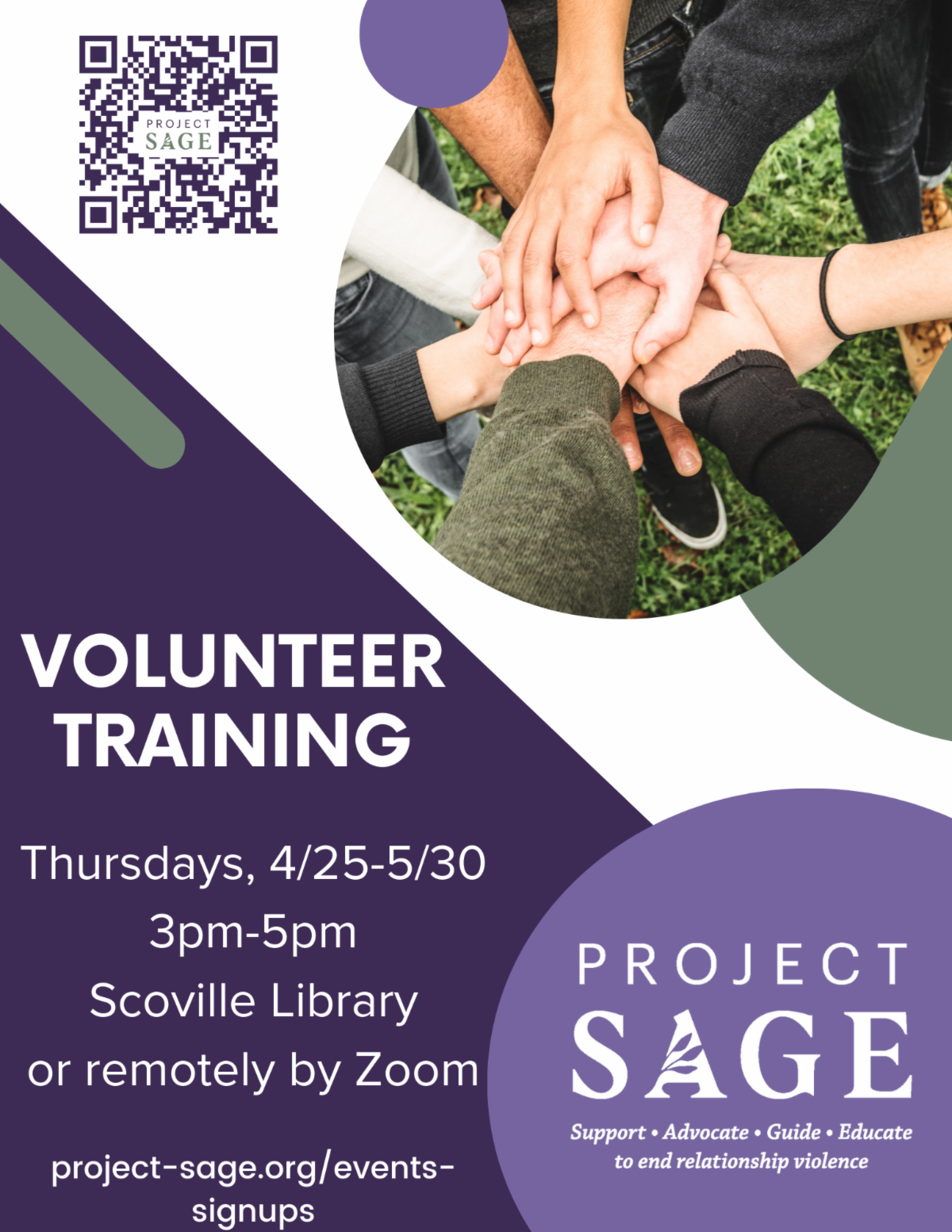
Join the team - become a certified volunteer!


Certified volunteers are able to...

  • support clients in our sheltering program
  • engage with youth through our education program
  • advocate for vital resources through our legislative outreach efforts
  • and more!

Click the flyer below for details and registration.

CLICK HERE TO VIEW OUR FULL CALENDAR OF EVENTS
 

Resource Roundup


TOOLKIT

For kids, digital life is real life. It's where they build friendships, take a stand on issues, and do so much more. It's also where kids are at risk of cyberbullying, grooming, and other dangers. This bilingual toolkit encourages kids and their families to reflect on their digital media habits and build digital citizenship skills, including those key to online safety. Family Engagement Toolkit

ARTICLE

What is cyberbullying? How common is it? And what can teachers do about it? Get advice and resources to support your students here: Teachers' Essential Guide to Cyberbullying Prevention

DAY OF ACTION: APRIL 2

Chances are someone in your life is a survivor of sexual harassment, assault, or abuse, even if they have never shared their story with you. The National Sexual Violence Resource Center invites you to their Instagram Live at 12pm to discuss what it takes to ensure communities are safe, inclusive, and equitable and what goes into building community-level prevention strategies. Click to join live at noon on 4/2

WEBINAR: APRIL 3

Jane Doe Inc. is excited to host a webinar on what it means for survivors to tell their own stories beyond the ways media sensationalize gender-based and sexual violence. Featuring a poetry reading with Olivia Gatwood and m. mick powell. Register for this 2pm event here: Beyond Violence: Survivor Healing and Reclaiming Our Stories 

ARTICLE

Domestic violence happens in every community and to every type of person, but those with money are often thought to be immune from abuse, or at the very least, have a much easier time extracting themselves from it. However, the reality is far different. Many affluent survivors will not report abuse because they feel shame, pressure, or the need to maintain appearances. Affluent abusers are also more likely to express a sense of entitlement and not remorse over the harm they inflict on others. Read more about affluence as a barrier to escaping an abusive situation here: Not to People Like Us

 
ARE YOU A CURRENT PROJECT SAGE VOLUNTEER? 
Remember to record your volunteer hours here.

NOT A VOLUNTEER BUT THINKING OF BECOMING ONE?
Email Linda at lindac@project-sage.org for more information.
 

Discover All the Ways You Can Support Project SAGE!

Click the link below to make a one-time gift or join our Monthly Leadership Circle.

MAKE A DIFFERENCE TODAY
 

We want your feedback!

CLICK HERE
 
 
24-hour Hotline 860-364-1900


Facebook  Linkedin