Around the NELMSC - April 2019
|
|
Better, Faster, Easier with Karlyn Pipes
|
This past year, Hall of Fame Swimmer and swim technique coach
Karlyn Pipes
changed her technique in all of the four competitive strokes.
Why would someone so fast and accomplished make a change? Because she was dissatisfied with her swimming! Even though Karlyn has set 233 FINA Masters World records to date, she was seeking something better, faster, and
easier
. Well, she has found it and would love to share these same techniques with you!
Attend a workshop (and bring a friend) so Karlyn can help you find your better, faster, and easier too.
May 11 in Portsmouth, NH
*Supported by the NELMSC to continue providing learning opportunities for our members
|
|
|
|
Apr 27 -- LANES Tea Party 8 Swim Meet (Sanctioned SCY)
Cambridge, MA --
Details
--
Entries close TODAY, 4/25
Apr 27 -- Swim Across America Boston Team Relay Challenge (2-hour pool relay)
May 15-Sept 15 -- USMS 5km/10km ePostal National Championship (Sanctioned)
Any 50-meter pool
May 18 -- YNS Masters LCM Mini Meet (Sanction Pending)
Beverly, MA -- Details coming
May 18 -- Dan Horton Invitational Masters Meet (Recognized SCY)
May 19 -- Connecticut Masters Games (Recognized SCY)
New Britain, CT --
Details
-- Enter by 5/10
May 24-26 -- Canadian Masters Swimming Championship (Sanctioned SCM)
Montreal, QC, Canada --
Details
-- Enter by 5/21
July 6-7 -- Bay State Games (LCM)
Boston, MA --
Details
-- Enter by 7/1
July 15-31 -- SmartyPants Vitamins USMS Summer Fitness Challenge (2k)
Aug 7-11 -- 2019 USMS Summer Nationals (Sanctioned LCM)
|
|
Technique Clinics & Education
|
|
May 11 -- Faster Freestyle Workshop (Coach and Swimmer) with Karlyn Pipes
May 11 -- Multi-stroke Workshop (Coach and Swimmer) with Karlyn Pipes
|
|
June 1 -- 6th Annual Landshark Swim & Paddle Palooza (0.5, 1.2, 2.4 mi)
June 2 -- 1st Annual Boston Frogman Swim (5 km)
June 15 -- MBCC Against the Tide Hopkinton (1 mi)
June 15 -- 11th Charles River One Mile Swim (Sanctioned 1 mi)
June 15 -- Jim Doty Memorial Mile (1 mi)
June 16 -- Wayland One Mile Swim & Three Mile Challenge (1, 3 mi)
June 22 -- 14th Annual Narrow River Turnaround (1 mi)
June 22 -- 26th Annual Buzzards Bay Swim (1.2 mi)
J
une 22 -- Swampscott Harborfest (0.25, 0.5, 1 mi)
June 29 -- 31st Annual Mashpee SuperSwim (0.5, 1, 3 mi)
July 27 -- 11th Annual Kingdom Swim (1, 10 mi; 5, 10, 25 km)
Aug 11 -- Glen Lake Swim (Sanctioned 1, 2 mi)
Aug 16-17 -- 2019 USMS Open Water National Championships (Sanctioned 1, 5 mi)
|
|
Swim the Charles River this June!
|
The
Eleventh Charles River One Mile Swim
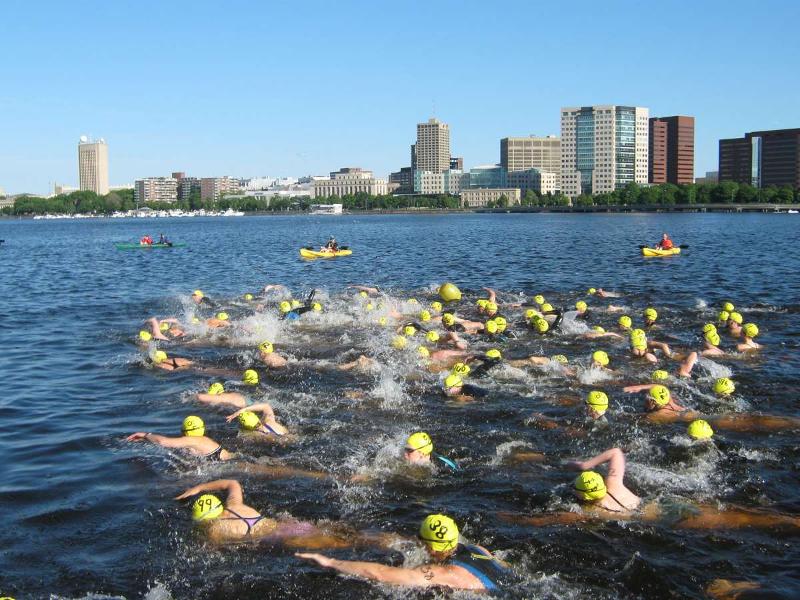
will take place on June 15, 2019. The swim will feature chip timing, fabulous t-shirts, custom caps, fun prizes, gorgeous scenery and a convenient location in the heart of downtown Boston. Wetsuits are optional, making this the ideal early season tune-up for your open water swimming.
Sign up today
- the race is selling out quickly and rates increase on 5/1! Please visit
our website
for more information or
email us
with questions.
|
If you have a friend or family member who doesn’t want to participate but wants to help out, please encourage them to contact us to volunteer! The Charles River Conservancy will be holding its City Splash event immediately after our race this year, which will provide another opportunity to swim in the Charles without competing.
Read more
about Boston’s first ever Day of River Swimming.
- Kate Radville, Race Director
|
|
What's New in New England
|
|
Over 100 USMS members took part in U.S. Masters Swimming’s Boston-area education weekend April 6-7. Offerings included USMS Level 1 & 2 Coach Certification, USMS Level 3 Coach Certification, USMS Adult Learn-to-Swim (ALTS) Instructor Certification, USMS Clinic Course for Coaches, and a USMS Stroke Clinic for swimmers that also served as practical experience for the Clinic Course participants. Read on for newly certified coach Joan Hudak’s perspective on the Level 1 & 2 Coach Certification experience.
MARLBOROUGH, MA — I fell in love with swimming at age six when my mom signed me up for a small summer league with an irregularly-sized pool. I raced through childhood, high school, and college, and by the end of my senior year I was beyond ready for a break. After some time off, some triathlons, and a lot of solo training, I joined U.S Masters Swimming at age 28.
|
|
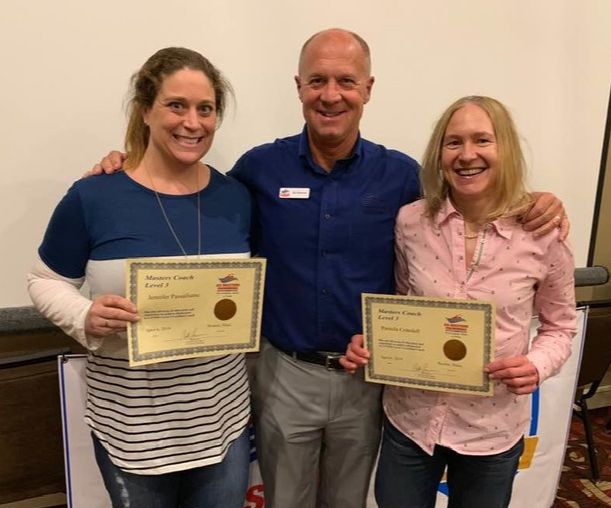
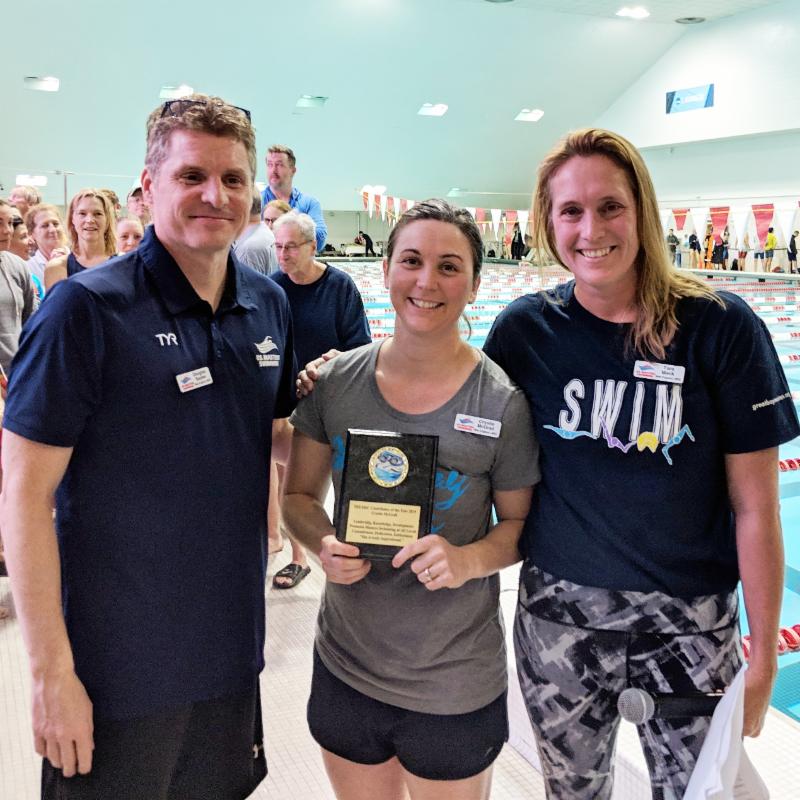
Newly minted Level 3 Masters Coaches Jennifer Passafiume and Pamela Crandall with USMS COO Bill Brenner
|
|
At Masters practice, one of the first things I noticed was how much more passionate about the sport my teammates were than I remembered being when I was younger. When I raced as a kid, I felt like I was partly swimming for someone else: for my parents, for my coaches, for my teammates. Now, I saw how excited my teammates were to swim for themselves. Many didn’t have the benefit of learning at a young age like I did, and they were eager to try new techniques and learn new strokes. Techniques I found intuitive were completely unknown to some of the newer swimmers, and the more I trained with them, the more I wanted to share my knowledge and experience.
|
|
This realization drove me to sign up for the USMS Level 1 & 2 Coaching Certification class. I completed the short reading assignment in advance, but as a kinesthetic learner I wasn’t quite sure how a day in a classroom would translate to the pool deck. I was pleasantly surprised to find that the course was run in a workshop-type setting, with frequent breaks and practical exercises to actively engage us in what we were learning.
After a quick round of introductions, it was clear that the 40 participants came from vastly different backgrounds, and that many were still relatively new to the sport. While some of the students were actively coaching for their respective USMS or USAT programs, others, myself included, were there for the love of swimming and desire to begin coaching following the class.
|
|
The day began with a brief review of our 15-page reading assignment: a history of United States Masters Swimming, the values and structure of the organization, and basic business practices for managing a safe, inclusive USMS club. We then dove (pun intended) into some coaching techniques and strategies for teaching adult learners – explaining the what, why, and how of each drill or set will ultimately help improve their swimming the most. We also spent a large portion of the class discussing the different types of swimmers that may join a Masters program, and some of the benefits or challenges they may face there.
|
|
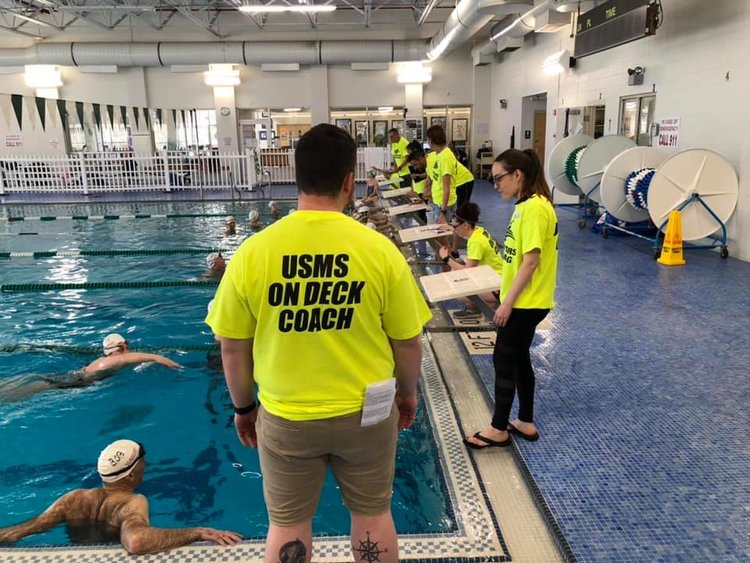
Coaches got hands-on experience during the in-water portion of the Clinic Course for Coaches while swimmers got a USMS Stroke clinic
|
|
We then moved onto some practical applications, such as strategies for and benefits of writing workouts of differing intensities (aerobic, anaerobic, VO2 Max, test sets) and setting SMART goals with your athletes. We spent time learning the basics of teaching stroke technique and discussed the necessity of being flexible in teaching, working around injuries, tips for correcting poor technique, and some drills for each of the four strokes (five, when you include the streamline!), turns, and starts. We watched several videos (above and underwater) of Masters swimmers and analyzed their technique and what they may need to work on.
The class ended with a quick assessment and we received our Level 1 and 2 certificates. Not only did I leave feeling confident to work with my own athletes, but I also felt like my own swimming benefitted from the techniques we discussed. I left wanting to try the new drills, work on my walls, and practice my weaker strokes. Overall, I was pleased with how much I gained from a single day in the classroom, and would highly recommend taking the course if you have the opportunity.
- Joan Hudak, NEM-CRM
|
|
College Club Swimming Makes Waves
|
|
ATLANTA, GA — Over President’s Day weekend this February, I traveled to Atlanta, GA to participate in the third annual College Club Swimming Summit.
College Club Swimming (CCS)
is a new governing body that was founded with the help of U.S. Masters Swimming. Now in its second year, CCS serves as a bridge between high school swimmers who didn’t or couldn’t swim on a varsity team in college and U.S. Masters Swimming.
|
|
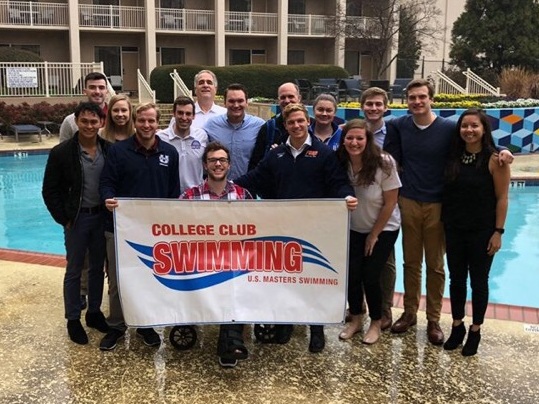
College Club Swimming Summit participants in Atlanta
|
|
Much like USMS, CCS is led by an Advisory Board consisting of volunteers who are elected to two-year terms and serve as leadership on their local teams. Although CCS is backed by USMS, it is financially independent and almost entirely student-run, with just a small number of CCS alumni and USMS members sitting on the Advisory Board. USMS helps provide infrastructure for CCS to keep swimmers in the sport and aims to transition CCS members to USMS after graduation.
|
|
This past year, CCS launched a wide variety of enhancements for its members. A new USMS-CCS bridge membership allows CCS members to swim in USMS sanctioned and recognized events while continuing to represent their CCS team in a new College Club Swimming LMSC. Additionally, CCS hosted its first Regional Championship series, with successful meets hosted at Rutgers University in the Northern region and Nova Southeastern in the Southern Region. CCS acquired its first sponsor in FINIS, the title sponsor for the CCS’s second national championship meet. Held at the Ohio State University from March 29-31, the 2019 FINIS College Club National Championships featured online meet entry through Club Assistant and drew 1,863 athletes from around the country. Online meet entry for all CCS meets is scheduled to become available to CCS Clubs in Fall 2019.
|
|
At the Summit, Advisory Board members discussed a wide variety of topics, including best practices for clubs, inclusion and diversity within CCS, and amended rules of the governing handbook. For the first time, all three committees of the Advisory Board (Club Development, Rules, and Competition) met separately to discuss specific challenges and issues within CCS. It was an incredibly productive summit, resulting in improved organization and structure within the Advisory Board while promoting a low barrier of entry to CCS with the goal of maximizing CCS membership.
|
|
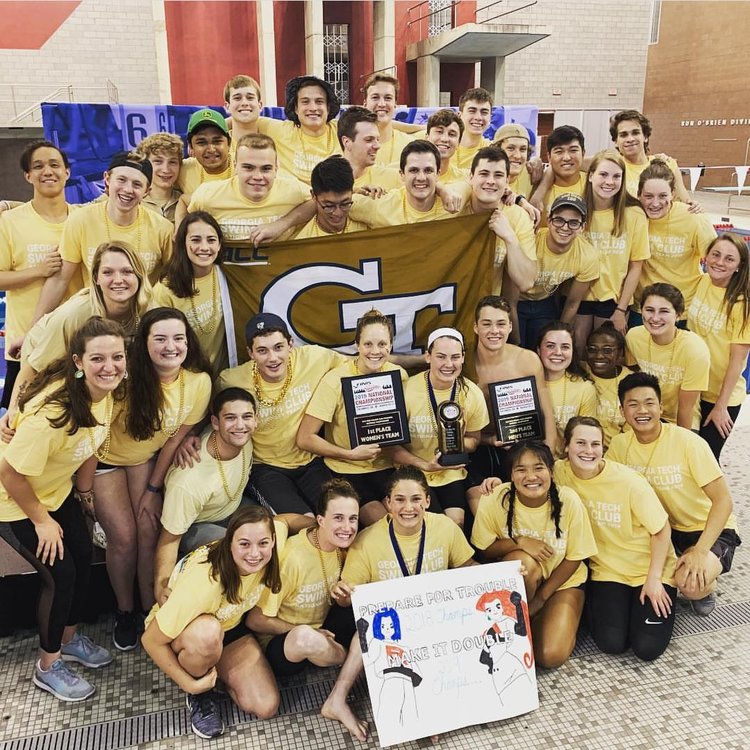
Georgia Tech was the 2019 FINIS College Club Swimming National Champion
|
|
In the New England area, there are currently about 10 CCS-affiliated clubs, including Harvard, Northeastern, UMASS, UVM, URI, CCRI, Brown, and UCONN, with several more intending to join for the 2019-2020 season.
- Jason Weis, NELMSC College Club Liaison
|
|
Team Champions
Large Team:
Charles River Masters
Medium Team:
Granite State Penguins
Small Team:
Wild Crab Masters Swimming
Squad:
Kingsbury Club Masters
|
|
Female High Point
- Christie Hayes, NMEG, 221
- Beth Estel, GSP, 209
- Kristin Wilkes-White, SCY, 186
- Anne Galliher, NMEG, 184
- Louise Case, GSP, 183
|
|
Male High Point
- Guy Davis, GBM, 215
- Thomas Manfredi, SWMR, 207
- William Jones, MESC, 204
- Ben Hammond, WAM, 188
- Bob Tyler, GSP, 187
|
|
|
USMS Records
Fred Schlicher
(CRM), Men 70-74 400 IM, 200 Fly, 200 Free
Courtney Bartholomew
(UNA), Women 18-24 50 Back, 100 Back
Fritz Bedford
(UVRA), Men 55-59 50 Back
|
|
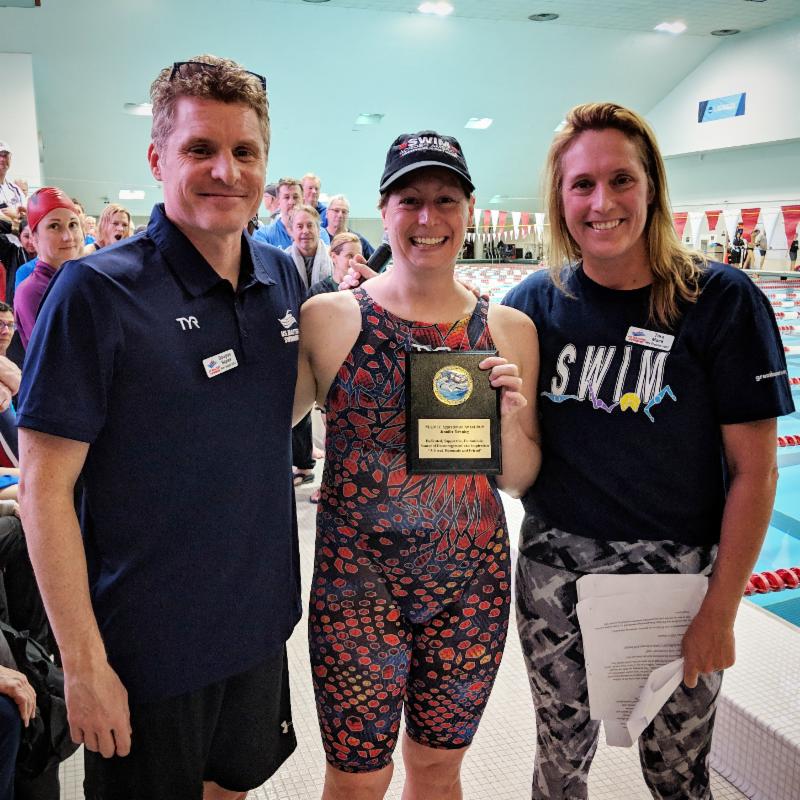
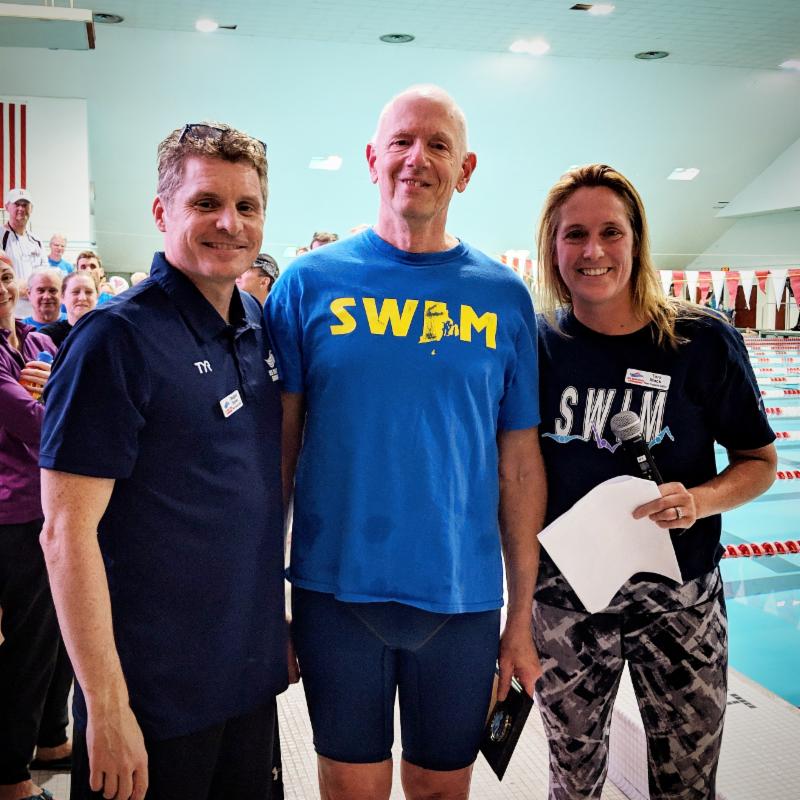
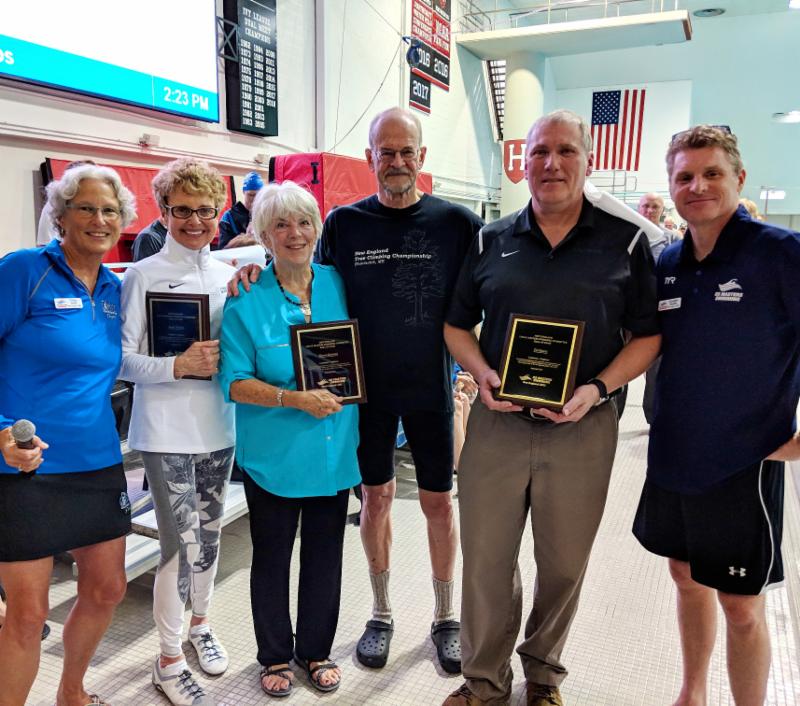
2019 NELMSC Service Award Winners
|
|
Presented by
Tara "TMack" Mack
, NELMSC Awards & Recognition Chair
and
Douglas Sayles
, NELMSC Chair
|
|
"An inspirational leader who empowers others with knowledge"
|
|
"A truly exceptional coach dedicated to the success of others"
|
|
"An enthusiastic and supportive teammate and volunteer"
|
|
"An outstanding mentor, coach, and member of the community"
|
|
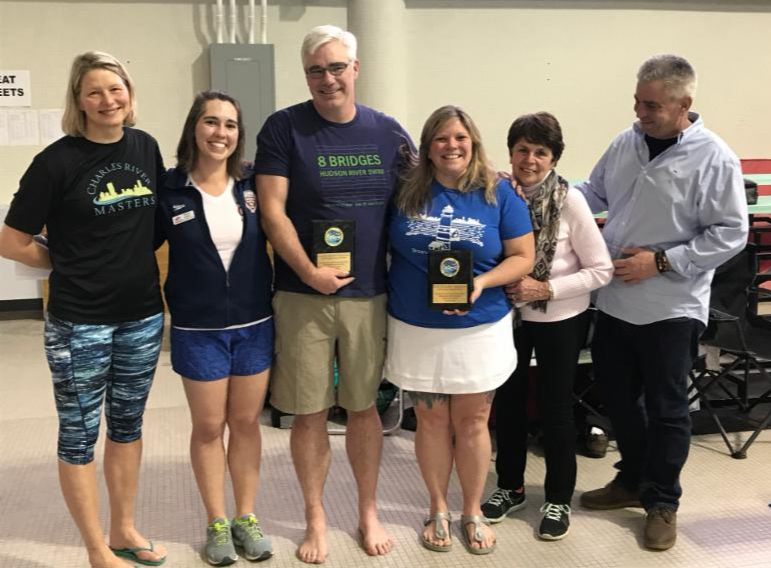
"Event directors creating and sustaining iconic open water traditions"
Presented by
Alana Aubin
, NELMSC Communications Chair, and
Lyn Duncan
|
|
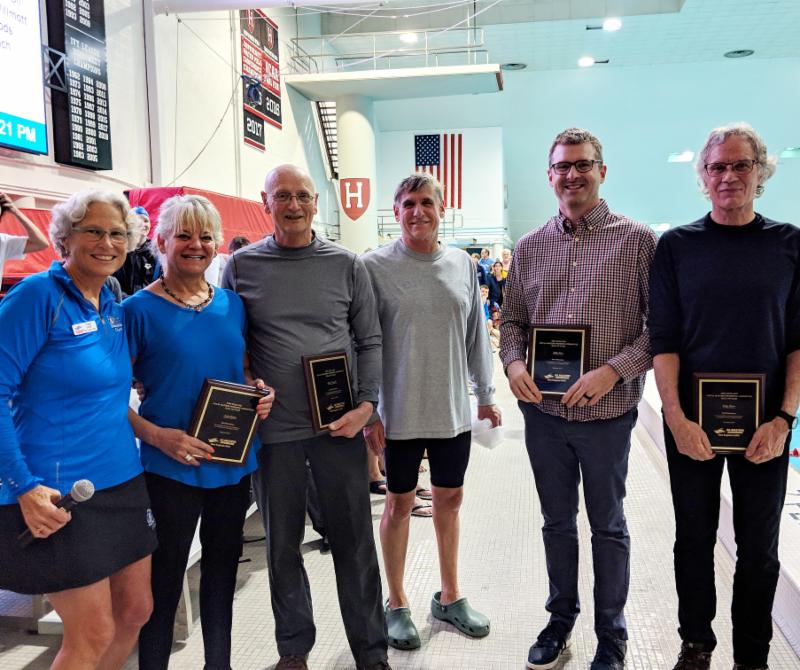
2019 NELMSC Hall of Fame Induction
|
|
Presented by
Tracy Grilli
, NELMSC Hall of Fame Chair, and
Elaine K. Howley
|
|
|
|
The Pool Performance category recognizes members based on outstanding swimming accomplishments achieved as a member of the New England LMSC.
Fred Schlicher
, 2011 inductee, presented the awards.
Jacki Hirsty
(NEM)
Dan Rogacki
(NEM)
Mike Ross
(MESC)
Greg Shaw
(NEM)
Diann Uustal
* (NEM)
Ronnie Kamphausen
* (MESC)
|
|
The Contributor category honors volunteers who have made significant contributions to Masters Swimming in the NELMSC. This year’s inductees are “Trailblazers” from the 1970s and 1980s who helped build our first three Masters Swimming clubs: New England Masters, Vermont Masters, and Maine Masters.
David Vail
presented the awards.
|
|
Sandy Potholm
(MESC)
Sharon Battistini
(MESC)
Ted Haartz
* (NEM)
(accepted by his son,
Doug Haartz
)
Debbie Alsofrom
* (VERM)
Jean (Hotchkiss) Archibald
* (VERM)
Joyce Brown
* (MESC)
Jim Edwards
* (NEM)
George Erswell*
(MESC)
Carol Limanek
* (VERM)
Henry Southall
* (VERM)
Dennis Willmott
* (VERM)
John Woods
* (MESC)
Enid Uhrich
* (NEM)
*Not pictured
|
|
|
Swim Strong: Multiphase Dryland Series for Masters Swimmers, Phase I
|
|
Swimming strong is about building athleticism that compliments the demands of moving through the water efficiently and powerfully. Dryland training, at the pool and at home, is a valuable addition to any swimmer’s routine regardless of age or fitness level. The goal of this series is to increase the swimmer’s range of motion while building strength and mobility. This fundamental movement pattern work aids in injury prevention, tightens connective tissue, and improves swim mechanics and strength.
The
Swim Strong Series
will present dryland exercises in progressive phases. Each phase builds upon the previous phase. The early phases will focus on range of motion, mobility and stability then progress into strength and resistive exercises.
Use the following
Phase I
exercise routine as your dynamic warm up before each swim, at home or before other activities. A dynamic warm up increases blood circulation and fires up muscles soon to be engaged in the water. Think, “RAMP Up!” before you start up. (RAMP = Range of motion, Activation, Muscle Pliability.)
Allow 3-5 minutes to complete this simple but effective routine at least 3x/week. On the pool deck, use a kickboard as a cushion for your knees, ankles, and forearms when appropriate. Do not force movements in this routine and build repetitions and time in exercises gradually.
|
|
Why do it?
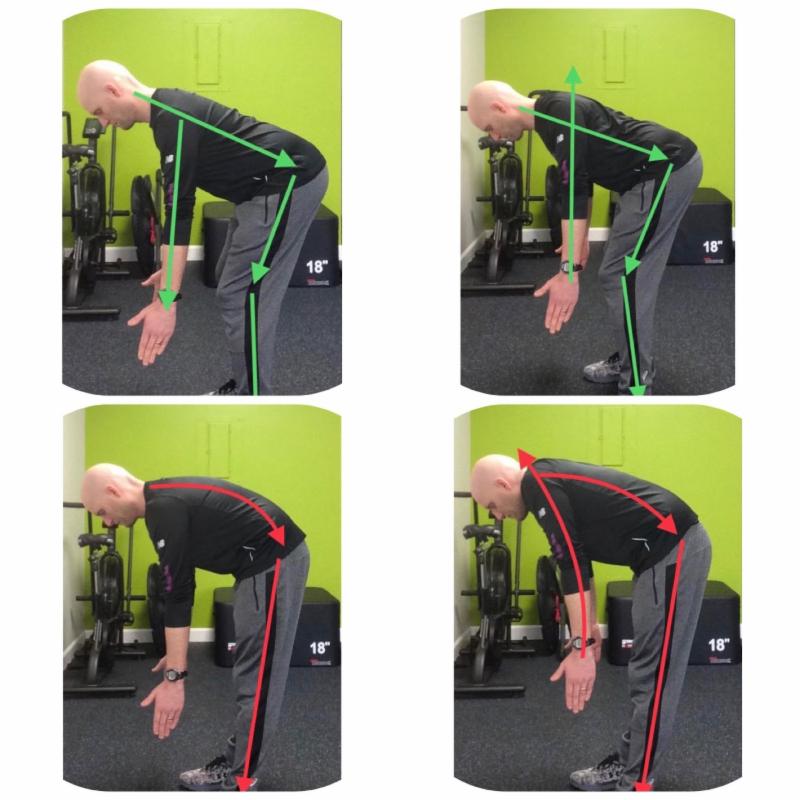
The Posture Row teaches us how to engage our upper back and shoulders while keeping our spine in a “neutral” position. A neutral spine aids in a better overall body position in the water.
How to do it well:
Standing with the feet hip width apart, knees flexed and hips back, make sure the head, neck and spine are in a “neutral” position as depicted by the green arrows below. Allow the fingertips to fall straight down to the floor, then draw the arms straight up towards the ceiling while squeezing the shoulder blades together. As you perform this motion, it is important that you remember to engage your core. One tip is to “zipper up the belly button” or, in other words, imagine trying to pull the zipper on your pants up with your belly button.
Complete 12-15 repetitions.
Common mistakes:
The most common mistakes most people make are 1) keeping the knees locked, 2) rounding the spine, and 3) not fully engaging the core. This will cause a “shrugging” motion instead of a pulling motion as depicted by the red arrows below.
|
|
Why do it?
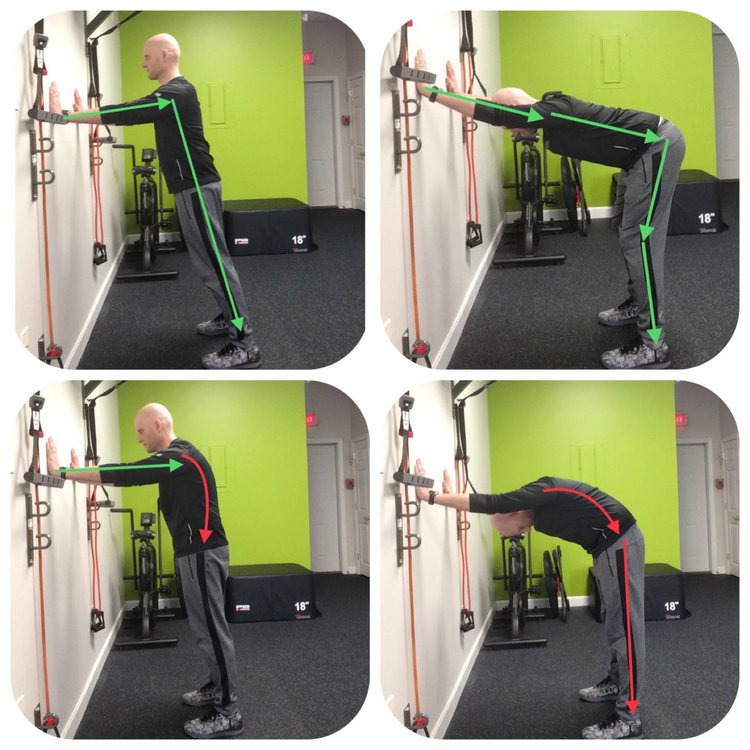
The Supported Hip Hinge is a great drill which will help develop mobility of the shoulders and hips as well as flexibility of the hamstrings.
How to do it well:
Standing with your hands on a wall (roughly shoulder height) take one step back from vertical with our feet hip width apart. Keeping your hands on the wall, slightly flex the knees as you press your hips back while “zippering up your belly button.” Your end range of motion should show a straight line from the wrist to the hips as depicted by the green arrows below.
Complete 8-10 repetitions.
Common mistakes:
The most common mistakes people make are 1) standing too close to the wall, 2) locking the knees, 3) rounding the spine, and 4) not fully engaging the core. This will cause a shortening of shoulder range of motion as well as the forehead dropping towards the floor.
|
|
Why do it?
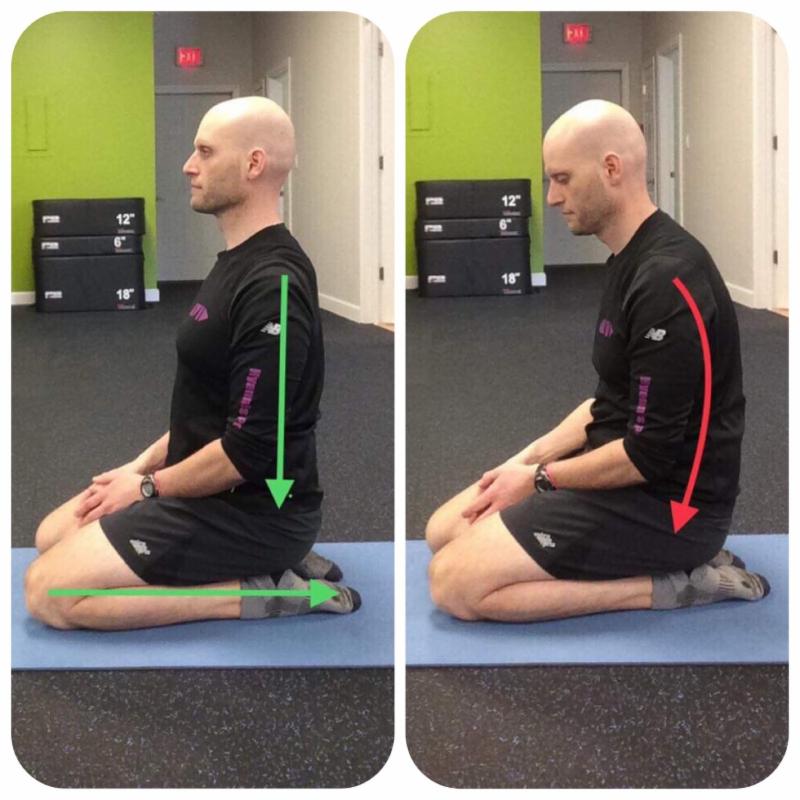
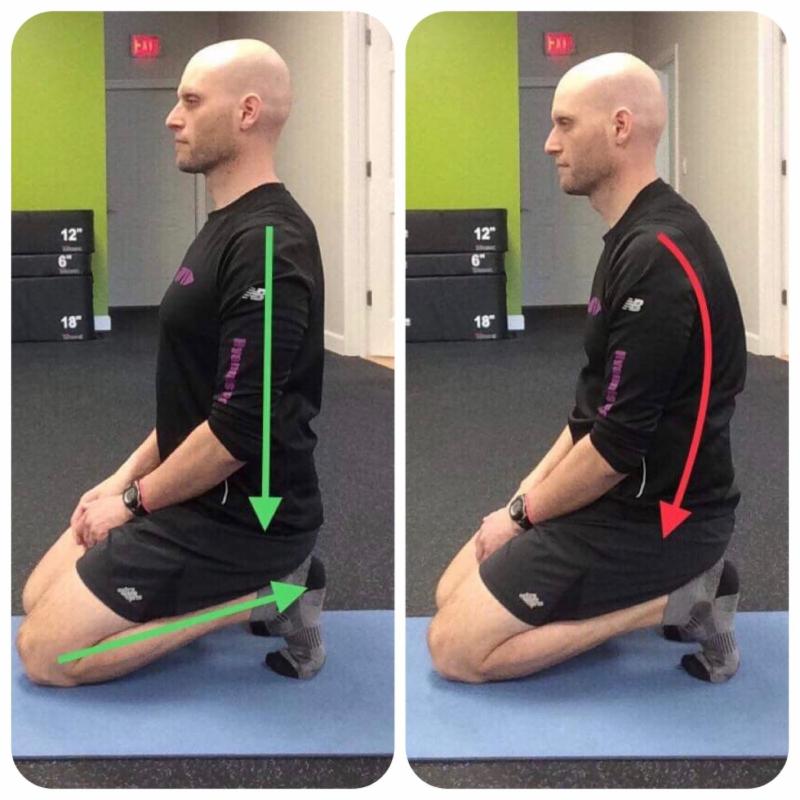
Ankle flexibility and mobility are crucial to swimmers both during the kick and push off of the wall. Heel Sits and Toe Sits are great drills to develop ankle and knee/quadriceps flexibility.
How to do it well:
For Heel Sits, start in a quadruped position with your toes pointed back. Slowly lower your hips to your heels and sit in a tall position. For Toe Sits, start in a quadruped position with your toes pulled towards your shins. Slowly lower your hips towards your heels and sit in a tall position. Even though you are in a kneeling position, it is critical that your core is engaged, so, you guessed it... “Zipper up the belly button.”
Take 8-10 deep breaths in each position.
Common mistakes:
The common mistake most people make during both of these drills is allowing the shoulders to fall forward as depicted by the red arrows below. Remember to sit as tall as possible pulling the shoulder blades together and engage the core.
|
|
|
Why do it?
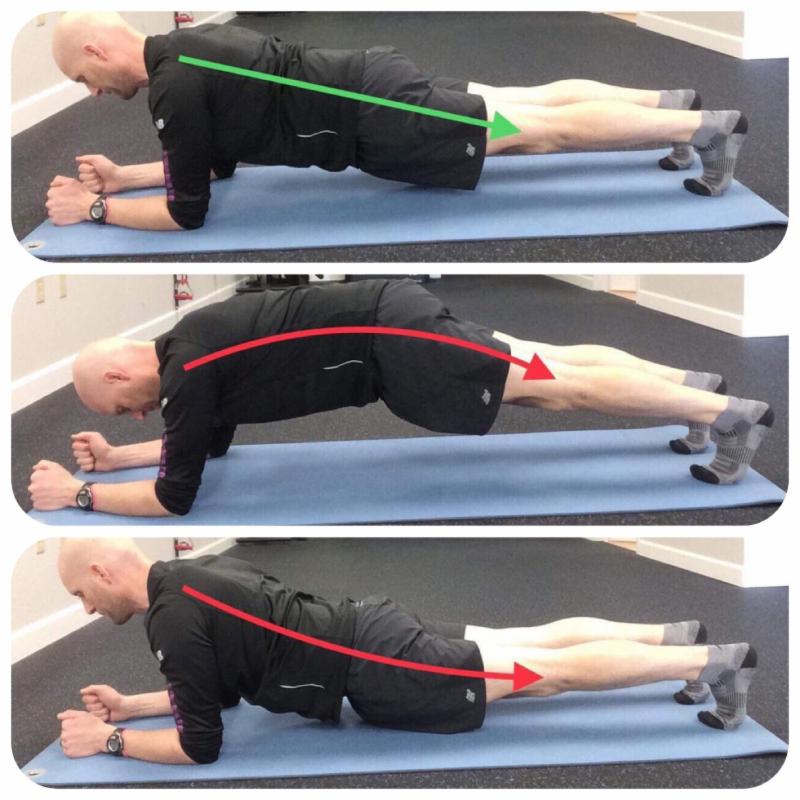
The plank is the best “bang for your buck” drill. When done properly, it engages every muscle in the body, giving us a complete sense of core stability. Core stability is critical to hold a taut body line in the water.
How to do it well:
Starting with the elbows directly under the shoulders and the toes in line with the ankles as depicted by the green arrows below, focus on engaging all areas of the body. Start by clenching the fists, then the biceps. Zipper up the belly button as you squeeze your glutes (“butt”). Now squeeze the thighs and pull the elbows down toward the toes. You should now feel the entire body working to stabilize.
Hold 30-60 seconds.
Common mistakes:
The common mistakes most people make during the plank are 1) allowing the hips to rise or fall out of neutral (as depicted by the red arrows below) and 2) not fully engaging the body during the exercise.
|
|
|
|
|
|
|