Middle Schoolers Restore Local Salmon Streams | |
|
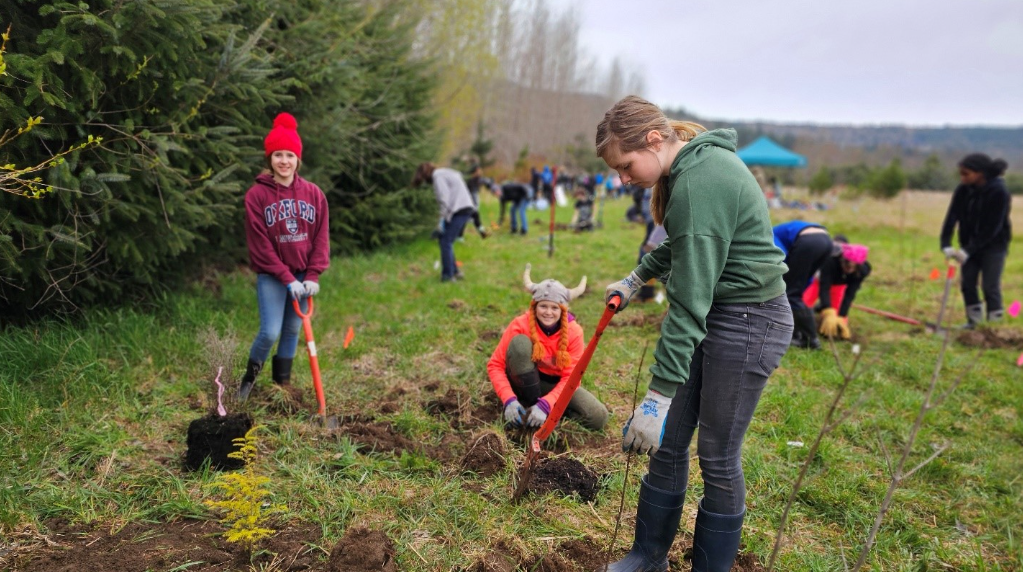
This past month middle school students in the Real Learning Real Work program, completed their year-long restoration projects. Over 300 students from four middle schools worked in teams to design and carry out their own riparian restoration plantings on nearby streams. Together, they planted over 600 native trees and shrubs along the Dungeness River and Salmon Creek.
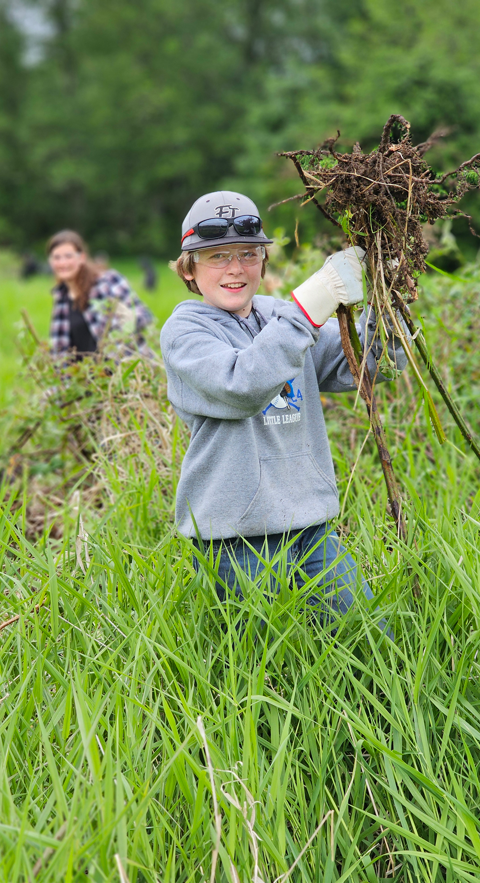
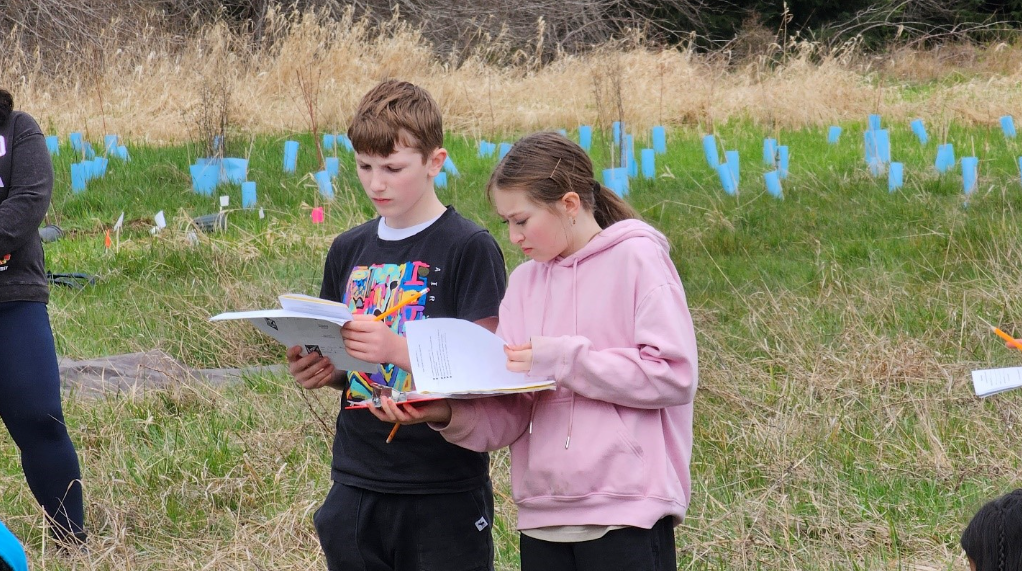
In late May, students returned to their plantings one last time to evaluate the efficacy of their work and perform maintenance on their plantings. This year’s plantings had great survival and students cut back reed canary grass, removed Himalayan blackberry, and protected their plants from animal browsing by installing blue tubes.
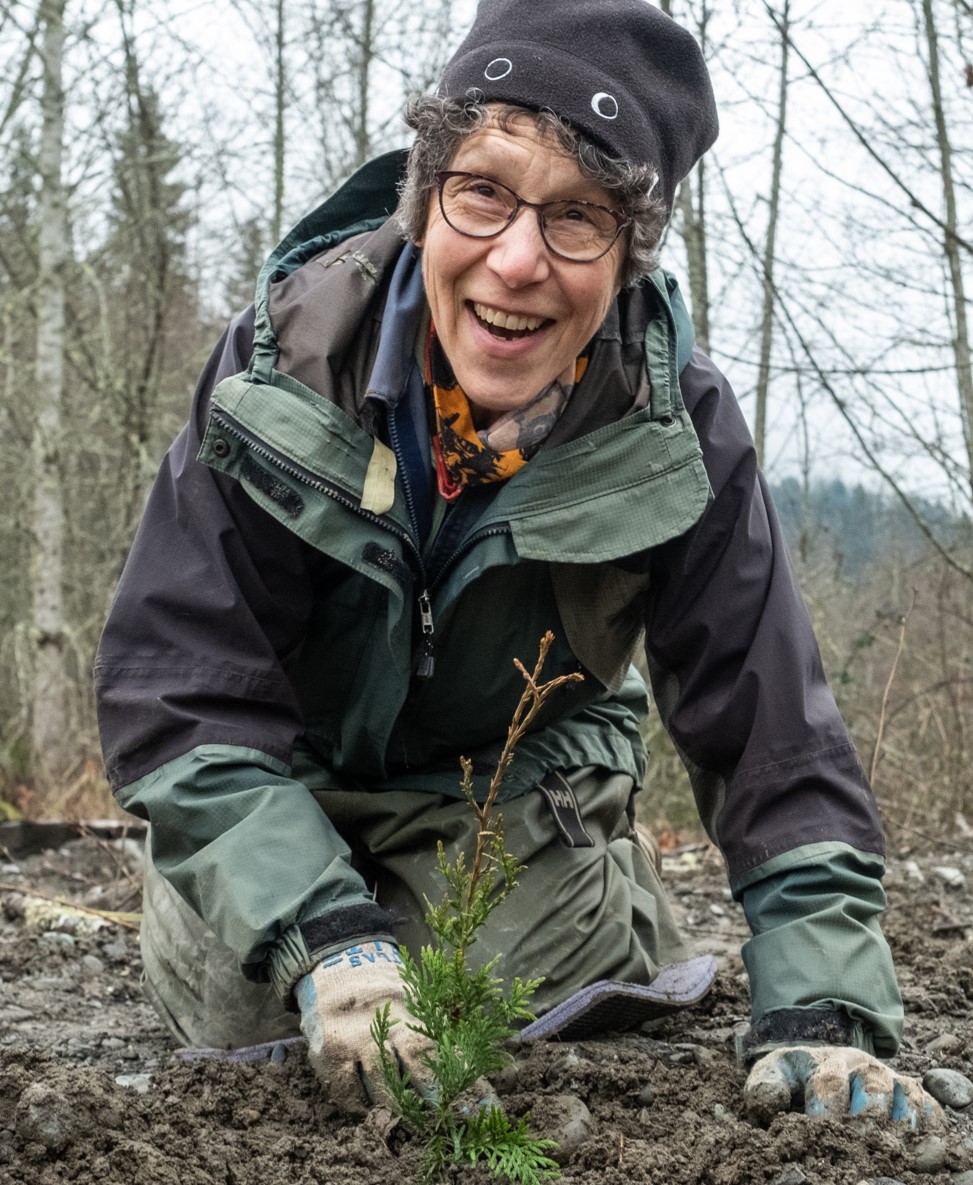
These students join thousands of prior students who have played a part in the restoration of the region’s salmon streams. Over time, they will get to watch their plantings grow into healthy and diverse riparian forests that will shade generations of salmon to come!
| |
“I enjoyed surveying the land, planting trees, and maintaining the plots. I liked working outside and being active in our learning.” – Middle School Student | |
|
This program could not be possible without the dedication of community volunteers – thank you to all the volunteers that made these middle school field trips possible!
Funding for this program is provided by the Recreation and Conservation Office, Office of Superintendent of Public Instruction, Jefferson Community Foundation, private foundations, and the generous support of community donors.
| |
Top Right: Photo of Blue Heron middle school student removing Himalayan blackberry root-ball. Above: Students digging holes for native plants and students looking at their plot maps with their plants protected by blue tubes in the background. Photos courtesy of NOSC staff. | |
Pacific Lamprey: Did You Know? | |
|
Article by Cheryl Lowe
Several recent conversations piqued my interest in an anadromous fish I had never heard about—Pacific Lamprey. Here’s a short quiz to see what you know and hopefully dispel some myths. Answers are below. Check out some of the resources listed to learn more.
| |
|
1. Pacific lamprey feed by sucking the blood of other fish and marine mammals.
2. Lampreys are ancient.
3. Pacific lamprey can climb vertical surfaces with their mouths.
4. Pacific lamprey taste terrible.
| |
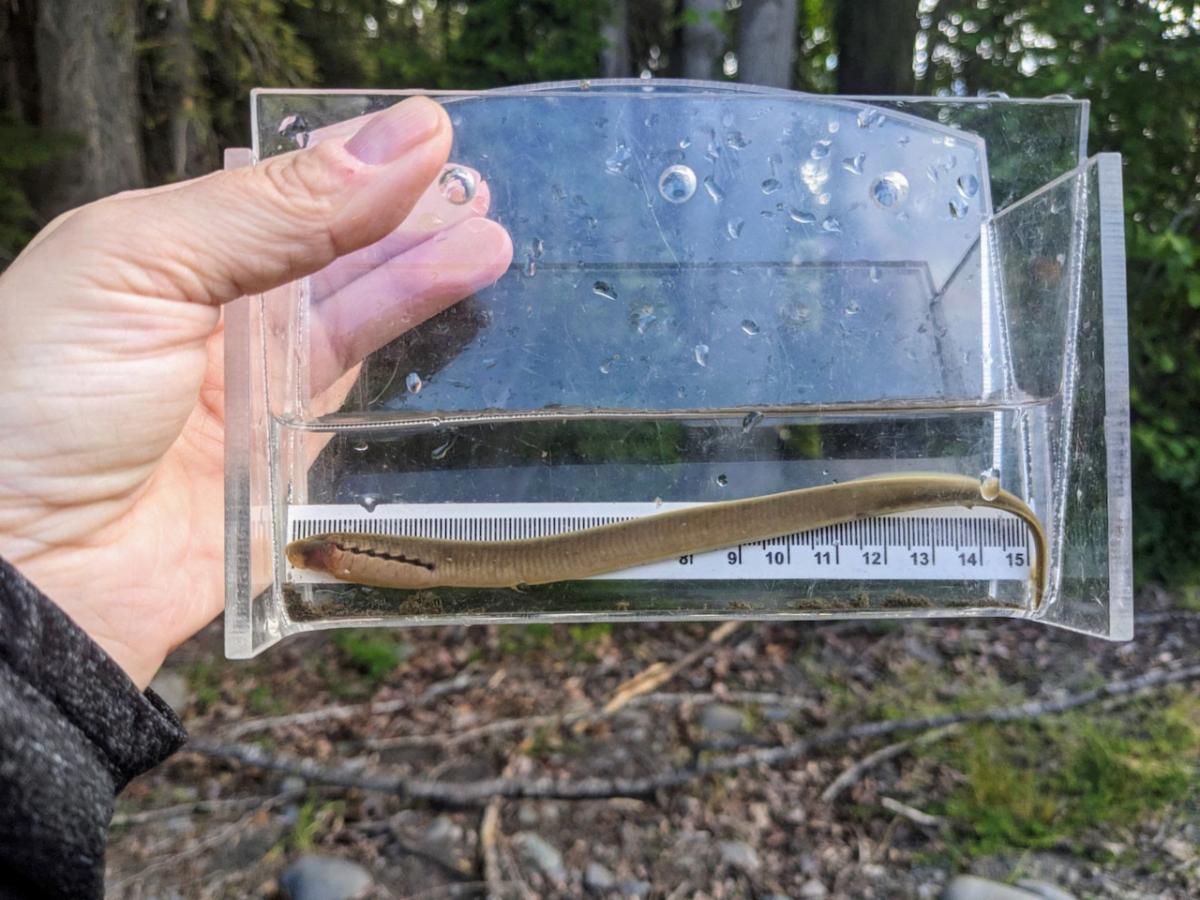
Above: Immature Pacific lamprey. Photo courtesy of Kelly Zupich. | |
|
1. Pacific lamprey feed by sucking the blood of other fish and marine mammals.
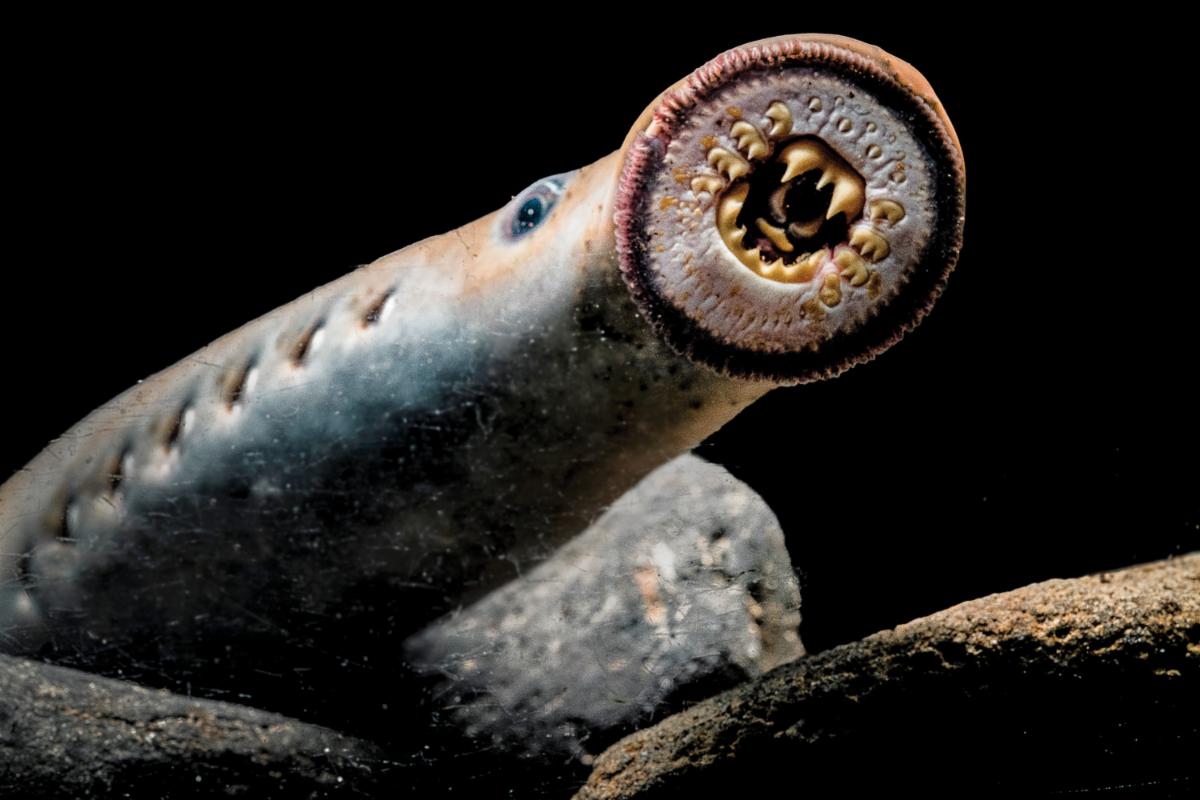
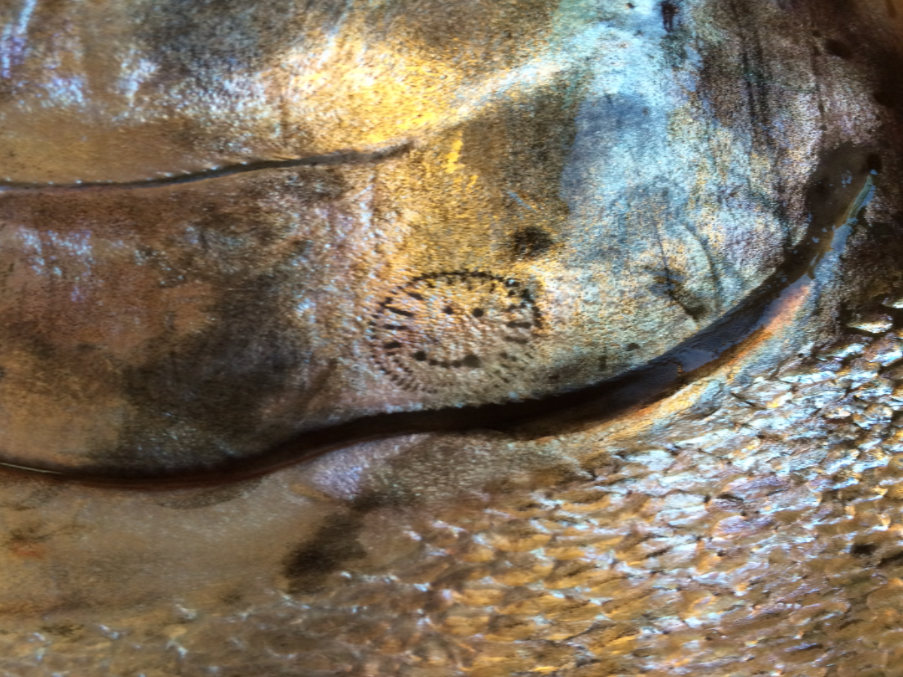
TRUE. Pacific lamprey adults are parasitic on other fish and marine mammals, using their suction mouth to attach to their host and suck out blood and body fluids until they are full. Then they drop off and the host swims on their way. Lamprey young, however, burrow in the mud and sand of freshwater streams and filter feed on microorganisms for five to seven years before they undergo a radical metamorphosis into adult lamprey. The adults then migrate to the ocean. After spending one to three years in the marine environment, they cease feeding and migrate to freshwater in the spring. They are thought to overwinter and remain in freshwater habitat for at least a year before spawning the following summer.
| |
Left: Mouth of Pacific lamprey. Photo courtesy of Paul Wilson. Right: A Pacific lamprey bite mark on a salmon, which appears as a circle, two eyes, and a smile! Photo courtesy of David Leal/USFWS. | |
|
2. Lampreys are ancient.
TRUE . Lamprey species have been on the Earth for hundreds of millions of years, longer than trees and dinosaurs! They have lived through several mass extinction events, the worst wiped out 96% of all marine species, but lampreys survived.
| |
|
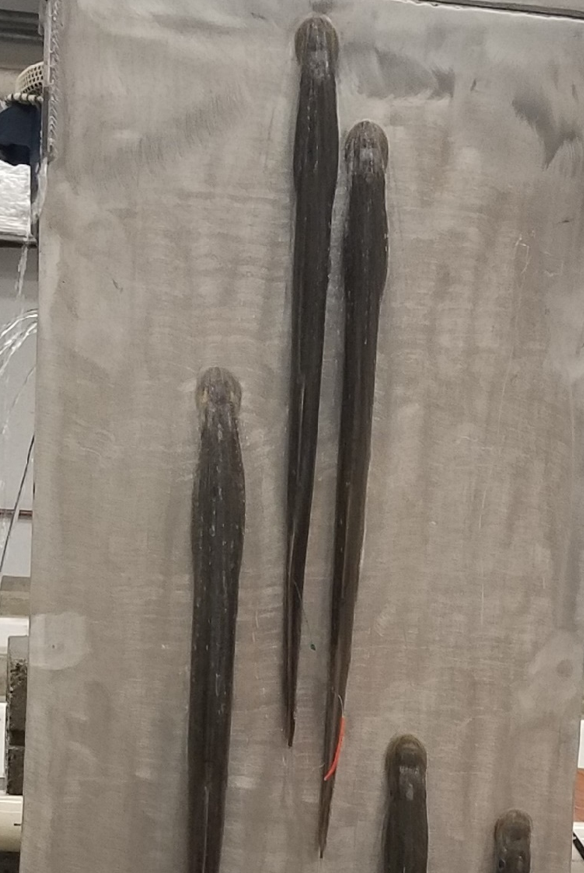
3. Pacific lamprey can climb vertical surfaces with their mouths.
TRUE. Pacific lamprey have a very unique skill that other lamprey don’t have — they can climb vetical surfaces using their suction mouth. They climb natural barriers such as waterfalls, which allows them to move upstream to good spawning habitat.
4. Pacific lamprey taste terrible.
FALSE. Not only do people enjoy eating Pacific lamprey, but they are also a very calorie-rich food and an important part of the food web. Pacific lamprey have at least 40 documented predators — juvenile lampreys are eaten by fish and birds, and adults are eaten by fish, birds and a variety of marine and terrestrial mammals. Pacific lamprey are actually preferred by predators over salmon because they are higher in fat and calories.
| |
|
Above Right: Example of Pacific lamprey climbing vertical surface during evaluation of wetted wall structures designed to improve passages at dams. Photo courtesy of D. Lumley, Yakama Nation Fisheries. | |
|
Pacific Lamprey Conservation Initiative: https://www.pacificlamprey.org
Tribes have been leaders in sounding the alarm as reductions in the abundance and range of Pacific Lamprey accelerated, and have helped initiate collaborative efforts to restore Pacific Lamprey populations and educate the public of their importance. Now in addition to being a species of immense cultural significance for Native American tribes, Pacific Lamprey are a tribal trust species for the U.S. Fish and Wildlife Service (USFWS), and a species of concern for many states.
The Pacific Lamprey Conservation Initiative (PLCI) is a collaboration of Native American tribes, federal, state, municipal and local agencies, and non-governmental organizations working to achieve long-term persistence of Pacific Lamprey, their habitats, and support their traditional tribal use throughout their historical range spanning the West Coast of North America.
USFWS info: https://www.fws.gov/story/2023-10/demystifying-pacific-lamprey
Washington Department of Fish and Wildlife Info:
https://wdfw.wa.gov/species-habitats/species/entosphenus-tridentatus#:~:text=Pacific%20Lamprey%20are%20important%20to,over%20the%20past%20several%20decades.
| |
Salmon and Drought: What YOU Can Do! | |
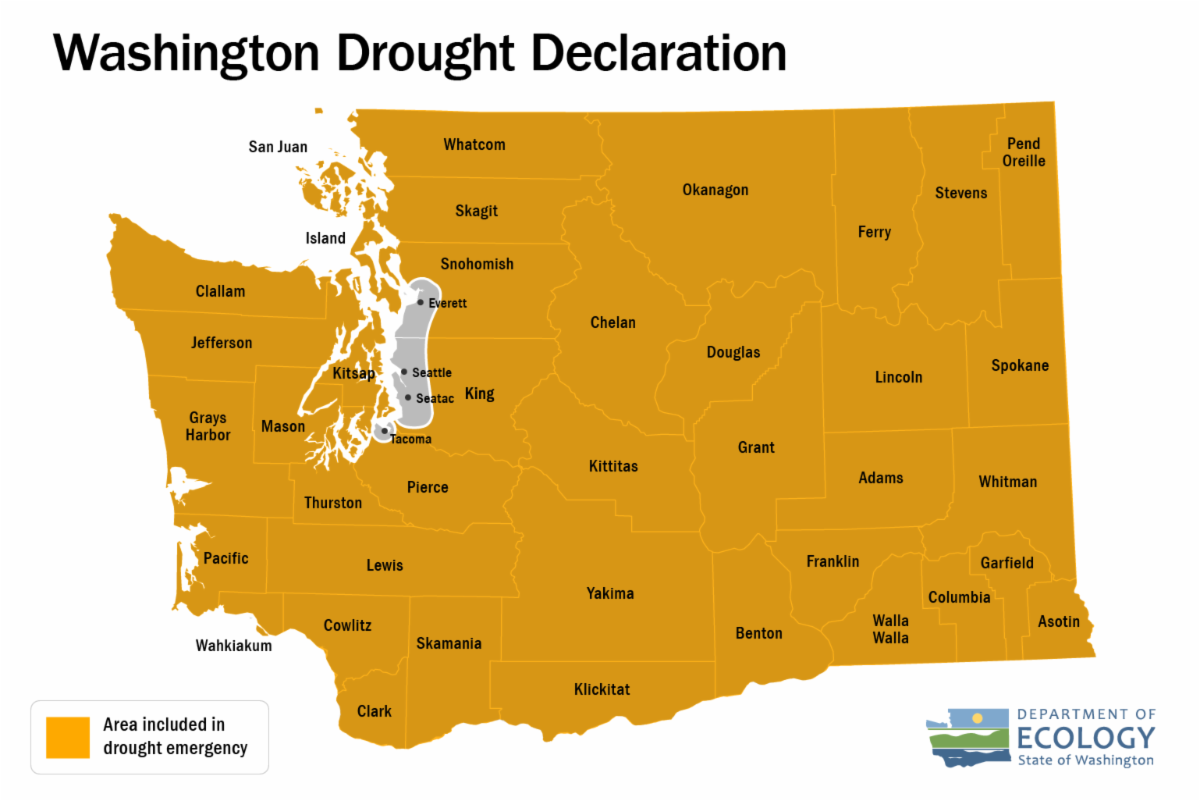
A statewide drought was declared April 16th 2024 with limited exceptions for Seattle, Everett and Tacoma metro areas. According to the Department of Ecology, “The forecasted runoff continues to be below the state’s statutory threshold for drought conditions. That threshold is met when an area is expected to receive less than 75 percent of normal water supply and there is a risk of undue hardship for water users and the environment. We rely on streamflow forecasts provided by the National Weather Service and the Natural Resources Conservation Service, and also consider data for precipitation, soil moisture, and other factors.” | |
|
What does this mean for salmon?
Drought often leads to decreased streamflow in rivers and streams which can concentrate salmon in smaller areas, increase competition for resources and make them more vulnerable to predation and other stressors.
Drought conditions can also cause water temperatures to rise in rivers and streams. Salmon are highly sensitive to temperature changes, and elevated water temperatures can stress fish and increase their susceptibility to diseases. High water temperatures can also disrupt salmon migration patterns and affect the timing of important life cycle events such as spawning.
Reduced streamflow and higher water temperatures from drought can contribute to habitat degradation like increased sediment buildup and decreased water quality, which can negatively impact salmon spawning grounds and rearing habitats.
Overall, a drought can exacerbate existing threats to salmon populations, including habitat degradation, water quality issues, and competition for resources. Effective management strategies, including habitat restoration efforts and adaptive water management practices, are essential for mitigating the impacts of drought on salmon and promoting the long-term health and resilience of salmon populations.
Where do you get your water from?
The volume of flow in rivers and streams are most obviously impacted by water use directly from the river either for home water use or irrigation. Well water use, especially from shallower wells also has an impact on rivers on stream. Streamflow depletion from wells happens because well usage can draw down groundwater, reducing the flow of cold groundwater into streams. If the groundwater is drawn down enough, water from the stream will flow into the ground to replenish the groundwater, further reducing water levels in the stream.
| 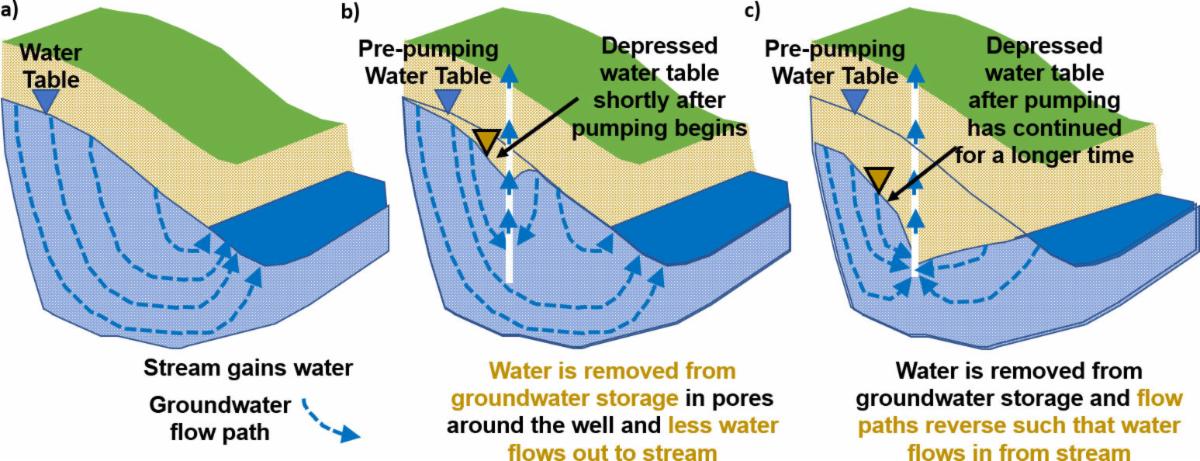 | Schematic showing that pumping water from a well near a stream depresses the water table: a) before pumping; b) shortly after pumping begins water comes from groundwater storage and less water flows toward the stream, decreasing flow in the stream; c) as pumping continues, the water table is depressed to the point that water flows from the stream to the well such that the stream discharge decreases further and the stream surface elevation is lowered (Poeter et al., 2020, gw-project.org). | Knowing where your drinking water comes from is often a first step in creating a sense of stewardship and appreciation for local waterways. This knowledge can be motivation for you and your community to keep these water sources as clean as possible! | |
|
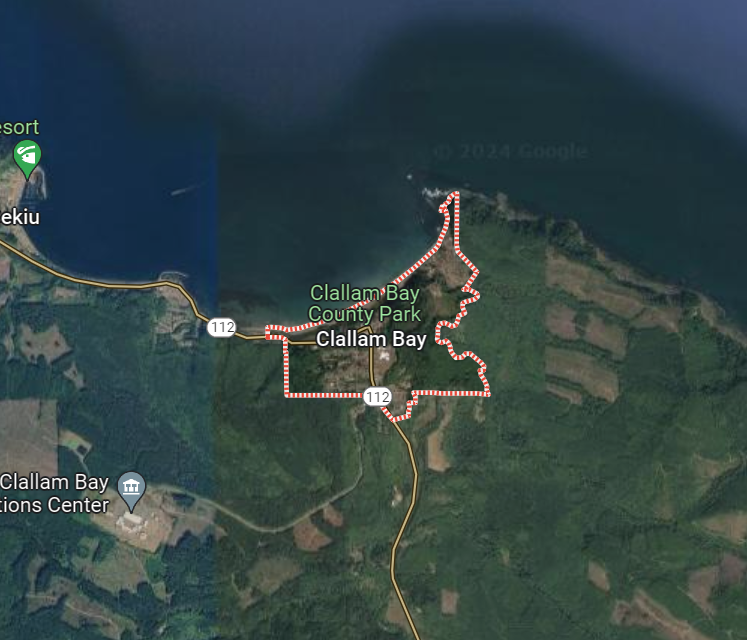
Clallam Bay
The Clallam Bay/Sekiu Water District is supplied groundwater pumped from a four-well field near the Hoko River. Sodium hydroxide is injected to help achieve and maintain proper pH levels. The water is chlorinated and then pumped to three different reservoirs: 100,000-gallon Sekiu Reservoir, 100,000-gallon Clallam Bay Reservoir, and 20,000- gallon Chanterelle Reservoir. From each of these three points, water flows back to the Clallam Bay/Sekiu area upon demand.
| |
|
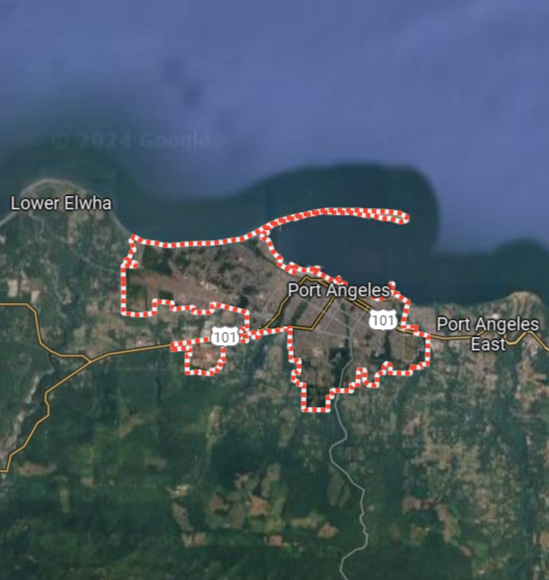
Port Angeles
The Water Utility maintains the city drinking water system from two source options on the Elwha River. The City can use its 60-foot-deep Ranney collector well, constructed in 1979, or receive water from the Lower Elwha Water Treatment Plant. Surface water is typically used to prevent the potential blockage of the Ranney collector well system with the transport of sedimentation from the removal of the dams.
| |
|
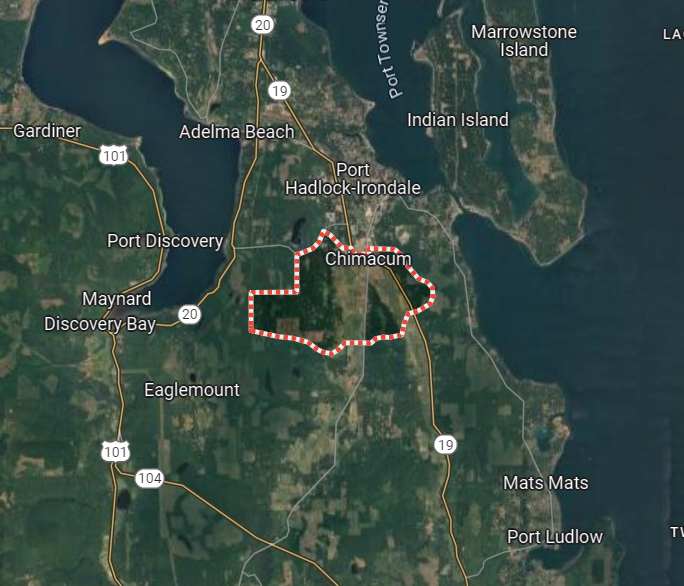
Chimacum
Chimacum primarily gets its drinking water from groundwater sources, specifically wells. The Chimacum area relies on groundwater as the main source of drinking water for residents and businesses. Wells tap into underground aquifers to extract groundwater, which is then treated to meet regulatory standards for safe drinking water. Chimacum does not have a centralized water treatment plant like larger municipalities; instead, individual wells or small water systems may treat the groundwater before distributing it to consumers.
| |
|
Port Townsend
The City of Port Townsend’s municipal water is supplied by the Big Quilcene and Little Quilcene Rivers. The water travels by gravity to the City via a 30-mile pipeline. The existing surface water system has been in operation since 1928, making it one of the oldest water systems in Washington State. In addition to serving the residents of the City of Port Townsend, water is provided to the Port Townsend Paper Corporation, Glen Cove, and parts of the unincorporated area west of town.
| |
|
By adopting simple yet effective water-saving practices in our daily lives, we can play a significant role in ensuring that salmon populations thrive. Here are some practical tips to help conserve water this summer and beyond:
- Plant drought-tolerant/resistant plants and trees
- Recycle indoor water to use for plants (water from washing vegetables, pasta pot, canning pot, etc.)
- Refrain from watering your home landscape when it rains
- Use a broom to clean driveways, patios, and sidewalks instead of water from a hose
- Water your outdoor landscape earlier in the day when temperatures are cooler
- Use an irrigation timer in your garden to water plants in the early morning, deeply and less frequently.
- Use the car wash, not your hose if you must have a clean car
- Wait until you have a full load before running the dishwasher or if you don't have a dishwasher do one sinkload at the end of the day
- Do not create recreational rock dams (Washington Department of Fish and Wildlife and Tribes are constructing some intentionally for fish passage)
| |
Summer is here and NOSC is traveling all across the North Olympic Peninsula to attend community events, providing fun educational experiences and sharing about the work that NOSC is doing in our community. Join us this summer! | | |
|
|
Joyce Daze Wild Blackberry Festival – Saturday, August 3rd
This community festival draws crowds out to Joyce for the wild blackberry pies! NOSC will be bringing interactive salmon activities to educate and inspire people about salmon. Proceeds from the event have provided scholarships for graduating Crescent High School seniors, funds to community organization and equipment for the Joyce Fire Department.
| |
|
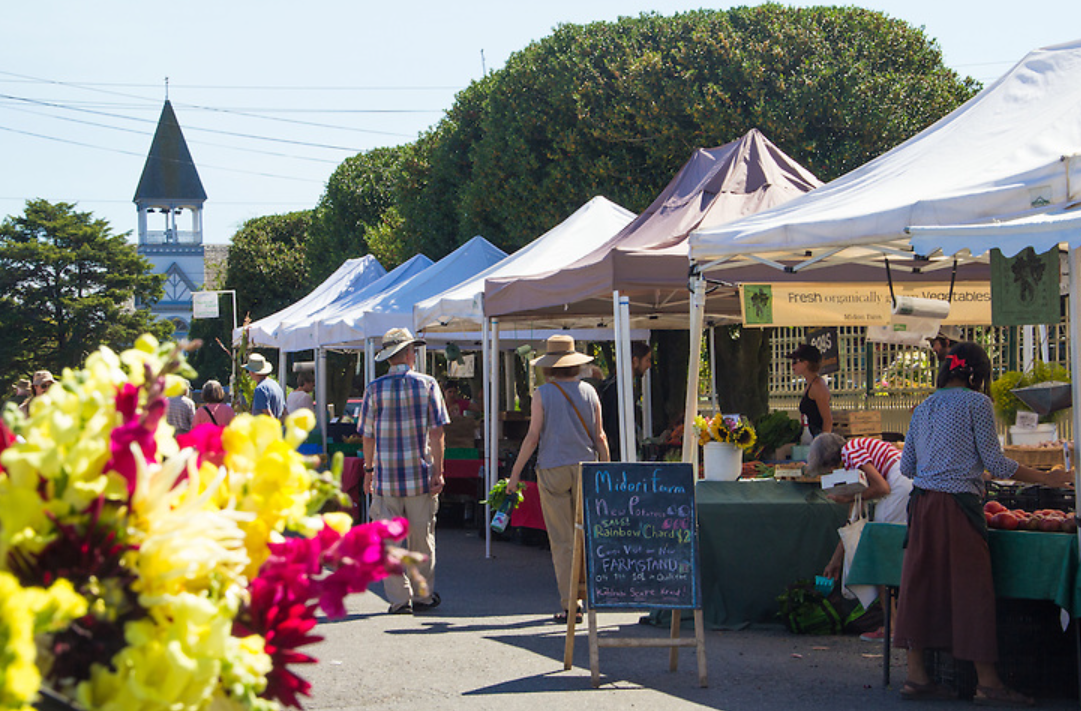
Port Townsend, Chimacum, Sequim, and Port Angeles Farmer’s Markets
*Dates subject to change*
Port Townsend Market – July 20th & August 17th
Chimacum Market – July 7th & August 11th
Sequim Market – July 27th
Port Angeles Market – June 29th and August 24th
| |
|
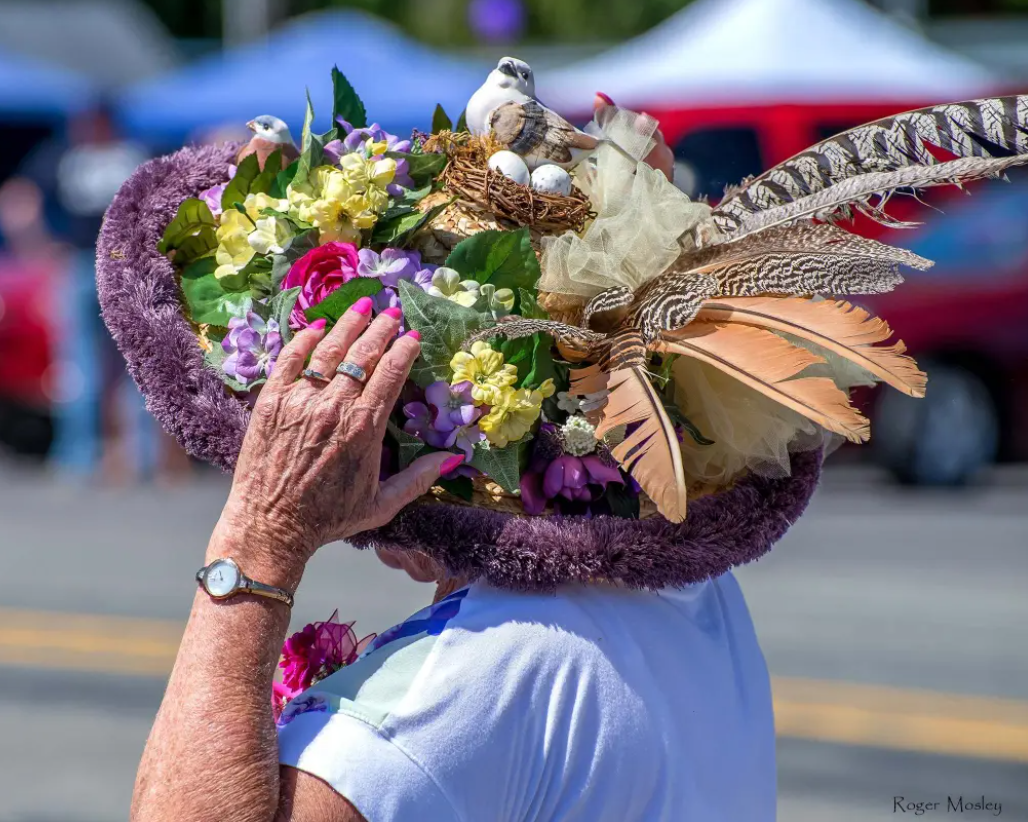
Above Left: Photo of Joyce Daze Wild Blackberry Festival decorated hat. Photo courtesy of Roger Mosley. Above Right: Photo of Port Townsend Farmers Market. Photo courtesy of Joel Rogers. | |
Last Chance to Raise a Glass of Cider for Salmon Education! | |
|
For the whole month of June, Finnriver Farm & Cidery has been hosting a RoundUp fundraiser to support NOSC's salmon education programs. Every purchase in the cider garden will be given the option to round up their purchase to benefit salmon education. Consider visiting Finnriver Farm & Cidery and rounding up this last weekend of June!
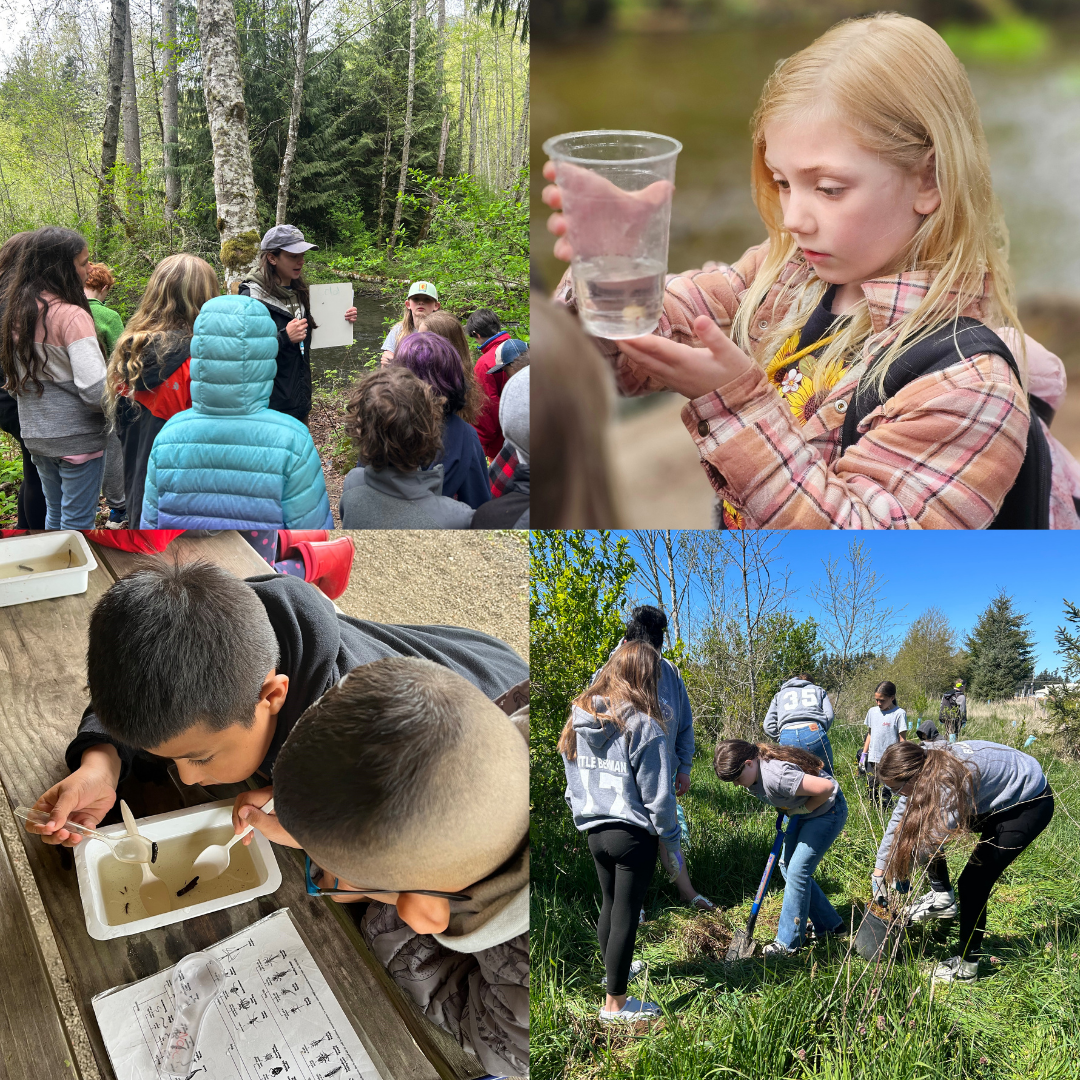
NOSC provides hands-on salmon education programs to over 800 students annually. From raising salmon in the classroom in elementary schools to helping middle schoolers design their own restoration project to watershed studies with community education, NOSC is committed to educating the next generation of salmon stewards! Find out more about NOSC’s education programs at Education | North Olympic Salmon Coalition (nosc.org).
Finnriver Farm & Cidery
124 Center Road, Chimacum, WA 98325
Open: Wednesdays - Sundays 12-8pm
| |
|
Above Right: Elementary and middle school students participating in Salmon in the Schools and Real Learning Real Work programs. Photos courtesy of NOSC staff. | |
Header photo: John Gussman | |
Base funding for the RFEG program comes from a grant from the U.S. Fish & Wildlife Service's Partners for Fish and Wildlife Program, a portion of state commercial and recreational fishing license fees, and excess egg and carcass sales administered by the Washington Department of Fish & Wildlife. | |
Give Us Your Feedback
Questions or Comments? Let us know what you think!
outreach@nosc.org
360.379.8051
www.nosc.org
| | | | |