August 19, 2026 | Issue No. 43

Stormwater Pollution Ordinance Works to Protect Streams


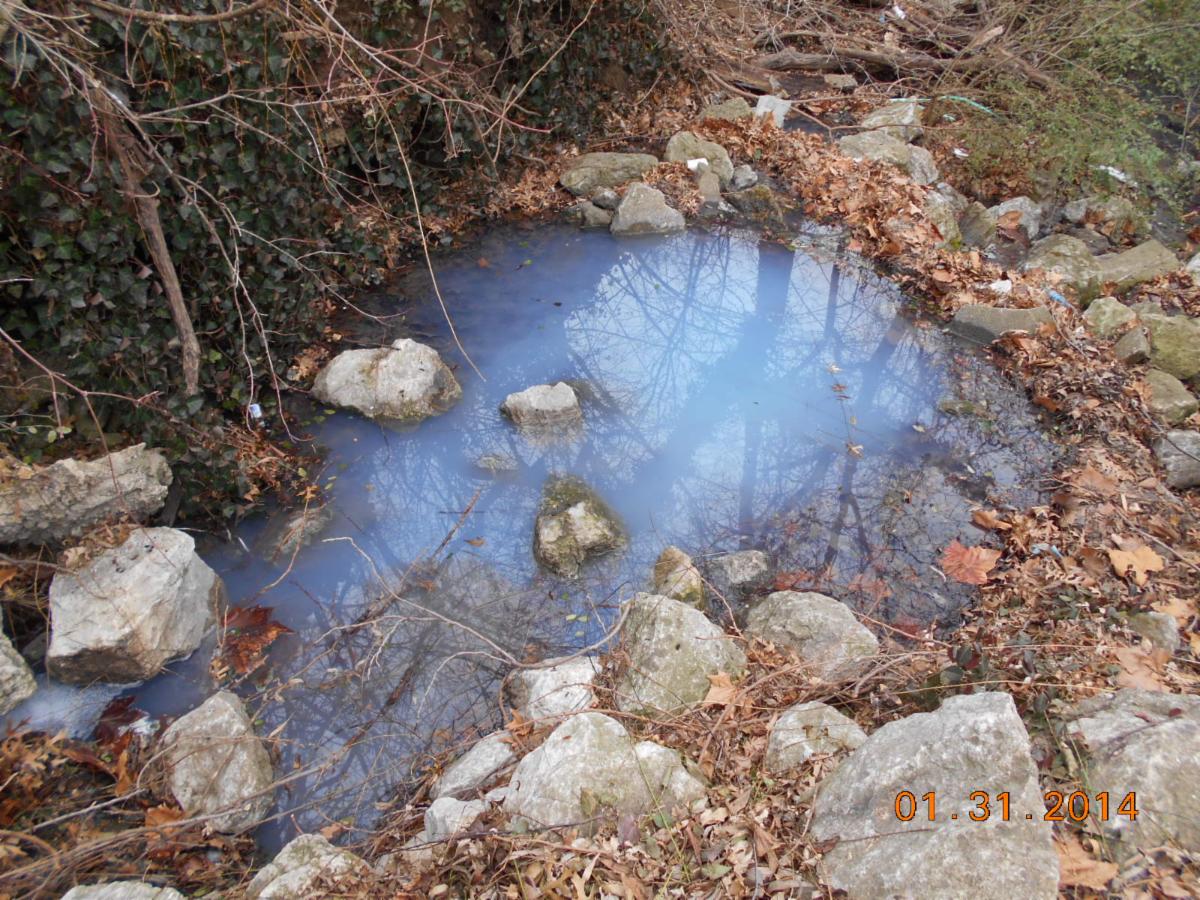
Did you know that the City of Tulsa has a pollution ordinance? This ordinance helps to regulate the introduction of pollutants into Tulsa’s municipal separate storm sewer system (MS4) and enables the city to comply with laws such as the Clean Water Act, Oklahoma Environmental Quality Act, and the National Pollutant Discharge Elimination System (NPDES).


In order to accomplish this goal, the city regulates activities that may release pollutants such as industrial operations, construction sites, and waste handling. It also requires businesses to follow specific rules to limit environmental impact. The ordinance prohibits discharging harmful substances into storm drains and waterways and sets expectations for proper storage and disposal of chemicals and hazardous materials. Facilities that potentially discharge pollutants may need permits and regular inspections to ensure compliance.


Residents and businesses are encouraged to report potential violations to 311, and the City can issue warnings, fines, or require corrective action when rules are not followed. The pollution ordinance encourages Tulsa to be a cleaner, safer city by promoting responsible environmental practices across the community.

Creek Transformation Increases Water Quality


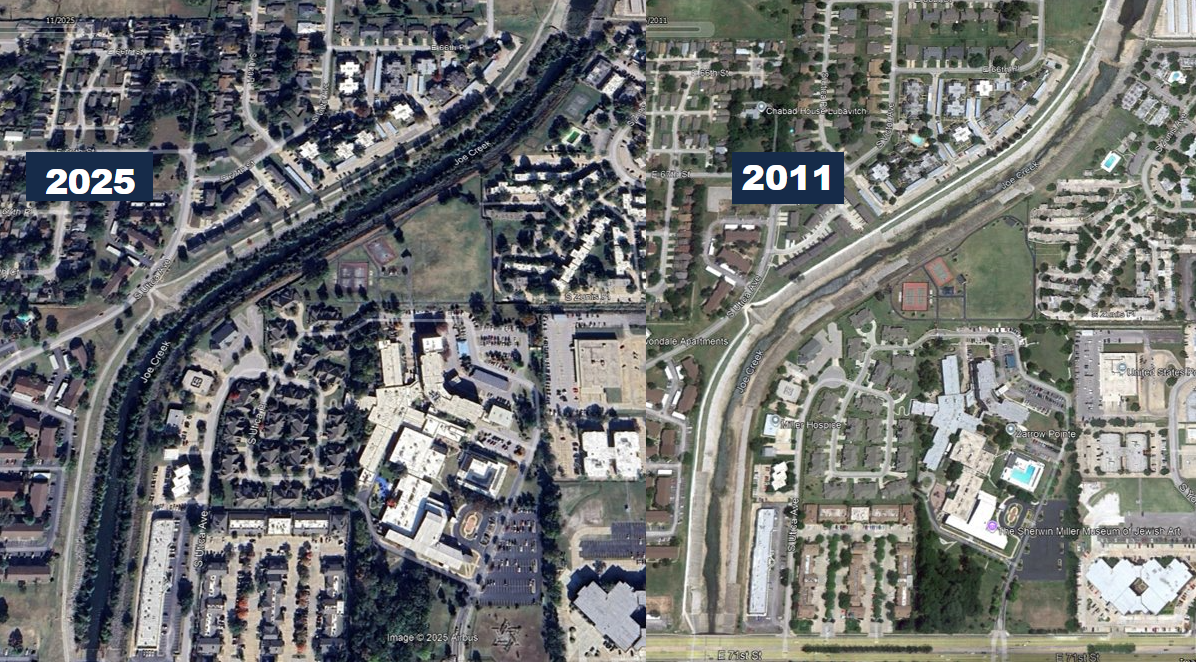
In 2012, the U.S. Army Corps of Engineers transformed a portion of Joe Creek near 71st and Lewis from a concrete stormwater channel into a more natural stream bed. The project added a sandy stream bed and new plants along the banks, helping turn the area back into a healthier, natural habitat.


Between 2024 and 2026, water quality testing showed encouraging results. When comparing bacteria levels upstream and downstream of the restored area, there was an average reduction of 62.3%. A reduction in bacteria levels like this suggests that restoring streams in this way can make a real difference in improving water quality standards.


Although no additional ecosystem restoration projects are currently underway in Tulsa, the success at Joe Creek shows that nature‑based solutions can be effective. As our community continues working to protect local waterways, projects like this offer helpful examples of how environmental restoration can support both wildlife and water quality.

Species Spotlight: Longear Sunfish


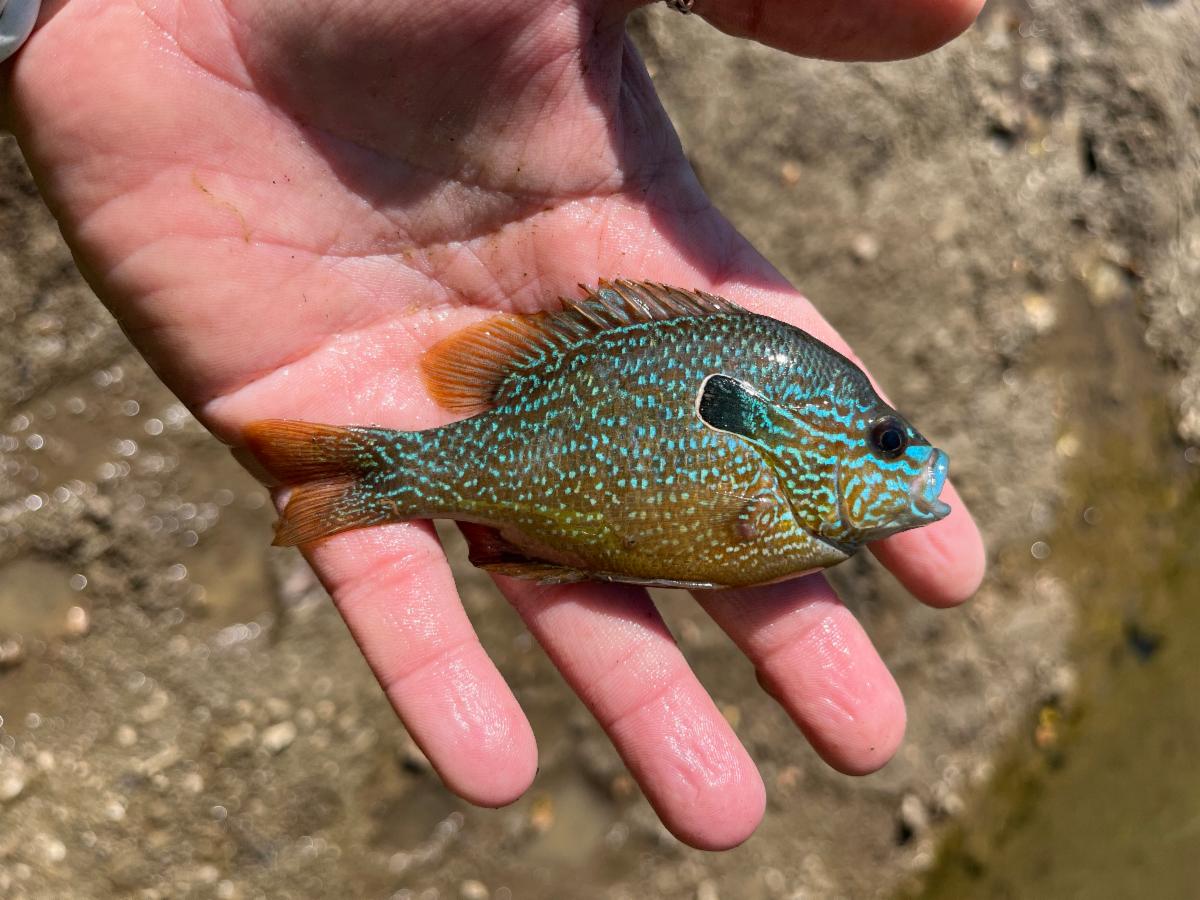
The Longear sunfish (Lepomis megalotis) is one of the more common fish found in City of Tulsa creeks.


Although commonly referred to as a perch, these are part of the sunfish family (Centrachidae). Longear sunfish are identified by their brilliant hues of orange, red, yellow, blue and green as well as their elongated dark opercular flap with a light margin. Unlike most species of sunfish, Longear sunfish are better at catching food in moving waters than in still water. This may be why they are found more often in streams than lakes. They are intolerant of cloudy water, causing a decrease in population in streams that suffer from high turbidity. Their main sources of food are insects, crustaceans, fish eggs, and young fish. They’ve been observed following hognose suckers, who kick up the streambed, to opportunistically feed on anything that comes out of the sediment. 


Excessive mowing and herbicides are detrimental to the lives of these fish, as it removes the instream vegetation longear sunfish use to nest and hunt for prey.


Yard Cleanup Made Easy

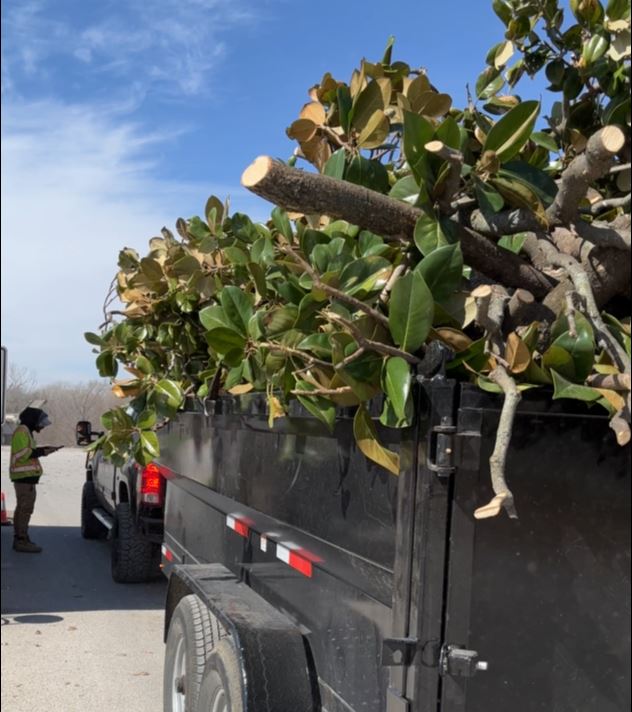
Tulsa residents may drop off tree branches, grass clippings, and leaves at no charge at the City's Mulch Site, simply by providing a driver’s license or a current city utility bill.


With proper hauling materials such as atruck or sturdy containers, Tulsa residents can even pick up free mulch and firewood.

The City of Tulsa Mulch, 2100 N. 145th E. Ave., site is open Thursdays through Tuesdays, from 7:30 a.m. to 4:30 p.m.


For questions about non-accepted items or for more information, please visit www.cityoftulsa.org/mulch.


Connect with us
Facebook  Twitter  Instagram  Youtube