Rail Workers Weekly News Digest
Number 25- June 23rd, 2020
|
|
Below is a series of articles compiled over the previous week.
They are of interest to railroad workers and activists.
|
|
ARTICLE #1 - RAIL WORKER FATALITY
2nd Canadian National Railway Worker Dies in B.C.
|
|
(Editor's Note: Within the space of two weeks, two CN swithmen were killed on this carrier in the same province. The continued carnage on CN and CP goes unchecked. Likewise, the oil train wrecks keep on piling up in Canada as well. See Article #4)
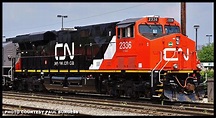
A Canadian National Railway conductor was fatally injured while working just outside of a rail yard in Prince Rupert, according to the union representing rail industry workers in B.C.
According to a statement from Teamsters Canada, the worker was a man in his 30s who had been with the company since 2018.
The union identified the man as a CN conductor, though his name is not being released. "I would like to extend our deepest condolences to our fallen brother's loved ones and colleagues," said the national president of Teamsters Canada François Laporte.
CN also emailed a statement confirming that a fatal "incident" happened on CN property involving a CN employee in Port Edward on Monday. Port Edward is a community about 20 kilometres south of Prince Rupert, B.C.
"We want to offer our sincere condolences to the employee's family and community in these tragic times," the CN spokesperson said.
The union confirmed Monday's death is the second CN conductor fatality relating to "switching operations" so far this month.
|
|
ARTICLE #2 - CORONAVIRUS NEWS
DOT to Distribute 15.5 Million Masks to Transport Workers
|
|
The
U.S. Department of Transportation
(USDOT) will send 15.5 million masks to transportation workers to help prevent the spread of the coronavirus, the agency announced last week.
The cloth facial coverings secured by the Federal Emergency Management Agency will be sent out over the coming weeks through the U.S. Postal Service, USDOT officials said in a press release.
Distribution will include 4.8 million masks for mass transit and passenger-rail employees, 2.4 million for those in the maritime industry and 2.2 million for freight railroad workers.
"Transportation workers are on the front lines of keeping our transportation systems operational during this public health emergency and their well-being and safety is paramount," said U.S. Transportation Secretary Elaine Chao.
|
|
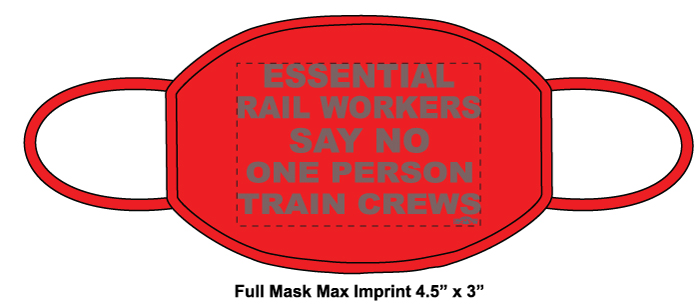
Would you rather have a mask to wear that tells the rail carriers how you feel?? Please see the link below and get your own personal union-made-in-the-USA mask from Railroad Workers United!
|
|
ARTICLE #3 - PASSENGER RAIL NEWS
Amtrak Slashing Service. Will It Be Permanent?
|
|
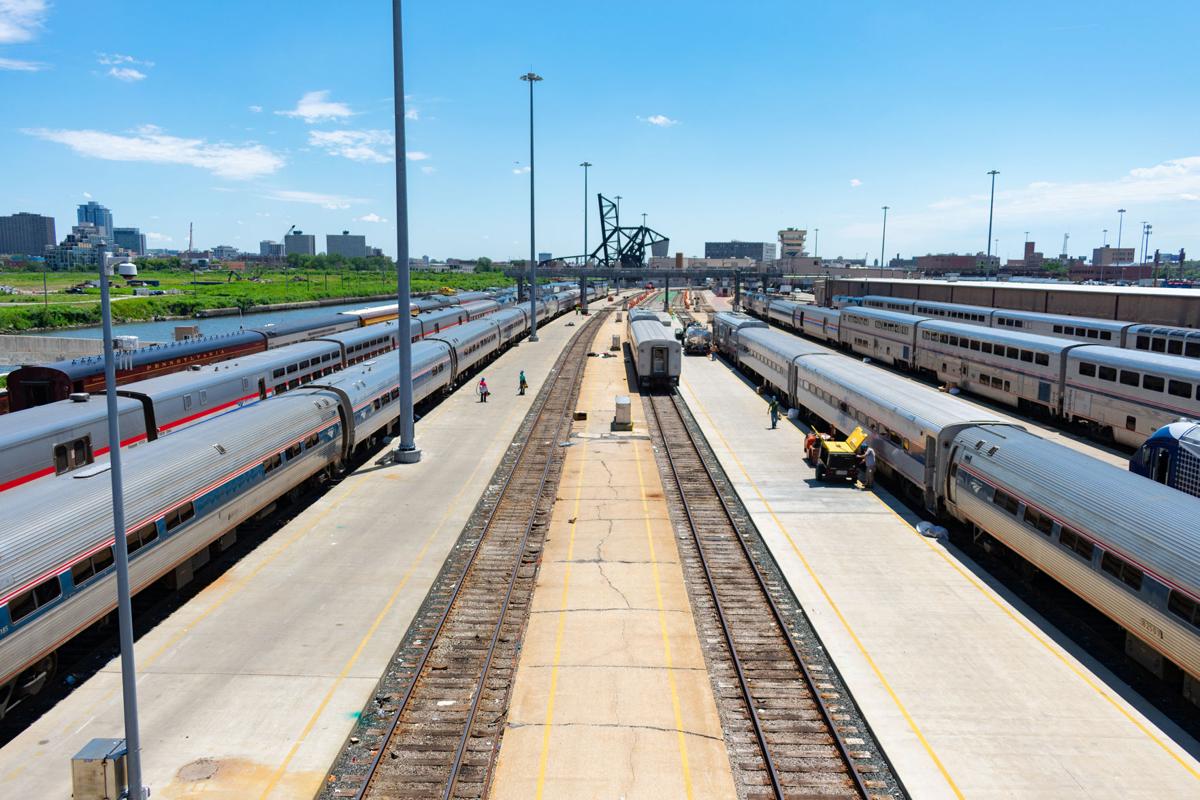
Citing a “need to be smart about how we deliver our service in this market environment” as well as “to demonstrate that we are using our resources efficiently and responsibly” because “Congress is not going to support us indefinitely to run mostly empty trains,” Amtrak Executive Vice President and Chief Marketing and Revenue Officer Roger Harris, in a June 15 letter to employees, announced drastic service cuts taking effect Oct. 1, 2020, the beginning of the railroad’s Fiscal Year 2021.
Harris began his announcement by saying that Amtrak “remain[s] committed to operating a national network that serves our customers across America.” Then, following his pronouncements about “smart” service delivery, “efficient” and “responsible” resource use and uncertain Congressional support, he announced plans for train frequency cuts of 32% on the Northeast Corridor and 24% for state-supported service, and a reduction for most daily Long-Distance trains to three days per week.
“This is an appropriate response, given the current and near-term market conditions,”
Harris, who joined Amtrak in 2019 following 25 years as an airline executive,
told employees. “During the COVID-19 pandemic, our ridership has been down by as much as 95% year-over-year. It’s climbing back slowly—and it is going to take a long time to return to normal. The demand for our Long-Distance service is down by 70%, even as some U.S. states begin to reopen. We expect our system-wide ridership in Fiscal Year 2021 to be only 50% of what it was in 2019.”
“Low ridership on Long-Distance trains has significantly increased our operating losses, which already exceeded $500 million annually on these services before the pandemic*,” Harris said. “We expect these Long-Distance frequency reductions will save as much as $150 million in FY21 vs. the losses that would have been incurred with daily service. These savings are part of our pledge to Congress to reduce costs by $500 million.”
Harris said Amtrak’s goal “is to restore daily service on these routes as demand warrants, potentially by the summer of 2021.”
|
|
ARTICLE #4 - OIL BY RAIL NEWS NEWS
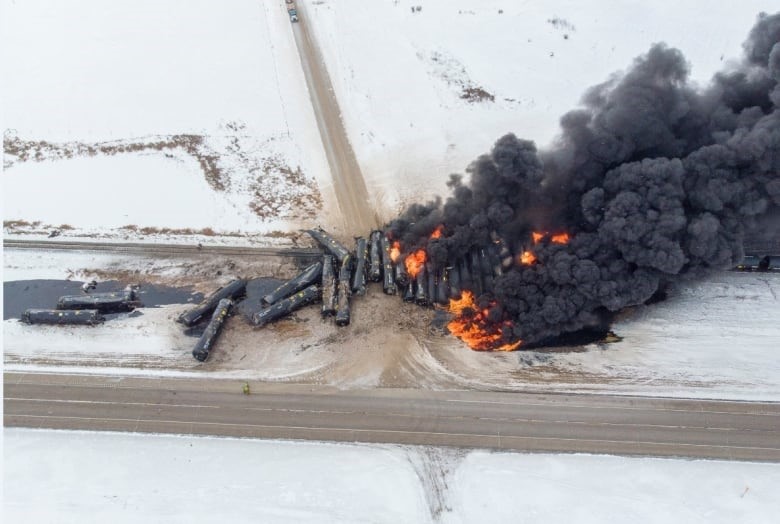
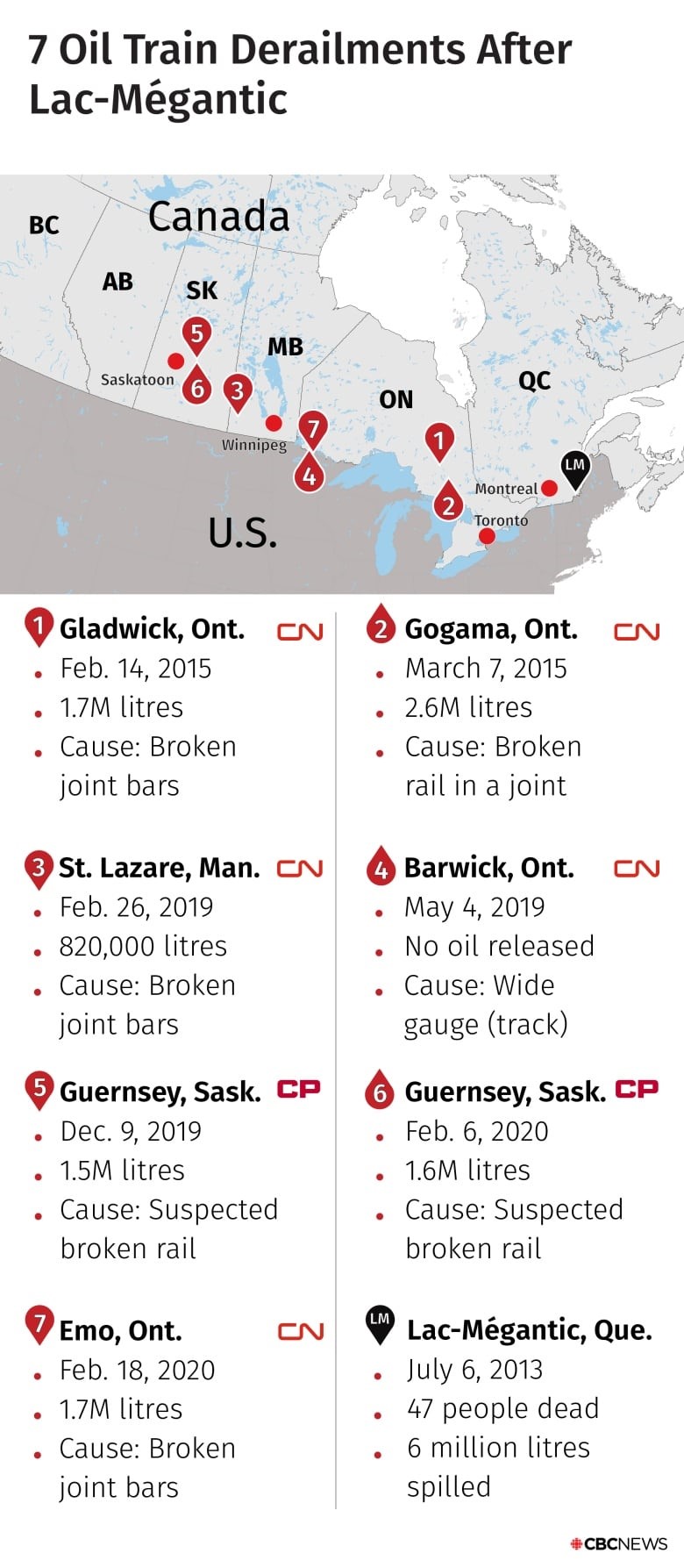
Why Crude Oil Trains Keep Derailing and Exploding in Canada - Even after the Lac-Mégantic Disaster
|
|
Transport Canada needs to 'drop the hammer' on rail industry, top safety expert says
In March, the TSB issued two
rail safety
advisories
warning Transport Canada to overhaul the track safety rules for routes that carry heavy volumes of dangerous goods.
"We're asking them to put improved standards and maybe tighter controls," Johnston said.
Transport Canada responded in April by issuing
three
ministerial
orders
. They instructed railways to improve the quality and frequency of track inspections.
The federal regulator also called on rail companies to develop and revise new track safety rules.
But that's a problem, according to Bruce Campbell, a professor of environmental studies at York University who wrote a book on the Lac-Mégantic disaster.
"The government touts its rigorous regulatory practices, but in reality, risk management is left to the companies," he said. "In an ideal world, Transport Canada would have the science and the resources to independently evaluate and revise the rules itself."
After the 2013 Lac-Mégantic catastrophe, the government and railways adopted tougher safety measures for shipping dangerous goods, including redesigning oil tanker cars.
Yet derailments and spills keep happening, Campbell said. "Guernsey dodged a bullet," he said. "What happens if the next time it's in a large community like Toronto or Montreal or Vancouver or Winnipeg?
"That's my worry."
|
|
ARTICLE #5 - LNG BY RAIL NEWS
USDOT Issues Rule Authorizing Bulk Transport of LNG by Rail
|
|
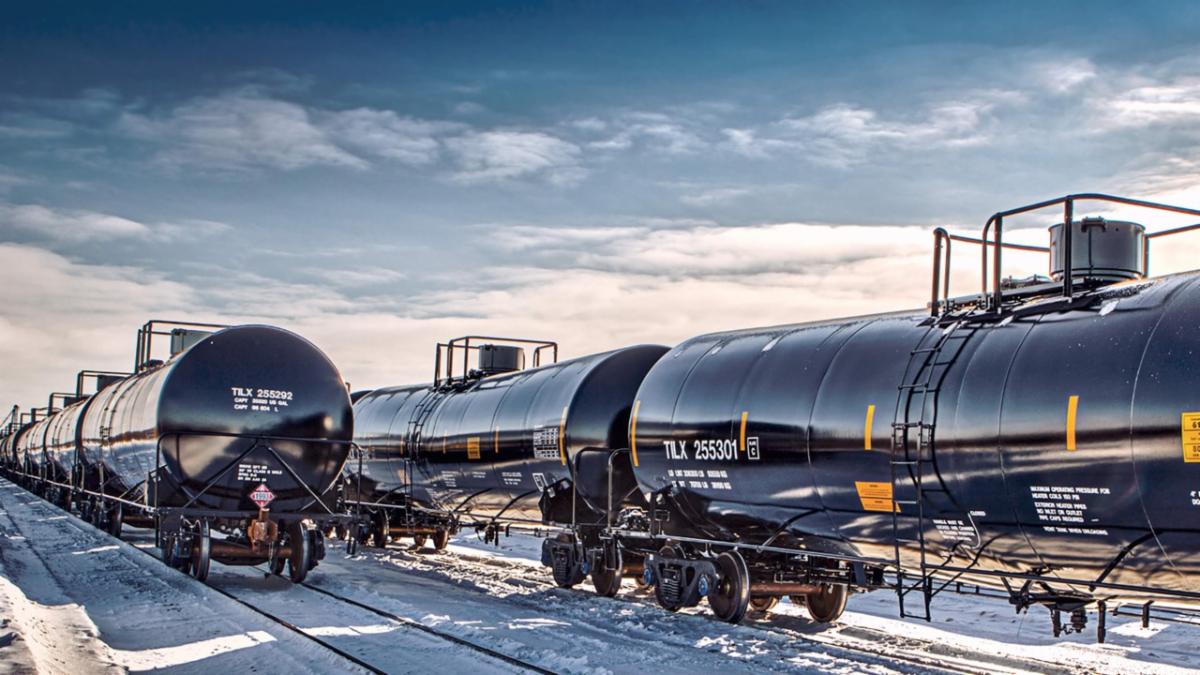
(Editor's Note: Despite the fact that the North American rail industry has been unable to get a handle on exploding oil trains (see article above), the U.S. has now fast-tracked the authorized movement of liquified natural gas (LNG) by rail, which has far more potential to cause catastrophic explosions when involved in a derailment.
The U.S. Department of Transportation (USDOT) and the Pipeline and Hazardous Materials Safety Administration (PHMSA), in consultation with the Federal Railroad Administration (FRA), issued on June 19 a final rule authorizing the bulk transportation of liquefied natural gas (LNG) by rail.
Specifically,
the rule will permit the bulk transportation of LNG
in DOT-113C120W9 (DOT-113) specification tank cars with enhanced outer tank requirements and additional operational controls. The publication complies with
Executive Order
13868 (EO 13868), “Promoting Energy Infrastructure and Economic Growth,” issued in April 2019.
“With FRA approval, LNG has previously been authorized for transport by rail in a portable tank,” DOT noted. “Federal Hazardous Materials Regulations have also authorized the transportation of other flammable cryogenic materials for many years in DOT-113 tank cars. Importantly, this final rule also incorporates newly designated additional safety requirements, such as an enhanced thicker carbon steel outer tank.”
The rule also requires remote monitoring of the pressure and location of LNG tank cars. In addition, “to improve braking,” the rule requires a two-way EOT (end-of-train) device or DP (distributed power) system when a train is transporting 20 or more tank cars loaded with LNG in a continuous block, or 35 or more such tank cars of LNG anywhere in the train consist. Furthermore, the rule requires railroads to conduct route risk assessments to evaluate safety and security.
|
|
ARTICLE #6 - RAIL EMPLOYMENT NEWS
Employee Headcount at U.S. Class I Operations Tumbles 17% in May
|
|
Rail employment in the U.S. Class I operations fell below 120,000 workers in May, reaching a new low as the railroads trimmed their workforce levels to match the steep declines in rail volumes.
May’s overall headcount among the U.S.operations of the Class I railroads totaled 118,880, a 16.9% drop from May 2019 and a nearly 4.5% decline from April 2020, according to freight rail data submitted to the
Surface Transportation Board
(STB). The total is the lowest since at least January 2012, which is the earliest date that FreightWaves has data available.
Of May’s total, headcount levels within the train and engine crew category, which tends to be more sensitive to demand for freight rail service, totaled 43,660, a whopping 25.7% decrease from 60,256 in May 2019 and a 10.3% decline from April 2020.
|
|
More Rail Employment News
|
|
ARTICLE #7 - RAILROAD WORKERS UNITED NEWS
RWU Issues Statement on the Murder of George Floyd
|
|
(Editor's Note: Most rail unions have issued statements condemning police brutality and racism. RWU urges those that have yet to do so make clear their position on this important issue.)
Railroad Workers United (RWU) joins the overwhelming majority of the people of the United States — and of the world who have taken to the streets in huge and unprecedented numbers in solidarity with US protests — in condemning the horrific murder of our brother George Floyd.
We urge all of Rail Labor and, indeed the entire labor movement in the United States, to speak out strongly against this crime and the rigged and racist criminal justice system that spawns outrage after outrage.
This injustice system is marked by mass incarceration; decade-after-decade of racist police killings and brutality with near-total impunity for the police; frame-ups and corrupt prosecutions; and endless, heartbreaking accounts of innocent men, disproportionately Black, enduring years and decades of false imprisonments. It is the weight of this legacy that fuels this social and political mass struggle for justice, which is overwhelmingly legal and peaceful.
We are encouraged and inspired by the unprecedented outpouring of trade-union support and strong statements in response to this latest racist outrage, including from unions representing rail and transit workers – Brotherhood of Maintenance-of-Way Employees Division (BMWED); SMART-TD, Machinists (IAM), Electricians (IBEW), Amalgamated Transit Union (ATU) among them.
This fight for social justice should be championed by a reviving US labor movement that draws on our best traditions of struggle against boss and state violence in our history of organizing and defending our unions. But we must also acknowledge, with some honorable exceptions, the US labor movement has had an uneven —generally bad — history of fighting anti-Black discrimination. And perhaps the worst, most openly racist, legacies have been in the railroad industry. Decade after decade, these segregationist policies were shamefully promoted by the rail union “brotherhoods.” Exclusion of Black workers from most organized rail labor craft unions did not collapse until the 1960s.
|
|
ARTICLE #8 - PRECISION SCHEDULED RAILROADING NEWS
Chemical Shippers Endorse Proposed Study of PSR Practices
|
|
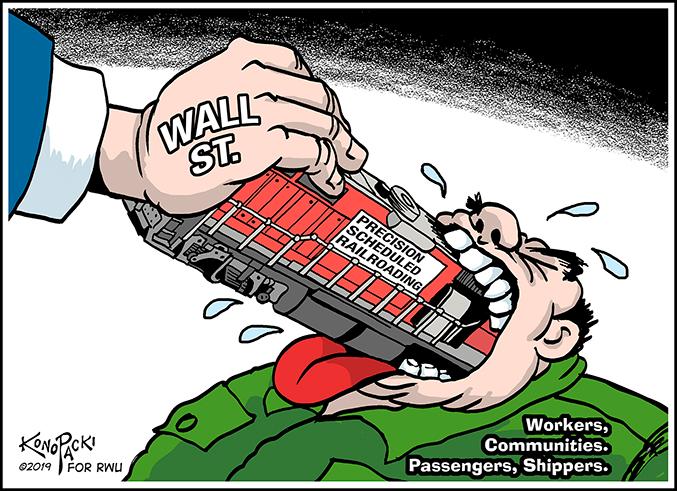
(Editor's Note: The INVEST in America Act - in addition to mandating two-person crews and limiting train lengths - calls for an investigation into the practice of PSR. Shipper groups, community organizations and unions are lining up in support of this legislation as a result. It deserves rail workers' support !)
An organization representing companies that ship chemicals by rail has endorsed language in a federal bill that calls for a study on the impacts of Class Is' adoption of precision scheduled railroading (PSR) operating models in the rail industry.
The bill includes language that calls for the U.S. Government Accountability Office (GAO) to conduct a study of PSR.
American Chemistry Council
(ACC) President and Chief Executive Officer Chris Jahn said members of his organization would welcome such a study.
"During several hearings, Congress and the
Surface Transportation Board
(STB) heard testimony from large and small businesses across America, including many of our members that have been hurt by the drastic operational changes adopted by the major railroads as part of their pursuit to implement precision scheduled railroading," Jahn said in a prepared statement. "Changes were often made with little advance notice or consultation with customers and resulted in harmful service reductions and higher shipping costs."
|
|
|
|
|
|
|