Dear Friends of Civil and Environmental Engineering, | | |
This fall, CEE is celebrating the new season while embracing the exciting changes within our department. We are fortunate to have talented students, faculty, and staff who continue to lead with innovation and resilience. Welcome to the Class of 2030, and welcome back to everyone returning to campus this academic year.
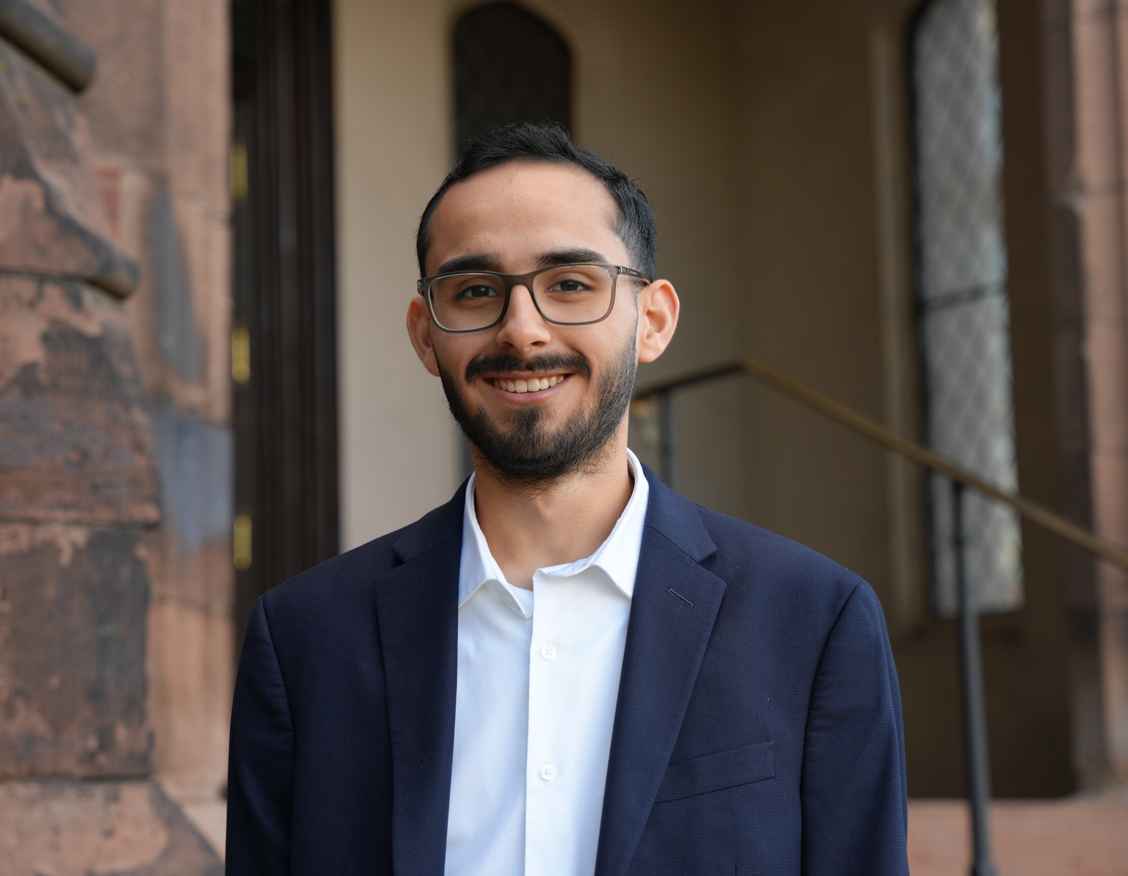
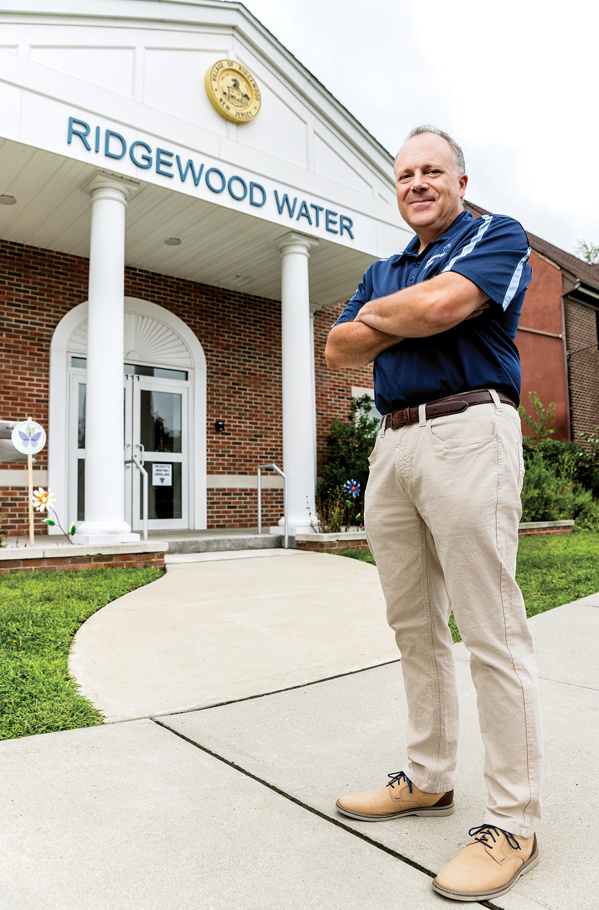
I am delighted to introduce Yong Pu, our new director of labs for education. A 2005 graduate of our environmental engineering Ph.D. program, Yong brings expertise in laboratory safety, instrumentation, and student mentorship from more than a decade as a forensic and research scientist with the State of New Jersey, as well as from teaching and research at NJIT. He will establish the teaching laboratories for our new undergraduate environmental engineering program. I also welcome Richard Calbi to our Industrial Advisory Board (IAB). A two-time graduate of our program (B.S. in civil engineering, 1994; M.S. in environmental engineering, 2000), Rich was featured on the cover of NJIT Magazine for his PFAS treatment work at Ridgewood Water. Please join me in welcoming them both.
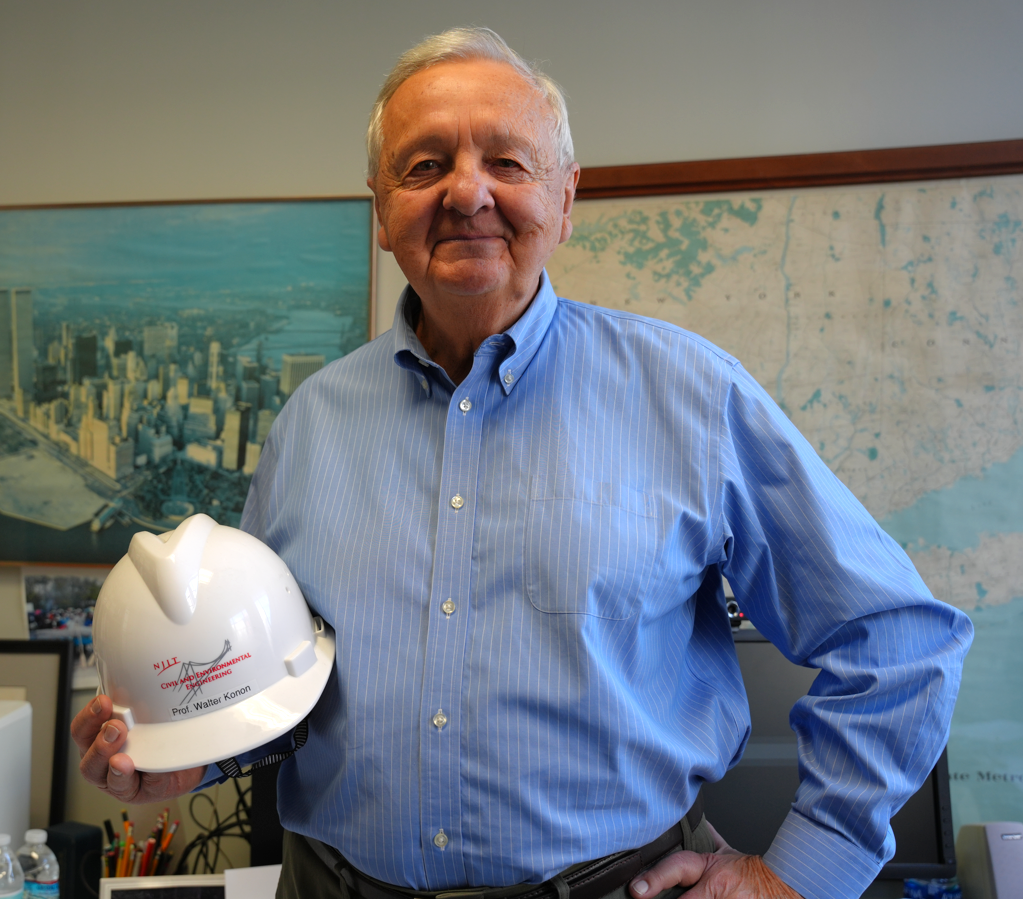
Professor Walter Konon has retired and been named professor emeritus. His more than 50 years of contributions to CEE are irreplaceable, and I am grateful for his guidance from when I became department chair in 2009. We congratulate Walter and thank him for his service.
We also mourn two members of our community. In July, Professor Emeritus Edward Dauenheimer passed away at his home in Vermont. An exceptional educator and engineer who bridged the classroom and industry in construction technology and bridge engineering, he left a lasting mark on countless students’ careers. Last month, we lost Andre Grebenstein, a 1995 civil engineering graduate and IAB member for 14 years, to pancreatic cancer. Andre generously gave his time to mentor students and keep our department connected to industry. Both will be deeply missed. We extend our condolences to their families and loved ones and honor their legacies by continuing to build on the foundation they helped create.
| | |
This semester also marks a milestone: for the first time in more than 20 years, we are offering a bachelor of science in environmental engineering. Challenges such as PFAS in drinking water and recurring flooding demand engineers trained in environmental systems from the start. Building on our research strengths in water quality, remediation, and flood resilience, we are investing in state-of-the-art teaching laboratories so students gain hands-on experience with the tools used in practice. We look forward to watching this first class grow into the next generation of environmental engineers.
This issue also highlights Dr. Michel Boufadel’s appointment as editor-in-chief of the section on of Environmental Research, Dr. Wen Zhang’s ACS Environmental Chemistry Engagement and Impact Award, our newest Chi Epsilon inductees and scholarship recipients, and the Center for Natural Resources’ flood resilience work with 17 New Jersey municipalities.
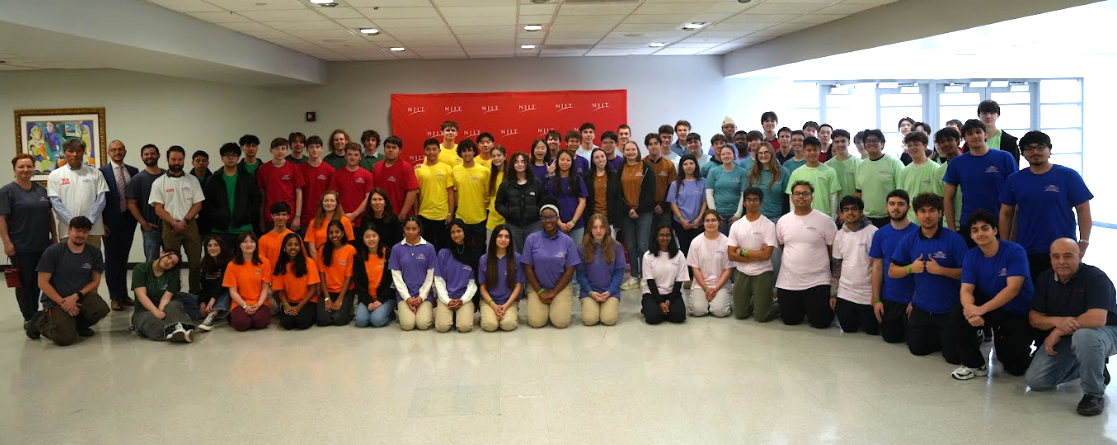
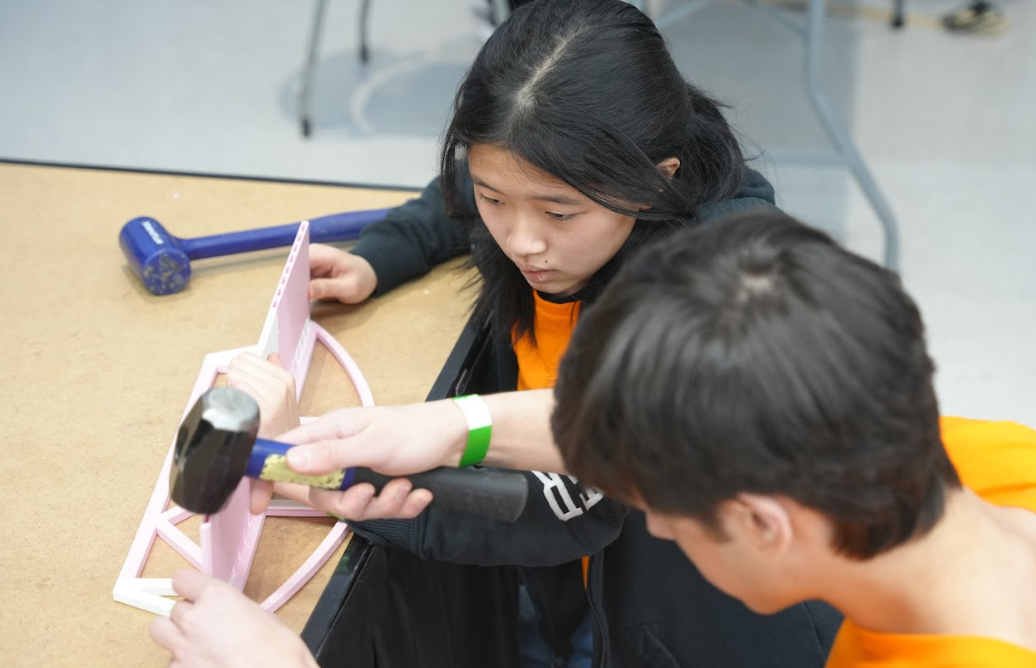
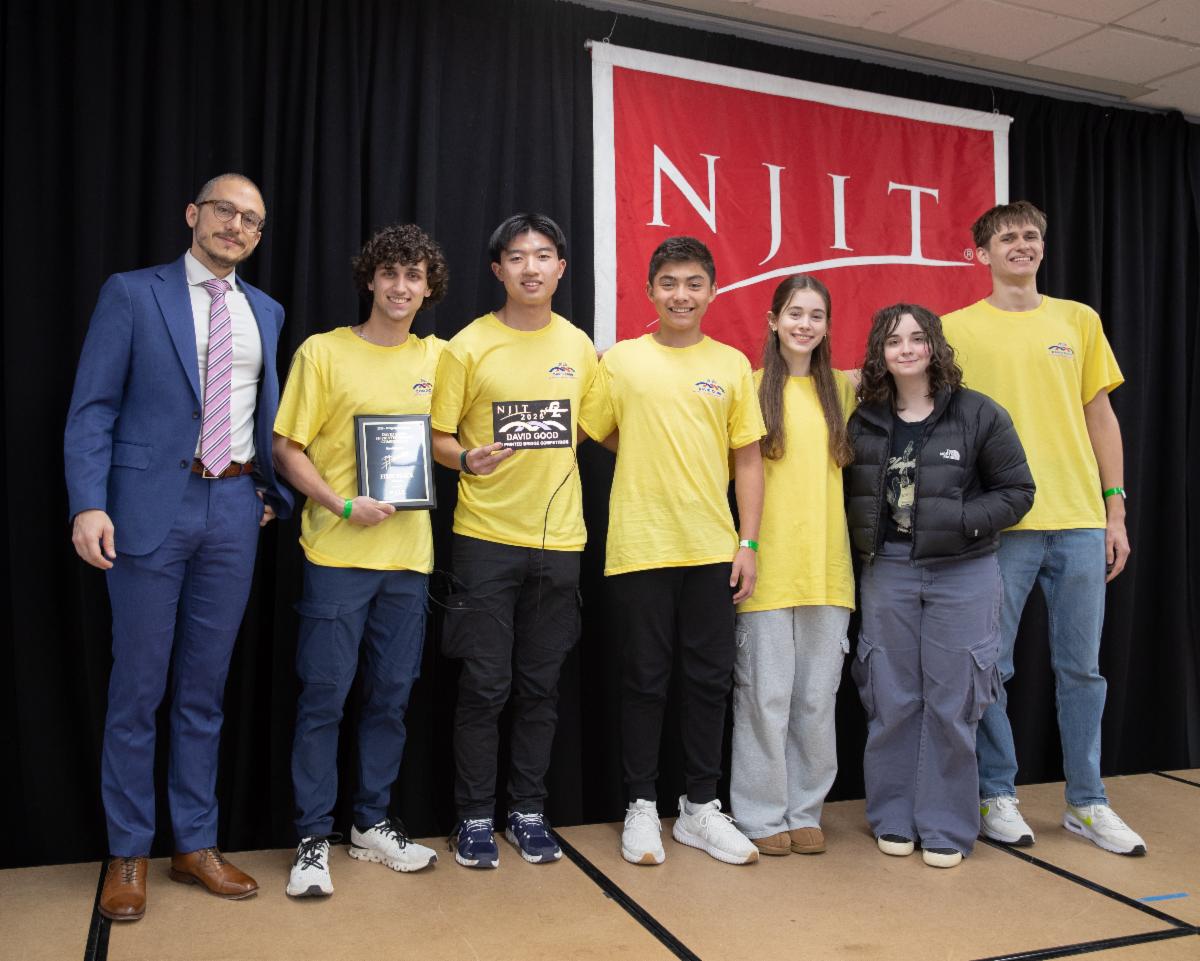
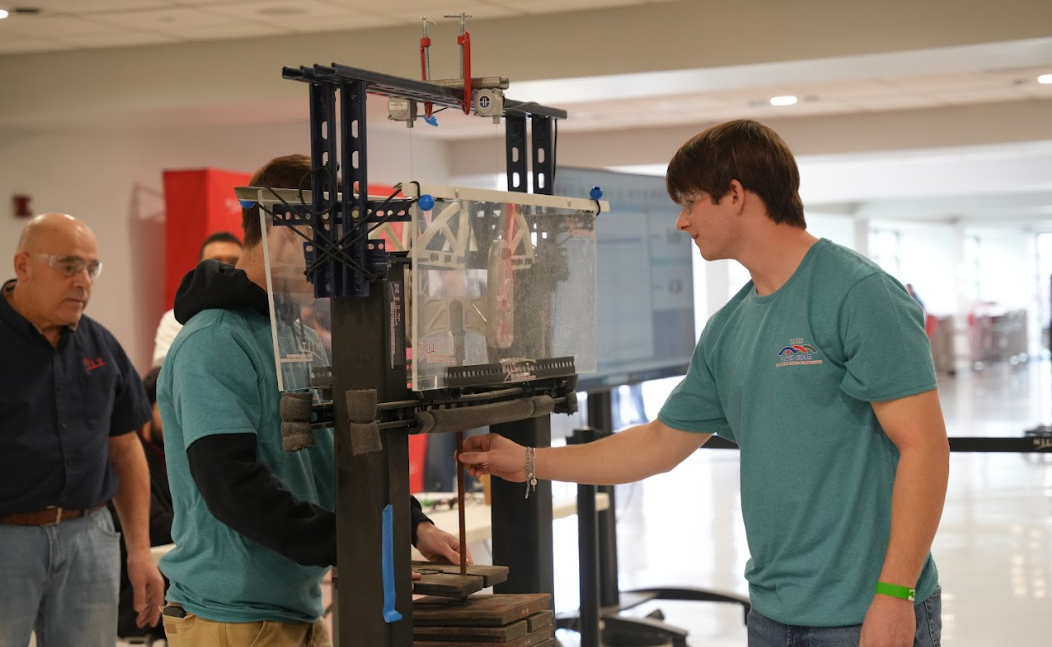
Our calendar ahead is full: NJIT’s second Open House of the semester, NCE’s Career Day, our Holiday Gathering, the David Good 3D Printed Bridge Competition for high school students on March 25, and the ASCE Metropolitan Student Symposium from April 23–25, where our student teams will compete in design competitions. I invite you to join us in supporting our students, faculty, and staff at these events.
It takes a village to keep the department running, and as always, I appreciate the time, dedication, and initiative of every member of this community.
Sincerely,
| |
Taha F. Marhaba, Ph.D., P.E., F.ASCE
Distinguished Professor and Chair
973-596-2444
973-596-5790 (fax)
marhaba@njit.edu
| | | |
Newsletter Contents
- Department Highlights
- Department Research
- Student Spotlight
- Faculty Highlights
- Alumni Highlights
- In the News
- Extracurriculars
- Events
- Our Advisory Board
- Recent Publications
- Recent Grant Awards
- Newsletter Credits
- Special Thanks
| |  | Follow us on Social Media! | |
Opportunities for Students
We collect information on various opportunities for students and alumni, such as internships, co-ops, scholarships and other job postings. Feel free to contact us at cee@njit.edu with any potential new openings!
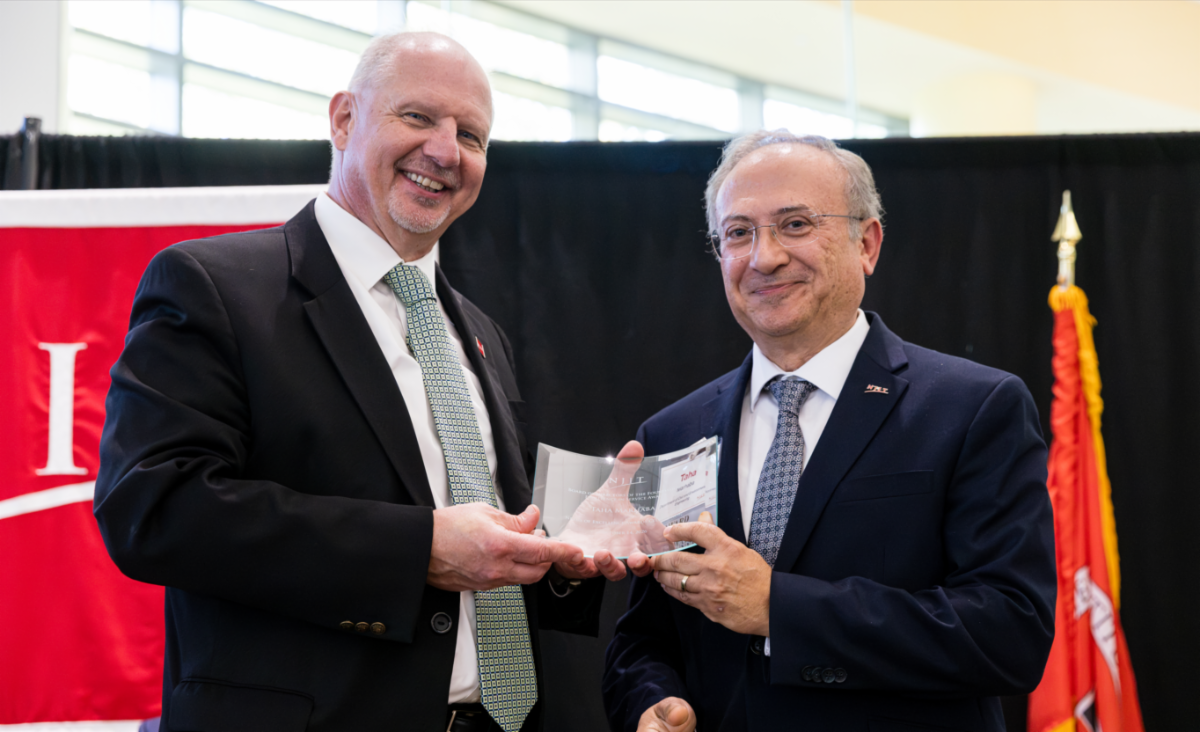
| | On October 14, NJIT hosted its annual Nexus of Excellence Awards celebration, a tradition that highlights the outstanding achievements of the university community in teaching, mentoring, community engagement, service, diversity, and research. Below are the CEE community members spotlighted in the ceremony. | | |
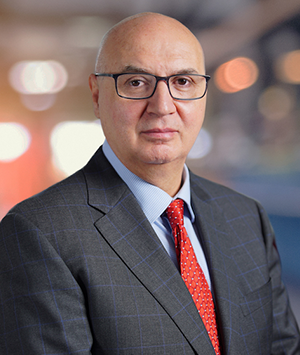
Taha F. Marhaba
CEE chair and distinguished professor
NJIT Foundation Board of Directors Excellence in Service Award
| |
Taha Marhaba, CEE distinguished professor, is recognized for nearly three decades of transformative leadership and institutional service. During his 17 years as department chair, supported by five consecutive supermajority faculty votes of confidence, he more than doubled undergraduate enrollment, launched a nationally recognized online master’s program, and expanded departmental research expenditures to over $12 million. He spearheaded the innovative corporate partnership graduate program to expand higher education pathways for regional working professionals, while co-creating industry-aligned curricula such as the Next Gen powerskills course with the Industrial Advisory Board. He is deeply enriching the university community by driving record student retention, advancing female representation in engineering, and representing NJIT on the state of New Jersey’s Water Supply Advisory Council.
| | |
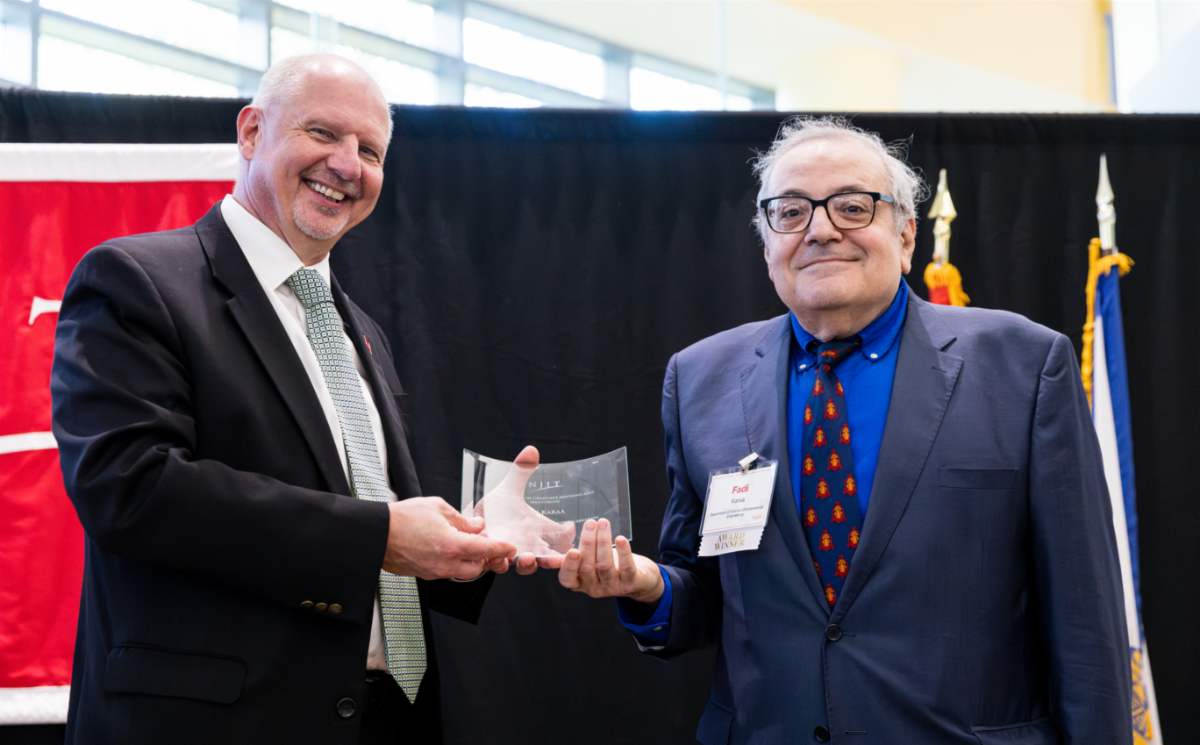
Fadi Karaa
CEE associate professor
Excellence in Graduate Advisement and Mentoring
|
 | | Fadi Karaa, CEE associate professor, is honored for nearly two decades of extraordinary dedication, program leadership, and transformative student support as Director of Master of Science Programs in Civil Engineering, Environmental Engineering, and Critical Infrastructure Systems. Renowned for his round-the-clock availability and deeply personal guidance, he has mentored hundreds of graduate students while successfully designing tailored pathways for individuals from non-engineering backgrounds to move into engineering careers. As the architect and steward of the interdisciplinary Critical Infrastructure Systems program, Karaa actively resolves complex administrative obstacles in real time to ensure student persistence and degree completion. His enduring mentorship extends far past graduation, through ongoing career placement, professional licensure guidance, and doctoral advisement, inspiring former mentees to model their own professional and teaching standards after his example. Karaa stated, “Advising and mentoring students is a calling. Its impact goes beyond degree performance, to include the mentoring of student career performance and progression.”
| | |
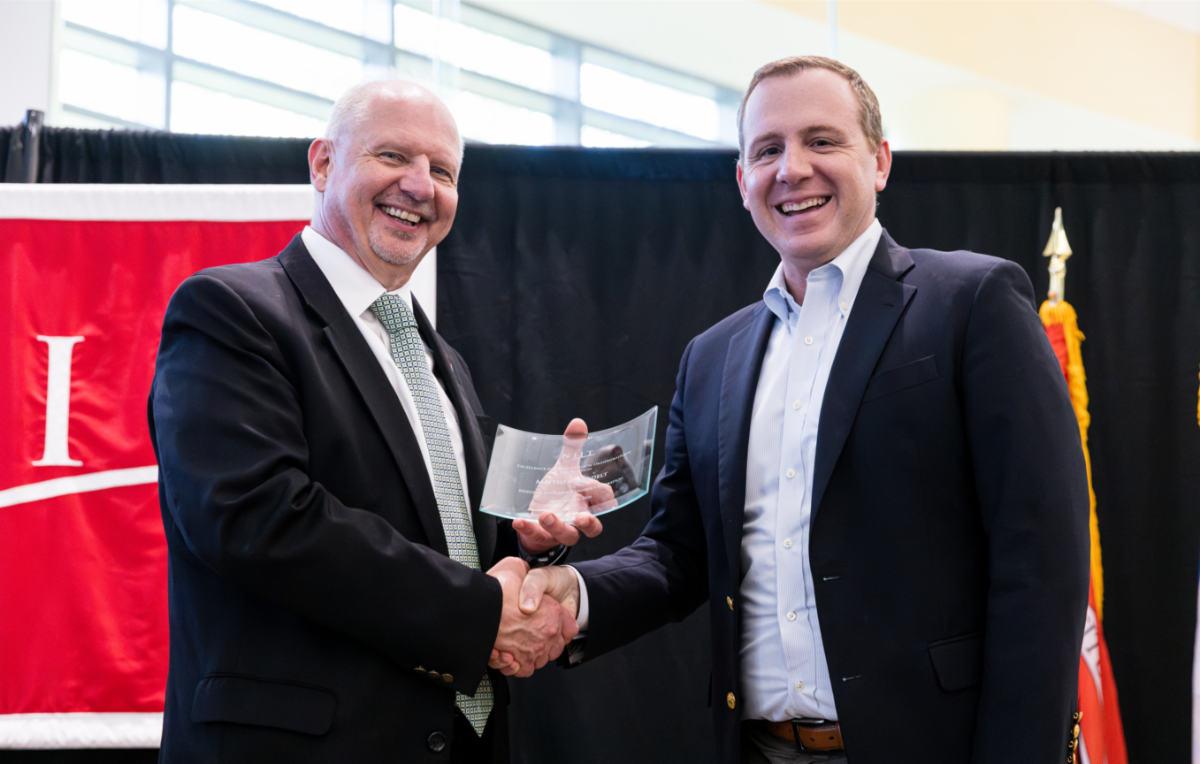
Matthew Bandelt
CEE associate professor
Excellence in Lower Division Undergraduate Instruction
|
| | | Matthew Bandelt, CEE associate professor, is recognized for a decade of exceptional lower division instruction and curriculum innovation in structural engineering. In teaching the rigorous reinforced concrete design course, he modernized the learning experience by embedding professional building codes and structural analysis software into coursework, instilling real-world engineering judgment. A leader in educational excellence, Bandelt introduced campus-wide digital assessment tools and actively shares evidence-based teaching strategies to elevate instruction institution-wide. His dedicated mentorship of student competition teams, undergraduate research, and professional fellowship programs ensures students transition seamlessly into accomplished industry professionals. He stated, “I am honored to receive this award and grateful to be recognized for something I care deeply about. Teaching is one of the most rewarding parts of being a faculty member, and I am fortunate to have the opportunity to learn from and work with so many outstanding students.”
| | |
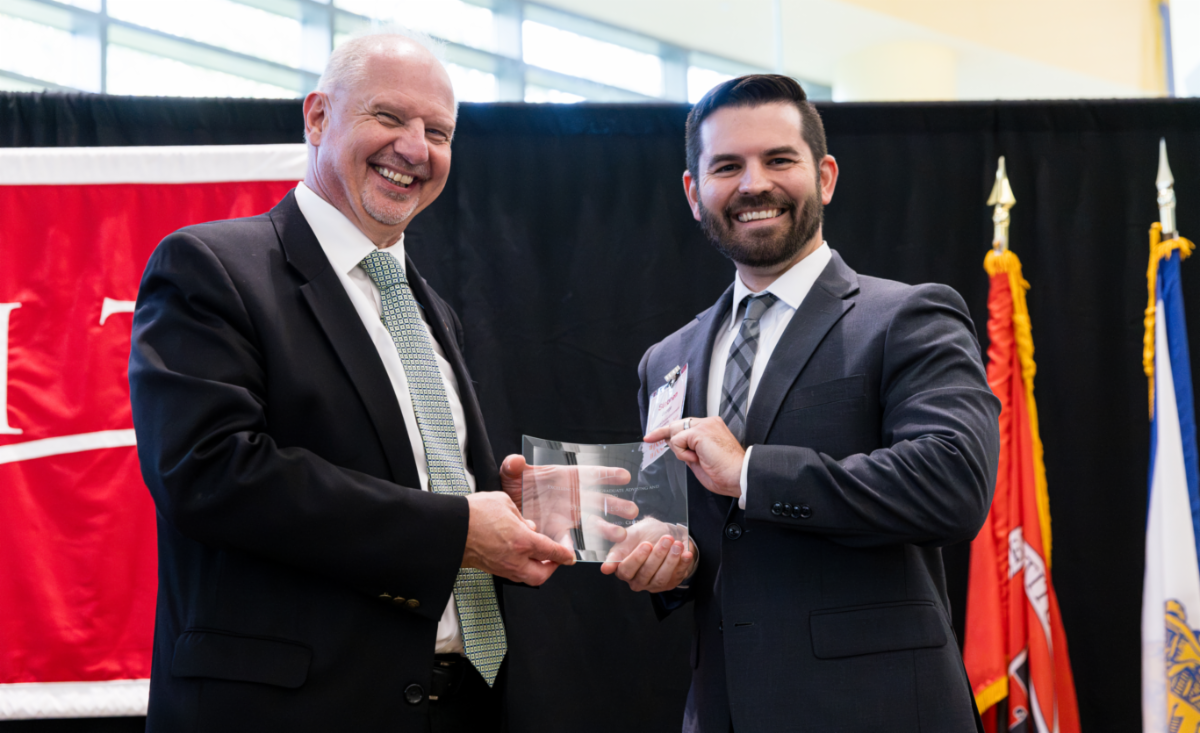
Stephen J. George '12, M.S. '18
CEE associate director of undergraduate programs and academic advisor
Excellence in Undergraduate Advisement and Mentoring
|
| | | Stephen George received this award in recognition of his exceptional dedication, leadership, and comprehensive support of his students. As CEE’s associate director of undergraduate programs and academic advisor, he serves as the primary advisor for over 600 undergraduate students. From orientation to graduation, he provides the individualized guidance that drives student success, retention, and career readiness. George’s impact extends far beyond advising. He helped shape the new Fall 2026 Environmental Engineering curriculum, and developed key laboratory instructional resources. As faculty advisor for the NJIT ASCE student chapter, he earned the 2025 ASCE National Outstanding Faculty Advisor Award and guided the chapter into the top 5% nationwide. Known for his deep empathy, his excellence as an adjunct instructor, and his service as Staff Council President, George is more than an advisor—he is a vital advocate and a transformative mentor for the entire university community. “As an NJIT alumnus, I am grateful for the education and experiences that shaped my career and the opportunity to use that knowledge to give back to the next generation of engineers,” George said. “I would like to thank NJIT for this recognition, the CEE Department for its continued support, my family for their love and encouragement, and most importantly, the students who make my work so rewarding.”
| | |
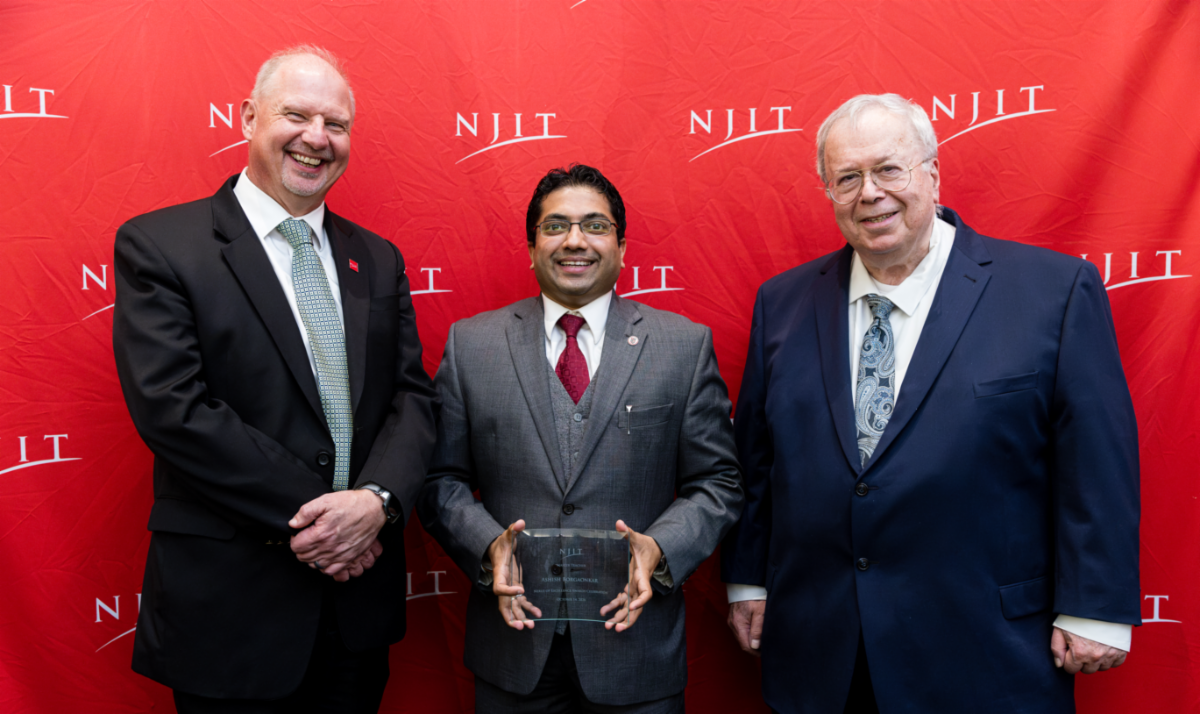
Ashish D. Borgaonkar, Ph.D. '11
Associate professor in the School of Applied Engineering and Technology
Master Teacher
Excellence in Innovation in Education
|
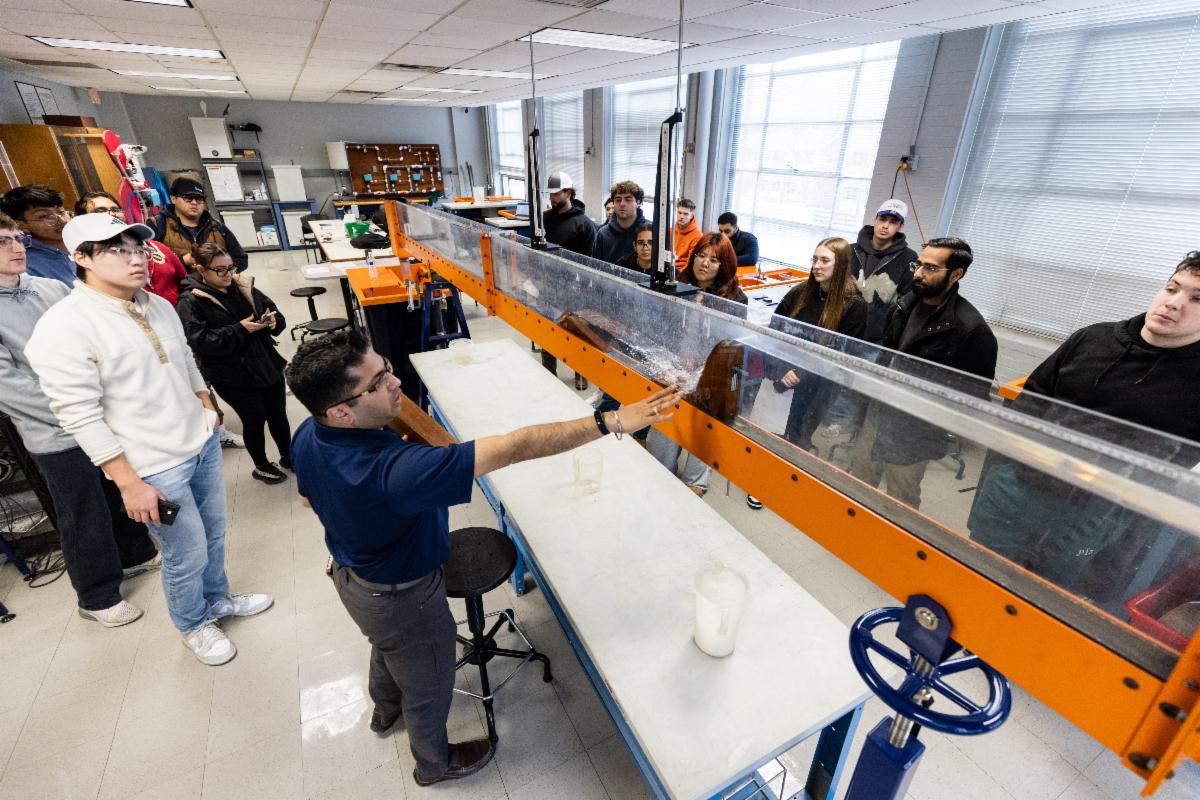
| | | Ashish Borgaonkar has exhibited transformative leadership as an associate professor in the School of Applied Engineering and Technology and his wide-ranging impact on undergraduate engineering education. As course coordinator for the foundational, college-wide Fundamentals of Engineering Design course, he orchestrates hands-on design, ethics, and Makerspace training modules for nearly 400 first-year students across eight engineering majors annually. Borgaonkar has developed or significantly redesigned eight innovative courses—including co-authoring a royalty-free Hydraulics Laboratory manual. As Founding Director of NJIT's National Academy of Engineering-endorsed Grand Challenges Scholars Program and creator of the Grand Challenges in Engineering minor, he leads students in interdisciplinary research and community engagement while organizing the annual NCE First-Year Engineering Design Showcase. He has secured over $3.8 million across 21 external and internal grants from sponsors, including the U.S. Department of Education, U.S. Department of Labor, National Oceanic and Atmospheric Administration, Environmental Protection Agency, and the City of Newark to power workforce pre-apprenticeships and STEM access programs such as the NJIT STEM Success Academy. Borgaonkar’s outstanding 5-year average teaching evaluation score of 3.77 out of 4.00—paired with over 30 published engineering education papers—reflects a deep, sustained commitment to student success.
| | |
A cornerstone of CEE:
Walter Konon retires and earns emeritus status
| |
Professor Walter Konon has retired after more than five decades at NJIT and Newark College of Engineering. Over the years, he became a cornerstone of the CEE department, shaping its infrastructure, academic offerings and administration. Generations of civil engineers learned their profession in his classrooms and labs.
Konon served CEE in a remarkable range of roles. He was department chair, associate chair, director of undergraduate programs, co-op director and ABET coordinator, and he headed the department's construction group. That work touched nearly every part of department life, from curriculum and accreditation to students' first professional experiences. By 2026, he had spent 17 years as associate chairman of undergraduate studies, advising thousands of students on their academic and career paths.
An NJIT Master Teacher and the recipient of multiple teaching awards, Konon built his courses around real-world field scenarios. He drew on his experience in construction management, materials, and work zone safety to show students how engineering decisions play out on the job. Students called his courses a department legend, and some felt that his was the first class where learning mattered more to them than the grade.
A professional engineer, licensed building inspector and authority on bridges and tunnels, Konon also taught safety as a core design responsibility. After 9/11, he gave more class time to the subject, noting that his students knew "safe design is a matter of life and death." His teaching reached beyond Newark as part of the Fulbright U.S. Scholar Program: in 1979 and 1990, he spent a semester as a lecturer at the Moscow Institute of Civil Engineering and the Kyiv Institute of Civil Engineering, respectively, where he lectured on heavy and building construction.
His applied research took on practical problems in infrastructure and the environment. He led projects on reducing infrastructure costs, developing cleaner wick systems for environmental remediation, and understanding how ground vibration affects historic structures. His sponsors included the New Jersey Department of Transportation, New Jersey Department of Environmental Protection, and the New Jersey Department of Community Affairs, among others.
Konon's influence will flourish in the department's programs and in the careers of the engineers he taught and advised, earning him the well-deserved title of Professor Emeritus. The department thanks him for more than 50 years of dedicated service and wishes him a happy and well-earned retirement.
| | |
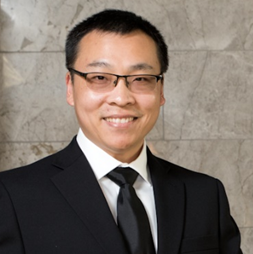
Meet our new team member: Yong Pu, Ph.D. '05
Director of Labs for Education
| | |
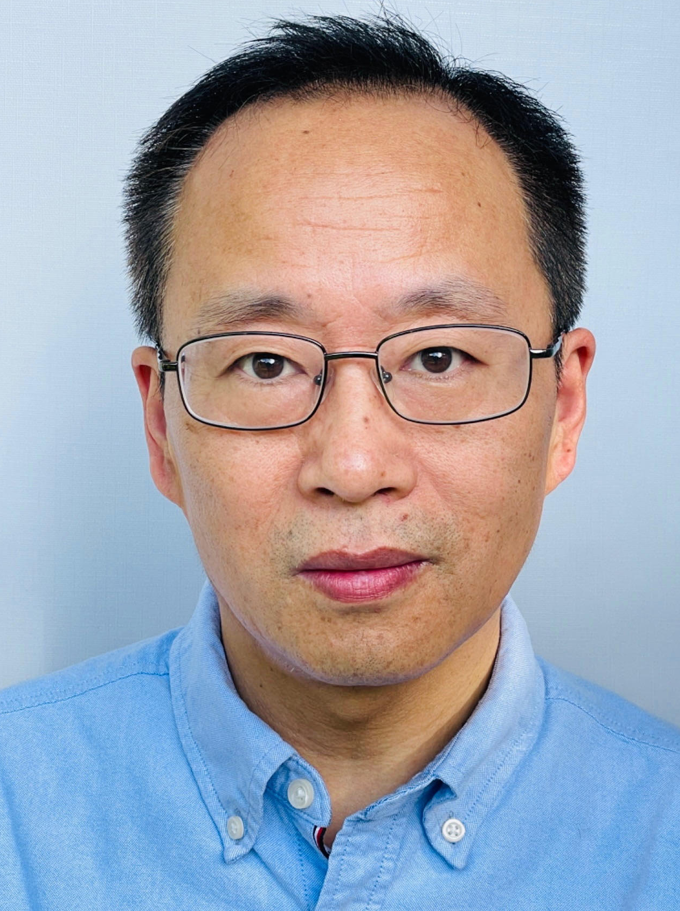
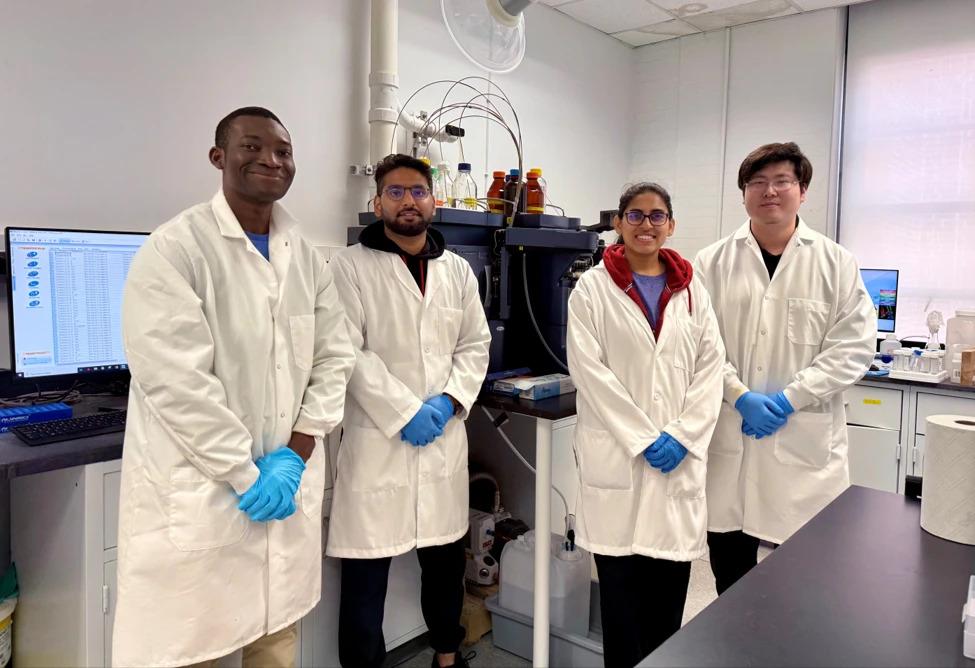
Yong Pu is a familiar face at NJIT, and he now joins as CEE’s director of labs for education. He earned his Ph.D. in environmental engineering here in 2005 and most recently served as instrument repair specialist in the Department of Chemistry and Environmental Sciences. During that time, he restored and maintained critical analytical instrumentation and microplate readers, saving the university thousands of dollars in outside service costs. He has also taught at NJIT, designed and delivered FTIR training for graduate students across several departments, and mentored undergraduate researchers.
Before returning to NJIT, Pu spent more than a decade in the public sector as a forensic scientist with the New Jersey Office of Forensic Sciences and as a Research Scientist with the New Jersey Department of Agriculture. In that role, he secured $750,000 in Food and Drug Administration funding to achieve accreditation for international standards for testing and calibration laboratories. He brings over 10 years of hands-on expertise with analytical instruments used for identification and quantification, along with a strong commitment to laboratory safety and student mentorship.
In his new role, Pu oversees the operational readiness, safety, and educational success of our undergraduate teaching laboratories. He works with faculty to support lab curricula and new experimental modules, serves on the Safety Committee, and helps advise student chapters preparing for regional and national engineering competitions. He is also responsible for establishing and maintaining the laboratory needs of the new bachelor of science in environmental engineering program.
The CEE department welcomes him to the team as director of labs for education.
| | In memoriam: Edward G. Dauenheimer | | |
The CEE department mourns the loss of Professor Edward G. Dauenheimer, a respected educator, engineer, mentor, and longtime member of our department. He passed away on July 23 in his home in Arlington, Vermont, at the age of 88.
Dauenheimer joined Newark College of Engineering (NCE), the predecessor of NJIT, in 1975 and devoted 27 years to teaching and service at the institution. He earned both his bachelor's and master's degrees in civil engineering from Rensselaer Polytechnic Institute and went on to establish a distinguished career as a professional engineer in consulting engineering firms in Northern New Jersey. After joining NCE/NJIT, he rose to the rank of professor.
Throughout his career at NJIT, Dauenheimer made lasting contributions to civil engineering education. He developed courses, advised students, and served in departmental leadership, including as acting and associate chair of the department. He was a prolific teacher, and during his tenure, he developed an astounding 17 undergraduate and graduate courses. His commitment to mentoring students is reflected in the many graduate students whose research he supervised in the fields of construction technology and bridge engineering.
Dauenheimer also brought a strong connection between classroom instruction and professional engineering practice. His work included structural and transportation engineering, bridge testing and evaluation, construction, and applied engineering research. He co-authored research and technical reports addressing subjects ranging from bridge instrumentation and load testing to the design and construction of highway noise barriers. These included two national manuals for the American Association of State Highway and Transportation Officials (ASSHTO) and a civil engineering Professional Engineer review text. He earned a number of honors for his contributions to the industry and education, including Engineer of the Year from the New Jersey Society of Professional Engineers and Land Surveyors as well as the James Robbins Teaching Excellence Award from the CEE Department.
Beyond his technical accomplishments, Dauenheimer is remembered as a teacher who cared deeply about his students and the profession of engineering. He represented a generation of engineering educators who viewed teaching not simply as the transmission of technical knowledge, but as an opportunity to prepare students for the responsibilities of professional practice. He retired from NJIT as a professor emeritus.
Dauenheimer is also a U.S. Army veteran, having served as a captain in the U.S. Army Corps of Engineers following his graduation from Rensselaer Polytechnic Institute. He has been interred in the Saratoga National Military Cemetery near Saratoga Springs, New York.
The department extends its deepest condolences to the professor’s family, friends, former students, and colleagues. We remember with gratitude his many years of service to Newark College of Engineering and NJIT, and his enduring contribution to the education of civil engineers.
May Professor Edward G. Dauenheimer's memory remain a lasting part of the history and CEE community.
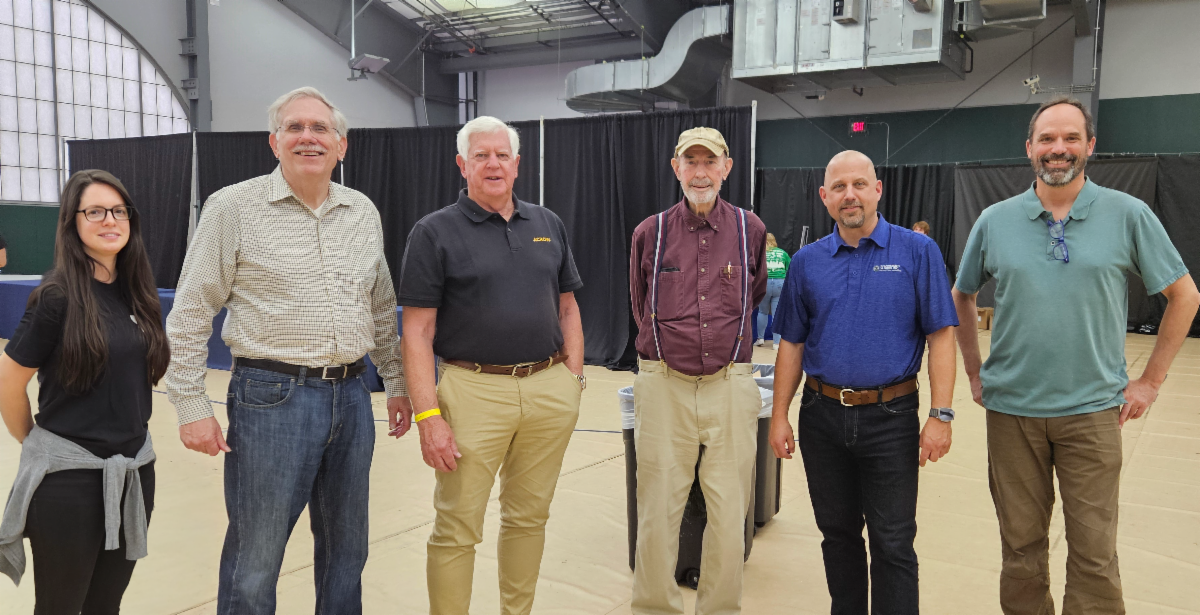
| | Photographed in April 2025 during the Metropolitan ASCE Student Symposium at NJIT. From left to right: Rita Esposito, John Schuring, Scott Patterson, Edward Dauenheimer, Sergio Couto, David Dauenheimer | | |
Matthew Bandelt appointed as NCE acting dean
CEE associate professor
| | |
As of August 5, Matthew Bandelt, associate dean at Newark College of Engineering (NCE) since 2022 and an associate professor of civil and environmental engineering, has served as NCE’s acting dean. Bandelt earned bachelor’s and master’s degrees from Villanova University and a Ph.D. from Stanford University. A recipient of the National Science Foundation CAREER Award, his research focuses on the mechanics and durability of resilient, sustainable construction materials. He is a recognized leader in the international concrete community and most recently served as Scientific Committee co-chair for the fourth International Interactive Symposium on Ultra-High Performance Concrete. As associate dean, Bandelt helped guide NCE operations through strategic planning and budgeting, supported faculty research and grant administration, and collaborated across the institution to administer programs for graduate assistantships, student recruitment, and faculty development funding.
| | |
CNR implements community efforts to combat flooding through REACH
NJIT’s Center for Natural Resources (CNR) pairs field data and flood monitoring modeling to help towns across the state target real flooding mitigations using the Resilience Excellence & Capacity Hub (REACH), which was launched to connect municipalities with scientific expertise, infrastructure solutions, and emergency management patterns. CNR turns environmental data into resilience strategies built for each community’s actual conditions. The center has worked on flood resilience in 17 municipalities, including Englewood, Paterson, Rahway, Ridgewood, Leonia, Irvington, and Asbury Park, producing data driven flood models and analytical tools for each. Read more about their community work.
| | Using fiber-reinforced materials in concrete columns to endure earthquakes | | |
In 2015, a 7.6-magnitude earthquake struck Nepal, the home country of structural engineering Ph.D. student Ronit Sthapit. Almost 9,000 people lost their lives, and an estimated 750,000 houses were destroyed. The nation is known to be prone to quakes, as it lies on the border of tectonic plates, but more often, it is struck by much smaller tremors.
Feeling his own home move during the quake sparked Sthapit’s interest in researching ways for structures to maintain their strength and withstand forces from catastrophic events such as what happened a decade ago.
When ordinary concrete buildings encounter such forces, they may lose strength because traditional concrete materials fail to deform inelastically. Other factors, such as exposure to harsh environments, also deteriorates the performance of structures from effects such as the corrosion of reinforcing bars.
Researchers and engineers have developed several ways to combat this problem, one of which is to add fibers in the concrete mixture. At NJIT’s Materials and Structures Lab (MatSLab), researchers test high-performance fiber-reinforced cementitious composites (HPFRCC) in concrete columns in experiments involving seismic motion. Sthapit works under the guidance of CEE associate professor Matthew Bandelt, who is the co-director of MatSLab.
While much of the previous research on this topic has covered fiber-reinforced concrete beams, which appear horizontally, Sthapit focuses on vertically-oriented columns. Using results from studies on beams, he determined the appropriate materials to test: engineered cementitious composite (ECC) and ultra high-performance concrete (UHPC). These materials, combined with the reinforcement ratio, which is the number of reinforcing bars inside the column, and the axial load ratio, which is the vertical load placed onto the columns, serve as the primary variables in the set of experiments.
Each of the four ECC and four UHPC columns have different reinforcement ratios and undergo various examinations: compression and beam material characterization tests, and reversed cyclic structural component tests. When using the actuator, Sthapit follows guidelines defined by the Federal Emergency Management Agency (FEMA) specifically for testing purposes. While these settings do not directly simulate real-life seismic tremors, the goal is for him to sketch a blueprint for engineers to implement when designing structures.
“Beams have already been extensively studied by many other researchers,” Sthapit emphasized. “There are only a limited number of studies related to columns made of these materials, and they are key to understanding the response of a full structural system.”
Preliminary results show promising performance enhancements of columns when using these materials. The next phase is to collect experimental results from other researchers to form a dataset. This can then help set guidelines to predict the column behavior using simplified equations and computational structural analysis software.
| | Investigating air sparging to remediate PFAS-contaminated soil | | |
Addressing the challenge of “forever chemicals”
Per- and polyfluoroalkyl substances (PFAS), often called “forever chemicals,” are persistent contaminants found in soil and water. Once released into the environment, these chemicals can attach to soil particles and gradually migrate into groundwater. Removing PFAS from contaminated soils remains especially challenging, and many established treatment strategies involve excavating soil or transferring contaminants into waste streams that require further management.
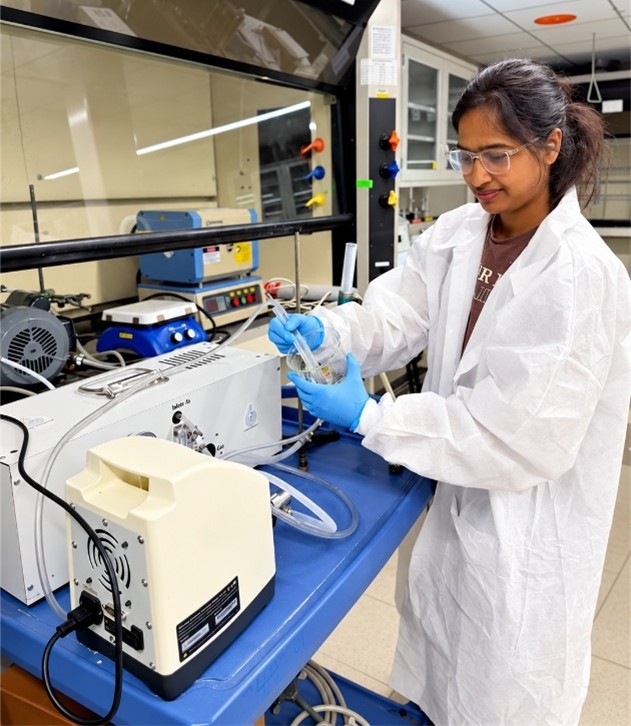
Researchers at NJIT are investigating whether carefully controlled air injection can help release and move PFAS molecules within saturated soils to the surface where they can be collected, creating opportunities to treat the contaminants more effectively. The experimental research is led by CEE Distinguished Professor Jay N. Meegoda and builds on the team’s earlier work in air sparging as well as PFAS treatment.
How air sparging works
Air sparging introduces gas bubbles into water-filled spaces between soil particles. As the bubbles move upward, they create air–water interfaces that may guide PFAS molecules to move through the soil and water and into the gas bubbles. The team is particularly interested in smaller bubbles, which may offer greater interfacial area and more uniform contact than conventional air sparging. The research aims to understand how bubble size, airflow rate, injection configuration, and sparging duration affect PFAS mobilization.
Understanding PFAS adsorption in soil
The research also builds on theoretical studies investigating how PFAS interacts with soil minerals. PFAS compounds can attach to soil particles through various molecular interactions, making their removal particularly challenging. Understanding these interactions is essential for identifying the conditions that promote PFAS removal and developing more effective sparging-based remediation techniques.
What the laboratory experiments have shown
The team conducted initial experiments using a cylindrical laboratory reactor packed with uniformly sized glass beads to represent a controlled porous medium. A PFAS compound, PFOA, was introduced into the system. Samples taken at different heights and times were analyzed using liquid chromatography–mass spectrometry (LC-MS) to track changes in PFOA concentration during air injection.
Preliminary results showed that PFOA concentrations became unevenly distributed along the reactor height during sparging. Higher concentrations were observed in the upper sampling region, while the lowest region showed a decrease. This pattern suggests that injected air can mobilize PFOA and promote upward movement through the porous medium. These preliminary findings demonstrate the potential of gas sparging can enhance PFAS mobility within porous media, providing a foundation for further research on PFAS extraction and removal.
Engineering the next stage
Ongoing work includes improving the laboratory reactor to provide better air distribution and more consistent sampling at different depths. Future experiments will compare sparging conditions and investigate how to move PFAS toward the surface for collection, including through foam formation. The next phase of the research will also compare the effectiveness of air and argon sparging and investigate the integration of PFAS extraction with ultrasound-based technology for the destruction of concentrated PFAS.
Why this research matters
A successful approach could help move PFAS from difficult-to-treat soil environments into a concentrated stream that can be collected and treated. By identifying which operating conditions promote reliable transport and recovery, the NJIT team hopes to advance the development of practical and potentially field-deployable soil remediation technologies. The work remains at an early experimental stage, with additional testing needed to evaluate removal efficiency, recovery, and performance under realistic soil conditions.
Project lead: Jay N. Meegoda, Ph.D., CEE distinguished professor
| | Using nanobubbles to improve pollutant removal from water and soil | | |
Cleaning contaminated water and soil requires more than capturing visible pollutants. Oil can cling to soil particles or remain dispersed as tiny droplets, while persistent chemicals can be difficult to remove from wastewater. Developing effective treatment methods requires understanding how these pollutants interact with bubbles, water, and surrounding surfaces.
Sowmya Atukuri, an environmental engineering Ph.D. student at NJIT, is working with Professor Wen Zhang to investigate how nanobubbles and applied electric fields can improve environmental cleanup. Her research combines studies of bubble and droplet behavior with experiments addressing petroleum-contaminated soil, oil–water separation, and the removal of per- and polyfluoroalkyl substances, commonly known as PFAS.
The goal is to help develop treatment systems that remove and collect pollutants more effectively while making efficient use of water, chemicals, and energy. Potential applications include cleaning contaminated industrial soils, treating oily wastewater, and concentrating PFAS-containing waste streams before further treatment.
Nanobubbles are gas bubbles smaller than one micrometer. Atukuri examines their size, concentration, and stability to understand how their properties influence treatment performance. By comparing nanobubble-containing water with regular water, she investigates how these small bubbles affect oil release, dispersion, and interactions with solid surfaces.
One part of her research focuses on washing petroleum hydrocarbons from contaminated soil. Laboratory experiments have shown that nanobubble-containing water can improve oil removal compared with deionized water after extended washing. The results also indicate that treatment duration and surfactant concentration strongly influence performance. Adding more surfactant does not always increase removal, so careful selection of operating conditions is essential. These findings guide further experiments to improve soil washing while reducing unnecessary chemical use.
A related project explores how electric fields affect dispersed oil droplets. Using microscopic channels and optical imaging, Atukuri observes droplet movement, deformation, and coalescence, the merging of smaller droplets into larger ones. Larger droplets can be easier to separate from water. Experiments compare direct, alternating, and pulsed electrical conditions to determine how different oils respond.
Her research also investigates nanobubble-assisted foam fractionation for PFAS separation from landfill leachate and reverse-osmosis concentrate. In this process, bubbling and selected surfactants help transfer PFAS into a collectable foam stream. The aim is to concentrate contaminants into a smaller volume for subsequent management or treatment.
Laboratory results have shown that PFAS removal varies with surfactant type and wastewater composition. This has strengthened the team’s focus on understanding how complex water chemistry affects separation. Ongoing experiments track PFAS in treated water, collected foam, and material carried into the air to better understand contaminant pathways throughout the process.
Together, these projects connect small-scale physical and chemical interactions with practical treatment challenges. Future work will examine how bubble properties, oil characteristics, water chemistry, and electrical conditions can be adjusted to improve performance.
| | Protecting Under the Hard Hat: From the civil engineering perspective | | |
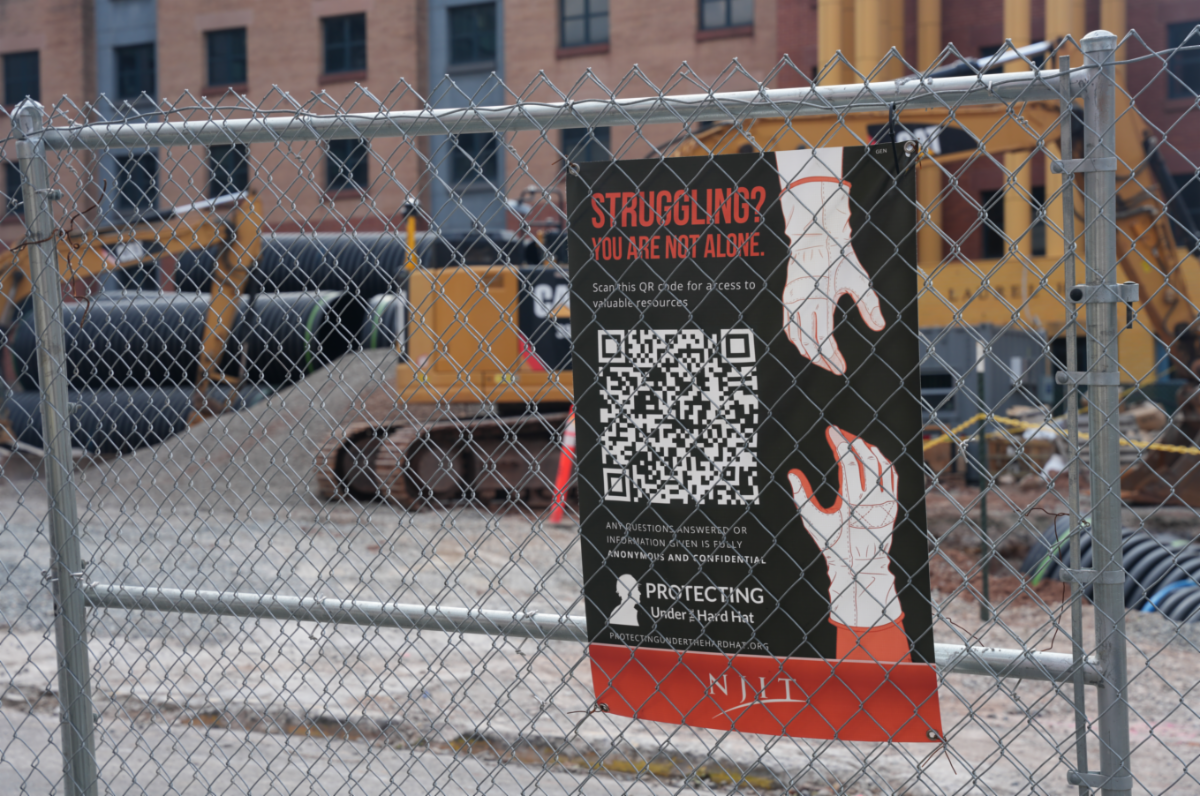
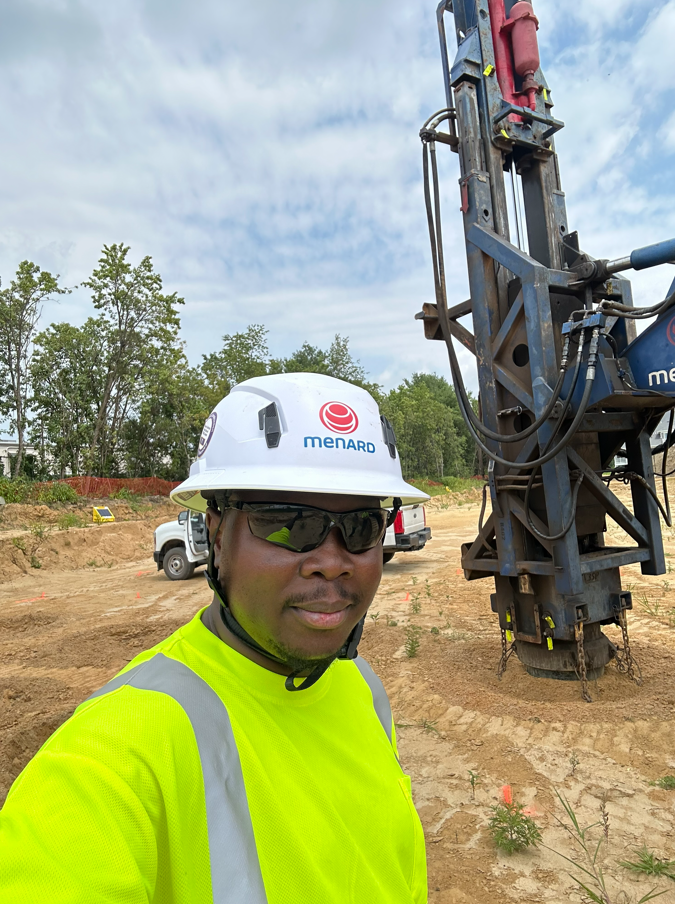
For many in the construction industry, managing mental and emotional well-being is a challenge. Anxiety, depression, substance use, and addiction often go unreported and untreated. An NJIT initiative, Protecting Under the Hard Hat, aims to reduce the stigma surrounding mental health struggles and provide information about services and tools available for those who may need additional support on the construction site. It was co-created by Roni Barak Ventura, assistant professor of applied engineering and principal investigator of the People + Interfaces + Data (PID) Lab, designed in partnership with Chris Lalevee of the International Union of Operating Engineers (IUOE) Local 825.
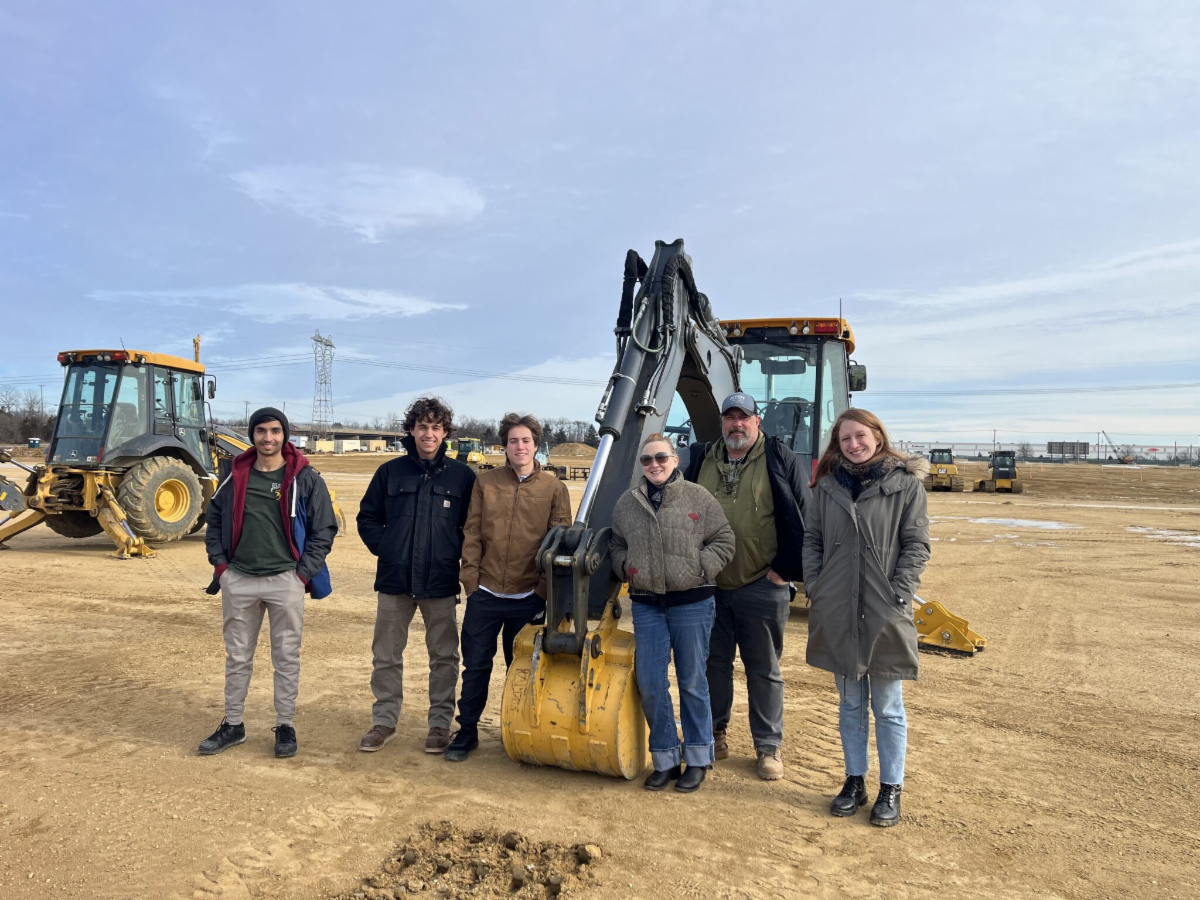
With assistance from NJIT Albert Dorman Honors College students Andrew Couto, Franco Giovannetti, and Krish Patel, Ventura built a web-based platform with a survey to anonymously gather mental health data from construction workers and provide resources based on users' responses. These can include helplines, support groups, and assistance programs for respective crises. Couto, a third-year civil engineering student, shared his perspective on the project.
Q: How did you first get involved with Protecting Under the Hard Hat?
I got involved through my STS 205H: Intro to Research Methods course — an honors class where they teach you research methodologies and then pair you with a researcher. Dr. Ventura came into that class explaining this as a project she wanted to do — she had become aware of the opioid and mental health crisis in the industry and wanted to start addressing it. It immediately felt relevant to me, and I started talking to her about joining the team.
Q: How have your own experiences on sites provided you with insights?
My time on sites gave me some sense of the culture around issues like this. Crews look out for each other, even if they don’t always talk about it. So our campaign is "Your crew cares." It's not "it's okay to talk about mental health" or "it's okay to be sad," because that’s not how crews talk to each other. Getting them to reflect on the fact that their crew cares about them chips away at a little bit of the stigma. Similarly, the campaign was designed so the stickers are placed in porta-potties and similar areas — private places where they can scan the code and find resources on their own terms.
Q: Have any courses at NJIT helped you with the project?
I took ENGL 102: Introduction to Research Writing. That class really helped me, especially with the literature review, which I was in charge of. This was a new project, so we had to figure out what was out there. I read everything I could find on opioid use, substance use, mental health, and suicide in the construction community, and much of what I found treated these as individual crises. Comparing them side by side showed us where these issues overlapped, and that’s how we started to hypothesize the cyclical nature of the problem.
Q: Your professor and student team members have different academic backgrounds from you — how has that helped develop the project?
| | |
My teammates, who are physics and computer science majors, developed the web application. We all helped shape the direction, but they take full credit for actually building it. They challenged my perspective. I came in with a lot of assumptions from my time in the construction industry about how these guys think about stuff, and my team members don't have those same assumptions. They'd challenge me, and they weren't afraid to, which really helped.
Dr. Ventura pushed back on many of my assumptions. For example, I assumed workers wouldn’t fill out the form without an incentive. She believed they would want to help our mission, and once responses came in, she was right. The workers surprised me, too. I expected them to be closed off, but many who had worked through their own struggles were the most eager to open up and help, especially for the younger guys.
Q: What role has Professor Ventura played since you started in October 2025?
This project started as her vision, and she has continued to lead it. She sets the direction and guides us through each step, from the literature review and the web application to our grant applications. We’ve met with Associated Construction Contractors of New Jersey’s safety committee and many other organizations. The project is now expanding into New York, and we’ve heard interest from across the nation. She attends many of those meetings, leads our focus groups, and has been the driving force behind the research.
Q: Now that the program is deployed in several places, what are you working on?
After the program’s deployment, I worked on drafting the methodologies portion of our first paper: how we set up the form and how we kept anonymity while still collecting important data such as geolocation. Currently, I’m analyzing our first round of results from the survey. We’re looking at what kind of struggles workers are dealing with. Additionally, we monitored how they move through the survey and where they drop off, so we can make it easier for them to finish the form. We’re also comparing sites and materials to see where the campaign is working and where it needs to be stronger as we expand.
Q: Is there any push for changing how mental health is viewed in this industry?
Chris Lalevee is part of our team and has been giving talks across the country, advocating for suicide prevention and promoting our tools. We have posters and stickers placed publicly across job sites, and also sample toolbox talks that leaders can share with their crews, all with the goal of helping to reduce the stigma. While the promotion of these tools hopefully helps reduce stigma, workers still might not be comfortable scanning in public, and that is why we have private options as well, such as porta-potties.
Q: How are the tools and services gathered on the site?
Chris Lalevee and Therese Edwards are both advocates of suicide prevention and mental health advocacy and have contributed a large amount of these resources. We also add other vetted resources we find or that people share with us. We only post resources that are legitimate and screen monthly to make sure they are still active. As mostly non-profits, there is a risk they can run out of funding and shut down. It is constantly updated.
Q: What does the program mean to you?
I want to help people. I grew up around construction and have been a volunteer firefighter since I was 16, and both are fields where people take pride in pushing through hard things. I respect that. I just don’t want anyone to feel they have to push through this alone.
| | The Moles’ Scholarships awardees at NJIT | | The Moles is a renowned organization of contractors and engineers specializing in heavy civil construction. Each year, The Moles awards scholarships to students in civil engineering and construction-related studies. They were recognized at the student and faculty reception on November 4 at the Newark Airport Marriott. Professor Andrew Ciancia is a member of the organization as well as the nominator and recommender for 2026’s winning NJIT students: Christopher George and Andrew Couto. | | |
After attending the Moles Students Day in 2025, fourth-year civil engineering major Christopher George put his name in the hat for this scholarship. It was Ciancia’s encouragement that really pushed George to apply for this fitting award, given his experience as a materials tester and construction representative at Dynamic Earth and CDM Smith, respectively. Balancing the workload of the civil engineering curriculum and a minor in safety engineering, as well as part-time work, provided him with a strong foundation for work in the construction industry.
Down the line, George aims to manage large-scale infrastructure projects, as a construction manager or resident engineer, and he acknowledged the level of impact that comes from his connection to The Moles with this award: “I have people with lifelong experience in the construction industry to support me along my journey.” He extends his appreciation for CEE, especially Ciancia; his parents and friends; and his colleagues at Coach USA and CDM Smith.
| | | |
Like George, taking part in the Moles Students Days sparked an interest for third-year student Couto in the fascinating work that is executed by the professionals. Through industry events, he has met various Moles members he then interned with and learned from for the last three summers. By the time he applied, Couto had real heavy civil work to write about in his application and discuss in his interviews, all of it influenced by those mentors.
This scholarship was a chance to get support toward his civil engineering degree and stay integrated with an organization that has already shaped so much of his path. “I'm incredibly grateful to the Moles for this generous scholarship, and I've been lucky to have several of them continue to serve as my mentors,” he said. “The time they make for students and young engineers shows how much they care about the future of the industry, and because of their support, I hope to build my career in heavy civil once I graduate.”
| | | This year, outgoing Moles President Michael D’Annunzio '81, who has been a member since 2005, designated NJIT as the recipient of the Moles President’s Scholarship, which was awarded to fourth-year civil engineering student Giovanni Olaya. | |
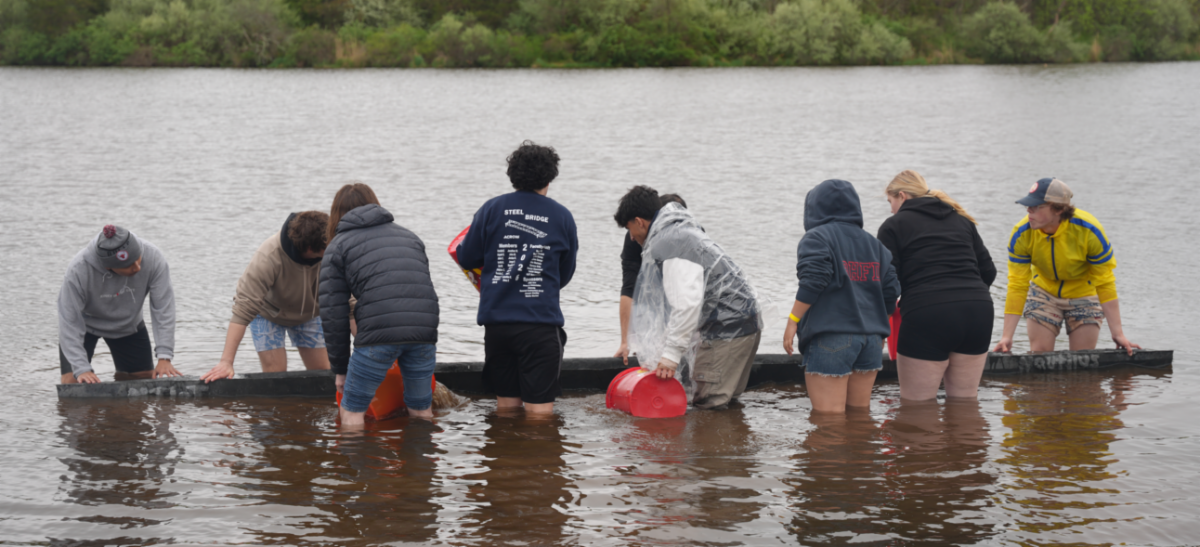
Deeply dedicated to giving back to CEE, Olaya believes that the magnitude of his involvement led to his selection. “Whether it was volunteering at nearly every open house, co-leading the 2025 ASCE Metropolitan Symposium, leading the NJIT ASCE Student Chapter as president, or now co-captaining the Concrete Canoe team, I have been committed to serving this amazing student community, department, and university that has afforded me so many opportunities,” he said.
Olaya’s aspirations lie in leading large-scale railroad infrastructure projects, and this year’s Moles Students Day featured a visit to the Portal North Bridge, one of the most significant rail transportation construction projects currently underway in the nation. This site tour solidified his fascination with rail engineering and heavy construction. “I would like to thank the CEE department and The Moles for selecting me for this prestigious award,” he added. “I am truly grateful to both organizations for investing in my future and providing me with numerous opportunities for me to grow as a student and professional.”
| | |
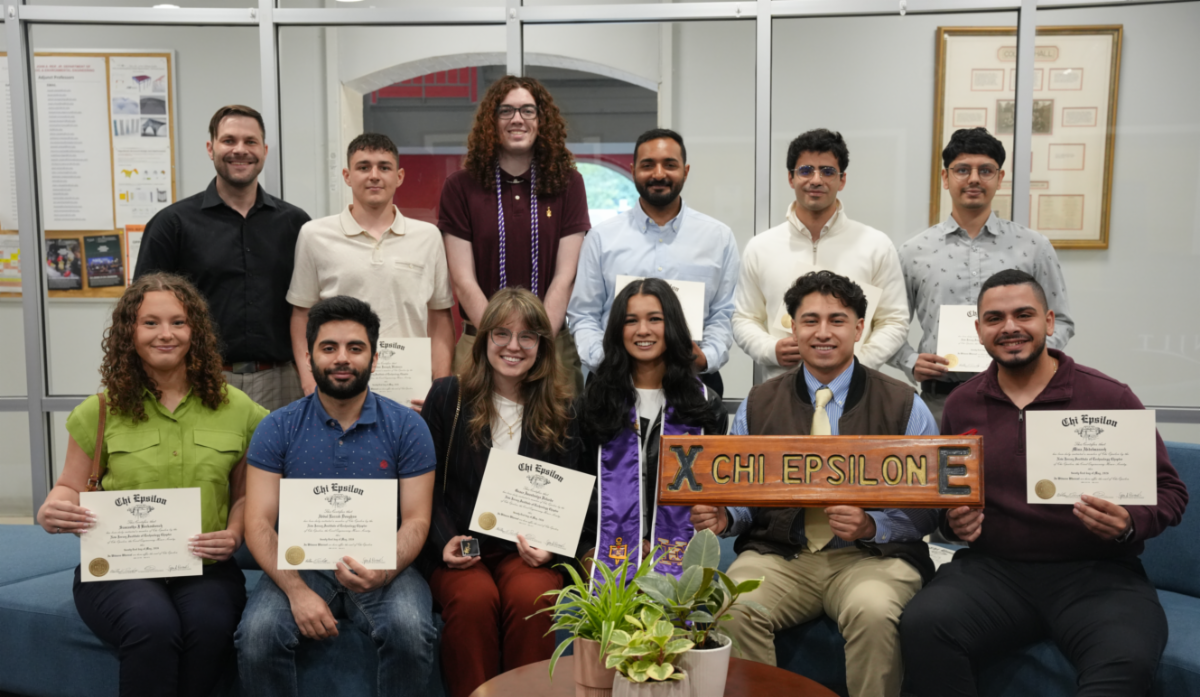
On May 21, NJIT’s chapter of Chi Epsilon (Chapter 50) initiated the newest class of inductees, including both undergraduate and graduate students. Chi Epsilon stands as the recognized national honor society for civil engineers. Students and professionals are selected to become members based on recognition of their scholarship, character, practicality, and sociability, considered by Chi Epsilon as the four primary traits of a successful engineer. NJIT’s chapter is one of 137 active branches at universities across the United States.
This year’s inductees include: undergraduate students Mina Abdelmaseeh, Samantha Berkenbosch, Alexander Hlawacz, and Jefferson Romero Villanueva; and graduate students Faysal Banafe, Ghadi Charbel, Abdul Razzak Doughan, Oscar Poudel, and Grace Velarde.
| | Stephanie Ruales spends the summer with J. Fletcher Creamer & Son |
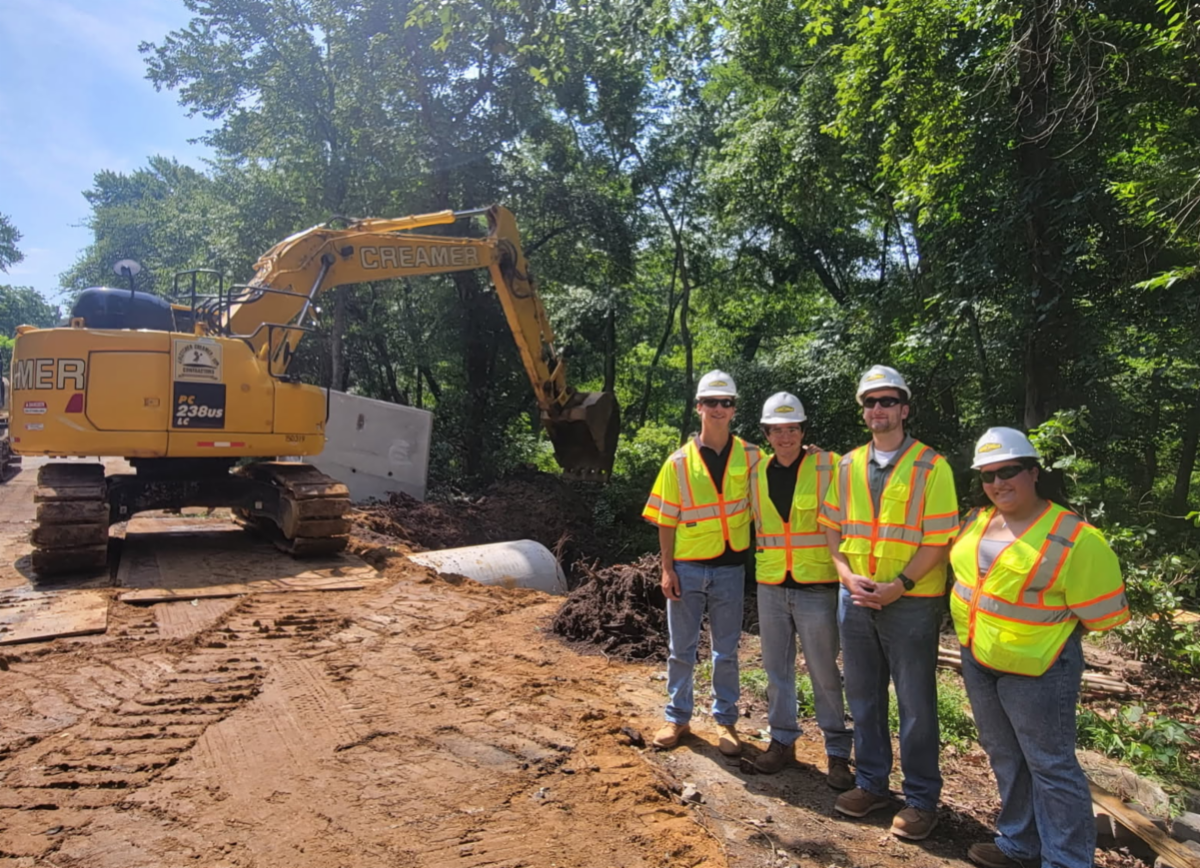
| | | A fourth-year civil engineering student, Stephanie Ruales worked on diverse civil infrastructure projects with J. Fletcher Creamer & Son at the Folsom office over the summer through the Construction Industry Advancement Program. Across multiple transportation and utility projects, her core administrative and engineering tasks included managing project submittals, material requisitions, and requests for quotes for the New Jersey American Water Camden water main, Delaware Department of Transportation (DelDOT) cable barriers, and Pennsylvania Department of Transportation (PennDOT) I-95 initiatives. Ruales created material and subcontractor buyout plans, reviewed sign structure demolition plans using PennDOT’s Engineering Construction Management System (ECMS), and conducted solo pre-bid site visits for projects such as the Wilmington Airport Blast Gate and Wetlands Institute Salt Marsh Trail. She also attended field operations, safety ride-alongs, and New Jersey One-Call training. The internship refined her skills in technical documentation, site supervision, and professional communication.
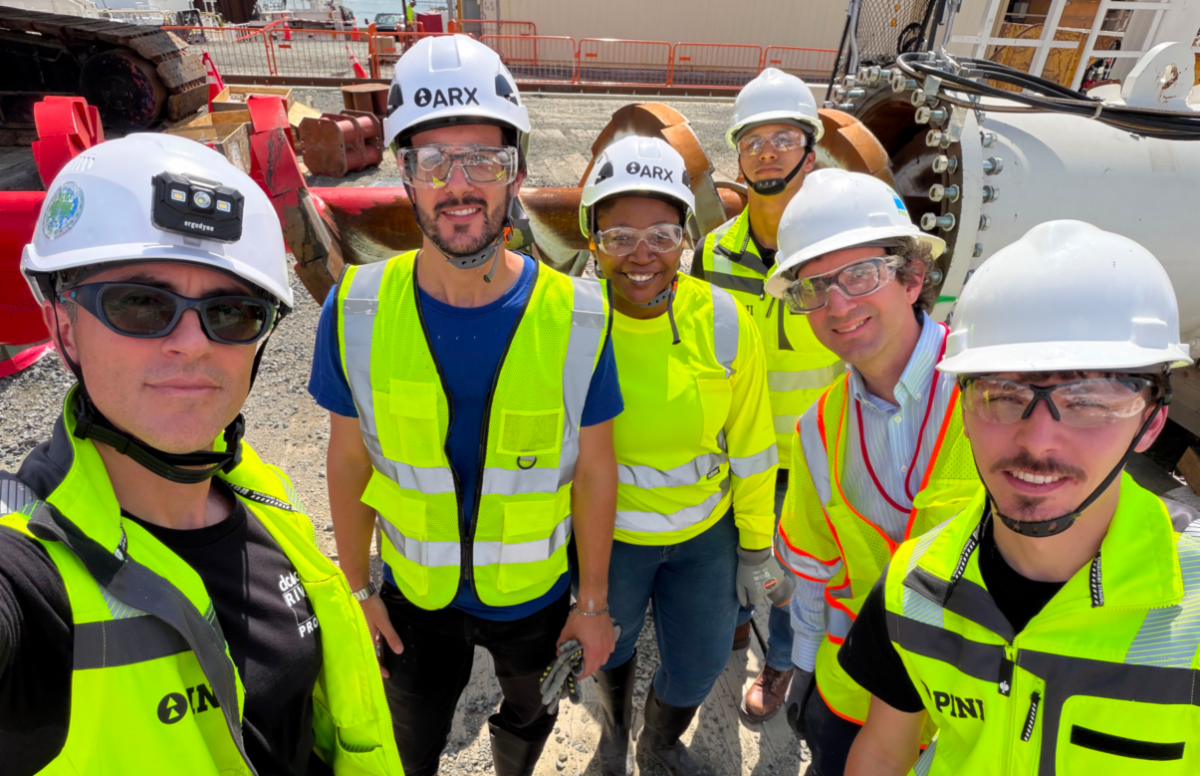
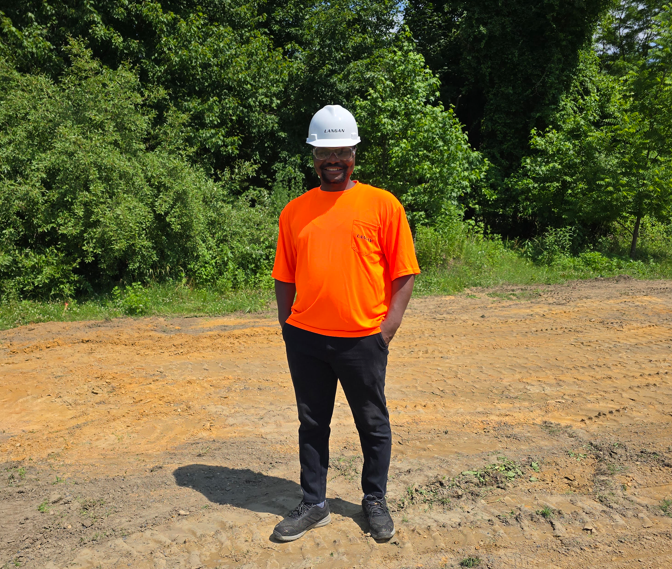
| | Geotechnical engineering Ph.D. students share summer co-op experiences | | Carol Mgiba’s summer internship with ARX USA involved geotechnical engineering for major civil infrastructure projects, including railway development and clean water initiatives in the Palisades, Ohio River, Potomac River, and Venice Dual Force Main tunnels. Her primary responsibilities were assessing tunnel portal support integrity for launching the tunnel boring machine (TBM) at the North Bergen site using computational modeling methods, calculating groundwater inflow at the shafts and near-surface infrastructure after grouting to evaluate water inrush and flooding mitigation strategies. Additionally, she reviewed geotechnical data reports for both railway tunneling projects and wastewater tunneling projects. Later in her summer internship, she conducted field mapping visits to verify site conditions against design assumptions and analyzed large microtunneling performance datasets and operator logs using custom coding and Excel macros. She particularly focused on the importance of designing for conservative worst-case scenarios, developing time-efficient assessment tools, recognizing field deployment impacts, and fostering strong collaborations between university research labs and consulting firms. | | | Matthew Sonibare’s summer internship with Langan involved extensive geotechnical fieldwork, design, and project oversight for high-profile civil infrastructure developments. His field assignments included conducting subsurface site investigations, soil classifications, and electrical resistivity testing for the Dark Star Solar project in West Pennsboro Township, Pennsylvania, as well as supervising pile drilling operations and groundwater level monitoring at the Health & Life Science Exchange (HELIX) site on Rutgers University’s New Brunswick campus. Additionally, he provided quality assurance for stone column aggregate pier installations, monitoring auger drilling depths, mandrel lifts, and aggregate volume compaction. Beyond field supervision, Sonibare performed historical mine studies, created AutoCAD drafts and subsurface investigation plans for the NEBIUS Data Center, and drafted earthwork specifications for the ALC Philadelphia Airport Expansion. These experiences strengthened his foundation design skills and inspired future research regarding aggregate stone columns and grouted rock mine remediation. | | | |
Kaydine Gonzalez
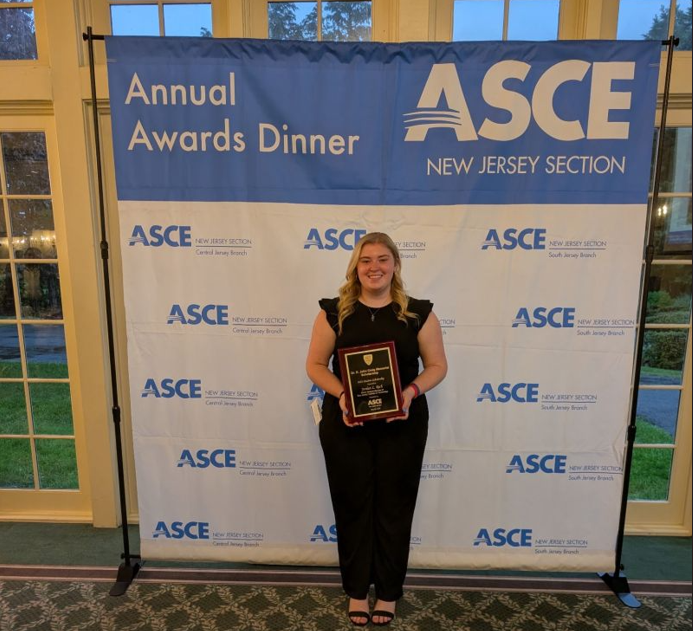
WTS NJ 2026 Student Scholarship by Women's Transportation Seminar (WTS) International
| | Michel Boufadel appointed as editor-in-chief of section in Environmental Research | | |
As of May 15, Michel Boufadel, a CEE distinguished professor, was selected as the editor-in-chief of Section I: Environmental Chemistry and Ecotoxicology of Environmental Research. As part of his three-year appointment, he charts the direction of the journal and assigns articles to editors within the section. Environmental Research is a Q1 journal in the top 25% of publications with highest impact and featuring the most influential and widely cited research. “I am humbled that the community asked me to step into this role,” Boufadel said. “It attests to the high quality environmental research at NJIT.” He aims to open the door for more engineering-focused articles to be published and is grateful to stay connected to the latest in the field through this position.
Boufadel is the director of the Center for Natural Resources at NJIT. He served recently on five National Academies committees in relation to oil spills from 2012 to 2019. He also served on a committee of the Royal Society of Canada on “The impact and behavior of oil in aquatic environments,” and served on the Environmental Protection Agency’s Science Advisory Board on natural gas extraction from shale formations from 2011 to 2012.
| | Richard Calbi takes on PFAS | | |
Richard Calbi, the director of Ridgewood Water, was astonished to discover the extent of PFAS contamination in his region’s drinking water after the state adopted pollution standards for the industrial chemicals in 2020.
“We found them in every one of our 52 groundwater wells, which are scattered over four townships. We couldn’t find water to buy that didn’t have PFAS in it,” Calbi ’94, ’00 recalled.
Known as “forever chemicals,” PFAS (per- and polyfluoroalkyl chemicals) were used for decades in protective coatings to withstand heat, fire, oil and water. The tight carbon-fluorine bonds that make them durable ensured their persistence in the environment, where they have accumulated in rivers, aquifers, household taps and even human blood. They have suspected links to diseases such as cancer, immunological problems and developmental delays in children.
“All across New Jersey and the U.S., water utilities are discovering PFAS in their drinking water. They are the single most impactful contaminants of our era. They’re in groundwater, sewage and the products we use. Everyone comes into contact with them. PFAS is in a lot of stuff.”
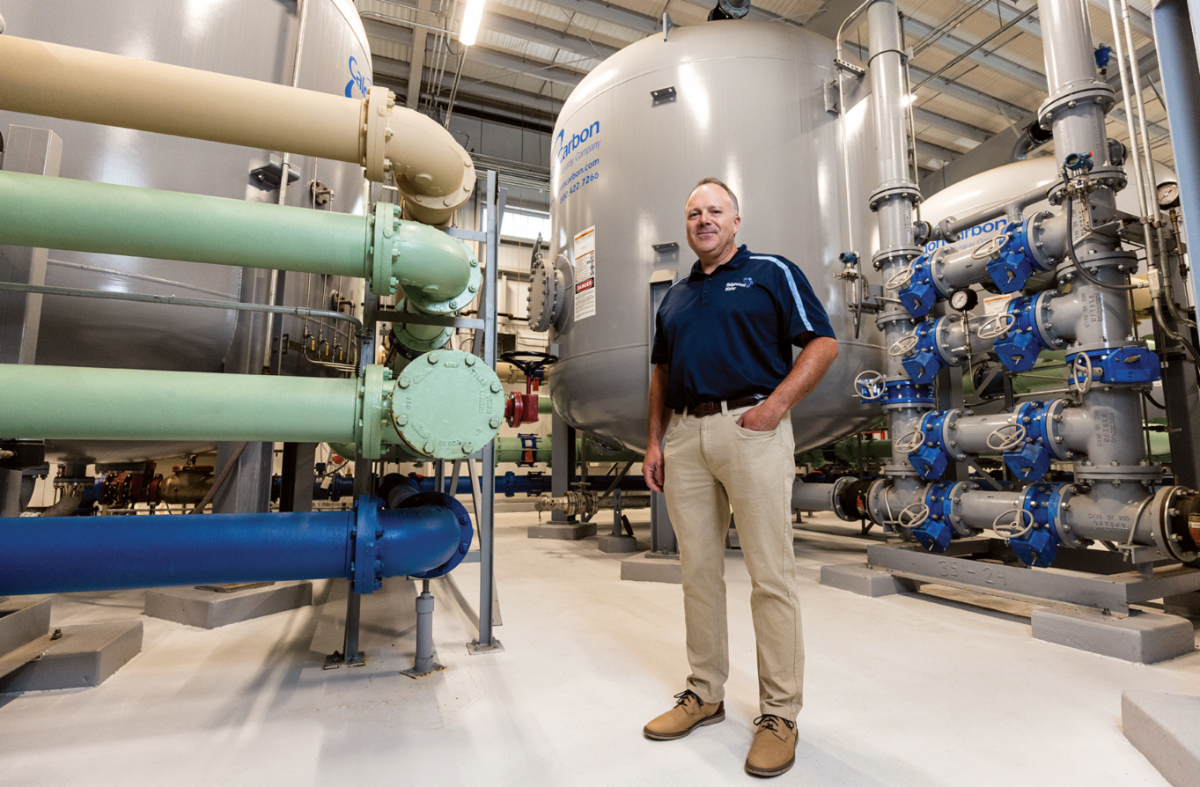
Calbi and his team set out immediately to reimagine and build an entirely new treatment system to protect the municipal water supply for the utility’s 61,000 consumers. Armed with a master plan completed in advance of the coming regulations, they designed and began installing a network of 12 plants containing enormous steel treatment tanks — some as tall as 24 feet — that are connected by nearly 13 miles of water mains. The final plant will come online early next year.
Their swift response, effective public outreach and ongoing efforts to optimize the system through research collaborations have made Ridgewood Water a model for utilities that are still coming into compliance. Based on his experience, Calbi plays an influential role in an NJIT-led consortium to coordinate and improve PFAS management in the state.
“PFAS treatment at the time was on a small scale and utilities didn’t know how to scale it up,” noted Calbi. In 2020, for example, Ridgewood’s existing treatment plants could not accommodate the massive new filters. “So we brought together engineers, academics, water companies, equipment makers and policy people to figure out how to do it smartly and efficiently.”
He not only had to build a new system, he had to sell it to elected officials and the public. The $150 million price tag was the utility’s largest expense ever. In the absence of upfront payouts from polluters, his team scrambled to find funding from additional sources, such as the New Jersey Infrastructure Bank. The utility has since taken legal action against companies whose facilities leached PFAS into the region’s groundwater, although Calbi could not comment further.
“We needed to let residents know that we were addressing the problem ahead of others; that we had studied it, made a plan and were building the facilities to manage it,” he recounted. “We had community meetings in all four towns, updated people on a weekly basis and used social media. We saturated the public with as much information as we could.”
| | |
PFASolve
Ridgewood Water is now looking for new ways to optimize the system, which is expensive to run. The utility’s 40 treatment vessels use more than 900,000 pounds of treatment material, granulated active carbon flakes, to absorb the chemicals as they collectively process up to 18 million gallons of water a day.
“We’re continuing to learn and find better ways to do this,” says Calbi, who is involved in efforts with NJIT researchers to develop new technology to improve treatment and reduce its cost.
“For example, we want to come up with faster detection and extend the life of our filters. NJIT researchers at the company PFASolve, which I advise, are coming up with new methods that would give us instant results, because we spend a lot of time and money waiting (for results from labs). We want to know when the carbon we’re using is breaking down and when we have to change it out.”
Facilities now pay between $300 and $400 per sample analysis, while waiting up to three weeks for results. “You may be testing 100 wells on a regular basis,” said Michael Ehrlich, a professor of finance and one of PFASolve’s co-founders.
PFASolve co-founder Arjun Venkatesan, an associate professor of civil and environmental engineering, recently tested a different type of technology in Ridgewood’s wells: a prototype that pre-treats contaminated drinking water with a chemical compound that modifies the structure of PFAS, enabling higher adsorption onto carbon water filters and thus extending their life.
A new partnership
Atam Dhawan, senior vice provost for research and NJIT’s chief strategic innovation officer, was so impressed with Ridgewood Water’s response to the problem that he recruited Calbi to help him build the New Jersey PFAS Partnership Innovation Consortium. Shortly after attending a PFAS event at NJIT, Calbi got a call from Dhawan with a direct request: “I need your help.” Because he knows so many people throughout the sector, Calbi is a brilliant networker who in turn helps open doors and recruit leaders, experts and practitioners to the growing organization.
The consortium facilitates partnerships by sharing utility-specific contamination data and information about technologies in development. It also supports technology testing and validation as a pathway to commercialization, promotes advocacy for clean-up initiatives and provides workforce training for on-site remediators. Founding members of the consortium include engineering companies such as Langan, AECOM, Battelle, ResinTech and T&M Associates; water company Veolia; utilities such as Ridgewood Water and Jersey Water Works; the New Jersey Commission of Science, Innovation and Technology; the state Department of Environmental Protection; universities such as Princeton, Rutgers, Stevens and NJIT; and start-up companies, among others.
“Rich not only has incredible engineering expertise, he has partnerships with technology innovators in academia and industry, policy makers and government officials towards addressing PFAS contamination,” Dhawan said. “He networked throughout the state to develop and implement a massive infrastructure project that is a wonderful blueprint for successful public utility remediation.”
| | |
Calbi said he was eager to help.
“As an NJIT grad, I always wanted at some point to give something back,” he said, who is also a member of the Department of Civil and Environmental Engineering Industrial Advisory Board. “And how better than to leverage my experience with PFAS in Ridgewood by assisting with research. There is also an education piece. The professors want their students to get ahead of the curve as they train the next generation of engineers to lead this industry.”
Some of the bigger utilities, which are now having to come into compliance as the U.S. Environmental Protection Agency tightens PFAS pollution standards, are learning from smaller utilities, such as Ridgewood.
“I participate in a group with the Passaic Valley Water Commission, Veolia and New Jersey American Water to determine what’s working and what isn’t,” Calbi said. “We spent $150 million and they’re going to have to spend many times that.”
While New Jersey is proceeding quickly to manage the problem, much of the country lags far behind.
“Nationally, it’s moving slowly,” Calbi noted. “A lot of water systems are doing nothing and will be playing catch-up as their states develop regulations.
While there is much work ahead to optimize and maintain Ridgewood’s system, Calbi savors some rewards from early compliance.
“The new filters have other benefits: they remove organic pollutants and improve taste, color and odors,” he noted. “Now it’s actually a plus to say that you have Ridgewood water.”
| | From railway to to Greenway: A public park comes to life in Newark | | |
New Jersey’s newest state park, a future nine-mile greenway extending from Jersey City to Montclair, is coming to life on a former rail line that cuts through an industrial neighborhood in Newark’s North Ward.
Five NJIT alumni are part of an AECOM Tishman construction management team coordinating the first phase of a remarkable transformation for this underutilized urban space. It promises to bring neighborhood playgrounds and sports courts, walking and bike paths, picnic areas, an observation deck overlooking the Second River in Branch Brook Park and a performance stage. The park will also improve the neighborhood’s air quality and stormwater management, while creating new habitat for animals and birds.
Shortly after breaking ground in the summer of 2025, the team began what it calls a “challenging, detailed, highly designed project” by removing layers —railroad tracks, debris and overgrown brush, more than century-old soils of unknown origins — from the 100-foot-wide corridor.
“We’ve done a lot of clean-up,” said Michael Kasian ’85, the company’s executive vice president responsible for New Jersey and Pennsylvania projects. “The railway was last used 20 years ago, and when we started, it was full of trash. People in the neighborhood saw the site as unsafe.”
Rosana Caputo ’99, the senior project manager overseeing the greenway construction, described the process: “It’s a remediation project, considered a brownfield due to its industrial past, so we capped the site. We first dug out and disposed of two feet of historic fill and replaced it with clean material. We then placed an orange-colored fabric barrier over it that serves as a warning barrier for any future digging. Over that, we put down more soil to plant 541 trees, along with thousands of shrubs and ground cover.”
Redeveloping a historic, former industrial site is a challenge, she noted. While peeling back the layers, contractors unearth long-forgotten features. “There were unknowns in the field, such as buried railroad tracks and existing retaining walls that run alongside them,” Caputo recounted.
The New Jersey Department of Environmental Protection purchased the nine-mile corridor in 2022 from Norfolk Southern.
What’s been most rewarding about the job, team members said, is creating an entirely new space in the city that also nods to its past use as a freight and passenger line that hauled, among other goods, iron ore and ice from frozen New Jersey lakes.
In early August, amid cranes and other heavy machinery, visitors could see the outlines of the stage and what will be a sweeping lawn in front of it. Wooden playground equipment, including a 30-foot-tall slide tower and a bridge connecting it to a 7-foot-tall climbing mountain composed of granite blocks, were waiting to be installed. A water play feature is yet to come. Throughout, there are touches that evoke the site’s history.
“There is a ramp with blue blocks to resemble ice, and finishes throughout, such as a screen wall, guard rails and trellises, that will look rusted. The wood will gray over time, to suggest the age of an old site,” Caputo explained.
In a section of the park with bike and pedestrian trails and many trees, large granite seating blocks also suggest ice. Those trails will connect the greenway to Branch Brook Park.
To train the next generation of construction engineers, Kasian contacted Marjorie A. Perry ’05, president and CEO of MZM Construction & Management Company, for assistance in staffing.
Gira Abdou ’26, a civil engineering major, and Denilson Olivera ’23, a mechanical engineering major, received messages from Perry on Handshake, the NJIT career networking app. Both had impressive construction-related internships while they were students. Would they be interested in working on a landmark project?
Both signed on as project engineers whose daily duties include, among others, record-keeping for all site activities and overall project updates. They keep tabs on contractors’ due dates, ensuring they are on time, and submit the required paperwork. Because the project is funded in part by the federal government, it must be completed on a compressed schedule on time or risk losing that money. The job also entails some problem-solving.
“I had experience testing concrete and soil and that’s important for this project, because there’s a lot of historic fill,” Olivera said. “What has really interested me is looking at project drawings and seeing how they take shape. Drawings are not always perfect. When we first started working on the paths, for example, we realized we had to build up areas to support them.”
Abdou said, “I’d always thought of civil engineering in terms of bridges, roads and buildings. But a park brings so many experiences: building the site from scratch, installing the playground equipment and decorating the overall site with trees and greenery.” The project has inspired her to forge a career in New Jersey that will include public sites. “There are also so many cool places with a lot of potential for new infrastructure, including parks and greenways, because you can never have too much green!”
Keith Adams ’96, a senior project manager on the team, relishes the transformation of his longtime community.
“This project hits home as I currently live in Bloomfield and actually rode on the old NJ Transit Boonton line train when I attended high school,” he recalled. “Seeing it turned into a beautiful park that the community can enjoy and extend into my town is great.”
| | |
Life on the River: a project led by Ashish Borgaonkar
Last spring, NJIT’s Albert Dorman Honors College (ADHC) collaborated with the Newark College of Engineering (NCE) to launch the course, “Service Learning for Engineers: Life on the River,” composed of student-led water remediation, ecology and infrastructure design projects. This program is led by Ashish Borgaonkar, Ph.D. ‘11, an associate professor in the School of Applied Engineering and Technology. Read more about this initiative.
| | |
Andrew Pennock awarded ASCE’s 2026 Collingwood Prize
The Collingwood Prize is administered by the Committee on Younger Members of the American Society of Civil Engineers (ASCE). This year, the committee selected Andrew Pennock, Ph.D. ‘25 to receive the 2026 Collingwood Prize for his 2024 paper “Assessing Baffle Minor Loss for the Design of Hydraulic Flocculators,” co-authored by William Pennock, CEE assistant professor, in the Journal of Environmental Engineering. The Collingwood Prize was instituted and endowed in 1894 by Francis Collingwood, past secretary of ASCE. It recognizes an outstanding engineering paper by a young member who advances engineering knowledge or documents engineering work and demonstrates relevance to professional practice.
| | |
CIRT names CEE graduate Greg Kelly as chair
The Construction Industry Round Table has elected CEE graduate Greg Kelly P.E, CEO of STV, as its 2026-2027 Chairman. Kelly was elected during the CIRT’s Annual Spring Conference last week in Washington D.C, succeeding Tom Reilly, President of Turner Construction. Kelly oversees a workforce of more than 3,300 members and guides the firm toward achieving its short and long-term strategic goals with an emphasis on performance and business development. He has a master’s degree in civil engineering from NJIT and currently serves as chair of Temple University’s College of Engineering’s board of Visitors and sits on the university president’s leadership council. Read more.
| | |
Mina Samuel appointed as co-chair of DPW leadership committee
Bayonne Mayor Elect Sharon Ashe-Nadrowski announced the leadership of the Department of Public Works by appointing Mina Samuel, M.S. '20 to serve as one of the co-chairs as the incoming administration continues assembling teams that will help guide the future of the city department. Samuel has more than 15 years of experience in engineering, construction management, infrastructure, inspections, and real estate development. He now serves as a civil engineer with the Port Authority of New York and New Jersey, and has had leadership roles which included inspections with the New York City Department of Buildings. Samuel holds a master of science in civil engineering from NJIT and has earned numerous certifications in construction management. Read more.
| | |
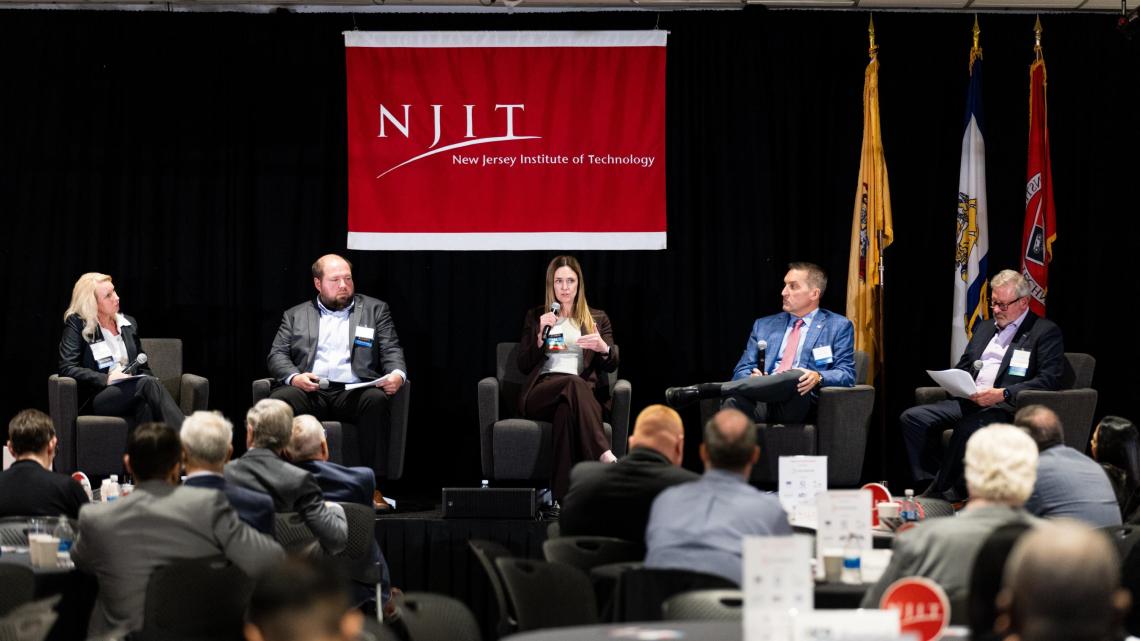
NJIT hosts 2026 International Conference on Nanobubbles
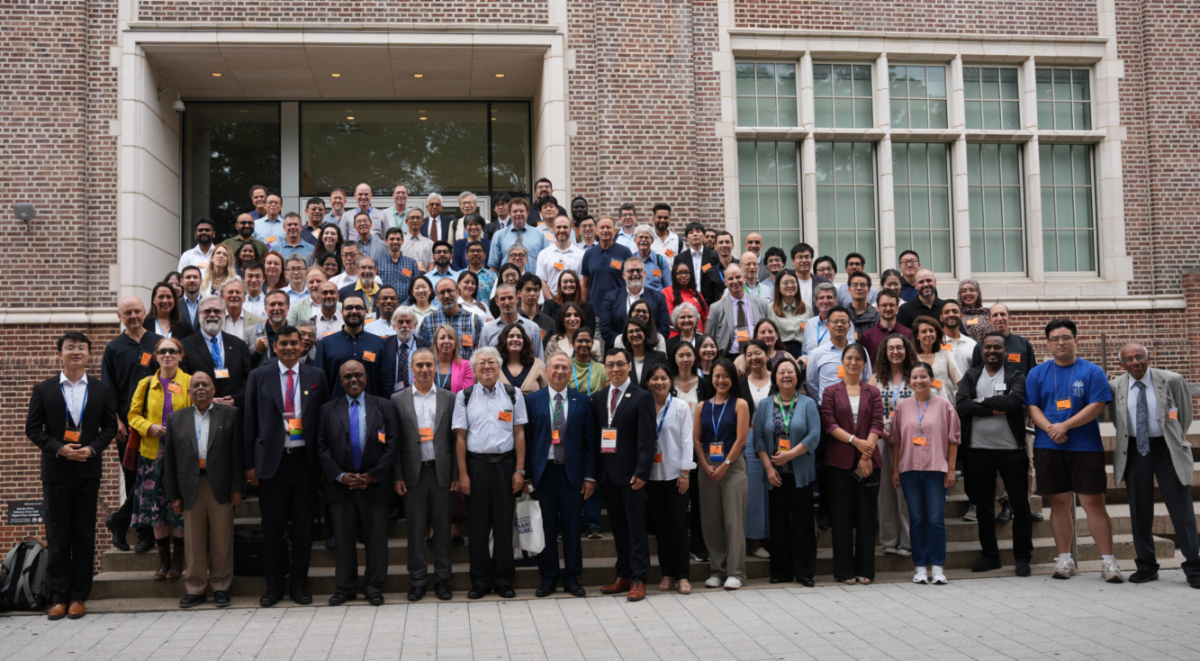
NJIT hosted the 2026 International Conference on Nanobubbles, bringing together scientists, engineers, entrepreneurs, and their customers to consider a technology so small that billions could fit inside a grain of sand. The tiny bubbles are typically used in air, soil and water as a delivery vehicle for chemicals or gases that perform functions such as aeration, cleaning and disinfection, explained conference chair Wen Zhang, CEE professor. Read more.
| | |
Oladoyin Kolawole shares thoughts on The Hudson River tunnel work
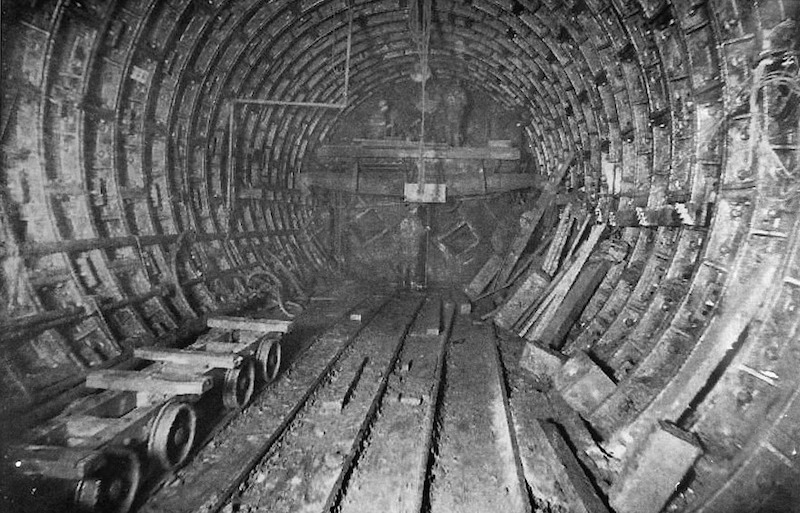
As the Gateway Tunnel project’s state-of-the-art tunnel boring machines are now chewing through the Palisades in North Bergen, the first attempt to tunnel under the Hudson River in 1880 was primitive, and deadly, in comparison. CEE assistant professor Oladoyin Kolawole sheds some light on the inner workings of the early tunneling work. Read more.
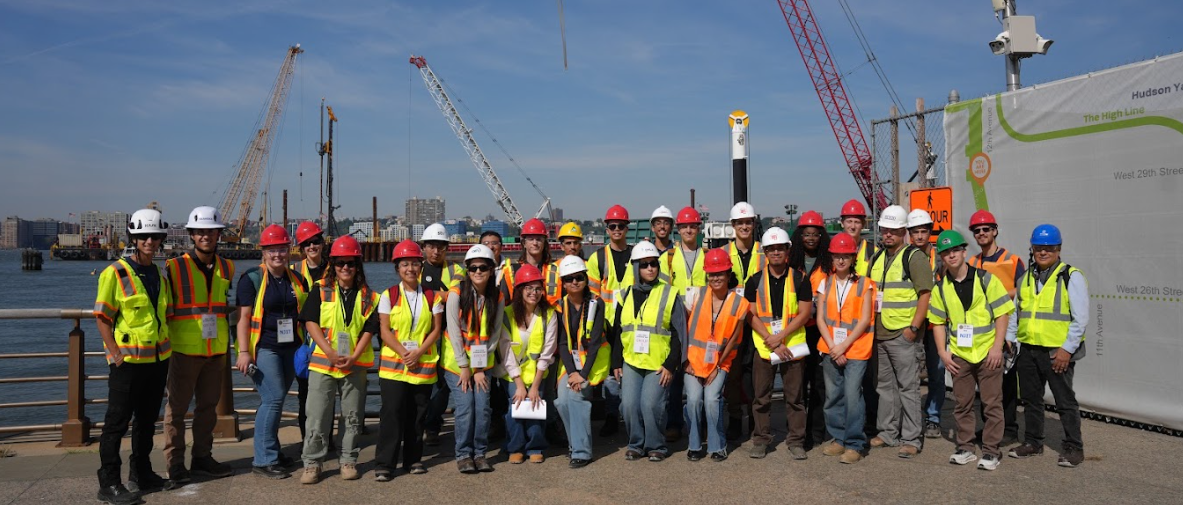
| | Each year, NJIT takes part in The Moles’ Education Committee’s Student Day that provides an in-depth site tour for primarily junior year students in various Northeast regions in the country. This year, the New York area featured a walking tour of several Gateway Development Commission projects as part of the $16 billion Hudson Tunnel Project: The Hudson River Ground Stabilization (HRGS) Project, Manhattan Tunnel Project, and The Hudson Yards Concrete Casing - Section 3. The Gateway Program is a suite of critical rail infrastructure projects on the Northeast Corridor between Newark, New Jersey, and New York Penn Station. The Hudson Tunnel Project is nine miles of new passenger rail track, including a new two-tube tunnel under the Hudson River. With the 11 Moles stations in rotation for about three hours on October 2, students saw each project’s sites up close while observing engineers’ first-hand experience of working on such projects. | | |
To strengthen connections between the classroom and industry, Langan Day featured candid conversations between students and professionals in various fields that are part of the company’s focus: geotechnical engineering, site/civil engineering, surveying, and environmental engineering. Opening and closing remarks were from Langan’s Associate Principal Michael Nilson and Senior Consultant Stewart Abrams, respectively. Students not only formed career connections, but also learned the current industry trends on October 22.
| | |
On-campus site visits to the Oak Hall construction and
Colton Hall brick facade renovation
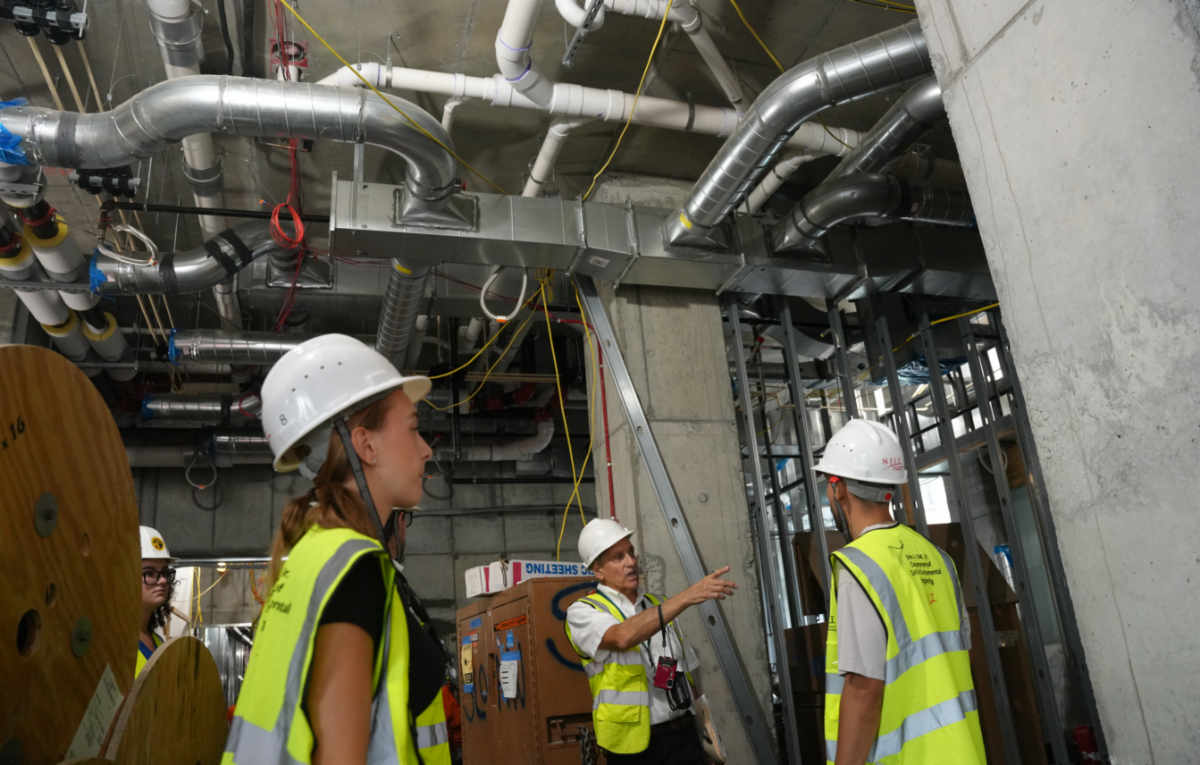
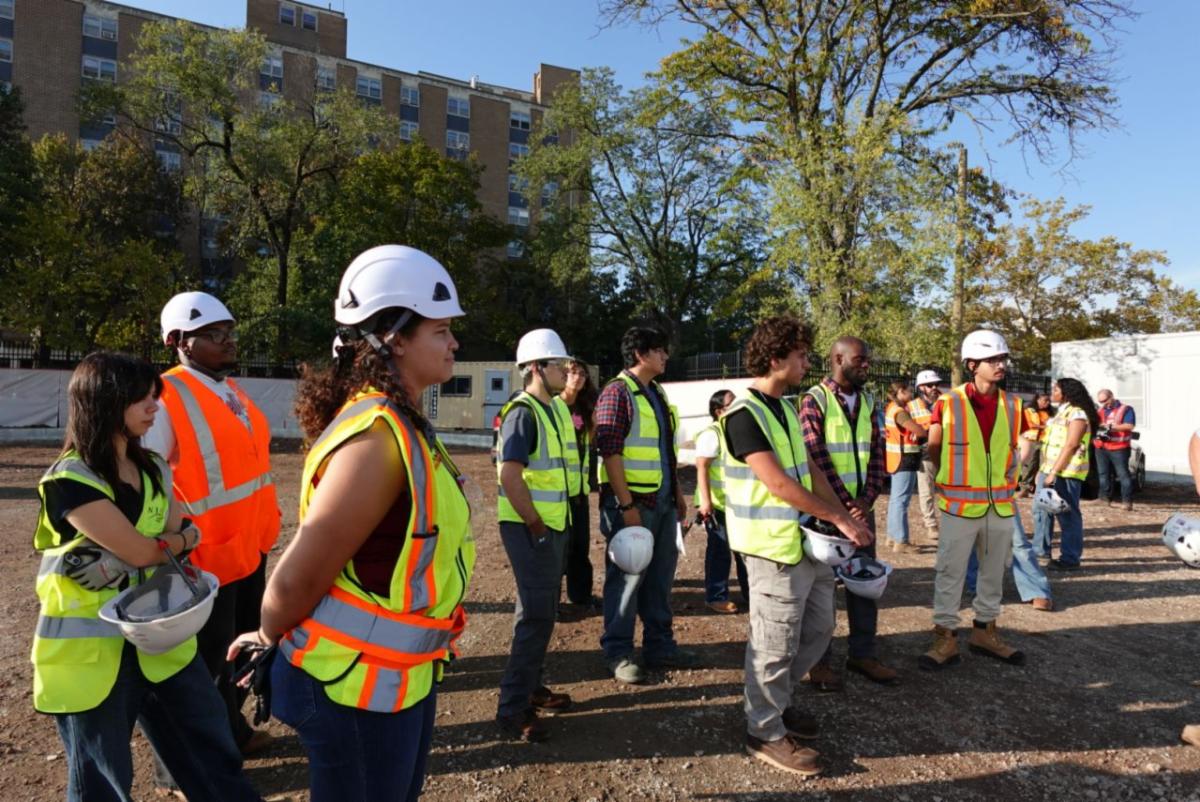
| In the last few months, students have seen the inner workings of two ongoing construction and renovation projects on campus. NJIT’s newest rebuild of the residence dormitory Oak Hall is set to open next fall, and civil engineering students visited the site while it’s under construction and learned from Denise Davis, project manager at NJIT, as well as workers from the Terminal Construction Corporation team. In addition, CEE’s own Colton Hall has undergone renovations in its brick facade. As part of CE 417: OSHA in Construction and Civil Engineering, students geared up and experienced implementing safety measures when working on tall structures. | | Student chapters of professional societies | |
The CEE department oversees student chapters of various organizations that serve as communities for individuals with similar professional goals. Members of these groups often take part in design competitions, provide community service, and connect students to industry experts. The chapters include:
- American Society of Civil Engineers (ASCE)
- Engineers Without Borders (EWB)
- American Railway Engineering and Maintenance-of-Way Association (AREMA)
- Professional Women in Construction (PWC)
- American Academy of Environmental Engineers and Scientists (AAEES)
- American Rock Mechanics Association (ARMA)
- American Water Works Association (AWWA)
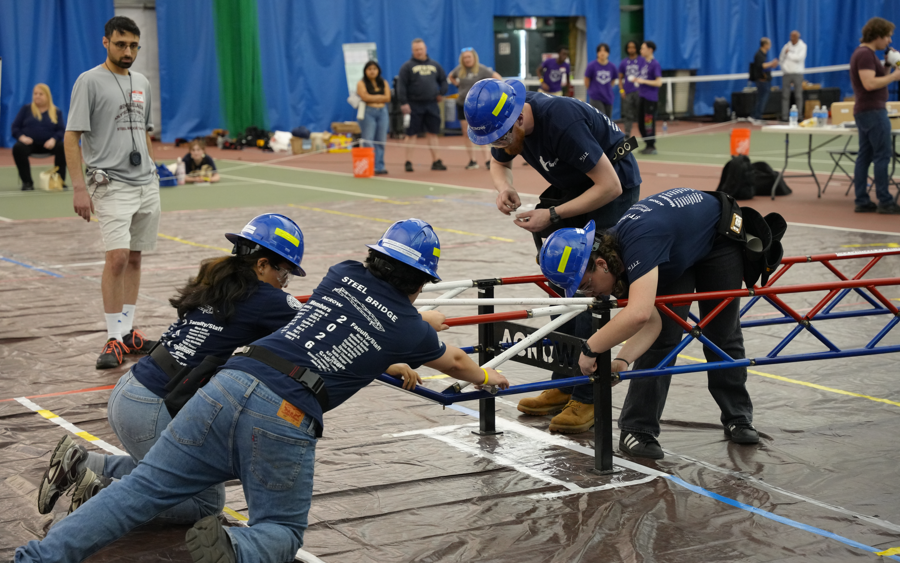
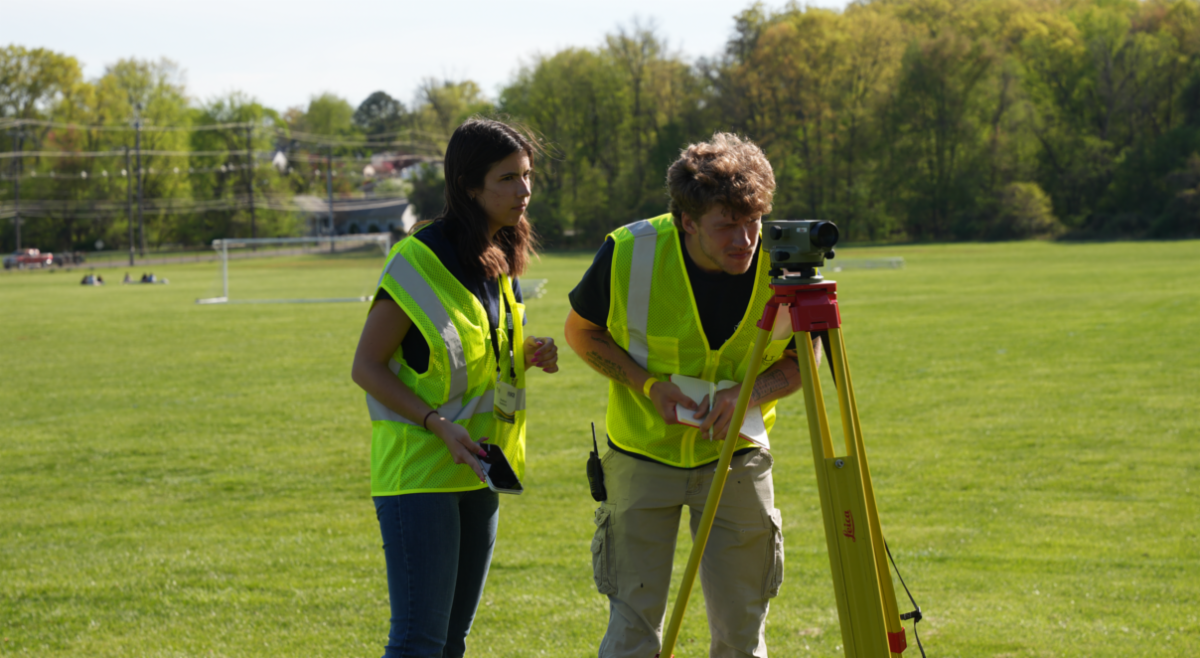
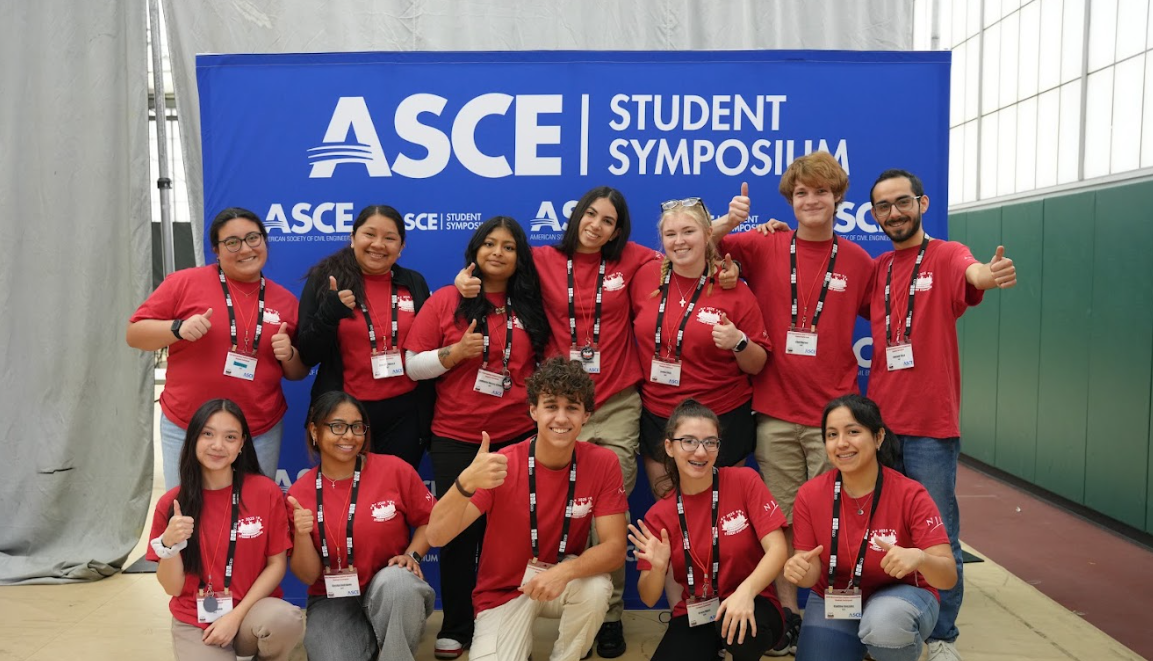
| | 2027 ASCE Metropolitan Student Symposium | Each year, NJIT’s student chapter of the American Society of Civil Engineers (ASCE) competes in a set of challenges that involve innovative design, problem solving, and team collaboration. This culminates in the ASCE Student Symposium, taking place from April 23-25 next year at Fairleigh Dickinson University and Columbia University for the Metropolitan section. The teams include steel bridge, concrete canoe, 3-D printing, surveying, construction institute, sustainable solutions, and timber-strong design build, as well as a student symposium paper that covers engineering ethics. | | |
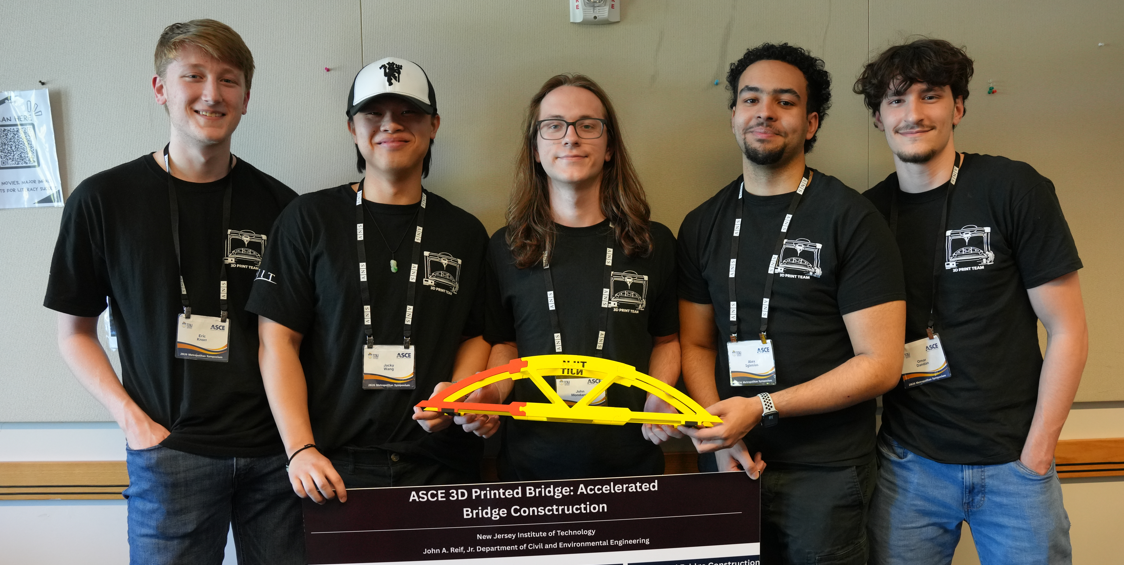
2027 David Good 3D Printed Bridge Competition
March 25, 2027
| | In memoriam: Andre Eric Grebenstein | | |
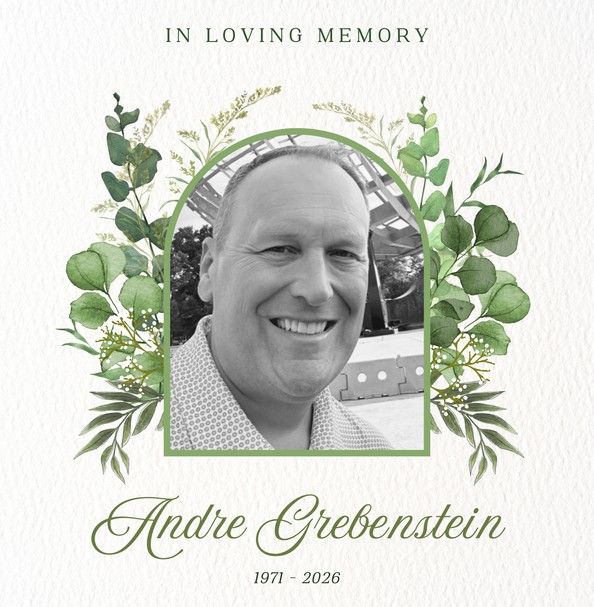
It is with deep sadness that we share the news of the loss of our board member, Andre Eric Grebenstein (1971 – 2026).
Grebenstein, 55, of Hazlet, New Jersey, passed away peacefully at home surrounded by his loving family, following a brief but courageous battle with pancreatic cancer. He earned a degree in civil engineering from NJIT and later earned an MBA in supply chain management from Rutgers University. During his time at NJIT, Grebenstein interned at Turner Construction; following graduation, he accepted a permanent position with Turner and began what would become a distinguished career.
Grebenstein’s professional journey continued with leadership positions at The Martin Group in Matawan and HITT Contracting, where he most recently served as vice president and leader of the New York Business unit. Above all, Grebenstein was a devoted husband and father. Of all his many accomplishments, none brought him greater pride or happiness than the life he built with his wife and their two children. The love he had for them was evident in everything he did.
[Excerpts from obituary by Shore Point Funeral Home]
“His passing is a sudden and heartbreaking loss, taking him from us far too soon. Andre was a valued member of our Industrial Advisory Board who consistently dedicated his time, insight, and leadership to supporting our department, profession, and students,” said Maurice Rached, chair of the IAB. “His contributions, thoughtful presence, and camaraderie will be sorely missed by all of us.”
“We are deeply saddened by the passing of Andre Grebenstein, a valued member of our Industrial Advisory Board and a proud NJIT civil engineering alumnus. Andre gave generously of his time and experience, mentoring students and helping our department stay connected to the needs of industry,” added Taha Marhaba, CEE chair. “He led with kindness, humility, and humor, and he made a lasting impact on everyone he worked with. Our thoughts are with his wife Gina, his children Celia and Jimmy, and his family, friends, and colleagues. He will be greatly missed.”
| | Meet our new board member: Richard Calbi, P.E., P.P., '94, M.S. '00 | | |
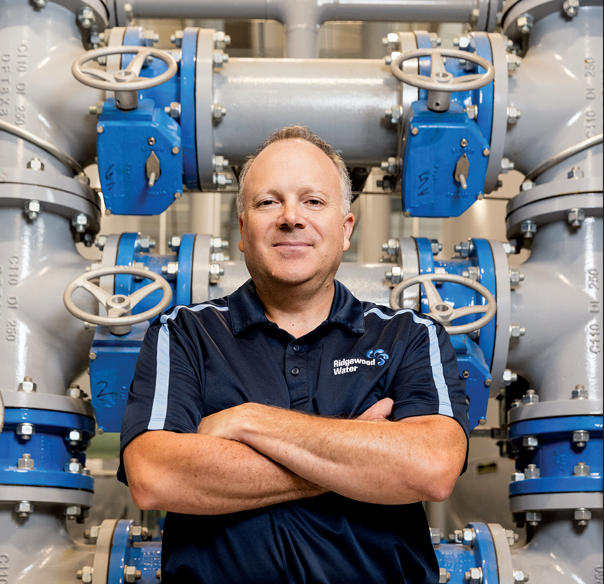
Richard Calbi serves as the director of Bright View Engineering, a firm with a full spectrum of engineering services for public and private sectors, and director of Ridgewood Water, one of New Jersey’s 25 largest water utilities, providing service to more than 61,000 customers across four municipalities. Calbi is a two-time graduate of CEE, with a bachelor’s in civil engineering and a master’s in environmental engineering. A licensed professional engineer and planner, he brings over 30 years of experience to the field in both his roles.
For the past decade, he has been instrumental in guiding Ridgewood Water, applying sound engineering practices to advance public policy and manage a complex groundwater system that delivers drinking water. He is a founding member of the Drinking Water Coalition of New Jersey and serves on several key organizations, including the NJ Drinking Water Quality Institute, Jersey Water Works, the American Water Works Association (AWWA) Ion Exchange Standard Subcommittee, and the AWWA NJ Water Utility Council. Under his leadership, Ridgewood Water has been recognized for its efforts on PFAS mitigation and water conservation, earning the distinction of being the first recipient of the New Jersey Department of Environmental Protection’s “Our Waters Worth It” award. Calbi is deeply involved in efforts with NJIT researchers to develop new technology to improve PFAS treatment and reduce its cost.
| | The CEE Industrial Advisory Board (IAB) represents a diverse cross section of civil and environmental engineering professionals including design consultants, construction managers, contractors, and attorneys. | | To enhance connections among students, industry professionals and faculty, the IAB has established social media profiles, helping individuals learn more about its initiatives and actions. Find its pages on LinkedIn, Instagram, Threads, and Facebook. | | |
Maurice Rached, P.E. (Chair)
Colliers Engineering & Design
Áine O’Dwyer, P.E., '07, M.S. '08 (Vice Chair)
Enovate Engineering
Richard Calbi, P.E., P.P., '94, M.S. '00
Village of Ridgewood; Bright View Engineering
Anthony Castillo, P,E., '95, M.S. '02
SESI Consulting Engineers
Andrejs Delle, P.E.
The Walsh Group
Muhammad Elgammal, P.E., P.M.P., '12, M.S. '15
Stantec
| | | |
James Giurintano, P.E., P.P., C.M.E., '94
Bright View Engineering
Gareth C. Middleton, P.E, '93, M.S. '04
Mace
Dennis Motiani, M.S. '96
Retired
Chrissa D. Roessner, P.E., '02
NJ Transit
Joseph Stanley, P.E., '78, M.S. '85
Mott MacDonald
Wei Wang, Ph.D. '95
Urban Tech, Inc.
| | |
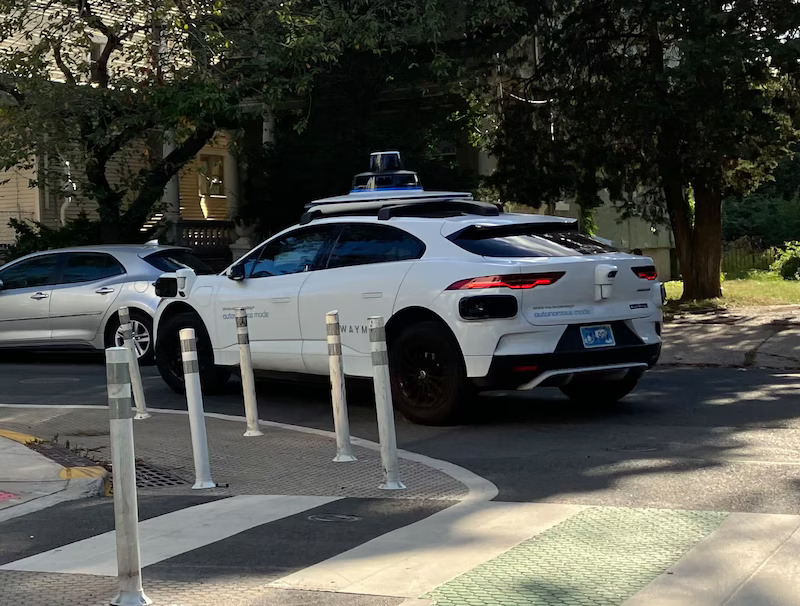
Learning-Based Routing for Autonomous Shuttles Under Stochastic Demand Using Generative Adversarial Imitation Learning and Reinforcement Learning
Hyun Kim, Branislav Dimitrijevic
Urban Science
Read the full article
https://doi.org/10.3390/urbansci10050287
| | | |
Influence of fracture orientation and aperture on grouting reinforcement of fractured surrounding rock: Experimental and numerical study
Matthew O. Sonibare, Carol Mgiba, Oladoyin Kolawole
Geomechanics for Energy and the Environment
Read the full article
https://doi.org/10.1016/j.gete.2026.100834
| | | |
Induction-heated membrane distillation using Fe3O4-PANI-FAS-coated omniphobic membranes: antiwetting, antifouling, and mechanistic insights
Guangyu Zhu, Haodong Jia, Jing-An Lin, Jiahe Zhang, Tiezheng Tong, Shuyan Yu, Guillen Ianmarco, Wen Zhang
npj Clean Water
Read the full article
https://doi.org/10.1038/s41545-026-00591-6
| | |
Experimental and numerical simulation assessment of fracture evolution and tensile strength recovery in Grout-reinforced fractured surrounding rocks
Oladoyin Kolawole, Matthew O. Sonibare, Olufemi Olorode
Scientific Reports
Read the full article
https://doi.org/10.1038/s41598-026-57008-0
| | | |
Human‐in‐the‐Loop Swarms: A Bionic Swarm Approach to Real‐World Soil Mapping
Petras Swissler, Mohammadali Rashidioun, Nicholas Sahu, Raaid Kabir, Ayodeji Aderibigbe, Oladoyin Kolawole
Advanced Intelligent Systems
Read the full article
https://doi.org/10.1002/aisy.202501218
| | | |
A Review of PFAS Adsorption and Desorption in Saturated Soils: Roles of Mineralogy, Interfacial Chemistry, and Environmental Conditions
Jay N. Meegoda, Ravisha N. Mudalige, David W. Washington, Duwage C. Perera
Environments
Read the full article
https://doi.org/10.3390/environments13070359
| | |
Real-time workforce monitoring and management through robotic teleoperation, mobile multi-modal visual and auditory sensing, and edge deep learning analytics
Xi Hu, Rayan H. Assaad
Engineering Applications of Artificial Intelligence
Read the full article
https://doi.org/10.1016/j.engappai.2026.114729
| | | |
Bioelectricity-driven forward osmosis for energy-neutral nutrient and water recovery
Jinyu Liu, Xiong Bi, Zefang Huang, Bingxin Li, Yichuan Zhu, Lijie Zhang, Wen Zhang, Heyang Yuan
Environmental Science and Ecotechnology
Read the full article
https://doi.org/10.1016/j.ese.2026.100730
| | | |
Extraterrestrial rock mechanics and brittleness indices of simulated Martian rocks with implications for in-situ resource utilization on Mars
Carol Mgiba, Oladoyin Kolawole
International Journal of Mining Science and Technology
Read the full article
https://doi.org/10.1016/j.ijmst.2026.04.016
| | |
A New Methodological Framework for Bridge Deck Deterioration Modeling Based on National Bridge Element (NBE) Data
Min Yang, Yun Bai
Transportation Research Record: Journal of the Transportation Research Board
Read the full article
https://doi.org/10.1177/03611981261455030
| | | |
Role of environmental variables and meteorology on California’s largest wildfires
Md. Tushar Ali, Qauzi Hamidul Bari, Jobaer Ahmed Saju
Scientific Reports
Read the full article
https://doi.org/10.1038/s41598-026-59766-3
| | | |
OPA-Z: An Integrated Approach for Oil–Particle Aggregate Genesis, Settling, and Fragmentation
Jacqueline Esimike, Michel Boufadel, Wen Ji, Kelly McFarlin
Journal of Marine Science and Engineering
Read the full article
https://doi.org/10.3390/jmse14141263
| | |
Insights, risk distribution, and potential impact assessment using fuzzy logic of the Mw 7.7, March 2025 earthquake in Myanmar
Md. Al Amin, Quazi Hamidul Bari, Md. Tushar Ali
Acta Geophysica
Read the full article
https://doi.org/10.1007/s11600-026-01959-5
| | | |
Machine learning and response surface modeling for predicting strength loss of alkali-activated materials exposed to aggressive environment
Munir Iqbal, Sohaib Nazar, Muhammad Hasham Kashif, Muhammad Ashraf, Haji Sami Ullah
Innovative Infrastructure Solutions
Read the full article
https://doi.org/10.1007/s41062-026-02847-z
| | | |
MXene-Modified Forward Osmosis Membrane with Enhanced Water Flux and PFAS Rejection from Landfill Leachate
Mohammadali Vafaei, Guangyu Zhu, Alejandro J. Vargas, Bianca Deona, Lai Wei, Jing-An Lin, Meng-Qiang Zhao, Heyang Yuan, Wen Zhang, Lijie Zhang
ACS Applied Materials & Interfaces
Read the full article
https://doi.org/10.1021/acsami.6c08998
| | |
Occurrence of per- and polyfluoroalkyl substances (PFAS) and their precursors in biosolids across 15 U.S. states
Xiayan Ye, Amith Sadananda Maroli, Santhoshi Chitthaluri, Erin M. Driver, Rolf U. Halden, Arjun K. Venkatesan
Environmental Science and Pollution Research
Read the full article
https://doi.org/10.1007/s11356-026-38066-3
| | | |
Advancing sustainable aquaculture with a zero-valent copper filter system
Tingting Zhu, Wen Zhang, Junwei Zhang, Xia Liu, Yifei Wang, Siyu Zhang, Li Yan, Yunfei Tan, Ruiping Liu, Chengzhi Hu, Jiuhui Qu, Menachem Elimelech, Meng Sun
Nature Sustainability
Read the full article
https://doi.org/10.1038/s41893-026-01902-y
| | | |
VTECSeg: Edge-aware hybrid CNN-vision transformer network with zero-shot vision-language-guided region proposals for crack segmentation
Oscar Poudel, Xi Hu, Rayan H. Assaad, Wei Wang, Tommy Huang, Gavin Wang
Automation in Construction
Read the full article
https://doi.org/10.1016/j.autcon.2026.106998
| | |
Physics-Informed Neural Networks for Non-Recurrent Traffic Congestion Detection: A Case Study on the Seoul Ring Expressway
Woohun Jeon, Joyoung Lee, Jinguk Kim, Md Tufajjal Hossain
Symmetry
Read the full article
https://doi.org/10.3390/sym18081394
| | | |
Characterization and Optimization of an Intermediate-Scale Sonochemical Reactor Design
Targol Teymourian, Duwage C. Perera, Jitendra A. Kewalramani, Jay N. Meegoda
Water
Read the full article
https://doi.org/10.3390/w18162027
| | | |
Environmental Fate, Biological Interactions, and Toxicity Mechanisms of Engineered Nanoparticles (ENPs)
Christina M. Brenckman, Ashish D. Borgaonkar, William H. Pennock, Genoa R. Warner, Jay N. Meegoda
International Journal of Environmental Research and Public Health
Read the full article
https://doi.org/10.3390/ijerph23091103
| | |
Automated Elevation Clash Detection in Building Information Models (BIM): Application to Clearance Distances for Mechanical, Electrical, and Plumbing (MEP) Systems
Ghiwa Assaf, Rayan H. Assaad, Sara Fayek, Mohamad Awada
Construction Research Congress 2026
Read the full article
https://doi.org/10.1061/9780784486979.045
| | | |
Bridge Deterioration Forecasting with Deep Learning and Monte Carlo Simulation for Resilient Infrastructure Asset Management and Maintenance Planning
Ghadi Charbel, Rayan H. Assaad, Mohamad Awada
Construction Research Congress 2026
Read the full article
https://doi.org/10.1061/9780784487006.012
| | | |
Pavement Deterioration Prediction by Integrating Agent-Based Simulation and Transformer-Based Machine Learning Models for Smart Infrastructure Asset Management
Ghadi Charbel, Oscar Poudel, Mohamad Assaf, Rayan H. Assaad, Mohamad Awada
Construction Research Congress 2026
Read the full article
https://doi.org/10.1061/9780784486979.048
| | |
A Framework of RGB-Thermal Sensor Fusion with Zero-Shot and Prompt-Aware Deep Learning for Enhanced and Real-Time Thermal Anomaly Detection in Buildings
Xi Hu, Rayan Assaad, Jeritt Williams, Akshat Santhana Gopalan
Construction Research Congress 2026
Read the full article
https://doi.org/10.1061/9780784486962.038
| | | |
Assessing the Efficacy of Visual Programming in Developing Machine Learning Skills among Construction Engineering Students
Mohammad Khalid, Abiola Adegoke, Abiola Akanmu, Homero Murzi, Ibukun Awolusi
Construction Research Congress 2026
Read the full article
https://doi.org/10.1061/9780784486993.058
| | | |
A Comparative Evaluation of Mental Workload Associated with Artificial Intelligence-Driven Sensor Data Analytics in Construction
Mohammad Khalid, Abiola Adegoke, Abiola Akanmu, Ibukun Awolusi, Homero Murzi
Construction Research Congress 2026
Read the full article
https://doi.org/10.1061/9780784486993.057
| | |
Effect of AI Trainer Demographic Matching on Construction Safety Training Outcomes
Samuel Olatunbosun, Mostafa Namian, Mohammad Khalid, Chukwuma Nnaji
Construction Research Congress 2026
Read the full article
https://doi.org/10.1061/9780784486962.064
| | | |
AI-Assisted Autonomous Quadruped Mobile Robotic System Integrated with Thermal and Environmental Sensing for Real-Time Fire Hazard Detection and Mitigation in Construction and Facility Safety Management
Oscar Poudel, Rayan H. Assaad, Mohamad Awada
Construction Research Congress 2026
Read the full article
https://doi.org/10.1061/9780784486979.009
| | | |
BIM Augmented VR Teleoperation for Precise Robotic Arm Manipulation with Human-in-the-Loop in Low Level Construction Tasks
Oscar Poudel, Ghadi Charbel, Rayan H. Assaad, Mohamad Awada
Construction Research Congress 2026
Read the full article
https://doi.org/10.1061/9780784486979.010
| | |
Talk, See, Support (TSS): A Wearable Multimodal, Intelligent, Agentic LLM-Powered Construction Assistant for Real-Time On-Site Guidance and Compliance Monitoring
Oscar Poudel, Mohamad Assaf, Rayan H. Assaad, Mohamad Awada
Construction Research Congress 2026
Read the full article
https://doi.org/10.1061/9780784486962.010
| | | |
Hydrophobic
Ion Pairing with Cationic Surfactant Modifies
Surface Activity and Colloidal Behavior of PFAS
Bishnu Pandey, Ligaya Manalastas, Afaq Ahmad, Siwei Gu, William H. Pennock, Arjun K. Venkatesan
ACS ES&T Water
Read the full article
https://doi.org/10.1021/acsestwater.6c00707
| | | |
Microalgae-based bioremediation of heavy metals: Mechanisms, optimization, and environmental applications
Siwei Gu, Weihao Meng, Chuhui Zhang, Ruipeng Zhang, Christopher Q. Lan
Journal of Environmental Management
Read the full article
https://doi.org/10.1016/j.jenvman.2026.130734
| | |
Reactivity and environmental fate of emerging contaminants in wastewater treatment systems: A reactive continuum framework approach
Sushma Kumari, Santhoshi Chitthaluri, Arjun K. Venkatesan, N. Chandana
Chemosphere
Read the full article
https://doi.org/10.1016/j.chemosphere.2026.145024
| | | |
Determining Reactor Velocity Gradient Distribution for Baffled Hydraulic Flocculator Design
Andrew P. Pennock, John Bridgeman, William H. Pennock, Monroe Weber‐Shirk
AWWA Water Science
Read the full article
https://doi.org/10.1002/aws2.70065
| | | |
Intelligent Acoustic-Based IoT-Enabled Sensing and Monitoring System for Automated Real-Time Leak Detection, Localization, and Pinpointing in Water Distribution Infrastructures
Oscar Poudel, Mohsen Mohammadi, Ghiwa Assaf, Rayan H. Assaad
Journal of Infrastructure Systems
Read the full article
https://doi.org/10.1061/jitse4.iseng-2861
| | |
An Al/Cu2+ self-filtering galvanic cell for energy-neutral copper separation from acidic wastewater and in situ catalyst upcycling
Huanhuan Tang, Xinyu Li, Haotian Zhong, Mo Dong, Yiqi Tang, Zupei Wang, Jingan Lin, Jiahe Zhang, Guicheng Liu, Wen Zhang, Neil Arnold, Xinyang Li, Hong Yao
Separation and Purification Technology
Read the full article
https://doi.org/10.1016/j.seppur.2026.138973
| | | |
A Data-Driven Framework for Scenario-Based Safety Service Patrol Route Prioritization Using Historical Crash Data
Md Tufajjal Hossain, Joyoung Lee, Dejan Besenski, Jiyeon Ban, Lazar Spasovic
Applied Sciences
Read the full article
https://doi.org/10.3390/app16178894
| | | |
Occurrence of
Ultra-Short Chain PFASs in Bottled Beverages
and New Jersey Tap Water
Siwei Gu, Santhoshi Chitthaluri, Ebenezer Etsiwah, Bishnu Pandey, Arjun K. Venkatesan
Environmental Science &
Technology Letters
Read the full article
https://doi.org/10.1021/acs.estlett.6c00768
| | |
Age-group perspectives on large language models in the architecture, engineering, and construction industry: usage patterns, adoption expectations, trust, and future outlook
Andrew B. Park, Oscar Poudel, Zeyu Wu, Mohamad Awada, Rayan H. Assaad
Construction Management and Economics
Read the full article
https://doi.org/10.1080/01446193.2026.2732229
| | | |
Spatiotemporal variability, trends, and health risk assessment of ambient PM2.5 and PM10 in Bangladesh during 2018–2025
Rafi Bin Shahadat, Sayma Sultana Keya, Md. Tushar Ali
Environmental Geochemistry and Health
Read the full article
https://doi.org/10.1007/s10653-026-03506-z
| | | |
Tailored co-doped biochar by varying the N:B ratio as peroxymonosulfate activator for sulfamethoxazole degradation
Jing Zhang, Yixuan Gao, Shaobin Wang, Wen Zhang, Xu Zhang, Chaoyang Wang, Hongna Li
Biochar
Read the full article
https://doi.org/10.1007/s42773-026-00647-3
| | |
Flood inundation depth prediction using probability gating and building-focused deep learning
Ahmad ALBarqawi, Ahmad Ibrahim, Abdallah Khreishah, Christopher Testa, Michel Boufadel
Progress in Disaster Science
Read the full article
https://doi.org/10.1016/j.pdisas.2026.100678
| | | |
Interaction between Darcy flow and electroosmosis for surfactant transport and hydrocarbon removal in heterogeneous media
Rong Mao, Wen Ji, Anirban Dhulia, Meghana Parameswarappa Jayalakshmamma, Michel C. Boufadel
Water Research
Read the full article
https://doi.org/10.1016/j.watres.2026.126277
| | | |
Double-spiral TiO2 nanoflower fiber electrodes enable coating-free electrocatalytic membrane ozonation through field-driven interfacial •OH oxidation
Huanhuan Tang, Daoxin Yang, Fan Bai, Zehui Zhang, Mo Dong, Wei Huang, Wen Zhang, Hong Yao, Xinyang Li
Journal of Hazardous Materials
Read the full article
https://doi.org/10.1016/j.jhazmat.2026.143669
| | |
Ebullition-Enhanced
Release of Microplastics from
Aquatic Sediment to Overlying Water: An Overlooked Transport Pathway
Shengdong Liu, Zhuoqing Zhou, Yang Li, Xinghui Xia, Xinjie Wang, Jiahe Zhang, Baoshan Xing, Shoichiro Hamamoto, Peng Zhang, Wen Zhang
Environmental Science &
Technology
Read the full article
https://doi.org/10.1021/acs.est.6c06432
| | | |
Reliable journey planning in multimodal networks under travel time uncertainty
Mei Xiao, Yanan Zhang, Steven Chien, Ching-Jung Ting, Liang Zhang
Proceedings of the Institution of Civil Engineers - Transport
Read the full article
https://doi.org/10.1680/jtran.26.00073
| | | |
SmartSwitchLight: Interpretable multi-agent reinforcement learning for adaptive traffic signal control via generative artificial intelligence based supervisory decision making
Abolfazl Afshari, Joyoung Lee
Engineering Applications of Artificial Intelligence
Read the full article
https://doi.org/10.1016/j.engappai.2026.116275
| | |
Evaluating RemBind amendments for reducing the leachability and extractability of PFAS in municipal sludge-derived pellets
Santhoshi Chitthaluri, Sudheera Yaparatne, Will Caldicott, Arjun K. Venkatesan
Journal of Hazardous Materials Letters
Read the full article
https://doi.org/10.1016/j.hazl.2026.100197
| | | |
Balancing interaction energy and collision frequency for engineering-efficient algal removal by covalently functionalized micrometer-scale magnetic particles
Lili Li, Liangjun Yang, Zimin Wang, Shaozhe Cheng, Haiyang Zhang, Wen Zhang, Xuezhi Zhang
Water Research
Read the full article
https://doi.org/10.1016/j.watres.2026.126566
| | | |
Noise-Invariant Agentic Human–Robot Interaction GenAI System Using a Dual-Encoder Contrastive ASR Architecture and VLMs for Robot Control and Navigation in Acoustically Challenging Jobsites
Oscar Poudel, Rayan H. Assaad, Mohamad Awada
Journal of Computing in Civil Engineering
Read the full article
https://doi.org/10.1061/jccee5.cpeng-7372
| | |
A CFD–VDROP framework for simulating oil droplet breakup in subwater jet blowouts: Implementation and validation
Zhaonian Qu, Fangda Cui, Cosan Daskiran, Joseph Katz, Michel Boufadel
Ocean Engineering
Read the full article
https://doi.org/10.1016/j.oceaneng.2026.128866
| | | |
A review of structural simulation of reinforced ultra-high performance concrete and high-performance fiber-reinforced cement-based composite members
Ronit Sthapit, Yi Shao, Matthew J. Bandelt
Engineering Structures
Read the full article
https://doi.org/10.1016/j.engstruct.2026.123074
| | | |
A review of structural simulation of reinforced ultra-high performance concrete and high-performance fiber-reinforced cement-based composite members
Ronit Sthapit, Yi Shao, Matthew J. Bandelt
Engineering Structures
Read the full article
https://doi.org/10.1016/j.engstruct.2026.123074
| | |
A CFD–VDROP framework for simulating oil droplet breakup in subwater jet blowouts: Implementation and validation
Zhaonian Qu, Fangda Cui, Cosan Daskiran, Joseph Katz, Michel Boufadel
Ocean Engineering
Read the full article
https://doi.org/10.1016/j.oceaneng.2026.128866
| | | |
Knowledge-informed neural network for reliable and explainable prediction of concrete strength
Tianjie Zhang, Hao Wang, Mathew P. Adams
Applied Soft Computing
Read the full article
https://doi.org/10.1016/j.asoc.2026.116348
| | | |
A review of structural simulation of reinforced ultra-high performance concrete and high-performance fiber-reinforced cement-based composite members
Ronit Sthapit, Yi Shao, Matthew J. Bandelt
Engineering Structures
Read the full article
https://doi.org/10.1016/j.engstruct.2026.123074
| | |
Recreational microplastics as emerging pollutants: effects of crumb rubber leachate across ecosystems
Sharon T. Pochron, Xiayan Ye, Amith S. Maroli, Arjun K. Venkatesan, Samy Sasoun, Thomas J. Gaylor, Mary Girgis, Morgan A. Jacobellis, Alec Miranda, Johanna A. Mitra, Grace Van Gelder, Samantha H. Byrne, Siddhartha Maharjan, Sayeed Khan, Jeffrey Dong, Zianya A. Gonzalez, Maria Nikakis, James Parker, Stephanie Reiter, Sasha Romero, Cameron Scheurich, Kellianne Ticcony, Yunjie Zhang, Kunyue Zhang, Wali Pirzada, Alex Casamassima, Matthew Abrego, Giselle Argueta, Kimberly Dallas, Tariq Khan, Kloey Kun, Yu Qin, Delaney Schoenfeldt, Fizah Shahid, Kenneth Wright, Kejia Xie, Sydney Sherbitsky, Sabrina Beckstead, Paxton Easton, Nathaniel Felicetti, Elaine Mei, John Corallo, Gavin Krois, Mackie Myers-Aldous, Rose von Eckartsberg
Chemosphere
Read the full article
https://doi.org/10.1016/j.chemosphere.2026.145034
| | | |
A review of structural simulation of reinforced ultra-high performance concrete and high-performance fiber-reinforced cement-based composite members
Ronit Sthapit, Yi Shao, Matthew J. Bandelt
Engineering Structures
Read the full article
https://doi.org/10.1016/j.engstruct.2026.123074
| | | |
Lessons Learned from a Pilot Study of the Relationship Between Rainfall and Levels of 1,4-Dioxane and Metals in Water Bodies Adjacent to Superfund Sites on Long Island, New York, USA
Sarah Grace Frueh, Jessica Alfano, Wil Cruz-Ruiz, Lissa Fortes Soares, Sheryl Jeanty, Janroy Caraan, Dimitrios E. Bakatsias, Brian Haldenwang, Roxanne Karimi, Xiayan Ye, Sudheera Yaparatne, Arjun K. Venkatesan, Carrie A. McDonough, Henry J. Bokuniewicz, Christopher J. Gobler, Kevin A. Reed, Jaymie R. Meliker
International Journal of Environmental Research and Public Health
Read the full article
https://doi.org/10.3390/ijerph23091173
| | |
NJ Transit
NJIT Scope of Work for NJ TRANSIT SMART Artificial Intelligence for Light Rail and Grade Crossing Safety (Stage I)
Principal Investigator: Yun Bai
Department: Civil and Environmental Engineering
Duration: Sunday, February 1, 2026 to Thursday, December 31, 2026
| | | |
Global Scholars
Pushing the Limits of Depth Filtration
Principal Investigator: William H. Pennock
Department: Civil and Environmental Engineering
Duration: Wednesday, April 1, 2026 to Saturday, March 31, 2029
| | |
NJ Dept. of Transportation
Technology Transfer and Implementation Program-1
Principal Investigator: Matthew J. Bandelt
Co-Principal Investigator: Matthew P. Adams
Department: Civil and Environmental Engineering
Duration: Wednesday, March 25, 2026 to Tuesday, March 25, 2031
| | | |
N.J. Dept. Of Environmental Protection
Flushing PFAS and metals from groundwater
Principal Investigator: Michel Boufadel
Department: Center for Natural Resources
Duration: Friday, July 31, 2026 to Sunday, July 30, 2028
| | |
US Dept Of Transportation
Sustainable Use of Steel Slag in Concrete and Cement for Transportation Infrastructure
Principal Investigator: Matthew P. Adams
Co-Principal Investigator: Matthew J. Bandelt
Department: Civil and Environmental Engineering
Duration: Monday, August 11, 2025 to Tuesday, August 10, 2027
| | | |
NJ Dept. of Transportation
E-Commerce Delivery Mitigation
Principal Investigator: Branislav Dimitrijevic
Co-Principal Investigator: Dejan Besenski
Department: Civil and Environmental Engineering
Duration: Wednesday, July 1, 2026 to Friday, June 30, 2028
| | |
NJ Dept. of Transportation
Task SP202.004.27 FY2027 NJTPA Travel Model Applications
Principal Investigator: Branislav Dimitrijevic
Co-Principal Investigator: Dejan Besenski
Department: Civil and Environmental Engineering
Duration: Wednesday, July 1, 2026 to Wednesday, June 30, 2027
| | | |
NJ Dept. of Transportation
Study on Production Rates in NJDOT Construction Scheduling Manual
Principal Investigator: Rayan Hassane Assaad
Department: Civil and Environmental Engineering
Duration: Thursday, July 31, 2025 to Friday, July 30, 2027
| | |
Houston-Galveston Area Council
H-GAC TELUS Maintenance and Technical Support
Principal Investigator: Branislav Dimitrijevic
Department: Civil and Environmental Engineering
Duration: Thursday, August 1, 2024 to Monday, March 1, 2027
| | | |
United States Department of Labor
Data-informed Heat Stress Prevention Training in Construction
Principal Investigator: Mohammad Khalid
Department: Civil and Environmental Engineering
Duration: Wednesday, September 30, 2026 to Wednesday, September 29, 2027
| | |
ANS Geo, LLC
ANS Geo Technical Project
Principal Investigator: Oladoyin Kolawole
Department: Civil and Environmental Engineering
Duration: Monday, September 1, 2025 to Tuesday, August 31, 2027
| | |
Editors & Contributors
Taha F. Marhaba
Tracey Regan
Sylvana Brito-Rodriguez
Yukthi Sangoi
| | | |
Special Thanks
NJIT Office of Strategic Communications
NJIT Office of Alumni Relations
Contributing Faculty, Staff, Students, & Alumni
| | | | |