|
Shortly after the State announced that they would sue Huntington Beach in its refusal to make land available for 13,368 affordable housing units, the City beat California to the punch. On March 9, the City filed its own lawsuit in federal court against the State over the number of housing units it is required to build.
Unwanted Urban Community
Huntington Beach Mayor, Tony Strickland said “the state’s goal is to ‘urbanize California’ by mandating an amount of housing that would turn suburban communities like Huntington Beach into dense urban landscapes like Los Angeles and San Francisco. Our citizens don’t want to live in an urban coastal community.”
Yorba Linda Rejects Urban Community
The majority of Yorba Lindans do not want to become an urban community either and are thankfully blessed with Measure B, the Right to Vote on and Use Amendment.
After the Yorba Linda City Council approved the Housing Element last year, residents rejected the rezoning of 19 parcels, voting NO to approve on Measure Z, by 75%. It was a loud and clear message to the Council and the City to find alternative solutions.
How our city will address this issue is still unknown. Their first approach was a proposal to hire FM3 Research Associates, Inc. to convince residents that high density is good for Yorba Linda. It was met with strong resident disapproval and was removed from the agenda.
How It Really Works
Officials are quick to tell residents that you only need to allocate the space for affordable housing and it may never be built. The reality is that such developments are in demand and are often quickly snapped up. The next step for the developer is to find council members that are pro-development and contribute to a political action committee that will fund their candidacy. Housing affiliates often get involved to fund those campaigns. Once elected or re-elected, the developer will expect a quid pro quo vote to favor a development and hopefully allow for higher end units that are more profitable.
From there, plans only need to be presented at the planning commission desk for approval unlike what residents face when they want to build or improve their homes. Not only do high density projects change a city but they may also change the Council as many will now strongly favor development. If Yorba Linda did not have Measure B, the Housing Element would have most likely received Council approval.
A perfect example of the above political methodology is Heritage Crossings that was approved in 2015 by Gene Hernandez, Craig Young and Tom Lindsey. Lindsey admitted that he did not understand the proposed units he was voting on. The developer was given a pass on low-low units which are the most difficult to achieve and less profitable to the builder.
An Unwanted, Council-Approved Beacon
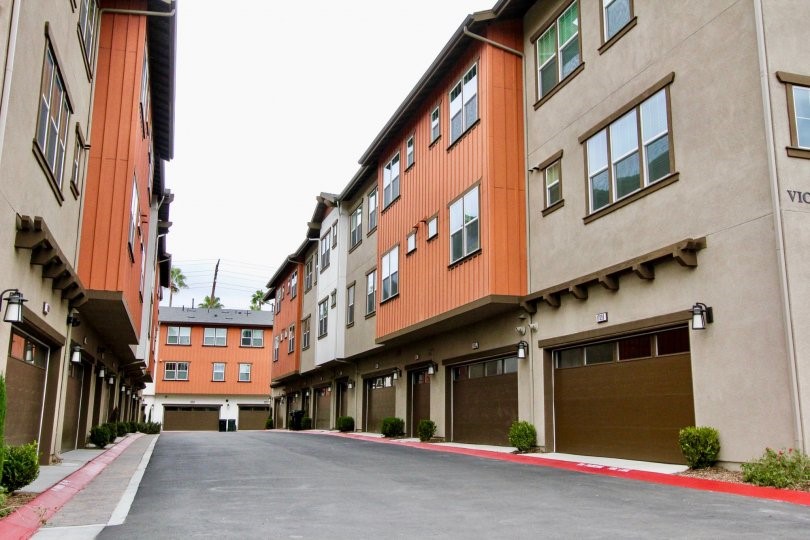
Heritage Crossings is a three-story maze located at Prospect and Yorba Linda Blvd. It has no elevator, no play area and only two small barbeques. It towers over older homes and longtime residents that will no longer have sun or privacy in their backyards. It stands as a beacon as to what the majority of residents do not want.
|