|
“Play is often talked about as if it were a relief from serious learning. But for children, play IS serious learning. Play is really the work of childhood.” ~ Fred Rogers
Welcome to the nature & play newsletter, which offers actionable ideas, resources, and research that support child-led play and nature connection for educators and families in ELRCs 8, 9, and 10.
| | |
Observation and Assessment Tools for Your Program's Environment
Looking for ways to observe or assess how your program supports nature- and play-based practices? Below is a list of tools designed to help programs reflect on their current environments and practices and identify next steps.
Observation and assessment play an important role in early childhood programs—they help make learning visible, supports intentional decision-making, and provides a shared language for reflecting on quality. When it comes to outdoor play and nature-based learning, observation and assessment tools can highlight strengths, uncover opportunities for growth, and guide meaningful, sustainable changes over time.
While only one of the tools listed is currently an approved Program Observation Tool for STARS indicators EC 3.4.5 and EC 3.4.6, all of them can be valuable resources for supporting your program’s movement toward more play, nature, and child-centered learning.
| | | |
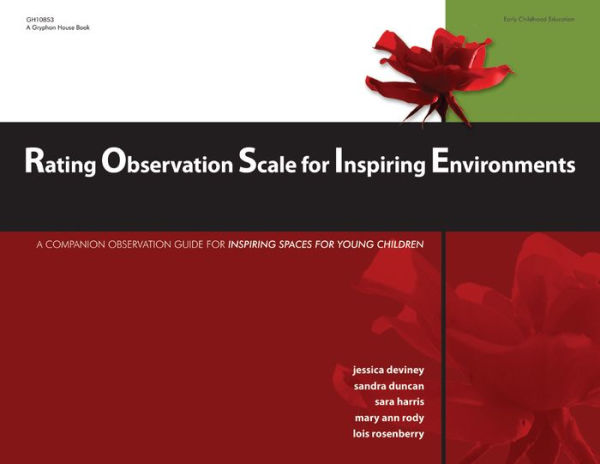
ROSIE (Rating Observation Scale for Inspiring Environments): An approved POI in PA
An observation tool designed to help early childhood programs evaluate how well their indoor and outdoor environments support play, creativity, and child-led learning. The scale focuses on elements such as open-ended materials, flexible spaces, and opportunities for exploration and engagement. ROSIE helps programs identify strengths and areas for growth while supporting environments that inspire curiosity and meaningful learning experiences.
Learn more on the PA Keys website here.
| |  | |
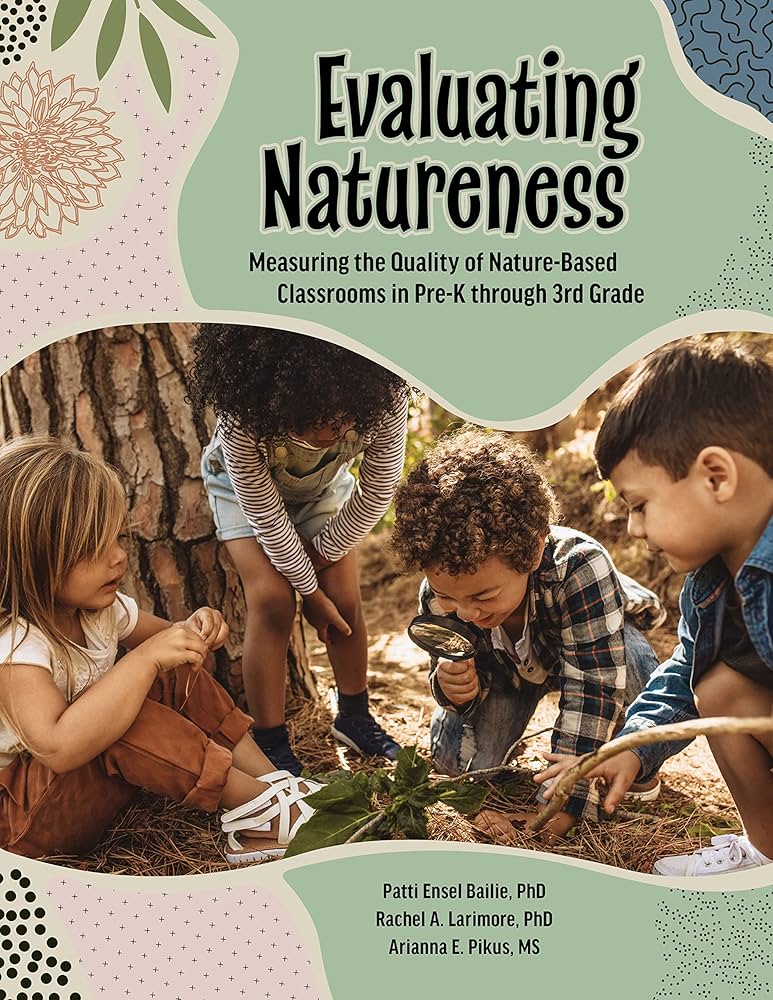
NAture-Based Environment Rating Scale (NABERS)
This is the first tool to specifically address the features of nature-based education. Nature-based early childhood education is the blending of early childhood and environmental education and the NAture-Based Education Rating Scale (NABERS) tool focuses specifically on the overlap between these two disciplines. As such, NABERS does not address measures of quality related to early childhood in general, but rather those practices specific to the nature-based approach.
Learn more about NABERS here.
| | | |
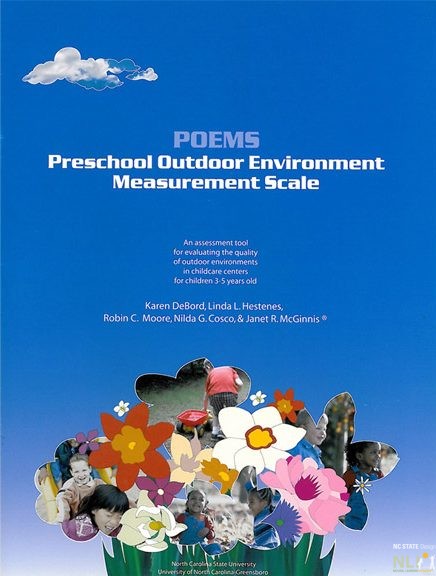
Preschool Outdoor Environment Measurement Scale (POEMS)
The objective of the instrument is to provide a valid, reliable tool for assessing the quality of outdoor environments and their use and at the same time provide guidance to childcare professionals and site administrators to assist them in making improvements. The instrument is structured with five domains, which contain 54 assessment items scored dichotomously (present/not present). Guidance is provided for possible actions to improve environments based on the domain/item scores.
Learn more about POEMS here.
| | | |
Childcare Outdoor Learning Environments Quality Tool (COLEQT)
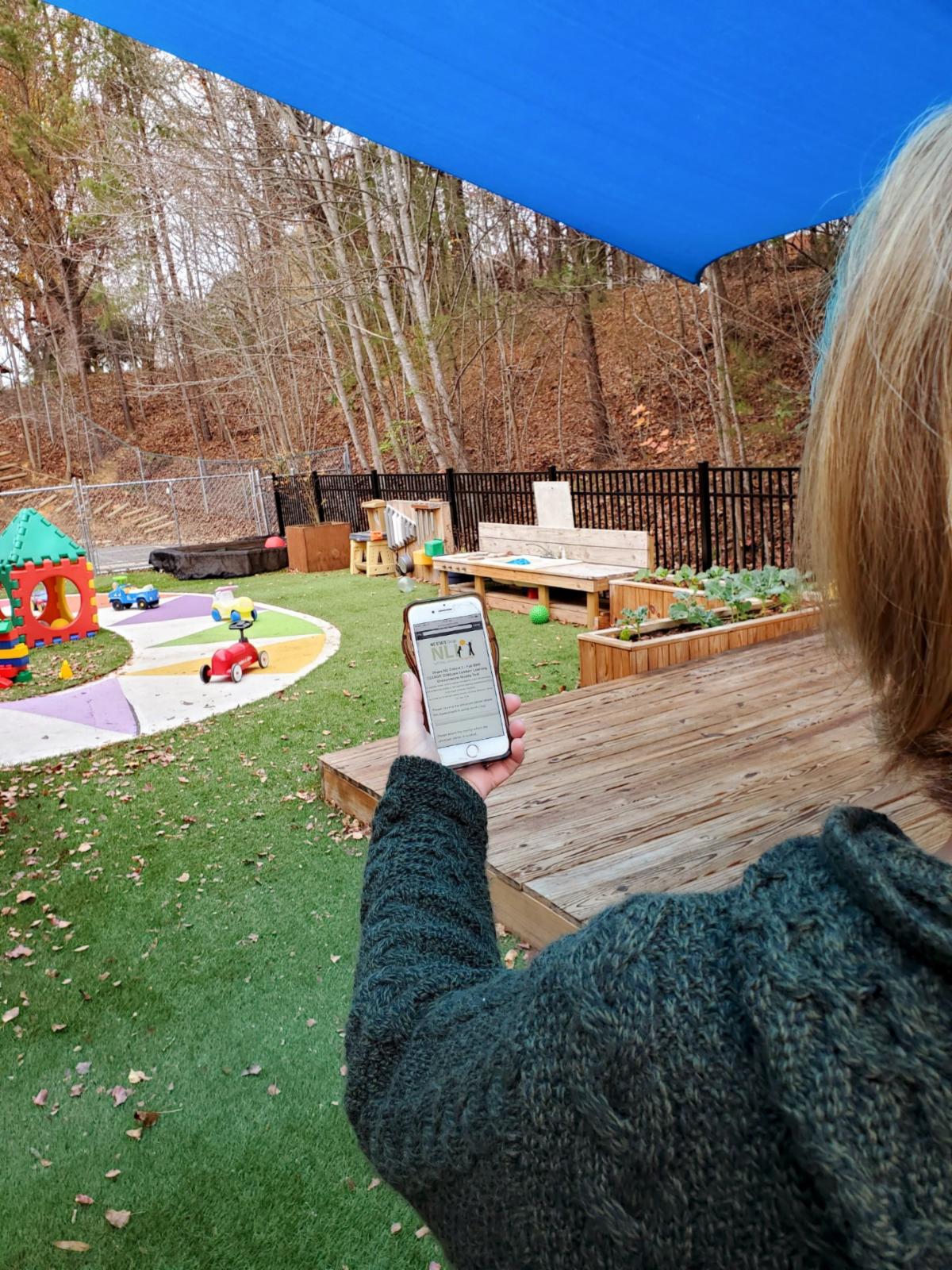
This is a portable tool aimed at assessing outdoor learning environments (OLE) quality across four levels of 13 built environment activity settings considered to be strongly supportive of healthy child development. This training is an introduction to the Childcare Outdoor Learning Environments Quality Tool (COLEQT). The objective of the instrument is to provide a valid, reliable tool for assessing the quality of outdoor environments and their use and at the same time provide guidance to childcare professionals and site administrators to assist them in making improvements.
Learn more about COLEQT here.
| | | |
Tool for Observing Play Outdoors (TOPO)
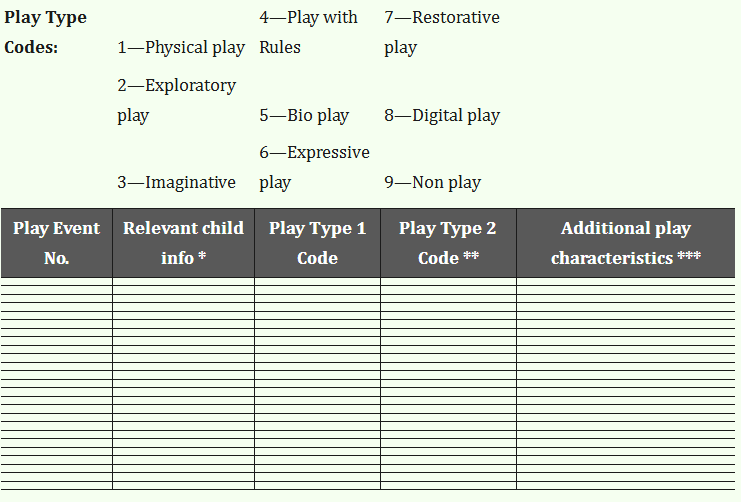
Tool for Observing Play Outdoors (TOPO) is a research-based observation tool developed through a multi-stage study to better capture children’s self-initiated play behaviors in outdoor environments. It categorizes play into nine types, including traditional forms of play as well as outdoor-specific categories such as bio play and restorative play. TOPO can be used to observe children’s play while also evaluating how well outdoor environments support diverse, high-quality play experiences and healthy development.
Learn more about TOPO here.
| | | |
Play Environment Rating Scale (PERS) and Creativity Environment Rating Scale (CERS)
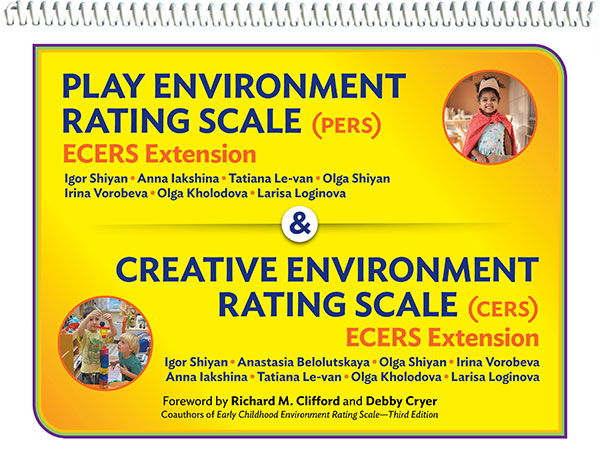
Combined into one book, these are two distinct environment rating scales designed to be used as extensions to the Early Childhood Environment Rating Scale® (ECERS-3)—one for supporting young children’s play (PERS) and one for supporting their creative abilities (CERS). Both scales are based on Vygotsky’s cultural-historical approach. Additionally, they are each structured and scored in the same manner as the Environment Rating Scale®. PERS and CERS can be used in both preschool and kindergarten classrooms to take a deeper look at specific aspects of quality and to provide guidance for improving conditions to support children's development.
Learn more about PERS and CERS here.
| | |
The Impact of Classroom Design on Play-Based Learning in Public School Settings | Understand the importance of classroom design in promoting play-based learning in public schools, with insights on layout, materials, and strategies to enhance student development. | | | |
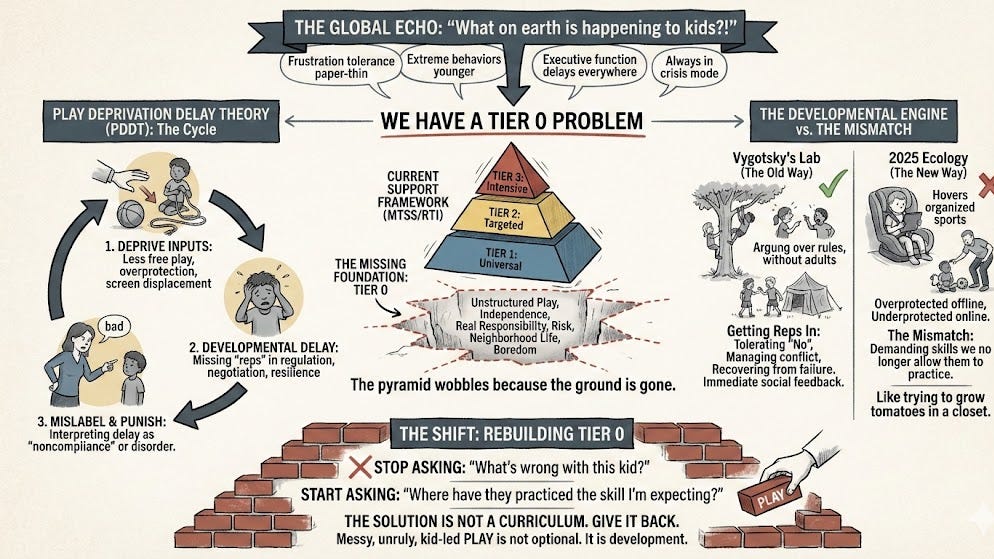
We Have a Tier 0 Problem: The Missing Layer of Childhood | Play Deprivation Delay Theory starts from the uncomfortable observation that in many places, it isn’t. At least not in the way it used to be. If you build a beautiful three-tier system on top of a childhood that has lost enormous amounts of real play, you shouldn’t be shocked when the whole structure starts to wobble. We don’t just have a behavior problem. We have a broken foundation problem. | | | |
A future full of promise: Nature in early childhood | Children & Nature Network | Access to nature in the early years isn't optional. It's foundational. Read more about the why - and the how - in this article. | | | |
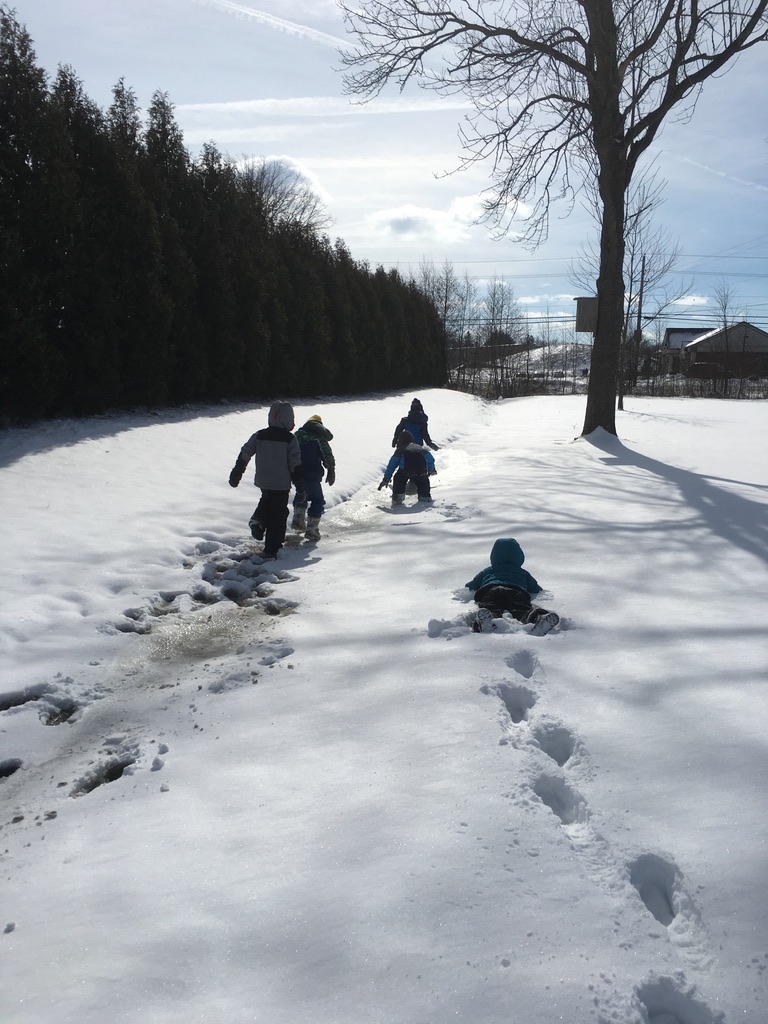
ICYMI: Flourishing in Winter: Guidance for Cold-Weather Play | Natural Start Alliance | This practitioner-informed handbook brings together insights from early childhood educators in Minnesota and Norway to offer practical, real-world guidance for supporting outdoor play in cold climates. Developed by the University of Minnesota Duluth with the Natural Start Alliance, it’s a hands-on resource for extending outdoor learning through the winter months. | | | |
Natural Start Alliance's Recommendations for Licensing Outdoor Nature-Based (ONB) Early Learning and Child Care Programs (Feedback due March 20, 2026) | In October 2025, the Natural Start Alliance released Recommendations for Licensing Outdoor, Nature-Based Early Learning and Child Care Programs in draft form. Recommendations are now being sought from professionals with expertise in early learning policy, program delivery, and related fields, along with parents and caregivers, or anyone who prioritizes children's access to outdoor, nature-based early learning. Deadline to submit: March 20. | | | | Upcoming Professional Development | |
February 5, 2:00 - 3:30 PM | Born to Tinker: Supporting Infant Learning with Loose Parts | Early Childhood Webinars | Join Infant Mental Health & Early Years Specialist, Sophie Rayner-Grignon to discover how to become an active, responsive partner in play with infants. You’ll dive into the curious minds of babies, unpack common barriers, and reframe your approach to infant play through a developmental and trauma-informed lens. Leave with practical ideas, real-world examples, and a curated collection of next-step resources to help educators, infants, and their communities engage meaningfully with Loose Parts. | | | Winter 2026 Virtual Outdoor Learning Workshops - Outdoor Learning School & Store | | | |
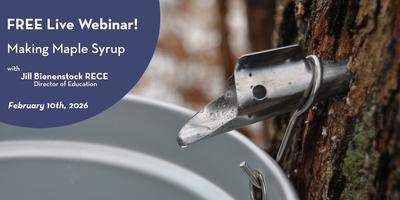
February 10, 7-8 PM | Making Maple Syrup | Bienenstock Natural Playgrounds | Learn the ‘in and outs’ of making maple syrup at your school or center. In this session, you will learn how to tap your trees on your playground to make maple syrup. We will review the equipment needed, identify the correct trees, and learn how to boil down your sap safely. Practical ideas from years of experience will support the success of this activity. | | | February 11, 2-3:30 PM | Beyond Behavior: Understanding Attention-Seeking in Young Children by Shelby Secoura, RECE | Ever wonder why some children seem to demand attention in ways that leave you feeling unsure or frustrated? In this workshop, we’ll uncover the hidden stories behind four distinct types of attention-seeking behaviors. You’ll learn to look beyond the surface and understand the why behind each child’s actions, helping you unlock new pathways to connection and care. As educators, it can be challenging when we’re unable to meet the needs of every child at once. | | | |
February 12, 2-3:30 PM | Books, Beats & Bonding: Fostering Connection Through Stories, Songs, and Play by Dr. Anne Meeker Watson, MT-BC | This engaging and interactive workshop will explore practical, joyful ways to nurture early literacy, emotional regulation, and social connection in young children through the powerful combination of carefully selected picture books, songs, rhythm, and rhyme. You’ll discover how these simple, everyday tools are deeply intertwined with social-emotional learning (SEL), providing a holistic foundation for development. We will delve into clear criteria for selecting rich picture book literature that captivates young minds and offers concrete opportunities for teaching a variety of essential skills. | | | |
Asynchronous: Creating a Natural Habitat for Learning | Teacher Tom | In this brand new 6-week course, you will learn how to transform your preschool (or your home) environment into a true "co-teacher" and ally, and stop feeling trapped and frustrated by its limitations. | | | | Upcoming In-person Conscious Discipline Trainings | | |
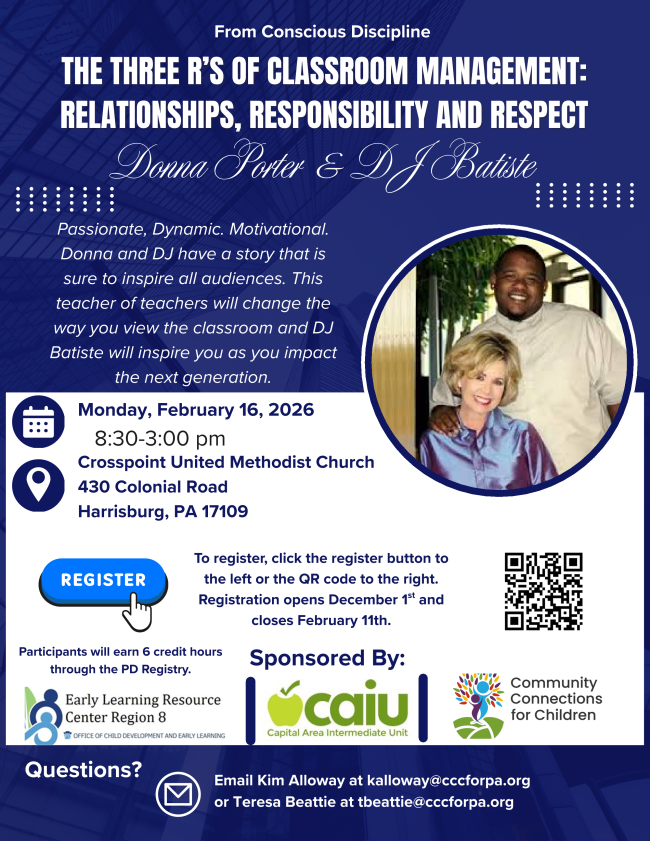
The Three R's of Classroom Management: Relationships, Responsibility and Respect
Monday, February 16, 8:30-3:00 Crosspoint United Methodist Church, Harrisburg, PA
| | |
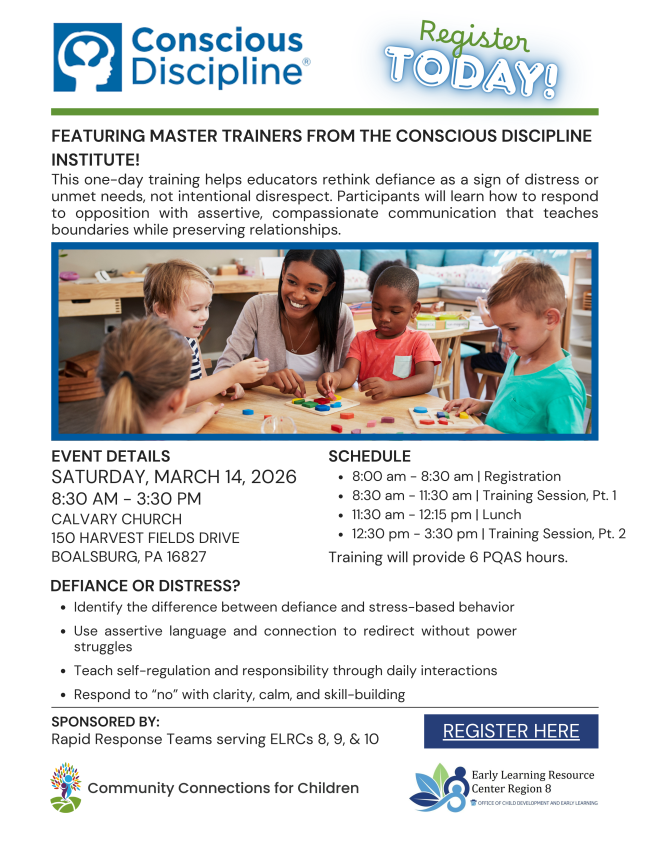
Defiance or Distress?
Saturday, March 14, 8:30-3:30
Calvary Church, Boalsburg, PA
| | |
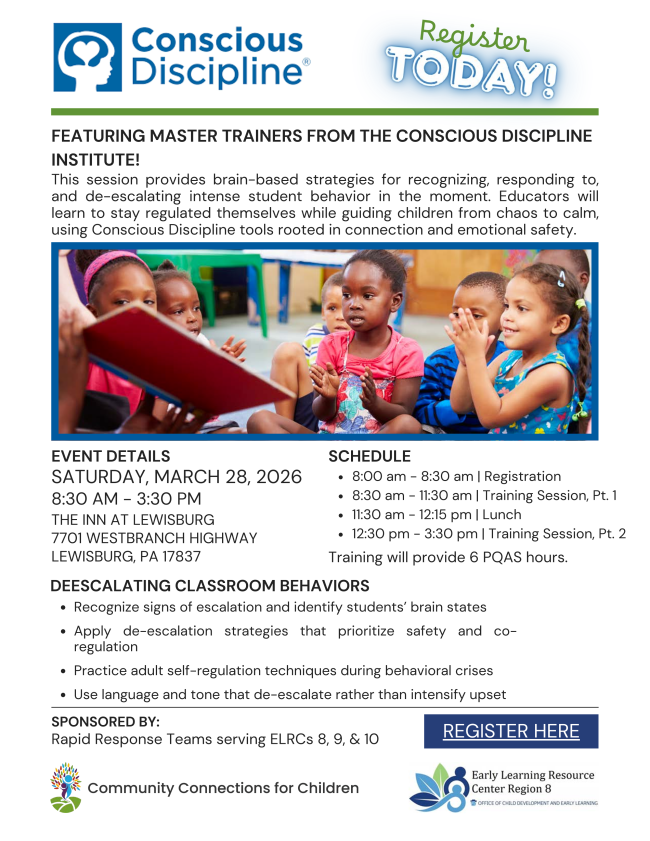
Deescalating Classroom Behaviors
Saturday. March 28, 8:30-3:30
The Inn at Lewisburg, Lewisburg, PA
| |
Ep 23 | Seasons of Play with Rusty: Tips for WINTER Outdoor Fun - Rusty Keeler | Welcome to Season 2 of the Play Nature Podcast! A full circle around the sun. A new season of listening begins. Winter has arrived (at least in Ithaca, NY). Cold. Snow. Gray skies. And...PLAY. | | | |
#218: The Art of Transitions | Listen to this episode from The Everything ECE Podcast on Spotify. Transitions get a bad reputation: rushed, chaotic, stressful. But they don't have to be. In this episode, Carla explores a powerful mindset shift: transitions aren't the thing before the next thing. | | | |
Nature-Based Emergent Curriculum (1): Noting Nature's Timely Patterns | |
This episode kicks off a series focusing on nature-based emergent curriculum, which prioritizes child-led, experiential learning with nature. In this first episode in the series, Dr. Rachel A. Larimore focuses on the importance of noticing nature's rhythms to support planning for play possibilities.
*Make sure to check out parts 2-4 here!
| | | |
You Matter Too: A 5 Minute Reset for Teachers | Early childhood teaching is meaningful—and exhausting. In this episode, we slow things down and speak directly to infant, toddler, and preschool teachers about burnout, well-being, and the emotional weight of the work. Through real classroom scenarios and gentle, practical strategies, this episode offers a moment of validation, reflection, and support—without asking you to do more. This is a reminder that your well-being matters too. | | | | Access our Nature-Based Play Resource List on the Keystone Kids Go website. | | Check out the "Inspiring Nature-Based Early Learning" webinar here. This training counts for 1 hour of PQAS PD (and can count toward STARS indicator EC 3.4.6). | | | |
Quest for Quality Podcast
Part 1: The Benefits of Outdoor Learning and How to Start Small
Research shows that children thrive outdoors and have opportunities for learning, development and self-regulation that cannot be achieved indoors. In this podcast, Susan and Elizabeth discuss how nature play supports the health and well-being of children and adults alike, the features of an Outdoor Learning Environment compared to a playground, the barriers that may limit how much time children spend outdoors, and small-step solutions anyone can take to get started.
| | | | |
Quest for Quality Podcast
Part 2: Diving Deeper into Outdoor Learning Practices
In part 2 of this outdoor learning series, Susan and Elizabeth do a deeper dive into what outdoor play really looks like, including some additional areas you can set up, how to easily connect outdoor play to learning standards, and our role as the adult in this type of play-based, child-led exploration.
Click here for part 1 and 2 resources.
| | | Our Favorite E-Newsletters and Blogs | |
Looking for more information or coaching?
STARS Outdoor Learning Coach Elizabeth Marcello and Outdoor Learning & Play Consultant Susan Chlebowski can partner with you to provide center-based or individual classroom coaching and professional development in the topics of:
- Play pedagogy
- Outdoor learning environments
- Classroom management and challenging behavior support
-
Creating innovative solutions to barriers
Complete a "Consultation Request" through your PD Registry Organization Page's Keystone STARS tab to request coaching.
*For early learning providers in ELRCs 8, 9, and 10 only.
| | | Keep in Touch with Community Connections for Children! | | | | |