JUNE 29, 2026

Arizona Supreme Court Takes Cautious Approach in Maricopa Election Dispute


The Arizona Supreme Court's June 23, 2026 order in the ongoing dispute between Maricopa County Recorder Justin Heap and the Maricopa County Board of Supervisors has generated significant discussion, with both sides attempting to frame the decision in a favorable light. However, a close reading of the Court's order shows that there was no clear winner or loser.


While the Recorder's Office has sought to portray the ruling as a positive development, the reality is that the Supreme Court did not grant the emergency relief Recorder Heap requested. At the same time, the Court did not reject his arguments outright. Instead, the justices chose a middle path focused on preserving election stability while gathering additional information before making any substantive decisions.


The dispute stems from an April 16 ruling by Maricopa County Superior Court Judge Scott Blaney, who issued an order defining the respective election responsibilities of the Recorder and the Board of Supervisors. The Board appealed that decision and successfully obtained a stay from the Arizona Court of Appeals, arguing that implementing major operational changes so close to the 2026 election cycle could create significant problems.


Recorder Heap then asked the Arizona Supreme Court to intervene and lift the stay. The Court declined to do so.


As a result, the Court of Appeals stay remains in place and Judge Blaney's order is not currently being implemented. This means the Recorder did not obtain the immediate relief he sought.


However, the Supreme Court also declined to simply deny the petition and walk away. Instead, the justices retained the matter, allowed settlement discussions to resume, and ordered expedited briefing on several important election administration issues.


Perhaps the most revealing aspect of the order is the Court's focus on operational concerns rather than political or legal arguments. The justices requested additional information regarding election deadlines, ballot drop box authorization, replacement ballot sites, Election Day tabulation, chain-of-custody procedures, provisional ballots, and the possibility of duplicate election processes.


These questions suggest the Court's primary concern is ensuring elections are conducted in an orderly, transparent, and reliable manner rather than determining which side can claim a legal victory.


The order repeatedly references election timelines and operational realities. Courts have long been reluctant to make significant changes to election procedures as elections draw closer, recognizing that last-minute changes can create confusion for election officials, poll workers, candidates, and voters.


The Supreme Court also appeared open to the possibility of a middle-ground solution. By asking about "tailored interim relief" and "discrete operational risks," the Court signaled that it may ultimately seek a solution that addresses specific concerns without fully adopting either side's position.


Another significant development is the Court's decision to allow settlement negotiations to resume. This may ultimately prove more important than any immediate ruling. Election administration requires ongoing cooperation between the Recorder and the Board of Supervisors, and a negotiated solution could provide a more durable resolution than prolonged litigation.


For now, the legal landscape remains largely unchanged. The Court of Appeals stay remains in effect, the Superior Court order is paused, and the parties have been directed to provide additional information before the Supreme Court determines its next steps.


The bottom line is straightforward: despite efforts by some to spin the ruling as a victory, the Supreme Court did not endorse either side's position. Instead, the Court hit the pause button, prioritized election stability, and made clear that before any significant changes are made, the justices want a complete understanding of how those changes could affect the administration of the 2026 elections.


In short, this was not a victory for the Recorder, nor was it a victory for the Board. It was a win for the voters - the stay stays in place.

Federal Judge Weighs End to 13 Years of Oversight at Maricopa County Sheriff's Office


After more than a decade of federal oversight, a judge is now considering whether the Maricopa County Sheriff's Office (MCSO) has made enough progress to finally end court supervision stemming from the agency's racial profiling case under former Sheriff Joe Arpaio.


During a hearing Friday, attorneys for Maricopa County argued that the purpose of the federal monitor has been fulfilled. They told the court that MCSO has corrected the constitutional violations that originally led to the lawsuit and that continued oversight is no longer necessary.


The U.S. Department of Justice largely agreed, stating that the sheriff's office has substantially complied with the court's orders and that federal oversight should come to an end.


The American Civil Liberties Union (ACLU), however, urged the court to proceed cautiously. While acknowledging that some reporting requirements could potentially be reduced, the organization argued that ending oversight entirely would be premature.


"If we were to terminate reforms today, it would not only be premature, but it would put the plaintiff class at risk of losing the relief that they won," said Jenn Rolnick Borchetta, deputy project director on policing for the ACLU.


U.S. District Judge G. Murray Snow did not immediately rule, saying the decision involves numerous complex legal and practical considerations.


Maricopa County Sheriff Jerry Sheridan did not attend the hearing, but Maricopa County Supervisor Debbie Lesko was present in the courtroom.


A Long Road Since the Arpaio Era

The federal case began after allegations that the sheriff's office, under then-Sheriff Joe Arpaio, engaged in unconstitutional racial profiling during immigration enforcement operations. The ACLU filed a class-action lawsuit on behalf of Latino drivers, and in 2013 the court appointed an independent federal monitor to oversee sweeping reforms within the agency.


For years, MCSO steadily improved its compliance with dozens of court-ordered requirements governing training, internal investigations, supervision, and constitutional policing.


Recent Report Raises Concerns

Despite years of progress, the most recent monitor's report concluded that MCSO has regressed in several areas where it had previously achieved full and effective compliance.


Among the concerns cited were internal disciplinary decisions within the Professional Standards Bureau. The monitor criticized leadership for considering reducing the mandatory termination penalty for an off-duty employee who received a DUI citation. The report also questioned decisions surrounding an internal investigation in which a bureau commander was allowed to have an attorney present during questioning, contrary to department policy.


The monitor concluded that these actions reflected serious departures from established policies, stating they represented "concerted efforts to break the rules, ignore policy and statute, and violate court orders."


Raul Pina, who has served on the Community Advisory Board for nearly a decade, called the findings disappointing.


"It's really sad to see us going backward," Pina said. "The PSB chaos is just an indicator of that, and it's very concerning."


Sheriff's Office Pushes Back

Sheriff Sheridan's administration disputes the monitor's conclusions.


MCSO argues the issues identified involve administrative decisions and internal personnel matters—not discriminatory policing or violations of constitutional rights.


In a written response, the sheriff's office stated:


"Reasonable people may disagree with administrative decisions. Those disagreements, however, should not be confused with a failure to investigate complaints, a refusal to follow the law, a disregard for constitutional policing, or the Court's Orders."


The sheriff's office has also asked the judge to reconsider aspects of the ongoing federal oversight. A separate hearing on that request is expected.


The Cost of Continued Oversight

One issue that continues to divide observers is the financial cost of the federal monitoring process.


The monitor has now overseen reforms for more than 13 years, with taxpayers paying millions of dollars over that time. Supporters argue those costs are necessary to ensure constitutional policing and to prevent the mistakes that led to the original lawsuit.


Critics, however, contend that every dollar spent on the federal monitor is a dollar unavailable for hiring deputies, improving response times, purchasing equipment, and other public safety priorities. They also argue that the monitoring process has become open-ended, with little incentive for the oversight to conclude even after substantial compliance has been achieved.


Whether Judge Snow agrees that the Sheriff's Office has reached the point where federal oversight is no longer necessary remains to be seen. His eventual ruling will determine whether one of the nation's longest-running court monitorships finally comes to an end or whether continued oversight remains necessary to ensure lasting reforms.

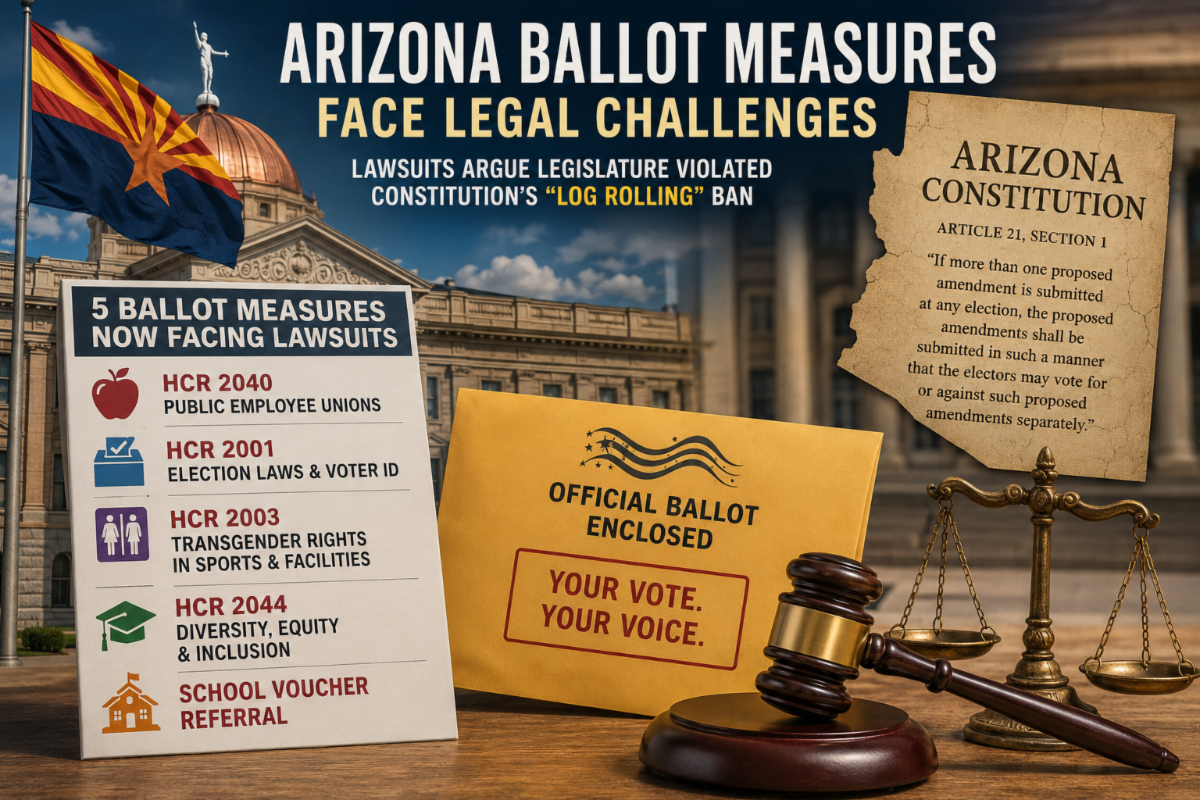
Arizona Ballot Measures Face Constitutional Challenges Ahead of November Election


Several high-profile ballot measures referred to the November ballot by the Republican-controlled Arizona Legislature are now facing legal challenges that could determine whether voters ever get the opportunity to decide them.


The legal challenges have been filed primarily by organizations opposed to the Legislature's referrals, including the Arizona Education Association and allied labor organizations, along with Will of the People, a political action committee created by Progress Arizona, a progressive advocacy organization. These groups generally oppose many of the Republican-backed policy proposals and argue the referrals violate Arizona's constitutional requirement that voters be allowed to consider separate constitutional changes independently. Legislative leaders and supporters of the referrals dispute those claims and have vowed to defend the measures in court, arguing that Arizona voters—not the courts—should have the final say.


While the referrals cover a wide range of topics—including election security, public employee unions, transgender rights, school vouchers, and diversity, equity and inclusion (DEI)—the lawsuits share one central argument: that lawmakers violated Arizona's constitutional prohibition against "log rolling."


What is "Log Rolling"?

Article 21, Section 1 of the Arizona Constitution requires that if more than one constitutional amendment is proposed, voters must be allowed to vote on each proposal separately.


Opponents argue lawmakers violated that requirement by combining multiple distinct policy changes into single ballot referrals, forcing voters to accept provisions they may oppose in order to approve others they support.


Arizona courts have struck down ballot measures in the past for violating the state's separate-amendment rule, making these lawsuits potentially significant before ballots are printed.


HCR 2040: Public Employee Unions

Perhaps the most closely watched lawsuit involves HCR 2040.


Republican lawmakers describe the measure as preventing taxpayer dollars from subsidizing labor unions. The proposal would prohibit school districts from financially supporting unions, bar union activities during working hours, prohibit teachers from distributing union communications while on duty, and prohibit public school teachers from striking.


Supporters argue the measure simply ensures public funds are used for educating students rather than supporting private organizations.


Opponents, including the Arizona Education Association and several labor organizations, argue one section extends far beyond teachers.


The lawsuit claims language prohibiting "this state or any political subdivision" from entering collective bargaining agreements could effectively eliminate collective bargaining for all public-sector unions, including those representing police officers, firefighters, and other government employees.


That concern has been echoed publicly by the Arizona Police Association, which warned the proposal could negatively affect law enforcement officers statewide.


Republican sponsors reject that interpretation, arguing the provision must be read in the context of school district employees and does not prohibit individuals from joining unions.


HCR 2001: Election Security

HCR 2001, sponsored by Representative Alexander Kolodin, combines several election-related reforms into one constitutional amendment.


Among its provisions are:

  • Requiring voter identification for every ballot cast, including mail ballots.
  • Requiring ballots to be tabulated at polling locations.
  • Restricting foreign nationals from influencing Arizona elections.
  • Additional election administration reforms.


Supporters argue the proposal would improve election integrity and voter confidence.

Opponents argue it combines several unrelated election policies into a single measure, violating Arizona's Constitution.


Critics have also questioned how Arizona's more than 80% of voters who vote by mail would comply with new identification requirements if the measure passes.


HCR 2003: Student Athletics and Privacy

Another lawsuit challenges HCR 2003, often referred to as the "Protect Girls' Sports" measure.


The proposal would require schools and athletic associations to separate athletic competition based on biological sex while also requiring bathrooms, locker rooms, and similar facilities to be used according to biological sex.


Supporters say the measure protects fairness in girls' athletics and preserves privacy in school facilities.


Opponents argue it improperly combines two separate policy questions—athletic participation and restroom access—into a single constitutional amendment.


The lawsuit also claims the measure's title is misleading because it references athletics while much of the proposal addresses access to private facilities for students who may not participate in sports.


HCR 2044: Diversity, Equity and Inclusion

Another challenge targets HCR 2044, which seeks to prohibit state government from spending public funds on programs that discriminate based on race, sex, ethnicity, or other protected characteristics.


Supporters argue the proposal reinforces equal treatment under the law and prevents preferential treatment based on identity.


Opponents contend many of the anti-discrimination provisions already exist under both federal and Arizona law and argue the referral uses those broadly supported concepts to advance more controversial restrictions on DEI training, educational programs, and workplace policies. They also argue portions of the proposal could infringe on First Amendment protections.


School Voucher Referral Also Challenged

Separate litigation has also been filed challenging another legislative referral dealing with Arizona's Empowerment Scholarship Account (ESA) program. That proposal would make it more difficult for future legislatures to impose additional restrictions on the state's universal school voucher system.


Supporters argue the amendment would protect school choice from political changes.

Opponents argue it improperly combines multiple policy changes into one referral and should not appear on the ballot.


What Happens Next?

The lawsuits will now work their way through Arizona courts over the coming months. Judges must determine whether the referrals satisfy the Arizona Constitution's separate-amendment requirement and whether voters are being asked to decide single subjects or multiple unrelated constitutional changes packaged together.


If the courts uphold the referrals, Arizona voters will decide the measures in the November election.


If the courts conclude the Legislature violated the Constitution's prohibition against log rolling, some or all of the referrals could be removed from the ballot before Election Day.


With constitutional challenges now pending, the legal battles may prove just as consequential as the political campaigns themselves, determining not only the future of several major policy proposals but also how far the Legislature can go when referring constitutional amendments to Arizona voters.

New Option Could Help Maricopa County Report Election Results Faster


One of the most common complaints about elections in Maricopa County is how long it takes to receive final results. While many factors contribute to the timeline, one of the biggest is the large number of voters who return their early ballots on Election Day.


Traditionally, voters who completed their mail-in ballots and waited until Election Day would place their signed and sealed ballot envelope into a drop box. While convenient, those ballots could not be tabulated immediately. Election workers first had to complete the signature verification process before opening and counting the ballots. Because hundreds of thousands of ballots can be returned this way, the process often takes several days and, in some elections, more than a week.


This year, Maricopa County voters have a new option that could help speed up election reporting.


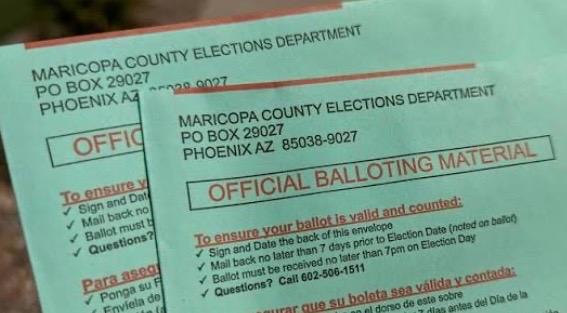
Voters who bring their completed early ballot to a voting location on Election Day can choose to present identification, remove their ballot from the affidavit envelope, and feed the ballot directly into the tabulator. The process takes only a few seconds and allows the ballot to be counted immediately rather than waiting in the signature verification queue.


The option is entirely voluntary. Voters who prefer to use a drop box may continue to do so. However, election officials hope more voters will take advantage of the new process because it reduces the number of ballots that must be processed after Election Day.


The change benefits both voters and election administrators. Voters receive confidence that their ballot has been accepted and counted, while election officials can provide more complete election results sooner.


No election system can produce final results instantly, especially in a county as large as Maricopa. However, small improvements can make a meaningful difference. If enough voters choose to tabulate their early ballots at voting locations rather than dropping them off in sealed envelopes, Maricopa County could significantly reduce the number of outstanding ballots after Election Day and provide faster election results for everyone.


For voters who wait until Election Day to return their early ballot, this new option is worth considering.

Arizona Deserves Better Representation


Serving in the Arizona Legislature is one of the most important public responsibilities in our state. Voters elect senators and representatives to show up at the Capitol, study legislation, debate important issues, and cast votes on our behalf.


Arizona legislators earn just $24,000 per year. While the salary is modest, the responsibility is enormous. Legislative session typically begins in early January and is intended to last about 100 days. In recent years, however, budget negotiations have routinely extended the session, with the Arizona Constitution requiring adjournment by the end of June.


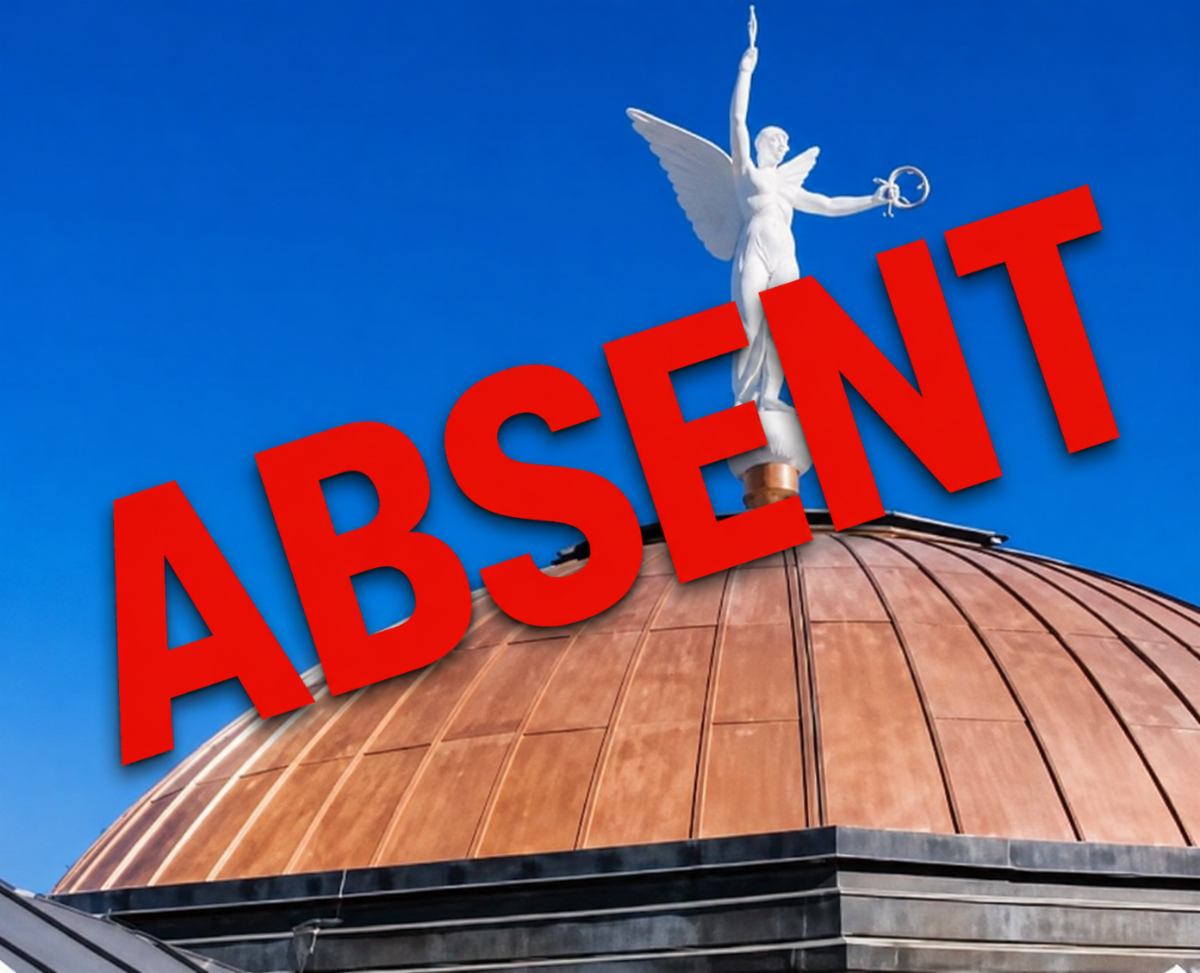
This year, one Arizona senator was absent for much of the legislative session. Over the course of the 65-day session, the senator was present and on time only 40 days, absent 18 days, and excused but seated for seven days. Out of 808 recorded votes, the senator missed 375—nearly half of all votes cast. Even a Senate Zoom meeting on June 25 was missed.


Every legislator has a personal life, and emergencies happen. But if most Arizonans missed this much work and failed to perform such a significant portion of their job, they likely would no longer be employed. Elected office should be no different.


Unfortunately, voters are not always able to hold elected officials accountable through elections alone. In some districts, incumbents face no challengers and are virtually guaranteed reelection. The recall process exists, but it requires citizens to bear the time and expense of gathering signatures.


Arizona should consider two reforms. First, increase legislative pay so more working Arizonans can afford to serve, broadening the pool of qualified candidates. Second, establish meaningful attendance standards with consequences for legislators who repeatedly fail to fulfill their duties.


Public service is a commitment to the people of Arizona. Showing up is the minimum expectation. Our state deserves legislators who are present, engaged, and willing to do the job they were elected to perform.


*I obtained the vote records and attendance records through a FOIA request.


Candidates Will Say Anything to Get Elected


Election season often brings bold promises, grand ideas, and campaign slogans designed to attract voters. Unfortunately, some candidates promise things they either know they cannot deliver or do not have the authority to accomplish. Voters should carefully examine not only what candidates promise, but whether those promises are actually within the powers of the office they seek.


A recent example is Zohran Mamdani. During his campaign for mayor of New York City, he made sweeping promises that energized supporters. Yet after taking office, he acknowledged that some of those promises could not realistically be fulfilled. While ambitious goals are understandable, voters deserve honesty about what an elected official can and cannot do.

The same issue can be found closer to home in Arizona. Candidates are making promises that sound appealing but fall outside the responsibilities of the offices they are seeking.


Take Elijah Norton, who has promoted the idea of conducting a Department of Government Efficiency (DOGE)-style audit. The problem is that such audits are not within the authority of the State Treasurer. In Arizona, audits are conducted by the Auditor General. The Treasurer manages the state's investments and finances, but does not direct or perform independent audits.


Likewise, Ralph Heap has stated that he would stop additional solar, wind, and battery projects. However, the Arizona Corporation Commission does not possess unilateral authority to prohibit entire categories of energy development. Energy infrastructure projects are subject to numerous laws, regulations, market conditions, and decisions involving multiple agencies and local governments. Suggesting that one commissioner can simply halt these technologies is misleading. Arizona is a proterty rights state. The commission cannot tell a property owner what they can and cannot do with their property.


One of the promises being made by Secretary of State candidate Alex Kolodin is that he would remove Arizona from the Electronic Registration Information Center (ERIC) on his first day in office. Critics argue that the pledge oversimplifies the process. While campaign promises often make for good soundbites, election administration in Arizona involves cooperation with the state's county recorders, who are responsible for maintaining voter registration records. Withdrawing Arizona from ERIC would not be a unilateral decision that could simply be accomplished with the stroke of a pen on day one, but would require the support of a majority of Arizona's county recorders.


Candidates from all parties and ideological backgrounds can be guilty of overpromising. Voters should expect more than catchy slogans and campaign rhetoric. They should expect candidates to understand the office they seek and to be honest about what they can realistically accomplish.


Promises that cannot be kept may win votes, but they ultimately erode public trust. Good government begins with candidates who tell voters the truth—even when the truth is less exciting than the promise.

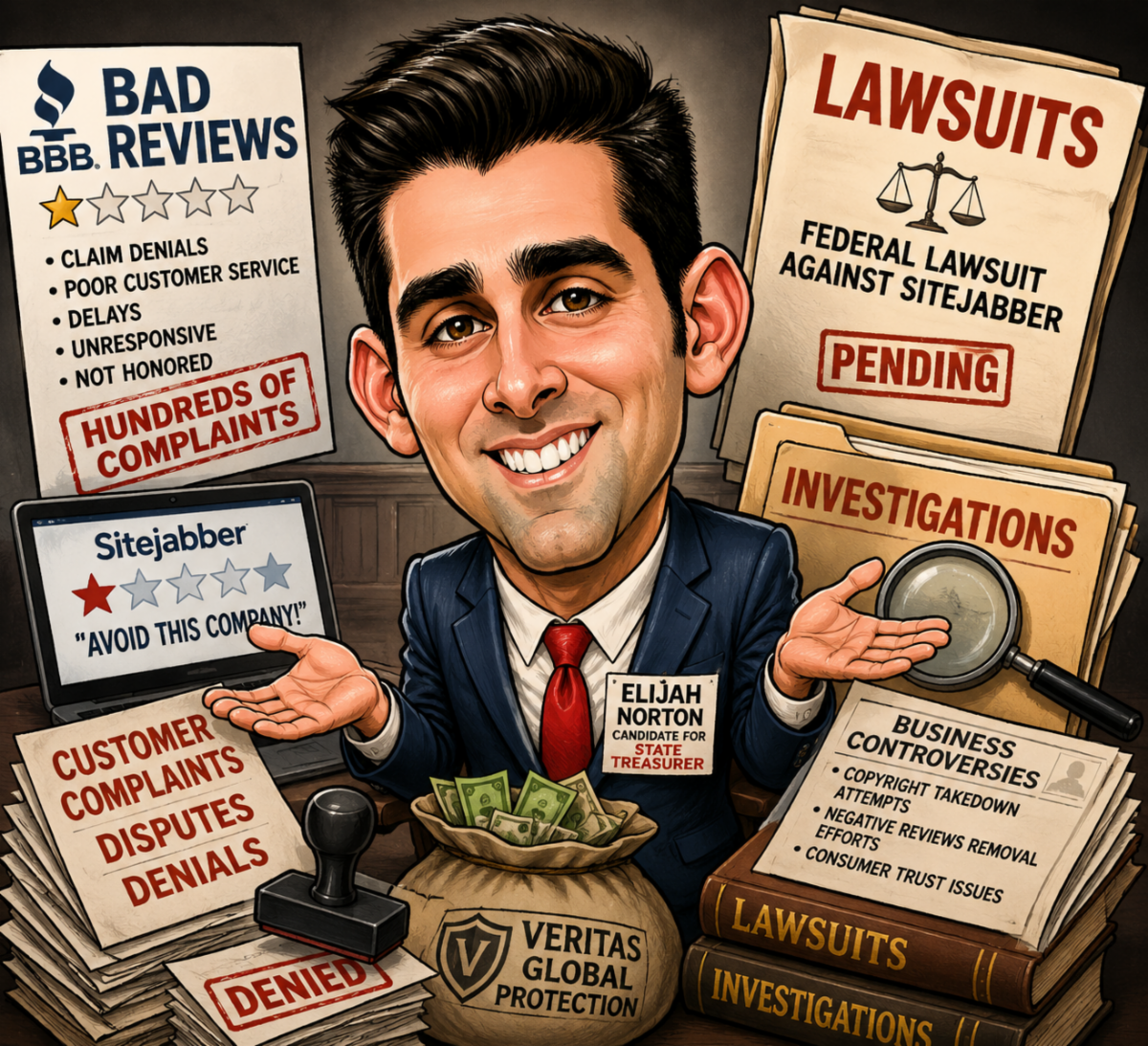
Business Controversies Surround State Treasurer Candidate Elijah Norton Draw Increased Scrutiny


As Arizona's Republican primary for State Treasurer approaches, candidate Elijah Norton is facing increased scrutiny over legal disputes and consumer complaints involving businesses he founded or has led.


Norton, a former Arizona Republican Party treasurer and CEO of Veritas Global Protection, has campaigned on his private-sector business experience, arguing that it uniquely qualifies him to oversee Arizona's multi-billion-dollar investment portfolio. His supporters point to his financial management background and experience running a national company.


Critics, however, have focused on a series of lawsuits, consumer complaints, and business practices connected to Veritas Global Protection.


One of the most significant ongoing legal disputes involves Veritas filing a federal lawsuit against the consumer review website Sitejabber after numerous negative customer reviews were posted about the company. The litigation seeks relief related to reviews posted on the platform and remains pending. Public reporting has also discussed allegations that the company attempted to remove unfavorable online content through copyright takedown requests, allegations the company has disputed. These are civil matters and should not be confused with criminal proceedings.


Consumer complaints have also become part of the discussion. Public records show hundreds of Better Business Bureau complaints and customer reviews concerning claim denials, delays, customer service, and warranty coverage disputes involving Veritas. Like many warranty companies, Veritas disputes many of those complaints and maintains that claims are evaluated according to contract terms.


Norton has also previously been involved in political litigation. During his 2022 congressional campaign, he was the target of campaign advertisements that led to defamation litigation, which was ultimately settled. That lawsuit involved campaign communications rather than his business activities.


To date, there is no verified public evidence that Elijah Norton has been criminally charged or that any government agency has announced a criminal investigation into him personally. Likewise, no state or federal prosecutor has publicly alleged criminal wrongdoing related to his campaign for State Treasurer.


The controversy nevertheless has become a political issue because the office of State Treasurer is responsible for safeguarding more than $30 billion in state investments. Opponents argue that voters should carefully examine a candidate's business record, while supporters contend that Norton's entrepreneurial experience makes him uniquely qualified for the position. The debate has become one of the defining issues in the Republican primary, alongside questions about investment management experience and financial stewardship.


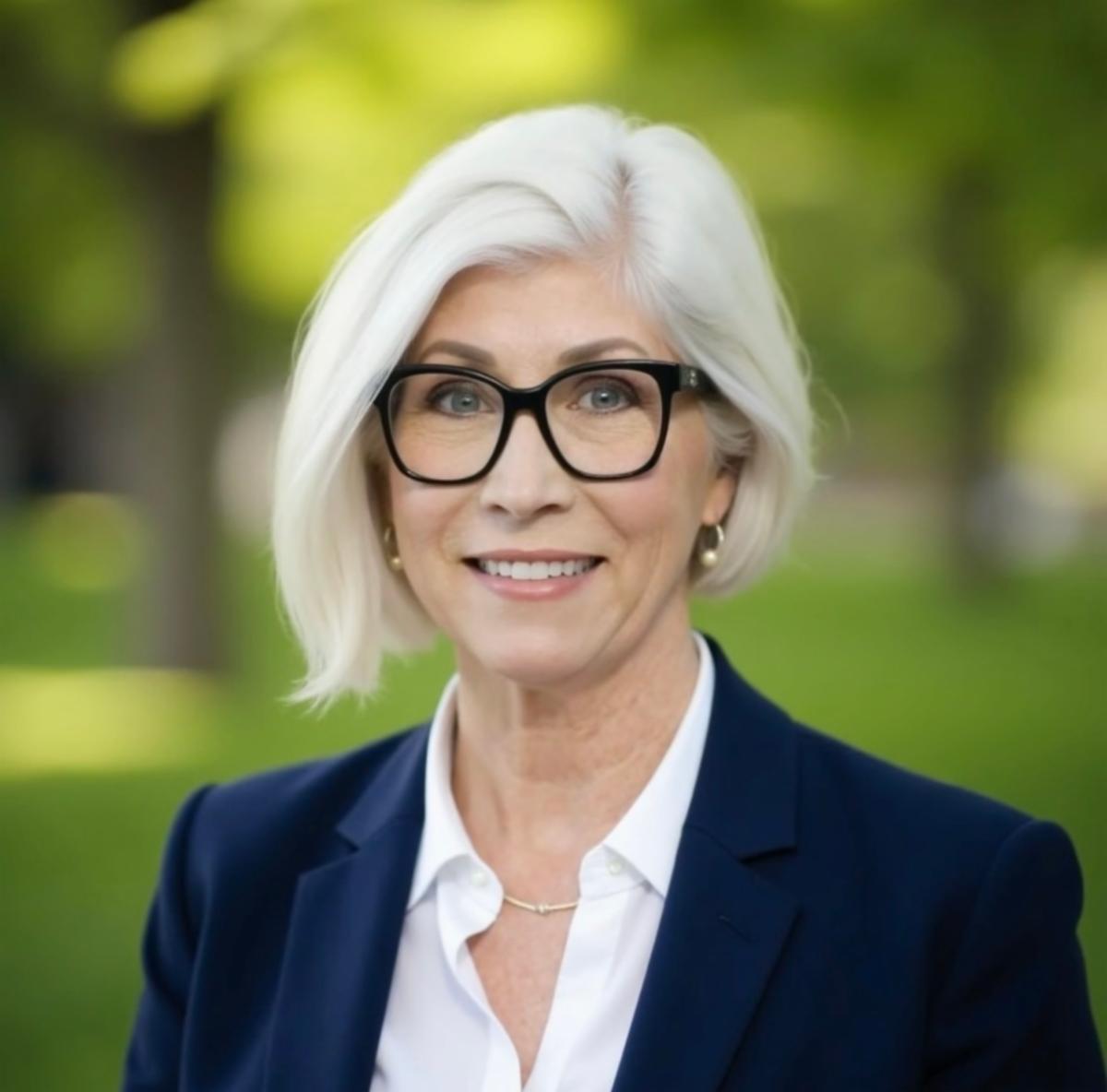
I am voting for Katherine Haley for Treasurer.

Maricopa County Approves FY 2027 Budget: Lower Tax Rates, Fiscal Discipline, and Focus on Core Services


The Maricopa County Board of Supervisors unanimously approved the Fiscal Year 2027 budget this week, adopting a $4.1 billion spending plan that emphasizes fiscal responsibility while continuing to fund the essential services county residents rely on every day.


For the sixth consecutive year, the Board voted to reduce the county's overall property tax rate. Although many homeowners may still see higher tax bills because of increasing property values—a factor determined independently of the Board—the county itself continues to collect substantially less than state law allows. According to county officials, Maricopa County's tax levy remains approximately $278 million below the maximum amount permitted under Arizona law.


County leaders highlighted that maintaining low taxes has remained a priority even as inflation has increased operating costs and the county has experienced rapid population growth.


Vice Chair Debbie Lesko noted that the budget demonstrates the county's commitment to keeping government efficient while protecting taxpayers. She emphasized that reducing the tax rate again this year reflects a continued effort to provide quality services without unnecessary tax increases.


One of the largest challenges facing the county is the growing cost of state-mandated programs. Nearly one-fifth of the county's General Fund is now devoted to obligations required by the State of Arizona, including indigent healthcare and juvenile corrections. Those mandated costs have increased by nearly 47 percent over the past five years, reducing the amount of discretionary funding available for local priorities.


Despite those pressures, county officials say the FY 2027 budget remains financially conservative. The budget maintains approximately two months of operating reserves to prepare for economic uncertainty while reducing the overall number of taxpayer-funded positions through efficiency measures and careful workforce management.


Maricopa County also continues to distinguish itself financially by avoiding general obligation debt while maintaining one of the lowest employee-to-resident ratios among comparable large counties. County leaders argue this demonstrates an emphasis on delivering government services efficiently rather than expanding bureaucracy.


The budget funds the wide range of services residents expect from county government, including public safety, elections, public health, transportation infrastructure, courts, animal care, flood control, parks, libraries, and human services. These functions serve more than 4.6 million residents across the nation's fourth-largest county.


The FY 2027 budget illustrates the balancing act facing county government today: absorbing rising inflation and increasing state-imposed costs while attempting to keep taxes low and maintain reserves for future economic uncertainty. Whether residents view the budget as a model of fiscal restraint or believe additional investments are needed in county services, the unanimous vote demonstrates broad agreement among supervisors on the county's current financial direction.


As Maricopa County continues to experience rapid growth, future budgets will likely face increasing pressure to expand services while preserving the conservative budgeting philosophy that has characterized the Board's recent financial decisions.

Thank you,

Lisa Everett


www.patriotnheels.com


Follow me on:

X - @patriotnheels

Facebook - @patriotnheels

Instagram - @patriotnheels