News and information to help journalists serve the public and stay safe.
July 24, 2020
Join moderator  Michael Days  of the Philadelphia Inquirer,  Libor Jany  of the Minneapolis Star Tribune, and  Jamiles Lartey  of the Marshall Project for a conversation with practical suggestions for “Covering Justice: Reimagining the cops, crime, courts beats.”

Registration is now open  for this program co-hosted by the National Press Club Journalism Institute and the News Leaders Association, on July 31, from 11:30 a.m.-12:30 p.m. EDT. 

The conversation will help journalists and the public understand: 

  • Daily decisions newsrooms could make differently, including the use of suspect descriptions, mug shots or coded language like ‘unarmed black man’ 
  • Short-term considerations, for example eliminating the crime blotter, explaining how police are funded or what it means to ‘abolish’ or ‘defund’ police'
  • Long-term questions of who the audience is for justice coverage, whose authority we seek/trust, how we can re-envision routines and what we should be tracking & investigating.
Diversifying newsroom investigative teams, long the domain of white male reporters, is essential for providing accountability journalism in underserved communities and requires persistence, mentorship and sponsorship to succeed, three veteran investigative journalists said Friday.
 
Cheryl W. Thompson , investigative correspondent for NPR and president of Investigative Reporters and Editors, and Maria Perez , investigative reporter at the Milwaukee Journal Sentinel, discussed the need for more inclusive investigative reporting in a program moderated by Manny Garcia , senior editor for the ProPublica-Texas Tribune Investigative Initiative. The program was hosted by the National Press Club Journalism Institute and the News Leaders Association .
 
Some tips:
 
  • Editors need to support their reporters, Thompson says, and tell them: “I’m going to trust you on this.”
  • Mentors are key, a point Thompson emphasized for her alumni publication: “You need somebody who knows the politics of a place. Someone politically savvy; someone who is well respected among management.”
  • When hiring, define intangibles (such as “fit”) for the job before interviewing anyone. That can help neutralize unconscious bias.
 
Other takeaways:
 
Importance of diversity

Perez : The issue of diversifying newsrooms is not just because reporters who are different, who are female, working class, people of color need a job. The issue is so that communities that have traditionally been underserved can be better served if you hire people who come from those communities or who are able to understand those communities better.

Garcia : The country has changed, and the reflection that we have in many of our news organizations, just still are not mirroring the communities, and that's impacting our ability to grow as an organization.

Diversifying positions of leadership

Thompson : How do you expect to cover issues and institutions and individuals fairly without that representation? I've always been asked, as recently as yesterday, ‘Do you know someone of color who would be good to run this team or that team?’ ... And the fact that there are few people in the pipeline to step into those roles says that there's a problem. 

Importance of mentoring and sponsoring

Garcia : In mentoring, you're helping someone through career advancement and different ideas... sponsorship is the person who's going to bring your name up in a room when you're not there. If there's a job opportunity, he's going to say, ‘I've got the right candidate.’ When you go from mentor to sponsor, you have worked with someone, you've built a relationship of trust, and they're willing to put their name and reputation behind you.

Small newsrooms with few resources

Perez : You have to cover every story thoroughly. But there are some stories you don't need to make 10 phone calls. You constantly need to be assessing the value of your time. I would advise to not work all the time. ... You need to be part of the community, and you need to have a life. Your stories are going to be better if you have a life, and your stories are going to be better if you don't spend all your time working.

Thompson : If the resources are short, you have to figure out as an editor what is more important to your viewership, your listeners, your readership, and do those stories. And sometimes forgo a daily story that you can come back to later and do the bigger piece that is really going to matter.

Investigative Reporters & Editors is a wonderful resource. They have amazing training directors. If you go on the website there are tip sheets and all kinds of resources for every level of newsroom, from the smallest ones to the major ones.

How to push editors to hire persons of color

Thompson : Persistence pays off. If you keep bugging that editor, and putting someone’s resume, talking someone up — you can’t make them hire, but you can at least make them pay attention. … Sometimes people will just do what you ask just to get rid of you.

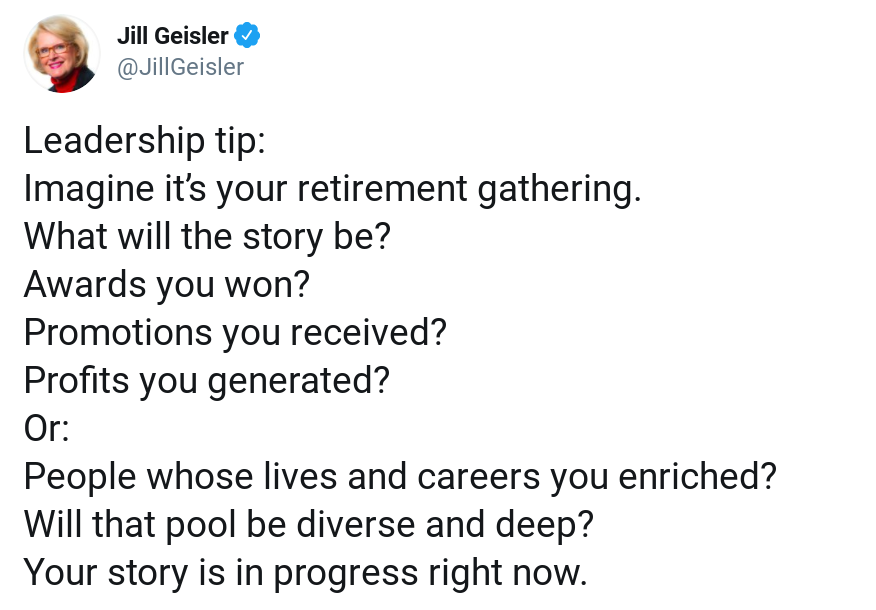
What will be your legacy as a leader?
A leader’s job is to help others succeed. What will be your legacy as a leader? Legacy is “planting seeds in a garden you never get to see,” wrote Lin-Manuel Miranda in the musical “Hamilton.” What seeds are you planting? Whose dreams are flourishing with your support? What blooms are bursting because you’ve helped to nourish them? The best time to plant is now. 

Advice from Jill Geisler, the Bill Plante Chair in Leadership & Media Integrity at Loyola University Chicago and Freedom Forum Fellow in Women’s Leadership
Do you qualify as an ally? Join Jill for the next  Freedom Forum Institute Power Shift Project program  on August 20 at 1 p.m. EDT.  Registration is now open .
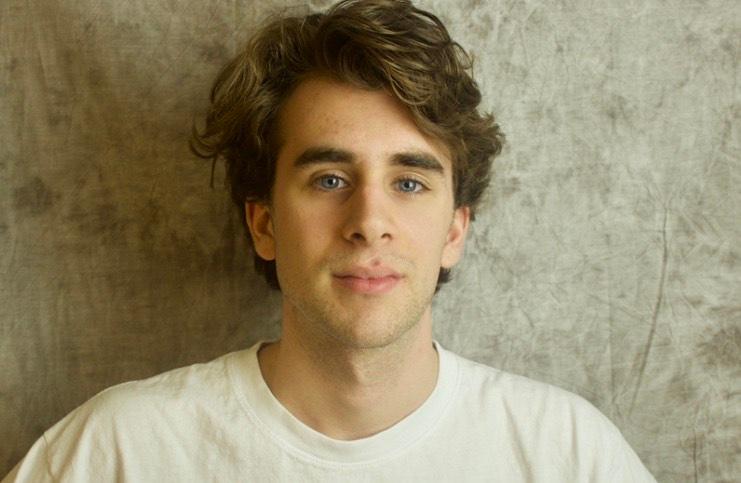
Introducing the Class of 2020: Brenton Blanchet 
The National Press Club Journalism Institute is spotlighting the next generation of journalists , students who graduated from college or Master’s programs this spring into a challenging job market . We hope they’ll meet future bosses and colleagues here, who will reach out and support them in building journalism’s future together. 

Name : Brenton Blanchet  
School : University at Buffalo
Location : Buffalo, NY
Bylines : Billboard , Clash Magazine, i-D , The Face , DJBooth , more .
Journalism hero : Craig Jenkins at Vulture

What's been your best moment in journalism?

Blanchet : My best moment in journalism was when I earned my first Billboard byline last summer. I had an emotionally taxing few months — with the loss of my grandfather and a near-fatal car accident — but I still made sure to celebrate.

What's the wackiest story you've worked on?

Blanchet : I’m currently working on a piece for VICE’s i-D mag on the internet’s l ost media community . These guys track down and archive missing pieces of television and gaming history on a wiki, and trust me when I say they know their stuff.

When you aren't practicing journalism, how do you spend your time?

Blanchet : I’m never not writing. Except when I go on jogs. That’s when I think about new pitches.

Read on: “ I’m driven. I care. I’m just as knowledgeable in AP style as I am in underrated pop stars.”

To support journalism students, contribute here to scholarships .
Some voices rise and echo, and others never penetrate the noise that surrounds us. Having an important platform — like the New York Times or L.A. Times — can amplify perspectives. In this program, L.A. Times editorial page editor  Sewell Chan , Pulitzer Prize-winning New York Times reporter  Nikole Hannah-Jones , New York Times Magazine editor-in-chief  Jake Silverstein, and L.A. Times columnist  Erika Smith will describe: 

  • How to make yourself heard 
  • How to work with an editor or writer to hone a point of view 
  • How to pitch (& catch) a column or opinion piece 

Registration is open now  for this program, which will be held on July 29 from 11:30 a.m.-12:15 p.m. ET.
Whether you planned to or not, you’ve built a pandemic routine.

It’s natural: Humans crave the  comfort of routines , which can promote physical, mental and emotional well being. Think  consistent meal times ,  sleep patterns , or   exercise routines . 

As journalists’ work to cover the pandemic wears on, now is a good time to take stock of the routine you’re in and correct course as you’d like. 

Use this checklist and note whether you are getting too much, just enough, or too little of the activities. Based on your responses, make changes where you see fit: 

  • Professional screen time 
  • Personal screen time 
  • Consecutive sleeping 
  • Naps
  • Exercise
  • Focused eating 
  • Snacking 
  • Alcohol or drug consumption 
  • Time with children/family
  • Time with friends 
  • Reading 
  • Creative activities
  • Unplanned time
  • Other activities you participate in

Read on for more self-care tips, or share your own . This tip originally ran in the May 7 edition of Covering Coronavirus.
This newsletter is written & edited by the National Press Club Journalism Institute staff: Beth Francesco, Holly Butcher Grant, Jim Kuhnhenn, and Julie Moos. Send us your questions and suggestions for topics to cover.

Get this from a friend? Subscribe , and view the archives .