Elmo Peeler Note-for-Note Piano Transcriptions
|
|
|
Today is the first day of February and time again for my monthly newsletter to keep you informed of recent transcriptions and other news of the last month.
|
|
 |
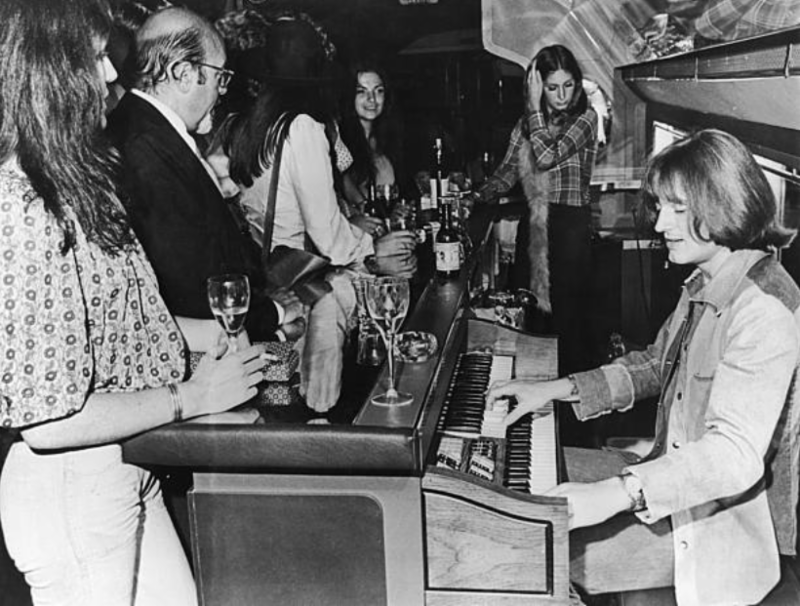
John Paul Jones playing on The Starship
|
|
A trivia question: which of rock's greatest bands recorded a free-form organ Intro to one of their songs, using not one but two organs - a pipe organ with pedals plus an overdubbed Hammond organ?
That would be Led Zeppelin's "Your Time Is Gonna Come" - quite a keyboard masterpiece by John Paul Jones.
Also new this month is an exercise for learning a riff that Liszt used in 1853 and Chuck Leavell used in 1972. Maybe you'd like to learn it in 2020.
BTW, to make sure that my email doesn't end up in your Spam folder, please add me to your Contact list and/or mark my email as "Not Spam".
Note that every Title Heading is clickable.
Elmo Peeler
|
|
|
ALL of the Sheet Music listed on my website has been personally transcribed by me, and guaranteed to be note-for-note perfect.
Whether you:
-
have a cover band and want to get your keyboard parts exactly correct,
-
are a professional who wants to study the styles of rock's greatest keyboard players, or
-
are a hobbyist that wants to learn how to play pop/rock and great piano music,
...these note-for-note transcriptions will prove extremely helpful.
And as always, if you ever need any help, just drop me a note at: elmo@manymidi.com
|
In the News!
- Led Zeppelin - "Your Time Is Gonna Come"
John Paul Jones on Pipe Organ
|
|
|
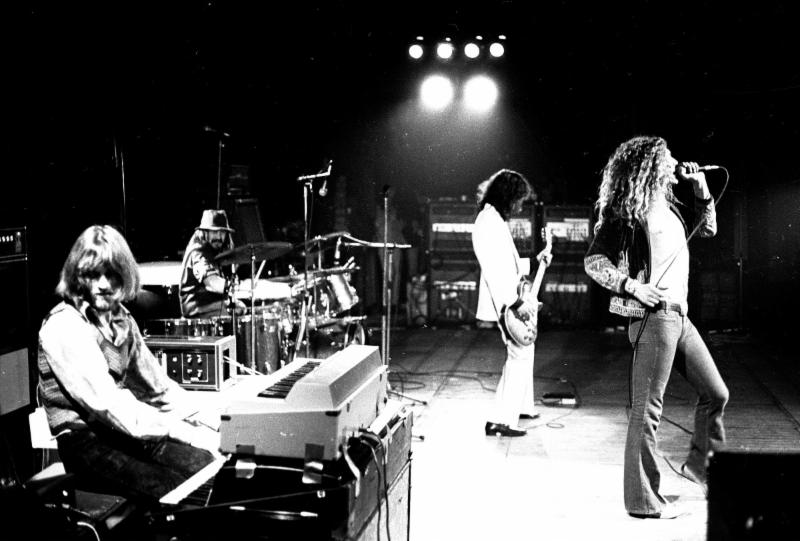
Led Zeppelin - Jones, Bonham, Plant & Page
|
|
Led Zeppelin was formed in 1968 by Jimmy Page, a prolific London-based session guitarist, who'd played on hit records since 1963 with artists as diverse as Petula Clark ("Downtown"), Marianne Faithfull ("As Tears Go By"), the Nashville Teens ("Tobacco Road"), and the Rolling Stones ("Heart of Stone").
After a stint in the Yardbirds (with Jeff Beck), Page decided to form his own group.
John Paul Jones, whose real name was John Baldwin, was born in 1946, two years after Jimmy Page. He started playing piano at age six, learning from his father, a pianist/arranger for big bands in the '40s and '50s. His mother was also in the music business and the family often performed together touring England as a vaudeville comedy act. His influences ranged from the blues of Big Bill Broonzy and the jazz of Charles Mingus to the classical piano of Sergei Rachmaninoff.
Because of his parents' touring, Jones was sent to boarding school at a young age. A student at Christ's College in London, he formally studied music; and at the age of 14 Jones became choirmaster and organist at a local church. During that year, 1960, he also bought his first bass guitar, followed by multiple others until finally buying his 1962 Fender Jazz Bass, which he used until 1976.
At 15 Jones joined his first band, The Deltas, and then played bass for the jazz-rock London group, Jett Blacks, a collective that included guitarist John McLaughlin.
In 1964 at 18 Jones began studio session work with Decca Records. From then until1968 he played on hundreds of recording sessions and soon expanded his studio work by playing keyboards and arranging, working with the Rolling Stones on
Their Satanic Majesties Request (Jones' string arrangement is on
"She's a Rainbow"), Herman's Hermits, Donovan (on "Sunshine Superman", "Hurdy Gurdy Man", "Mellow Yellow"), Jeff Beck, Cat Stevens, Dusty Springfield, Rod Stewart, Shirley Bassey, Lulu, and numerous others.
During his time as a session player, Jones often crossed paths with guitarist Page, and in 1968 at a recording session, he approached Page, who later recalled, "I was working at the sessions for Donovan's Hurdy Gurdy Man, and John Paul Jones was looking after the musical arrangements. During a break, he asked me if I could use a bass player in the new group I was forming. He had a proper music training, and he had quite brilliant ideas. I jumped at the chance of getting him."
Vocalist Robert Plant and drummer John Bonham soon joined. Initially dubbed the "New Yardbirds", the quartet soon became known as Led Zeppelin.
Always a cutting-edge musician, Jones acquired a GX-1, Yamaha's first big polyphonic analog synth, and used it in 1978 to record the Strings and the Synth-Brass solo in "All My Love". He later sold it to Keith Emerson.
Written by John Paul Jones and Robert Plant, "All My Love" was composed in honor of Plant's 5-year-old son who had died in 1977.
Released in 1979 "All My Love" was performed only 14 times - all during their 1980 European tour - as Led Zeppelin broke up two months after the tour with the passing of John Bonham.
John Paul Jones and Robert Plant also teamed up to write "Your Time Is Gonna Come", released on their very first album in 1969, where he gets to show-off his pipe organ skills acquired as a 14-year-old choirmaster/organist. If you're not familiar with it, check out at least
the 50-second organ Intro (with a second overdubbed organ on top of it, no less).
Here are my Led Zeppelin transcriptions
:
|
February's New Transcription
- "Your Time Is Gonna Come"
Note-for-Note Accuracy
|
|
|
|
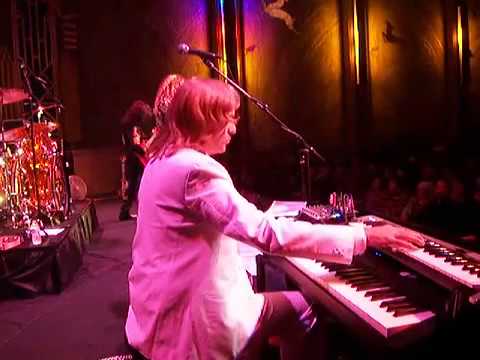
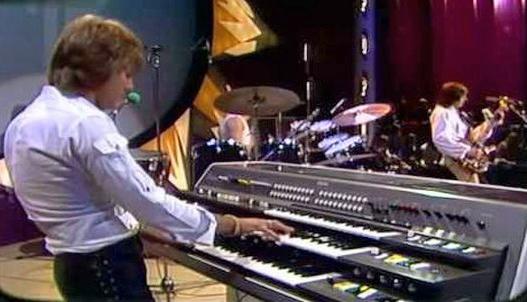
John Paul Jones, "Your Time Is Gonna Come"
|
|
Led Zeppelin's "Your Time Is Gonna Come" was recorded in 1968 at Olympic Studios in London, and released in 1969, seven months before the Woodstock Festival (to help place it in time).
John Paul Jones improvises an atmospheric, free-form organ Intro that is actually two organs playing different parts at the same time - a pipe organ with pedals plus a Hammond organ through a Leslie speaker.
After almost a minute, drums and vocals enter and kick off the next 3:44 of the song. The chords of the Intro are never used in this second section, based on an entirely different chord progression. The end result is that it's almost like two songs in one - definitely a treat for organ lovers.
The two-organ Intro was the most challenging part of this new transcription, which combines the most important elements of both organs into an arrangement that can be played by one player.
Also included are suggested Hammond organ drawbar registrations to approximate those on the recording.
|
February's New Exercise - the 'Cascade' Exercise
Descending Major Pentatonic Riff from 'Jessica' & Liszt
|
|
|
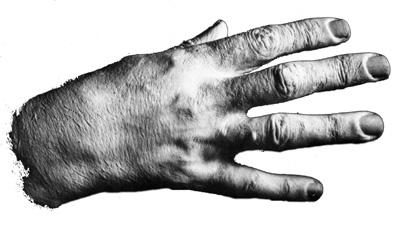
| Franz Liszt's hand - Transcendental Chops |
|
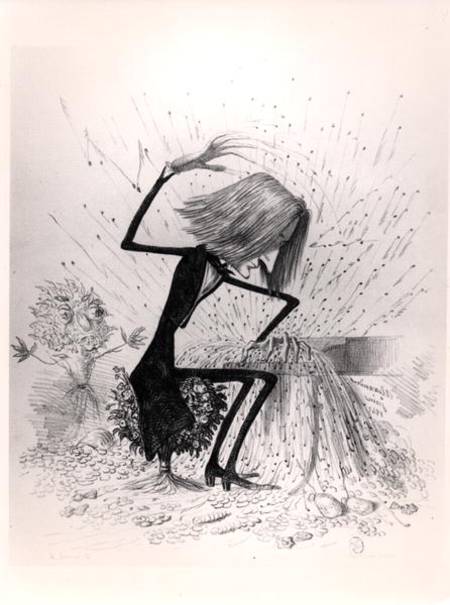
Using the major pentatonic scale one can generate a wonderful, descending run that sounds like a watery cascade. Franz Liszt used it in 1853 in his Hungarian Rhapsody #6 (on the black keys, no less) and Chuck Leavell used it in his piano solo on the Allman Brothers' "Jessica".
It's not only an important riff to have in one's pianistic bag-o-tricks but it's also helpful in building independence of the fingers.
This exercise includes five parts:
1) RH in single notes, simple LH
2) RH in single notes, quarter-note LH
3) RH in triplets, LH uses different harmonic rhythm
4) RH in double notes
5) RH in double notes in triplets
The double-notes in parts 4 & 5 are excellent for developing finger strength, independence and flexibility. They are included as supplemental exercises to help perfect the main single-note cascade.
(BTW, if you need other good, effective technical exercises, please check out the other 71 exercises available - including other boogie exercises.)
(click here to hear it)
|
'Crowdfund' a Transcription - Your Own Favorites
Suggest Your Favorite Keyboard Track for CrowdFunding
'Custom' (to-order) transcriptions can be expensive because of the time required. And when a recording is particularly long and/or complex, the expense can be too much for one person.
if you'd like to suggest a transcription - a complete song, or perhaps just a keyboard solo.
My 'CrowdFunded' transcriptions to-date:
|
Why not add a harmonious gift to the traditional flowers and chocolates on Valentine's Day and give your sweetheart piano lessons? Of course your sweetheart can be anyone you define it to be, perhaps your child or even yourself.
A new student told me during his last Skype lesson that he'd had his first band rehearsal since having two lessons with me, and that already he was playing with more confidence and security and able to take a better solo.
If you'd like to be able to play more than just "Hearts & Flowers", and need an effective, experienced 'coach' to guide your growth and provide a practice regimen tailored to your own musical needs, feel free to call me and let's talk about it for five minutes (323-650-6602).
I've
toured the world playing keyboards and arranging/conducting for these Rock and Roll Hall of Fame Artists:
- The Beach Boys
- Ricky Nelson - Stone Canyon Band
- Rod Stewart - All 'Unplugged' concerts
I've also won classical piano competitions performing Beethoven, Rubinstein and Saint-Saens' Piano Concerti. See me playing here. "Josie's Boogie" is quite the virtuoso dramatic minor-key showpiece; check out the ascending double-octave run at the ending... :)
Thanks to the internet, I can help you play piano better - rock or classical, by ear or by note.
Perhaps all you need is just an hour or two on Skype discussing rock keyboards.
If you're serious about wanting to improve, drop me a note at info@manymidi.com. Tell me three things:
1) Your musical background
2) Where you are currently, musically-speaking
3) Your musical goals
My students include members of:
- Weezer (Rivers & Brian)
- Vampire Weekend (Ezra & new addition, Greta)
- Incubus (Mike)
- The Strokes (Nick)
- Rooney (Robert)
- Jason Schwartzman ("Mozart in the Jungle")
- Courteney Cox
- Sasha Spielberg
|
|
|
|
|