January 30, 2023

Top stories

■ Trump sues journalist Bob Woodward for releasing interview recordings (Bloomberg) / The press versus the president, part one (CJR) 


■ CNN adds Bill Maher Real Time: Overtime to weekly TV schedule (Hollywood Reporter) / CNN’s Chris Licht defends decision to air Bill Maher segments, says network is uninterested in ‘partisan hackery’ (The Wrap) / CNN boss Chris Licht on restoring trust and why he deleted his Twitter account (Los Angeles Times) 


■ Tyre Nichols beating video released: CNN airs raw police body cam footage first as MSNBC & Fox initially hold back (Deadline) / News organizations grapple with showing horrific Nichols, Pelosi videos (Washington Post) / Opinion: Take special care with coverage of police violence and protests (Poynter) 


■ BBC News Review says journalists’ ‘lack of understanding of basic economics’ brings ‘high risk to impartiality’ (Deadline) / This report sees journalistic ‘bias’ less as partisanship and more as relying on too-comfortable habits (Nieman Journalism Lab) 


■ Judge finds Post-Gazette broke labor law, orders newspaper to bargain with striking workers (TribLIVE.com) 


■ Social video startup The News Movement acquires The Recount (Axios) / ‘Start-up called The News Movement will try to "translate traditional news values into the visual language of TikTok," says Ben Smith.’ (Jay Rosen)


■ Opinion: Newsrooms that move beyond ‘objectivity’ can build trust (Washington Post)


■ AP deletes viral tweet regarding ‘the’ French (The Hill) 


■ ‘Another high-profile exit from CNN: Rani Raad, president of CNN Worldwide Commercial, is leaving after a quarter-century at the network, per internal memo from CNN Chairman Chris Licht’ (Ben Mullin) / Amy Robach and T.J. Holmes to leave ABC after relationship revealed (Washington Post) / Tony Elkins, thought leader in design, product thinking and DEIB, joins Poynter faculty (Poynter) / Medill adds director of Midwest Solutions Journalism Hub (Editor and Publisher) 


■ NFL photographer shares dizzying view from stadium catwalk (Peta Pixel)


■ How an 18-year-old got his crossword puzzle in the Sunday Times (New York Magazine) 


■ Your iPhone has powerful new security features. Do you need them? (Washington Post) 


Press Freedom 


■ Three men indicted in plot to kill Iranian-American journalist on U.S. soil (POLITICO) / Iranian journalist calls for Biden meeting on Islamic Republic policy after assassination attempt (Mediaite) 


■ India's top court to consider cases against block on BBC documentary (Reuters via VOA) / Why is the Modi documentary so hard to find? Some blame lies with the BBC (Rest of World) 


■ Finnish journalists found guilty of revealing state secrets (Reuters) 


■ What’s behind a sharp increase in journalist killings around the world (PBS News Weekend)

The Tyre Nichols Video: Advice for Leaders

by Jill Geisler


My friend Al Tompkins at the Poynter Institute has published important advice for newsrooms sharing video that documents the death of Tyre Nichols. Please read it. 


Leaders, as you make those important journalistic decisions, it is equally important to care for your team members who are covering the story, whatever their role.


The three things to keep in mind as you do are emotional intelligence, inclusion, and agency.


Emotional intelligence: 


Don’t expect every team member to don a journalistic heat shield to power through graphic, gut-wrenching video in service of a free press. Every person on your team brings different life experiences, health, personality, spirituality, and resilience to their work.


Some of your staff may feel compelled, or even morally obligated, to view or become experts about every frame of the documentary footage. Others may feel the need to distance themselves from it because it will be tortuous and traumatizing.


Some of your staff may want to talk about the footage, analyze it, and process it with colleagues. Others may need space and silence.


Inclusion:


Don’t make decisions about the video or this ongoing story alone. The more diverse voices you invite into the conversation, the better. Ask yourself, “Who has a stake in this story?” “Who isn’t represented in this discussion?” Identify and include the missing. 


Newsrooms are good at identifying experts with titles. Who speaks for the rest of those affected by brutality, inequity, and injustice? Who in your organization (not just the newsroom) can bring more ideas and voices into your coverage?


Agency:


Give your staff the power to do what’s right for them while doing great journalism. Some of your colleagues may want more than anything to contribute to your coverage. Some may be emotionally exhausted by yet another horrific death in the criminal justice system. Let people opt in or out, day by day. 


Make support resources available. As a leader, be available and empathetic. Encourage people to talk with you and other managers, and to take advantage of counseling or employee assistance programs.


Debrief with people after stories, not just about the quality of their work but how that work is affecting them. 


The killing of Tyre Nichols demands the highest quality journalism — and leadership.

Jill Geisler is the Bill Plante Chair in Leadership & Media Integrity, Loyola University Chicago. Jill has spent decades hiring, coaching, and mentoring journalists at all stages in their careers. Her first career was in broadcast journalism, where she became one of the country’s first female TV news directors at WITI-TV in Milwaukee. After 25 years on the front lines of news management she joined the faculty of the Poynter Institute, where she guided its leadership and management programs for 16 years and became known as a master teacher. Jill has been inducted into multiple media halls of fame.

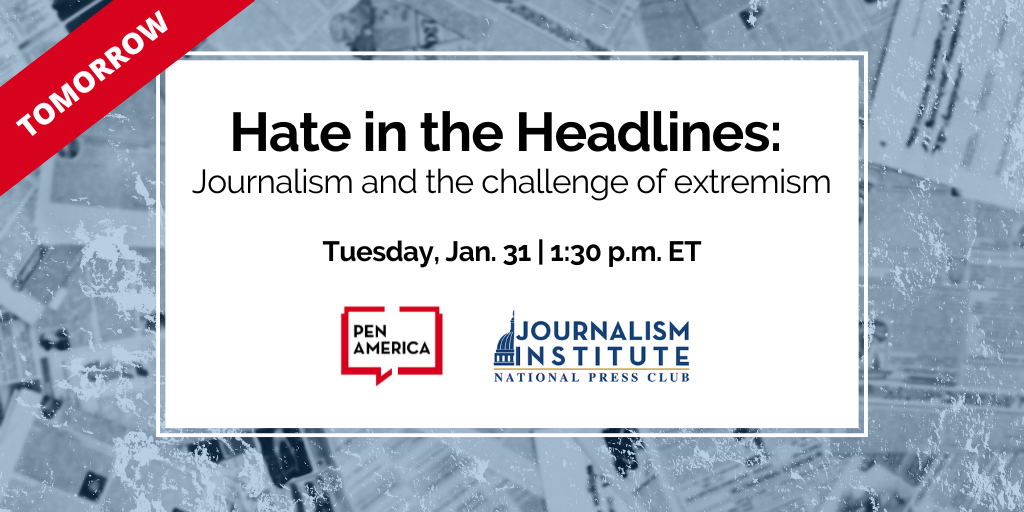
Tomorrow is Hate in the Headlines: Journalism and the challenge of extremism

Register for tomorrow’s program on how to cover political extremism


The Institute and PEN America invite you to join a free webinar tomorrow at 1:30 p.m. ET that will cover key findings from the “Hate in the Headlines” report. Participants will learn how political extremism has affected reporting on issues on every beat, as well as practical strategies to cover these issues in ways that do not amplify messages of hate.


Right-wing extremism is more accepted today in America’s political mainstream than at any other time in the post-civil rights era, according to the PEN America report. Panelists will explore how these rising levels of extremism are not only antithetical to democracy but also linked to the surge of disinformation campaigns.

Register now

Speakers include:


  • Hannah Allam, national security reporter focusing on extremism and domestic terrorism, The Washington Post
  • Natalia Contreras, Texas reporter, Votebeat
  • Scott Kraft, editor at large, Los Angeles Times
  • Wesley Lowery, journalist, author, and correspondent
  • Moderator: Rhema Bland, journalism talent acquisition specialist, McClatchy; former director, Ida B. Wells Society for Investigative Reporting 


Bring a friend: Share this on Twitter.

Resources

This newsletter is written & edited by the National Press Club Journalism Institute staff: Beth Francesco and Holly Butcher Grant. Send us your questions and suggestions for topics to cover.


Get this from a friend? Subscribe, and view the archives.


If you value this newsletter, consider supporting The Latest with a tax-deductible, recurring gift to the Institute: Even $5 a month will help fund the technology and time it takes to provide this important service.  

Facebook  Twitter  Linkedin  Youtube  

The National Press Club Journalism Institute promotes an engaged global citizenry through an independent and free press, and equips journalists with skills and standards to inform the public in ways that inspire a more representative democracy. As the non-profit affiliate of the National Press Club, the Institute powers journalism in the public interest.