Anniversary of Commonwealth Court Decision
Declaring Pa. Funding System Unconstitutional
|
|
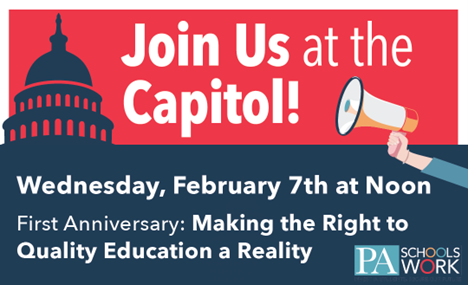
We are days away from the one-year anniversary of Commonwealth Court’s decisive ruling in our case challenging the constitutionality of Pennsylvania’s school funding system. On Feb. 7, we will join with other advocates for an adequate, equitable, and racially just school funding system to mark the anniversary of that momentous decision with a rally in Harrisburg on the theme “Making the Right to Quality Education a Reality.”
|
|
Our elected officials in Harrisburg owe it to our students and communities to make the necessary additional investments and changes to the state’s funding system required by the court to bring it into constitutional compliance. It is time for action. If you can’t be with us to deliver that message in person to legislators, please contact your legislators to let them know: It’s time to fund our schools.
|
|
Commission Proposes
Transformational Plan to Fund Pa. Schools!
|
|
Following months of testimony and advocacy by ELC and others, the state’s Basic Education Funding Commission issued a majority report on Jan. 11 finding that Pennsylvania school districts are underfunded by more than $5.4 billion and recommending a seven-year plan for the state to close this massive funding gap.
If implemented, this could be life-changing for students in the state’s underfunded schools. The plan represents a major milestone towards an effective remedy in the school funding case. We had urged the commission to identify a research-based target for what level of added funding is needed, and they did!
The bipartisan commission included representatives of Gov. Shapiro and House and Senate members. Through 11 hearings over three months, members conducted a comprehensive review of the commonwealth’s school funding system and made eight recommendations to ensure stable, predictable, and adequate funding for all school districts.
Using methodology similar to the one we recommended, the report estimates the total adequacy gap is $5.4 billion and says the state’s responsibility is to provide $5.1 billion of that, almost 95% of the total. An additional $955 million increase is recommended as relief for school districts that have had to impose extraordinary local taxes rates. Both increases are to be phased in over seven years (a longer timeline than we had advocated).
The report’s proposal does not include additional money for pre-K, although the court highlighted this as an issue to be addressed, and ELC will continue to advocate for this important foundational investment.
The commission also recommended increases of at least $200 million annually to be distributed through the state’s current basic education funding formula and $300 million each year to renovate or rebuild school facilities. The total first-year increase would be $1.4 billion, with increases for every district.
The governor has indicated that his budget proposal, scheduled for release Feb. 6, will align with these commission recommendations. ELC and our partners will be watching for a commitment to a long-term funding plan and allocations consistent with the BEFC’s transformative recommendations.
|
|
Celebrating Black History Month |
|
The stories, voices, and histories of Black people should be centered every day – not just one month out of the year. And challenging systemic racism is a year-round commitment at ELC. But the establishment of February as Black History Month was an organized, Black-led effort to elevate the work of celebrating Black accomplishments, honoring Black voices, and teaching accurate history. It is an annual reminder to continue this work.
Please check ELC’s social media accounts for activities and materials all month — to learn and to get involved. Once again this year, we highlight the resources available through the Black Lives Matter at School Week of Action, which this year is Feb. 5-9 and includes events and projects for both students and educators. |
|
School District of Philadelphia Holds Meetings
on COVID-Related Compensatory Education
|
|
The School District of Philadelphia has begun holding meetings to determine compensatory education services owed to students with disabilities who experienced education deprivations during the COVID school closures. This effort applies to students with IEPs and those with 504 plans and is the result of corrective action ordered by PDE’s Bureau of Special Education in response to ELC’s complaint that the district did not provide these necessary make-up services or make required determinations for all students with disabilities.
IEP and Section 504 plan teams that include parents must review and assess data for all students to determine necessary make-up services, or compensatory education (often called “comp ed”), owed for deprivations of a free, appropriate public education stemming from COVID school closures from March 2020 through June 2021.
If you are the parent of a student with a disability in the district, you should be invited to a meeting to review data and determine your child’s eligibility for compensatory education. The district must also provide you with notice of any decision to award or deny compensatory education in writing in a Notice of Recommended Educational Placement (NOREP). In response, you have the right to accept or disagree with that decision. To learn more about your right to disagree, check out this resource. If you have not been invited to a meeting and believe that your child may be eligible for these make-up services, contact your child’s school or ELC’s Helpline for more information.
Notably, Pittsburgh Public Schools continues to implement “COVID Compensatory Services 2.0” to ensure that their students receive the make-up services to which they are legally entitled. You can learn more about this ongoing effort at www.pghschools.org/ccs, including a helpful Parent Pre-Meeting Planning Checklist. |
|
New State Coalition Takes on
Extremist School Boards
|
|
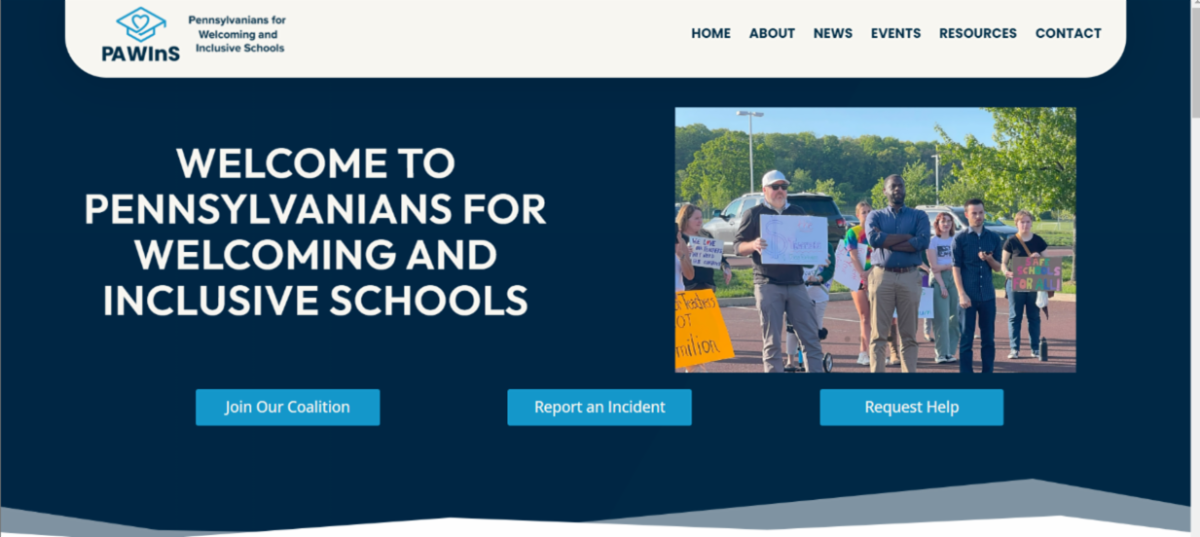
ELC is a founding member of a new statewide coalition, Pennsylvanians for Welcoming and Inclusive Schools (PAWInS), working to support public schools that are affirming and to fight state legislation and school board policies that censor books, limit student and teacher speech, and attack Black, Brown, and LGBTQ+ students.
PAWInS officially launched with a press conference on Jan. 21. Founding groups include ELC, ACLU, Education Voters, Red Wine and Blue, PA School Library Association, Disability Rights PA, and Planned Parenthood. The groups began working together informally in May 2022, when parents in the Central Bucks School District reached out for help fighting a book ban policy. After organizing a parent forum in Bucks County, the groups worked together statewide to provide legal and organizing assistance to parents fighting regressive board policies and to defeat state legislation that would have made these types of policies mandatory for all districts.
Since 2022, PAWInS partners have provided assistance to communities in 75 school districts in 25 counties. The coalition’s goals are to educate the public about the harm that is done to students when schools seek to exclude LGBTQ+ students and students of color, to provide assistance to community groups, to be a forum for parents working on these issues, and to develop and share tools on the coalition website.
ELC provides trainings for coalition groups and community members. On Jan. 11, ELC staff led a training for school board members on education law and best practices for inclusive schools free from race- and sex-based discrimination and book bans.
|
|
Ensuring Access to Education
for Students in Hospital Settings
|
|
ELC recently filed a special education due process complaint on behalf of a student in foster care, “Jay,” who was deprived of educational services for nearly two years while in a psychiatric hospital in Philadelphia. Sadly, Jay’s experience is not isolated. Through our Helpline and other work, we have learned that many children in hospital settings are being deprived of their rights, despite clear state and federal laws that entitle students to special education services while they are hospitalized.
Many of those who are deprived of education while receiving needed care are Black or Brown children and youth. Due to biases in the child welfare and education systems, students of color are overrepresented in foster care and are often inadequately or inappropriately provided special education services; they also experience mental health crises at higher rates due to poverty and systemic racism in multiple systems, including healthcare. Students languish for months and sometimes years in hospital settings without education services and are often unsupported when they transition back to their schools after being hospitalized.
ELC is providing representation to Jay’s education decision maker in this due process hearing against both a school district and the state to enforce Jay’s educational rights as well as to challenge the systemic concerns that result in the deprivation of educational services for all students who are in hospital settings. ELC Skadden Fellow Makayla Harrison is focused on representing students in psychiatric facilities like Jay to ensure their access to a quality public education. |
|
Hundreds of Former Glen Mills Students
Submit Claims in Response to CCIU Settlement
|
|
Over 500 former students of Glen Mills Schools submitted claims over the last year to establish their eligibility for compensatory education and education damages based on the harm they experienced while at Glen Mills. Last January, the Chester County Intermediate Unit (CCIU) approved a $3 million settlement agreement to resolve education-related claims asserted against them in our Glen Mills class action lawsuit.
Under the agreement, former Glen Mills students will receive cash payments, compensatory education services, or a combination of these remedies to address education deprivations they experienced while at Glen Mills.
Pro bono counsel at Troutman Pepper worked tirelessly over the past year to notify eligible former Glen Mills students. Pro bono counsel at J.M. Smucker will now review all submitted claims and determine eligibility for awards based on how long each student was at Glen Mills. We are so grateful to Troutman Pepper, led by Sara Richman and Madeline Moore, the J.M. Smucker legal department, and the pro bono team at Vanguard for their commitment to ensuring that former students receive some relief for the harm they experienced at Glen Mills.
Our ongoing class action suit includes education and abuse claims against the Glen Mills Schools, the Pennsylvania Department of Education, former leaders of the Department of Human Services, and individual defendants. |
|
Voucher Threat Still Looms Over Pa. |
|
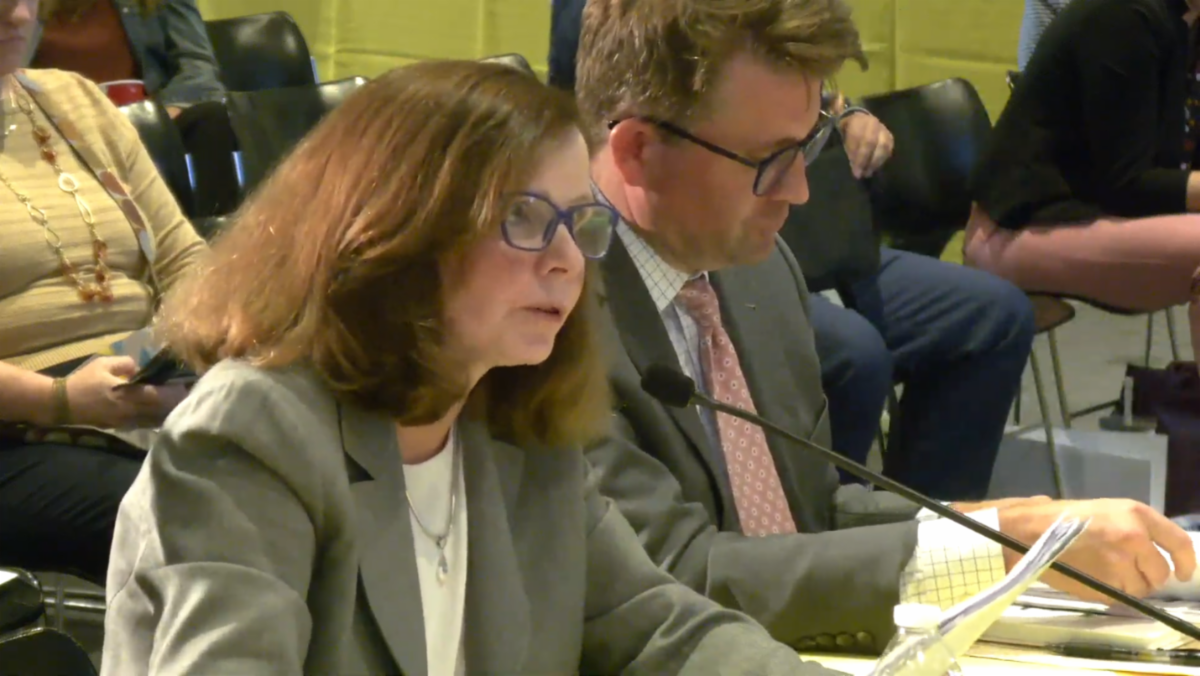
ELC legal director Maura McInerney raised concerns about private school vouchers at a legislative hearing Oct. 25.
The plan to adequately and equitably fund Pennsylvania’s public schools is heartening news, but Harrisburg officials are also likely to consider legislation to establish a new private school voucher plan that would fund private schools that discriminate and subvert public education, draining and diverting funds from public schools that have never been adequately funded. Gov. Shapiro has said he considers the adoption of a private school voucher program to be “unfinished business” for the state legislature and may include vouchers in his budget address.
With the state funding system ruled unconstitutional and remaining unremedied, state officials must focus on their constitutional duty to fully fund our underfunded schools, where generations of students have been deprived of basic school resources. As ELC has advocated, Pennsylvania needs to reject vouchers and stay focused on repairing its public schools.
|
|
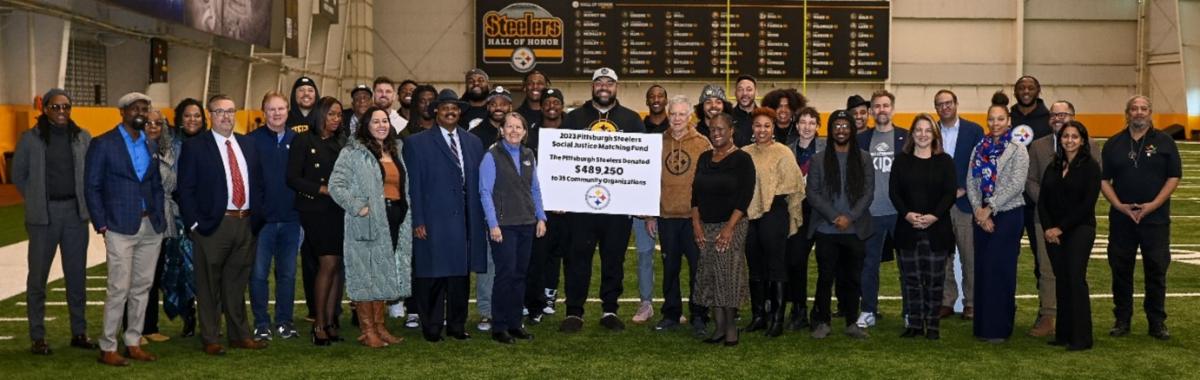
We are excited and honored that the Pittsburgh Steelers selected ELC as a recipient of their Social Justice Fund. This is a fund where both individual players and the Steelers organization contribute to local groups addressing key social justice issues. ELC senior attorney Hetal Dhagat (second from right) was presented with a donation from Steelers Breiden Fehoko and George Pickens, along with a matching commitment from the Steelers. Thank you to the entire Steelers organization for supporting our work.
|
|
Get to Know Us:
ELC Board Member Edwin Mayorga
|
|
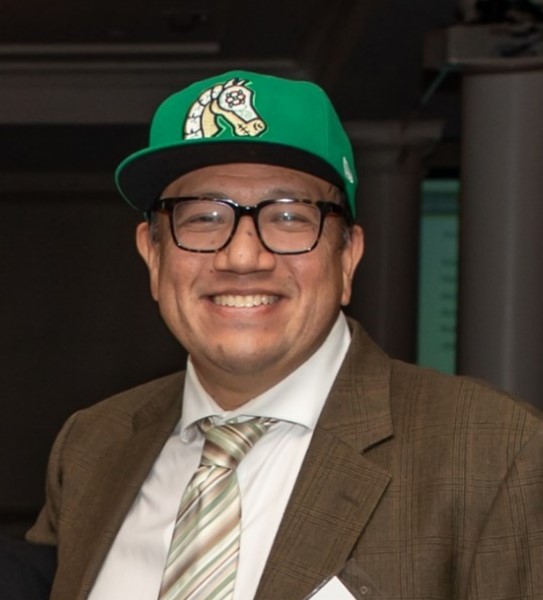
Edwin Mayorga, Ph.D., is associate professor & department chair of educational studies at Swarthmore College. He joined ELC’s board in 2020.
How did you connect with ELC?
I’ve been a fan for a long time, following their work in education policy and legislation for over 15 years. Becoming a board member was a wonderful opportunity for me to be connected in more concrete, tangible ways.
What do you enjoy most about serving on the board?
As a researcher in education, scholar, activist, and parent, ELC sustains me on a personal level. Whether supporting their work through fundraising or interacting with litigators, being part of the education justice sector is a nourishing experience.
What do you wish other people knew about ELC?
I wish people knew how hard this work is. I think they understand that it's important, but even as a board member, I only get a glimpse of the work of the litigation team and everyone around them. It requires a large amount of emotional, intellectual, and social labor to do this work well, and ELC is really exemplary in this way.
The anniversary of the Commonwealth Court ruling is coming up – any thoughts?
The fair funding case is already reshaping the experiences of so many people. And there's so much more work to do.
The Basic Education Funding Commission’s report is monumental in terms of setting some numbers to concepts that have been fought over for over a decade. Education is a fundamental right that everyone should have access to, and yet here we are. These are systemically, culturally created ways of living in the world that I think are really damaging and harmful – disproportionately damaging to people of color, people with disabilities, low-income folks, and everyone who occupies multiple intersections of those categories. ELC has been steadfast in trying to be both a bridge-builder and advocate. Things must change and things will change, but we must stay very vigilant around the micro and macro ways obstacles are put in front of people who are part of that long arc of justice.
This interview was condensed and edited.
|
|
Introducing Our Newest Staff Members! |
|
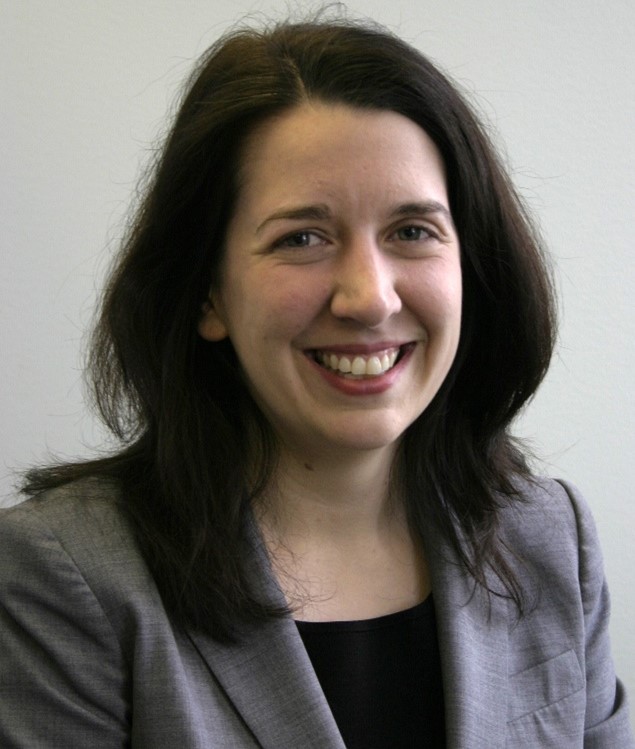
Christine Porter (she/her) is a staff attorney in ELC’s Pittsburgh office. She was previously the deputy director of the Allegheny County Public Defender’s Juvenile Division, where she designed the division’s first education advocacy program. Christine has represented families as an education attorney with a private firm in Seattle and practiced disability and elder law with Neighborhood Legal Services in Pittsburgh. She has served on the boards of nonprofits advocating for juvenile justice reform and for the rights of individuals with disabilities.
Christine received her M.A. and J.D. degrees from the University of Washington in Seattle. Before law school and graduate school, Christine worked in public school classrooms through an education nonprofit in Florida.
|
|
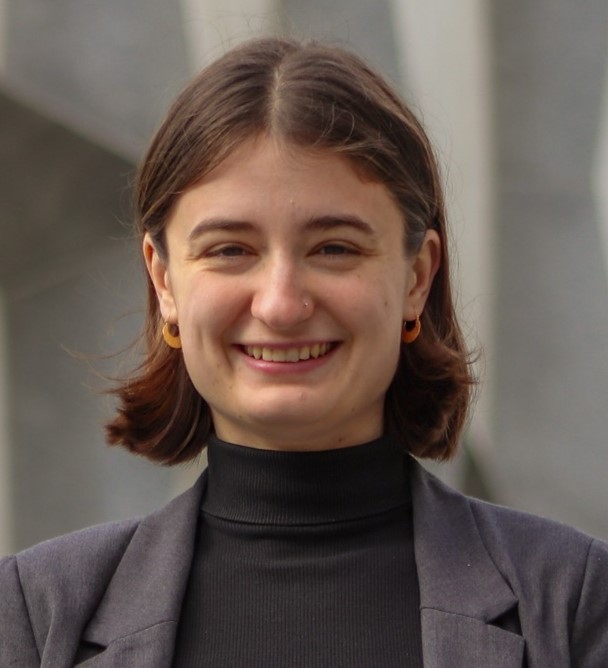
Abigail Leighton (she/they) is the intake coordinator at the Philadelphia office of the Education Law Center. She is a recent graduate of Yale University, where she studied history, education studies, and Spanish.
As an undergraduate legal intern at HIAS Pennsylvania, she gained experience conducting intakes and assisting with cases. She also has a background in education research and policy developed in her roles as a summer program associate at Hope in a Box and an intern for the Gilder Lehrman Center’s conference, Teaching Race & Slavery in the American Classroom. As an alum of Philadelphia public schools, Abby is excited to support ELC’s mission to ensure access to a quality public education for all children in Pennsylvania.
|
|
Alex Leone is a second-year student at Temple University Beasley School of Law and a Rubin Presser Social Justice Fellow. Before law school, she worked in education and at early-stage startup companies while pursuing her M.A. from Columbia University Teachers College. She hopes to pursue a career in special education law, focusing on protecting the rights of students and their families.
Angela Sadat is a second-year student at Temple University Beasley School of Law. Angela attended the University of Florida, where she became passionate about advocating for marginalized communities. After graduation, Angela worked toward educational equity by serving as an elementary school teacher in her hometown of Orlando and as a volunteer teacher in a rural community in Ghana.
Cally Gant is a second-year student at Temple University Beasley School of Law. Cally received her bachelor’s degree in social studies secondary education from the University of Delaware. Before attending law school, Cally was a substitute teacher in Montgomery County, where she taught students in kindergarten through twelfth grade.
Cathy Ginder is a third-year, part-time student at Temple University Beasley School of Law. Prior to law school, she and her spouse were foster parents for both Berks County and Lancaster County. She has spent many years advocating for the special education needs of her own children and anticipates doing the same in the future for children in Pennsylvania’s dependency system.
Emma Gabriel, our communications intern, is a junior at Swarthmore College, where she studies history and education. Emma enjoys serving as a mentor and tutor to high school students and running Swarthmore's undergraduate history journal. She would like to become an educator, continuing to focus on issues related to education equity and access.
|
|
Check Out Our Job Postings!
|
|
See our website for a description of internship opportunities at ELC. |
|
Education Law Center | 215-238-6970 (Philadelphia) | 412-258-2120 (Pittsburgh)
|
|
A copy of the official registration and financial information of the Education Law Center may be obtained from the Department of State by calling toll-free, within Pennsylvania, 1-880-732-0999. Registration does not imply endorsement. |
|
|
|
|
|
|