Wednesday | January 13, 2021
|
|
On December 27, the Consolidated Appropriations Act, 2021 modified the Calendar Year (CY) 2021 Medicare Physician Fee Schedule (MPFS):
- Provided a 3.75% increase in MPFS payments for CY 2021
- Suspended the 2% payment adjustment (sequestration) through March 31, 2021
- Reinstated the 1.0 floor on the work Geographic Practice Cost Index through CY 2023
- Delayed implementation of the inherent complexity add-on code for evaluation and management services (G2211) until CY 2024
CMS has recalculated the MPFS payment rates and conversion factor to reflect these changes. The revised MPFS conversion factor for CY 2021 is 34.8931. The revised payment rates are available in the Downloads section of the CY 2021 Physician Fee Schedule final rule (CMS-1734-F) webpage.
CMS is ready to process claims correctly and on time. You don’t need to wait to submit your claims.
The new physician fee schedule conversion factor for 2021 is $34.89, 7.6% higher than the conversion factor finalized in the rule released in December ($32.41), but 3.3 percent less than the 2020 conversion factor ($36.09), according to the American Hospital Association.
|
|
After reading the 2021 Abstracts & Poster Presentations guidelines, please complete the form along with the presenter's CV by clicking here. Questions can be directed to Savannah Gold at 270-554-9412 x 4219 or sgold@asipp.org.
- Selected manuscripts will be presented in electronic poster presentation.
-
Top 25 will be published in the Pain Physician journal.
- Top 10 will be selected for abstract presentation at meeting.
- Top 3 will receive cash prizes.
A $50 submission fee is required, and will be collected at the end of this form.
Proposals will be accepted until April 14, 2021
|
|
The Trump administration announced it will stop withholding portions of its COVID-19 vaccine supply for second doses, and instead free up all available doses so that states can vaccinate people ages 65 and over, as well as adults under 65 with comorbid conditions.
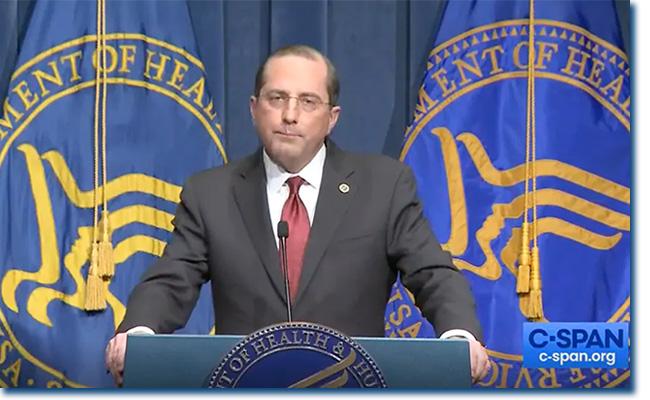
"We're telling states today that they should open vaccinations to all of their most vulnerable people. That is the most effective way to save lives now," said Department of Health and Human Services (HHS) Secretary Alex Azar during a Tuesday press conference.
|
|
We are pleased to share the good news that we have finalized details for the 23rd Annual Meeting, which is set to go live on June 24-26, 2021.
The meeting will be educational (providing much need CME credits), exciting, and will offer the long-awaited ability to leave our homes and attend meetings in person in a safe and responsible manner.
We are working on making the program highly relevant for our changing healthcare system and environment. We will also bring you cutting-edge lectures on exciting new technology, world-renowned speakers, and much, much more. We will open registration very soon, and will announce more meeting information as the program develops.
|
|
The Small Business Administration (SBA) and Treasury Department has officially announced the Paycheck Protection Program (PPP) will reopen the week of January 11. To promote access to capital, initially only community financial institutions will be able to make First Draw PPP Loans on Monday, January 11, and Second Draw PPP Loans on Wednesday, January 13. The PPP will open to all participating lenders shortly thereafter.
This round of the PPP continues to prioritize millions of Americans employed by small businesses by authorizing up to $284 billion toward job retention and certain other expenses through March 31, 2021, and by allowing certain existing PPP borrowers to apply for a Second Draw PPP Loan.
Best of luck to all as we enter this new round of the Payment Protection Program!
|
|
Anesthesia Business Consultants outlined key takeaways from CMS' rule changes on telehealth in 2021 in a Dec. 30 blog post.
Four takeaways:
- Seven services were added as category 1 services: group psychotherapy; psychological and neuropsychological testing; domiciliary, rest home or custodial care services, established patients; home visits, established patient; cognitive assessment and care planning services; visit complexity inherent to certain office/outpatient evaluation and management; and prolonged services.
- The final rule extended Medicare coverage for telehealth services during the pandemic through Dec. 31 of the year when the public health emergency ends.
- CMS reiterated that telehealth rules don't apply when the patient and practitioner are in the same physical location.
- CMS is establishing payment on an interim final basis for audio-only telephone services.
|
|
Telehealth claim lines1 increased 3,060 percent nationally from October 2019 to October 2020, rising from 0.18 percent of medical claim lines in October 2019 to 5.61 percent in October 2020, according to new data from FAIR Health's Monthly Telehealth Regional Tracker. From month to month, coinciding with a surge in COVID-19 cases in October, the telehealth share of medical claim lines rose 10.6 percent nationally, from 5.07 percent in September 2020 to 5.61 percent in October 2020. The data represent the privately insured population, excluding Medicare and Medicaid.
Trends in the four US census regions (Midwest, Northeast, South and West) were similar to those in the nation as a whole. In each region, there were large percent increases in volume of claim lines from October 2019 to October 2020, and smaller increases from September 2020 to October 2020.
|
|
The details vary but the story is always the same: every candidate’s big plans for health care morph, shrink, and change after they are elected and confronted with new political and economic circumstances. That will be true in spades for President-elect Biden. Very narrow margins in both houses of Congress means two of the big ideas he campaigned on may get a hearing but are highly unlikely to pass, the public option and early eligibility for Medicare. But Democratic control of the Senate opens up different if more modest opportunities for legislation to expand access and make health care more affordable, while narrow margins provide the political benefit of lowered expectations for big health legislation to go with it. And there is a long list of actions the president-elect can take with executive and administrative authority that cumulatively could really make a difference.
|
|
If nine family members are left behind to grieve each of the nation's 320,000+ COVID-19 deaths, nearly 3 million Americans are grappling with loss on an unprecedented scale of mass bereavement.
But unlike past disasters in which communities could come together to heal, this one has kept them six feet apart.
"If you think of that bereavement as grief, that's not necessarily mental illness... that's just pain, emotional pain, that needs to be validated and normalized and expressed out loud," said Jessica Gold, MD, of Washington University in St. Louis. "Until we really do that, I think we're kind of stalled in healing."
|
|
Pain Physician journal is currently looking for section editors and reviewers. If you are interested in joining the Editorial Board or you have a recommendation, please email us today!
Section Editor responsibilities are as follows:
- After peer review, each Section Editor is responsible for the selection and approval of manuscripts submitted in their subject area.
- Each Section Editor provides recommendations to the Editor-in-Chief after evaluating the opinions provided through peer reviews by editorial board members.
Based on the Section Editor's evaluation, the Editor-in-Chief will recommend whether to accept or reject the manuscript. A process for conflict resolution will be developed.
Editorial Board responsibilities are as follows:
- Review a minimum of 6 manuscripts per year.
- Failure to review 2 manuscripts consecutively or 60% of the manuscripts sent will disqualify one from Editorial Board Membership.
For more information or to submit your letter of interest, please e-mail:
|
|
All sessions from the September 2020 meeting are available through June 2021 for a reduced fee. On-demand registration also provides access to all of the great resources available in the exhibit hall.
*Recorded sessions are not eligible for CME credits.
|
|
ASIPP has formed a partnership with Henry Schein and PedsPal,
a national GPO that has a successful history of negotiating better prices on medical supplies and creating value added services for the independent physician. Working with MedAssets, PedsPal provides excellent pricing on products like contrast media that alleviate some of the financial pressures you experience today.
|
|
In an effort to further increase value to its physician members, ASIPP has endorsed Willow Risk Advisors as their professional liability insurance broker. Teaming up with the NORCAL group, Willow Risk has developed an exclusive Medical Malpractice Insurance Program tailored specifically to serve interventional pain physicians.
|
|
ASIPP is now offering our members the benefit of a unique revenue cycle management/billing service. We have received a tremendous amount of interest in the ASIPP billing and coding program. Click here to learn more about the negotiated rate for practices and more!
|
|
|
|
|
|
|