|
Dear Angelenos,
City Council approved several of City Planning’s multi-year milestones that are anticipated to improve LA’s housing options, sustainability efforts, and community plans. During its Dec. 10 session, City Council approved the Citywide Housing Incentive Program (CHIP) Ordinance and the Housing Element Sites and Minimum Density Ordinance, which are key components of the City's Housing Element Rezoning Program that will need to be in place by February 2025 per state mandate. Council also approved the Resident Protections Ordinance (RPO), which will strengthen citywide tenant protections for individuals facing evictions due to redevelopment, as well as the Citywide Adaptive Reuse Ordinance (ARO), which facilitates the conversion of underutilized commercial buildings to residential use.
A few weeks ago on Dec. 4, Council approved the final ordinances for the adopted Downtown LA Community Plan Update (CPU), also known as DTLA 2040, the first community plan update that will use the New Zoning Code-- and these both will go into effect Jan. 27. The current Zoning Code was established in 1946; the New Zoning Code is a modern and flexible system designed to be more responsive to the needs of L.A.’s diverse communities. The DTLA Community Plan Update is a product of advocacy and support of diverse neighborhoods and needs at the City’s center, while allowing for sustainable development and housing.
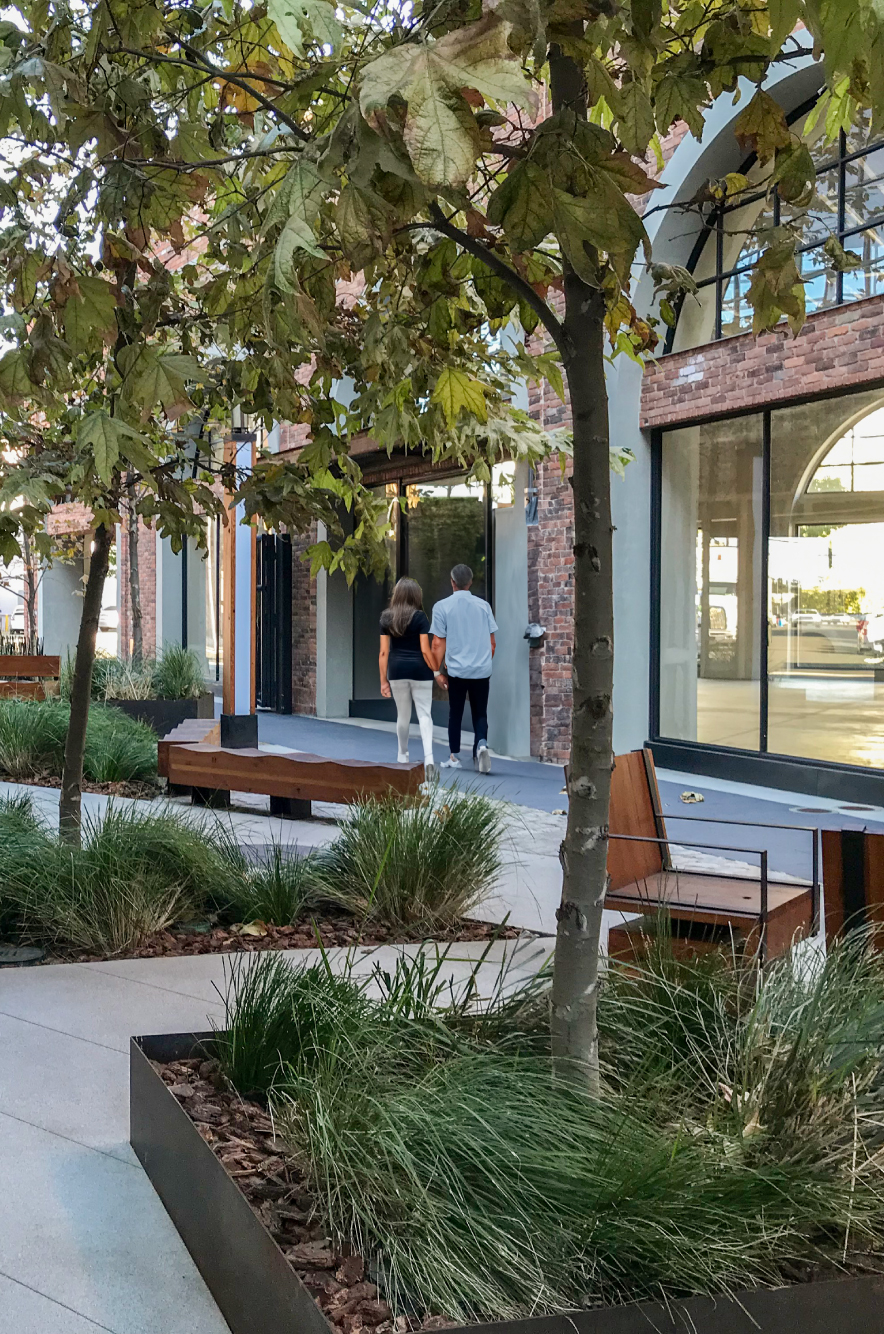
Earlier this month on Dec. 3, the Planning and Land Use Management (PLUM) committee moved forward the Landscape and Site Design Ordinance, which creates people-first design standards that support neighborhood walkability, healthy communities and climate-adapted design. The PLUM committee also advanced CBS’ TV City Project, which is a major project supporting media and entertainment industry success. It is congruent with Mayor Karen Bass’ Executive Directive 8 to uplift the economy through entertainment production.
City Planning is committed to expanding more options and opportunities to increase housing production, affordable housing choices, and bolster economic activity in an equitable and sustainable manner. Thank you to the thousands of stakeholders who have weighed in on public comment to help shape these critical recommendations through the adoption process.
Happy Holidays! Together, we are #Planning4LA.
Sincerely,
| |
|
Vince Bertoni,
Director of Planning
| | |
|
A Major Milestone: City Council Unanimously Approves DTLA CPU and New Zoning Code | |
On Dec. 4, 2024, the Los Angeles City Council unanimously approved the final implementing ordinances for the Downtown Community Plan Update, or DTLA 2040, a multi-year effort that seeks to update the policies and zoning designations that guide development within the seven-square-mile core of the City. The Council’s unanimous decision helps usher in more sustainable growth, as well as protects and encourages affordable and supportive housing in L.A.’s urban core. The DTLA Community Plan Update will also be the first area in the City to make use of the long-anticipated New Zoning Code.
“The Downtown Community Plan update provides clear, standardized tools necessary to address the housing crisis equitably,” said Director of Planning Vince Bertoni. “Downtown Los Angeles faces unique challenges and opportunities as a dense, mixed-use urban center. This update coupled with the New Zoning Code will play a crucial role in shaping its future, promoting sustainable development, preserving historic resources, and enhancing its livability.”
More information on the Downtown Community Plan can be found at planning4la.org/dtla2040. More information about the New Zoning Code will be shared in coming months.
| | |
|
City Council Moves Housing Element Rezoning Program to Form and Legality | |
On Dec. 10, 2024 the Los Angeles City Council acted on and voted to instruct the City Attorney to prepare the final ordinances associated with the Housing Element Rezoning Program. These ordinances include the Citywide Housing Incentive Program (CHIP), Housing Element Sites and Minimum Density Ordinance, Resident Protections Ordinance, and Citywide Adaptive Reuse Ordinance. This milestone signifies a crucial step in creating an equitable, sustainable, and resilient City, where all Angelenos have access to housing.
At the meeting, Council heard over two hours of public comment and discussed revisions to the ordinances including expanding housing opportunities in single family areas near transit. The Council also discussed technical amendments to the Citywide Adaptive Reuse Ordinance including aligning adaptive reuse provisions with the Responsible Hotel Ordinance and restricting residential conversions of existing hotels. Ultimately, the City Council voted to adopt recommendations from the PLUM Committee with minor technical amendments to the Citywide Housing Incentive Program (CHIP) and Housing Element Sites and Minimum Density Ordinance, as well as the amendments to the Citywide Adaptive Reuse Ordinance noted above. An audio recording of the meeting is available here (an audio recording in Spanish can be found here).
| | |
|
Landscape and Site Design Ordinance Unanimously Approved by PLUM | |
After four years in development, the Planning and Land Use Management Committee (PLUM) unanimously approved the Landscape and Site Design Ordinance with no amendments on Dec. 3, 2024.
The ordinance reflects best practices in addressing climate needs and social factors, and provides multiple pathways to advance site design principles that make our streets and sidewalks more walkable, support healthy communities, provide spaces for nature and biodiversity to flourish, and create buildings and places that support positive community interaction. It will be considered for adoption by the full City Council in 2025.
City Planning invites Angelenos to test a new web-based tool in development, the online Landscape and Site Design Ordinance Calculator, that will enable project applicants to select from a variety of sustainable design strategies and determine compliance with the Ordinance’s flexible point system prior to filing an application. Any feedback on the calculator can be sent to: planning.urbandesign@lacity.org.
| | |
|
Planning’s BESt Unit Introduces New Email and Phone to Assist with Al Fresco Applications | |
City Planning has actively supported the Al Fresco program through targeted outreach and streamlined processes to assist restaurant professionals and small businesses. In November and December 2024, two Al Fresco Application Clinics were held in collaboration with the Mayor’s Office, providing personalized guidance on the application process. To improve accessibility, City Planning’s Beverage and Entertainment Streamlining (BESt) unit introduced a new email address, planning.BESt@lacity.org for inquiries related to Al Fresco applications and other alcohol authorizations. The BESt unit also released a bilingual interactive voice service, provides in-person and virtual consultations in several languages, and distributes informational materials in English and in Spanish. The voice service can be reached at (213) 202-5456.
Since the program’s adoption, City Planning has engaged stakeholders through Mayor-led inter-agency presentations, small business events hosted by Council Districts 7 and 1, and independent efforts, including a social media campaign, newsletters, e-blasts, and updates to the "Alcohol Sales" page and BuildLA resources.
L.A. Al Fresco launched in May 2020 as a temporary program to promote the economic vitality of the City’s restaurants during COVID-19 by creating a streamlined process to obtain approvals for outdoor dining on private property, sidewalks and streets adjacent to their establishments. The deadline for Al Fresco Temporary permits to expire has been extended to Jan. 31, 2026. For guidance on applying for the permanent program, visit buildla.lacity.org/alfresco.
| | |
|
Home-Sharing Complaint Form | City Planning has introduced a new process for reporting non-compliant Short-Term Rentals operating without a valid Home-Sharing registration number. To report an unregistered property, please complete the Unregistered Short-Term Rental Report Form. | |
On Nov. 20, 2024 the annual GIS Day was held at Gloria Molina Grand Park next to the County Hall of Administration. The Map Gallery section of the event showcased some maps, and Stephanie Pincetl from the California Center of Sustainable Communities (UCLA) was the keynote speaker. This year's Los Angeles City Planning GIS staff hosted a booth highlighting the new Downtown Zoning Code. | |
Planning Shares Real World Experiences With UCLA’s MURP Students | |
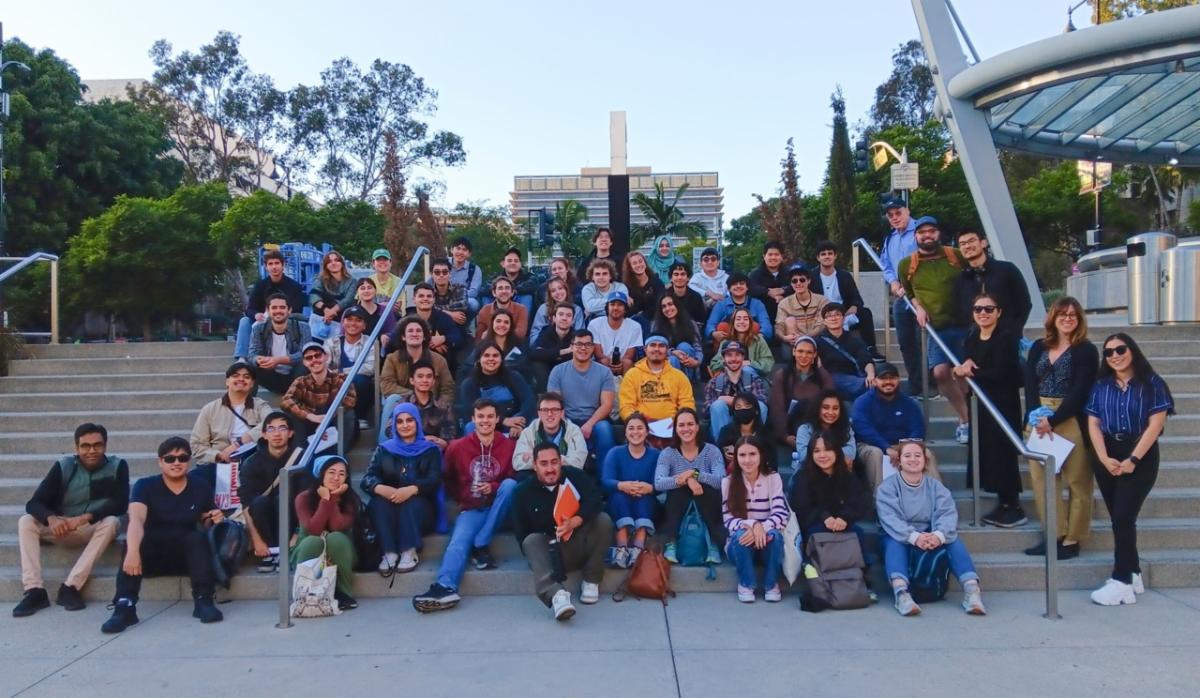
On Fri., Nov. 22, 2024, members of the Department of City Planning met with graduate students from UCLA’s Masters in Urban and Regional Planning (MURP) program at Grand Park as part of Professor Brian D. Taylor’s (Ph.D, FAICP) Transportation, Land Use and Urban Form class. During their field trip, nearly 60 students and faculty met with and heard from Planners from the Central Project Planning and Community Planning Divisions and the Urban Design Studio on topics such as the Boyle Heights Community Plan Update and debates over gentrification in the area (led by City Planning Associate Osvaldo Garcia, MURP 2013), the implementation of housing incentive programs such as ED 1 (led by City Planner Chi Dang, MURP 2015), implementation of the Vermont Western Station Neighborhood Area Plan (SNAP) (led by City Planning Associate Yamillet Brizuela, MURP 2020), and updates on the Landscape and Site Design Ordinance and Citywide Adaptive Reuse Ordinance (led by Senior City Planner Michelle Levy of the Urban Design Studio). The opportunity to share real world experiences and practices was made possible by the collaborative efforts of Principal City Planner Jane Choi (MURP 2007), with the hope to continue bridging discussion between universities and working professionals. | |
OFFICE OF RACIAL JUSTICE, EQUITY, AND TRANSFORMATIVE PLANNING | |
|
On Nov. 5, 2024, Americans embraced a core responsibility of democracy: voting in the presidential election. For Angelenos, the recent election represented more than a choice of president, it was also an opportunity to vote on vital propositions and local candidates whose policies impact the quality of everyday life. As the City and country continue to process the results of the election, the Office of Racial Justice, Equity, and Transformative Planning (ORJETP) wants to uplift the importance of building and maintaining strong community connections and staying connected to important causes.
Now more than ever, Los Angeles City Planning and the ORJETP are working to make planning more inclusive and to center the voices of people that have been historically excluded from decision making. In recent years, the Planning Department has prioritized public engagement by offering informational material in multiple languages, holding meetings in person and virtually to maximize attendance, and providing extended office hours to keep an ongoing dialogue with the public.The ORJETP hopes the city can be a place where people can lead enriched civic lives, where they can continue to build community through volunteering, participating in neighborhood council meetings, assisting local school boards, and joining social clubs.
Strong community connections allow Angelenos to engage in meaningful and honest dialogues that contribute to psychological wellbeing and a sense of purpose. The ORJETP remains committed to fostering inclusivity in its planning process and centering the values and perspectives of its communities.
| |
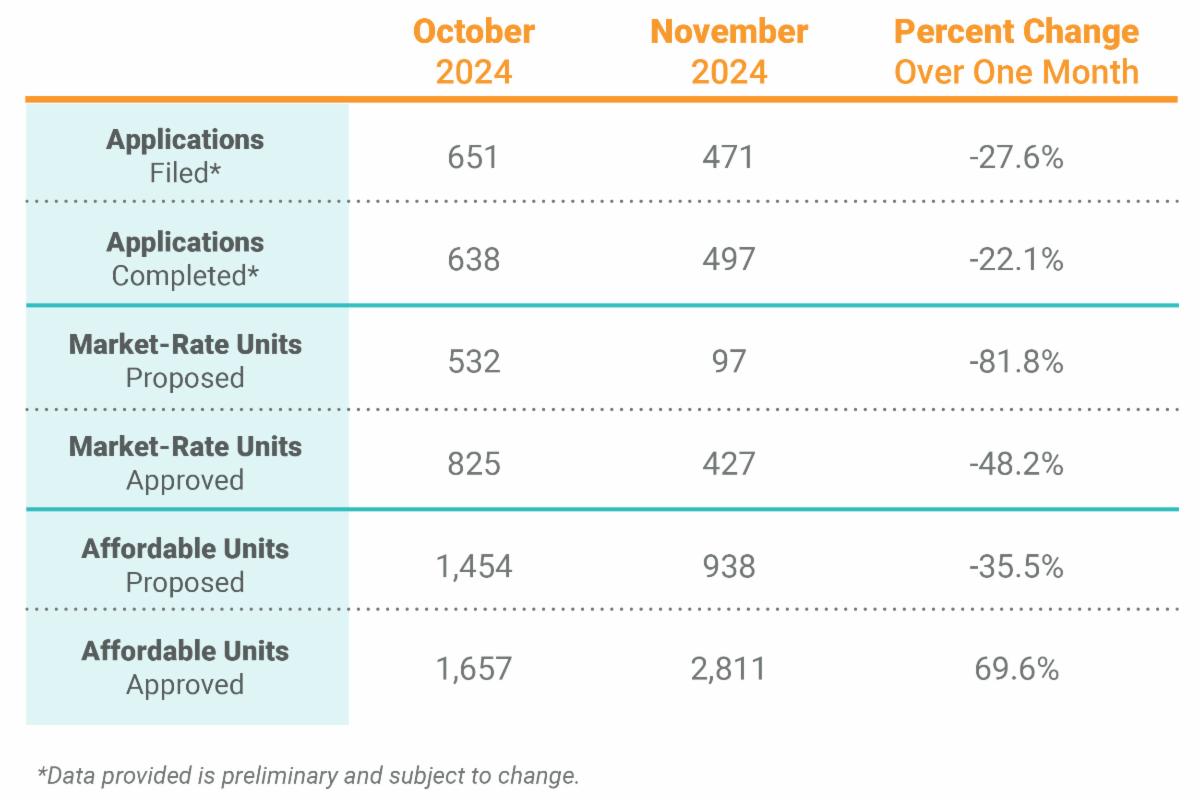
Applications filed decreased by 27.6% and applications completed decreased by 22.1% between October and November 2024. Proposals for market rate and affordable housing units declined by 81.8% and 35.5% respectively, while the number of affordable units approved by Los Angeles City Planning increased by 69.6% month-over-month. | | |
|
- The City Council adopted the Boyle Heights Community Plan on Sept. 25, 2024. The plan’s final ordinances were referred to the City Attorney to be finalized. The plan is anticipated to go into effect during the 2025 calendar year.
- The PLUM Committee recommended approval of amendments to the Boyle Heights Community Plan on Sept. 17, 2024, following which the City Council also recommended its approval on Sept. 25, 2024. The Plan will then enter the “form and legality” process where its implementing ordinances (zoning regulations) are reviewed and refined by the City Attorney's Office.
- On May 30, 2024, the Mayor approved the City Planning Commission’s action and transmitted the Boyle Heights Community Plan for the PLUM Committee and City Council’s consideration of the amendments to the Community Plan, Framework Element, Community Plan Text, General Plan Map Land Use Change and Matrices.
- The City Planning Commission disapproved modifications to the City Council adopted amendments to the Boyle Heights Community Plan at its meeting on Jan. 11, 2024.
- The PLUM Committee recommended approval of the Boyle Heights Community Plan with amendments on Dec. 5, 2023, following which the City Council also recommended its approval on Dec.12, 2023. The City Council’s actions on the Boyle Heights Community Plan Update are summarized here.
- Following the Mayor’s approval, the Boyle Heights Community Plan has been transmitted to the PLUM Committee for adoption (Council File 23-0861).
- On Nov. 7, 2023 Los Angeles City Planning held an Open House event in partnership with Council Member Kevin de León - Council District 14, and the Boyle Heights Neighborhood Council, as part of the Boyle Heights Community Plan Update.
- Final Environmental Impact Report (FEIR) was published on Aug. 10, 2023
-
Proposed Plan was unanimously approved by City Planning Commission on April 20, 2023
- Held a public hearing on the Draft Community Plan text, zoning regulations, Draft Land Use Map, and Draft Community Plan Implementation Overlay (CPIO) on Oct. 27, 2022
- Published Draft EIR on July 28, 2022, and the EIR comment period ended on Oct. 11, 2022
| | |
|
- The City Council adopted the Downtown Community Plan’s final ordinances on Dec. 4, 2024. The ordinances will become operative on Jan. 27, 2025.
- The City Council’s PLUM Committee unanimously approved DTLA’s final ordinances on Nov.19, 2024.
- PLUM approved the recommendations within a report on Campus Style Sites within the IX3 Use District (CF-22-0617-S3) and the report on Community Benefits in Skid Row (CF-22-0617-S4) on Oct. 15, 2024.
- The report on Fashion District IX3 Production Space Requirement (CF-22-0617-S5) was received and filed by the City Council’s PLUM Committee on Nov. 19, 2024. No actions were taken with respect to the report’s recommendations.
- The City Attorney reviewed the Downtown Community Plan Implementing Ordinances and the New Zoning Code. The documents were transmitted to the City Council for final approval.
- Per direction from City Council, transmitted reports on topics such as Adaptive Reuse, and Public Open Space in September 2023, to inform further refinements to the Community Plan
- The Planning and Land Use Management (PLUM) committee recommended approval of the Community Plan with amendments on April 24, 2023, following which the City Council also recommended its approval on May 3, 2023
- Transmitted Director of Planning's Memo to PLUM in September 2022, and a Director of Planning's Supplemental Memo to PLUM in March 2023 describing a few amendments to the CPC Recommended draft
- Transmitted Letter of Determination, Final EIR (FEIR), and CPC's recommended Community Plan to the Mayor and City Council for adoption on Sept. 27, 2022
- City Planning Commission recommended the plan and new zoning for approval in September 2021
- Released revised materials in advance of City Planning Commission hearing, including Zoning, Plan Text, Land Use Map, and Community Benefits Program, in June 2021
| | |
|
- Preparing for the Planning and Land Use Management (PLUM) Committee
- Preparing Final Environmental Impact Report (FEIR)
- The Proposed Harbor Community Plans were considered and recommended for approval by the City Planning Commission on Feb. 8, 2024
- Hosted a virtual information session and public hearing - November 2023
- Released the Draft Environmental Impact Report (DEIR) for public review and comment – September 2023
- Hosted Virtual and In-Person Office Hours – September 2023
- Released the proposed Harbor LA zones and new zoning tutorial video series in September 2023
- Released Harbor LA StoryMap with new zoning information in December 2021
| | |
|
- On Nov. 13, 2024 City Council continued the consideration of Hollywood's final ordinances to Jan. 7, 2025. The final ordinances are awaiting City Council adoption and are anticipated to be considered in early January.
- Consideration of Hollywood’s final ordinances by the PLUM Committee occurred on Nov. 19, 2024.
- On May 3, 2023, the Los Angeles City Council unanimously adopted the Hollywood Community Plan Update. The City Council also recommended an amendment requested in the motion from Council District 13 (Soto-Martinez) and a follow up report requested in the motion from Council District 4 (Raman). Additional information about the requested amendments is summarized here.
- The implementing ordinances have been reviewed to ensure clarity of regulations and consistency with state law and were transmitted by the City Attorney to the City Council. These ordinances will be back before the City Council in November.
| | |
|
- Ongoing outreach meetings with various stakeholder groups and neighborhood councils across all three community plans to implement our Outreach Strategy Plan including sharing the General Plan Land Use Maps through the StoryMap, May 2024 - January 2025
- Staff hosted in-person and virtual office hours on Sept. 17, 19, 23, and 24 for more detailed, one-on-one discussions about the Draft GPLU Designations with stakeholders.
- Drafting Policy Documents, June - December 2024
-
Virtual Historic Resources Workshop with Office of Historic Resources on Nov. 20, 2024 at 6 pm
| | |
|
- Released an interactive draft Zoning Map, draft Plan Policy text, and updated draft General Plan Land Use Designations map for public release in Spring 2024.
- Ongoing outreach efforts with various stakeholders, including neighborhood councils and community organizations, and hosting virtual office hours to answer questions and hear feedback on the recently released draft documents.
- Staff hosted two Scoping Meetings for the Draft Environmental Impact Report in October.
| | |
|
- Conducted Neighborhood Council outreach throughout the summer across the four Community Plan Areas, providing an overview of the Spring 2024 Draft Land Use Maps and the Community Plan process.
- The team hosted a meeting with the Westside Community Plans Advisory Group (WCPAG) on Oct. 29 to provide an overview of the Spring 2024 Draft Land Use Maps, overview of the New Code zoning tools, and solicit targeted feedback to incorporate those zoning strategies into the round of drafts.
| |
|
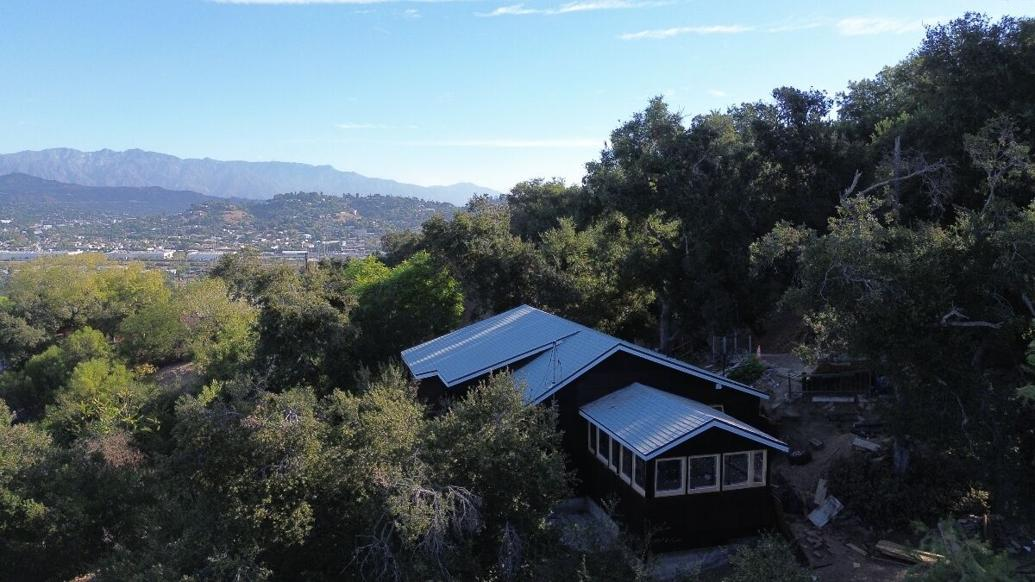
Tucked away in the hills of Elysian Heights you can find the cabin of master wood engraver, Paul Landacre and his wife Margaret. The house was registered as Historic-Cultural Monument (HCM) No. 839 in 2006. Built in 1909, the house was purchased by Landacre in 1932 and served as his home through his most productive years as an artist. Landacre is considered one of the best artists of his era, having produced highly acclaimed black and white prints through the use of wood blocks. The cabin fell into disrepair in 1963 after the death of the Landacres and stood abandoned and boarded up for many years. In more recent years, thanks to the efforts of architects Monica Oller and Tom Pejic, the house has been restored to its former glory.
A lesser known history of the house is its significance to the Spiritualist movement in LA. Spiritualism was a social movement and religion that arose in the 1840s and had a thriving community in the hills of Elysian Valley known as the Semi-Tropic Spiritualist Association. Before the Landacre ownership, the house served as one of the Semi-Tropic Spiritualist Association’s cabins. The house sits on the Semi-Tropic Spiritualists’ Tract, land bought by the spiritualists, and is bordered by the Semi-Tropic Park, where the group planned to build shared structures and hosted events. Some sources have tried connecting Landacre to the spiritualist movement but while his lifestyle followed many of their values, the association ceased to exist before the Landacres’ move to LA from Ohio.
| |
|
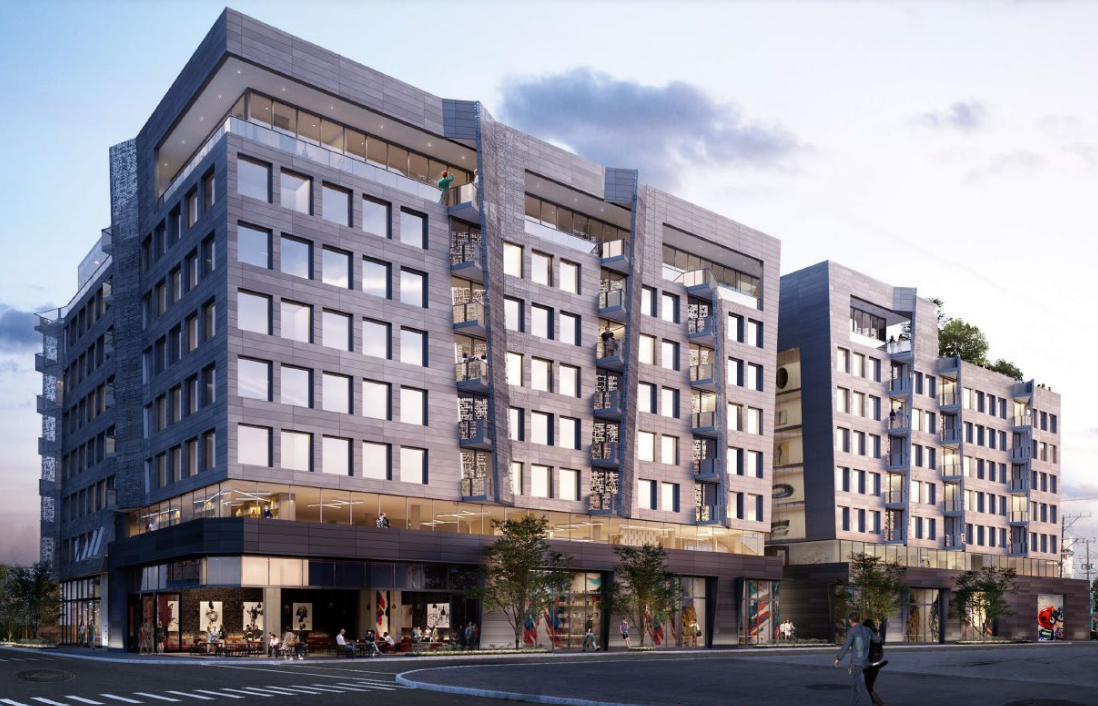
The City Planning Commission (CPC) recently recommended approval of an eight-story, mixed-use development located at 1100 East 5th Street in the Arts District Neighborhood. The mixed-use building will include 220 live/work units, of which 11 percent of the units will be deed-restricted for Very Low-Income (VLI) households, and 46,548 square feet of commercial uses. The project includes a flexibility option to replace 20 live/work units with an additional 17,765 square feet of commercial uses, consisting of 200 live/work units, 11 percent of which will be deed-restricted for VLI households, and 64,313 square feet of commercial uses. The flexibility option will utilize the same building parameters as the project and there would be no other changes to the project. Both options will provide 22,275 square feet of open space, including publicly accessible paseos and a courtyard.
Staff Recommendation Report
| |
December City Planning Commission Meetings | |
|
December Area Planning Commission Meetings | |
|
South Los Angeles: Dec. 17
West: Dec. 18
Harbor: Dec. 17
North Valley: Dec.19
| |
|
LOS ANGELES
CITY PLANNING
| |
Sign up to receive citywide planning updates by email | |
|
@Planning4LA
Planning4LA.org
| |
| | | |