|
Fell Pony Ponderings and Pictures from Willowtrail Farm
June 2026
| | |
Earlier this year, I learned it was the Year of the Fire Horse in the Chinese zodiac. It has lived up to its billing: fast and furious and needing a focus on love, compassion, and forgiveness in order to make it through with any shred of sanity! Thank goodness for Fell Ponies who help me with the latter!
I have been spending lots of time in service to the North American Fell Pony community as a member of the council of the Fell Pony Society of North America. It has been an honor and a learning experience. I have appreciated the expressions of appreciation that we have received from our community as we restore our organization. One of the biggest projects we have underway has just reached a major milestone. Ballots have been sent out for a vote on revisions to our bylaws. I was brought up with the belief that voting gives you the right to gripe, and not voting is the opposite. So if you are an FPSNA member and have voted, thank you! And if you haven’t, please do!
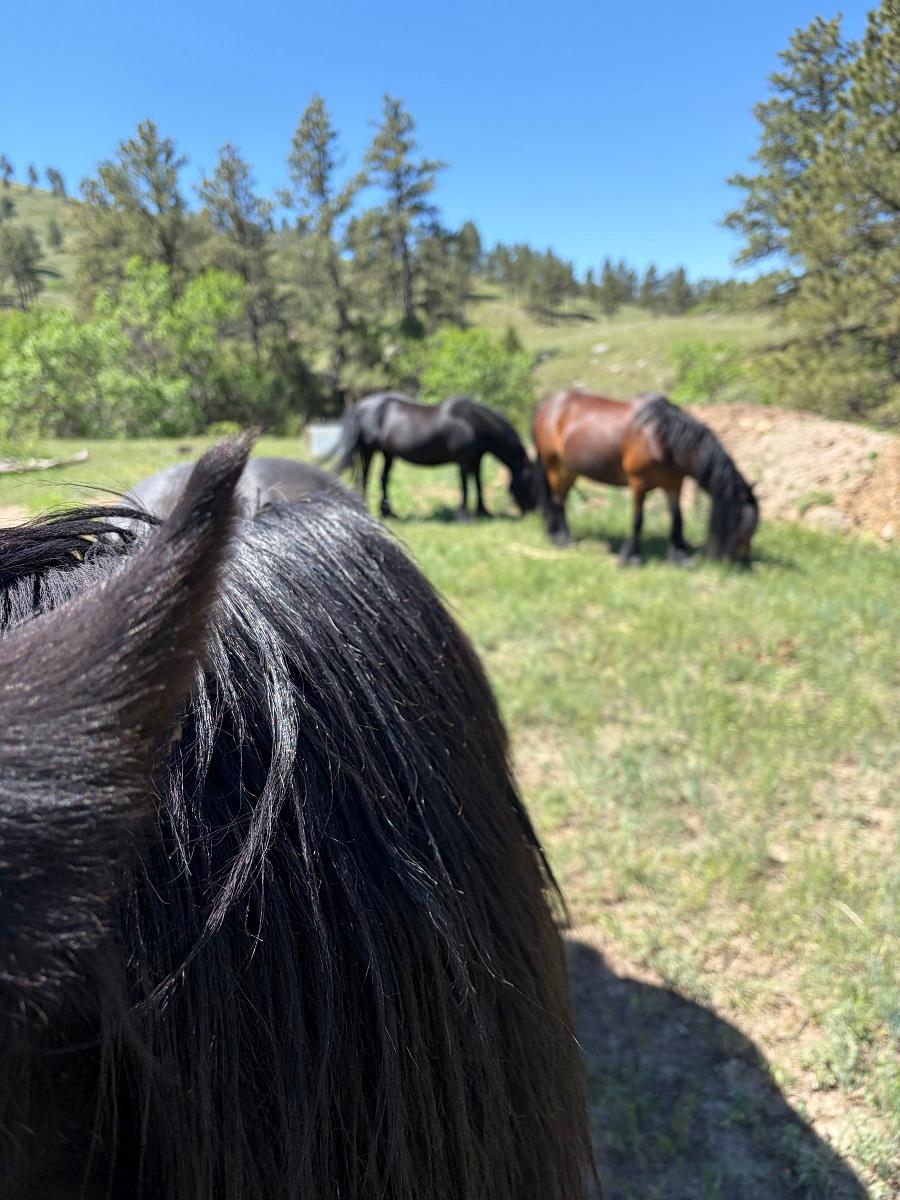
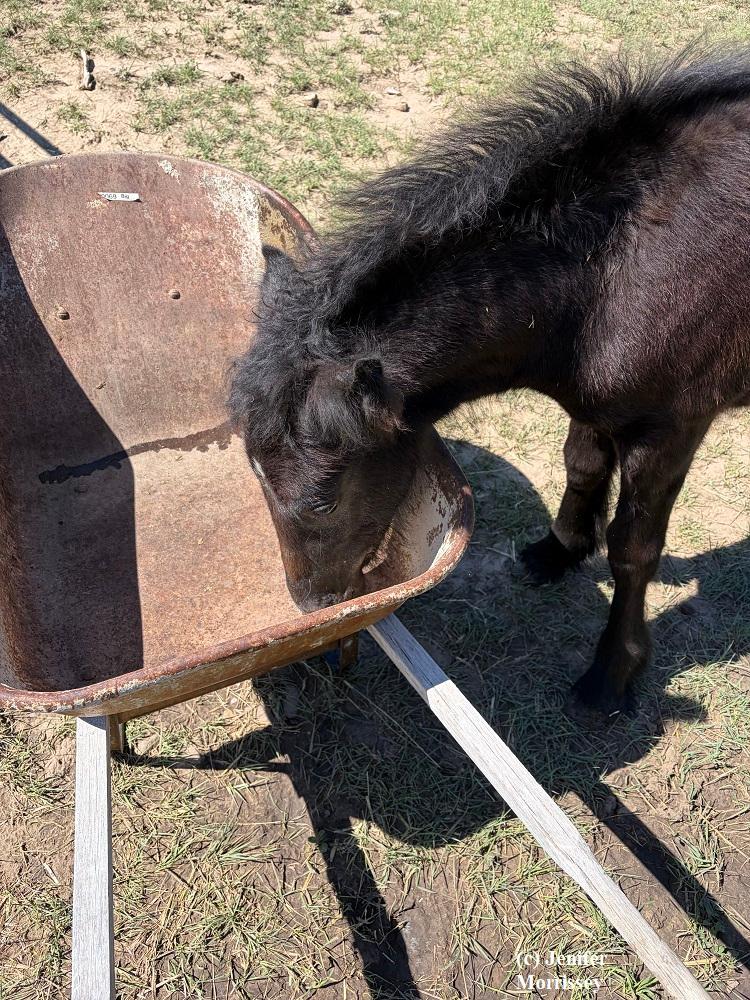
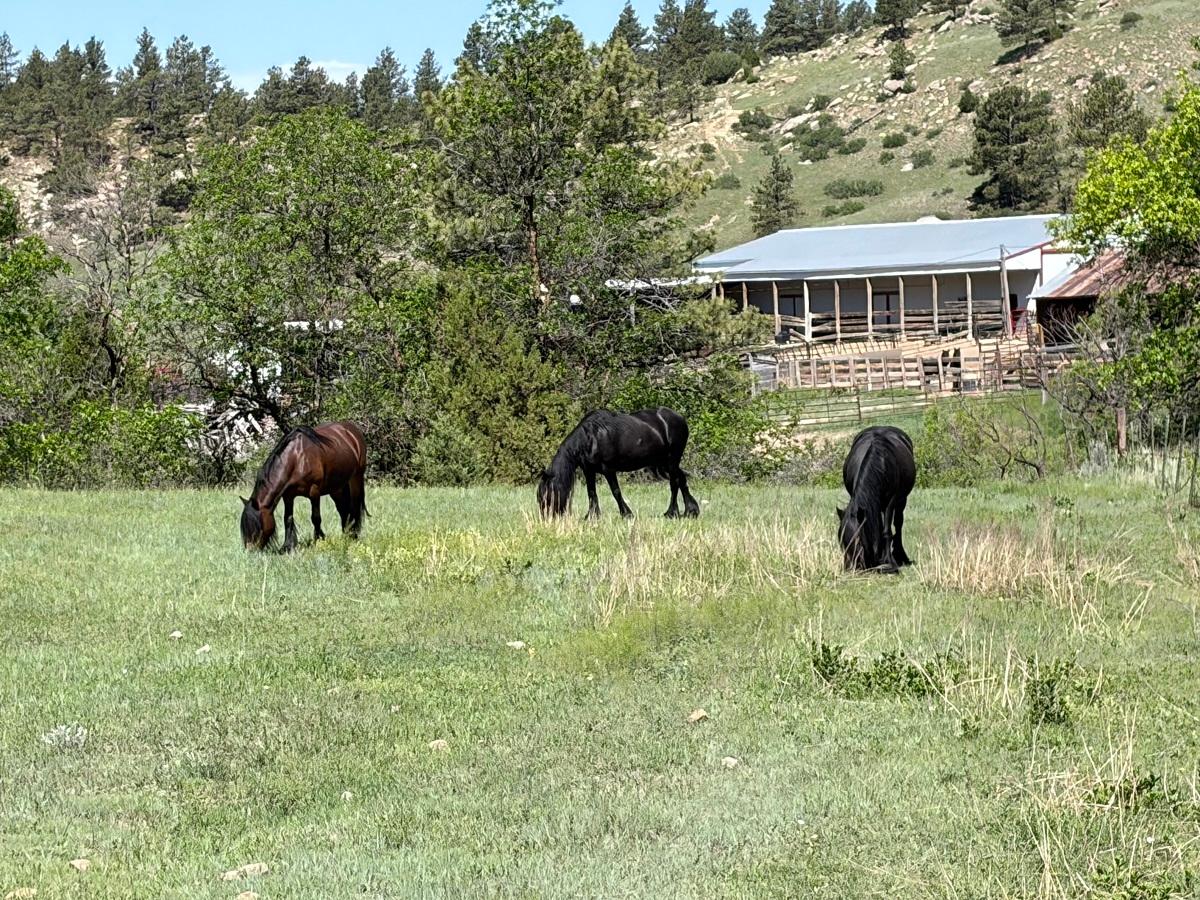
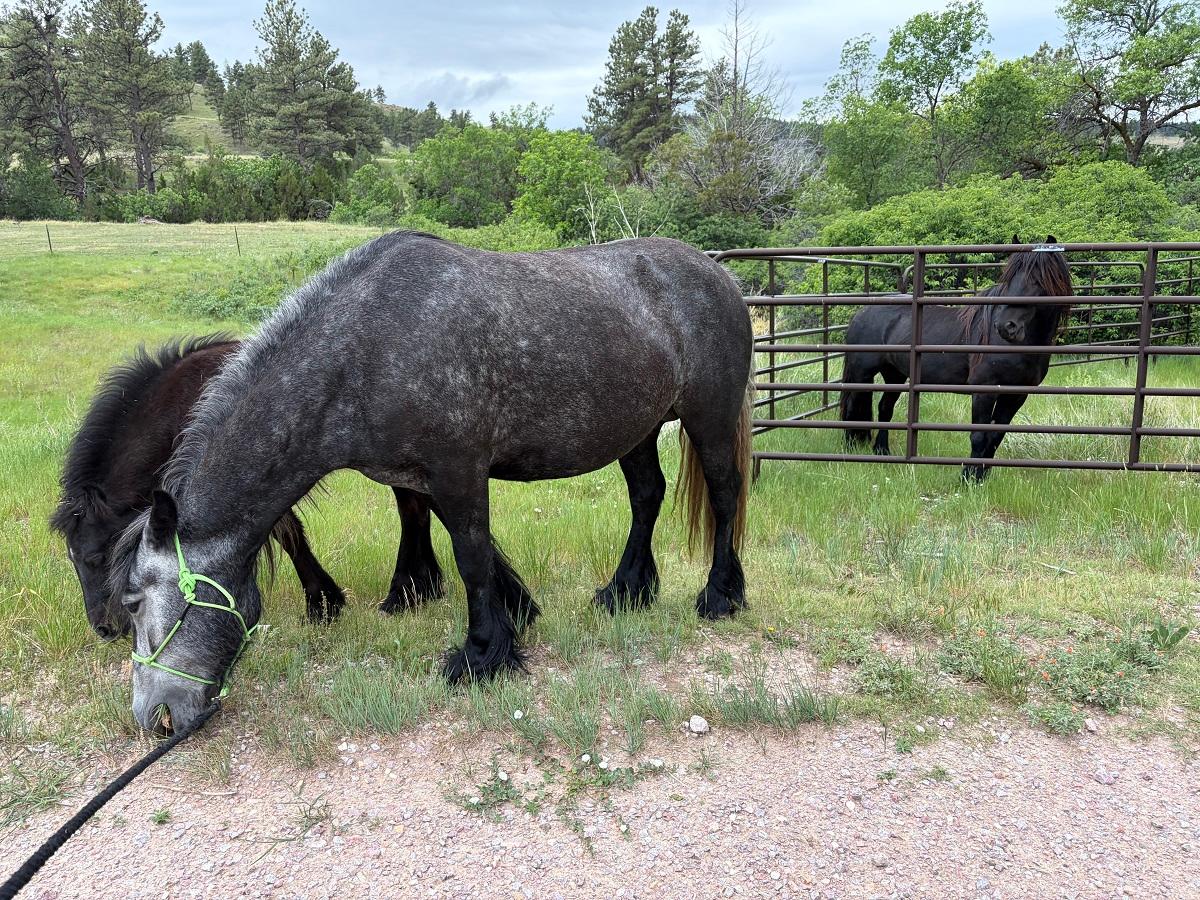
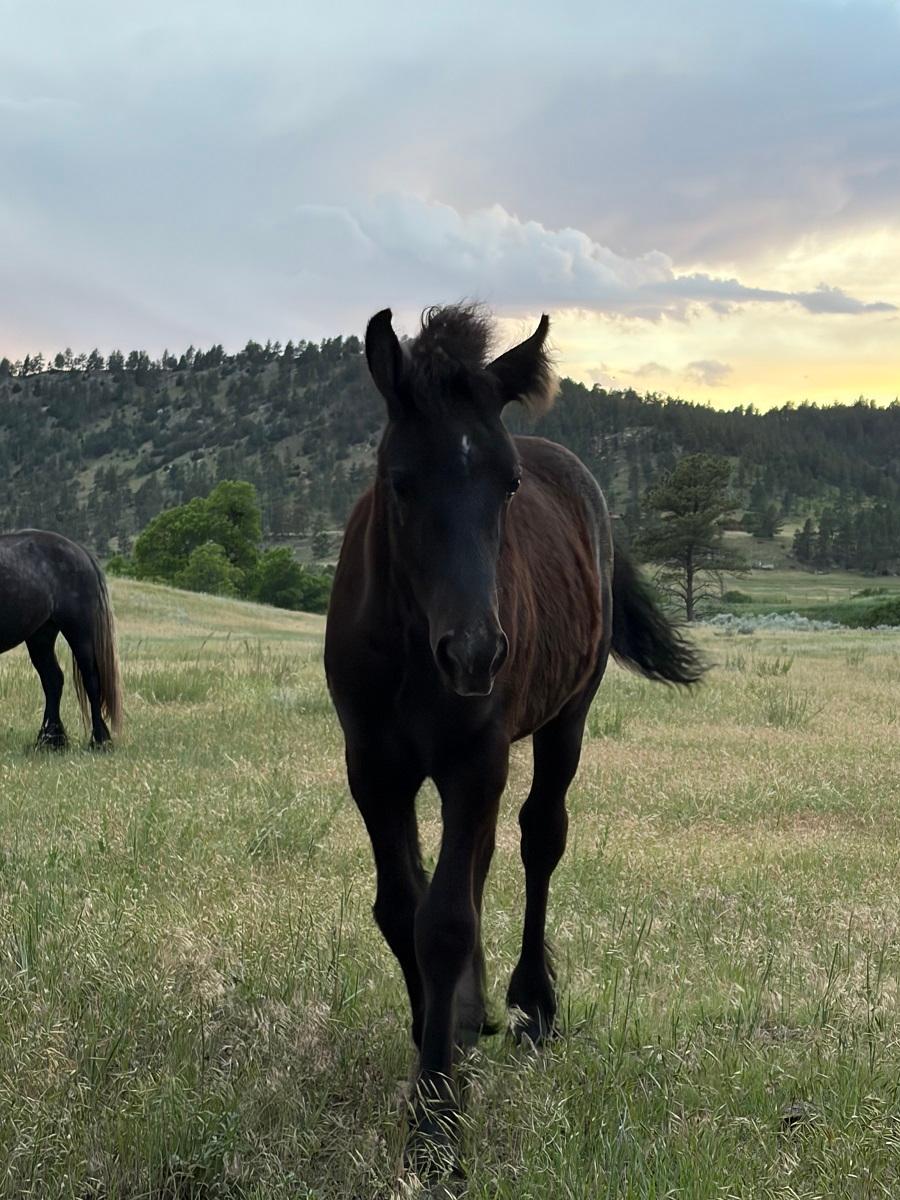
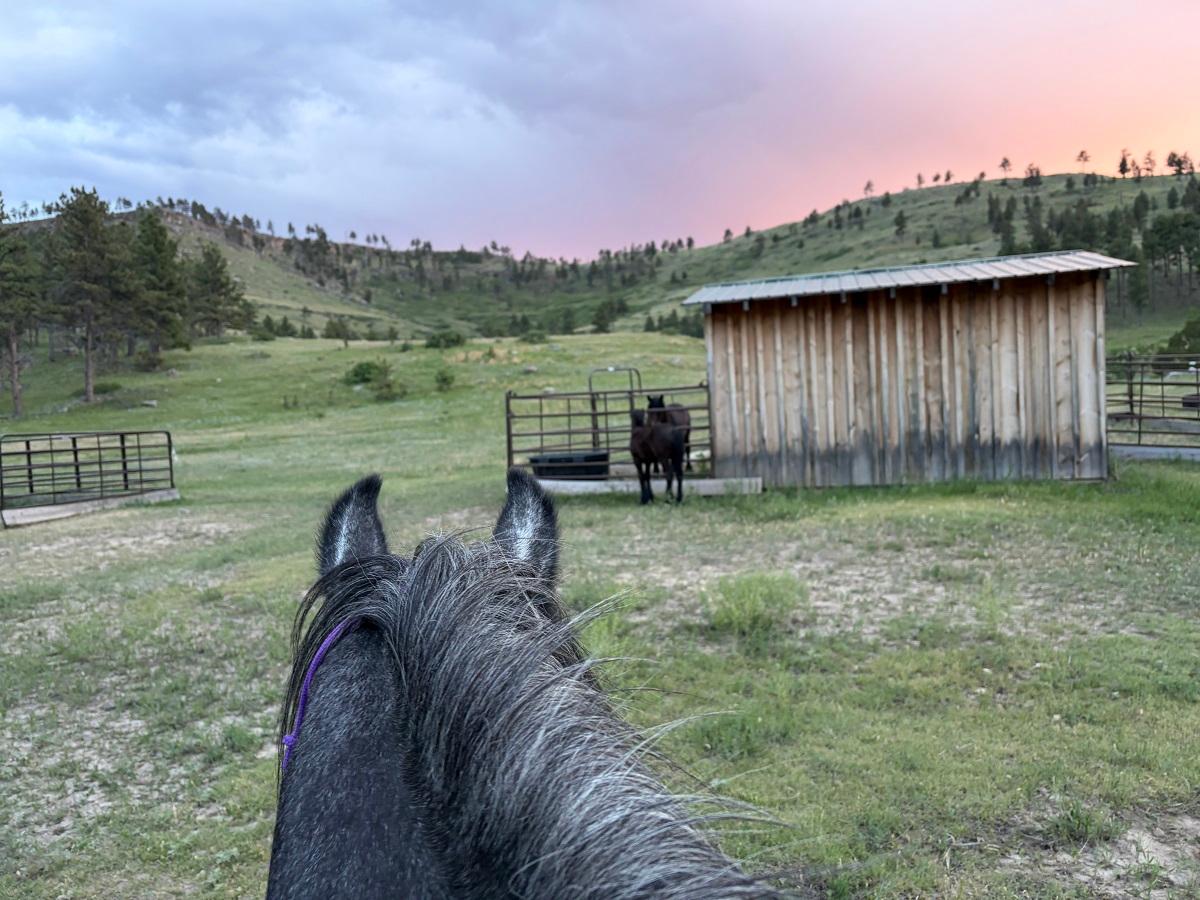
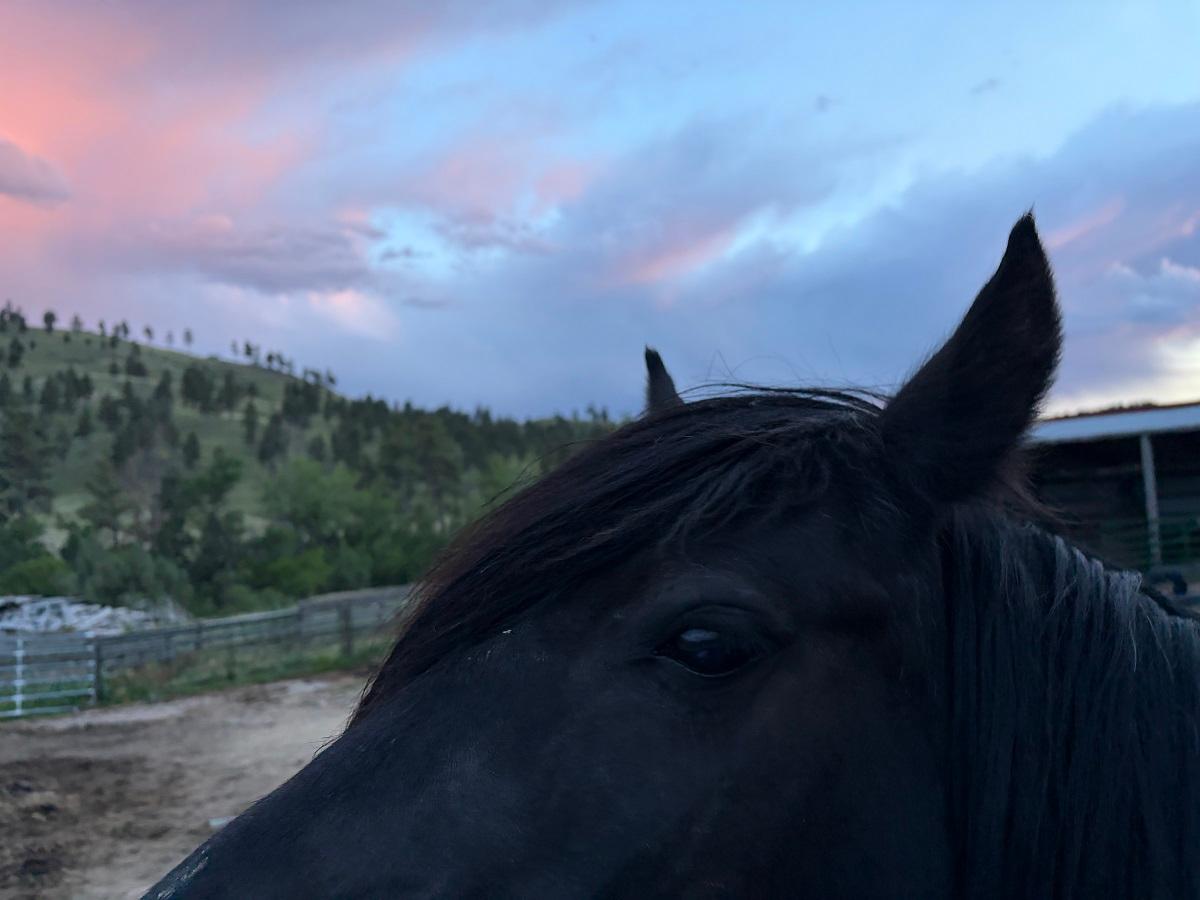
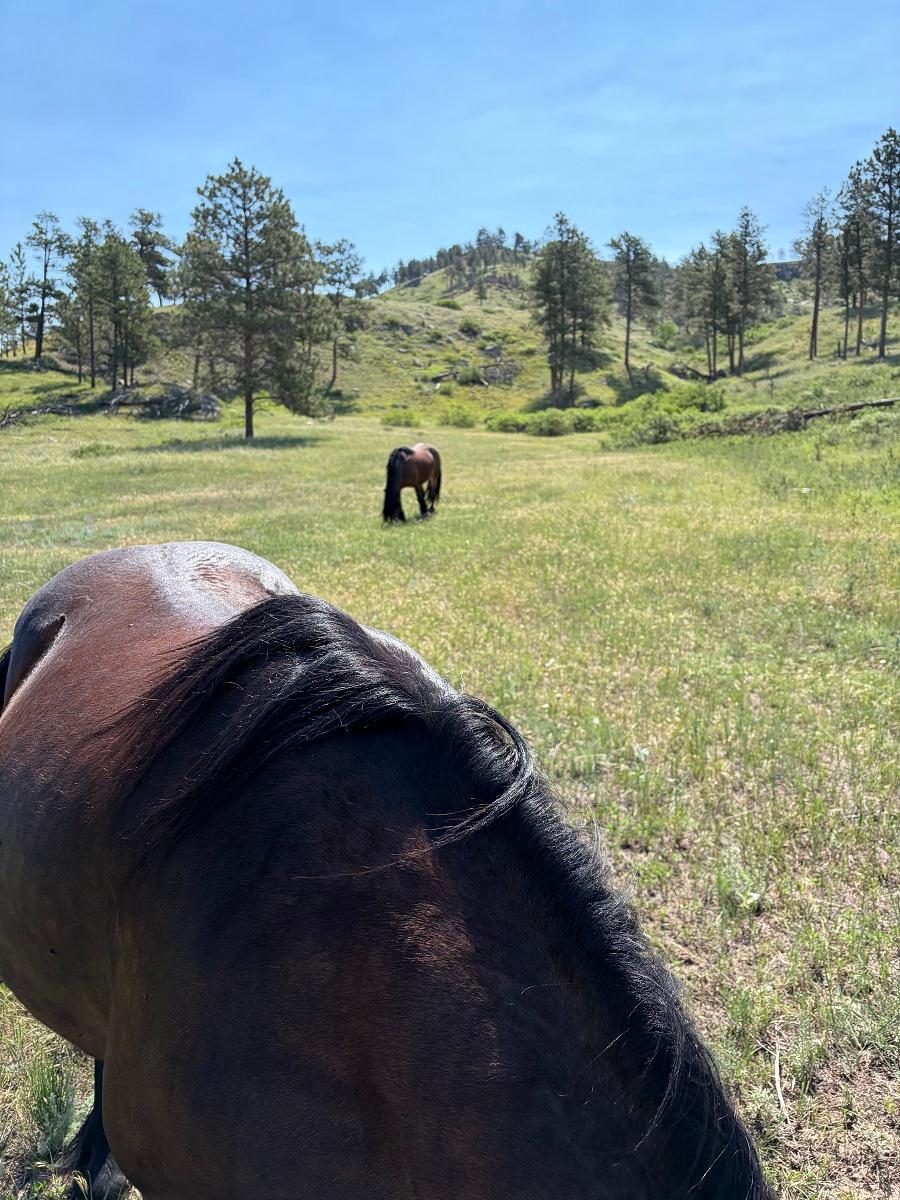
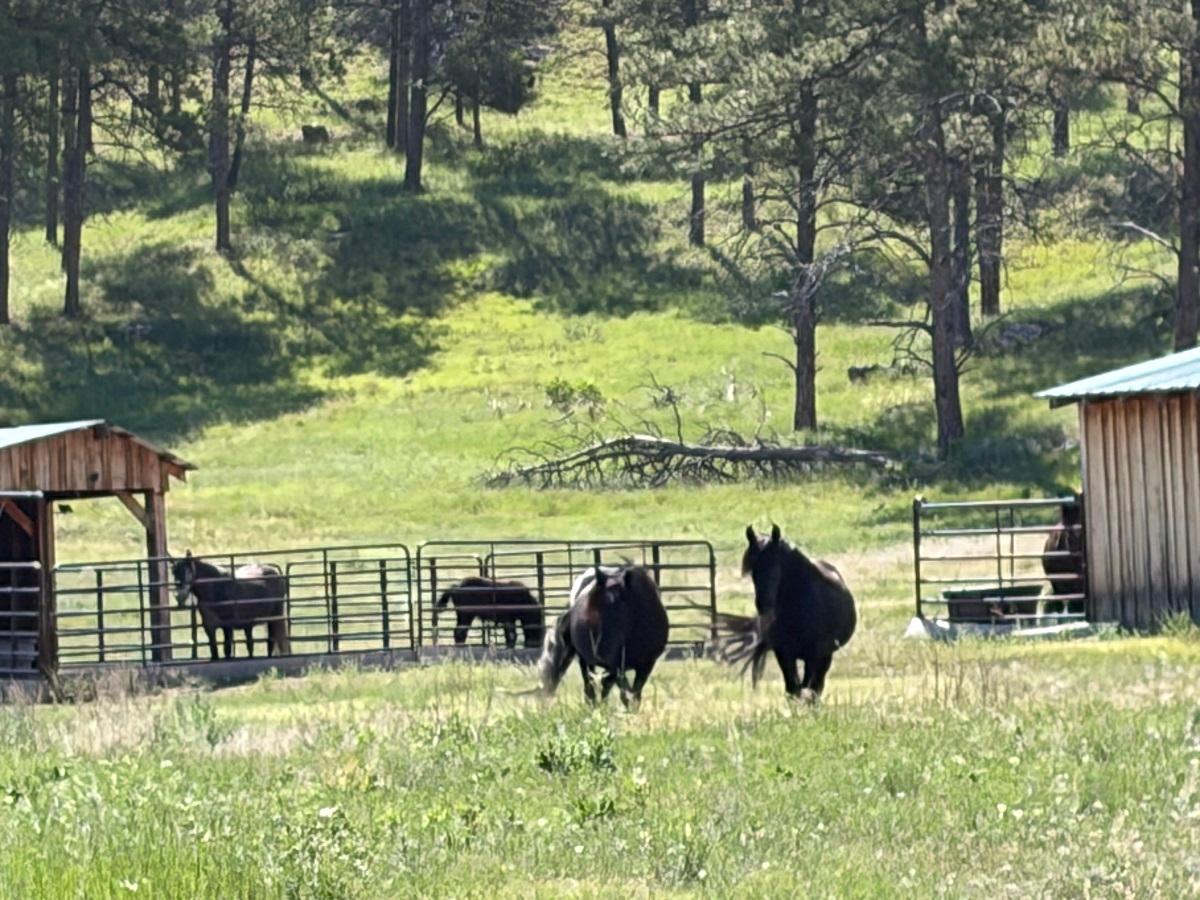
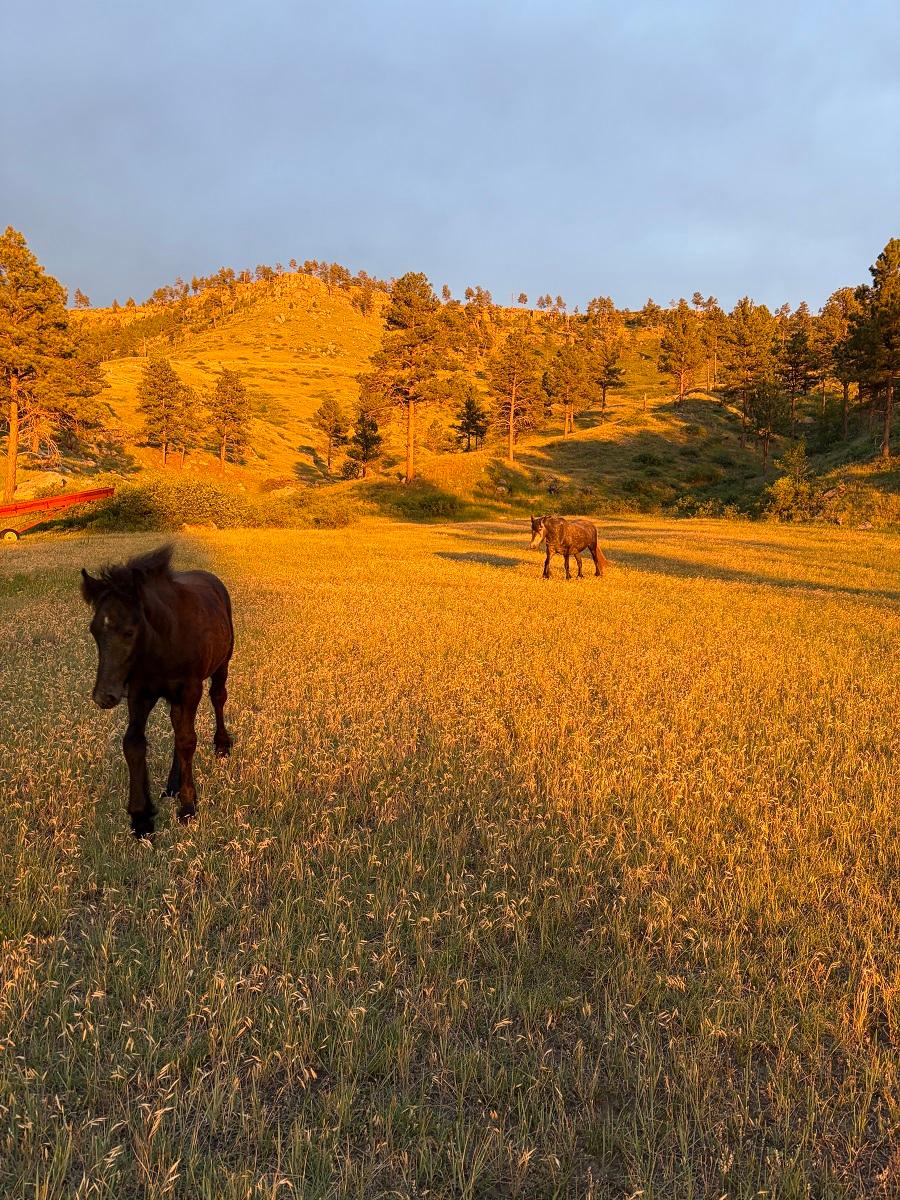
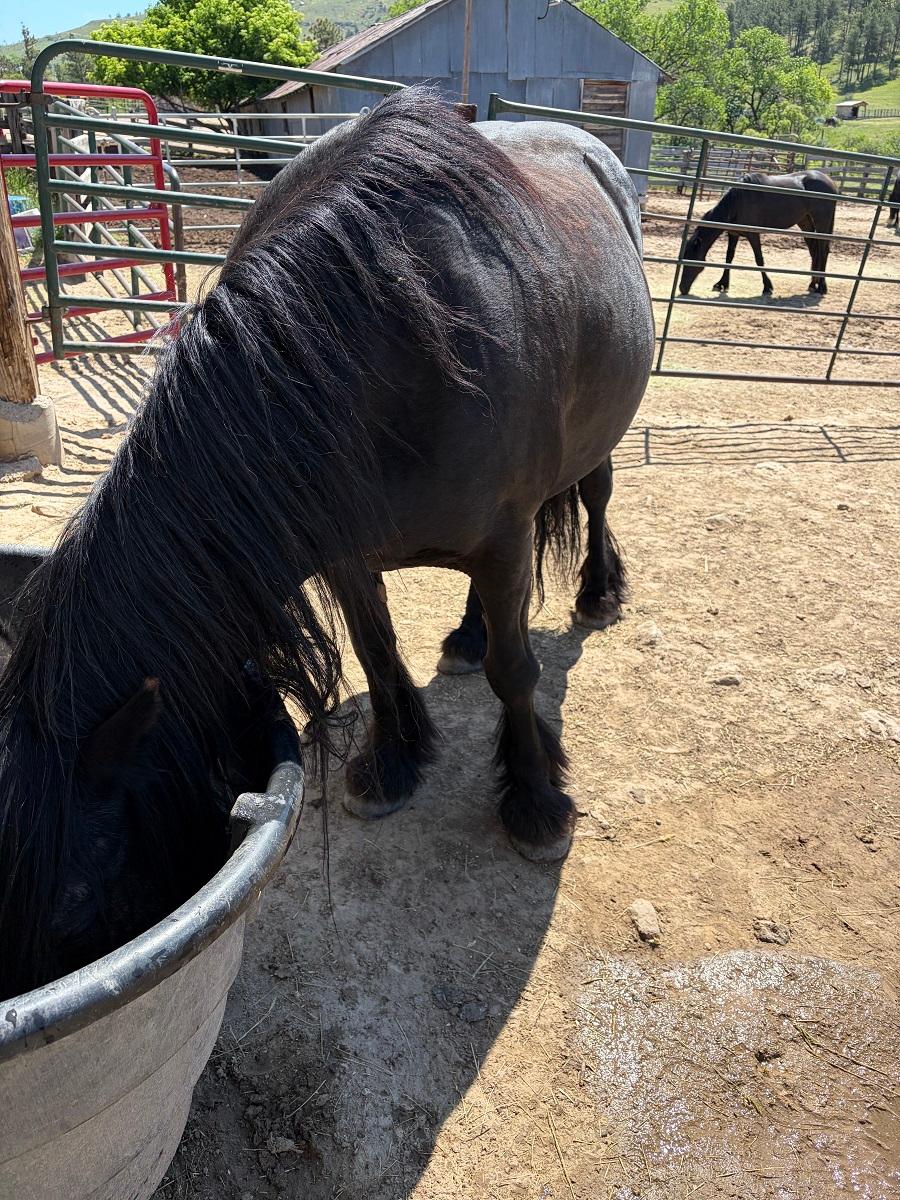
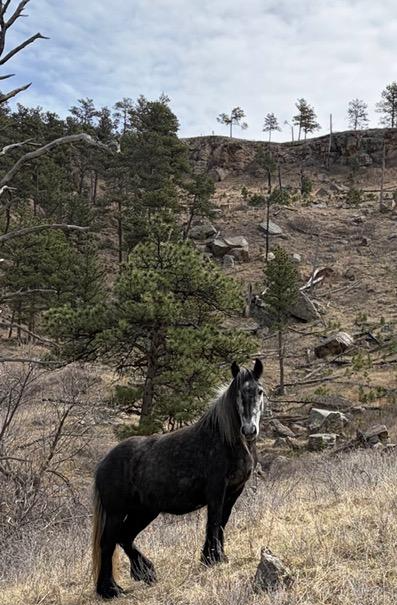
| | During this Year of the Fire Horse, responding to its fast and furious nature from a focus on love, compassion, and forgiveness is useful. Ponies can help us with that! | In this issue, I have included both Fell Pony ponderings and pictures. I hope you enjoy them! The pondering is about what a traditional Fell Pony is and why some of us consider them hard to find. The pictures are from the month of June, when we had enough moisture to turn things green! We were very grateful! I hope you too have found things to be grateful for in the midst of the fast and furious Year of the Fire Horse! | | Fell Pony Pictures from June 2026 | | |
Finding Traditional-Type Fell Ponies
I love getting questions about Fell Ponies. A recent one has really made me stop and think. I was asked why finding traditional-type Fell Ponies is so difficult. I admired the inquirer’s study of the question. They had looked at their own two ponies, concluding that one was traditional and the other different. And they had looked at many pictures online. Finally, they had defined what they meant by traditional. And they asked, why is the one they like that they currently have so hard to replicate?
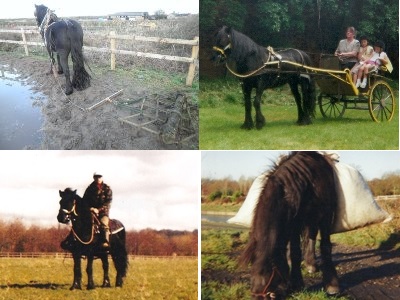
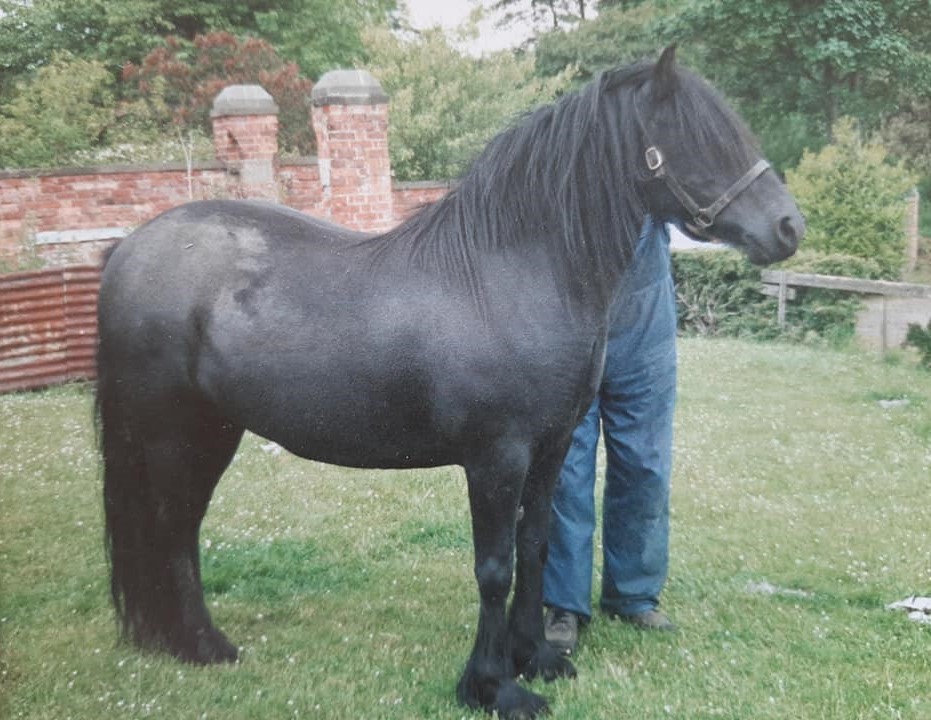
| | Mowcop Black Bess was put to many uses during her life, from driving to shepherding to harrowing to packing. Photos courtesy Eddie McDonough | | |
What is Traditional Type?
I have spent several months thinking about this question because it is one that is near and dear to my heart. First of course, as my inquirer did, I should define what I mean by a traditional-type pony. It’s something that any Fell Pony enthusiast - breeder or otherwise - has to answer when we decide to bring a Fell Pony into our lives.
My answer is that it’s the type that can do as the Fell Pony Society says: “you can’t put a Fell Pony to the wrong job.” It’s a type that has the conformation to do multiple jobs, not one that is specialized for riding or driving or packing or any of the many ways that ponies can be put to use. A traditional Fell Pony is a work pony in as many senses of those words as we can imagine. And there are implications of that for conformation, temperament, hardiness and any other aspect of these ponies that we can consider.
After defining traditional type, I quickly realized that a whole collection of reasons came to mind for why the type is hard to find today. Each section below is a summary from a longer article. Please feel free to ask if you’d like the longer article sent to you.
Breed type and the Work at Hand
The traditional work of the Fell has changed, so breeding emphasis has changed as well, and the ponies of today are different than those of a few decades ago. The breed type that ensured that our ponies could do a hard day’s work safely in harness or moving across rough ground carrying a pack or a rider is difficult to retain when the work at hand has changed and the characteristics of the breed type that support that work are no longer understood or valued.
Here’s something the late Walter Lloyd, breeder of the Hades Hill ponies, once said on this topic: The Fell Pony has developed as a result of hundreds of years of breeding on the hills of Northern England. It is hardy, able to live out on the hills all winter with no supplementary feeding and breed successfully the following summer. The hill land develops great stamina and the breed is also multi-purpose, so that in summer the owner can catch up the pony, hitch it to the mower and scaler and raker to make hay, to the sweep or sledge or cart to house the hay, to the Dales cart to get the muck out, and then ride it over the fells for shepherding, or in a gig to drive at a trot to market. …Nowadays the hill farmer probably uses an ATV to do the shepherding, and a tractor and baler to make the hay if he doesn’t make all silage, and Fell Ponies are mostly used for leisure riding and perhaps private driving; many are kept in a stable all winter and on fertile grassland in summer, in fat or show condition. (1)
Walter accurately summarizes the significant change to the work at hand of Fells today compared to times gone by, with inevitable changes to the type that people are breeding now because the work has changed. It’s really no wonder that the traditional-type Fell can be hard to find. To read more, click here.
| | This pony's breadth between the front legs has changed since moving to a landscape that requires moving up and down hills. | | |
How Bone and Substance are Made
Characteristics often associated with the traditional type of Fell Pony include bone and substance. It turns out that in addition to genetics, bone and substance are influenced by exercise and nutrition. As long as an equine is getting adequate vitamins and minerals, then exercise can have benefits in terms of bone density and dimension. In one study, for instance, cannon bone circumference increased in youngstock given 12-24 hours of turnout daily compared to stalled animals. (2) It is interesting to ponder how bone and substance might change in the Fell Pony when the ponies are raised away from their native fell where regular movement is required.
One of the most impressive modern-day mature Fell stallions in the bone and substance department serves as useful example. While not reared on a fell, he was on a well-crafted exercise regimen as a youngster resulting in his impressive mature physique. I have noticed in my own herd that since moving to a place with a fell-like hill, my ponies have become more muscular and wider through the chest. Now that Fell Ponies are more often living an easy life compared to that on the fell, it’s not surprising that the traditional type, with its bone and substance is hard to find. To read more, click here.
| |
Pony versus Horse Phenotype
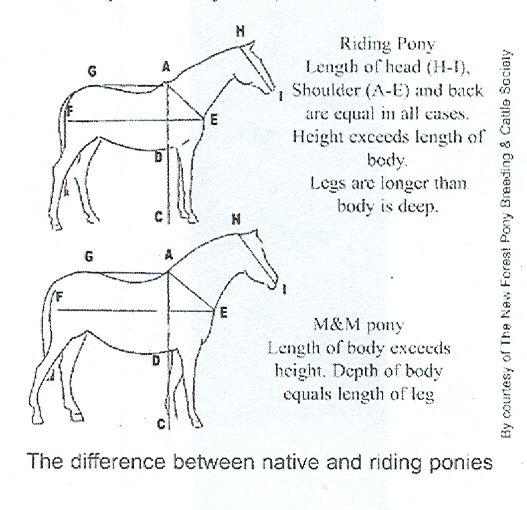
A phenotype is the appearance of an animal, as compared to its genotype or genetic make-up. For me, the image above is the best illustration I have ever found that distinguishes between a horse phenotype (as illustrated by the riding pony) and the pony phenotype (as illustrated by the M&M pony). The image was generously shared with me by the New Forest Pony Breeding and Cattle Society. I consider a traditional-type Fell to look like a pony not a horse.
What makes a pony look horsey? The illustration shows various proportions that differ between the two types. For me, a horsey looking pony often has large ears and a longer head, more leg than body (making them look taller), and a longer neck. Sometimes their hindquarters are lighter. A pony has a body that’s longer than the pony is tall, and the depth of girth is equal to or greater than the length of leg. The Fell Pony breed description says, “The Fell Pony should…show good pony characteristics with the unmistakable appearance of hardiness peculiar to mountain ponies…” For me this means a Fell Pony should look like an M&M pony rather than a riding pony.
Why is this relevant to the search for traditional-type Fells? Because Bill Potter, long time breeder of the Greenholme ponies, has observed, ““A lot of people have forgot about the little word ‘pony.’ These are ponies, not horses.”(3) And because here in North America, we have an example of what we have done to an M&M pony breed over time. Mountain and moorland pony enthusiasts will know that there is a tremendous difference between an American Shetland Pony and a traditional Shetland Pony. The American version tends toward the riding pony (horsey) type, while the traditional version retains mountain-and-moorland pony characteristics. That difference causes any American interest in mountain and moorland pony breeds to be looked on suspiciously for fear other breeds will suffer the same fate. It’s probably too soon to tell if the Fell in North American is being bred towards the horse phenotype, but I have definitely seen examples of that shift on both sides of the pond. To read more, click here.
People breed what they know and want
The vast majority of Fell Pony enthusiasts in North America came to the Fell from horses. It’s no surprise really, since in America we don’t have a history of using ponies for adults. I think this puts most enthusiasts here at a disadvantage since the majority of images they have in their minds are of horses. As a result, they may not even know when, especially if they’re breeding, they’re making selection decisions away from the Mountain & Moorland type and towards a horse phenotype. If they liked a Thoroughbred or a Friesian or a Quarter Horse, that is the image they will have in their mind as they select a Fell Pony to add to their lives. It’s not surprising, then, that with Shetlands, American breeders selected towards the horse phenotype. The presence of the horse phenotype in a customer’s or a breeder’s mind’s eye may be a contributing factor to why the traditional-type Fell is hard to find.
| Tarnmoor Black Beauty and her full sisters Beauty II and Beauty III represent a maternal line that we have lost. Photo courtesy Ruth Eastwood. | | |
Maternal Lines Lost
Maternal diversity means diversity on the female side. In 2025 I did an extensive research project about maternal diversity in the Fell Pony. I was incredibly saddened to learn that in the last fifty years, we have lost 44% of the mare lines in the breed.
Maternal diversity is important for two primary reasons: 1) there is genetic material passed to offspring exclusively through the maternal line. And 2) breeding practices tend to limit diversity on the male side, so retaining diversity on the female side becomes more important for the long-term health of the entire population. In 2019, Dr. Claire Winton found that the Fell Pony breed has good maternal diversity, and we need to not lose it. (4)
In the course of my research, I was fortunate to have access to historic photos of many Fell Pony mares courtesy of Ruth Eastwood. I was surprised how many of the photos of historic mares that Ruth shared were mares on my research list. Sadly, many of the most traditional looking, to my eye, have been lost to our breed or their line is critically rare. If we have lost that many mare lines that were traditional type, it’s no wonder it is hard to find the traditional type today. To read more, click here and scroll down to Maternal Diversity.
FIS Carriers
Have you ever had the experience of hearing something and thinking that it makes total sense and why didn’t I see it before?! That’s how I felt when I was told about a topic that’s quietly being discussed amongst Fell Pony breeders in Cumbria. The topic is about FIS carrier ponies and how those ponies seem to be, as a group, of better type than most FIS clear ponies. Often it seems that carrier to carrier crosses produce the best type of pony. (FIS is Foal Immunodeficiency Syndrome, a recessive genetic condition that can be fatal for foals 8-12 weeks of age. We now have a test for FIS status that is impacting breeding decisions.)
When I visited Cumbria in 2022, I was looking for an FIS clear colt to add to my breeding program. I looked at dozens of ponies, and the ones my eyes were drawn to were carriers or had unknown FIS status. I was incredibly frustrated that I couldn’t find what I was looking for. Now I understand that I was chasing the near impossible. The Fell Pony type that I admire is so often an FIS carrier.
Last year I had the opportunity to speak to a professional equine buyer who had been asked to purchase Fell Ponies in England for import to this continent. They said their client restricted their search for ponies to those that were FIS clear. The professional buyer then recounted how many excellent ponies they saw that they couldn’t consider because of that restriction.
I know from first-hand experience that there are some excellent FIS clear ponies in our breeding population. And I also know from experience that we have lost a lot of high-quality ponies from our breeding population because they were FIS carriers. Every breeder must make their own decision about how to manage the possibility of FIS in their herd. I hope that everyone will prioritize proper type over FIS carrier status. We need proper-type ponies to continue to contribute to our breed’s future. Obviously there are some who are not doing that which is yet another reason why it can be a challenge to find traditional-type Fell Ponies.
| | Bracklinn Phoebe is an example of a traditional type pony that is FIS clear. Someday I hope to learn what makes breeding ponies like her possible. | | |
I’m afraid my reflections on why traditional-type Fell Ponies are hard to find is not providing my inquirer with an easy answer to focus on. My reflections do, however, provide motivation for continuing the search; our breed needs people interested in that sort of pony to ensure that the Fell Pony of the future resembles the Fell Pony of its working past.
- Lloyd, Walter. “Notes on Breeding Fell Ponies,” Fell Pony Society Newsletter, Autumn 1995, p. 19.
- “Training and Bone Development,” Equinews Nutrition and Health Daily, Kentucky Equine Research, 11/15/09.
- Potter, Bill in Endangered Species – Conversation with Bill Potter, produced by Tom Lloyd, Dreamtime Film, 2011 at https://vimeo.com/1338910.
- Winton, Clare, et al. “Genetic diversity within and between British and Irish breeds: The maternal and paternal history of native ponies,” Ecology and Evolution, November 2019.
| | |
Fell Ponies for Sale
I have recently learned that Willowtrail Lettie, a 2021 mare, is for sale. Click here if you’d like contact information for Lettie’s owner.
| |
Best Wishes,
Jenifer Morrissey
Willowtrail Fell Ponies
www.willowtrailfellponies.com
605-745-3699
Hot Springs, South Dakota, USA
author of numerous books about Fell Ponies, available internationally by clicking on the image below
| |
Breeding an old type pony
for future generations
| | | | | |