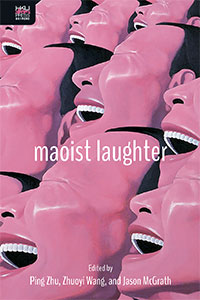
The Mao era (1949–76) is often depicted as oppressive, traumatic, and inhumane, and thus many people would consider “Maoist laughter” an oxymoron. In the introduction to this collection, Ping (Chinese literature, Univ. of Oklahoma) points out that “the Mao era was actually a period when laughter was not only ubiquitous but also bonded with political culture to an unprecedented degree.” This scholarly study of what made people laugh during the Mao era convincingly demonstrates the diversity, complexity, and dynamics of various cultural productions in Mao’s China. Divided into three parts—”Utopian Laughter,” “Intermedial Laughter,” and “Laughter and Language”— the volume’s ten essays cover, among other things, cross talk, cartoons, dance, children’s literature, comedy, regional oral performance, film, and fiction. Taken together, the essays work in concert to offer groundbreaking insight into laughter and humor in the Mao era.