|
Welcome to Committee Week 2 of the 2026 Session
Both chambers convened this week for their second round of interim committee meetings. Committees heard from agency leaders and subject matter experts on key state issues. The remaining interim committee schedule is as follows:
- November 3–7, 2026
- November 17-21, 2026
- December 1-5, 2026
- December 8-12, 2026
Regular session will begin on Tuesday, January 13, 2026.
| |
Speaker Perez Issues Memorandum on Property Tax Reform Proposals
| | |
On Thursday, House Speaker Daniel Perez issued a memorandum to members of the Florida House of Representatives outlining a series of property tax proposals under consideration for the upcoming legislative session.
The Speaker indicated his intent to advance these measures through the legislative process. Each House Joint Resolution includes provisions to prohibit reductions of funding for law enforcement and exempts school taxes. The memorandum also notes that the Joint Resolutions will not be accompanied by implementing legislation until it is determined which proposals ultimately receive approval.
The memorandum references several House Joint Resolutions—HJR 201, 203, 205, 207, 209, 211, 213 and House Bill 215.
Click here to read the Speaker’s memorandum.
See the proposals in our property tax tracker on our website, here.
| |
Reminder! FAC’s Legislative Conference is November 19th-21st — Register Today!
| |
Join your fellow county commissioners and staff at the 2025 Legislative Conference in Hillsborough County as we continue the Florida Association of Counties’ (FAC) vital policy development process. This annual event brings together FAC members and Legislative Policy Committees to meet, collaborate, and finalize the Legislative Action Plan that will guide advocacy efforts for the upcoming legislative session.
Playing a pivotal role in shaping statewide policy, the conference offers attendees the opportunity to engage in dynamic panel discussions, hear insightful presentations from state leaders, and participate in in-depth conversations on the most pressing challenges facing Florida’s counties today. More than just a gathering, the FAC Legislative Conference is where local leadership becomes statewide impact — and where the path forward for Florida’s counties is defined.
| | Capital Recap: Committee Week 2 | | Tune in to this week’s episode of Capital Recap for the latest updates on legislative meetings, policy discussions, and key developments from the Capitol that impact counties across Florida. | | FAC’s Executive Director Ginger Delegal Discusses County Commission Districting in the House Intergovernmental Affairs | | |
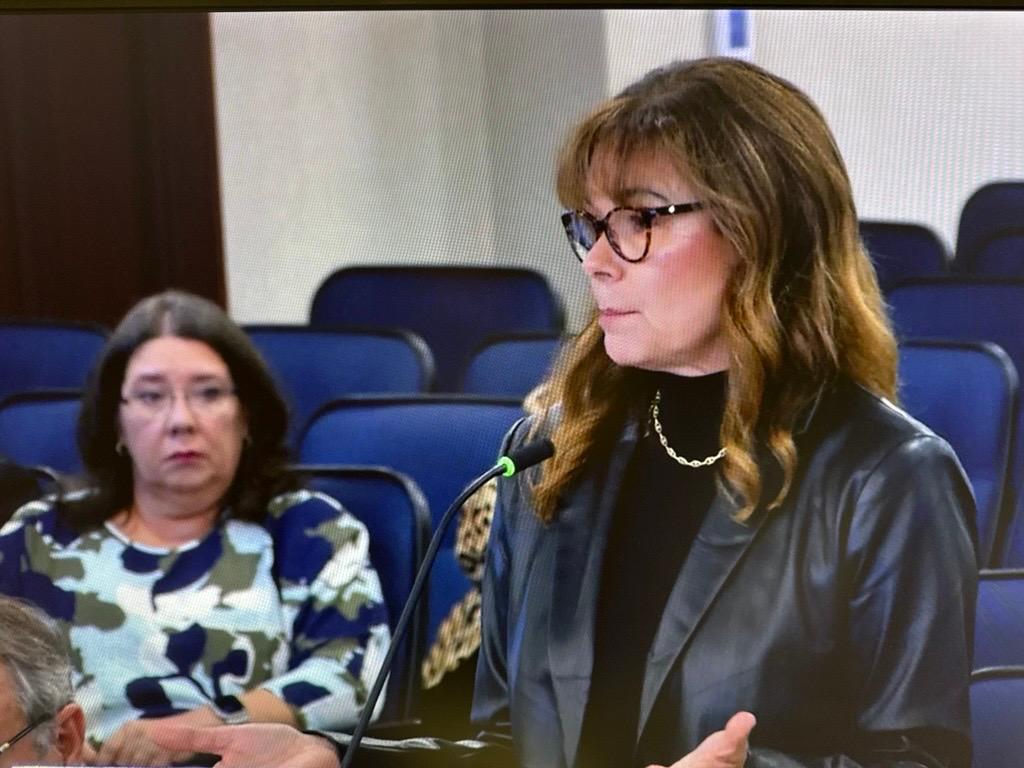
On Wednesday, the House Intergovernmental Affairs Subcommittee held a panel discussion on County Commission Districting. Committee leadership began by providing an overview of the historical development of local governmental powers, including the distinct roles of state, county, and municipal governments. FAC’s Executive Director Ginger Delegal, presented on the various districting options available to counties and the structures currently in place.
FAC explained that county boards are typically composed of five or seven members serving staggered four-year terms. By default, commissioners are elected at-large in partisan races, with districts required to be contiguous and roughly equal in population. She traced the origins of the five-member board back to 1821 and outlined the options available to both charter and non-charter counties, including single-member, at-large, and mixed district systems. Charter counties, she noted, have greater flexibility, allowing for nonpartisan elections, term limits, and boards with more than seven members. The decision on which structure to adopt depends largely on each county’s size, population density, demographics, and growth trends.
The committee also heard from a panel of county commissioners representing different board structures, including Commissioners Robert Carroll (Bay), Ronnie Moore (Madison), Dave Eggers (Pinellas), Becky Troutman (Polk), and Carolyn Spooner (Bradford). Each shared local perspectives and firsthand experiences with different districting models, discussing how single-member and at-large districts influence the way elected officials engage with constituents and prioritize county-wide initiatives.
Click here to view FAC’s presentation on County Commission Districting.
| |
Senate Republican Caucus Officially Selected Senator Jim Boyd (R- Bradenton) as the Florida Senate President Delegate for the 2026-2028 Legislative Term
| | |
On Tuesday, the Senate Republican Caucus convened to formally select Senator Jim Boyd as the President-Designate for the 2026-2028 legislative term. The event included a nomination by Senator Burgess, who commended Senator Boyd’s leadership, experience, and dedication to public service, followed by a second speech from Senator Trumbull expressing his strong support. Following these remarks, the caucus conducted a formal vote, confirming Senator Boyd’s designation. His counterpart in the Florida House, Representative Sam Garrison, was officially elected as Speaker-Designate on October 9, and the two will lead their respective chambers in 2026-2028.
Click here to view the President Designation Ceremony.
| |
Senate Committee Receives Report on Administrative Rulemaking Procedures
| | |
Kenneth Plante, Coordinator, with the Joint Administrative Procedures Committee (JAPC), updated members of the Senate Government Oversight and Accountability Committee about implementation of Chapter 2025-189, Laws of Florida (SB 108) which passed during the 2025 Session. Senate Bill 108 made several changes to the Administrative Procedures Act's (Chapter 120, F.S.) agency rulemaking process to provide greater public input and transparency.
Specifically, the new law enhances notice requirements for proposed rulemaking, specifies additional requirements when ratification of an agency rule is required, addresses transparency regarding emergency rulemaking processes. The law also improves opportunities for public input and the evaluation transactional cost and market impacts relating to the preparation of an agency's Statement of Estimated Regulatory Costs (SERC). Additionally, state agencies must, by July 1, 2030, review their existing rules adopted before July 1, 2025, and any rules adopted after July 1, 2025 must be reviewed in the fifth year after adoption. In reviewing each rule an agency must determine whether the rule:
- Is a valid exercise of delegated legislative authority;
- Has current statutory authority;
- Reiterates or paraphrases statutory material;
- Is in proper form;
- Is consistent with expressed legislative intent concerning the provisions of law the rule implements;
- Requires a technical or substantive update to reflect current use; and
- Requires updated references to statutory citations and incorporated material.
An agency may make no change to the rule, make a technical change, make a substantive change, or repeal the rule. The agency must submit a statement to JAPC of its intended action and an assessment of the factors that guided its review. If an agency makes no change or only a technical change to the reviewed rule, the review is completed upon filing a certified copy of the rule and JAPC's certification with the Department of State. If a rule is subject to substantive change or repeal, the review is completed once timely notice is filed under s. 120.54, F.S. The Department of State must publish notice of the completed rule review.
Click here to view the committee presentation.
| |
Local Law Enforcement Immigration Grant Program Update
| | |
On Wednesday, the House Justice Budget Subcommittee received an update on the Local Law Enforcement Immigration Grant Program from Melissa Bujeda of the Florida Department of Law Enforcement (FDLE), which provides administrative support to the State Board of Immigration Enforcement (SBIE). The presentation outlined the current status of Florida’s State Immigration Enforcement Grant Program (IGP), established under Chapter 2025-1, Laws of Florida, during Special Session C. The program allocates $250 million to assist local law enforcement agencies participating in federal immigration enforcement through ICE’s 287(g) program. Oversight is provided by the SBIE, comprised of Florida’s top elected officials, and all board actions require unanimous approval.
The presentation detailed how eligible law enforcement agencies can apply for reimbursements across multiple categories, including training programs (IGP-A), detention bed space for ICE detainees (IGP-B), transport operations (IGP-C), task force travel and lodging (IGP-D), officer and correctional officer bonus payments (IGP-E & F), equipment and software (IGP-G), and other allowable immigration-related operational costs (IGP-H). To qualify, agencies must actively participate in ICE-supervised enforcement and meet strict documentation and eligibility requirements.
As of September 30, 2025, the SBIE had approved $14.2 million in grants to 56 agencies. Applications are submitted through FDLE’s Electronic Grant Management System (EGMS) and undergo a multi-level review process. Agencies are encouraged to estimate all expected costs in advance and maintain thorough documentation to ensure reimbursement approval.
Click here to view the committee presentation.
| |
County Property Tax Report
| | | | |