|
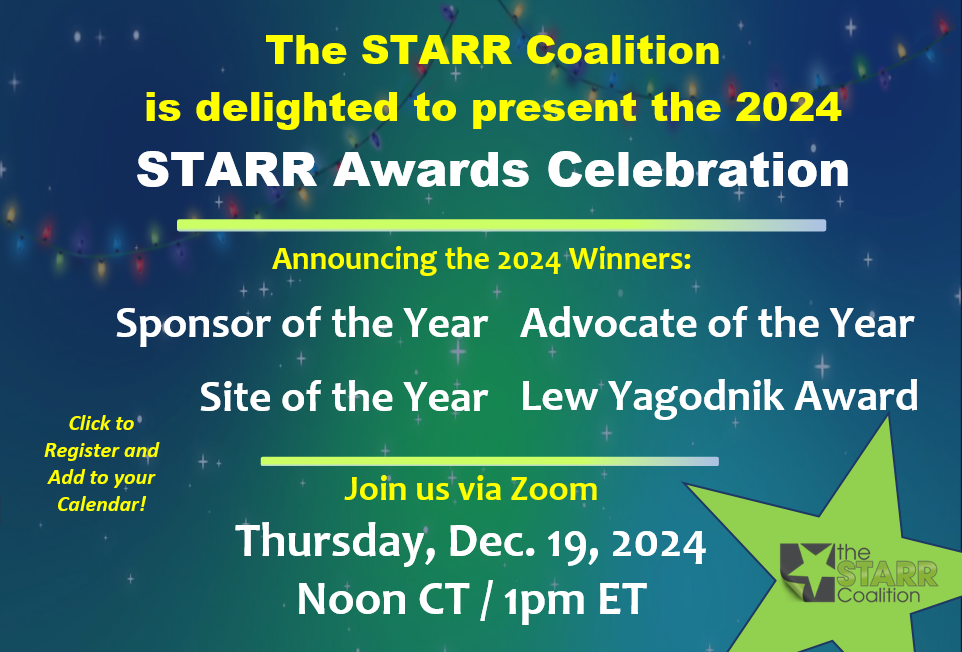
We invite everyone to join the STARR Annual Awards Celebration on Thursday, December 19th!
This year's zoom event will be cheerfully hosted by Adam Simmons and will be a great way to celebrate the end of the year with friends and colleagues from the STARR community!
Please register in advance and join us on
Thursday, December 19th at 1pm ET via zoom.
Register in advance and add to your calendar HERE.
Or send me an email and I'll email you a calendar invite with the zoom link!
| |
|
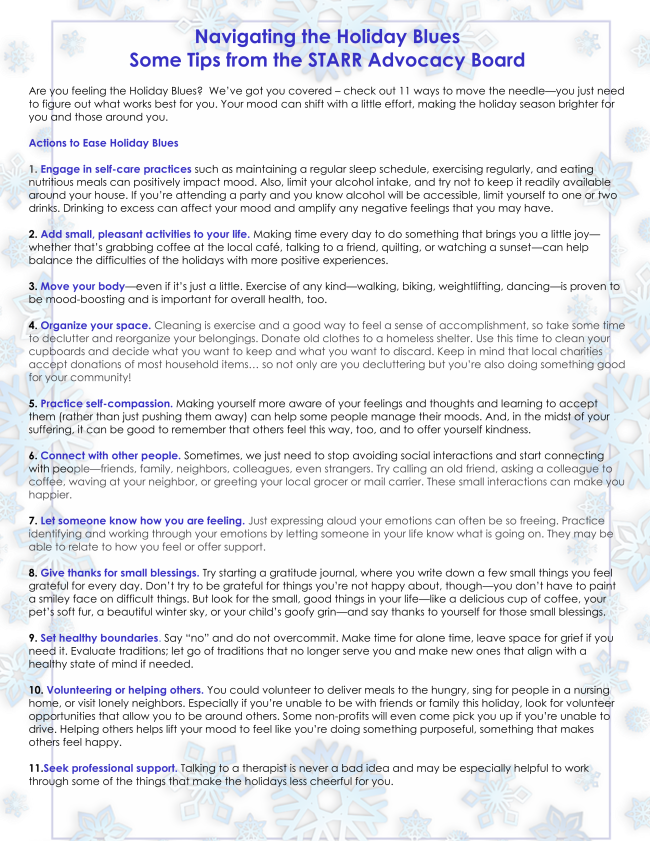
Navigating the Holiday Blues
Some Tips from the
STARR Advocacy Board
Are you feeling the Holiday Blues? We've got some tips to help move the needle—you just need to figure out what works best for you. Your mood can shift with a little effort, making the holiday season brighter for you and those around you.
Actions to Ease Holiday Blues
Here are a few tips to help ease the holiday blues you or a loved one may be experiencing. Check out the full list on our website!
1. Engage in self-care practices such as maintaining a regular sleep schedule, exercising regularly, and eating nutritious meals can positively impact mood. Also, limit your alcohol intake, and try not to keep it readily available around your house. If you’re attending a party and you know alcohol will be accessible, limit yourself to one or two drinks. Drinking to excess can affect your mood and amplify any negative feelings that you may have.
2. Move your body—even if it’s just a little. Exercise of any kind—walking, biking, weightlifting, dancing—is proven to be mood-boosting and is important for overall health, too.
3. Connect with other people. Sometimes, we just need to stop avoiding social interactions and start connecting with people—friends, family, neighbors, colleagues, even strangers. Try calling an old friend, asking a colleague to coffee, waving at your neighbor, or greeting your local grocer or mail carrier. These small interactions can make you happier.
Click here to check out the full list on our website!
| |
|
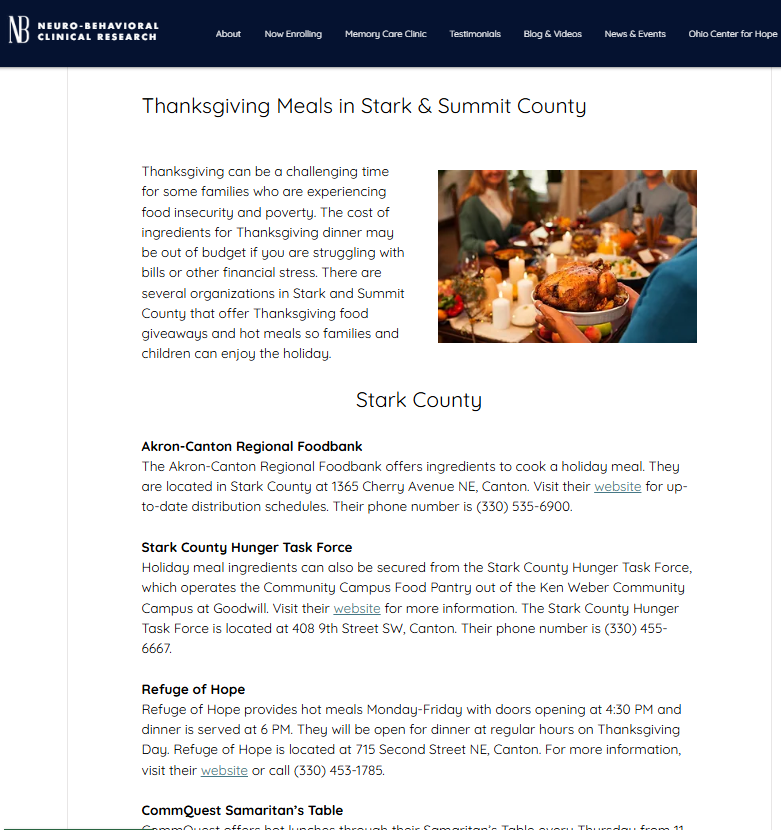
NeuroBehavioral Clinical Research published a list of locations offering Thanksgiving meals in Stark and Summit counties. The thoughtful gesture, featured on their website, helps individuals and families facing food insecurity during the holiday season. The list includes a variety of meal options, ensuring that those in need can enjoy a warm Thanksgiving dinner, a cornerstone of holiday tradition and connection. By taking the time to compile and share these resources, Neurobehavioral Research highlighted their dedication to the well-being of the community they serve.
This act of kindness reflects NBCR's broader mission of care and support. Providing access to meals not only alleviates hunger but also fosters a sense of belonging and dignity—key components of mental health. 💚
| | |
|
The team at CenExel RCA are sharing the joy with their community by coordinating a Toy Drive for the children of The Caring Place. The Caring Place offers meals, safe shelter, life-changing residential programs, and employment assistance. By partnering with this incredible organization, CenExel RCA aims to bring smiles to the faces of children who may otherwise go without the magic of receiving a special gift during the holidays. Employees, patients, and community members alike are encouraged to contribute, making this effort a collective act of kindness. The goal is to ensure that every child served by The Caring Place experiences the joy and warmth of the holiday season, reminding them that they are cared for and valued.
| | |
|
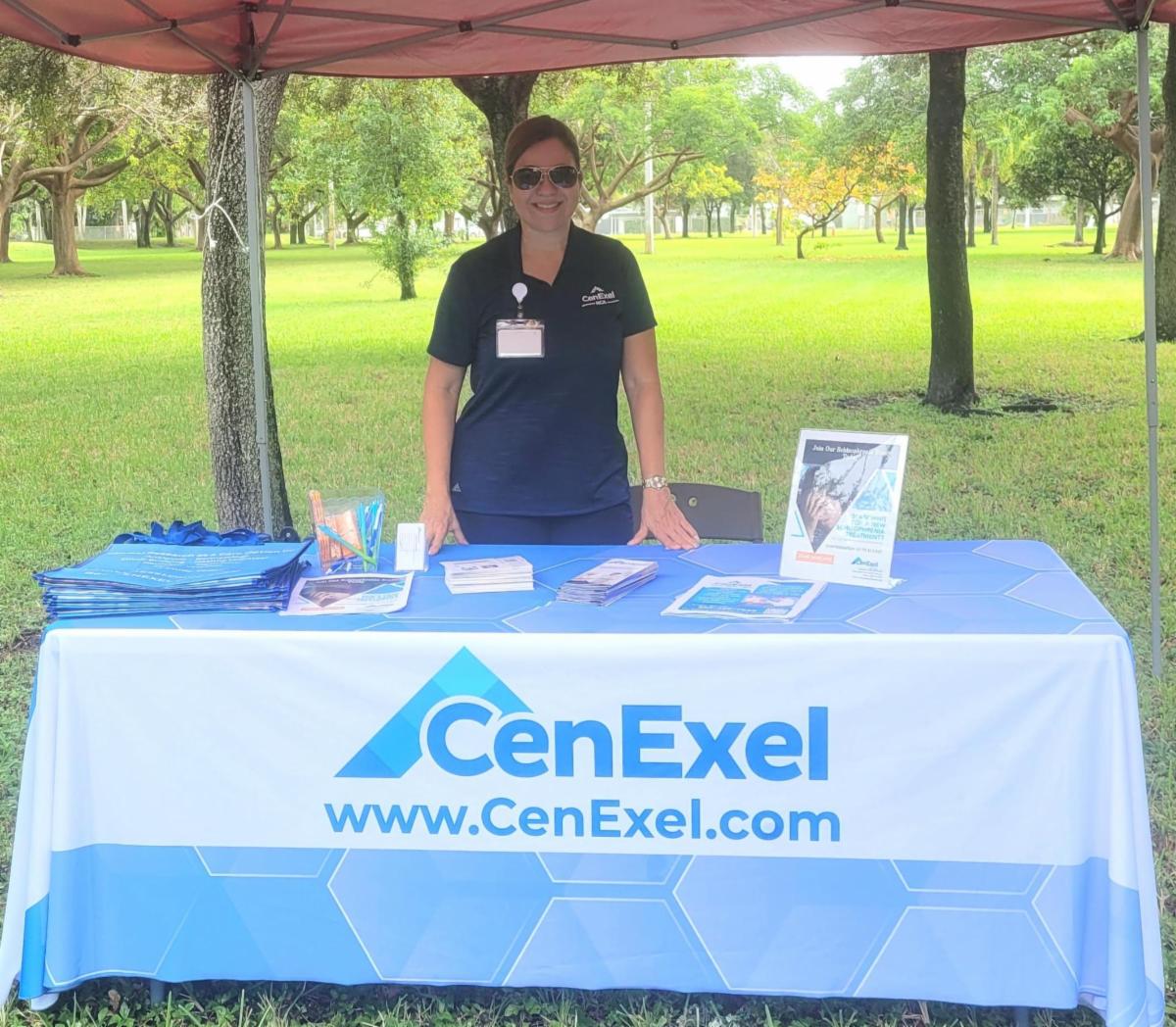
In other CenExel RCA news, the staff promoted its clinical trials at the Pembroke Park Health Fair celebrated at the Raymond P. Oglesby Preserve Park. The Health Fair was a great opportunity to reach the community of Pembroke Park and network with other vendors and city leaders.
Their Mayor, Ashira Mohammed, personally thanked RCA for participating and for offering services like ours for her community. They had the opportunity to educate community members on clinical trials and share information on the current open trials at CenExel RCA.
| | |
|
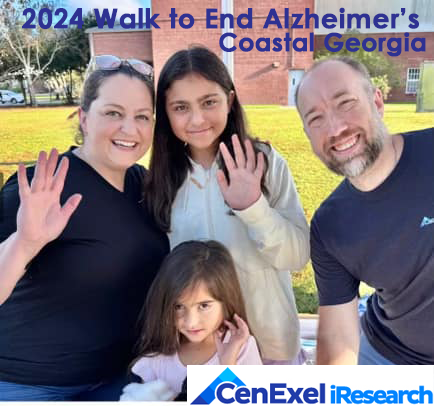
CenExel iResearch Savannah was proud to participate in the 2024 Walk to End Alzheimer’s - Coastal Georgia, which took place on November 9 in the beautiful city of Savannah, GA. This incredible event brought together individuals, families, and organizations united by a shared goal: to raise awareness and funds in the fight against Alzheimer’s disease. The Walk to End Alzheimer’s represents a powerful opportunity to come together as a community, inspire hope, and push forward toward a future without Alzheimer’s. By collaborating with local advocates and national organizations, we believe that every step we take brings us closer to breakthroughs in research and care. Together, we are creating meaningful change and making strides toward a brighter tomorrow. 💙
| | |
|
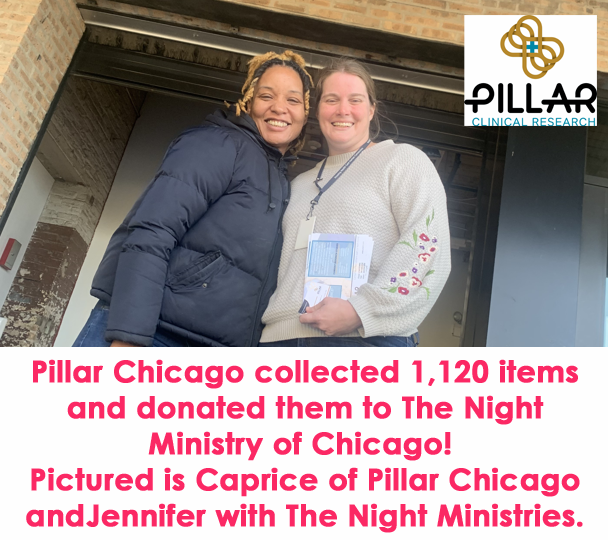
Pillar Clinical Research conducts an annual contest among the four sites to raise food and collect gifts for those in need. Supporting community-based organizations is central to the mission of Pillar Clinical Research. In 2023, we collected 408 food items donated to needy people. The goal for 2024 was to collect 1000 items and we have already exceeded that goal -- the sites combined collected 2,227 items for the Bentonville and Little Rock, AR, Chicago, Il, and Richardson, TX communities! The winning site was Chicago, which collected 1,120 items and donated them to The Night Ministry of Chicago. That’s Caprice of Pillar Chicago on the left of Jennifer with The Night Ministries. In the second picture, that’s Whitney of Pillar Richardson with a volunteer of The New Room.
| | |
|
CNS Healthcare is joining USPS Operation Santa this year! Operation Santa is a charitable program run by the United States Postal Service to help fulfill holiday wishes for children and families in need. Children and families write letters to Santa that include their holiday wishes along with their circumstances or needs. The letters are anonymized and uploaded to the Operation Santa website, where people or organizations can review and 'adopt' a letter by purchasing the requested gifts and having them sent to the family or individual through USPS.
Join the CNS Healthcare team or start your own team at www.uspsoperationsanta.com. To join the CNS Healthcare team, visit www.uspsoperationsanta.com/team/6092c2ce and join us virtually on Thursday, December 12th. At 11 AM, when we all meet to read the letters select some to adopt. After we decide on the letters, we will then shop together online in Santa's USPS gift shop powered by Toys r Us. They will take care of the shipping on our behalf. What a nice opportunity to be grateful together and spread the holiday cheer! 💚
| | |
|
Your Holiday Giving & Outreach:
A Win-Win for Your Site and for the Community!
We've published the info, but in case you missed it, check out the science behind volunteering and doing charitable work. And we've included some super-simple charity ideas to help your team (and your patients) give back AND feel better about themselves!
Check out the full article HERE!
| |
|
For the first time, Boehringer Ingelheim has been included in the Mental Health category of the pharma reputation report compiled annually by PatientView. PatientView's report, ‘The Corporate Reputation of Pharma—from the Perspective of Mental-Health Patient Groups, 2023’, contains the results of a November 2023 to late-February 2024 survey, answered by 79 mental-health patient groups. The other 3 companies listed in the report are Janssen, Lundbeck, and Otsuka. Out of 10 indicators measured in this report, Boehringer was ranked first in:
- Integrity
- Relationship Building
- Services beyond the pill
- Engaging patients in R&D, and
- Transparency of clinical data
Teva's Phase 3 SOLARIS trial results demonstrated improvements in social functioning and quality of life in adults receiving TEV-'749 (subcutaneous LAI olanzapine). Teva shared positive efficacy, safety, and tolerability results from SOLARIS earlier (Sept), when TEV-'749 met the primary endpoint, displaying significant improvements in the PANSS total score from baseline to week 8.
The results of Real-World Analyses of Teva's UZEDY (1-month and 2-month LAI subcutaneous risperidone for treatment of schizophrenia) provide insight into the social determinants of health (SDOH) as well as patterns of adherence. Results reveal high adherence rates in adults living with schizophrenia who have unmet social needs.
Intra-Cellular Therapies has been recognized on the Deloitte Technology Fast 500™, a ranking of the fastest-growing technology, media, telecommunications, life sciences, fintech, and energy tech companies in North America. ITCI attributes being a part of the Fast 500 to the dedication and passion of their employees, partners, and everyone who shares in ITI's mission to enhance the lives of individuals affected by serious mental health conditions.
AbbVie’s closely watched schizophrenia drug emraclidine didn’t outperform placebo in two Phase 2 trial tests. Emraclidine, a once promising psychiatric medicine AbbVie acquired by buying Cerevel Therapeutics last year, has similar mechanism as Cobenfy, targeting muscarinic receptors to treat schizophrenia. The failure of Emraclidine to meet endpoints gives an advantage to Cobenfy, which is differentiated from Emraclidine by its dosing frequency and activation of both M1 and M4 receptors (Emraclidine only targets the M4 receptor).
Progentos Therapeutics appoints Karuna Therapeutics founder Andrew Miller, Ph.D. to Chairman of its Board of Directors. Progentos Therapeutics, a biotech company addressing the critical unmet need to regenerate myelin and restore function for patients with Multiple Sclerosis (MS) and other demyelinating diseases, today announced that Andrew Miller, Ph.D., has been appointed Chairman of the Board of Directors.
Gordon Lavigne, MEd, CEO of the Schizophrenia & Psychosis Action Alliance, talks about the joint FDA committee's vote on clozapine REMS. The advisory committee's recommendations included eliminating the requirement for prescribers to document absolute neutrophil count (ANC) results within the REMS system and for pharmacies to verify these results before dispensing Clozapine. Additionally, the committee suggested ending the need for health care provider certifications through the REMS system. If adopted, these changes could significantly reduce bureaucratic delays faced by patients, Lavigne said. Despite the promising recommendations, the FDA is not obligated to implement the proposed changes.
Peter J. Weiden, MD shared critical insights into the challenges surrounding Clozapine prescribing in the wake of the FDA advisory committee’s recommendations to overhaul its REMS (Risk Evaluation and Mitigation Strategies) system. Check out the article and 6-minute video that discusses the systemic issues that disincentivize the use of clozapine, such as inadequate training and logistical barriers.
Emergency Department Visits Involving Hallucinogen Use and Risk of Schizophrenia Spectrum Disorder. A cohort study (including 9,244,292 individuals with no history of psychosis) found that people who had an ED visit involving hallucinogen use had an increased risk of schizophrenia spectrum disorder compared with members of the general population of the same age and sex and after further adjustment for comorbid mental and substance use disorders. This suggests that individuals who require emergency care for hallucinogen use may have an increased risk of developing a schizophrenia spectrum disorder.
Empowering Advanced Practice Providers to Adopt Routine Screening for Tardive Dyskinesia (TD). APA guidelines recommend routine screening for TD before starting or changing DRBA treatment, monitoring for signs of TD at each visit and conducting a structured TD assessment every 6 to 12 months, depending on risk, and if new or worsening movements are detected at any visit. Screening can be done in any setting simply by observing the patient unobtrusively in their own environment for community practice or the waiting area as they make their way to the exam room or even via telehealth visits.
Commercial interests contribute to drug use and addiction. The cannabis industry has presented new opportunities for commercial interests to drive drug consumption across all ages and demographics. Cannabis products are often sold in colorful packages that mimic kid-friendly snack foods, for example, making them appealing to children and to young people. Adolescents exposed to cannabis marketing have greater odds of using the drug.10 The legalization of cannabis by the states and the diversification of cannabis products have led to significant increases in the number of users and the amount of cannabis consumed by them in the US. Although people 18-30 years old have the highest prevalence of cannabis consumption, the age group with the fastest rate of increase is people 65 years or older.11 This older age group is being targeted with advertising touting cannabis’ alleged therapeutic benefits. As expected, the expanded use of cannabis and the higher doses used have resulted in an increase in the number of individuals suffering from adverse health consequences from these exposures.
A new analysis by the National Academies of Sciences, Engineering, and Medicine found that early legalization efforts have prioritized economic outcomes over public health. Much more research is needed to understand the potential risks and therapeutic applications of cannabis and to inform policy approaches that minimize cannabis’s harms, reduce the social and racial inequities associated with its criminalization, and ensure safe access for those who may benefit from it therapeutically.
A must-read from Nora D. Volkow, M.D., Director of the NIH National Institute on Drug Abuse (NIDA).
| |
|
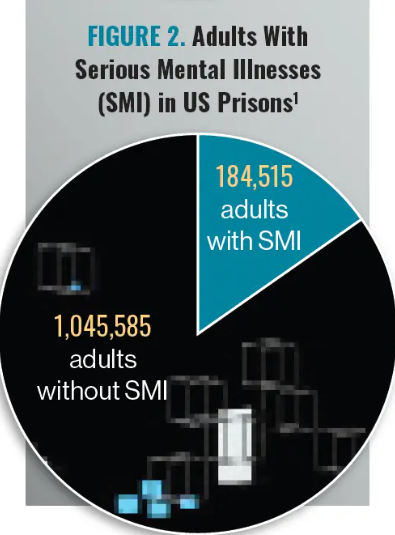
A significant percentage of incarcerated individuals have serious mental illnesses, exceeding the homeless population and mental health treatment capacity. A recent Manhattan Institute report estimated that 20% of jail and 15% of prison populations comprised adults with serious mental illnesses in the US in 2022. The same report estimated that the number of incarcerated adults with serious mental illness was greater than both the total population of homeless adults and the number of beds in mental health treatment facilities in the US. Legal entitlements exist for adequate medical care, yet biases and misdiagnoses often hinder appropriate treatment for justice-involved individuals. Forensic psychiatry units offer acute, forensic, and long-term hospitalizations, including competency restoration for trial proceedings. The complex journey through legal and mental health systems disrupts continuity of care, emphasizing the need for improved mental health treatment access.
| |
|
The American Foundation for Suicide Prevention (AFSP) is collecting data on research participation by people who have suicidal ideation. Outside of the protocols that exclude people with suicidal ideation, many sites do not include people that may have expressed any thoughts of suicide. AFSP is looking to speak with sites that have enrolled people with suicidal ideation. Please contact jharkavyfriedman@afsp.org.
The latest findings from the 2024 Public Perception of Mental Health and Suicide Prevention Poll reveal significant insights into how U.S. adults understand suicide and their potential roles in supporting those in crisis. Three of the nation’s leading suicide prevention organizations – the American Foundation for Suicide Prevention (AFSP), the National Action Alliance for Suicide Prevention (Action Alliance) at EDC, and the Suicide Prevention Resource Center (SPRC) – partnered with The Harris Poll to develop the bi-annual online poll, which found that nine out of ten people in the U.S. believe that suicide can be prevented at least sometimes, showing an incredible shift in public understanding about suicide from decades ago when society viewed suicide as an inevitable outcome. There is a growing willingness to talk about mental health and suicide, signaling that negative attitudes are decreasing, but there is more work to do in the face of barriers. This poll shows that there is opportunity for everyone to play a role, reinforced by increases in those who would take action in supporting mental health and preventing suicide for themselves and others, and that resources like the 988 Suicide & Crisis Lifeline and others are critically needed to help those struggling with mental health. The poll also underscores efforts needed to educate on the impact of lethal means and create culturally relevant strategies to support marginalized and racial groups who face unique challenges.
| |
|
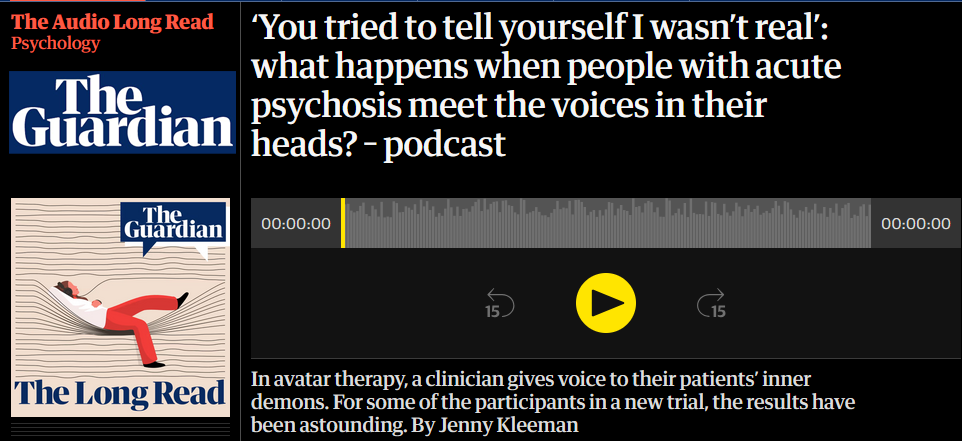
Featured Podcast: Avatar Therapy for Hallucinated Voices
‘You tried to tell yourself I wasn’t real’: what happens when people with acute psychosis meet the voices in their heads? – The Guardian Long Read Podcast
In avatar therapy, a clinician gives voice to their patients’ inner demons. For some of the participants in a new trial, the results have been astounding. By Jenny Kleeman, as posted on The Guardian website. Check out this month’s podcast on this interesting therapeutic treatment for psychosis!
| |
|
The Schizophrenia & Psychosis Action Alliance (S&PAA) created the
“I’m Diagnosed. Now What?” toolkit, designed to help navigate the early stages of one's schizophrenia diagnosis with practical advice, resources and encouragement.
Part 1 of the toolkit explores ways to understand the condition, manage the symptoms, and take important steps toward recovery.
Part 2 delivers practical guidance, tips, and tools aimed at achieving stability and setting a foundation for long-term success.
We highly recommend that all sites —whether or not you directly serve individuals with schizophrenia — consider printing and sharing these exceptional resources in your waiting areas or distributing them directly to patients.
Download the “I’m Diagnosed. Now What?” toolkits HERE.
| | |
|
|
The Harley Jacobsen Clinical Trial Participation Income Exemption Act seeks to exclude all payments to participants in clinical trials from being treated as taxable income so welfare benefits are not put at risk.
WHAT CAN YOU DO TO SUPPORT THIS IMPORTANT LEGISLATION?
1. Sign the petition on Change.org to show your support for the Harley Jacobsen Act. Share the petition with your network and colleagues.
.
2. Sign on the Mural Health website, supporting the Harley Jacobsen Act.
| |
|
Cornell University’s College of Veterinary Medicine and NY FarmNet, in partnership with Rural Minds, are offering a free online course: Mental Health Awareness & Suicide in Rural America.
The course explores the unique mental health issues faced by rural communities across the country. You'll gain insights into the distinct factors that contribute to mental health disparities in these areas, equipping you with the knowledge to recognize and address these critical issues effectively.
Beyond understanding the challenges, this course will empower you with practical strategies for supporting mental health and suicide prevention efforts. You'll learn about how you can play a role — both directly and indirectly — in raising awareness and providing assistance to those in need. By the end of the course, you'll have the tools and knowledge you need to make a meaningful impact, fostering healthier and more resilient rural communities.
| |
|
Thank you for reading!
If you have questions, comments, or would like to submit an item to be included in an upcoming newsletter, please email erica@thestarr.org.
| |
|
The STARR Coalition | phone: 501-725-8890 | www.thestarr.org
SHARE, CARE, AND BE KIND.
| | | | |