Be Seen Outdoors This Fall | |
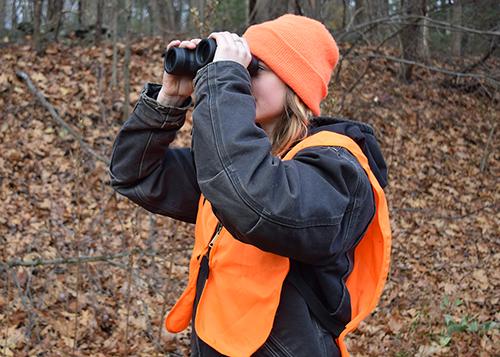
Several additional fall hunting seasons will soon be taking place this month, and visitors to public hunting areas are strongly encouraged to wear fluorescent orange to improve their visibility to other users of the land.
Connecticut has one of the best hunting safety records in the country, and most hunters also wear fluorescent orange when moving between hunting locations.
Whether you like to hike, horseback ride, mountain bike, hunt, or fish, it is a good idea to observe a few safety precautions while afield.
More on fall hunting seasons . . .
| |
Hyperphagia Is in Full Swing | |
|
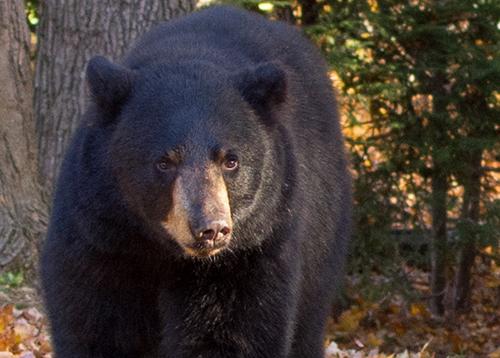
For Connecticut’s black bears, hyperphagia is in full swing! During fall months, black bears become very active, looking to maximize their food intake to build up needed fat reserves before the winter denning season. This annual power-eating marathon is called hyperphagia. During hyperphagia, bears can eat upwards of 20,000 calories a day - 10 times the calories they typically consume!
A pound of acorns has about 2,100 calories; a pound of blueberries, just 256 calories. It takes many hours of foraging each day for bears to find 20,000 calories’ worth of nuts and berries.
Connecticut’s landscape provides plenty of natural food for bears. However, just one bird feeder full of black oil sunflower seed or one garbage container with leftovers can reward a bear with a day’s worth of calories for less than an hour’s work, making human-provided foods very attractive for bears during the fall.
This fall, allow black bears to forage naturally by denying them access to bird feeders, garbage, and other human-related foods.
Black bear videos, StoryMaps, Webinars, and more . . .
| |
Provide Your Input: State Wildlife Action Plan Public Survey | |
|
Connecticut’s State Wildlife Action Plan is being revised for 2025-2035, and the Wildlife Division is seeking public input.
The Plan will guide conservation for the next 10 years, helping imperiled species recover and helping us maintain our diverse natural landscape for wildlife and people alike. Key elements of the Plan include habitats that are important to protect, issues that our wildlife face, and actions that will help conserve wildlife populations.
Please take a few minutes to complete our survey and let us know what habitats, issues, and actions matter most to you!
Provide your input . . .
| |
Women's Shooting Day Held at Franklin Swamp WMA | |
|
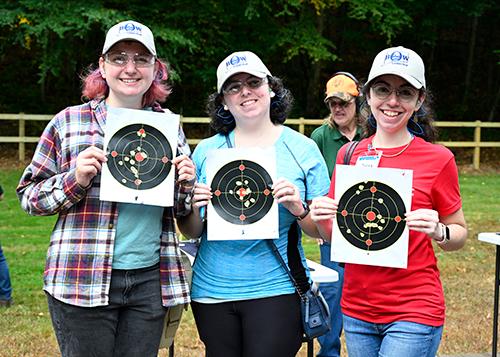
Last month, the DEEP Wildlife Division hosted its first-ever Women’s Shooting Day at Franklin Swamp Wildlife Management Area in North Franklin.
The goal of the event was to create a welcoming space for women to come together and connect while learning or refining skills that translate directly to outdoor activities, including hunting and shooting sports.
The Wildlife Division aims to build on the excitement of this experience and introduce the Becoming an Outdoors-Woman (BOW) program in Connecticut. Ultimately, both this event and the BOW program are designed to increase women’s participation in outdoor activities and build community and confidence in the outdoors.
A special thanks to all of the staff, volunteer instructors, and most importantly, all of the women who participated!
| |
|
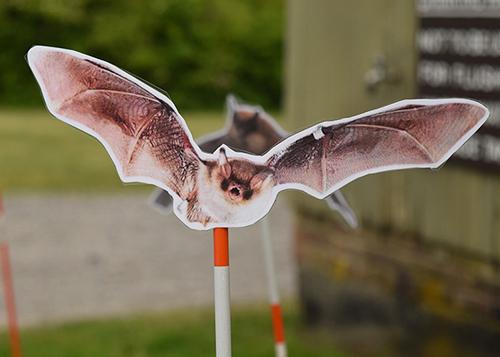
Join us on social media for BatWeek (October 24-31) as part of the international, annual celebration designed to raise awareness about the need for bat conservation. Bats are vital to the health of our natural world and economy, and although we may not always see them, bats are hard at work all around the world each night - eating tons of insects, pollinating flowers, and spreading seeds that grow new plants and trees.
Recently, DEEP Wildlife Division Biologist Devaughn Fraser and White Memorial’s Research Director James Fischer were featured on SciStarter’s podcast to highlight “Bats Count,” a joint commitment to bat conservation in Connecticut between the DEEP Wildlife Division and White Memorial Conservation Center. Listen in to learn more about these denizens of the night!
View the interview . . .
| |
Hemorrhagic Disease Confirmed in White-tailed Deer | |
|
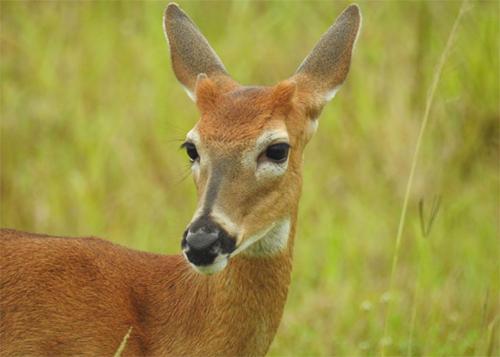
The Wildlife Division recently announced that epizootic hemorrhagic disease (EHD) was confirmed in white-tailed deer for a fourth year since it was first documented in Connecticut in 2017 (no cases were reported in 2018, 2019, and 2023).
The first positive case of 2024 came from a deer found in Durham at the end of August that had exhibited neurological symptoms and no apparent injuries. A second case was reported in early September. Both deer were tested and confirmed to have died from EHD. There are several different forms of hemorrhagic disease, but it usually kills the animal within one to three days of infection.
Hemorrhagic disease is transmitted by biting midges (commonly referred to as sand gnats, sand flies, or no-see-ums). Outbreaks tend to occur when drought conditions are prevalent, typically in late summer and early fall, causing an increase in midge numbers. EHD outbreaks cease with the onset of a hard frost, which kills the midges carrying the virus. Outbreaks can range from a few mild cases to high deer mortality.
Hemorrhagic disease does not infect humans, and people are not at risk by handling infected deer, eating venison from infected deer, or being bitten by infected midges. The disease rarely causes illness in domestic animals, such as cattle, sheep, goats, horses, dogs, and cats.
More on EHD . . .
Precautions for hunters . . .
| |
|
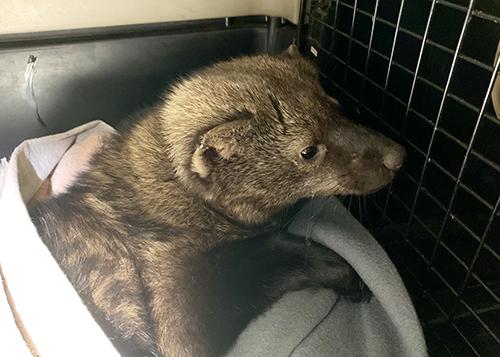
Last year, the Wildlife Division’s Furbearer Program initiated a state-wide study of Connecticut’s fisher population. Despite having very suitable habitat in Connecticut, the fisher population is gradually declining, and biologists are hoping to learn why.
After a season of live-trapping and tracking 20 adult fishers, Wildlife Division biologists are gearing up for another season of live-trapping and are seeking fisher sightings from Connecticut residents.
If you or someone you know has recently seen a wild fisher in Connecticut, Wildlife Division staff would like to know. Please take a few minutes to submit your sighting(s).
Report sightings . . .
| |
Record Red Acorn Crop Observed | |
|
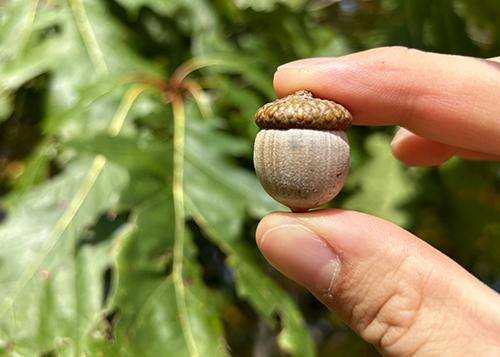
The Connecticut Agricultural Experiment Station is reporting a significant increase in acorn abundance in the red oak group this year as compared to past years, a phenomenon referred to as either a “mast year” or “bumper crop”.
“A bumper crop can drive several ecological processes in our forests, such as the opportunity to help maintain and perpetuate declining oak populations while providing a nutritious food source to sustain wildlife populations throughout the winter months,” according to Joseph Barsky, lead forest researcher for the study.
View the press release . . .
| |
|
Stay Connected!
Follow us on Social Media
| |
|
-- Quick Links --
Your Feedback Is Important to Us!
Send your comments or suggestions to deep.ctwildlife@ct.gov
|  | |
The Connecticut Department of Energy and Environmental Protection is an Affirmative Action/Equal Opportunity Employer that is committed to complying with the requirements of the Americans with Disabilities Act. If you are seeking a communication aid or service, have limited proficiency in English, wish to file an ADA or Title VI discrimination complaint, or require some other accommodation, including equipment to facilitate virtual participation, please contact the DEEP Office of Diversity and Equity at 860-418-5910 or by email at deep.accommodations@ct.gov. Any person needing an accommodation for hearing impairment may call the State of Connecticut relay number - 711. In order to facilitate efforts to provide an accommodation, please request all accommodations as soon as possible following notice of any agency hearing, meeting, program or event.
This program receives Federal financial assistance from the U.S. Fish and Wildlife Service.
Under Title VI of the 1964 Civil Rights Act, Section 504 of the Rehabilitation Act of 1973, Title II of the Americans with Disabilities Act of 1990, the Age Discrimination Act of 1975, and Title IX of the Education Amendments of 1972, the U.S. Department of the Interior prohibits discrimination on the basis of race, color, national origin, age, sex, or disability. If you believe that you have been discriminated against in any program, activity, or facility, or if you need more information, please write to:
Office of Diversity, Inclusion and Civil Rights
U.S. Department of the Interior 1849 C Street, NW
Washington, D.C. 20240
| | | | |