Volume 6 Issue 10 | October 2025 | | This month we focus on spiders...of one kind or another. | | The Root of It newsletter ends with our monthly quotation. If you find your newsletter has been clipped by your email provider please click HERE for a webpage version of the newsletter. | | |
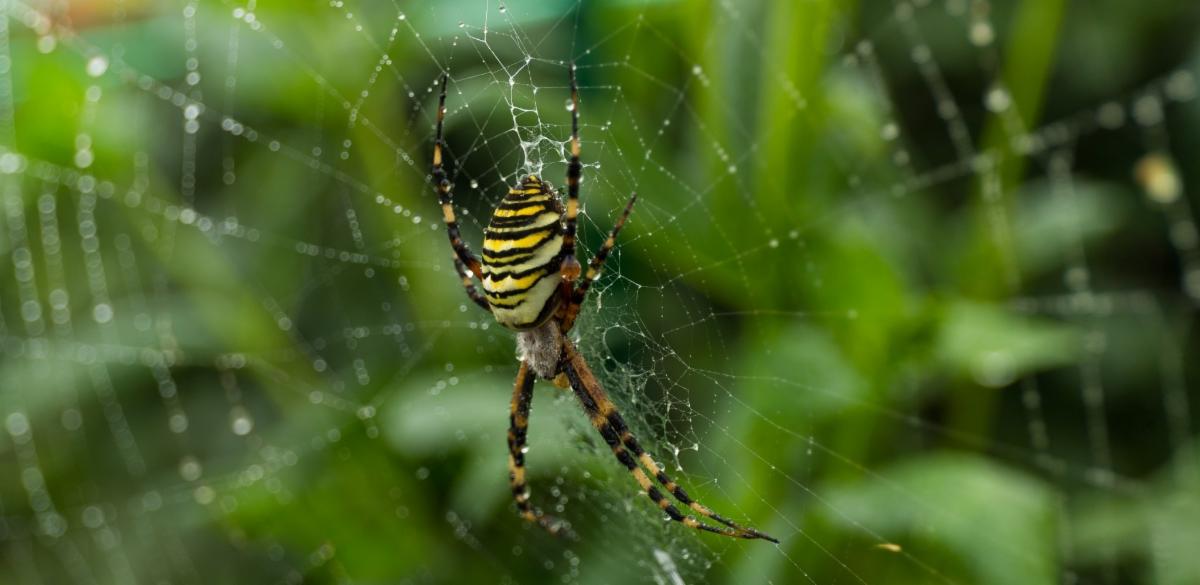
A garden orb weaver tending her web. She will soon lay her eggs in a silken egg sac and attach to a leaf or stem. More spider magic occurs In spring, when the spiderlings hatch and disperse throughout the garden.
photo by E Barth-Elias
| | |
Weed-free beds—check! Spent plants removed—check! Leaves composted—check! Not so fast! Fall garden clean-up is upon us, but we now know that what we might consider unsightly debris is actually a fertile winter home for insects, arachnids, amphibians, microscopic organisms, and a host of other creatures.
The tagline Leave the Leaves reminds us that removing leaves from the landscape in fall eliminates the winter habitat of countless animals (and often the inhabitants as well). Chopping up leaves can mean the death of caterpillars, moths, spiders, and others. A layer of leaves can kill or weaken turf, but a light layer in flower and shrub beds helps retain moisture, insulates plants, and supports wildlife.
What about flowers and stems? Goldfinches, chickadees, cardinals, juncos—many birds feed on the seeds of spent flower heads in winter. Denise Ellsworth, Program Director of OSU’s Pollinator Education, suggests that flower heads be left standing in the fall and then cut knee-to-hip height in early spring to provide nest sites for solitary bees. The bees utilize those hollow stems to create brood cells that house individual eggs, provisioning each with pollen and nectar for the developing larvae. Because different solitary bee species occupy these hollow homes at different times, they should be left standing until the following spring. The stalks can be allowed to fall naturally, or, if the area needs to be cleaned up, can be cut at ground level and loosely stacked horizontally. The bees will find their way out. In the fall the stems can be composted.
Ah, yes, the spiders. This is an issue about spiders, after all. Virtually all spiders are carnivores, and, as such, immeasurably helpful in the garden. When the temperature drops in fall, they find shelter or lay their eggs in leaf litter, bark, downed wood or other crevices. An antifreeze-like substance in their hemolymph (spider blood) allows them to survive winter’s worst. We need spiders, and they need winter habitat.
Not everyone can live with the disorder and clutter of a garden filled with plant debris, and sometimes it’s important to clean up to prevent prolific self-seeding or disease and pest issues. Denise notes that that’s OK. If you are a person who recoils at a “messy” garden, consider a compromise. Devoting even a small area or corner of your garden to overwintering creatures is a help.
Approach garden clean-up in a purposeful way this fall, deciding what can stay and what needs to go. Appreciate the multitude of insects, arachnids, birds, and other animals that call it home and rely on its shelter. Look around!
K Edgington
| | |
LEAF BRIEF
Don't Be Scared of the Red Spider Lily
| | |
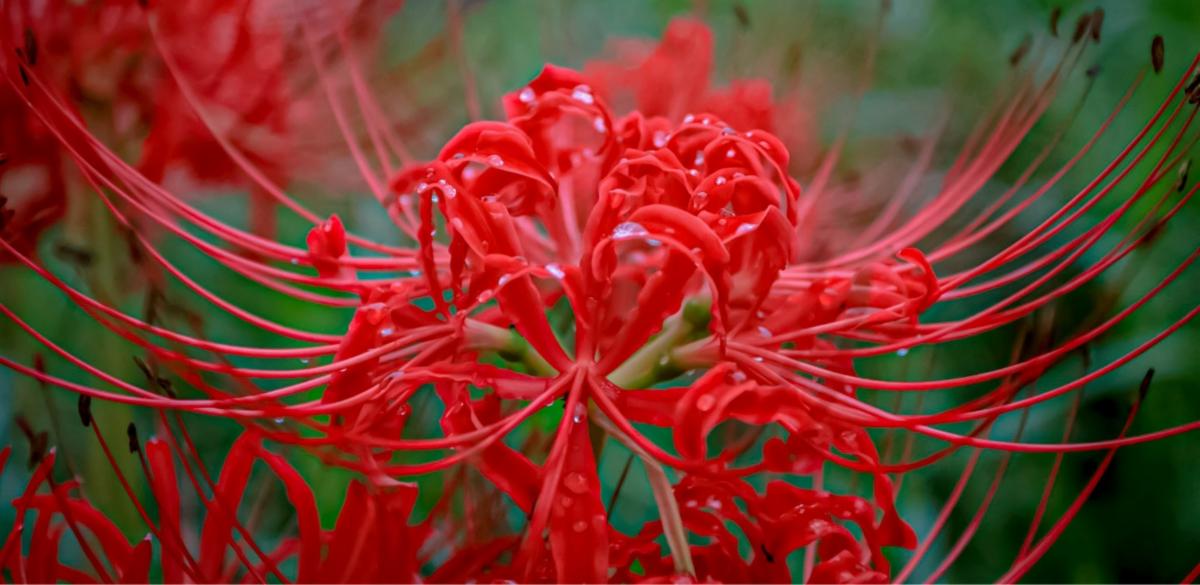
The spidery blooms of Lycoris radiata.
photo by Lisa Siefert
| | |
Looking to conjure up a little Halloween spirit in your garden? Say hello (or boo!) to the red spider lily, which manages to be spooky and sophisticated at the same time. For gardeners in Ohio (USDA Hardiness Zone 6), the vibrant, otherworldly presence of the red spider lily (Lycoris radiata) is a surprisingly attainable goal. While often associated with warmer southern climates, this late-summer blooming bulb can thrive in Ohio with the right care and location.
A defining characteristic of the red spider lily, a member of the amaryllis family, is its reverse growth cycle, which has earned it the nickname "surprise lily.” Its foliage and flowers appear at different times of the year. In late summer or early fall, leafless scapes eerily rise 1-2’ from the ground (giving it another nickname, "naked lily") and form a cluster of blood-red, spidery blooms with long, spidery stamens. Not until after the flowers fade do the strap-like leaves creep up in the fall. They persist through the winter, gathering energy for the following year, before dying back in the spring. The lilies then enter a summer dormant period, conserving their energy for a ghostly encore—bursting forth to create a landscape that would make Tim Burton proud.
Adding to their Halloween allure, the red spider lily, a native of Asia, is associated with cemeteries and spirits in China and Japan. Often planted around gravesites, they deter rodents due to their mildly toxic alkaloids. In Japan, their bloom time during the autumn equinox is linked to transitions, earning yet another nickname, the "equinox flower".
Ready to invite this spirited guest into your garden? Here’s how:
- Plant properly: Sow spider lily bulbs in the late summer during their dormant period (before blooming), with the neck exposed, spaced 6-12" apart in rich, moist, well-drained soil. Part shade is optimal, but they will tolerate full sun with less flowering. Plant the bulbs in sheltered locations, such as a south-facing wall, to protect the foliage from deep cold.
- Provide sufficient winter sun: The lily foliage requires adequate sun exposure during winter to photosynthesize and store energy. Plant the bulbs where they will receive at least a half-day of winter sun, such as under deciduous trees.
- Ensure good drainage: As with most bulbs, spider lilies are prone to rot if planted in waterlogged soil. Amending heavy clay with organic matter, like compost, improves drainage.
- Mulch: In late fall apply a thick layer of mulch over the bulbs. This insulates the soil and helps protect the bulbs from extreme temperature fluctuations.
- Feed: Consider a high-nitrogen fertilizer in early spring to aid foliage development, and a high phosphorus and potassium (low nitrogen) feed after blooming.
Once established, red spider lilies are practically immortal and require minimal maintenance. Consider partnering them with other perennials or ground covers to disguise their “bare legs.” They naturalize easily through offsets and are largely pest-resistant, including to deer, due to the presence of the toxic alkaloid lycorine in their bulbs.
With a little forethought for site selection and winter protection, you can achieve Gothic elegance or perhaps frighten your neighbors with their haunting beauty and Halloween magic year after year.
J Gramlich
| |
|
CREATURE FEATURE
The Miracle of the Web
| |
When life feels chaotic, Nature provides serenity. Miracles small and large abound if we just look around (as our Dear Editor advises). One small miracle manifests this time of year outside (and in) A spider’s web. Beautiful, effective, shockingly strong, spiders masterfully weave sticky and silk to create—sublime. Let's consider the miracle of the web.
Spiders belong to the class Arachnida, together with mites, ticks and scorpions. These creatures have two-segmented bodies—the head (cephalothorax), to which eight legs are attached, and abdomen (opisthosoma). Spiders are generally classified as active or passive hunters. Passive hunters build webs to capture their prey (some ambush). Of the more than 50,000 spider species worldwide, an estimated 50% build webs to trap prey. Spiders begin spinning webs as spiderlings. The adult webs are the largest, and especially visible in landscapes in August, September, and into October.
It all begins with a spider’s spinnerets (generally three pairs), which are appendages on the underside of the opisthosoma. The spinnerets house from a few to hundreds of microscopic spigots, each connected to a silk gland. Silk glands produce liquid protein, which becomes solid as it journeys through long ducts to the spigots. Each protein has different properties for different purposes; spiders can produce up to seven types of silk, although most only make a few. The silk threads are extremely thin—a single human hair is ten to thirty times thicker than a spider thread. Spiders use their hind legs to pull the threads out of their spigot and can twist single threads together to create thicker rope-like threads.
Tensile strength measures how much force a substance can be stretched before it breaks. Using this metric, spider silk is actually stronger than steel (although not by other measures). So are Spiderman’s abilities realistic? Not exactly—watch THIS.
Besides web-making, spiders use their silk for egg sacs, wrapping prey, building shelters, creating “balloons” for transport on wind currents, or making a single dragline as a safety line. Some spiders build nets and fishing lines with silk, and many eat their old webs, recycling valuable protein. How amazing is that? Males spin small webs to transfer sperm to their pedipalps (pincers located near their mouths) for fertilization—that’s a scary visual—and then die after mating. Essentially, spiders use silk in almost every aspect of their lives. Learn more HERE.
This amazing material is fashioned into various types of webs that exactly suit a particular species’ needs. And these miracles happen fast—taking typically 30 minutes to an hour, depending on a web’s complexity, and often repeated multiple times daily as spiders rebuild webs damaged by weather, animals, or my flailing arms.
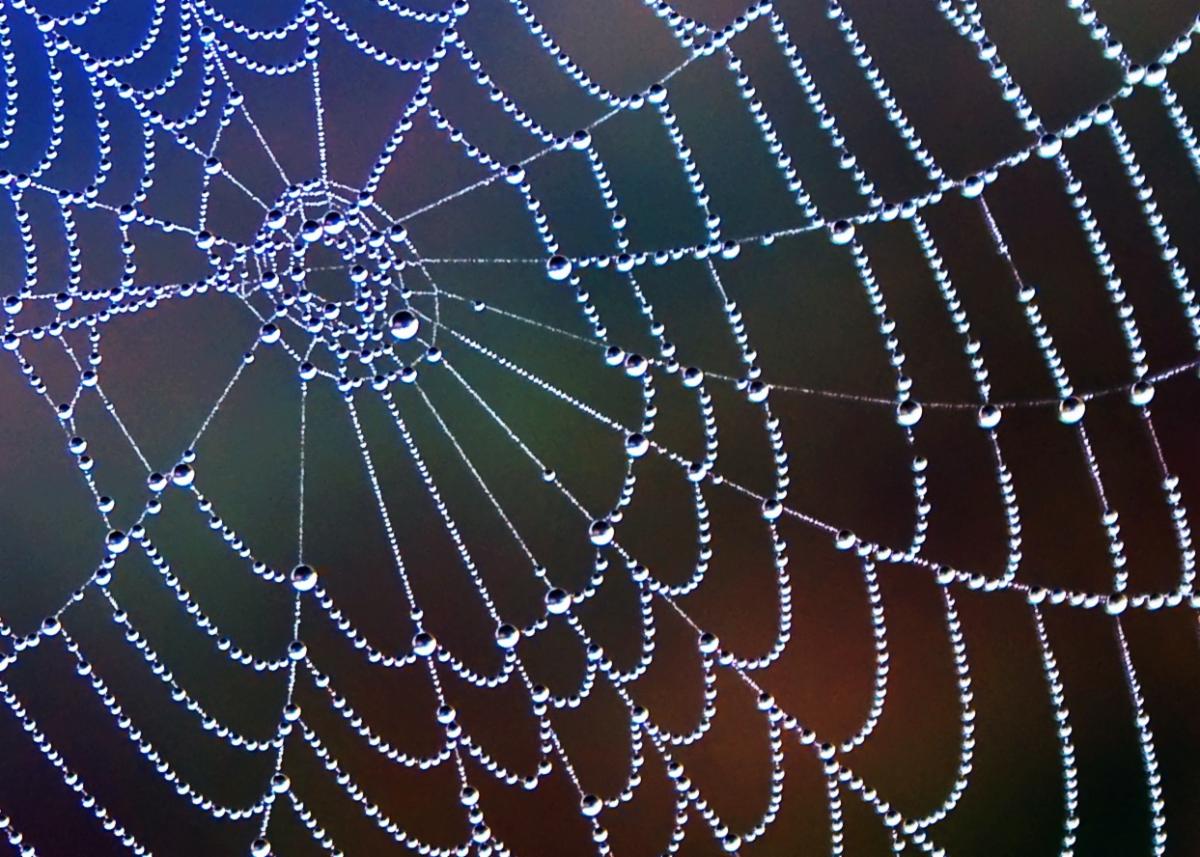
The classic spiral web is made by orb weavers (Araneidae family). Remember Charlotte and “Some Pig”? These superb artists/engineers create round, intricate webs. Non-sticky threads make up the outer frame of the web, radiate out from the center and attach to the support. Sticky threads spiral from the center outward to capture prey, while the weaver watches from a corner. WATCH one being built.
Different orb weavers have special techniques. The black and yellow garden spider creates a stabilimentum, a zigzag vertical pattern in the middle of its web, that reflects ultraviolet light that attracts insects, and renders both spider and web less visible. The trash line orb weaver arranges the remains of its prior meals and hides among the macabre debris.
Spiders such as the comb-footed spider and daddy long-legs that spin tangled webs (cobwebs) are the Jackson Pollacks of the spider world. Their mishmash piles of threads may be difficult to understand, but they fill a space with stickiness—if you’ve ever walked into one you know how well it catches prey.
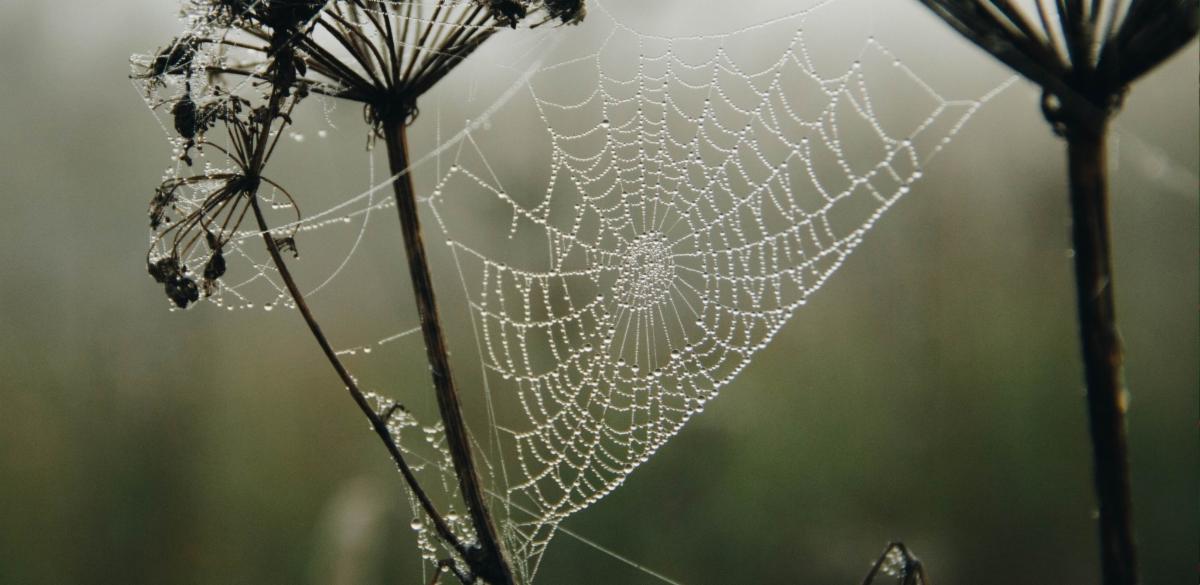
Sheetweb weavers (Linyphiidae family) such as American grass spiders, create “sheets” of flat or bowed webbing you see sparkling with dew on the tops of grass or vegetation. Funnel weaver spiders produce a variation of a sheet web that includes a tunnel from which the spider waits for DoorDash. Go HERE for some wonderful pictures.
Spider webs are truly amazing. Appearing like magic, made by a mostly unseen creator, they are both powerful and beautiful. Like Nature. Take a moment this fall and revel in the miracle of the web.
C Christian
| | |
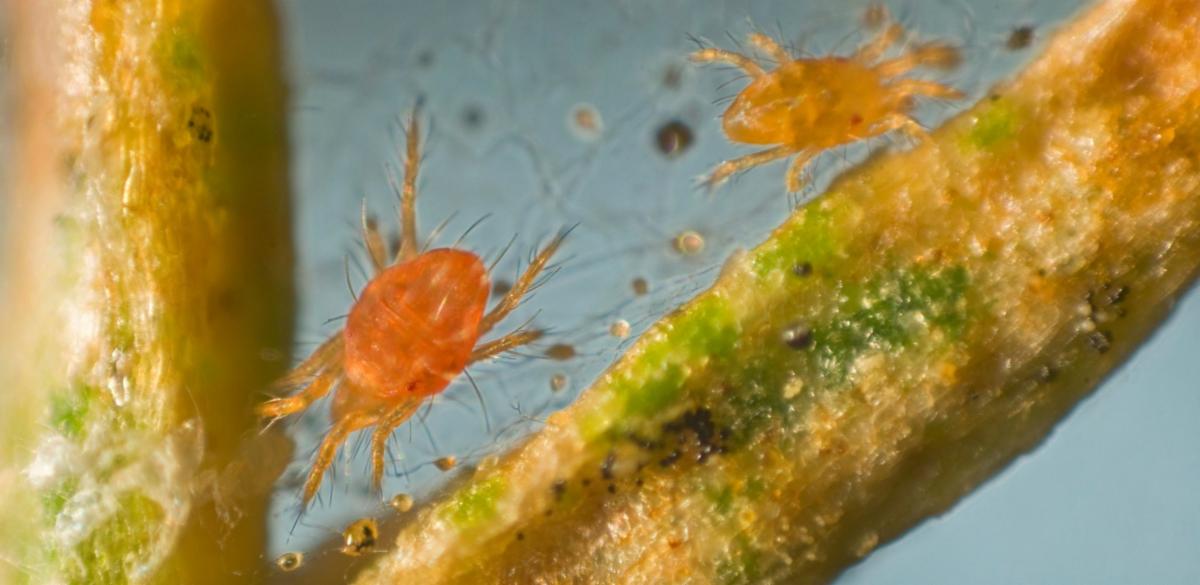
It’s October, and frost is on its way. If your plants aren’t already inside, they should be soon. But be careful you don’t bring uninvited hitchhikers, spider mites, into your home.
Despite their name, spider mites are not spiders, but arachnids in the family Tetranychidae, which includes scorpions. All members of the Tetranychidae family sport eight legs. Spider mites thrive in warm, dry weather. After this hot, dry summer, vigilance is key.
Most Mites are vegetarian, with piercing mouthparts that attack individual plant cells and suck out the liquid. True spiders are voracious carnivores, using their webs to snare hapless creatures wandering too close to the sticky trap.
Mites are very small and often hard to spot. As your houseplants make the transition from out to in, check carefully for thick webs stretching between stems and leaves. Some mites change color, becoming red toward the end of the season. There are more than 1,200 types of mites,with two-spotted mites and spruce mites being most common in Ohio. They feed on 180 different plant species including fruits and berries, vegetables, trees and shrubs, and annuals and perennials. They can be found under leaf surfaces, in cracks in tree bark, and in leaf litter.
Juveniles have three pairs of legs. After they hatch, they feed and then molt into the first nymphal stage, where they gain the fourth pair of legs. They molt once more before emerging as adults.
Control depends on early detection. Holding a piece of white paper under a section of plant and shaking it is one way to see them. If yellow stippling on leaves is visible, it may be too late.
Rain often washes mites off plants, and water is an effective way to control them. A forceful spray should knock off interlopers. Cultural controls include quarantining new houseplants until you are sure they are mite-free.
Even though the vast majority of mites feed on plants, some are predators of other mites. Be sure to match the predator to the pest.
Chemical controls include insecticidal and miticidal soaps and horticultural oils. A 2006 article in the Journal of Economic Entomology touted the effectiveness of rosemary oil in both killing mites and interfering with the female's ability to lay eggs. It also repels them.
With winter on its way, be sure the only critters you bring inside are animals you want to cuddle with. Leave the mites outside.
SPIDER MITES AND THEIR CONTROL: Ohioline
SPIDER MITES: WHAT TO KNOW AND HOW TO GET RID OF THEM: WebMD
S Vradenburg
| | |
October Checklist:
- Continue putting the vegetable garden to bed, covering with hay, or a cover crop to prevent soil erosion.
- Plant garlic before the ground freezes.
- Divide overcrowded perennials and plant larger trees and shrubs.
-
Dig up tender bulbs and tubers like dahlias, canna lilies, gladiolus, and caladiums. Store in a cool, dry location. STORING TENDER "BULBS" FOR WINTER: Wisconsin Horticulture
- Plan, purchase, and plant spring bulbs.
-
Aerate lawns where the soil is compacted. Cut grass to 2-2 ½ “ in height to combat snow mold in winter. LAWN AERATION: West Virginia
- Bring in house plants when nighttime temperatures dip below 50°.
-
Keep an eye out for spotted lantern fly egg masses on trees and destroy them when possible. BEAUTIFUL BUT HARMFUL: THE SPOTTED LANTERNFLY...: OSU CFAES
J Gramlich
| | |
More learning opportunities:
| | |
...In the evening the silver business of the spider fills the fields:
for in that heavy interim,
when lightning blooms upon a livid stem,
the spider, drawing beauty from his bowels,
dresses the earth in nets of pearl and cloth of silver…
Strange, how many yards of silk
the spider wastes to catch one fly.
And yet how worth the cost...
Joseph Auslander, Letter to Sappho
| | We invite you to share The Root of It with your friends and family. If you would like to subscribe to our mailing list please visit our website, scroll to the bottom, and follow the link under Join our email list. | | The Root of It staff: Karen Edgington (Editor), Emma Barth-Elias (Photo Editor), Carolyn Christian, Jennifer Gramlich, Sarah Vradenburg, and Geoff Kennedy (Technical Advisor) | |
We Would Like your Feedback
Contact us at: newsletterscmg@gmail.com
To discontinue receiving this newsletter please click on the UPDATE YOUR PROFILE link below. You may then choose what types of information you would like to receive from us.
| | | | |