|
Transparency in Congress and a well-informed electorate are vital to preserving our self-governing Constitutional Republic. My constituents deserve to know how their members of Congress vote, which is why I have explained every vote I have cast in Congress since I was first elected.
To read more about my votes and see the full list with explanations of all the legislation considered this week by the House, please click here.
Monday, August 31
I voted “Yes” on S. 307, the Prison Staff Safety Enhancement Act. This bill requires the Bureau of Prisons (BOP) to implement recommendations from the Department of Justice (DOJ) Inspector General’s report on mitigating sexual harassment and assault by inmates against prison staff. It would also require DOJ to issue national standards to prevent, reduce, and punish sexual harassment and sexual assault by inmates against BOP correctional officers and employees. Federal correctional officers put themselves in harm’s way to protect our communities, and they deserve a safe workplace with effective procedures for reporting misconduct and holding offenders accountable. This commonsense legislation will strengthen protections for prison staff and ensure the Bureau of Prisons takes meaningful action to address these dangerous incidents. This bill passed the House by a vote of 376-8.
I voted “Yes” on S. 32, the Local Access to Courts Act. This bill adds College Station to the list of places where court can be held in the Southern District of Texas and adds El Centro to the list of places where court can be held in the Southern District of California. Currently, residents, jurors, witnesses, attorneys, and law enforcement officers may have to travel significant distances to participate in federal court proceedings. By allowing proceedings at these additional locations, this legislation will improve access to the federal court system, reduce unnecessary travel and expenses, and help cases move through the judicial process more efficiently. This will ensure federal courts can better serve local communities. This bill passed the House by a vote of 378-10.
Tuesday, September 1
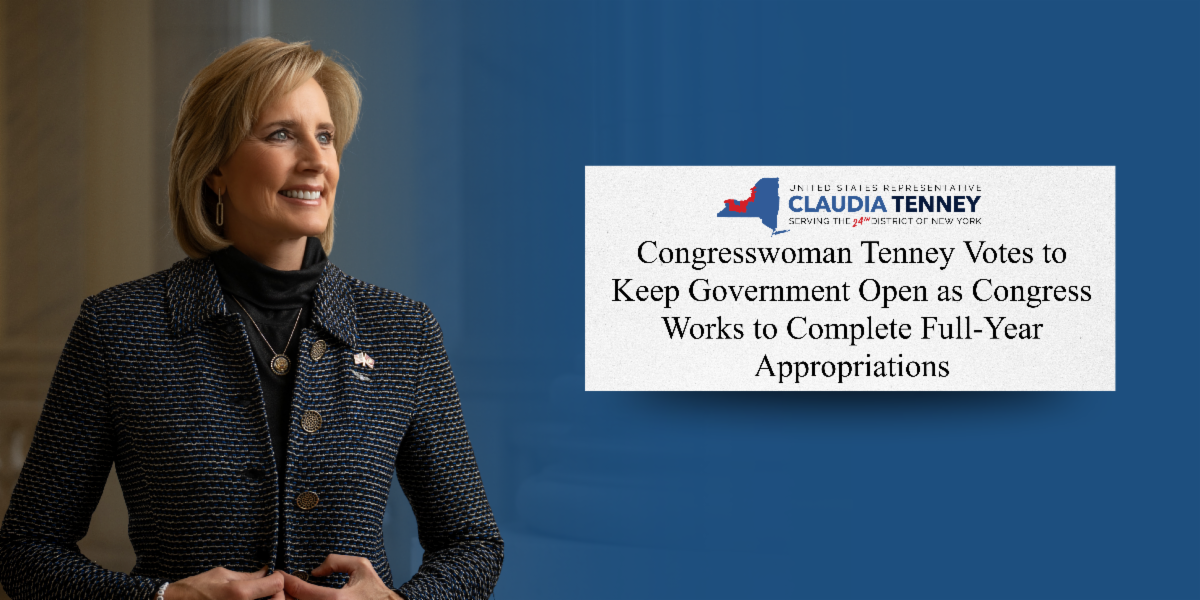
I voted “Yes” on the Senate Amendments to H.R. 6500, the Continuing Appropriations and Extensions Act, 2027. The Continuing Appropriations and Extensions Act maintains federal funding at Fiscal Year 2026 levels through December 11, 2026, or until full-year appropriations are enacted, whichever comes first. The legislation also prevents the expiration of important programs and authorities supporting veterans, agriculture, cybersecurity, transportation, flood insurance, and other federal priorities. Shutting down the federal government would disrupt essential services Americans rely on and distract Congress from the important work of advancing responsible, full-year appropriations. This short-term measure keeps the government open, maintains funding for programs serving our veterans and communities, ensures our servicemembers continue to be paid, and gives Congress additional time to finish its work. Rest assured, I remain committed to advancing responsible spending bills that protect taxpayers, strengthen our national security, and hold the federal government accountable to the American people. This bill passed the House by a vote of 370-48.
I voted “Yes” on H.R. 9436, the Northeast Lobsterman Protection Act. This bill extends the existing moratorium on certain federal regulations affecting the American lobster and Jonah crab fisheries from December 31, 2028, to December 31, 2035. The lobster industry supports thousands of jobs and contributes billions to our economy each year, and conservation efforts should be made in cooperation with those whose livelihoods depend on these fisheries. This commonsense legislation protects a historic American industry from premature and burdensome mandates while allowing continued work to safeguard the North Atlantic right whale. This bill passed the House by a vote of 219-196.
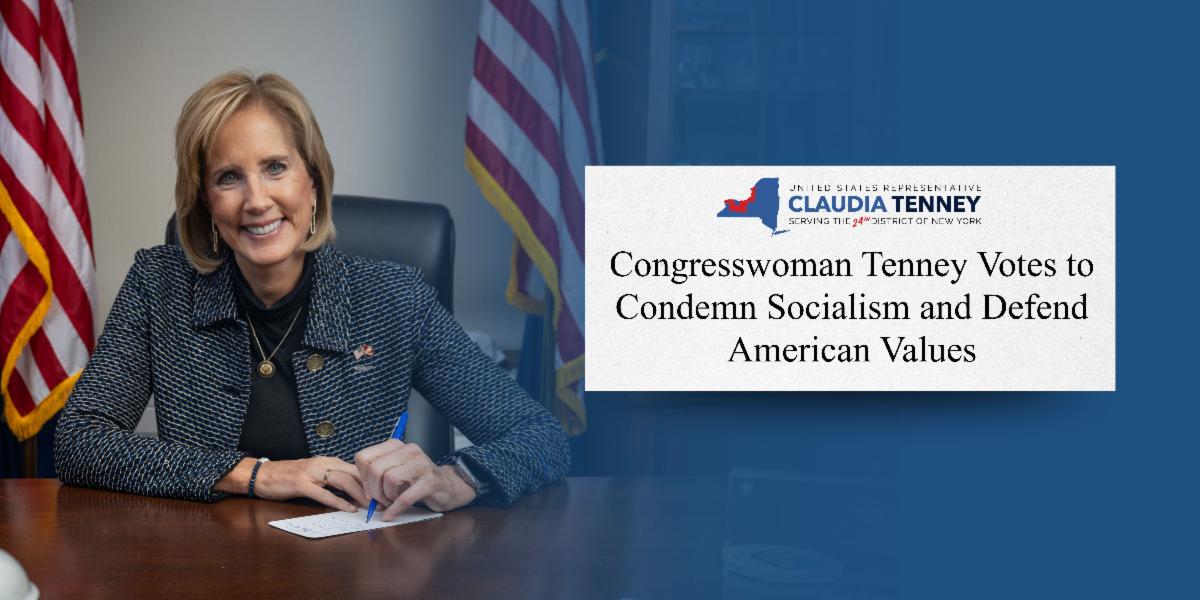
I voted “Yes” on H.Res. 1490, Providing for the condemnation and denouncement of socialism in all its forms, and for other purposes. Socialism invariably results in widespread political repression, economic collapse, and severe human rights violations, such as in the Soviet Union, China, Cuba, North Korea, and Venezuela. This dangerous ideology has led to the deaths of more than 100 million people throughout socialist countries. Yet Democratic Socialists continue pushing radical policies that would weaken our constitutional system and permit noncitizens to vote in American elections. Our nation was built on individual liberty, free enterprise, limited government, and equal opportunity, not the failed promises of socialism. The resolution reemphasizes the dangers of socialism and warns against the expansion of socialist policies that concentrate power in the state, undermine democratic institutions, and erode liberty. I proudly supported this resolution to defend our founding principles, uphold the Constitution, and oppose the rise of socialism. This resolution passed the House by a vote of 220-192, with 2 members voting present.
I voted “Yes” on H.Res. 1498, In the matter of allegations relating to Representative Chuck Edwards. Following an investigation, the bipartisan House Committee on Ethics found that Rep. Edwards engaged in “poor judgment and unbecoming conduct” and his behavior violated “the spirit of the House’s prohibitions on sexual harassment and unwanted advances, as well as the requirement to act in a manner that reflects credibly upon the House.” This resolution adopts the Committee’s recommendation of a censure for Representative Edwards’ inappropriate conduct. Members of Congress must uphold the highest standards of ethical behavior, and Congressman Edwards failed to do so. Sexual harassment is never acceptable, and I supported this resolution to hold Congressman Edwards accountable and make it clear that every Member of Congress must behave appropriately or face formal repercussions for their actions. This resolution passed the House by a vote of 413-2.
Wednesday, September 2
I voted “Yes” on H.J.Res. 1, Proposing an amendment to the Constitution of the United States to require that the Supreme Court of the United States be composed of nine justices. This joint resolution would propose an amendment to the Constitution of the United States requiring the U.S. Supreme Court to consist of 9 justices: one chief justice and 8 associate justices. Radical proposals to pack or abolish the Supreme Court threaten the separation of powers and would transform an independent judiciary into a political instrument. Allowing future congressional majorities to manipulate the Court’s membership whenever they dislike its decisions would undermine public confidence and weaken our constitutional system. This amendment would preserve the Court’s independence, provide institutional stability, and prevent partisan court-packing schemes. Under Article V of the Constitution, if two-thirds of both the House of Representatives and the Senate favorably propose an amendment, then it shall be submitted to the states for ratification. Unfortunately, H.J.Res. 1 did not reach the required two-thirds majority and failed in the House by a vote of 212-206.
I voted “Yes” on H.R. 1501, the Protecting Domestic Mining Act. This bill amends federal law to clarify that mining and mineral processing activities are entitled to expedited permitting under the enacted Fixing America’s Surface Transportation (FAST) Act. The bill would also prohibit the Federal Permitting Improvement Steering Council (FPISC) from finalizing, implementing, administering, or enforcing its 2023 proposed rule that would narrow the scope of eligible mining projects under the FAST Act. The United States possesses abundant mineral resources, and domestic access to hardrock mining and critical minerals is a national security priority that ensures we are not reliant on adversarial nations like China for the technologies essential to Americans’ everyday lives. This legislation will streamline permitting, strengthen domestic mineral supply chains, support American jobs, and advance our energy and national security. This bill passed the House by a vote of 218-201.
I voted “Yes” on H.R. 4795, the Protect Economic and Academic Freedom Act of 2026. This bill ensures that colleges and universities receiving federal higher education funding cannot participate in certain commercial boycotts of Israel that are not based on a legitimate business reason. It also requires schools receiving federal international education funding to treat academic opportunities involving Israel the same as those involving other countries, ensuring students and faculty are not denied opportunities to study abroad, conduct research, attend conferences, or participate in academic exchanges simply because they involve Israel. Anti-Semitism on college campuses has risen dramatically in recent years, with 2,334 incidents reported during the 2024-2025 academic year alone. American taxpayers should not be forced to subsidize universities that participate in discriminatory efforts to isolate Israel, one of our closest strategic partners. There can be no tolerance for anti-Semitism at our universities, and this legislation helps ensure that federally funded institutions provide students and faculty fair access to academic opportunities involving Israel. It is truly disappointing that a majority of my Democrat colleagues voted against this legislation at a time when anti-Semitism on college campuses remains alarmingly high. This bill passed the House by a vote of 237-169.
|