APRIL OBSERVANCES & ACTIVITIES |
|
April is Alcohol Awareness Month |
|
|
|
The Toolkit seeks to raise awareness about alcohol-related harms and the importance of strong alcohol policies, and encourage engagement from prevention and public health stakeholders to educate and inform decision-makers about effective alcohol policies by providing easy-to-personalize templates for editorials, letters, and proclamations.
|
|
World Book Day | April 23, 2022 |
|
World Book Day (also known as World Book and Copyright Day or International Day of the Book) is an international and worldwide celebration that promotes the enjoyment of books and reading and champions books, copyright, and creativity.
Each year, World Book Day seeks to encourage everyone (and young people in particular) to discover the pleasure of reading…and this special day is observed by millions of people in 100+ countries around the world!
Studies have found that students who are motivated to spend their leisure time reading for pleasure tend to be less involved in risky behaviors such as drug and alcohol use. These positive impacts make World Book Day a valuable and opportune moment to kick start reading habits in our families and communities!
|
|
|
|
Commemorate World Book Day by Registering for ODP's Virtual BeTheParents Book Club! |
We are excited to announce our first ever VIRTUAL BOOK CLUB with the Idaho RADAR Center! We will be reading Crazy-Stressed: Saving Today's Overwhelmed Teens with Love, Laughter, and the Science of Resilience by Dr. Mike Bradley. A limited number of books will be available to early registrants.
|
|
|
National Prescription Drug Take Back Day |
|
The 22nd National Prescription Drug Take Back Day is on Saturday, April 30, 2022. Created by the Drug Enforcement Agency (DEA) in 2010, National Prescription Drug Take Back Days happen twice a year in April and October to address the public safety issue created by unused or expired prescription medications, which are highly susceptible to misuse, abuse, and theft. Take Back Day events provide an opportunity for Americans to safely and securely dispose of unused, expired, and unwanted prescription medications and help prevent drug addiction and overdose deaths in our communities.
ODP encourages local organizations across the state to support and promote Take Back Day events in their communities to help Idahoans properly dispose of unused or expired medications.
Find National Prescription Drug Take Back Day events near you by using the Collection Site Locator Tool at www.dea.gov/takebackday
|
|
First Responder Mental Health Training For Public Health Practitioners |
|
April 12, 2022 | 10am-11am MST
The Idaho Department of Health and Welfare's Drug Overdose Prevention Program is excited to present a free, virtual public health training opportunity to gain information and insight on first responder culture to inform cross-sector collaboration. In this one-hour virtual training, Chaplain Bill Lotz from the Chaplain Services Network will provide insight on first responder culture and dynamics. This training will assist public health professionals in building and fostering relationships with first responders across the state.
As the opioid crisis in Idaho evolves, bridging the gap between public health and first responders becomes increasingly important. Partnership between public health and first responders increases opportunity for collaboration and intervention. This training will provide information on first responder priorities and culture, which may assist public health decision-making within the first responder relationship-building process. The overall goal of the training is to equip Idaho public health practitioners with the knowledge to effectively communicate and engage local first responder agencies.
|
|
There Has Always Been Drinking in America:
Alcohol, History, Culture, and What it all Means for Prevention
|
|
April 14, 2022 | 12:00-1:30pm MST
Americans drink to celebrate and to mourn. We toast a new addition to our family, an engagement, a marriage, a new job, and a life well-lived. We open a bottle to break bread with friends, to watch sports, to pray, and to drown our sorrows. But we also suffer from addiction, violence, motor vehicle crashes, and death, all at the hands of alcohol.
This webinar explores America’s cultural relationship to alcohol, from the thirteen colonies and prohibition to today’s music and movies. In prevention, we often focus so intently on our communities and strategies that we fail to step back and look at the much, much bigger picture of the cultural and historical context of what we are trying to accomplish. Using humor and examples from history, movies, music, television, and more, Dr. Rodney Wambeam provides the larger context of what it means to prevent the misuse, abuse, and devastating consequences of a substance that has always been part of the American experience.
|
|
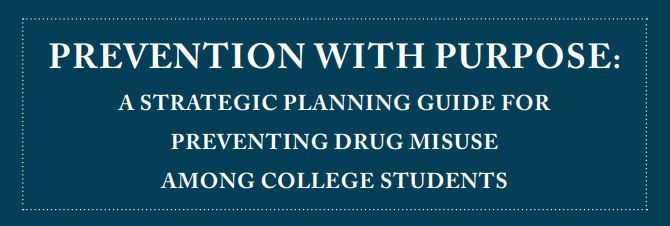
Prevention with Purpose: Strategic Planning Guide for Preventing Drug Misuse Among College Students |
|
For many of the 16.8 million students enrolled at America’s two- and four-year degree programs each year, the university experience promotes academic growth, fosters new friendships, and expands understanding of a world outside the home environment. Unfortunately, the college years are also a time when students may experiment with drugs for the first time.
Drug use remains, for many college health and wellness professionals, an individual issue, despite emerging evidence that the college environment contributes to the initiation of drug use for the majority of college drug users. College is the ideal setting for innovative, campus-wide programming aimed at preventing and reducing drug use among college students, but these efforts remain few and far between.
You can find the guide here. There is also a complementary new web series designed to serve as a resource for professionals looking to execute each of the SPF steps in their work.
|
|
Project ECHO Idaho: A Virtual Community for Idaho's Healthcare Workforce |
|
Think of ECHO Idaho as a curb-side chat for healthcare teams. Every week we offer multiple drop-in sessions over your lunch hour to connect virtually with providers, specialists, and colleagues. Earn free CME/CE for all series, including: Opioids, Pain and Substance Use Disorders, Counseling Techniques for Substance Use Disorders, and Viral Hepatitis and Liver Care.
Medications for Opioid Use Disorder (MOUD) Office Hours
ECHO Idaho offers MOUD Office Hours every Thursday from 12:30-1:30pm MST. MOUD Office Hours connect healthcare professionals treating patients with opioid & substance use disorders with medical and behavioral health experts to receive quality feedback and support. Questions related to buprenorphine, methadone, prescribing medications for opioid use disorder and psychosocial aspects are all welcome. Spend six or 60 minutes at MOUD Office Hours; this series is designed for participants to come and go as their schedule allows. Learn more.
ECHO Idaho Upcoming Events:
- Common Medical & Psychiatric Comorbidities with Anxiety. Wednesday, April 6, 12-1pm MST.
- Stabilization: the Goal of MOUD. Thursday, April 7, 12-1pm MST.
- Stigmatizing Language. Thursday, April 21, 12-1pm MST.
- CDC Policy Updates on Opioid Prescribing. Thursday, April 14, 12:15-1:15pm MST.
- State of Use in Idaho: Trends & Resources. Monday, April 28, 12:15-1:15pm MST.
|
|
DrugFree Idaho Youth Leadership Forum |
|
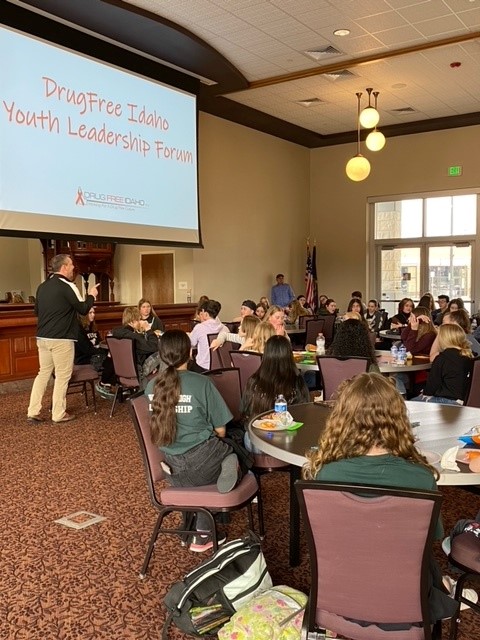
When the kids from junior high schools across the Treasure Valley arrived at this year’s DrugFree Idaho (DFI) leadership event, they were a bit stiff. It's hard to be a kid, and it must be even tougher when your school year has been so fractured over the last two years. At the start of 2020 many of these students were learning in an elementary school classroom, then COVID-19 hit and the next time they were back in a school full-time they were in junior high and the landscape had changed considerably.
As outside observers, ODP staff watched facilitator Greg Summers as he miraculously brought the kids out of their shells. We watched kids supporting and taking risks in a public forum. Let’s face it, most of them didn’t want to engage, but Greg slowly oiled all those rusty parts. Kids trying to present themselves as cool soon joined in and had a great time. All while learning to support each other with the core values Greg’s company reinforces, honesty, experience, connections, positive influence, service leadership, and intention. Greg skillfully taught students how to be more aware of their social environment and monitor their own emotions in a way that creates respect and helps them resist negative peer pressure. These tools will help them when they are put in uncomfortable situations.
The director of DrugFree Idaho, Rob Stevenson, has been eager to get kids back together, and we commend him on this huge success.
|
|
Regional Roundtables: Help ODP Develop a Strategic Plan
|
|
ODP is working with JBS International to develop a statewide five-year strategic plan that will guide ODP’s work over the next five years. As part of the planning process, we will conduct seven regional stakeholder sessions with prevention stakeholders in all seven regions of the state to collect input and insights around the substance use problems in Idaho.
Regional Stakeholder Sessions
- Region 1: Wednesday, April 6th from 9am-12pm MST
- Region 2: Tuesday, April 5th from 9am-12pm MST
- Region 3: Thursday, April 7th from 9am-12pm MST
- Region 4: Friday, April 8th from 9am-12pm MST
- Region 5: Tuesday, April 12th from 9am-12pm MST
- Region 6: Wednesday, April 13th from 9am-12pm MST
- Region 7: Thursday, April 14th from 9am-12pm MST
Who Should Attend the Region 7 Stakeholder Session?
- Agencies who contract with ODP to provide prevention services, representatives from Law Enforcement, Substance Abuse Treatment and Recovery Agencies, Healthcare Providers, Coalitions, Education Providers, and persons in recovery
A couple of logistical notes: The meeting will be very interactive, so please plan to use your webcam and be in a quiet place so you can fully participate. Please invite those in your region who you feel would have valuable input as we develop a five-year plan that addresses the prevention of SUD in our state!
|
|
New Blog Post
My Zombie Desires: Modeling Healthy Alcohol Use for Our Kids
|
|
"Not drinking or cutting back shows my kids that I am not a victim of my zombie desires. I don’t have to follow the same old routines around alcohol. It is like putting down salt on an icy sidewalk for them. There are still slippery spots, but not as many..."
There have been a lot of jokes and memes about pandemic drinking by women, but the fact is that in the past two decades, women have often turned to alcohol more than they did in the past. Yes, the pandemic has compounded the problem. A 2020 study found that the days in which women drank excessively (defined as four or more drinks in a few hours) increased by 41% during lockdown. Another report, from the National Institute on Alcohol Abuse and Alcoholism, said that mothers with children under 5 increased their drinking by more than 300% during the pandemic. Read the full blog post here.
|
|
NEWS STORIES & REPORTS | UPCOMING EVENTS |
|
 |
Local News Stories
National News Stories
Reports
|
|
|
|
February Events & Observances
Observances & Events
Webinar & Training Opportunities
-
April 7: Enhancing Readiness to Change through Motivational Interviewing. Register.
-
April 12: First Responder Mental Health Training for Public Health Practitioners. Register.
-
Big Ideas in Overdose Prevention: Build Partnerships that Work. Register.
-
April 14: There Has Always Been Drinking in America: Alcohol, History, Culture, and What it Means for Prevention. Register.
Next Month...
- May is Idaho Mental Health Month
-
May 2: Addressing Stigma & Harm Reduction in a Clinical Setting. Register.
-
May 8-14: National Prevention Week. Learn more.
-
May 9-12: Idaho Conference on Alcohol and Drug Dependency. Register.
|
|
|
|
What's new with you?
Have an update, story, or other news you'd like to share in a future newsletter?
|
|
We envision a safe and healthy Idaho free from the devastating impact of substance use on youth, families, and communities. |
|
|
|
|
|
|