Rail Workers Weekly News Digest
Number 35 - September 1, 2020
|
|
Below is a series of articles compiled over the previous week.
They are of interest to railroad workers and activists.
|
|
ARTICLE #1 - AMTRAK NEWS
Since March, Long Distance is Amtrak's Revenue King
|
|
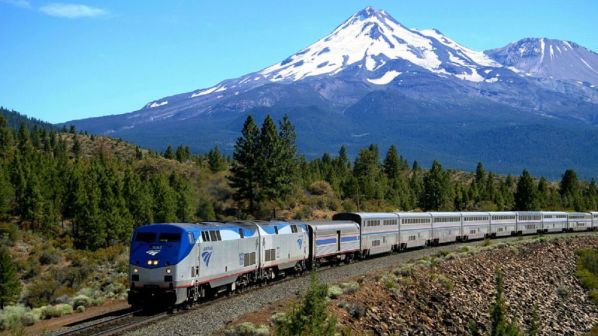
One thing that the coronavirus pandemic has revealed is just how essential America’s long-distance intercity passenger routes really are: powered by essential journeys, the so-called “money-losing long-distance routes” have contributed the largest single share of Amtrak’s revenues in every month this year since the pandemic began in March.
Throughout the pandemic the intercity routes have demonstrated the degree to which they remain "essential" transportation. Ridership has been holding up more strongly on these routes than in the rest of the system, underscoring how vital these trains are for “Flyover Country” where the options are fewer and less appealing. A look at Amtrak’s revenues and ridership since the pandemic first clobbered the U.S. transportation system tells an interesting tale.
So far, we have financial information through the end of July. During the pandemic period since March, the National Network’s routes have contributed 45% of Amtrak's revenues, compared with 21% a year ago during those same five months.
Since March, NEC revenues are down 90% compared with a 64% decline for the National Network. As for ridership, it plummeted in the NEC and hasn't really recovered. In all of calendar 2020, NEC ridership is down 66%, and during the pandemic period ridership is down 88%. By contrast, the National Network's ridership is only down 53% in 2020, and 68% during the pandemic period.
For calendar 2020 through the close of July, Amtrak's overall revenues are down 62%, a figure that would be much worse except that all three business lines showed strong gains in January and February which helped to cushion the pandemic’s blow.
|
|
ARTICLE #2 - RAIL LABOR LITIGATION NEWS
Rail Unions Score Court Wins on Cross-Border Crews, Crew-Size Bargaining
|
|
(Editor's Note: While both of these represent victories for rail labor, we are up against powerful corporations with deep pockets and the power of endless appeals. Yes, the battles are far from over. But these tactical victories buy us time, and allow us to build up and develop our forces on other fronts.) |
|
Railroad unions scored a pair of court victories on Friday, with rulings overturning the Federal Railroad Administration’s approval of use of Kansas City Southern de Mexico engineers for cross-border movements, and vacating an injunction that forced the union to bargain over crew size.
In the Kansas City Southern case, a three-judge panel of the U.S. Court of Appeals for the District of Columbia Circuit remanded the matter to the FRA to either better explain its reasoning or take a new action. The court held that the FRA’s “passive approval system and complete absence of any accompanying explanation … [means] the administrative record is devoid of any explanation or reasoning for the administrative steps taken and legal determinations made by the agency.” The FRA had approved the plan allowing KCS de Mexico engineers to operate into the U.S., which unions had protested since it was enacted in 2018. The International Association of Sheet Metal, Air, Rail, and Transportation Workers-Transportation Division and Brotherhood of Locomotive Engineers and Trainmen had challenged the FRA decision in court.
In the crew-size case, BNSF et al vs. SMART-TD, the U.S. Court of Appeals for the Fifth Circuit addressed a lawsuit filed by carriers which contended crew-size issues were subject to collective bargaining rather than arbitration. A U.S. District Court judge in Texas ruled in favor of the railroads, issuing a permanent injunction enjoining the union from refusing to bargain on crew size Friday’s decision vacated the injunction and returned the matter to the district court.
|
|
ARTICLE #3 - RAIL REGULATORY NEWS
FRA, STB Call on Class Is to Address Recent Service Problems
|
|
(Editor's Note: The agencies' meek request to the rail industry to "improve employee availability, equipment resources, and robust communication to quickly resolve service issues" is a joke. The agencies insinuate that these are related to the COVID-19 pandemic. Nothing could be further from the truth, when these service interruptions are a direct result of Precision Scheduled Railroading (PSR) which has cut crews, maintenance, and infrastructure to the bone.)
In letters to the Class Is' chief executive officers, FRA Administrator Ronald Batory and STB members said they've been made aware of concerns such as "missed industrial switches and excessively late or annulled trains due to crew availability issues."
The letters stress the importance of crew availability, safety, equipment resources and communication between rail carriers and shippers as the economy recovers from the pandemic, FRA and STB leaders said.
"It is our expectation that there will be heightened emphasis on improving employee availability, equipment resources and robust communication to quickly resolve service issues as they arise and to prevent them from becoming widespread," the letters state.
|
|
ARTICLE #4 - POSITIVE TRAIN CONTROL NEWS
Metropolitan Transit Authority Is A-OK on PTC
|
|
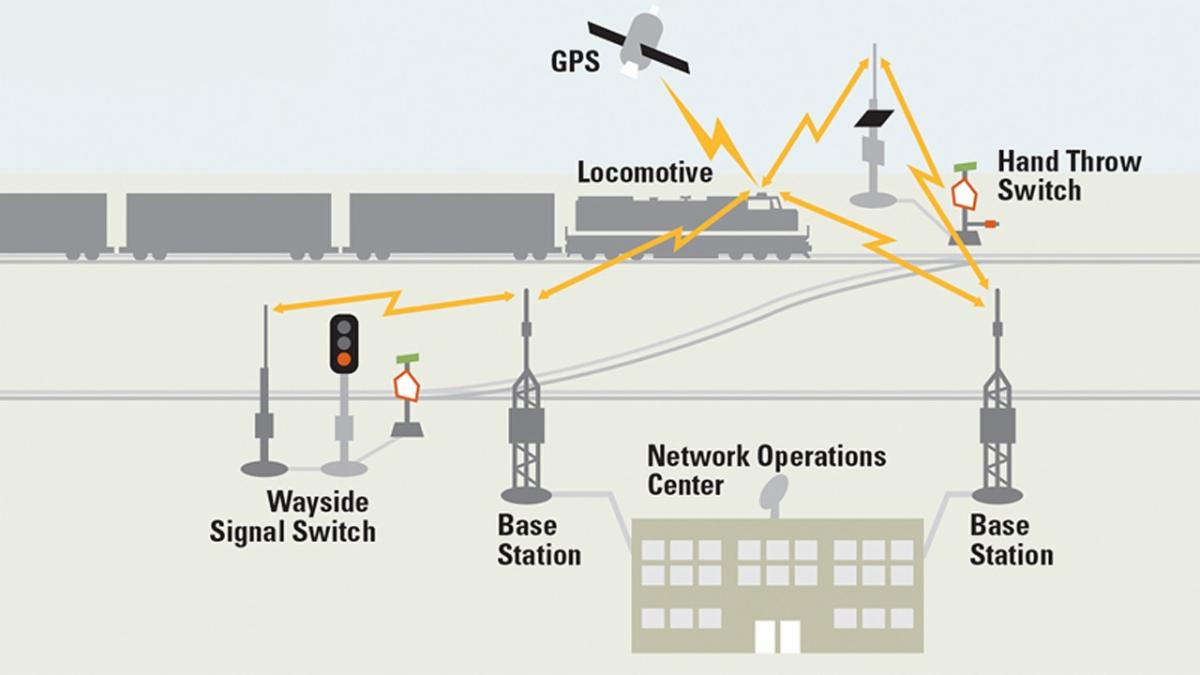
New York Metropolitan Transportation Authority (MTA) has made “major progress on implementing Positive Train Control (PTC) on MTA Long Island Rail Road and MTA Metro-North Railroad, reaffirming both railroads will be in full PTC operations by the end of 2020.”
Metro-North
Metro-North has implemented mandated wayside PTC operability on its entire system east of the Hudson River, adding the New Haven Line from Greenwich to New Haven to join the line’s western portion, the Harlem and Hudson Lines and Danbury and New Canaan Branches, which had already had PTC operability.
All Metro-North’s diesel trains, as well as all of its electric trains on the Harlem Line and Hudson Line are operating in PTC. Technicians are bringing PTC software to the New Haven Line’s M8 electric cars, which will allow New Haven Line trains to enter PTC operations in October.
LIRR
LIRR’s train cars all now have the equipment and software to operate PTC. Technicians are continuing to review performance and perform quality checks on a train-by-train basis to ensure that all trains are operating in PTC by the end of the year.
|
|
ARTICLE #5 - DERAILMENT NEWS
FRA Refutes Index Ranking Regarding Train Derailments
|
|
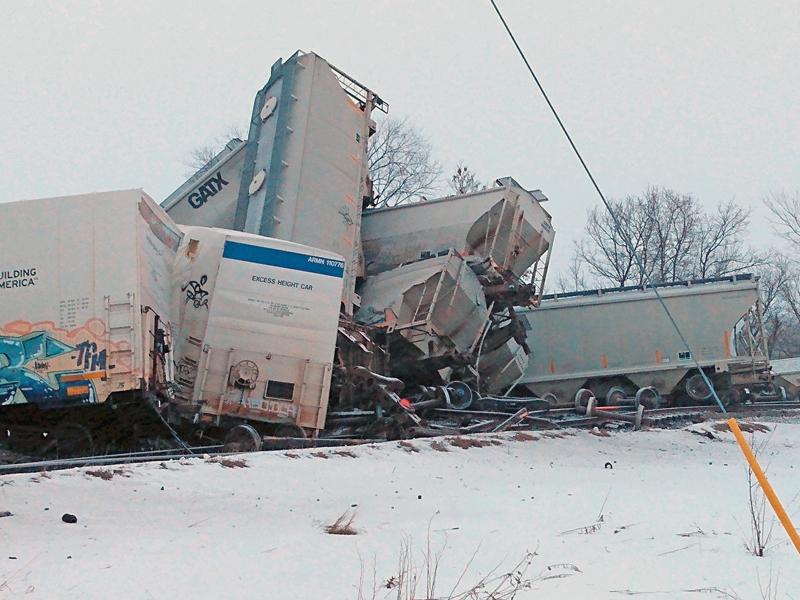
Wall Street, using numbers from the Federal Railroad Administration (FRA) and the Association of American Railroads, has created an index ranking the best and worst states when it comes to rail infrastructure. The index shows the number of train derailments between 2015 and 2019 per 100 miles of track. In the U.S., there have been 4.8 derailments per 100 miles of track over the last five years.
Train derailments happen the most frequently in New Jersey, with 10.9 derailments per 100 miles of track. Coincidentally, the state also is the worst in the country when you combine highway, bridge and rail infrastructure.
The FRA, however, is claiming the index is bogus. Several other factors go into derailments, including traffic density and train speeds. New Jersey also has a large number of rail yards, where derailments can happen at very low speeds.
New Hampshire has recorded zero train derailments since 2015.
The index has the following states with the highest train derailments per 100 miles of track: California (7.6 derailments per 100 miles of track); Illinois (7.7 derailments per 100); Texas (7.8 derailments per 100); Nebraska (7.9 derailments per 100); and New Jersey.
|
|
ARTICLE #6 - SOLIDARITY NEWS
The Goodfellas Scheme To Destroy The Post Office
|
|
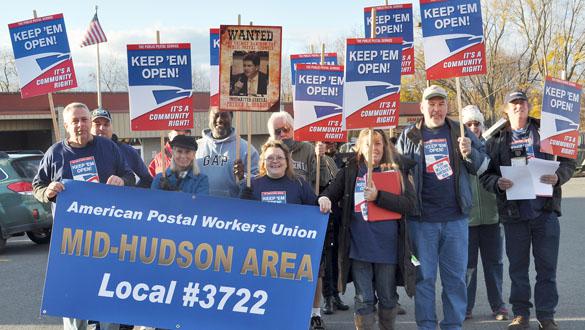
Lawmakers deliberately manufactured a USPS financial crisis and now Trump is using the turmoil to justify burning the whole place down.
(Editor's Note: This is an excellent article that explains the underlying causes of the crisis. Of interest to railroaders is that once upon a time, the post office shipped vast amounts of mail by rail, creating thousands of good jobs for rail workers. Shady politics brought about its demise. Perhaps returning the mails to the rails could greatly assist the Post Office, Amtrak and the nation's railroads. All railroad workers have an interest is supporting our fellow workers at the post office. Their struggle is our struggle.
If you’re confused and overwhelmed by all the political news about the U.S. Postal Service, here’s the key thing to know: At its core, this scandal is not new or innovative. It is the standard government version of the Goodfellas scheme: Deliberately make life impossible for an agency while using it to enrich big campaign donors, “and then finally, when there’s nothing left, when you can’t borrow another buck from the bank or buy another case of booze, you bust the joint out — you light a match.”
In this case, lighting a match means Trump (with the help of Senate Democrats) putting the postal office under the control of Republican operatives who then eliminated sorting machines, removed mailboxes and restricted postal workers from helping Americans vote absentee. The moves threaten to ignite a fire that could throw the election. Longer term, they could also bolster the argument that the only way to create a more reliable mail system is to hand over the postal service’s core functions to companies led by donors such as FedEx or UPS that funnel big money to Republicans.
|
|
ARTICLE #7 - HIGH SPEED RAIL NEWS
High-Speed Rail Heats Up In California As Brightline Eyes Las Vegas Route Extensions
|
|
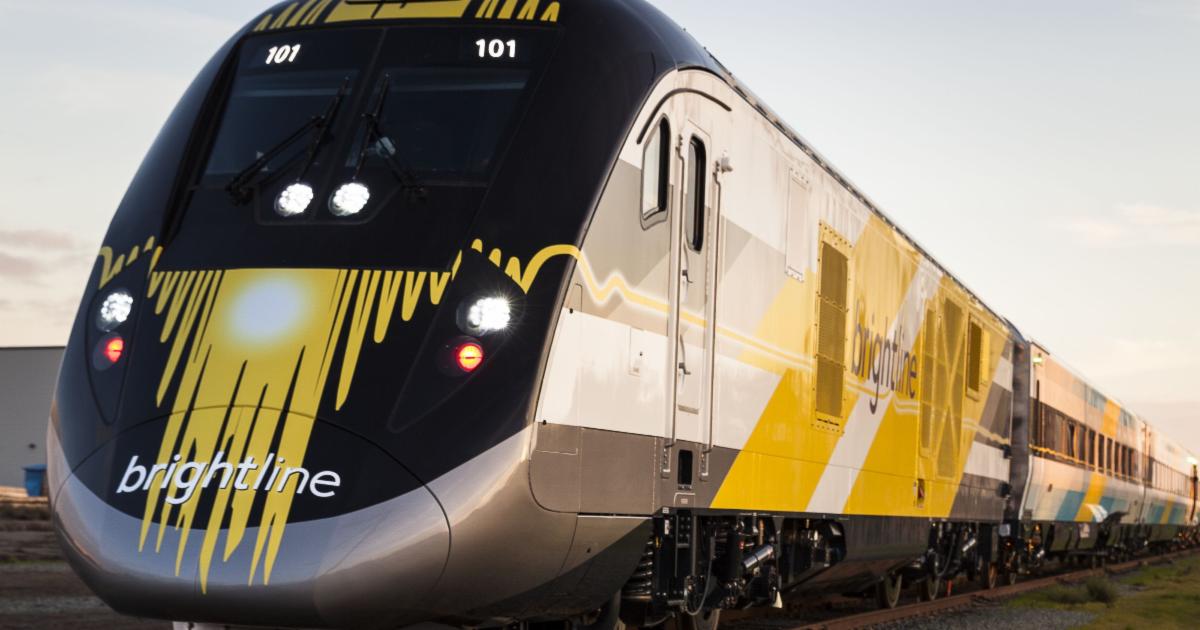
Brightline, the sole private passenger rail service in the U.S., has a green light from transit agencies to begin planning two extensions for its $5 billion high-speed train to Las Vegas that would tie it into existing Los Angeles-area commuter rail lines and, someday, California’s high-speed rail project.
The board of Metrolink, operator of commuter trains that run from downtown Los Angeles to communities sprawled across six Southern California counties, unanimously approved a memorandum of understanding on Aug. 21 to study linking Brightline’s XpressWest project to Metrolink stations in L.A. suburbs Rancho Cucamonga and Palmdale. Each of the extensions would be about 50 miles from Victorville, California, the current terminus for XpressWest. They would likely add about $2 billion of additional construction costs for the Florida-based company.
“This is a forward-looking partnership that will allow us to explore the possibility to enhance the rider experience and attract new riders,” said Metrolink CEO Stephanie Wiggins. “Working with Brightline we can further connect our integrated regional transportation system. This could expand travelers’ access to passenger rail, which is a safe, stress-free form of transportation where riders can enjoy the journey as much as the destination while reducing emissions contributing to a cleaner tomorrow.”
|
|
ARTICLE #8 - RAIL WORKERS IN THE NEWS
Retired SMART Amtrak Conductor Discusses Joe Biden and Working Families
|
|
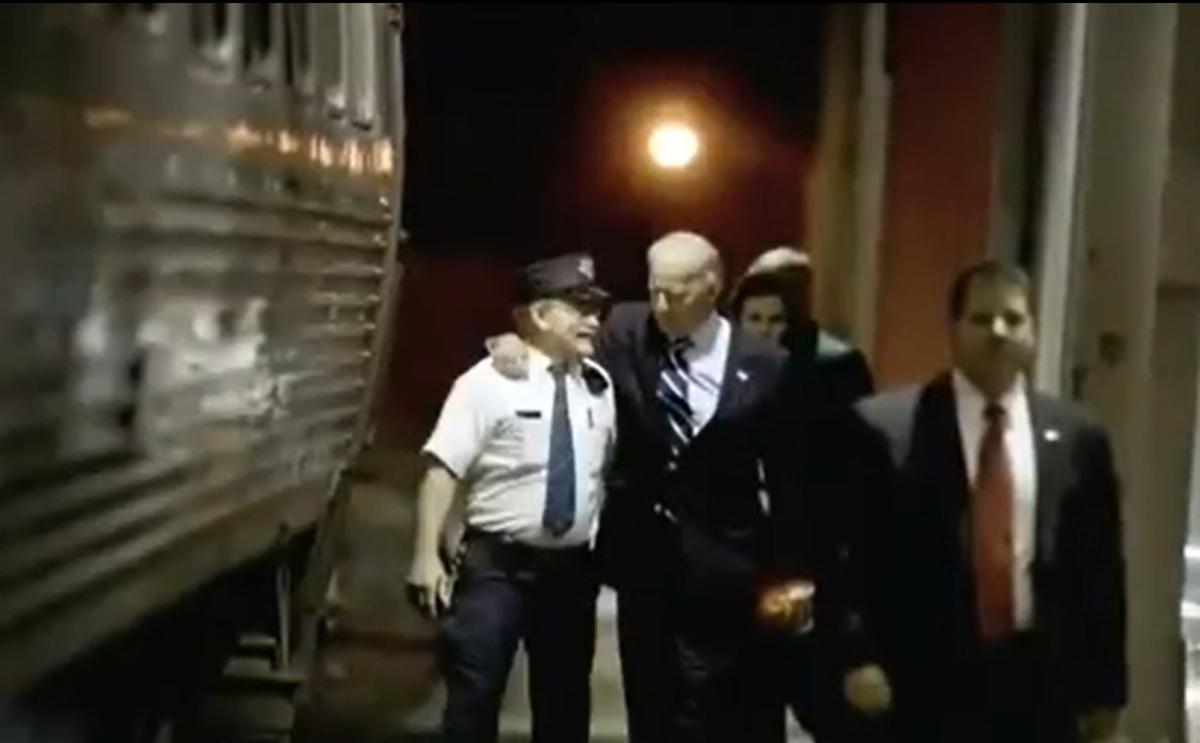
In this nationally televised video, retired SMART conductor Greg Weaver talks about what he learned about former VP Biden from their 30 years traveling together from Wilmington, Delaware to DC.
Accorded to Weaver, "he's most comfortable around everyday working-class people. When he got on that train, everyone was equal to him."
Weaver adds in the video, "the essential workers working behind the scenes to keep this country going, he understands that. The average guy is important to him."
|
|
|
|
|
|
|