|
For Immediate Release
Contact: Priscilla Brendler
914-592-6726
|
GHHN receives $297,257 from Save America's Treasures to conserve
12 at-risk objects at 8 small and mid-size museums in NYS!
| | |
The Greater Hudson Heritage Network (GHHN) has been awarded $297,257 from the National Park Service’s Save America’s Treasures program to conserve 12 nationally significant objects in eight museums throughout New York State. The grant is from the Historic Preservation Fund administered by the National Park Service in partnership with the National Endowment for the Arts, the National Endowment for the Humanities, and the Institute of Museum and Library Services.
This new project builds on GHHN’s successful 2024 Save America’s Treasures project, which is currently supporting the conservation of 35 objects from 10 small and mid-size museums throughout New York State. The new project will conserve objects representing a wide range of materials and stories connected to the history and development of New York State and the nation.
This collaborative conservation project embodies the goals of Save America’s Treasures by preserving a group of nationally significant objects from museums across New York State that document the American experience. Spanning more than two centuries, these objects tell stories of the nation’s founding, artistic achievement, literary and intellectual life, innovation, public service, community identity, and social change. Several are unique, one-of-a-kind resources directly associated with pivotal events, influential individuals, and transformative movements in American history, while others document ideas, inventions, and cultural developments that originated in New York State and shaped the nation. Collectively, these artifacts illuminate New York State’s unique contributions to the American story and represent irreplaceable components of the nation’s cultural heritage.
“Preserving our nation’s history is about honoring the people, events, and cultures that shaped who we are,” said Jessica Bowron, NPS Comptroller, exercising the delegate authority of the Director. “These grants empower communities to tell their stories, celebrate their heritage and ensure that future generations can connect with the past in meaningful ways.”
"We are thrilled to receive this second Save America's Treasures grant from the National Park Service for the conservation of twelve objects in eight museums that are of historical significance to New York State", said GHHN Executive Director Priscilla Brendler. “The purpose of a museum is not only to display art and historical objects but also to care for objects so they can be enjoyed and cherished by future generations. Thanks to the Save America’s Treasures grant, GHHN will provide project oversight and coordination for the conservation of these irreplaceable objects, helping safeguard them for future generations.”
The objects to be conserved include:
| |
Tiffany Stained Glass Window
Cayuga Museum of History & Art
Conservation work to be done by Scott Brennan, Brennan Stained Glass Studio
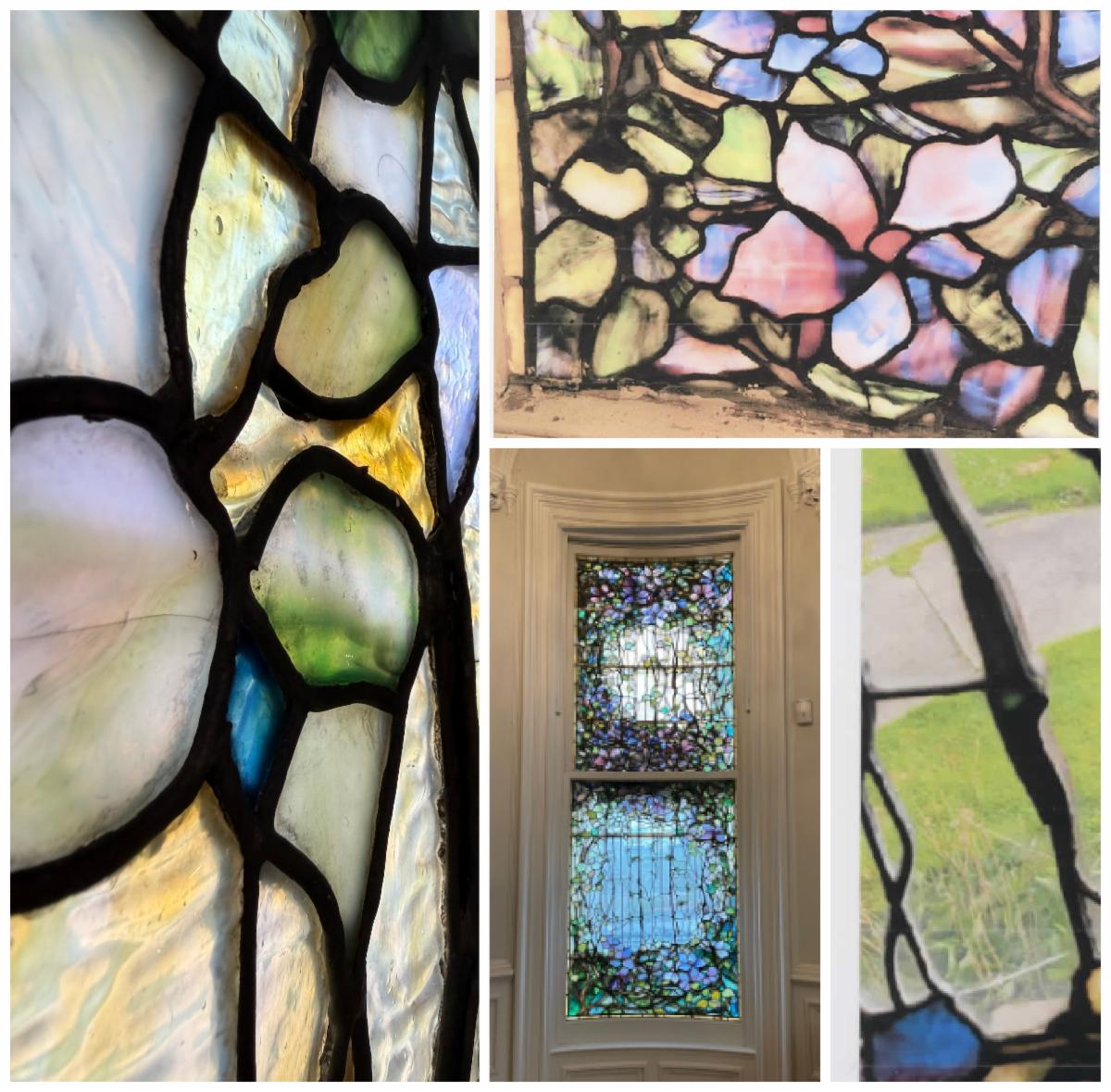
Commissioned by Caroline and Georgiana Willard in memory of their father, Dr. Sylvester Willard, this stained glass window was made by the Tiffany Glass and Decorating Company in New York City, the studio of Louis C. Tiffany. The piece is particularly unusual because it is one of the few curved stained-glass windows crafted by Tiffany that is still in existence. While some Tiffany windows, particularly in churches, could be opened slightly to allow ventilation, most were purely decorative; this fully functional window could be opened and closed. The window uses Tiffany’s opalescent glass, which revolutionized stained glass as an art form. The museum’s Tiffany window is made of glass from the Kokomo Opalescent Glass Company, founded by glass chemist Charles Edward Henry in 1888 in Kokomo, Indiana, and still in existence today. Replacement pieces used in its conservation will come from the Kokomo Opalescent Glass Company.
| |
Lincoln Mourning Flag
Constitution Island Association
Conservation work to be done by Sarah Stevens, Zephyr Preservation Studio
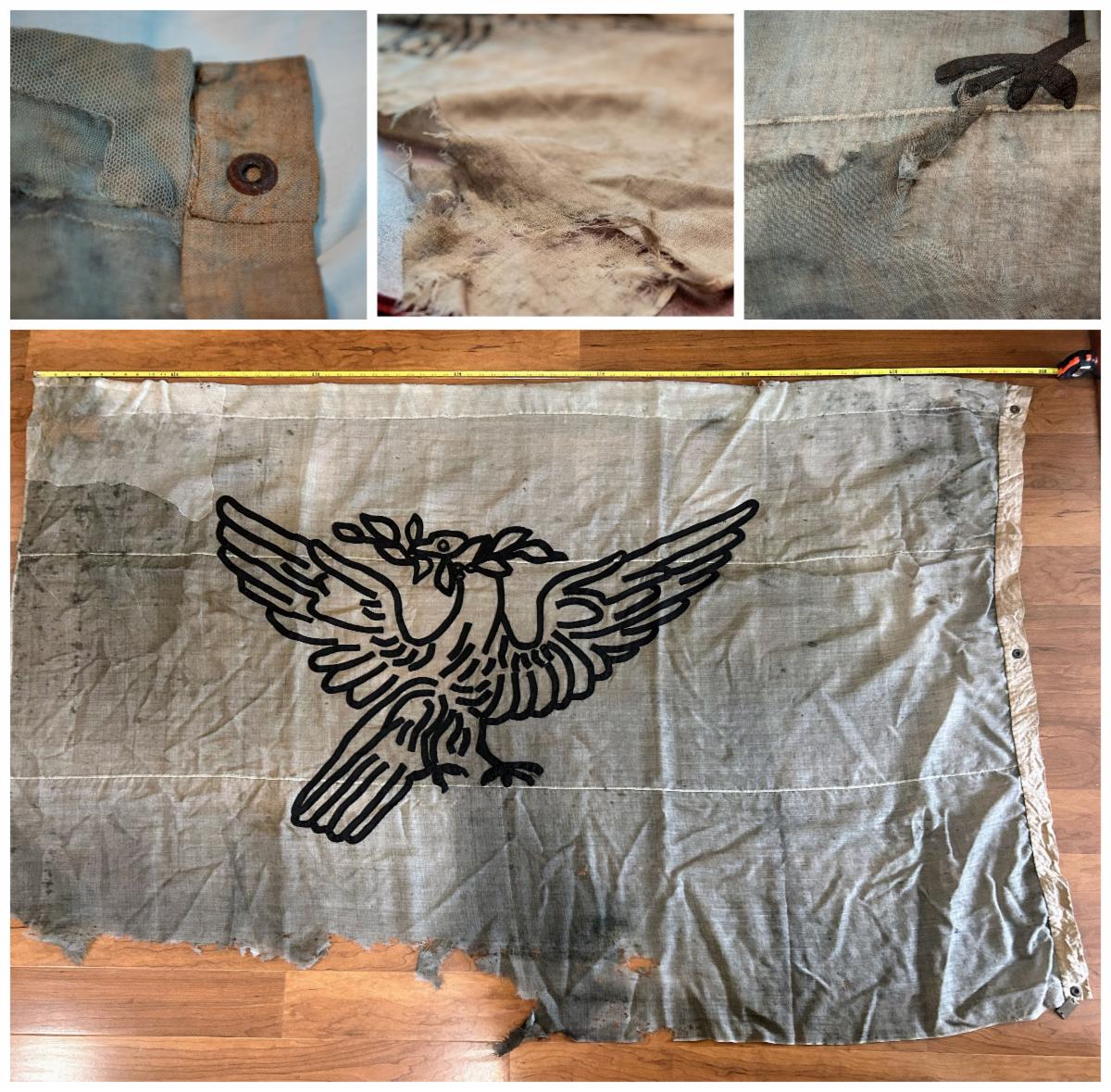
This rare handmade mourning flag was designed and crafted by sisters Susan and Anna Warner in response to the assassination of President Abraham Lincoln in 1865. Featuring an eagle with an olive branch and draped in black mourning trim, the flag is documented in Anna Warner’s firsthand account of witnessing Lincoln’s funeral train pass Constitution Island, where she wrote, “we took our flag in its black drapery and went over to the side of the railway to wait and watch.” This one-of-a-kind flag provides a tangible and deeply personal expression of national grief at a pivotal moment in American history. Its significance is further enhanced by its association with Susan and Anna Warner, influential nineteenth-century authors and educators; Susan’s novel The Wide, Wide World sold more than 1 million copies, while Anna wrote the beloved hymn “Jesus Loves Me,” one of the most widely recognized Christian hymns in the world. For four decades, the sisters also taught Bible classes for West Point cadets, forging a lasting connection to the United States Military Academy. Preserved by the Warner family and continuously displayed by the Constitution Island Association since its founding in 1915, the flag is an exceptional artifact that connects the Civil War era, the Lincoln legacy, and the cultural history of New York’s Hudson Valley.
| |
Naturalist John Burroughs’ Satchel
John Burroughs Woodchuck Lodge
Conservation work to be done by Kate Wight Tyler
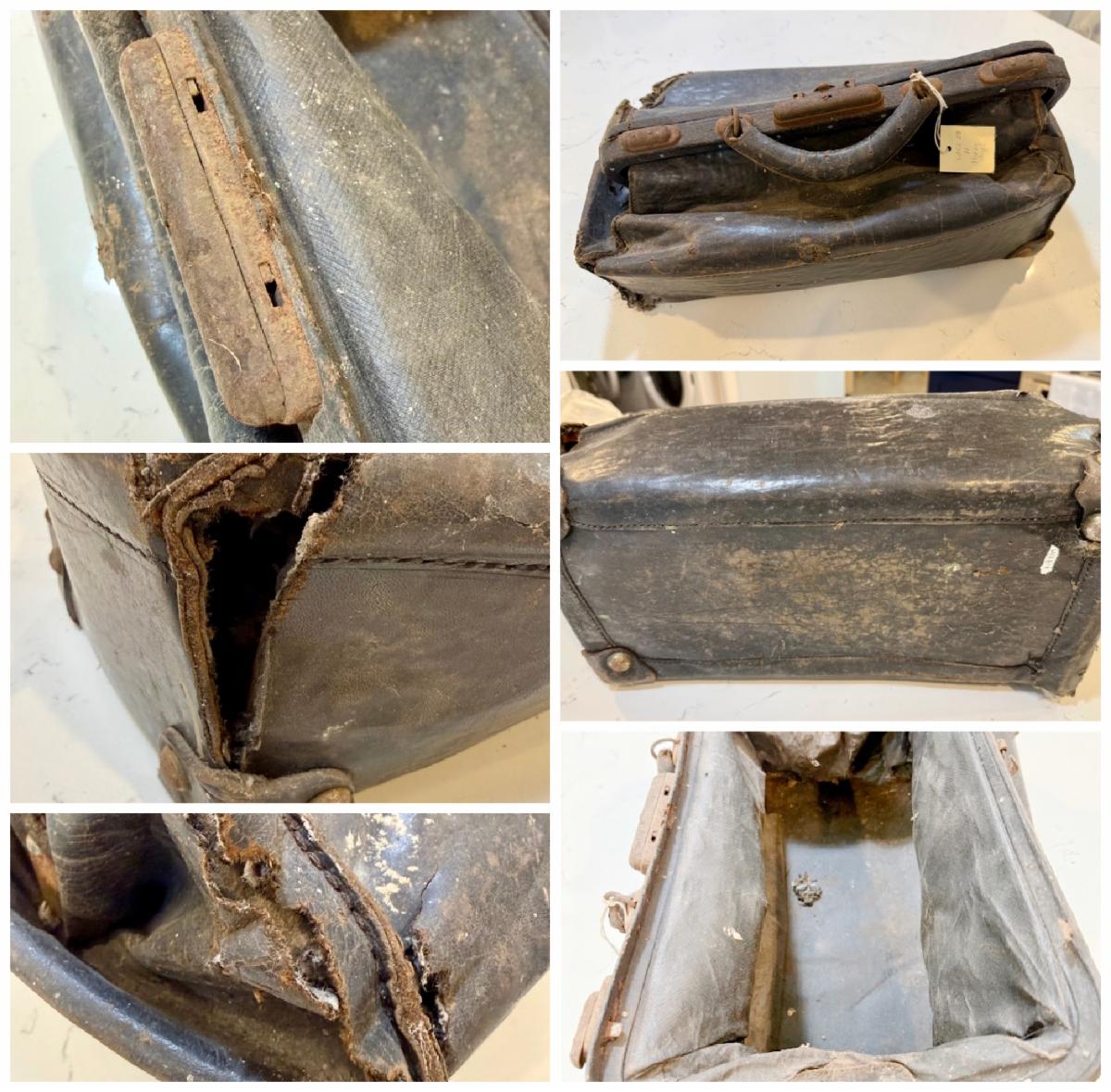
This personal satchel was used daily by renowned American naturalist and essayist John Burroughs during the second half of the nineteenth century. Although less widely recognized today, Burroughs was among the most influential literary figures of his era and, at the time of his death in 1921, was considered one of the most famous writers in America. Widely credited with inventing the nature essay, a distinctly American literary form, Burroughs transformed observations of the natural world into accessible writing that resonated with millions of readers. His essays and books were widely read, taught in schools, and instrumental in shaping the nation’s emerging conservation ethic. Burroughs’ influence extended far beyond literature; he maintained close friendships and associations with poet Walt Whitman, President Theodore Roosevelt, naturalist John Muir, industrialists Henry Ford and Harvey Firestone, and financier Jay Gould. As a rare personal artifact associated with his life and work, the satchel provides a tangible connection to a writer whose contributions helped shape American literature, environmental thought, and the nation’s cultural relationship with the natural landscape.
| |
Rufus King’s Revolutionary War Campaign Trunk
King Manor Museum
Conservation work to be done by Kate Wight Tyler
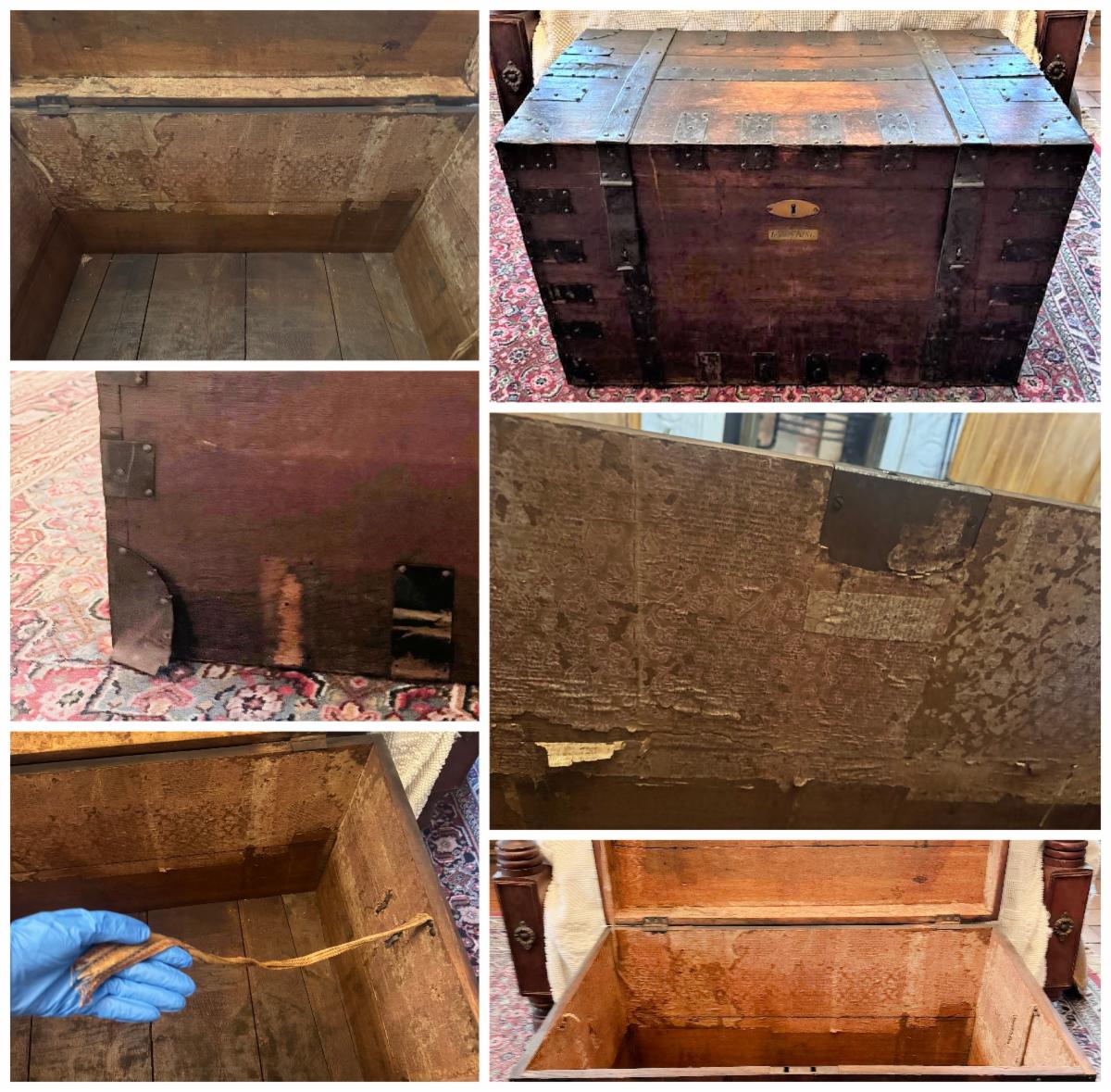
This campaign trunk is the only known surviving Revolutionary War artifact associated with the Founding Father in the museum’s collection. Used by King during his military service in the Continental Army from 1777 to 1780, the trunk is directly connected to a figure who later became a framer and signer of the United States Constitution, one of New York’s first U.S. Senators, and U.S. Ambassador to Great Britain. As a rare surviving personal object linked to both King’s wartime service and his influential public career, the trunk provides a tangible connection to the founding of the United States and the development of its democratic institutions. The object also offers insight into Revolutionary-era military and material culture, illustrating how soldiers and officers transported and safeguarded their belongings during wartime. The trunk enjoyed continued use within the King family, including by King’s son, John Alsop King, Governor of New York from 1857 to 1859, during the War of 1812, linking the artifact to multiple generations of public service and leadership.
| |
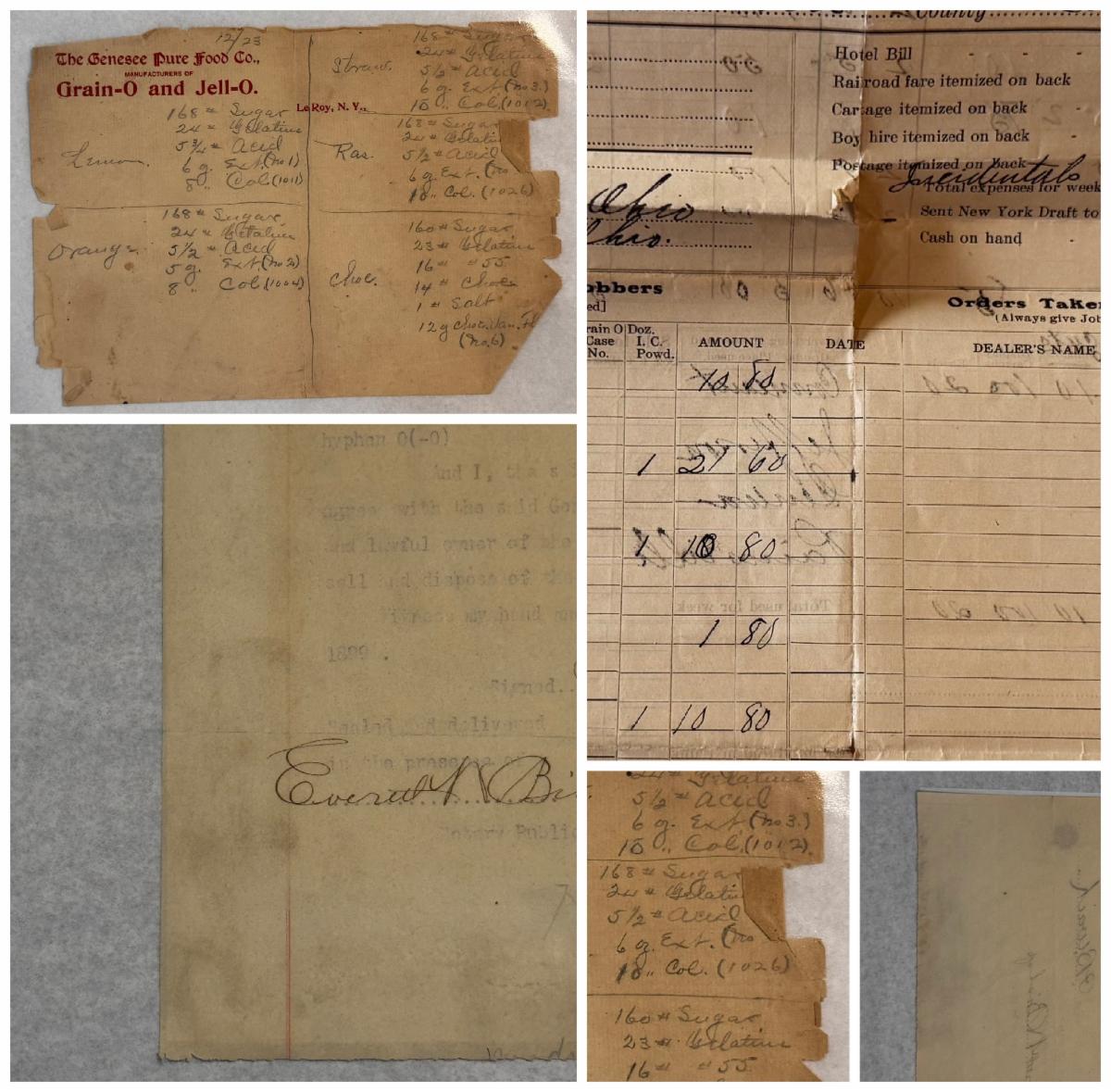
Jell-O Bill of Sale, Original Formula Recipe Sheet, and 1909 Ledger Page
LeRoy Historical Society
Conservation work to be done by Carolyn Frisa, Works on Paper
Three exceptionally significant documents trace the origins and early success of Jell-O, often called “America’s Most Famous Dessert.” The LeRoy Historical Society is the steward of Jell-O history as it was created and manufactured in LeRoy from 1897 until 1964. The collection includes the original 1899 bill of sale in which inventor Pearle Bixby Wait transferred the Jell-O trademark, recipes for the four original flavors—orange, lemon, raspberry, and strawberry—and manufacturing rights to Orator Woodward’s Genesee Pure Food Company for $450; one of the oldest known Jell-O recipe sheets, documenting the original flavors as well as chocolate, the first flavor introduced after the company’s acquisition of the brand; and a 1909 sales ledger, among the earliest known records of Jell-O’s commercial distribution, documenting weekly sales to retail stores by a Genesee Pure Food Company salesman. Together, these rare documents provide a remarkable snapshot of Jell-O’s formative years, illustrating its transformation from a newly invented gelatin dessert into a nationally recognized household brand through innovative production, distribution, and marketing.
|
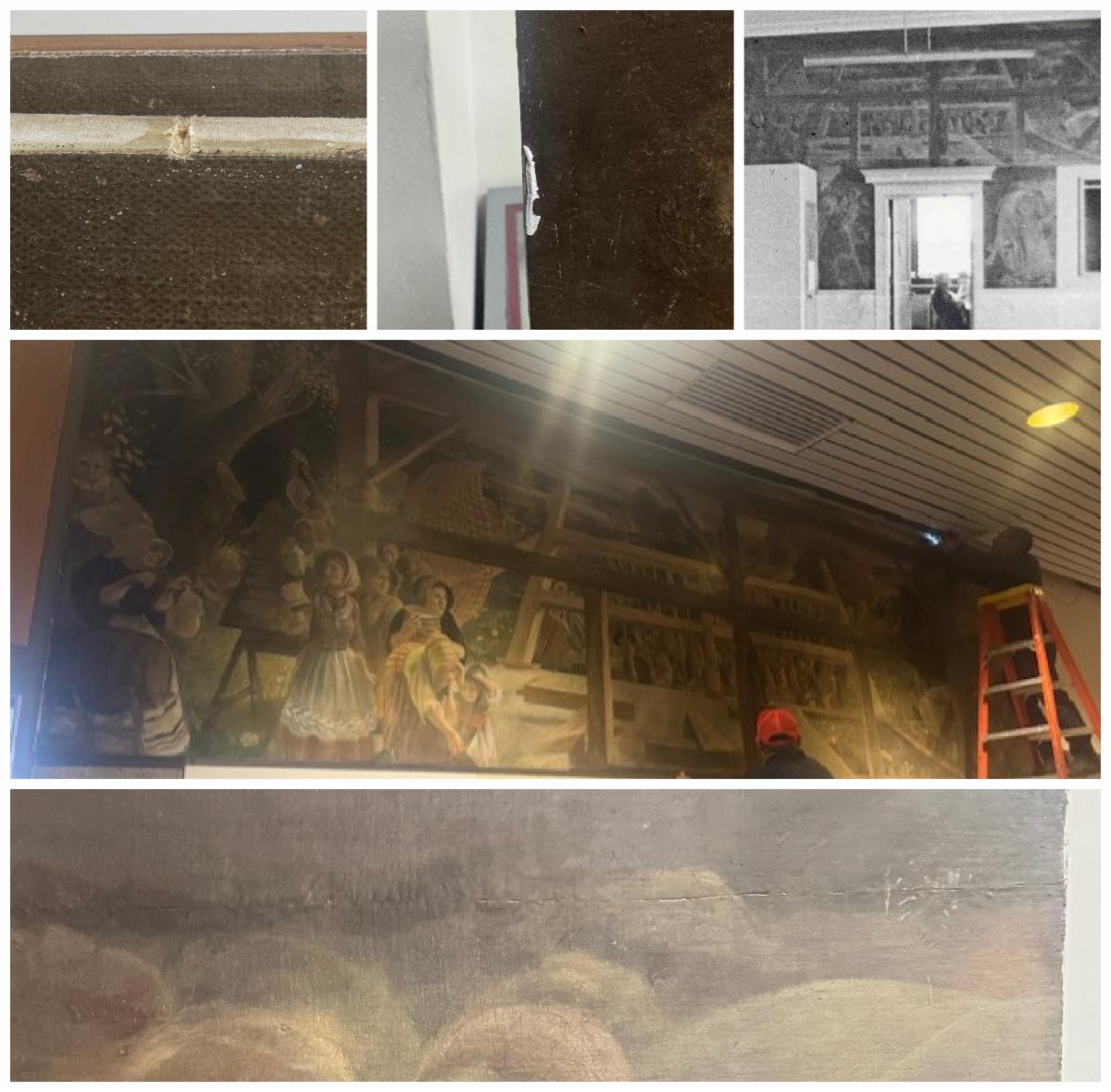
Barn Raising WPA Mural
Rome Historical Society
Conservation work to be done by Westlake Art Conservation Center
Barn Raising, a monumental three-panel oil-on-canvas mural painted by Wendell Jones in 1942 for the Rome Post Office, the building that is now the home of the Rome Historical Society, was created through the federal Treasury Section of Fine Arts program. Depicting a traditional Mohawk Valley barn raising, the mural celebrates the spirit of community cooperation that shaped rural New York life. Barn Raising is nationally significant as a surviving example of New Deal-era public art, created through one of the federal government’s most influential cultural initiatives, which commissioned artists to create murals for public buildings across the country during the Great Depression. These works were intended to make art accessible to everyday Americans, foster civic pride, and document the histories, industries, and traditions of local communities. Today, surviving Treasury Section murals are recognized as important records of American life and enduring symbols of the New Deal’s investment in both cultural heritage and public service. Barn Raising is also one of the few remaining works by Wendell Jones, whose federal mural commissions were limited and increasingly rare, making the mural an important example of both New Deal public art and Jones’s contribution to the American mural tradition. The mural was removed from the Rome Post Office and relocated to City Hall, where it remained until 2024. With the City’s gracious cooperation, the Rome Historical Society reacquired the mural with the intention of reinstalling it in its original home.
|
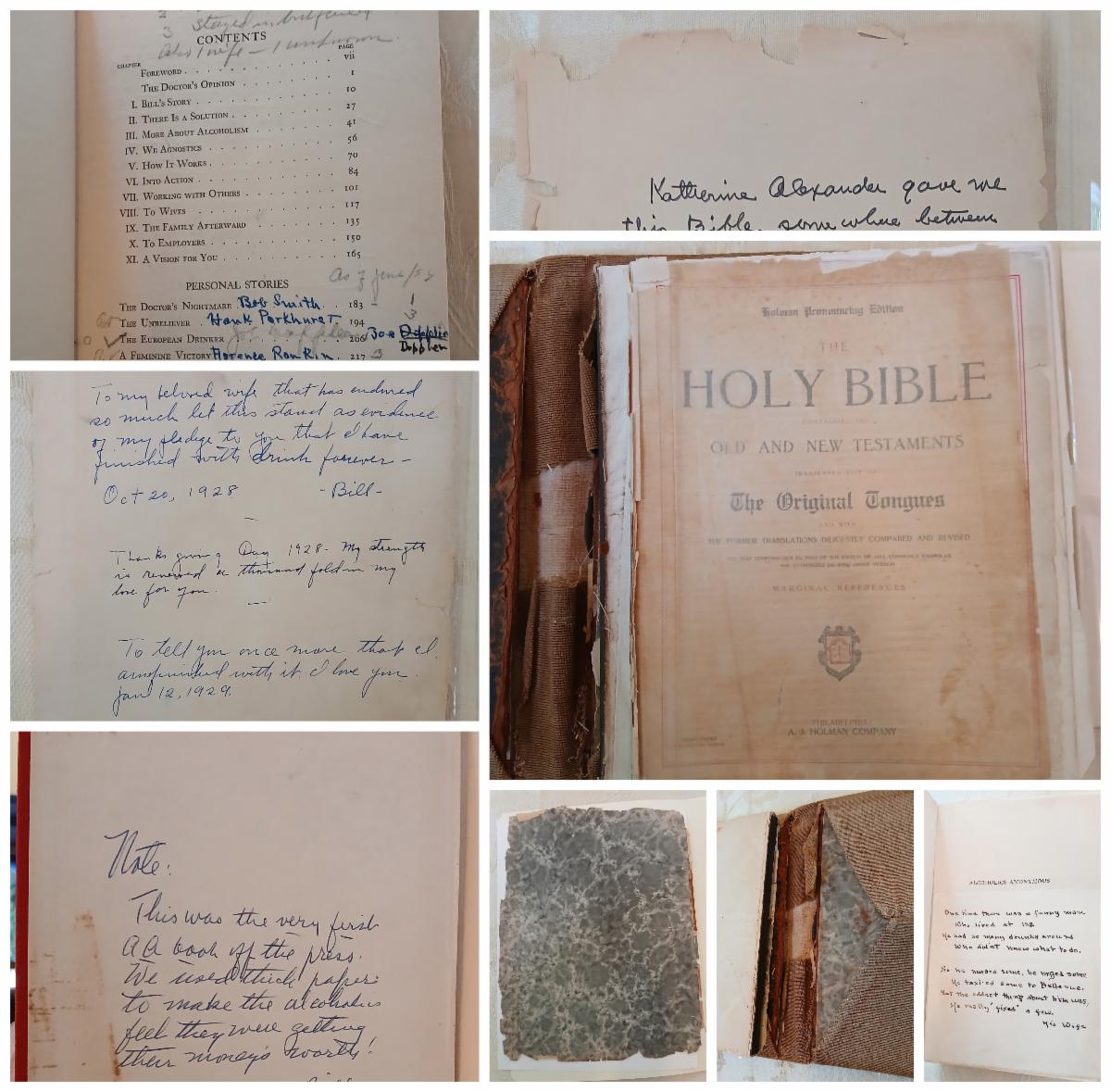
Bill & Lois Wilson’s Bible and the “Alcoholics Anonymous 'Big Book'”
The Stepping Stones Foundation
(Stepping Stones - Historic Home of Bill and Lois Wilson)
Conservation work to be done by Donia Conn
Two extraordinary artifacts document the origins and global impact of Alcoholics Anonymous (A.A.): the Wilson family copy of the first edition, first printing of Alcoholics Anonymous (the first book produced from the press) and the Bible shared by Bill and Lois Wilson, co-founders, respectively of A.A. and Al-Anon Family Groups. The inscribed first-edition volume contains annotations by both Bill and Lois Wilson, including a poem written by Lois that reflects Bill’s dedication to helping others during the formative years of the recovery movement. Widely known as the “Big Book,” A.A. has sold more than 42 million English copies, been translated into over 76 languages, and has been recognized by the Library of Congress as one of the “88 Books That Shaped America” for its profound influence on addiction recovery worldwide. The companion Bible preserves Bill Wilson’s handwritten sobriety pledges to Lois, offering a rare and deeply personal record of his struggle with alcoholism before achieving recovery and co-founding a movement that now serves millions of people around the globe. Together, these two books document both the personal journey that inspired A.A. and the creation of one of the most influential recovery programs in modern history, making them artifacts of exceptional national and international significance.
| | |
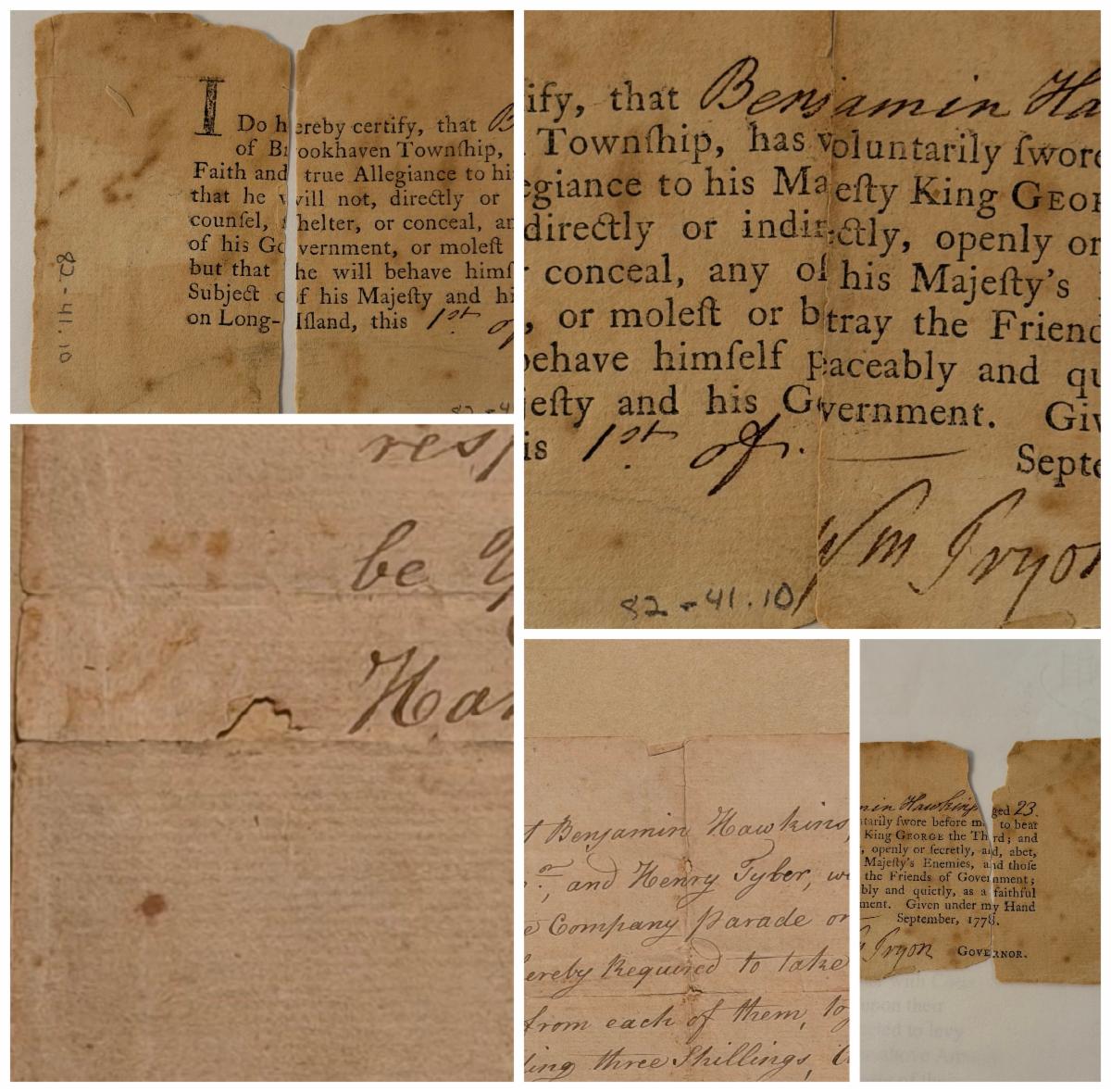
1778 Oath of Allegiance and 1789 Militia Warrant
Three Village Historical Society
Conservation work to be done by Donia Conn
These two Revolutionary War-era manuscripts from the Thornton Hawkins Collection are a 1778 Oath of Allegiance signed by Benjamin Hawkins during the British occupation of Long Island and a 1789 militia warrant addressed to a then-turned Hawkins and signed by Captain Austin Roe, a member of General George Washington’s Culper Spy Ring. These manuscripts are nationally significant because they provide rare primary-source evidence of civilian life under British rule, military service, and local governance during and after the American Revolution. Their significance is further enhanced by their association with individuals connected to Washington’s intelligence network, including Austin Roe and Culper courier Major Jonas Hawkins, whose story captivated U.S. households from 2014–2017 on AMC’s hit series TURN. Together, the documents illuminate the complex realities of political allegiance, espionage, and community life during the nation’s founding era and serve as an important resource for historians, genealogists, and scholars studying the Revolution and the early United States.
| | |
Together, these objects represent irreplaceable pieces of America’s shared heritage. Conservation will stabilize these treasures and ensure their long-term preservation, allowing museums to continue using them in exhibitions, educational programming, and research. As the nation celebrates its 250th anniversary and looks ahead, this project will help safeguard significant cultural resources so they remain available to the public and continue to inspire a deeper understanding of the people, events, and ideas that have shaped and defined the United States.
Community Engagement Conservation Workshops (CECW): To enrich educational programming and help build each museum’s staff and volunteers’ collection-care knowledge and capacity, the CECW will be held at the eight museums. At the CECW, members of the museum community—staff and volunteers—are invited to join them for a day-long workshop. The museum hosts will open their doors to the museum community, provide access to the conserved object(s), and be joined by the object’s conservator for an educational discussion and training on the unique challenges posed by the object type and the best practices for its future care and conservation. The CECW will also benefit approximately 250 museum staff and volunteers who attend the workshops, as well as the visitors of each museum and the communities they serve, as the museums will now be able to offer expanded access, interpretation, and display of these unique items which were previously too damaged to provide for study or exhibition.
GHHN is grateful to the National Park Service and its partners for recognizing the need to conserve these nationally significant objects and funding this essential project. The National Park Service announced $24.4 million in Save America’s Treasures grants to fund 49 projects in 31 states. The Save America’s Treasures grant is a highly competitive grant program. GHHN is the only New York State organization to have received a 2026 Collections grant. With these funds, organizations and agencies nationwide will conserve significant U.S. cultural and historic resources that illustrate, interpret, and are associated with the great events, ideas, and individuals that contribute to our nation’s history and culture. To read the original press announcement, click here.
The Save America’s Treasures grant program was established in 1998 to celebrate America’s premier cultural resources in the new millennium. Since 1999, the Save America’s Treasures program has provided more than $400 million from the Historic Preservation Fund to support preservation and conservation work on nationally significant collections, artifacts, structures, and sites.
-----
| | |
About The Institute of Museum and Library Services:
The Institute of Museum and Library Services is the primary source of federal support for the nation's libraries and museums. We advance, support, and empower America's museums, libraries, and related organizations through grantmaking, research, and policy development. IMLS envisions a nation where individuals and communities have access to museums and libraries to learn from and be inspired by the trusted information, ideas, and stories they contain about our diverse natural and cultural heritage.
To learn more, visit www.imls.gov and follow us on Facebook and Twitter.
| |  |
|
About GHHN:
GHHN is New York State's ‘go-to' service organization focusing on interpretation, collections care programming, and the conservation and preservation of objects in collecting institutions statewide. Our programming and professional development training programs, webinars, hands-on workshops, web-based resources, responsive technical assistance, and grant opportunities provide the tools so that historical societies, historic house museums, heritage centers, historic sites, archives, and libraries may better care for their own collections.
For more information, please visit www.greaterhudson.org or follow us on social media - @theghhn
| | | | |