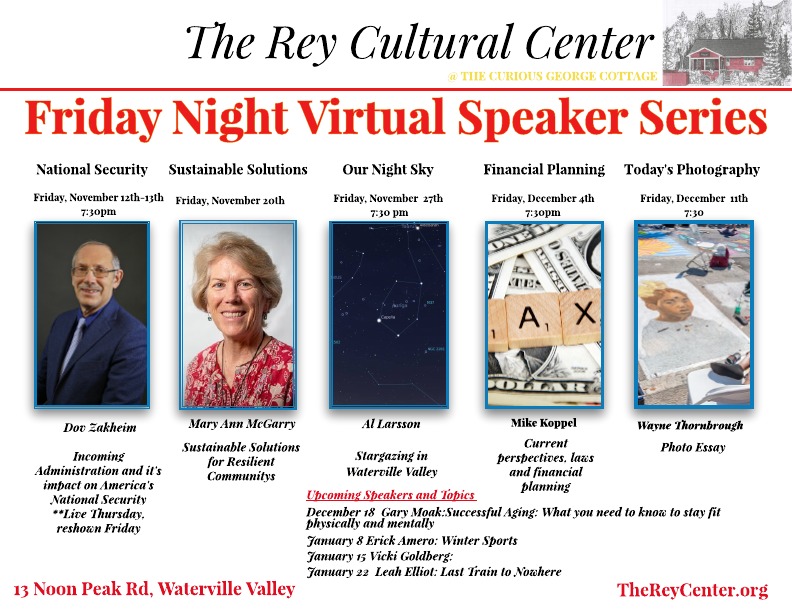
7:30 Friday 20th Virtual Speaker Series
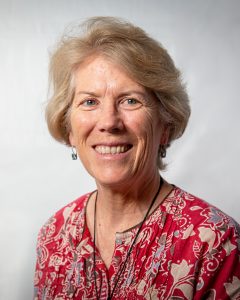
Dr. Mary Ann McGarry: Sustainable and Resilient Communities
Dr. Mary Ann McGarry has been a professor of environmental science and policy at Plymouth State University since 2004 when the Center for the Environment was founded. McGarry has been an active member of the interdisciplinary council managing the minor in sustainability. She regularly teaches a foundational course she co-created called Issues in Sustainability, where students focus on water, waste, transportation, energy, and sustainable food systems.
In January of 2020, right before COVID-19 changed the world, McGarry travelled to the Sadhana Forest eco-community in India where she planted trees alongside, an architectural professor from the largest private Amity University in Kolkata, India. McGarry developed and delivered a webinar version of this Sustainable Communities presentation for 300+ students and faculty affiliated with this university. This experience catalyzed McGarry’s passion for interweaving various fields, cultures, and specialties to promote the evolving nature of sustainable structures, especially, now in the context of COVID-19.
Upon returning to NH from India, McGarry joined the Board at D’Acres Educational Farm and Homestead, in Dorchester, as she sought to immerse herself in a local, similar ecovillage as to what she had experienced in India.
This week's presentation by Dr. Mary Ann McGarry, Endowed Abbot Professor of Environmental Studies at Plymouth State University will focus on local to global examples of sustainable solutions to make communities more resilient. Dr. McGarry will talk about the evolution of practices in her life at home in Plymouth, NH, activities on the PSU campus, ongoing and recent initiatives in the greater community of Plymouth, as well as a sampling of national and international projects. A theme of the presentation is integrating one’s personal and professional ethics, walking the talk, and practicing what we teach. A second theme is rethinking architecture and how we interact with human constructed spaces- indoors and out- in response to COVID-19.