INSIGHTS FROM THE ALLIANCE | | |
Where the Future Workforce Is Being Built
Much of the national conversation about the future of work focuses on artificial intelligence, automation, and the rapid transformation of industries. Those discussions are important, but they sometimes overlook where much of the real workforce preparation is happening. Across the country, rural community colleges are preparing students for careers in advanced manufacturing, healthcare, agriculture, energy, transportation, and the skilled trades.
Research from the Georgetown University Center on Education and the Workforce shows that roughly 52 percent of jobs in the U.S. are “middle-skill” jobs, positions that require education beyond high school but not necessarily a four-year degree. Georgetown researchers also project that more than 70 percent of jobs will require some form of postsecondary education or training by 2031. Institutions serving rural communities are central to meeting that demand.
Learn more: https://cew.georgetown.edu.
Rural community colleges have long focused on practical, applied education tied closely to local economic needs. Whether training welders, nurses, technicians, agricultural specialists, or first responders, these colleges are deeply connected to the employers and industries that sustain their communities. Analysis from the Brookings Institution notes that community colleges enroll nearly 40 percent of all U.S. undergraduates and serve as key engines for regional workforce development, particularly in smaller and rural labor markets where they often represent the primary source of career and technical education.
Learn more: https://www.brookings.edu.
This focus on the future workforce will be front and center at the upcoming American Technical Education Association (ATEA) conference, taking place May 27–29 at Guilford Technical Community College in North Carolina. This year’s theme, The New Workforce: Accelerating Productivity for the Future, will bring together educators, administrators, and industry partners to explore how workforce education is evolving. As national conversations about the future of work continue, it is worth remembering that rural community colleges have been preparing the workforce of tomorrow for decades and they will remain essential to building the economy that comes next.
| | |
As Congress debates how to address the projected shortfall in the federal Pell Grant program, rural community colleges have an important stake in the outcome. An analysis of federal data from 469 rural-serving institutions shows that Pell participation and total federal investment in these colleges have declined over the past decade. In other words, long before policymakers began discussing a Pell funding gap, rural community colleges were already seeing fewer students receive Pell Grants and fewer federal dollars flowing into their campuses and communities.
Using Integrated Postsecondary Education Data System (IPEDS) data collected since 2010, three trends emerge that should inform the national conversation about Pell and rural higher education. These data start two years before Congress addressed the last major Pell funding shortfall in 2012 by tightening eligibility rules. Those changes stabilized the program financially, but they also reduced access for many students and were followed by a long period of declining community college enrollment.
Continue reading the full article here.
| | College Spotlight: College of the Redwoods | |
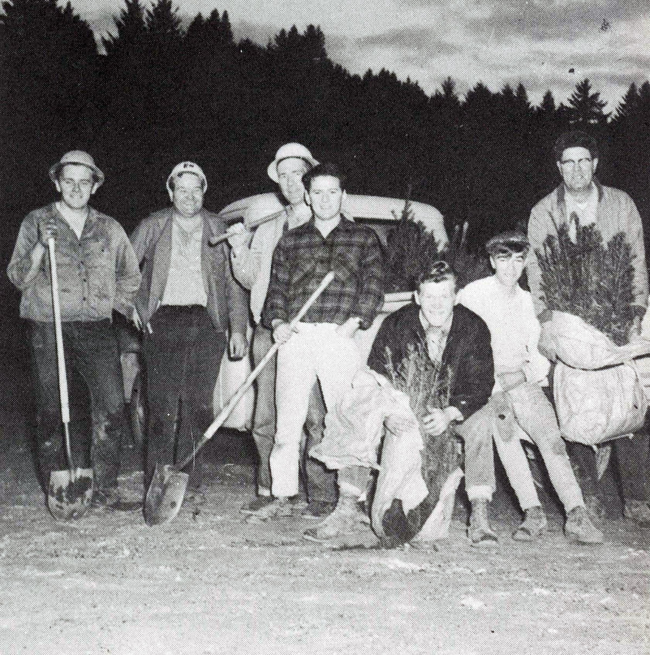
Deep Roots, Bright Future: 60 Years of Forestry & Natural Resources at CR
For six decades, the Forestry & Natural Resources (FNR) program at College of the Redwoods has been more than a curriculum. It has been a place where curiosity about the natural world becomes expertise, passion becomes commitment, and students leave prepared to care for the forests that sustain communities and ecosystems alike.
Founded in 1965, just a year after the college opened its doors, FNR quickly became one of CR’s cornerstone programs. In a county nearly synonymous with redwood forests, it was a natural fit. Since then, hundreds of graduates have carried forward science-based solutions to some of the region’s most complex natural resource challenges. “Sustainably managed forests are critical to the future of our planet,” says CR President Dr. Keith Flamer. “Our graduates contribute to economic growth, cultural preservation, and community well-being, not just here in Humboldt, but across the country.”
Read the full article here.
| | Welcoming Our New Education Partner | |
|
Almy Education partners with colleges and universities to redesign gateway courses, achieving measurable improvements in student outcomes at scale. Our mission is to guide institutions through this transformation using a proven, faculty-led approach that respects each campus's unique context. We believe every student deserves access to an education that leads to a living wage.
Unlike traditional consultancies, Almy Education utilizes a practical "done with you" methodology. The team of current and former faculty provides hands-on implementation support, guiding partner institutions through systemic change management while fostering genuine faculty buy-in. Specializations include Gateway Course Redesign, Corequisite Support Implementation, and Curriculum Design.
Institutions working with Almy Education typically see increased course completion rates within 12-18 months across math, English, biology, and chemistry. With a strategic focus on culture, systems, and classroom practices, Almy Education supports partners in overcoming resistance and building a sustainable environment for student success. This approach enables institutions to turn strategic goals into quantifiable results.
Learn more about Almy Education here.
| | | | |
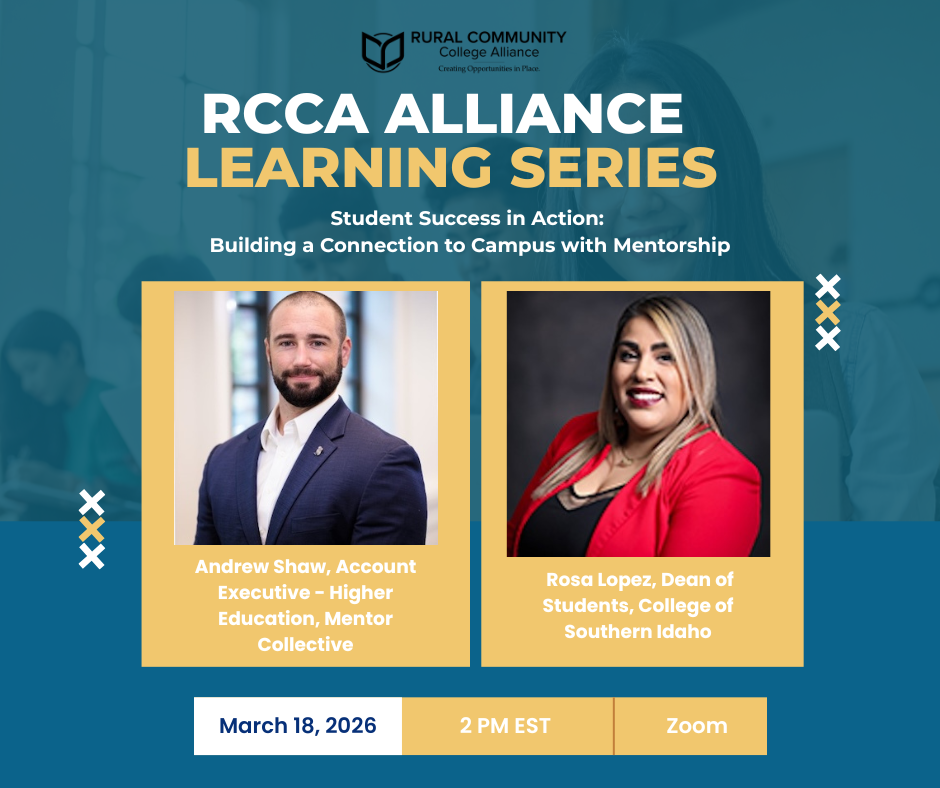
RCCA Alliance Learning Series Webinar
- Student Success in Action: Building a Connection to Campus with Mentorship
- Tuesday, March 18, 2026
- 2:00 pm Eastern
Mentorship can play a meaningful role in addressing enrollment challenges, improving retention, and strengthening students' connection to campus. When designed with intention, mentorship becomes a coordinated strategy that supports students while also giving institutions better insight into when support is needed most.
This session will highlight a data-driven mentorship model that brings together students, faculty, staff, and peer mentors to create a strong, connected support network. Presenters will share how this approach builds belonging, enables timely outreach, and provides actionable data to support student persistence and administrative decision-making.
The conversation will focus on how this model can be implemented and scaled to support student success while making the most of existing campus resources.
Presenters
- Dr. Rosa Lopez, Dean of Students, College of Southern Idaho
- Andrew Shaw, Account Executive for Higher Education, Mentor Collective
| |
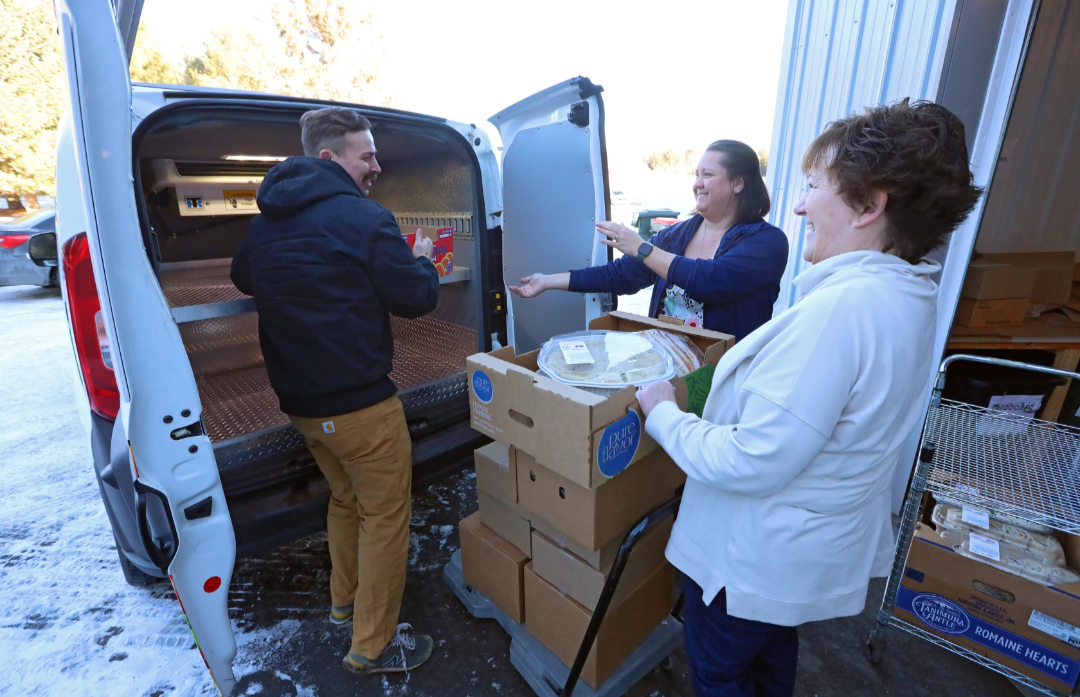
Food Recovery Network Offers Third Year of Funding Opportunities to Expand Food Recovery on Community and Technical College Campuses
Washington, D.C. — Food Recovery Network (FRN) is excited to announce the opening of applications for the third year of its Community College Food Recovery Grant Program. This initiative aims to establish and strengthen food recovery programs at community colleges across the United States, helping to combat food waste while supporting people experiencing hunger within local communities.
Community colleges play a crucial role in addressing food insecurity in their areas and serve as essential hubs for food recovery efforts. To date, the ten previous grant recipients, together, have recovered 311,853 pounds of food, often redirecting it right on their own campuses to serve students experiencing hunger.
Read the full press release here.
| | | Resources and Opportunities | |
|
Register for the 2026 ATEA National Conference
The American Technical Education Association will host its 2026 National Conference May 27–29, 2026, in Jamestown, North Carolina.
Theme: The New Workforce Accelerating Productivity for the Future
The event convenes technical education and workforce leaders from across the country to explore emerging trends, industry partnerships, and strategies that strengthen student pathways into high-demand careers.
| | | | | | |
April is Community College Month, and that presents a great opportunity to get the word out about why community colleges matter, how your college is serving your community's needs today, and why public support for our colleges is more important than ever.
The 2026 #CCMonth theme is "The Smartest First Step, the Strongest Next Step."
Use ACCT's toolkit to advocate all of April!
| | |
|
New Cleveland Fed study examines unemployment trends for high school and college graduates
A new Federal Reserve Bank of Cleveland study explores whether young college graduates are losing their competitive edge in the modern job market, with potential implications for employers’ recruitment strategies and workforce development. The research may help your organization better understand the evolving landscape of talent acquisition in our changing economy. The Bank also invites the public to a virtual Fed Talk conversation on these topics on March 20.
| | | |
Important Dates from ACCT
-
March 18, 1 PM ET Informational Webinar on the Workforce Futures Accelerator: Embedding Real-World Employer Projects in Community Colleges
-
March 24, 5 PM ET Pell Grants: Deadline for U.S. House Republicans to sign letter supporting robust funding for Pell Grants and campus-based aid.
-
March 25, 5 PM ET Child Care Access Means Parents in School (CCAMPIS): Deadline to sign on to letter to support CCAMPIS funding
-
March 26, 12 PM ET Strengthening Community College Training Grants (SCCTG): Deadline to sign on letter to support SCCTG
-
March 26, 5 PM ET Pell Grants: Deadline for U.S. House Democrats to sign letter to double the Pell Grant maximum
-
March 27, 6:00 PM - Deadline for U.S. House Members to Submit Final Requests to Labor-HHS-Education Appropriations Subcommittee
-
March 30, 11:59 PM ET Public comment period closes for the proposed revision on certifications that recipients of federal funding must submit.
-
April 1, 11:59 PM PT The Workforce Futures Accelerator: Embedding Real-World Employer Projects in Community Colleges Application Deadline
-
April 3, 1-2 PM ET LAW Live
-
April 3, 11:59 PM ET DOL "Pay for Performance" Registered Apprenticeship Grant Due
-
April 8 Public Comment Period Closes for AHEAD (Workforce Pell)
-
April 14 FAFSA Form 2027-28 comment period closes
-
May 1, 1-2 PM ET LAW Live
-
May 20, 11:59 PM ET. Strengthening Community College Training Grant Closes
-
June 5, 1-2 PM ET LAW Live
-
July 10, 1-2 PM ET LAW Live
-
August 7, 1-2 PM ET LAW Live
-
September 4, 1-2 PM ET LAW Live
-
October 2, 1-2 PM ET LAW Live
-
October 21-24 ACCT Leadership Congress
-
November 6, 1-2 PM ET LAW Live
-
December 4, 1-2 PM ET LAW Live
| | Follow the RCCA Facebook Page | | | | |