|
Most pour over and auto drip coffee making is bypass brewing, to a certain extent. Bypass refers to some water that manages to find its way into the coffee carafe without having much contact with ground coffee. Some flows down the sides of the space between paper filter and filter holder. Some extracts out the sides of the paper filter, passing through very little coffee. It is the normal part of brewing filter coffee, and this is why so much emphasis is placed on how you pour hot water over a bed of coffee when brewing pour over.
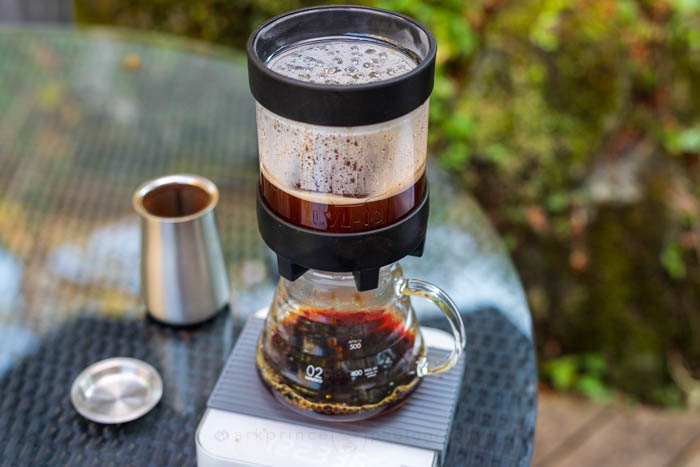
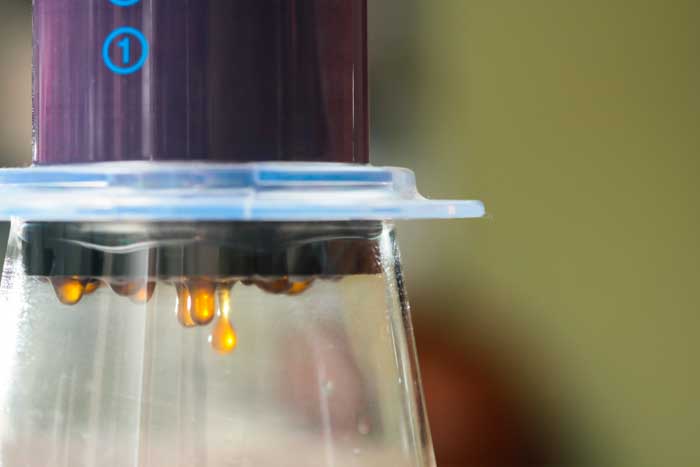
No bypass means you are forcing all your brewing water to pass through the bed of coffee. There’s no escape route for the water. The result is a larger extraction ratio, and it provides another tool for the barista to control the final output. By maximizing the extraction during the brew, the barista then can add hot water at the end of the brew to the coffee carafe to control the exact amount of dilution they want in the final cup.
It’s that latter part – the dilution – that makes things a bit new here, but again, not really. Because no bypass brewing has been around for a long, long time.
The humble americano – a double shot of espresso diluted with hot water – is a prime example of no bypass, super high extraction ratio coffee with added dilution.
The Chemex brewer is a 70 year old nobypass coffee brewer: the paper filter is designed to adhere to the glass side walls, forcing all extraction through the bottom of the cone shaped filter. For decades, people have used Chemex brewers to do extra strong coffee brews, and diluted them, either for normal hot coffee drinking, or for making iced coffee beverages.
The Vietnamese phin coffee maker is a very traditional and well used no bypass coffee brewer, brewing small amounts for coffee drinks that get iced and sweetened with condensed milk.
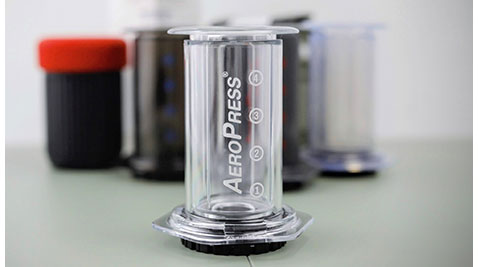
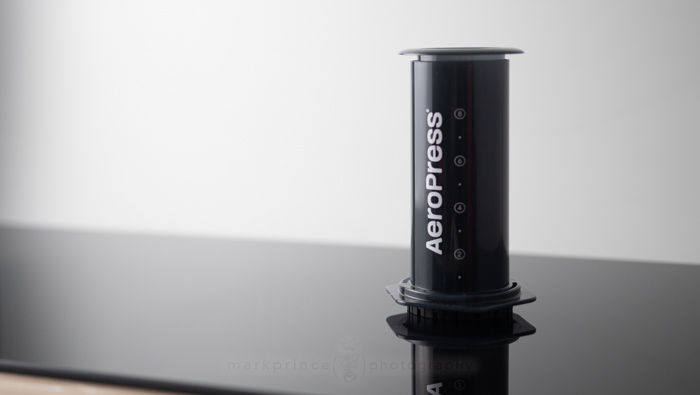
The AeroPress is in effect a no bypass brewer doing it’s thing for nearly 20 years now. And the new AeroPress XL is even better suited for no bypass brewing.
|