|
The Establishment of the Passover
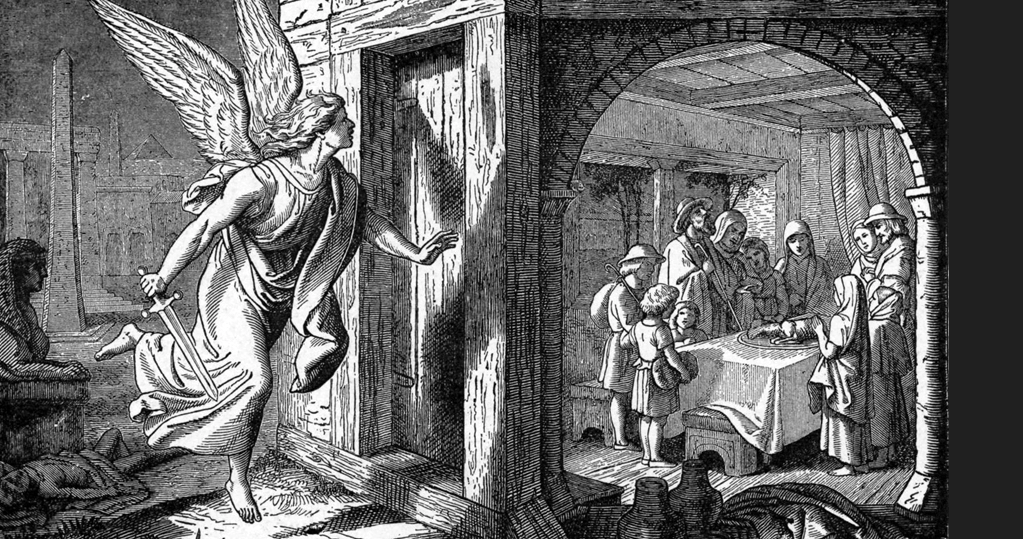
“When I strike the land of Egypt, the blood on the houses where you live will be a sign for you; and when I see the blood, I will pass over you, and no plague will befall you to destroy you” (Exodus 12:13).
Before the final and decisive disaster came upon the Egyptians, God prepared Israel to face the night of judgment. For God’s people, this night was both a night of preservation and the night of the Exodus. The passage does not deal only with the historical events at the time of the Exodus, but also with the observance of that event as an annual festival—namely, the celebration of the Passover on the fourteenth day of the month of Abib, or Nisan (March/April in spring), in Israel.
The Powerlessness of the Egyptian Gods
The plague of death came upon the houses of the Egyptians and struck them, while the houses of the Israelites were passed over because blood had been applied. The Hebrew word meaning “to pass over” sounds similar to the name of the festival, Passover. Each year, as the Passover is celebrated, the ritual reenacts the original event so that it is experienced as vividly as if it were happening in the present. On that night, the powerlessness of all the gods of Egypt was proven. When the LORD passed through the land of Egypt, those who did not acknowledge God and refused to obey His command could not escape death. God’s judgment upon Egypt extended to both humans and animals, and even to all the gods of Egypt. Neither the idols of Egypt nor the gods they worshiped were able to stop God’s judgment.
The Feast of Unleavened Bread Joined with the Passover
God commanded that unleavened bread be eaten at the Passover. The regulations concerning the Feast of Unleavened Bread are described in detail. It was clearly established that this feast was to be observed for seven days, from the fourteenth to the twenty-first day of the first month. On the first day, leaven was to be removed, and for the entire seven days no leaven was to be present. This command applied whether one was a foreigner or a native-born person—the Hebrew expression may be rendered as “the sojourner or the native.” Eating leaven symbolically represents refusing to depart from sin, cherishing it, and repeatedly committing it; such a person is, in reality, removed from the company of those who are saved. Although we are saved by faith, that faith must necessarily be accompanied by action—that is, a holy life that turns away from sin. Those who do not live in this way show contempt for the righteous God.
Each of us also has a day like the Feast of Unleavened Bread, when Israel was delivered from Egyptian oppression—a day when we were led out of the power of sin into salvation. Just as the Israelites relived the joy of salvation through the observance of the Feast of Unleavened Bread, we too should live each day with a renewed sense of gratitude and joy for our salvation. The “passing over” of the plague and the day of the Exodus begin, according to the biblical reckoning of a day, on the evening when the Passover lamb is prepared.
The Passover Meal and the Lord’s Supper
To this day, in Judaism, the Passover meal is observed annually, while Christians instead celebrate the Lord’s Supper. Paul unites these two observances by stating, “Christ, our Passover lamb, has been sacrificed”. For Paul, as in Judaism, the “passing over” of the firstborn signifies God’s act of preserving His people from destruction and bringing about a new beginning for them. Through the regular observance of the Passover meal, Israel continually experiences this salvific act as a present and living reality. Likewise, through the Lord’s Supper, each new generation of believers should be taught to understand and appreciate this act.
Reflection
God commanded the Israelites to observe the Feast of Unleavened Bread not only in Egypt but wherever they dwell thereafter. This teaches that commemorating the Lord’s salvation and being set apart from sin in holiness is a timeless and location-transcending responsibility of God’s people. It means that holiness is not confined to a specific place; wherever God’s people go, they are called to live in holiness.
The ordinance of the Feast of Unleavened Bread provides us with a clear lesson today: to live a holy life. Indeed, those who have been redeemed from sin by the grace of Christ must separate themselves from sin and live worthy lives as God’s holy people. In doing so, they are promised the inheritance of the kingdom of heaven and eternal life.
|