|
Reflections from our Community
June 4, 2026
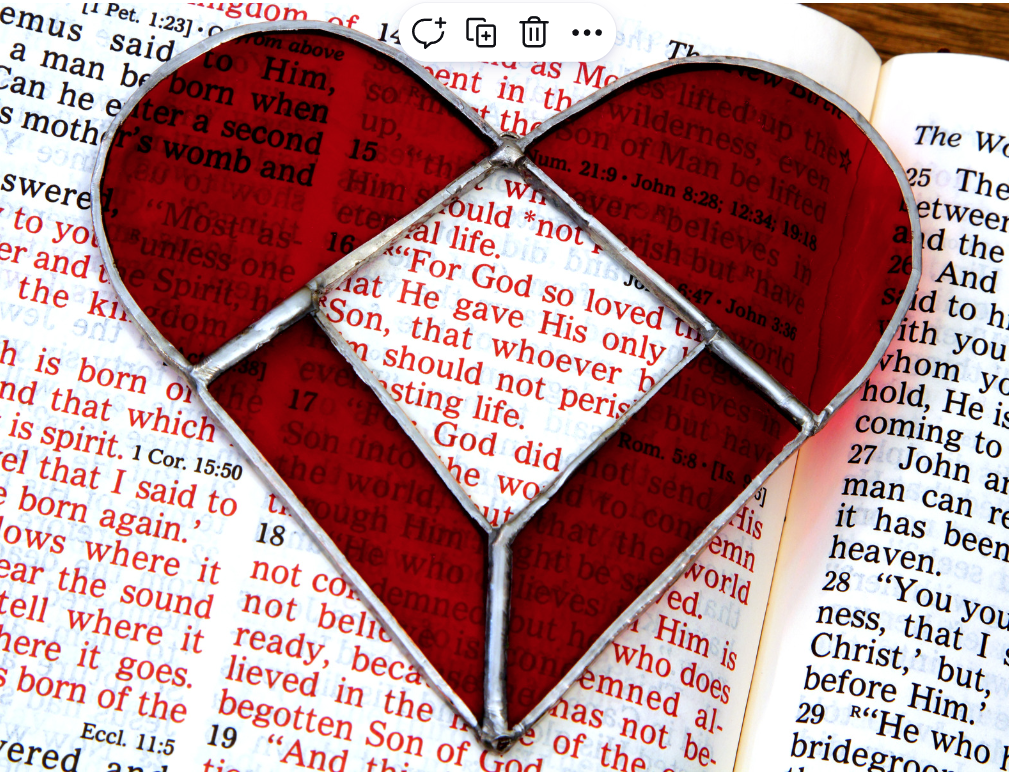
My Response to John 3:16-18
There are days when I understand Psalm 137 better than I wish I did. "By the rivers of Babylon—there we sat down and there we wept." The psalmist did not hide his grief. He did not pretend that oppression was merely a disagreement between reasonable people. He did not congratulate himself on seeing both sides. He sat beside the waters and wept because he could see clearly what had been lost.
I find myself in a similar place when I look at our nation today. Not because politics has become contentious. Politics has always been contentious. I grieve because I see human beings being dehumanized. I see cruelty treated as strength. I see fear deliberately cultivated and weaponized. I see lies repeated so often that many no longer recognize them as lies. I see vulnerable people suffering while powerful people congratulate themselves on their victories. And I find myself asking, like the exiles in Babylon, how are we supposed to sing the songs of God in a strange land?
Perhaps that is why John 3:16–18 speaks to me differently these days. For much of my life I heard this passage as a story about guilt. Jesus died because of our sins. Jesus suffered because we are sinners. Yet Jesus says something else entirely. "Indeed, God did not send the Son into the world to condemn the world, but in order that the world might be saved through him."
Jesus did not die to lay a guilt trip on us. Jesus died because he confronted the Babylons of his own age. He proclaimed good news to the poor. He welcomed the
stranger. He challenged religious hypocrisy and political power. He exposed corruption, fear, and cruelty. And for that, he was killed.
The forces that crucified Jesus are not relics of history. They still walk among us. They still occupy seats of power. They still tell us that cruelty is necessary, that some lives matter more than others, that fear is wisdom and compassion is weakness. The names change. The faces change. The justifications change. But the spirit remains the same.
This is why I can no longer dismiss what I see as merely political. There are moments in history when the issue is not partisan but moral. There were not good people on both sides of slavery. There were not good people on both sides of segregation. There were/are not good people on both sides of fascism. Some realities must be named for what they are. The prophets understood this. Jesus understood this. When human beings are degraded, exploited, or discarded, faithfulness requires more than neutrality. It requires moral clarity.
Yet John reminds us that God's answer to the world's darkness is not condemnation but love. "For God so loved the world." Not part of the world. Not people who think like us. The world. Every immigrant. Every refugee. Every prisoner. Every child. Every person created in the image of God.
The psalmist sat beside the waters and wept. I understand those tears. But I am not
ready to hang up my harp. Babylon is not the end of the story. The cross was not the end of the story. Empires rise and fall. Fear rises and falls. Tyrants rise and fall. But truth endures. Justice endures. Love endures. And the God who loved the world enough to enter it has not abandoned it now.
So I will remember. I will speak. And I will preach. For silence has never defeated
Babylon. Only truth has.
******
May the God who heard the cries of Israel by the rivers of Babylon hear your cries as
well.
May God preserve your heart from indifference when others suffer, and from despair when the darkness seems overwhelming.
May Christ grant you the courage to tell the truth, the wisdom to recognize cruelty for what it is, and the compassion to stand beside those whom the world would rather ignore.
May your anger be shaped by love, your convictions tempered by humility, and your
hope sustained by the promise that no empire, no tyrant, and no power on earth is
greater than the justice and mercy of God.
And when you are weary, may you remember that Babylon is never the final chapter, the cross is never the end of the story, and love will always have the last word.
Amen.
Jim Berry
|