Honoring a decade of exceptional leadership
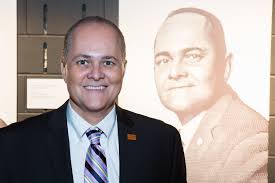
This year, we celebrate the 10-year anniversary of our chairman, Jair C. Soares, MD, PhD.
Soares joined UTHealth in 2009 as professor and chair of the Department of Psychiatry and Behavioral Sciences, and the Pat R. Rutherford, Jr. Chair in Psychiatry at McGovern Medical School, as well as the executive director of UTHealth Harris County Psychiatric Center. He is a board-certified psychiatrist and recipient of the Best Doctors Award for the past seven years. He also serves as chief of psychiatry services at Memorial Hermann-Texas Medical Center and Harris Health Lyndon B. Johnson Hospital, and is president of the International Society of Affective Disorders.
During his tenure, Soares has grown a team of leading experts to join as faculty, starting with 40 when he arrived and expanding to more than 100 and counting. He has secured funding of $125 million for the building of
the UTHealth Continuum of Care Campus for Behavioral Health. The additional hospital will make UTHealth the largest academic psychiatric hospital in the country.
As an active, enthusiastic, and dynamic researcher, Soares also directs the UTHealth Center of Excellence on Mood Disorders, which focuses on the search for causes and the development of new treatments for mood disorders. The center is comprised of an active research team that specializes in clinical neurosciences (neuroimaging, neurophysiology, cognitive neurosciences, and genetics) and clinical psychopharmacology and interventions research. In support of his research, Soares has been able to secure millions of dollars from several different funding sources. He has published more than 300 peer-reviewed articles and book chapters in psychiatric literature and has held editorial positions on a number of national and international medical journals. His collaboration and vision keep him on the forefront of medicine.
We are thankful to have a strong, determined and inspirational leader with excellent integrity, intellectual honesty, devotion and dedication with
an assertive aspiration setting high expectations for us now and in the years to come.
|
|
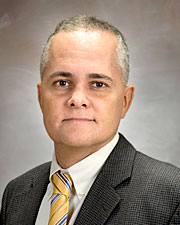
Alan Prossin, MBBS, is an assistant professor in the Department of Psychiatry and Behavioral Sciences and is the director of both the Neuroimmune Interactions in Depression, Addiction, and Pain Research Program and the Interdisciplinary PET Working Group. His research centers on using molecular brain activity in an innovative way to identify mechanisms that underlies mind and body relationships in pain and depression. Through his work, Prossin is looking to find out how thoughts affect our mood, how we feel pain, and the impact on our bodies.
Prossin’s journey to the Department of Psychiatry and Behavioral Sciences took a few turns along the way. While studying electrical engineering at McGill University in Montreal, Canada, Prossin attended an interdisciplinary meeting that was exploring the theory of thought, sparking his interest in psychiatry. After completing his psychiatric residency training, he did both a research elective and fellowship at the University of Michigan.
Prossin has received many grants and awards throughout his career. Most recently, he received an award from the National Institutes of Health. This five-year, $3.7 million award is a phased award set up to validate biosignatures of the human pain experience. The research includes seeing patients that underwent cosmetic abdominal surgery, looking for molecular brain changes in response to pain.
|
|
|
Center for excellence on mood disorders recruits treatment-resistant depression patients for psilocybin clinical trial
|
|
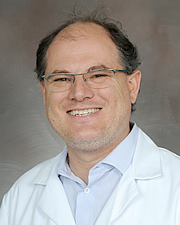
The team made up of Jair Soares, MD, PhD, professor and Pat R. Rutherford, Jr. Chair in Psychiatry;
João Luciano de Quevedo, MD, PhD,
professor and vice chair of Faculty Development and Outreach; Sudhakar Selvaraj, MD, PhD, assistant professor and director of the Depression Research Program; and
Thomas D. Meyer, PhD, associate professor in the department (clockwise from top left) are working on a study sponsored by Compass Pathways
to test the safety and efficacy of psilocybin in participants with treatment-resistant depression.
This is a new multisite study to be conducted across several sites in North America and Europe toward testing psilocybin as a potential new treatment for refractory depression with the goal of FDA submission. This is another example of researchers finding innovative ways in their battle to treat severe depression in patients. Find out more about this study
here
.
|
|
National Institute of Mental Health awards De Quevedo grant
|
João Luciano de Quevedo, MD, PhD, professor and vice chair of Faculty Development and Outreach in the Department of Psychiatry and Behavioral Sciences recently received a grant from the National Institute of Mental Health to further his research in mood disorders- specifically, bipolar disorder.
This two-year grant of $387,084 will fund a study to investigate plasma neural-derived extracellular vesicles in bipolar disorder patients. The goal is to improve the understanding of the disorder and to develop personalized treatments.
|
|
Schmitz continues research with help from Brown Foundation
|
Joy Schmitz, PhD,
is the Louis A. Faillace, MD Professor and director of the Center for Neurobehavioral Research on Addiction. Schmitz has conducted extensive research in the development and evaluation of behavioral treatments, and combinations of behavioral therapies, and pharmacotherapies for substance use disorders.
The Brown Foundation awarded her $20,000 to continue her research at the center.
|
|
Fries uses grant to further bipolar research
|
Gabriel R. Fries, PhD
,
is an instructor and translational researcher in the field of biological psychiatry. His research focuses on the epigenetic basis of mood disorders, with a particular interest in bipolar disorder and molecular mechanisms of stress.
Fries was awarded a KL2 grant from the Center for Clinical and Translational Sciences through the National Institutes of Health. This two-year project’s goal is to lead to the identification of a DNA methylation biosignature of suicidality in post-mortem brains of adult bipolar disorder patients, with the ultimate aim of shedding light on the causes of suicide and reducing the impact and development of suicidal behavior in patients.
|
|
Selvaraj and Lane team up for joint venture
|
|
Sudhakar Selvaraj, MD, PhD, and Scott Lane, PhD, are combining forces with
Nitin Tandon, MD, professor of neurosurgery at McGovern Medical School at the UTHealth
, to take a peek at how the brain processes emotions. Using sophisticated technology tools, a live look into the brain is possible with monitoring to understand how the brain works to process emotions such as fear, happiness, anxiety, etc. The hope is to use this study to better understand how emotion processes work to better treat mood disorders.
Specifically, the team will be working with patients with severe cases of epilepsy. A unique move was made when the epilepsy team invited Selvaraj to join the team to provide psychiatry care to the patients. While still in the early stages, the team’s goal is to build a model that can treat both epilepsy issues as well as help patients cope with any psychiatric problems that may arise. This is a very exciting collaboration that’s being started!
|
|
Come join us for the ninth annual Walk for Mental Health Awareness – Houston.
The celebration culminates with our annual family and pet-friendly 5K walk and mental health expo on Saturday, October 12. Houstonians will have the opportunity to learn about mental health and its effects on the local community by interacting with nonprofit mental health organizations in the Greater Houston area. Participants can learn about mental resources and community efforts.
Walk Houston 2019 is all about changing minds and lives in how everyone approaches mental and neuropsychiatric illnesses.
To register for the walk, click
here
|
Suchting R, Yoon JH, Miguel GGS, Green CE, Weaver MF, Vincent JN, Fries GR, Schmitz JM, Lane SD.
Brain Res. 2019 Jul 30:146359. doi: 10.1016/j.brainres.2019.146359.
Villarreal YR, Suchting R, Klawans MR, Lane SD, Green CE, Northrup TF, Stotts AL.
Soc Work Public Health. 2019 Aug 2:1-10. doi: 10.1080/19371918.2019.1635948.
Wessler LB, de Miranda Ramos V, Bittencourt Pasquali MA, Fonseca Moreira JC, de Oliveira J, Scaini G, Streck EL.
Int J Dev Neurosci. 2019 Jul 19. pii: S0736-5748(19)30108-X. doi: 10.1016/j.ijdevneu.2019.07.007.
|
|
Leslie Taylor, PhD
, c
linical director of Child Services for the Trauma and Resilience Center,
was interviewed by
Fox 26 News
about how participating in team sports could help kids better cope with trauma
.
Jin Yoon, PhD
, assistant professor of psychiatry, discusses whether a particular diabetes medicine can help reduce drug use on
Fox 26 News
.
Austin Lin, MD
, assistant professor of psychiatry and director of Adult Services for the Trauma and Resilience Center, talks with
KHOU 11
about PTSD.
|
Join us for the Grand Rounds in September on Wednesdays at noon at UTHealth Harris County Psychiatric Center:
Sept. 4: Amanda Venta, Sam Houston State University
Sept. 11: Cristian Zeni
Sept. 18: Scott Kollins, Duke University
Sept. 25: Michael Weaver, Department of Psychiatric and Behavioral Sciences at McGovern Medical School
|
|
Department of Psychiatry and Behavioral Sciences at McGovern Medical School at UTHealth
713-486-2500
|
|
|
|
|
|
|
|