|
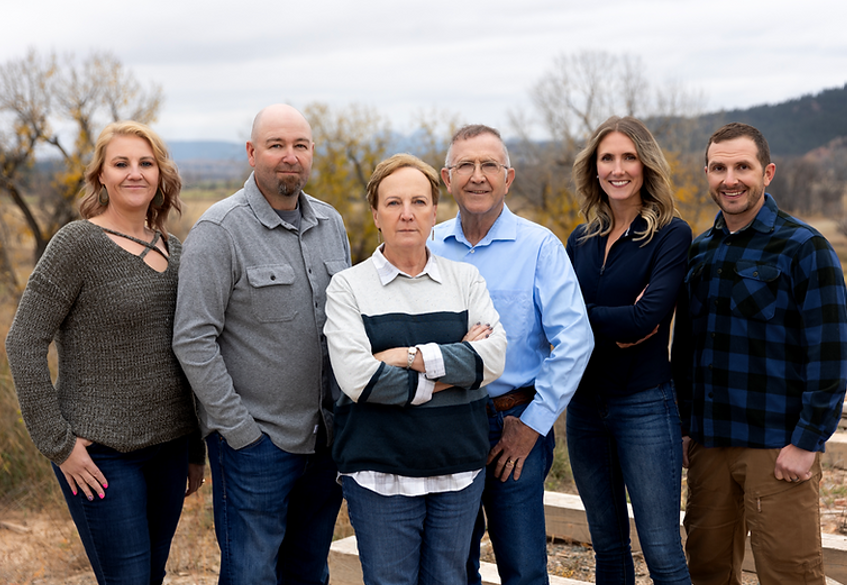
Neiman Enterprises has been one of Wyoming Agriculture in the Classroom’s most dedicated and impactful supporters. Their longstanding investment in agricultural and natural resource education reflects a deep commitment to Wyoming’s youth, rural communities, and the future of responsible land stewardship. Through their support, WAIC is able to connect students to the science, values, and industries that sustain our state—ensuring the next generation understands both where resources come from and how to care for them. WAIC was honored to sit down with the Neiman team to conduct an interview, wrapping up our 2025 Supporter Spotlight Series.
Neiman Enterprises has been part of the backbone of Wyoming’s natural resource economy for decades. Can you share how the company got its start and what has guided your family’s vision for responsible forestry through the years?
Neiman Enterprises was founded in 1936 in Upton, Wyoming as a small family operation. Over the decades, we’ve weathered our share of challenges—from sawmill fires that nearly wiped us out to multiple recessions that tested our resilience. What carried us through was the same grit and perseverance that shaped our family’s roots in farming and ranching.
Those agricultural ties also shaped our approach to forestry. We’ve always seen responsible forest management as a way to support the entire ecosystem—from protecting watersheds to improving wildlife habitat to reducing the risk of catastrophic wildfires. That belief has guided our family’s vision for nearly 90 years and continues to define the work we do today.
Forestry and agriculture are interconnected across Wyoming’s landscapes. How do you see these two industries working hand in hand to support ecosystems and strong rural economies—and what trends or changes are you currently seeing in Wyoming’s forests?
Forestry and agriculture have always been deeply linked in Wyoming. Healthy forests directly influence the watersheds that ranchers and farmers rely on, and they provide critical habitat that supports wildlife and future generations. When our forests are healthy, our agricultural communities are stronger, too.
But the inverse is also true. Wildfires have become one of the greatest liabilities for our state—whether you live in the timbered foothills or out on the plains. The cost of post-fire restoration is enormous, both financially and in terms of the crews and resources required to repair the damage. Prevention is far more effective than recovery.
What’s especially challenging today is that the economics of forest management have shifted. Where landowners once could make a decent return from thinning their private timber, many now find themselves having to pay to get that work done. The wood simply doesn’t pay its way out of the woods anymore. That’s a tough concept for the public to understand, and it’s unlikely that paradigm will change anytime soon.
Even so, the reality is clear: proactive forest management is essential. It’s far better to maintain a healthy, resilient forest than to risk losing everything to a catastrophic fire.
The lumber industry plays a quiet but powerful role in both Wyoming’s and the nation’s economy. How does Neiman Enterprises help keep rural communities strong and the state’s natural resource economy thriving?
Every one of our operations is located in a small, rural community—and we take that responsibility seriously. We make it a priority to invest directly in the places we call home, whether that’s through community outreach, supporting local organizations, or contributing our time and resources to strengthen schools, medical facilities, and local infrastructure. When our communities succeed, we succeed.
But our impact goes well beyond our own company. A sawmill is just the beginning of a much larger economic ecosystem. Our work supports loggers, truck drivers, equipment suppliers, mechanics, contractors, foresters, and countless small businesses that rely on a steady flow of activity from the mill. Each job inside the mill creates multiple jobs outside of it.
And importantly, active forest management keeps public lands productive and reduces the risk of catastrophic wildfire—supporting everything from recreation and hunting to grazing, tourism, and overall forest health.
In today’s world, there’s growing recognition that a secure domestic supply of natural resources (like lumber) is key to national resilience. How do you see your work contributing to America’s economic and environmental security?
For too long, the U.S. has relied heavily on foreign wood products, even as we struggle to properly manage our own public lands. It’s frustrating to watch subsidized materials shipped in from overseas when we have the ability—and the responsibility—to produce renewable, sustainable wood products right here at home. Keeping that work domestic strengthens our economy, supports rural communities, and reduces our dependence on foreign markets.
Although Neiman Enterprises got its start in Wyoming, we’ve grown into operations across three additional states. The products we produce are shipped nationwide and ultimately used in homes built across America. Every board we manufacture represents local jobs, healthier forests, and dollars that stay in our economy.
We don’t need to depend on foreign wood when we have the ability to manage our forests responsibly and supply our own nation. Our work helps ensure both economic security and environmental resilience—and that’s something we take seriously.
At Wyoming Agriculture in the Classroom, we believe that education is where stewardship begins. Why do you think natural resource education, especially around forestry and forest management, is so important for Wyoming students?
We are stewards of the land, and generations of Wyoming families have relied on these landscapes for their livelihoods and way of life. A healthy forest is foundational to the health of our state. As much of the nation has moved further away from science-based management and the understanding of what a working forest provides, it’s more important than ever that our students learn the true value of our natural resources.
Natural resource education helps students see that responsible forestry isn’t just about what we take from the land—it’s about how we give back. It teaches them that a healthy forest, a strong ecosystem, and a thriving community all go hand in hand. That balance is at the heart of stewardship, and it’s essential for the future of Wyoming.
Many people associate forest management with cutting trees, but there’s so much more to it. What are some of the biggest misconceptions you encounter about your work, and what do you wish more people understood about the science behind sustainable forestry?
One of the biggest misconceptions is that logging is just another way for corporations to make a big profit. In reality, most of what we do is replicating natural processes—wildfire, insect outbreaks, wind events, and other disturbances that historically shaped healthy forests. Over the last century, we’ve aggressively suppressed fire and scaled back active management, and the result is an overstocked, unnatural ecosystem. When a fire or insect epidemic hits today, the forest often can’t survive it. Instead of a thinning event, we lose entire landscapes.
Much of our work now is focused on restoring forests to a more natural, resilient condition—reducing density, improving species mix, and creating the spacing that allows trees to withstand fire, drought, and insects.
Another major misconception is about the process behind getting acres treated. The public rarely sees the depth of analysis and coordination that goes into every timber sale. The NEPA process is a perfect example. NEPA requires a thorough review of wildlife, soils, water, cultural resources, recreation, and public input before any project moves forward. While it can be challenging and time-consuming, it’s a critical part of ensuring that forest management is science-based, transparent, and environmentally responsible.
Neiman Enterprises has been a long-standing supporter of Wyoming Agriculture in the Classroom. What motivates your company to invest in programs like ours, and what kind of future do you hope to help build through that support?
In many ways, our education system has drifted from the core values and history that built Wyoming—especially our foundation in agriculture and natural resources. It’s essential that students understand where their food, building materials, and energy come from. These aren’t abstract ideas; they’re part of everyday life in our communities. It’s our parents working a farm, our neighbors in the mines, our friends logging the woods. Investing in programs like Wyoming Agriculture in the Classroom is our way of helping ensure the next generation understands and respects the industries that sustain this state.
With that knowledge comes responsibility. We want students to grow up equipped to make informed decisions, to lead Wyoming with a deep understanding of stewardship, and to support positive, science-based management of our natural resources.
|