The STARR News: September 2021 |
|
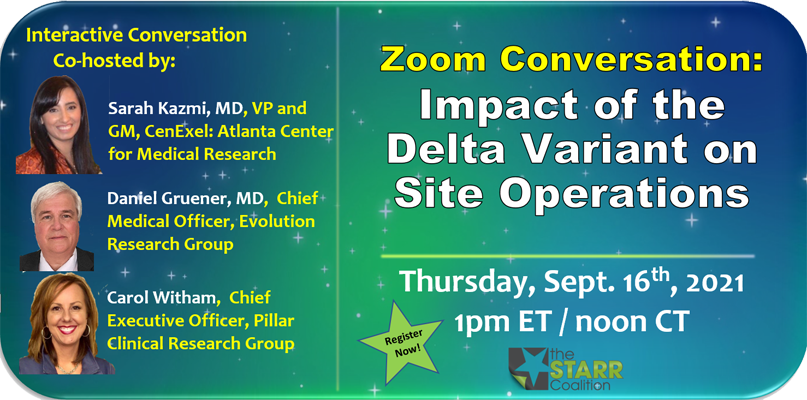
Join us for our next Zoom Conversation: |
|
Impact of the Delta Variant on Site Operations
Thursday, Sept.16th, 2021 -- 1PM ET / 10AM PT
|
|
September is
Suicide Prevention Awareness Month!
September is Suicide Prevention Awareness Month — a time to raise awareness on this often taboo topic. In addition to shifting public perception, this month is the time to spread hope and vital information to people affected by suicide. We all have a part in ensuring that individuals, friends and families have access to the resources they need to discuss suicide prevention and to seek help.
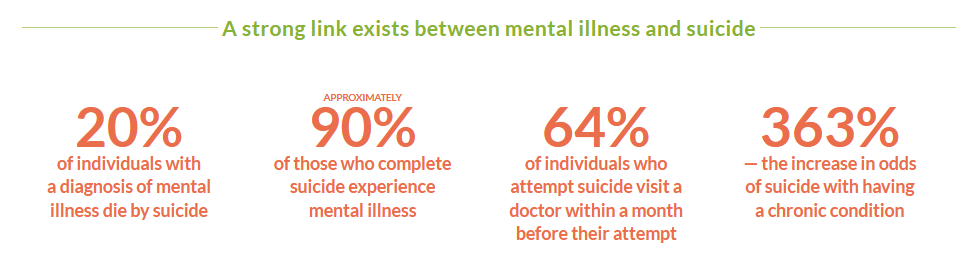
A strong link exists between chronic illnesses and suicide: individuals who are diagnosed with a chronic condition have 363% higher odds of suicide. Up to 20% of individuals with a diagnosis of mental illness complete suicide. Research has also found that 90% of those who die by suicide experience mental illness. People considering suicide usually seek help: for example, 64% who attempt suicide visit a doctor within a month before their attempt.
For many individuals, contacting a research site about possible enrollment for a clinical study may be their first attempt to reach out for help. This gives researchers the opportunity to help make suicide prevention and support a part of their first contact process and culture.
|
|
If, during a screening call, an individual indicates any suicidal thoughts and therefore may not fit the study criteria, the site screener automatically pivots to the STARR 911 script.
The STARR 911 program gives researchers
the opportunity to help save lives and to use
site resources to impact suicide prevention.
|
|
The STARR Coalition welcomes The Jed Foundation into our community! |
|
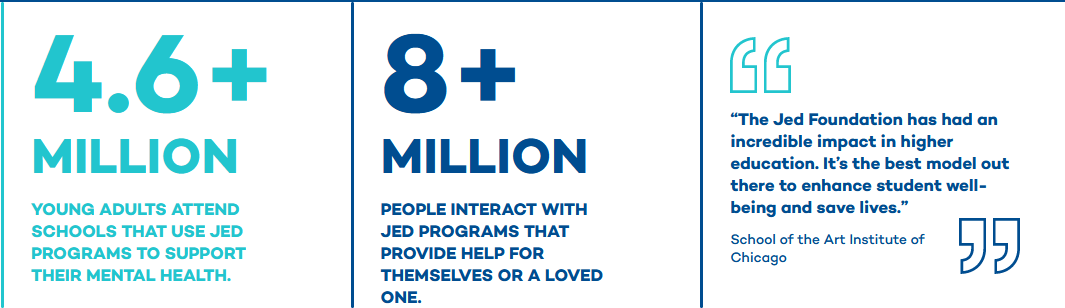
The Jed Foundation is a nonprofit that protects emotional health and prevents suicide for our nation’s teens and young adults. We’re partnering with high schools and colleges to strengthen their mental health, substance misuse, and suicide prevention programs and systems. We’re equipping teens and young adults with the skills and knowledge to help themselves and each other. We’re encouraging community awareness, understanding and action for young adult mental health. |
|
JED believes that we can promote mental health and prevent suicide among teens and young adults by empowering them as individuals, strengthening their schools, and mobilizing the communities and influences in their lives.
- JED currently works with nearly 350 institutions of higher education representing over 4.5 million students.
- Additionally, more than 9,000 high schools, colleges, and universities use a JED resource to help strengthen their mental health programming.
- Schools in the JED Campus program are significantly more likely to have cross-department collaboration to promote student mental health, implement mental health screenings, add additional locations for counseling services, and conduct scans for access to lethal means.
For more information and to get involved with this phenomenal organization, visit their website at https://jedfoundation.org.
We are excited to welcome The Jed Foundation into
The STARR community!
|
|
Meet Our New Team Member!
Mallory Mercer: Director of Advocacy Engagement
Mallory was raised in Arkansas and is a proud alumnus of The University of Arkansas in Fayetteville. She was a member of Kappa Kappa Gamma sorority and enjoyed giving back to her community while in NWA through the EMPOWER Program, Arkansas Children’s Hospital NWA, and Equestrian Bridges. She has served as the philanthropy chairman for the National Society of Leadership and Success as well as on the Executive Board for her sorority, planning numerous large events.
Mallory graduated with her B.A. in Psychology in December of 2020 and plans to attend Medical School in the future where she plans to pursue a career in Psychiatry. She is a passionate advocate for mental health and has worked in the mental health industry in various aspects for the last 7 years as a day treatment receptionist, an assistant for a research group, and a volunteer at both day treatments and equine therapy groups.
Mallory takes mental health and research advocacy very seriously, as an immediate member of her family lives with a diagnosis of bipolar disorder. This further fuels Mallory’s passion for advocacy and compassion for patients as she knows what it is like on both sides of the industry not only as a service provider but as a family member of someone living with mental illness. In her free time, Mallory enjoys spending time with her friends and family, walking her Chocolate Lab, Oakley, and riding her horses, Oliver and Tailor.
Mallory has been peripherally involved with The STARR Coalition since its launch and is very familiar with the mission and values. She is excited for this opportunity to connect with the community and to help spread the message that research equals hope.
|
|
The STARR Site Certification was created to help advance mental health clinical research by promoting community engagement, empathy, and communication between research sites, staff, patients, and advocacy groups, as well as providing support for best practices around working with advocacy, suicide prevention, and other areas that enhance clinical research. |
|
|
Everything The STARR Coalition does comes from our stakeholders looking to make positive change.
|
|
The proposed mission of ARPA-H could be to make pivotal investments in break-through technologies and broadly applicable platforms, capabilities, resources, and solutions that have the potential to transform important areas of medicine and health for the benefit of all patients and that cannot readily be accomplished through traditional research or commercial activity.
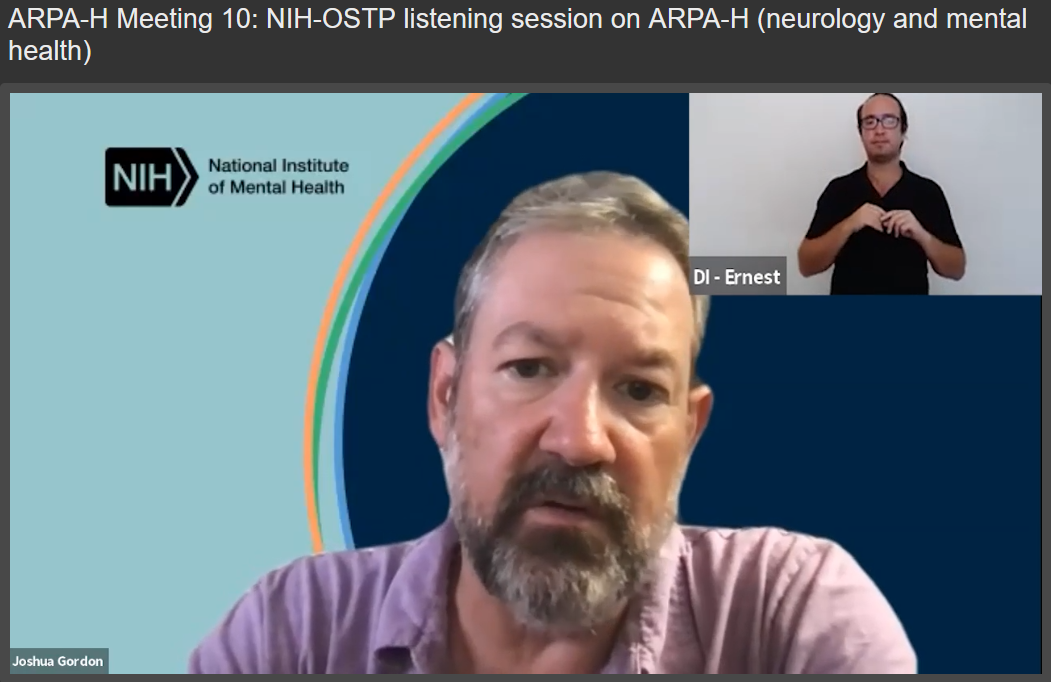
The NIH and the White House Office of Science and Technology Policy hosted a listening session to get feedback from patient advocacy groups, industry, scientific professional organizations, and other stakeholders to contribute to the planning for ARPA-H. This session focused on “Advocates for Research on Neurology and Mental Health,” held on August 16th.
Information was presented by several groups, each of which suggested areas for focus for ARPA-H. There were a couple that stood out including a presentation from Juliane Baron of the Federation of Associations in Behavioral & Brain Sciences (FABBS), who advocated for a program for early detection and early intervention of mental health disorders, as well as establishing facts/data on risk factors (i.e. adolescent use of marijuana is a risk-factor for schizophrenia).
Jonathan Alpert, M.D., Ph.D, chair of the APA's Council on Research, suggested that ARPA-H create tools for the prediction and prevention of suicide, especially among the vulnerable populations (LBGTQ, veterans, etc.). Dr. Alpert also supported programs to advance diversity to ameliorate health care disparities. He also suggested a focus on RAPID-ACTING treatments.
ARPA-H has enormous potential to create transformative solutions. It is in our interest to keep an eye on ARPA-H initiatives.
|
|
The STARR Coalition has partnered with thought-leaders across the industry and advocacy to create a National Call to Action to Support Mental Health Research. We have created a campaign consisting of actionable items anyone can do to support and help bring mental health research into the same light as cancer, diabetes or heart disease.
We need everyone's help promoting this National Call to Action!
To join the Call to Action and find ways you can support mental health research right now, visit our website at www.thestarr.org/c2a
|
|
The STARR Coalition | phone: 501-725-8890 | www.thestarr.org |
|
|
|
|
|
|