|
‘People love change, when they feel
they are in charge…’
That's all you need to know about the management of change. That’s it.
What you don’t do is say or even imply, you are going to ‘make-change’. Use change as a threat, ‘do’ change to people or change what they are proud of doing.
I suspect you know that.
Charmer doesn't. Which is why his one word slogans, 'change' are problematic. We've no idea what it means. Change what? From what to what. Who is going to do it to us. How will it impact on me?
He only got elected because everyone was fed up with the Tories. A vacuous message to 'change' is just that... meaningless.
It’s pretty basic stuff.
'Together we can be the change we all want'...
...works.
'Change we can believe in'.
... worked for Obama.
'Make America great again.'
... worked. Trump's 'change' message, contextualised.
On its own, the word 'change' has no context and is ominous.
Therefore, I suppose it was unsurprising that the Prime Minister popped-up on our TV screens, and with all the oratorical skill of a train-station announcer, told us he was going to ‘mainline’ into our workplaces, the biggest change since the invention of the steam-engine.
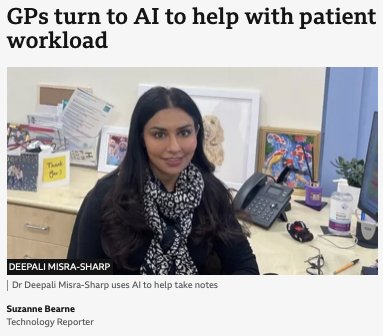
Charmer will inject where you work with artificial intelligence, as if it were some sort of performance enhancing steroid, to boost national performance...
... with no thought for the impact it might have on the lives, incomes and anxieties of working people.
Most people don’t know… right now, there’s no such thing as artificial intelligence.
Machines cannot ‘do’ human reasoning, understanding and consciousness.
But…
Most people will hear ‘artificial intelligence’ and think… there goes my job. It’s called the ‘displacement effect’. It makes them angry, uncertain and worried.
Studies make claims about the ‘pass-through effect’. Meaning we will migrate to other jobs.
Most people would probably agree, the world has enough Deliveroo riders and Uber drivers.
We’re in the foothills of whatever AI turns out to be and no one can see the view from the mountain top.
Machines can ‘remember’ a lot of stuff (enthusiasts call it machine learning, ML) and access it quickly using natural language processing (NLP).
Meaning; answer questions written or spoken in free-flowing, natural English.
Machines are very good at comparing images. If you look at a hundred-thousand images of a cancerous lump, the hundred thousandth and one is easy to compare to see if it is cancer, too.
But if you type ‘the cow jumped over…’ the machine will suggest ‘moon’, rather than ‘a dead farmer’.
Most people are understandably suspicious and concerned that machines will encroach on their jobs and put them out of work.
They’re probably right. Think about the NHS.
A machine can't hold your hand but it can do things to create the time and space for more hands to be held.
We already use ML to scan images for breast lumps and other nasties. Approximately 133,000 scans are produced every day in the UK, but the NHS faces a 29% shortfall of clinical radiologists.
The NHS AI Lab imaging programme, the National Covid Chest Imaging Database and the Lung Cancer Detection programme… plus a host of collaborations… is aimed at fixing that and...
… is evidence enough to say to parents, (to borrow from Noel Coward) don’t put your daughter in to films (Mrs Worthington) …
... at least not the films and images that ‘ologists and others routinely read, because machines will do it better and quicker.
The first systematic review and meta-analysis of its kind found;
'AI can correctly diagnose disease in 87% of the cases, whereas detection by healthcare professionals yielded an 86% accuracy rate. The specificity for deep learning algorithms was 93%, compared with humans' at 91%.'
The professions will claim their superiority in nuance. Of course, they’ll object, deny and disrupt any attempt to dislodge the grip they all have on medicine and their professions.
Who can blame them? But...
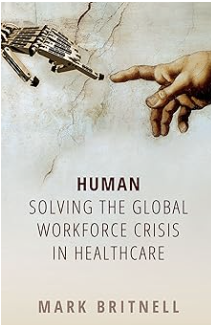
... let’s be brutal. Read Mark Britnell's book; there is a global shortage of clinical professionals. It is a slam-dunk that health systems of the future will have fewer doctors, more technicians and decision support provided by AI…
… which will have analysed the nation’s medical records going back eighty years, and millions of images… to support diagnostics.
In the wider economy AI might well mean GDP goes up but paradoxically, so might unemployment. The truth? It’s a mixed picture. Foreshadowing a polarisation of work.
Up-skilling is probably the worker's only defense, but not everyone can do that.
Name me a profession that has not, already been in some way deskilled or taskified.
We stand on the brink of robotics, 3D printing and genetics. Machines that can beat a man in the ultimate test in the court of public opinion, at chess. Machines that can paint like a 16th Century Dutch master.
Machines that will peer into a tiny spot of blood and tell you, in an instant, everything you might wait for months, for a human to tell you and maybe some things a human might miss, or not even know.
AI will not reform the NHS. But, it has the potential to demolish its structures, dig-up the foundations and create a world closer to Dr Spock than Dr Findlay…
… and needs very, very careful handling.
|