Quick, Timely Reads
On the Waterfront
|
|
Watching Water:
Before Mindfulness There Was the Bay
|
|
Dr. David Frew, a prolific writer, author, and speaker grew up on Erie's lower west side as a proud "Bay Rat," joining neighborhood kids playing and marauding along the west bayfront. He has written for years about his beloved Presque Isle and his adventures on the Great Lakes. In this series, the JES Scholar-in-Residence takes note of life in and around the water.
|
|
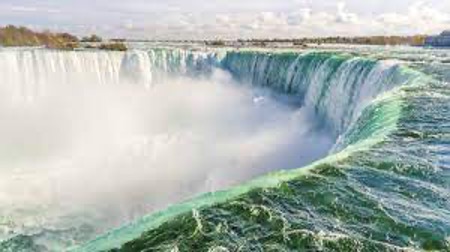
The Horseshoe Falls at Niagara: A good place to watch the Earth breathe |
|
Covid-19 has changed life for almost everyone. One of the most dramatic shifts in my life has been the closure of the Peace Bridge, the magical gateway to the rich life and many friends that I have enjoyed in Ontario. I have two favorite places on “the other side of the pond.” One is Niagara Falls and, while I realize that the falls are accessible from the United States side of the Niagara River and I have resorted to a few of those trips over the past year, the experience of Niagara for me has always been connected to the Canadian side. Over the bridge, quick turn and along the river. That is a journey that my wife Mary Ann and I usually take at least a dozen times per season.
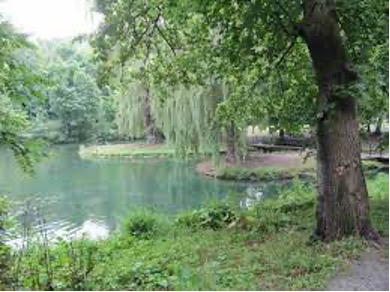
Friends once asked why we go to Niagara Falls so often. “Has anything changed?” they wonder. Not sure, no, and yes are the raw answers to the questions. I am “not sure” why we like it so much, “no,” there have been no significant geological changes, and “yes” everything is constantly changing. We generally stop at a few favorite places along the river before we get to the falls. There is an island with a picnic table along the route where we often linger to gaze at the moving river. Then Dufferin Falls, a magical loop just above the falls. Finally, Niagara Falls, itself. From the walkway just above the falls it is a simple matter to become hypnotized by the falling water. I usually begin by gazing and end with contemplating the magnificence of this water route that defines the Great Lakes. Drops of water that began at Duluth, Minnesota mix with drops that had their genesis near Erie to form the blue cascades that pass us on their way to Montreal and the Atlantic Ocean.
|
|
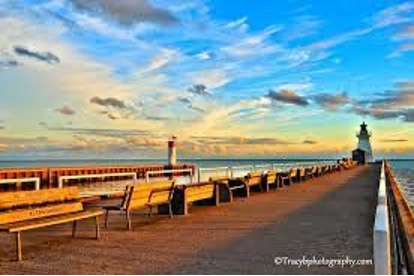
My second “special spot” is the town pier at Port Dover with its historic lighthouse. The pier is graced by strategically placed benches where a person can sit with a cup of (Tim Horton) coffee and contemplate Lake Erie, or just contemplate. On clear evenings, the colors of sunset mix with the sounds of waves running along the pier. And on especially clear days, the Appalachian Escarpment line that frames the south side of Lake Erie can be seen on the horizon – a dull blue ridge that rises above a darker blue lake. Sitting on the pier always makes me think of the times that I have sailed back and forth from Erie with happy children and grandchildren who were once my faithful crew. |
|
A thought-provoking site on the water |
|
Several years ago, Mary Ann observed that when we travel or vacation, we always find our way to water. Oceans, rivers, and lakes have become destinations. We pay extra and travel farther if necessary but always find ourselves at the water. Repeat vacations, like our last 25 years at Isle of Palms, South Carolina (Charleston), or annual November trips to Lake Geneva, Wisconsin are always at the water. I am a genetic highlander form the hinterlands of Scotland. Why would water be part of my DNA? After visiting my ancestral home some years ago, I learned that my family grew up on the shores of Loch Ness, which is almost an ocean. Mary Ann’s water predilections are more easily explained. Her parents were born on the shores of the ocean in southern Italy and her family was in the commercial fishing business. So, we might both have an internal attraction to water. But there must be more.
For me it probably started on the bayfront. My friends and I were not always involved in active assaults on civilian facilities like the Cascade Docks or the Strong Estate. Nor did we play sports every minute. There were quiet times – contemplative opportunities when for some reason none of my Bay Rat buddies were allowed out. When such an opportunity presented itself, I would often find myself sitting along the bluffs gazing. Watching Presque Isle Bay. More important than the sailboats, ships and tugboats, there was the water, itself. And at an early age, I recognized its power and ever-changing dynamics. I could sit for hours, just gazing. Sometimes the gazing happened from a distance. At other times, I would wander to the water’s edge to watch.
During the late 1960s in graduate school, I slowly began to understand my attraction to water. Our psychology lab had a specific gravity tank and most of the students were willing participants. Floating in a dense, saltwater solution that had been heated to body temperature, we listened as professors regaled us with “theoretical notions,” including the primal role of water. Breathing, suspended, floating. Professors introduced us to the concept of a “mantra” as well as the exercise of quieting our minds. It was my introduction to “mindfulness,” although that specific term was not used then. Our professors, disembodied voices from just outside the tank, narrated as we floated. They pointed out the importance of water, which is life, itself. They added that the Earth is mostly composed of water and that we, ourselves, were also mostly made up of water. One professor emphasized that the composition of the ocean’s saltwater is almost exactly the same as the chemical composition of our brains; that our most important understanding should be that all water is life-giving. He added that the best way to visualize large bodies of water, such as the oceans and Great Lakes, is to imagine they are the Earth’s lungs. Watching an ocean rise and fall, or its surf running on a shore is seeing the Earth breathing. And paying attention to the breathing of an ocean was a meditation in itself.
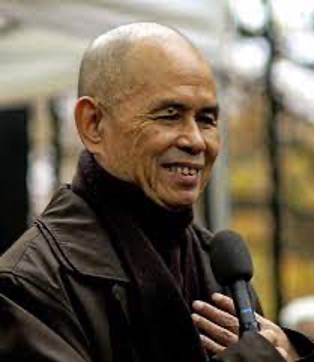
It was there that I first learned of the Dalai Lama, Buddhist monk Thich Nhat Hahn, and the power of meditation. Both spiritual leaders were advocates of mediation andd their approaches to meditation were rudimentary and simple. Watching the breath. Feeling pulsations that come from bodies of water. Recognizing that, while water always seems to be the same, it is ever-changing, just like our breath. Realizing that water and breath are life. I was hooked!
Later, after I had begun teaching at Gannon, I managed to incorporate meditation into research on job satisfaction and productivity at work. It seemed logical that if my “job” was to investigate ways of helping people to enjoy their jobs, that something as simple as meditation could be more than useful. To make my typical corporate trainees comfortable, I searched the literature on Christian forms and traditions of meditation, which connected the practice with centering prayer. Then I visited Trappist monasteries to ask questions and learn. Eventually, I integrated the work of Father Basil Pennington, who had written a book on Centering Prayer into my portfolio of training materials.
|
|
Buddhist monk Thich Nhat Hahan |
|
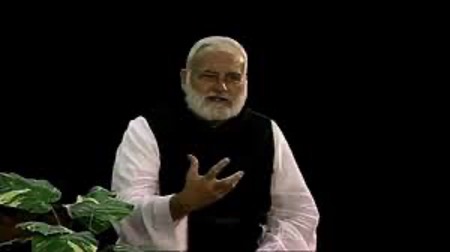
Trappist monk Father Basil Pennington |
|
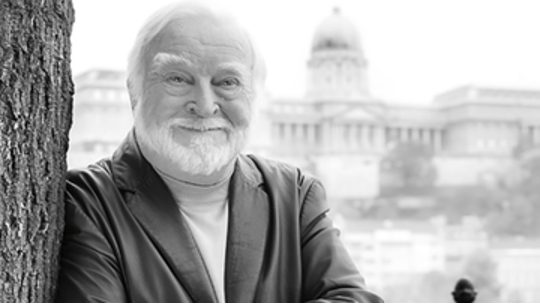
Biologist Wallace Nichols |
|
The more I learned about meditation, the more my water fascination seemed to make sense. And then recently I found the work of biologist Wallace Nichols, who wrote the book “Blue Mind” in 2014. Nichols’ journey from turtle specialist to advocate of “being near water” is documented in his book as he makes stunning statements about the power of water. The question of why we are so attracted to water is powerfully addressed in his book and in the avalanche of research that has accompanied it. Wallace characterizes water as medicine and suggests that our bodies know how much we need continuous doses. He goes so far as to say that people who live near water are happier and healthier than those who don’t and uses epidemiologic research to support his hypothesis.
Dozens of research studies, many of which began from a perspective of skepticism, have affirmed and complemented his work. A relatively new field, called “blue mind science,” has emerged with practitioners ranging from physical scientists to psychologists and physicians. New “blue minders” encourage us to go to water as often as possible, design lives that keep us near water, and choose activities that help us to participate with water: swimming, sailing, fishing, and more. Using laboratory instruments that measure physiological stress, scientists have been able to design and replicate studies that show the power of water, seeing it, hearing it, or just being near it, on the body and the mind. As neuroscientist Dr. Catherine Franssen, who has investigated Nichols’ ideas, put it, “Stress causes disease, but water ameliorates stress.”
For those of us who live in Erie, one more positive. We can watch water. So here is a prescription from Dr. Frew: Go to Presque Isle.
|
|
Accidental Paradise Available at TRECF!
Accidental Paradise
by Dr. David Frew and Jerry Skrypzak
|
|
The beautiful book on Presque Isle published by authors David Frew and Jerry Skrypzak – “Accidental Paradise: 13,000-Year History of Presque Isle” – is on sale at the Tom Ridge Environmental Center’s gift shop and through a special website, AccidentalParadise.com.
The book, priced at $35 plus tax and shipping, can be ordered now through the website sponsored by the TREC Foundation, AccidentalParadise.com.
Presque Isle Gallery and Gifts on the main floor of TREC, located at 301 Peninsula Drive, Suite #2, Erie, PA 16505 will also handle sales daily from 10 a.m. to 4 p.m.
For more information, send an email to aperino@TRECF.org.
To watch "Accidental Paradise: Stories Behind The Stories" click here.
|
|
ABOUT THE AUTHOR
Historian and author David Frew, Ph.D., is a Scholar-in-Residence at the JES. An emeritus professor at Gannon University, he held a variety of administrative positions during a 33-year career. He is also emeritus director of the Erie County Historical Society/Hagen History Center and is president of his own management consulting business. Frew has written or co-written 35 books and more than 100 articles, cases, and papers.
|
|
|
|
|
|
|