Ooooh That Smell!
Stinknet, With Its Pungent Odor,
Threatens To Displace Our Native Plants

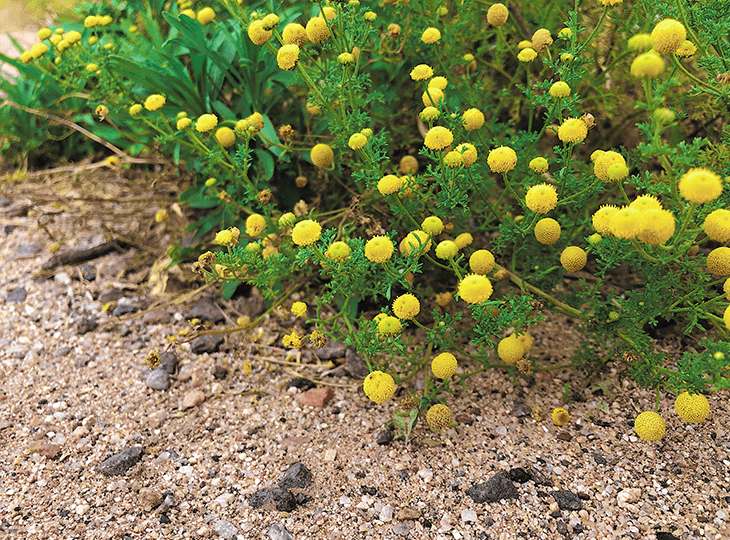
Stinknet, also known as Globe Chamomile, is a relatively new invasive plant in Arizona that has quickly spread. Many of our residents are aware of our major efforts last year to remove this plant from all areas of Sincuidados. A native of South Africa, Stinknet/globe chamomile is an annual that has the same lifecycle of most of our cool-season Sonoran Desert wildflowers. It is easily recognized by its dark green carrot-like leaves and small, rounded, bright yellow flowers. It also has a distinctive pungent odor similar to turpentine.  

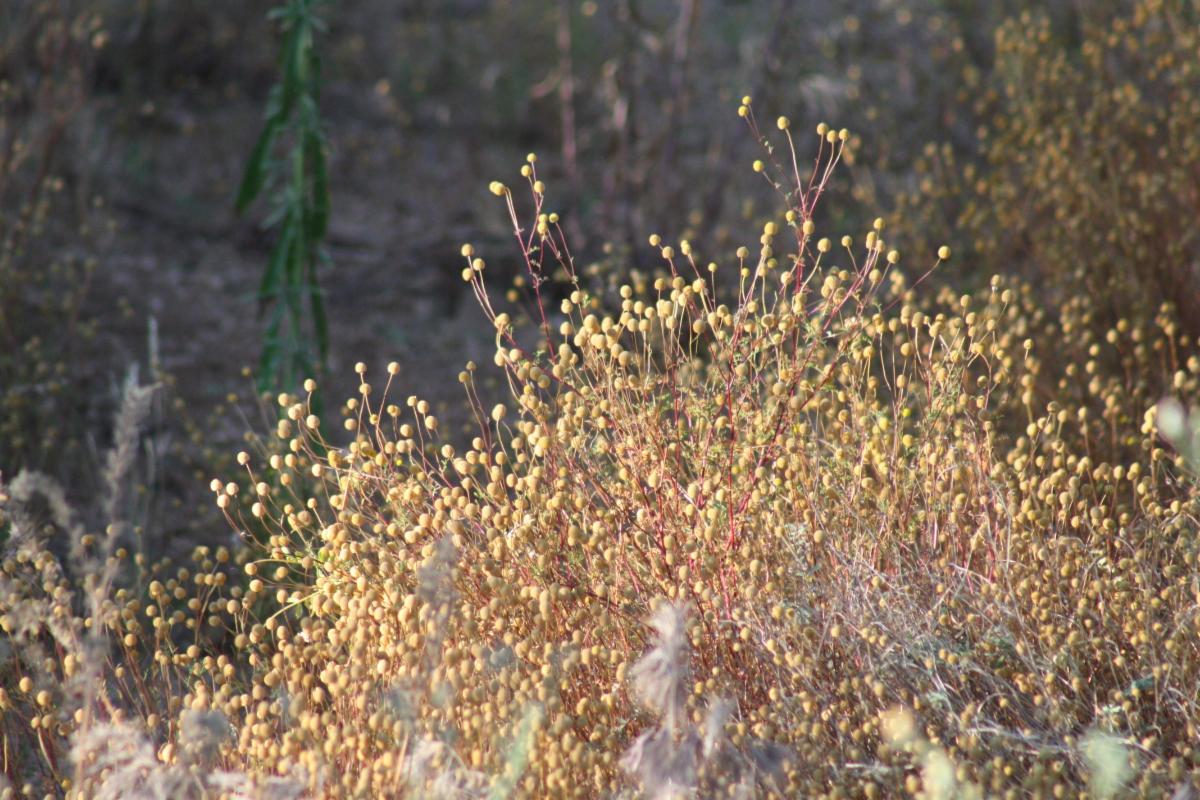
Why don’t we like Stinknet? Due to its highly invasive nature and ability to spread faster than other invasives, Stinknet threatens to displace native plants, especially our beautiful spring wildflowers. As Stinknet dies during the hot summer months, the dried, dead plants become ladder fuel for wildfires. It can catch fire easily and carry that fire to trees, shrubs and homes. Stinknet has been implicated in the wildfires of the summer of 2020 in the Cave Creek and north Phoenix areas. Stinknet has not been observed to be edible by our native birds or wildlife, therefore, infested areas provide less native food for native species. It has been shown to negatively impact agricultural areas and rangelands in our state.
To control Stinknet, it is important to understand its lifecycle. Seeds can begin to germinate in the late fall with flowering beginning in late winter. Seedlings will sprout and produce bright yellow, small, globe shaped flowers in late February and early March. By April or May, these flowers will set seeds, which can number in the hundreds per flower blossom (That’s not per plant, but per flower blossom!). The plants begin to dry and turn brown and will die during the summer heat. Seed heads can remain on the plant for over a year if not disturbed.  

How do we get rid of Stinknet/globe chamomile? Our collective knowledge of how to deal with Stinknet is evolving and although we had previously recommended the use of herbicides, we now know from official sources that this method is not as effective as mechanical removal. When done early in the plant’s life cycle, pulling the entire plant up by its taproot is relatively easy and is the most effective method. The plant should be collected, bagged and removed with bulk trash. The best time to remove Stinknet is when it’s in bloom, and its yellow flowers are easily recognizable in late February or March.  
An alternative method is to use your weed-wacker during this same timeframe while the plant is in bloom and before it sets seeds. Since the plant is still in flower, there is no risk of spreading seeds at this time and the plant can be raked up and disposed of. But remember, the less soil disturbance, the better. You can also use a hula-hoe (available at any garden center) to cut the plant off at its base for removal. Stinknet doesn’t regrow from the roots - only if a stem is left behind.

Herbicides have not proven effective against Stinknet and are not allowed in our Natural Area Open Space (NAOS). Any use of herbicides over a large area will also kill native plants, perhaps for multiple seasons and risk poisoning our native birds and animals.  

While mechanical, or manual, removal of Stinknet/globe chamomile sounds intimidating, it can be done relatively easily if addressed while Stinknet is in bloom. Or better yet, have your landscape crew do it! Since there may be seeds remaining in the soil from prior seasons, it may take a couple years to substantially control an infestation, and seeds may continue to enter an area by wind or other transfer agents. This means a continual monitoring and control effort will likely be needed, but hopefully the problem will be reduced in future years. 

Sincuidados has added Stinknet/globe chamomile to its list of invasive species that must be controlled on all residents’ properties. The Board of Directors, as well as the NAOS/Firewise Committee, are here to assist any resident who needs help identifying Stinknet or discussing ways to control it. Your cooperation and participation in this effort is greatly appreciated and will definitely produce dividends in a more beautiful, natural and fire safe community. 
The annual meeting is at 6:30pm, Feb. 24 on Zoom.
Please obey our speed limits.
Please pick up after your pets.
Missing Links? Click Here!