|
Back to School Spotlight on Vaping:
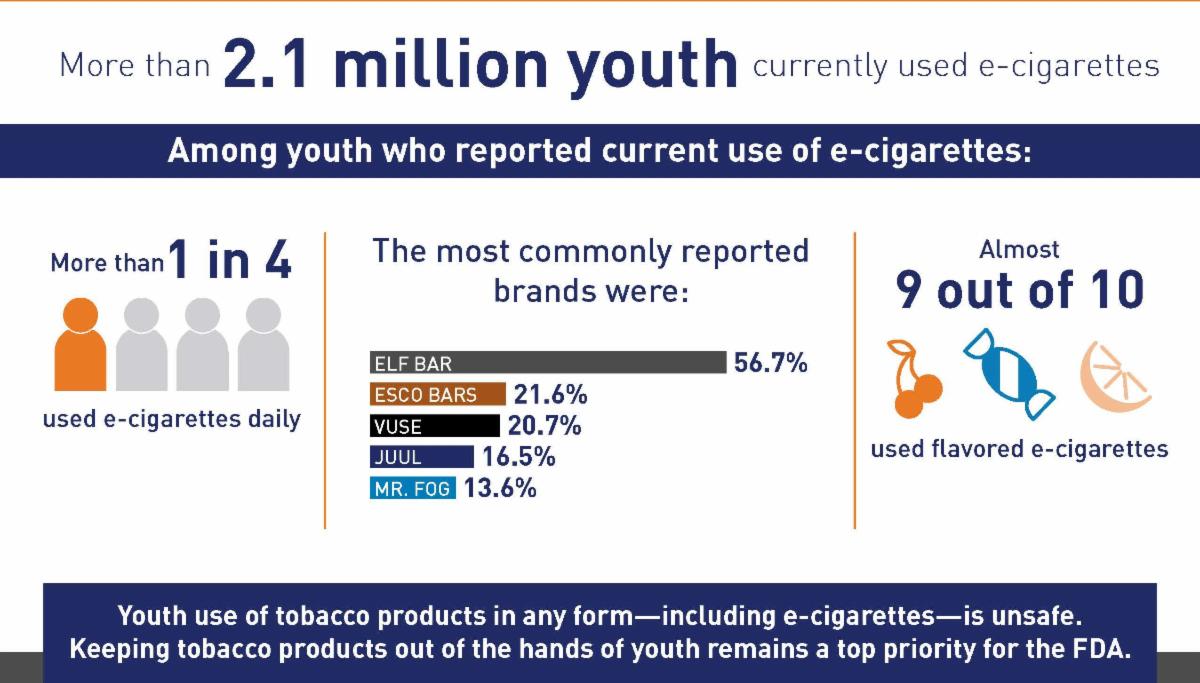
The National Youth Tobacco Survey asks middle and high school students about tobacco use, with current use defined as use within the past 30 days. According to self-reports, in 2023 school tobacco use in the US decreased to 12.6% (from 16.5% in 2022). This decrease was driven by a reduction in e-cigarette use. Unfortunately, during the same time frame middle school tobacco use in the US increased to 6.6% (from 4.5% in 2022). Again, e-cigarettes were the most popular product used among middle school students.
Of concern, top reasons for current e-cigarette use among middle school students were “I was/am feeling anxious, stressed, or depressed” and “to get a high or buzz from nicotine.” In the 2023 National Youth Tobacco Survey (NYTS) Hispanic middle school students reported the highest rates of “ever using” e-cigarettes compared to their peers. 12.3% of Hispanic middle school students reported ever using e-cigarettes compared to 8.4% among Non-Hispanic White students and 10.6% among Non-Hispanic Black students. To help adolescents who vape, consider using the American Academy of Pediatrics Youth Tobacco Progressive Web App (PWA). The app uses validated screening tools to determine a youth’s level of tobacco/nicotine dependence. Separate AAP training videos provide suggestions on navigating a conversation to gauge a youth’s interest in quitting. For young people who are interested in quitting and have moderate/severe dependence, guidelines are provided for dosing off-label nicotine replacement therapy (NRT). Resources for behavioral support/counseling are also available through the app, including texting, quitlines, and online. For example, "This is Quitting" is a texting program for youth and young adults ages 13-24 who want to quit vaping. Youth and young adults participate anonymously by entering their age only (but not name or other personal information) after texting “VAPEFREEMASS” to 88709.
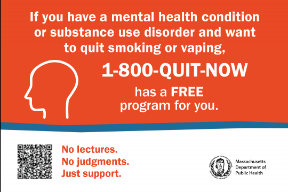
For the greatest success, encourage youth to participate in a form of behavioral counseling throughout their quit attempt! Massachusetts offers My Life, My Quit for youth ages 13-17 with free phone coaching and options for live texting as well (mylifemyquit.com). Follow up early with your young patients as nonadherence and relapse are common. For example, following up 2 weeks after a patient’s quit date can create a touch point for assessing progress, adjusting treatment as needed, and providing additional intervention for relapse. Though quitting is hard, help is available!
More information about how to help youth quit tobacco is available in the Information for Healthcare Providers section of MA's Toolkit Addressing Student Use of E-Cigarettes and other Vaping Products.
|